
Événement Conférence
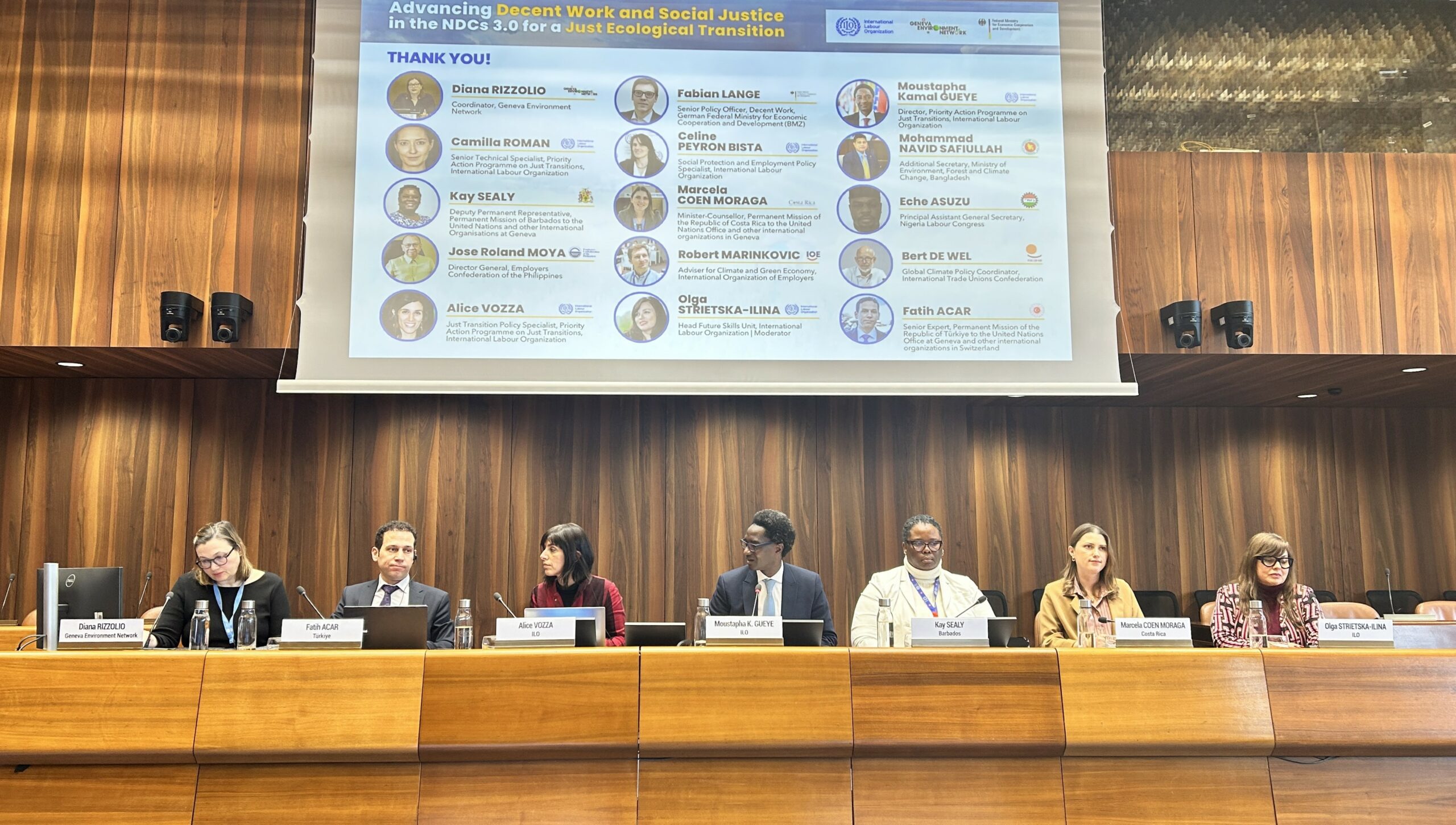
Advancing Decent Work and Social Justice in the NDCs 3.0 for a Just Ecological Transition

28 Jan 2026
10:00 – 12:00
Lieu: ILO Building | Room II & Online | Webex
Organisation: Organisation Internationale du Travail, Geneva Environment Network, Allemagne
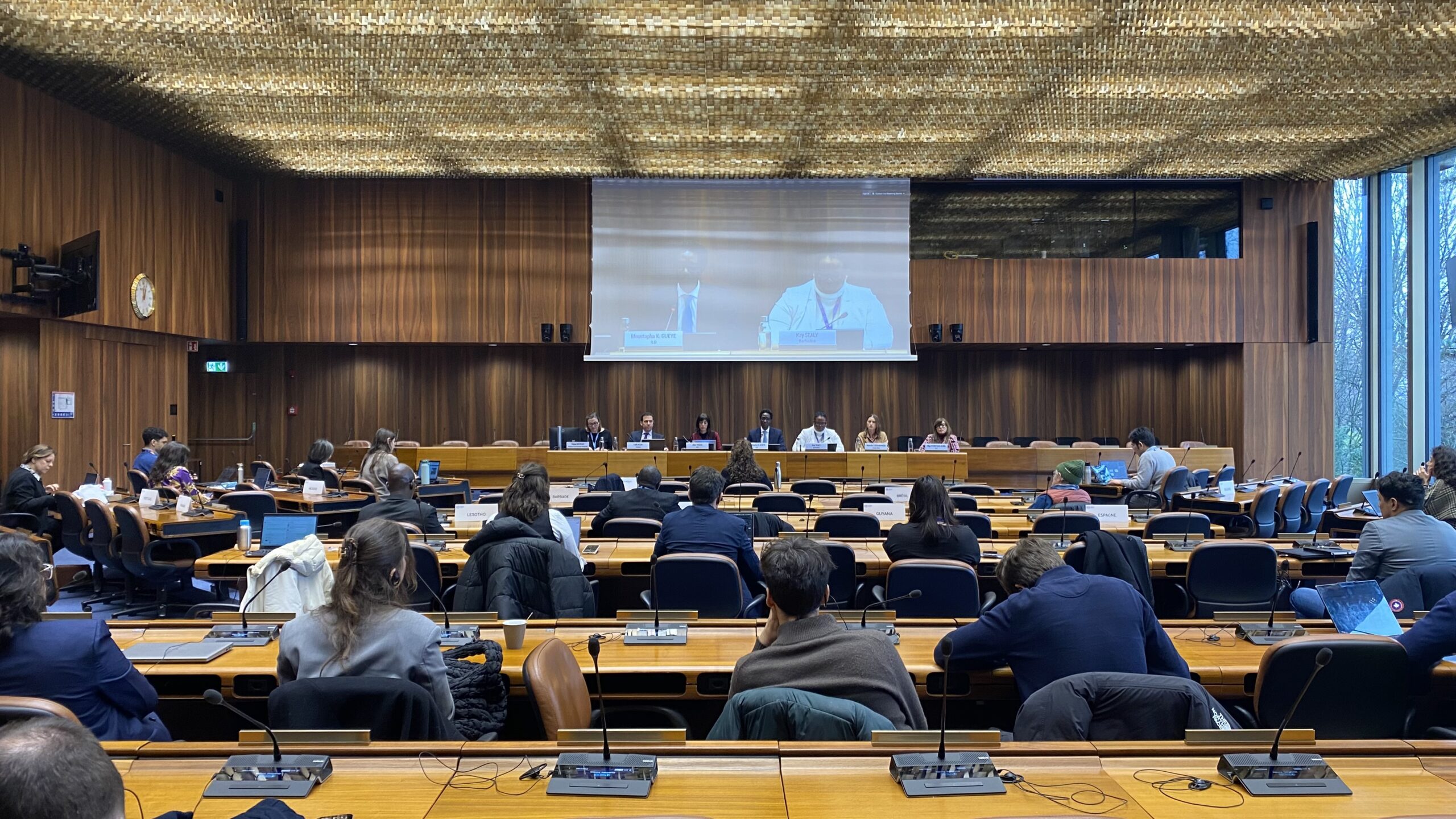
This event, jointly organized by the International Labour Organization (ILO) with the Geneva Environment Network (GEN) and with financial support from the German Federal Ministry for Economic Cooperation and Development (BMZ), aims to share perspectives on the integration of just transition in the new generation of NDCs and to reflect on how their implementation can foster decent work creation and social justice, grounded in social dialogue.

About this Event
Advancing a just transition towards environmentally sustainable economies and societies for all is essential for meeting climate goals while creating decent work, promoting social justice, reducing inequalities and supporting sustainable development and poverty eradication. A just transition aims to steer change in ways that expand social and economic opportunities and ensure that no one is left behind in the shift to low-emission and climate-resilient pathways.
Nationally Determined Contributions (NDCs) are short-to-medium term plans for countries to signal their climate ambition while also outlining how employment and broader socio-economic dimensions will be addressed in climate strategies and implementation. In recent years, just transition has gained increasing visibility as a priority across many countries and international processes, particularly under the UNFCCC and its UAE Just Transition Work Programme. This momentum has been further strengthened by the endorsement of the ILO Guidelines for a Just Transition towards Environmentally Sustainable Economies and Societies for All by 187 ILO Member States at the International Labour Conference in 2023.
Over the past two years, the ILO, working as part of the UN system and in collaboration with the NDC Partnership, has intensified its support to countries to integrate just transition into NDCs, through both global research and country-level policy advice. This has included a series of mappings of how just transition is reflected in NDCs, aimed at establishing a baseline and informing how related elements are incorporated into NDC texts. The research has directly informed country-level action, supported by international development partners: in 2024–2025, around thirty Member States developed integrated policies and programmes to advance decent work and social justice in the context of the ecological transition, including through their NDCs. This progress was achieved through coordinated Office support, which strengthened synergies across policy areas and across country, regional, and global levels.
Against this background, the International Labour Office is convening a dialogue on Advancing decent work and social justice in the NDCs 3.0 for a just ecological transition, jointly organized with the Geneva Environment Network and with financial support from the German Federal Ministry for Economic Cooperation and Development (BMZ).
The event will be held with simultaneous interpretation in English, French and Spanish. Coffee and tea will be served from 9:30.
Speakers
By order of intervention.

Fabian LANGE
Senior Policy Officer, Decent Work, German Federal Ministry for Economic Cooperation and Development (BMZ)

Moustapha Kamal GUEYE
Director, Priority Action Programme on Just Transitions, International Labour Organization

Camilla ROMAN
Senior Technical Specialist, Priority Action Programme on Just Transitions, International Labour Organization

Celine PEYRON BISTA
Social Protection and Employment Policy Specialist, International Labour Organization

Mohammad NAVID SAFIULLAH
Additional Secretary, Ministry of Environment, Forest and Climate Change, Bangladesh

Kay SEALY
Deputy Permanent Representative, Permanent Mission of Barbados to the United Nations and other International Organisations at Geneva

Marcela COEN MORAGA
Minister-Counsellor, Permanent Mission of the Republic of Costa Rica to the United Nations Office and other international organizations in Geneva

Eche ASUZU
Principal Assistant General Secretary, Nigeria Labour Congress

Jose Roland MOYA
Director General, Employers Confederation of the Philippines

Robert MARINKOVIC
Adviser for Climate and Green Economy, International Organization of Employers

Bert DE WEL
Global Climate Policy Coordinator, International Trade Unions Confederation

Alice VOZZA
Just Transition Policy Specialist, Priority Action Programme on Just Transitions, International Labour Organization

Olga STRIETSKA-ILINA
Head Future Skills Unit, International Labour Organization | Moderator

Fatih ACAR
Senior Expert, Permanent Mission of the Republic of Türkiye to the United Nations Office at Geneva and other international organizations in Switzerland
Highlights
Video
Summary
Opening Remarks
Fabian LANGE | Senior Policy Officer, Decent Work, German Federal Ministry for Economic Cooperation and Development (BMZ)
- At the Federal Ministry for Economic Cooperation and Development, there is a strong conviction that climate action, economic development, and social justice must go hand in hand. A just transition is not only a policy goal in itself; it is fundamentally a people-centered approach.
- Embedding decent work, social dialogue, social protection, and labor rights into NDCs is therefore not a social add-on but essential for durable climate action, political legitimacy and long-term resilience.
- Leaving no one behind requires intentional design to ensure that efforts to mitigate climate change do not deepen inequality.
- A crucial success factor is the inclusion of trade unions and social partners to ensure that the transition is not only green but also fair.
- Strong collaboration is needed between policymakers, workers’ organizations, employers, civil society, and financial providers to design and implement socially just NDCs.
- The ministry is proud to support initiatives, networks, and dialogues such as this one that help turn this vision into reality.
Moustapha Kamal GUEYE | Director, Priority Action Programme on Just Transitions, International Labour Organization
- The ILO is the only tripartite agency in the United Nations system, with the important mandate to promote decent work for all and to advance social justice, and to do so through a process that brings together representatives of governments, workers, and employers’ organizations. These are the actors in the real economy that are needed for any economic or social transformation.
- The ecological transition is not only an environmental agenda. In this very house, the tripartite constituents recognize since many years that advancing social justice and promoting decent work for all requires integrating job creation and social justice objectives into climate and environmental policies, and ensuring that actors in the world of work are active agents in this transformation.
- That is why, in 2023, in this very room, the Governing Body of the ILO adopted a four-year strategy to promote a just transition, which the Office, together with partners across the UN system and other organizations, is now putting into motion.
- Those negotiating climate and environmental agreements, in particular under the Paris Agreement, have also recognized for many years that ambition cannot be confined to numerical goals and targets. Ambition is ultimately about human capacity.
- It is about having enterprises that can innovate and invest in new business models to deliver goods and services with a low-carbon footprint.
- It is about having workers with the skills needed to transform economic systems, agriculture, food systems, and transport.
- It is about having communities that can diversify their economies and sustain livelihoods and well-being.
- This is why addressing social dimensions in NDCs is so critical, and why collectively a major effort was made with tripartite constituents during the NDC 3.0 process last year.
- This dialogue, bringing together representatives of governments, workers and employers from around the world to share their experiences and how they intend to move forward, is expected to be a very insightful exchange to guide future work.
Kick-Off Presentation: Mapping the Integration of Just Transition in NDCs.3.0
Camilla ROMAN | Senior Technical Specialist, Priority Action Programme on Just Transitions, International Labour Organization
- Integrating just transition into nationally determined contributions under the Paris Agreement is important because:
- It allows climate action to be leveraged as an engine of decent work creation and as a way to deliver social justice: by integrating climate objectives on the one hand and work objectives on the other.
- It helps to address both the opportunities and the risks that derive from climate change and the climate transition itself, as their impacts are far-reaching for the world of work.
- It helps ensure that policy responses are relevant to needs on the ground – those of real economy actors, workers, communities, and enterprises. This is achieved by ensuring that NDCs are based on social dialogue and that there is strong and meaningful participation of social partners as well as different line ministries in the process.
- It signals a serious commitment by governments and other stakeholders to the just transition agenda. It moves beyond speeches and places just transition within a highly regarded and highly relevant policy instrument.
Mapping Just Transition in the NDCs
- The objectives were to serve as a baseline and to monitor changes in the integration of just transition into climate plans.
- Having this knowledge and understanding of the different dimensions of integration has helped inform and shape ILO’s support to countries and will continue to do so going forward. The findings have also helped provide technical inputs to international processes, such as those under the UNFCCC.
- The mapping was done in collaboration with the École polytechnique fédérale de Lausanne (EPFL) and the NDC Partnership and supported by CEDA funding. The approach taken is firmly grounded in the ILO Just Transition Guidelines.
- In terms of scope and coverage, a mapping was conducted in 2024 focusing on NDC 2.0, and this was repeated at the end of 2025 to examine NDC 3.0 and track changes over time.
- This analysis focuses strictly on the content of NDC texts and does not constitute a qualitative review.
Findings
- The first element considered was whether NDCs include explicit references to just transition, which is an important indication of the level of integration.
- In the previous round of NDCs, around 50% of the same set of 123 countries that had submitted by 30 November included an explicit reference to just transition. In the current round, that figure has risen to 79%. This represents a significant increase, resulting in a solid majority of countries integrating just transition into their climate plans.
- Across regional and income groups, uptake is consistently high, generally above 70% and in some cases exceeding 80%. This trend is visible across the board, with some regions, such as Asia, showing particularly remarkable positive change.
- Across regional and income groups, uptake is consistently high, generally above 70% and in some cases exceeding 80%. This trend is visible across the board, with some regions, such as Asia, showing particularly remarkable positive change.
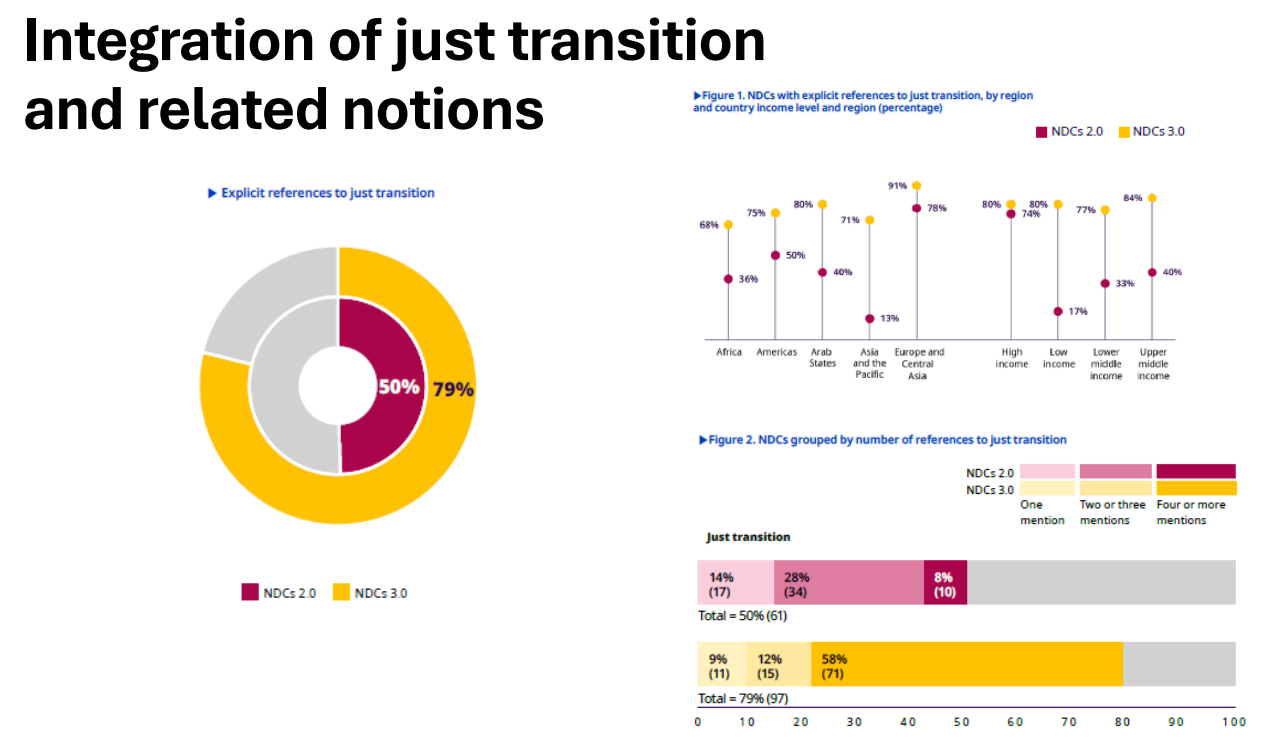
- Another aspect considered is the number of references to just transition within NDCs, as this provides an indication of the weight attributed to the issue within the policy document.
- Not only has the number of countries referencing just transition increased, but the depth of engagement has also grown. The majority of countries that integrate just transition now include four or more references, indicating that the issue is addressed in greater depth rather than as a one-line mention.
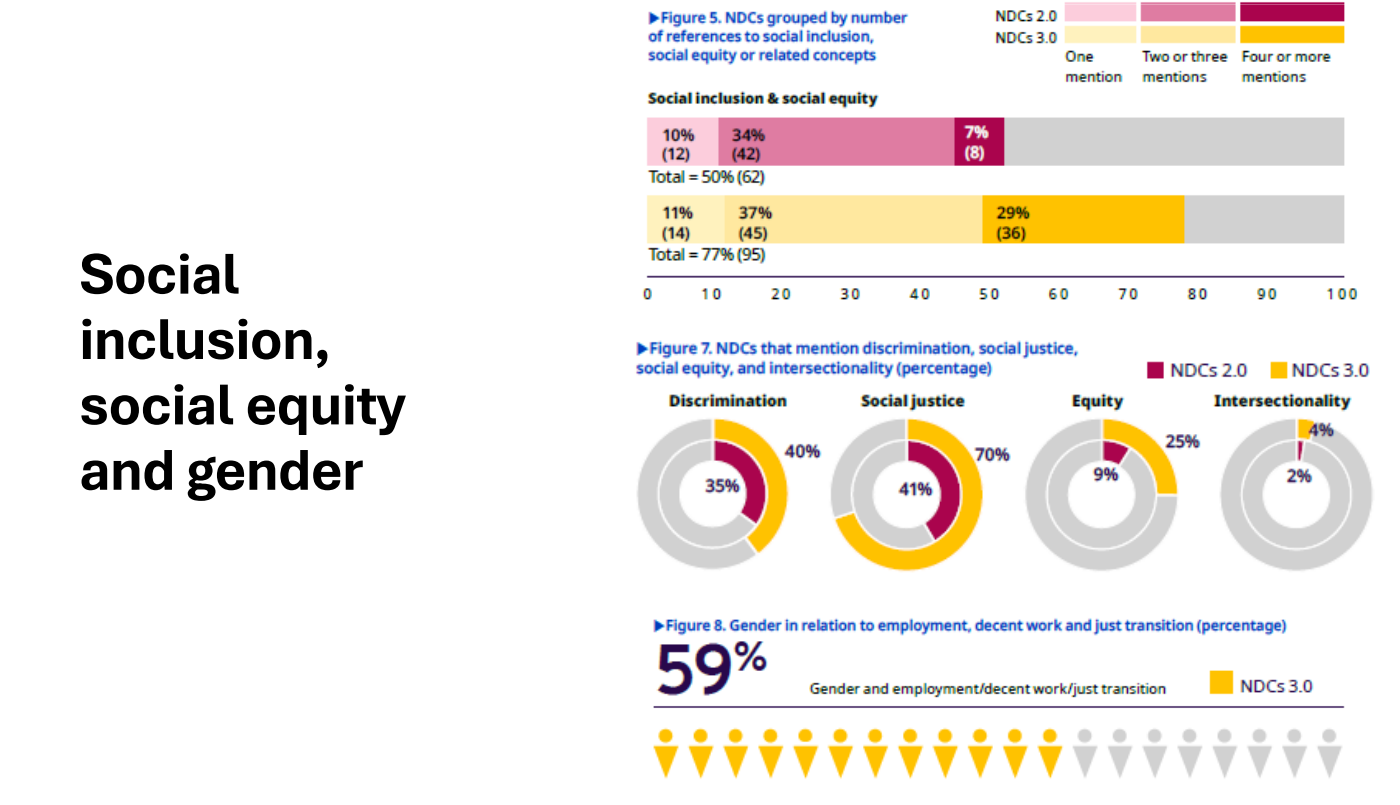
- Another integral dimension of just transition is social inclusion, social equity, and gender. Significant uptake is observed here as well. Around 70% of NDCs now refer to social equity, social justice, or similar concepts, with explicit mentions of social justice present in 70% of NDCs. This reflects a clear upward trend, often with substantive content.
- This year, an additional element was introduced by examining gender specifically in relation to employment, work, and just transition, not gender in general. The findings show that 59% of the current round of NDCs explicitly link gender considerations to just transition and labor markets.
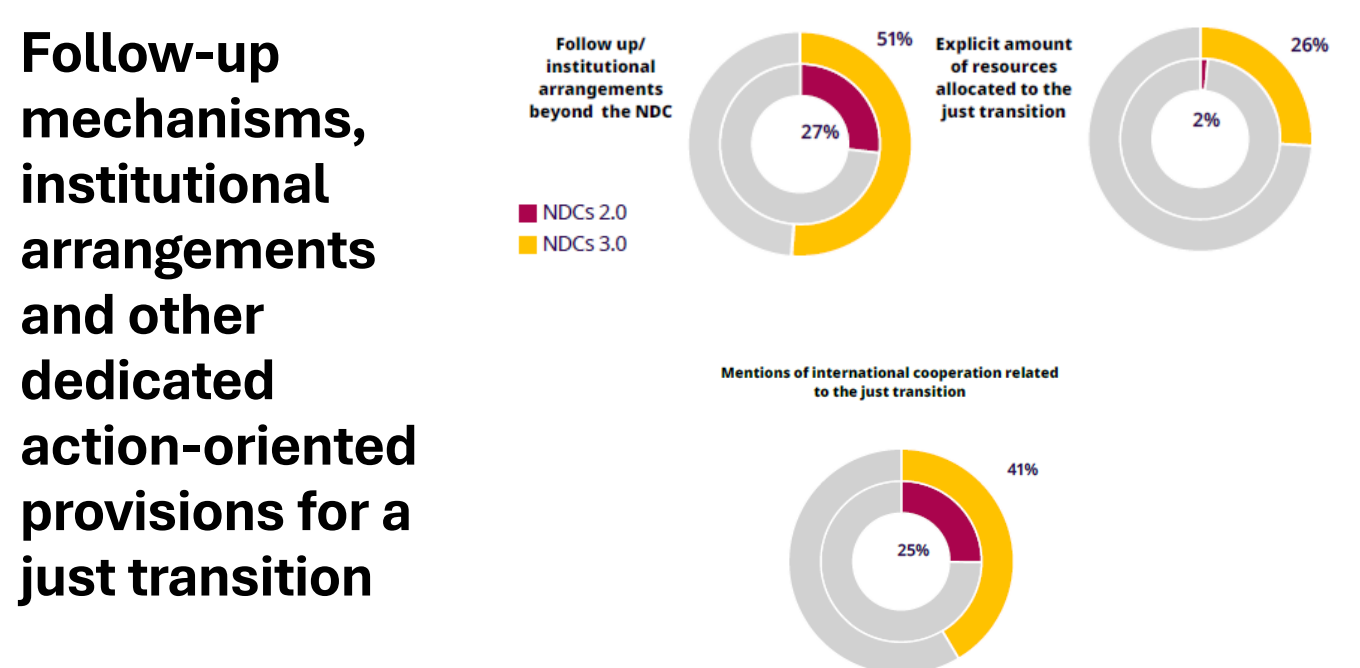
- Beyond explicit references, the analysis also considered how far countries go in making provisions that pave the way for implementation. Action-oriented provisions related to just transition were therefore examined. In particular, references to follow-up or institutional arrangements dedicated to just transition, such as frameworks, strategies, boards, or committees, were assessed. Over half of NDCs now include references to such arrangements, representing a significant increase.
- Explicit references to resources allocated for just transition within NDCs were also examined. While this remains below one-third of NDCs, the increase is significant: more than tenfold compared to the previous round. Mentions of international cooperation for just transition have also increased and now exceed 40%.
- Another important aspect of the analysis concerns the extent to which NDCs address the different policy areas outlined in the ILO Guidelines. These linkages to policy domains are essential for giving effect to just transition commitments and for delivering decent work outcomes through climate policies by ensuring coherence with employment and social policies.
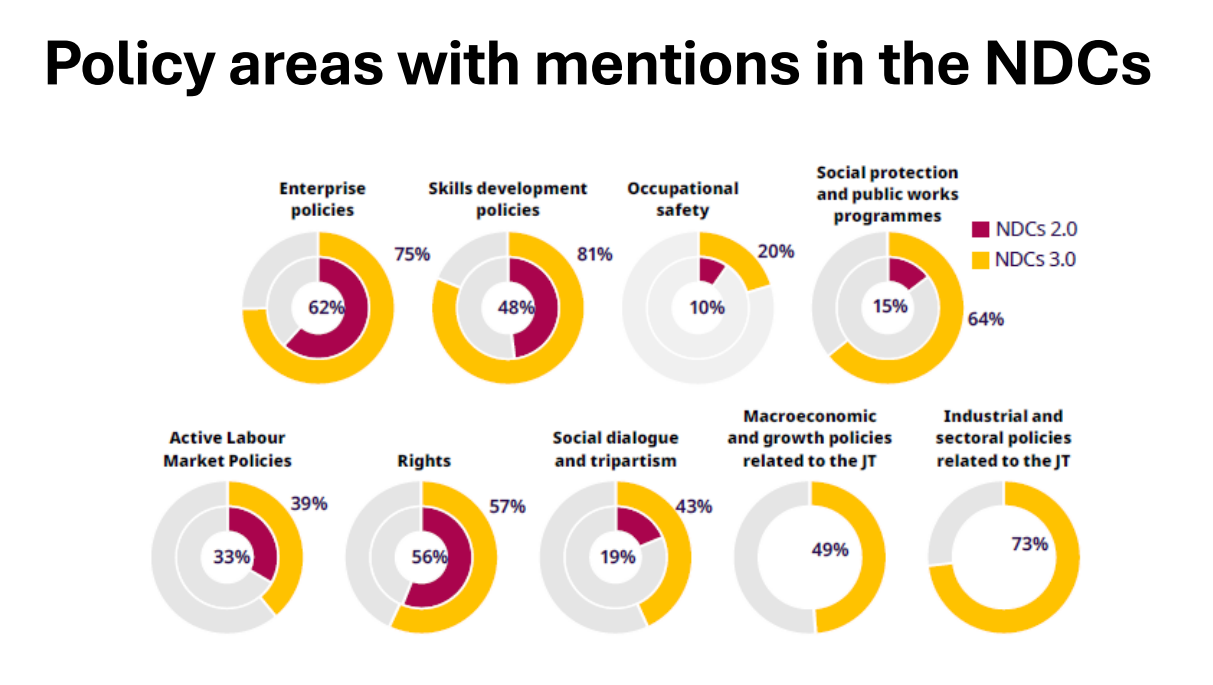
- Macroeconomic, growth, industrial and sectoral policies were also examined in relation to just transition. Around 50% of NDCs include macroeconomic policy references linked to just transition, and 73% include sectoral or industrial policy references.
- The analysis further breaks down policy areas into specific provisions and instruments, including enterprise support measures, skills development initiatives, sectoral focus, references to TVET and other education systems, and various social protection measures, including those targeting low-income households. These findings provide insight into how just transition policy provisions are articulated in practice.
- To conclude, findings related to ILO’ support for NDCs in the context of just transition were also examined:
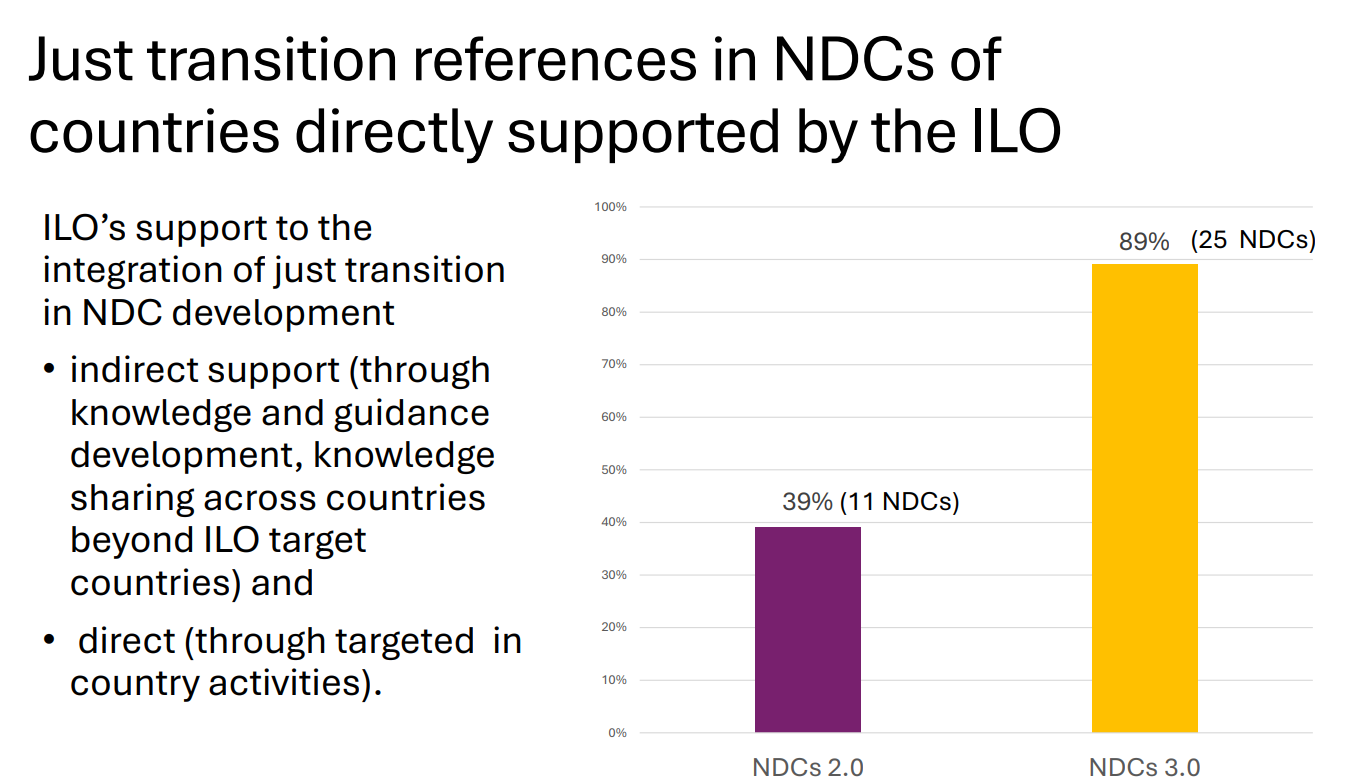
- Finally, regarding ILO support, targeted assistance provided to countries was examined. Among the 28 countries that submitted their NDCs by 30 November and received ILO support, the share of NDCs with explicit references to just transition increased from 39% to 89%. This reflects strong collaboration and provides a solid basis for moving toward implementation.
Mapping just transition in NDC 3.0: global trends across 123 countries
Q&A
Celine PEYRON BISTA | Social Protection and Employment Policy Specialist, International Labour Organization
- It is encouraging to see how social protection has gained more importance in the NDCs.
- At the same time, there is a strong sense that the symbiosis between social protection and climate action remains largely untapped, and that much more can be done.
- When thinking about social protection and climate, the first policy instrument that often comes to mind is the ad hoc response to climate disasters through cash transfers. However, this is not the only measure that exists within the area of social protection to strengthen the link between social protection, just transition, and climate action.
- Currently, only half of the global population has access to at least one social protection benefit. When looking at the 20 countries most affected by climate change, only 8% of the population has access to social protection. This clearly illustrates how much more can be done to improve the role of social protection in supporting climate action.
- A few concrete examples help illustrate how social protection measures can be linked more effectively to climate action:
- Mitigation: in countries like Spain, Germany, and South Africa, when the transition from the mining sector to a greener economy was undertaken, social protection measures such as unemployment benefits, combined with reskilling policies and early retirement options, were deployed by governments to support the transition.
- Use of social protection to support households when energy subsidies are removed: this is an important measure that has been observed in many countries, including Egypt and Senegal.
- Adaptation is a domain where it’s clear that social protection can support adaptation policies. The link between climate change and its impacts on health is increasing worldwide. A concrete example can be seen among Nepali workers returning from Gulf countries, where rising cases of kidney failure have been observed. This illustrates how heat stress directly affects workers and, as a result, has implications for the social and health policies that governments need to put in place to support those workers.
- Other examples can be found in the agricultural sector. In countries such as Nicaragua and Paraguay, cash transfers have been deployed together with skills development programmes and subsidies to introduce new technologies, diversify production, and move toward more nature-based solutions.
- Social protection is also an important instrument for ensuring public acceptance of climate policies. This is crucial, as social protection helps ensure that everyone is included in the transition in an equitable manner, while protecting workers and supporting enterprises through the transition.
- There is strong appreciation for the expansion of references to social protection in NDCs. The key question now is how to move forward with implementation. As part of efforts to support NDC preparation, two guidance notes were developed to explain the interaction between social protection and climate.
- These were developed under the Task Force on Social Protection and Climate Action, led by Germany and the World Bank. The contribution of BMZ to these advocacy efforts is particularly acknowledged.
- One of these guidance notes is primarily addressed to social protection practitioners, while the other is aimed at climate actors. Moving toward implementation, there remains a strong need to support countries in strengthening their social protection systems.
- This includes continuing to guide reforms and the extension of social protection in line with internationally agreed social security principles, and through sound social dialogue with workers’ and employers’ representatives.
- Strengthening social protection systems remains essential. At the same time, there is a need to think collectively about how these systems can evolve from responding primarily to crises and natural disasters toward a more comprehensive approach.
- This means placing social protection at the core of coherent and comprehensive policy frameworks, alongside employment policies, structural development policies, and climate objectives.
Q: If we updated legal or statistical theory to make things more effective and efficient, there may come a point where the frequency, recency, or number of mentions of a concept would no longer determine its importance or validity. I just wanted to highlight that. How is targeted support funded?
Camilla ROMAN
That is why we don’t look at frequency alone. The frequency of mentions is just one aspect, and it is considered alongside whether there are action-oriented provisions, integrated measures, dedicated frameworks, and so forth. So it should not be looked at in isolation but as part of the broader discussion on how just transition is articulated in NDCs.
The reason we look at this dimension is that there are differences in how policies are currently formulated. For example, saying “we recognize that just transition is important” is different from having a full section on just transition or having it integrated across different actions and sectors. Examining this helps us see how the just transition has been mainstreamed and is not simply an acknowledgement.
Regarding support, we are fortunate to collaborate with various funding partners who place strong emphasis on NDCs, including CEDA, BMZ, the French partnerships, and others. Their contributions have been pivotal in supporting countries in developing NDCs that integrate just transition.
Perspectives from Member States and Constituents
Olga STRIETSKA-ILINA | Head Future Skills Unit, International Labour Organization
- In areas where we have invested significant efforts to support countries in formulating NDC 3.0, 81% of countries now mention skills development. However, less than half of those mentioning these measures formulate them in an actionable way. The question, therefore, is to what extent what is on paper is simply documented recognition – which is already a step forward – or whether there are concrete steps planned for implementation.
- The objective of this session is to focus on employment and decent work policy measures, as well as just transition commitments. We aim to understand how social dialogue can be leveraged in the implementation or was leveraged in the formulation of NDC priorities, how countries are advancing their just transition plans, and what lessons can be learned from these experiences.
Mohammad NAVID SAFIULLAH | Additional Secretary, Ministry of Environment, Forest and Climate Change, Bangladesh
- The concept of just transition was first coined in the 1970s by Tony Mazoki, a US labor and environmental activist, to protect workers’ rights and livelihoods. It gained worldwide recognition after being included in the preamble of the Paris Agreement.
- Since then, a growing number of countries are incorporating just transition action strategies to achieve ambitious climate goals. It is a shift towards a greener economy that is fair and equitable, guided by the principle of common but differentiated responsibilities and avoiding disproportionate risks to countries or communities.
- Just transition is firmly embedded in our country’s NDC3, reflecting our commitment to sustainable and inclusive growth. It is a shift towards a low-carbon climate resilient green economy by reducing emissions.
- By reducing emissions in the transport and industry sector, expanding renewables and improving energy efficiency with a focus on strengthening adaptation and applying nature-based solutions.
- Our just transition is people-centered. Bangladesh prioritizes protecting our workers, empowering communities and supporting the vulnerable.
- It is based on applying nature-based solutions and it prioritizes protecting our workers, empowering communities and supporting vulnerable groups while creating green jobs, skills development and innovation, ensuring that climate actions benefit everyone and leaving no one behind.
- Our NDC3 provides a road map for an ambitious, fair and just transition, building resilience and creating opportunities for current and future
- For the successful implementation of our NDC, the government of Bangladesh is emphasizing aligning the policies with climate and development goals for ensuring coherence and effectiveness.
- Strengthening institutional frameworks for coordinated action across sectors and levels.
- Mobilizing adequate finance and resources to support mitigation, adaptation and green investments.
- Building technical and human capacity to enable effective planning and execution.
- Engaging stakeholders inclusively, including communities, workers, and vulnerable groups.
- Prioritizing social protection and skills development to ensure an equitable and just transition.
- And monitoring, evaluating, and regulating actions to ensure progress towards targets and sustainable outcomes.
Kay SEALY | Deputy Permanent Representative, Permanent Mission of Barbados to the United Nations and other International Organisations at Geneva
- Barbados’s NDCs outline ambitious mitigation and adaptation goals with clear implications for decent work and a just transition to a low-carbon, resilient economy.
- Importantly, Barbados’s NDCs expressly acknowledge the need for a just transition, one that is inclusive, equitable, rooted in social justice, while being mindful of the diverse needs of society.
- We are committed to ensuring that any climate action supports workers and communities as the country shifts towards renewable energy, sustainable industries, and a green and blue economy.
- Collaboration with partners such as the ILO under the Partnership for Action on Green Economy (PAGE) to align climate and labor priorities, policies, and cultivate decent jobs in emerging sectors is critical.
- As such, recent national dialogues and symposiums have emphasized just transition and job creation, advocating for reskilling, upskilling, social protection, and targeted education to ensure that workers are not left behind are all part of our strategy.
- The NDCs of Barbados further anchor this commitment, along with the decent work country program in Barbados 2025 – 2030, which was coordinated with the ILO, prioritizing inclusive employment, social dialogue and rights at work.
- Just transition is therefore treated as integral to the development of our strategy rather than a standalone environmental measure.
- Barbados’s updated NDC embeds a just transition across these main domains:
- Energy and transport decarbonization, where targets for renewable energy, electrified transport, and energy efficiency create new demand for skills standards and regulatory reform.
- Blue and green economy development, including nature-based solutions, ecosystem restoration, coastal resilience, adaptation, and disaster risk management, with strengthened resilience measures and recognition of differentiated vulnerabilities among workers in formal enterprises and frontline communities.
- Institutionally, just transition is operationalized through a social dialogue ethos in Barbados’s tripart tradition tripartite traditions and complemented by sectoral consultation processes.
- Linkages with social protection and workforce development frameworks exist.
- Implementation has advanced in phases, with progress most visible in regulatory reforms, programmatic pilots, and institutionalization and coordination.
- Key reflections:
- Just transition language now features in national economic, energy, and social policy documents.
- Early initiatives have targeted training for renewable energy installation, electric mobility, and climate-resilient construction.
- While Barbados has championed global climate finance reform, for example, through the Bridgetown Initiative, domestic implementation still relies on blended finance and concessional windows that are not consistently aligned with labour and social inclusion objectives.
- Implementation increasingly acknowledges informal workers and MSMEs in tourism services, agriculture, and fisheries.
- Tracking the social outcomes of climate action remains nascent, and improved statistical capacities and monitoring frameworks are emerging as priorities.
- In conclusion, the NDC frames just transition as a pathway to climate resilience, economic diversification, and social justice.
- The country has demonstrated leadership in global fora and early-stage institutional alignment domestically.
- The next phase of implementation hinges on strengthening social protection tools for climate impacts, accelerating training and labour market transitions, and securing climate finance that explicitly supports equitable transformation.
- As a SIDS, this experience illustrates how NDCs can function as an integrated development agenda rather than solely as an emissions instrument.
Olga STRIETSKA-ILINA
- A key takeaway is how investments in new and emerging sectors can be linked with workforce support measures, not only for workers at risk of job loss, but also for those already active in these sectors, through upskilling and reskilling pathways for workers transitioning from declining industries. This linkage is essential.
- Another important concept raised is mainstreaming. While targeting specific sectors is necessary, a just transition ultimately needs to be approached economy-wide and society-wide.
- Mainstreaming just transition principles across all sectors reflects a shift in mindset and represents a form of institutional and policy innovation, ensuring that responsibility does not rest with isolated initiatives alone.
- Institutionalization is equally critical. If just transition measures are to be sustainable and systemic, they cannot remain one-off projects. Strong institutions are needed to embed resilience into the system, ensure long-term continuity, and support coordination across public and private actors, as well as across different sectors of the economy. Representation and inclusive governance are therefore central.
- Finally, data availability and capacity emerged as a key constraint. Strengthening the ability to collect, analyze, and use data – particularly in the context of climate finance, is highly actionable and urgently needed.
- Climate funding for “soft measures,” such as just transition policies, is still at an early stage, making data systems and analytical capacity foundational for progress going forward.
Marcela COEN MORAGA | Minister-Counsellor, Permanent Mission of the Republic of Costa Rica to the United Nations Office and other international organizations in Geneva
- Costa Rica has a very strong framework of public policy instruments focused on consolidating a sustainable development model, decarbonization and just transition.
- For instance, Costa Rica National Decarbonization Plan (2018–2050) serves as the backbone of NDC implementation and functions as a core just transition instrument, because it links sectoral decarbonization pathways like transport, energy, agriculture and waste with job creation, skill development and transformation and inclusive mobility.
- It also embeds social safeguards and strong inter-institutional coordination to ensure climate policies align with employment, education and social protection goals while avoiding disproportional impacts on low-income households.
- In October 2025, we launched the report of Costa Rica’s 2025 2035 NDCs that centers just transition as a fundamental condition and a transversal criterion for all climate change and governance.
- This institutionalizes just transition through the establishment of a national framework and sectoral roadmaps in key sectors. By linking climate policy with the circular economy and bioeconomy, the NDC seeks to ensure that the transformation maximizes collective well-being and fosters a just and inclusive future for both people and ecosystems.
- Key just transition priorities reflected in the NDC 3.0 include human rights, social justice, and inclusion as cross-cutting principles.
- The NDCs adopt a human-rights-based approach, recognizing that decarbonization and adaptation must improve well-being and reduce existing inequalities.
- The promotion of decent work through green and blue jobs is achieved by integrating climate goals with national employment policy and the decent work agenda. The strategy emphasizes innovation and job creation in renewable energy, sustainable transport, climate-smart agriculture, sustainable fisheries, marine conservation and coastal resilience.
- Skills development and workforce transformation are prioritized through lifelong learning, reskilling, and inclusive access for youth and vulnerable workers, with public training systems aligned to emerging low-carbon and climate-resilient sectors. The National Learning Institute (INA) plays a key role through targeted vocational training and curriculum adaptation in areas such as renewable energy, electrical systems, ecotourism, environmental management, and conservation.
- The NDC also places strong emphasis on social dialogue and participatory governance, highlighting inclusive and tripartite processes alongside the active participation of women, youth and Indigenous peoples in the design and monitoring of climate policies.
- Specific attention is given to ensuring women’s equal access to green and blue jobs and leadership roles through affirmative actions and empowerment measures, while youth participation is institutionalized through mechanisms such as the National Youth Forum on Climate Action.
- Territorial equity and a differentiated approach further frame the transition, recognizing diverse starting points across regions, with particular focus on rural and coastal areas through nature-based solutions, sustainable agriculture, fisheries and ecosystem-based livelihoods.
- Next steps for implementation focus on operationalizing just transition at sectoral and territorial levels, moving from high-level objectives to localized execution.
- Efforts are underway to strengthen labor market data and monitoring by leveraging the national climate change metrics system (SINAMECC), ensuring traceability of progress, including social and gender-disaggregated data.
- In parallel, mobilizing inclusive finance for a just transition remains a priority by aligning the NDC with the National Development Plan and the Public Investment Plan to secure funding for transition costs.
- Overall, Costa Rica’s experience reflects a strong commitment to policy coherence and long-term planning, demonstrating that climate action and social equity are mutually reinforcing when pursued through an integrated, human-rights-based approach.
- The most critical challenge ahead lies in implementation at scale, ensuring that institutions, financing mechanisms, skills systems, and labor frameworks translate this vision into tangible improvements in livelihoods and well-being alongside measurable climate outcomes.
Olga STRIETSKA-ILINA
- The discussion now moves to the next part of the panel, which brings in the perspective of other key actors involved in the formulation and implementation of NDCs: social partners.
- This includes representatives of workers’ and employers’ organizations. Social dialogue and tripartism are reflected in only 19% of NDCs 2.0, but this increases to 43% in NDCs 3.0. The panel will now hear from representatives from two countries; the Philippines and Nigeria, on the key just transition priorities reflected in their NDCs, particularly from the perspective of their organizations.
Eche ASUZU | Principal Assistant General Secretary, Nigeria Labour Congress
- The priority for the Nigerian Labour Congress is to ensure the need for a voice. This has been one of the key lessons from engagement in the NDC 3.0 process.
- Prior to this, Nigeria had communicated its nationally determined contributions (NDC 1.0 and 2.0) to the UNFCCC, but those submissions did not strongly reflect the concerns of trade unions, particularly with regard to just transition. This changed with NDC 3.0.
- Support from the ILO, especially the Nigeria country office, the Country Director and the ACTRAV specialist, was instrumental in ensuring that these priorities – particularly the priority of having a voice – were addressed in the development of NDC 3.0. The need for a voice cannot be overemphasized.
- Meaningful contribution to any process is not possible without identity and recognition.
- A key achievement has been the recognition of workers as stakeholders, to the extent that NDC 3.0 dedicates an entire chapter to the just transition. This chapter addresses core concerns such as decent work, social protection, social dialogue, employment promotion, occupational safety and health, active labour market policie and the importance of coherent macroeconomic policies within the just transition framework.
- From the Nigerian perspective, the absence of workers at the table effectively places them on the menu, which is not an acceptable outcome. The NDC 3.0 process was therefore used to push workers to the forefront of public policy formulation on just transition, with a significant degree of success.
- Among the 25 African countries included in the global mapping report, a notable share of progress can be attributed to work undertaken in Nigeria, alongside efforts in other African countries.
- A further priority is the mainstreaming of the trade union voice. This is essential because climate change is fundamentally a workplace reality. Excluding workers from policy processes weakens outcomes. Those most directly affected by climate impacts must be represented in policy formulation and decision-making. This has been one of the most important lessons from engagement in NDC 3.0.
- Another key priority is evidence-led advocacy. Progress cannot be made without evidence. Strong emphasis has been placed on research, inquiry, and empirical data to support advocacy positions. This proved critical in advancing arguments, particularly at moments when influence depended on the strength and credibility of evidence.
- Several evidence-based initiatives were undertaken, some with ILO support, including comparative studies on different approaches to just transition and their relevance to Nigeria.
- Submissions from the ILO, ITUC, regional bodies and national organizations helped situate Nigeria’s position, particularly with respect to trade unions, and enabled the framing of arguments in ways that resonated with policymakers and institutional gatekeepers.
- Evidence-led advocacy remains essential. The global mapping exercise itself is fundamentally about evidence. The statistics and findings distilled in the report help clarify where countries stand and where they need to go.
- Going forward, processes at national, regional and global levels should prioritize evidence while also mainstreaming voices beyond purely scientific ones. Voices that have historically been marginalized in evidence generation should be included, including within processes such as the IPCC, to ensure that no one is left behind or pushed aside.
- Collaboration and synergy-building have also been central priorities. Advancing trade union positions on just transition required strong partnerships, institutional relationships, and sustained engagement.
- In highly contested policy spaces such as just transition, institutional backing and coordinated advocacy are essential. Media engagement and public communication have also been important tools in advancing just transition issues in Nigeria.
- Looking ahead, capacity building is increasingly critical. While progress has been made over the past year, further efforts are needed as global attention shifts from negotiation to implementation.
- Constituents, including trade unions and employers, need enhanced capacity to understand policy coherence, identify priorities, and engage effectively in implementation processes. Strengthening this capacity will support more informed demands and help advance climate justice.
- Finally, attention must be given to the broader economic and social dynamics shaping climate justice advocacy. This is not solely a climate issue but also one of social and economic justice. The global mapping report clearly shows that Africa lags significantly in climate and just transition financing, receiving only around 4% of relevant initiatives.
- Africa also ranks low in integration with other global processes, reflecting broader challenges related to resource mobilization and development across the Global South.
- The global mapping provides valuable insight into these disparities and highlights the scale of support required.
- In light of the modest achievements at COP30, there is a need for serious consolidation to ensure that the pledged 1.3 trillion in climate finance is directed not only to Africa but also to where it matters most: the workplace, where climate change impacts are directly experienced.
- Elevating the discussion in this way allows climate justice to be addressed alongside broader economic and social transformation, with the aim of achieving social justice for all.
Jose Roland MOYA | Director General, Employers Confederation of the Philippines
- One message emerging clearly from the ongoing NDCs revision is that climate action is not only about emission targets. It is about people, jobs, and livelihoods. NDC 3.0 increasingly recognizes that the transition to a low-carbon and climate-resilient economy must be fair and inclusive, especially for workers and communities that will feel the impacts most directly.
- There is a stronger emphasis on skills development, social protection and stakeholder participation, particularly in sectors such as energy, transport, agriculture and industry.
- At the same time, NDC 3.0 acknowledges a very practical reality for a developing country like the Philippines: ambition must be supported by finance, technology, and capacity building.
- From the perspective of the Employers Confederation of the Philippines, three priorities stand out in considering how NDC 3.0 can be implemented on the ground:
- Alignment with national development priorities and business realities:
- Just transition measures under NDC 3.0 must be coherent with the Philippine Development Plan and sectoral roadmaps, particularly for employers in micro, small, and medium-sized enterprises, which make up more than 99% of Philippine businesses.
- This requires clear and predictable policies, appropriate incentives, and access to affordable clean technologies. Just transition should help businesses remain competitive and protect jobs, rather than create uncertainty or unintended costs.
2. Skills and workforce readiness:
- NDC 3.0 rightly highlights the need to prepare workers for new and emerging green jobs. This preparation must be practical and demand-driven.
- Training and reskilling programmes should be designed jointly with industry, labour organizations, the Technical Education and Skills Development Authority, and education institutions, so that they lead to real employment opportunities and decent work for workers in carbon-intensive or climate-affected sectors.
- Just transition must provide clear pathways to new livelihoods, rather than leaving workers behind as the economy changes.
3. Social dialogue:
- Just transition will not work if it is implemented in a top-down manner.
- Tripartite and bipartite dialogue must be at the centre of implementation, not only as consultation mechanisms but as a means of jointly designing solutions. This is why ECOP entered into the 2024 bipartite declaration on just transition with labour, ensuring that employers and workers jointly manage climate-related change while upholding labour rights and enterprise sustainability.
- In summary, NDC 3.0 sets the right direction from the employers’ perspective. The real test now lies in implementation, translating principles into practical programmes supported by accessible finance, technology transfer, skills development, and structured social dialogue.
- If this is done effectively, just transition can become an opportunity to modernize the Philippine industry, create decent jobs, and build a more resilient and inclusive economy, with businesses and workers as partners in the process.
Robert MARINKOVIC | Adviser for Climate and Green Economy, International Organization of Employers
- It is encouraging to see the evolution and progress of just transition elements in NDCs. Beyond the quantitative aspect, such as the frequency of references, the qualitative integration of just transition into policies is increasingly visible.
- The next step is to track implementation on the ground. At IOE, this is a positive and interesting moment, as new trends in just transition measures and policies are being implemented.
- Multilateral processes increasingly address socioeconomic impacts, labor issues, and other related elements in climate discussions, which represents an important development.
- Progress is visible both at the national policy level and at the company level. Many companies are now putting workforce development plans and specific just transition initiatives in place, including training and reskilling programs to support workers.
- An example at the national level is South Africa, where the government recently launched a skills desk providing guidance and resources for reskilling, paired with initiatives in specific regions offering targeted training programs.
- Social dialogue remains a key element. Employers, organizations, trade unions and workers must be involved from the outset in developing plans, measures and policies, and continue to engage throughout implementation. This ensures that measures are effective and reach their intended targets.
- At IOE, efforts focus on engaging members to work closely with governments, fostering dialogue and collaboration. Some countries have made strong progress, but work remains to be done.
- Companies also have a crucial role and some have already implemented stronger measures. Financing is another critical element. For example, last year, the Just Transition Finance Lab highlighted cases of collaboration with multilateral development banks and other financing institutions, providing lessons and examples for enabling the transition through targeted funding.
- The work being done through IO is crucial. Past workshops, such as the one in South Africa last year, have advanced technical assistance and collaboration.
- Continued efforts will further support the implementation and scaling of just transition measures worldwide.
Bert DE WEL | Global Climate Policy Coordinator, International Trade Unions Confederation
- Without consultation with unions, a transition cannot be considered just.
- Social dialogue is the backbone of any just transition process and is grounded in fundamental labor rights, including freedom of association, the right to organize and collective bargaining.
- Several countries provide strong examples of this approach, including Bangladesh, Barbados, Nigeria, and the Philippines. However, many countries have not engaged with unions, and in those cases, the transition cannot be considered truly just.
- The growing adoption of just transition concepts by more countries is encouraging, yet challenges remain.
- References to decent work are taken seriously in only 13 countries out of 198 UNFCCC parties, reflecting the concerns of workers.
- Climate policies often fail to deliver adequate protection, with heat stress and other hazards increasingly affecting workers. At the same time, governments sometimes scale back climate measures instead of making them more ambitious.
- While renewable energy jobs continue to grow, the rate is slowing, and new jobs are not always decent. Workers transitioning out of fossil fuel sectors face major challenges, especially given the lack of social protection for many. Despite these issues, the report highlights progress and provides opportunities to improve future policies.
- The intervention of Mr. Moya from the Philippines emphasized that climate action is fundamentally about people, jobs, and livelihoods.
- This perspective aligns with the UNFCCC decision to establish a Just Transition Mechanism, aimed at supporting countries in integrating just transition policies and improving access to finance.
- Social partners, governments, unions and employers must work together through social dialogue to deliver better, more effective climate policies.
- This collaborative approach is essential for ensuring that just transition measures are implemented effectively and inclusively.
Q&A
Q: Sean O’Connell, UNDP Geneva
First, congratulations to the ILO for this important mapping; an essential piece of work that lays the foundation, not just for NDC 4.0 but also for the implementation of NDC 3.0. Grounding the mapping on explicit references is crucial, as it provides actors with concrete elements to work with and ensures accountability for the commitments made. In that context, the World Bank and UNDP recently published a report on the legal foundations for just transitions, highlighting that NDCs and just transition processes do not happen in a vacuum. They operate within existing obligations related to the environment, climate, labor, and human rights. UNDP is conducting a complementary assessment to the ILO’s mapping, focusing on human rights integration in NDCs 3.0.
The question is directed to Marcela: Costa Rica has shown strong, explicit references to human rights in its NDC 3.0, similar to Mexico, the Marshall Islands, and Vanuatu. How central is a human rights framework to Costa Rica’s NDC, and what does it mean now as the country moves toward implementation?
Comment, Marcela COEN MORAGA
Costa Rica integrates a human rights-based approach across all public policies and this framework is central to the implementation of the NDC 3.0 for 2025–2035. Just transition is treated as a consolidated principle, guiding both design and implementation, and is closely aligned with governance structures, the national development plan, and the public investment plan.
The approach emphasizes inclusion of vulnerable communities, ensuring that no one is left behind in line with the SDGs. Human rights considerations are essential because climate action, ecosystems, and governance ultimately affect people’s well-being. Special attention is given to gender equality, indigenous peoples, Afro-descendant populations, youth and other marginalized groups.
All these elements are integrated into a national policy framework that ensures all affected groups have a voice at the negotiating table, reflecting the principle that those impacted by climate measures must be part of shaping them.
Key Takeaways
NDCs and just transition measures do not exist in a vacuum: they must be linked to national development priorities, sectoral plans, and ideally integrated into individual policy areas such as employment, skills, and social policies. Effective coordination is essential, as is the active involvement of all stakeholders, including social partners, employees, workers and representatives of vulnerable groups.
Policies should be targeted, with clear indicators for measuring achievement and monitoring systems need to be established to track progress. Data collection is crucial, as is ensuring that climate finance flows to support just transition objectives.
Looking Ahead: Supporting Implementation and Building a Global Just Transition Policy Gateway for Advancing a Just Transition
The Just Transition Gateway is intended as a platform to gather international experience and make it available to countries. It aims to support the important work being done on just transition, in partnership with colleagues across the UN system and beyond.
Alice VOZZA | Just Transition Policy Specialist, Priority Action Programme on Just Transitions, International Labour Organization
- The urgency of creating a just transition policy gateway comes from hearing the stories, like we have heard in this session, from different countries.
- There is an urgency to create a repository of examples of concrete policies, strategies and actions that can take place on the ground and be originated by different governments, different ministries within governments but also by other stakeholders and particularly by our social partners.
- Therefore, together with Germany, we have created a platform through the invention of a platform, it is not yet online as it is under finalization and will likely be launched in March/April 2026.
- The idea of the gateway is to answer two fundamental questions; how does a just transition policy look like and how can that be implemented and put into practice?
- The gateway is bridging what we were discussing this morning – we’ve heard different examples; we have appreciated that just transition policies can translate into different shapes and forms depending on the country’s priorities and development plans and depending on who is originating the policy, but there is a lot of urgency regarding how we can make them actionable on the ground.
- The portal is structured around two features:
1. The database of policies that can be browsed by countries. We have already collected several policies from different countries we’ve been working with, but also countries that have reached out to share their experiences. On government initiatives but also initiatives from particular social partners, workers and employers. Through this database, it becomes possible to see concretely what it means to implement just transition actions and policy measures.
- A clear methodological definition of just transition policies underpins the platform, covering national, sectoral, and subnational policies, as well as specific action plans and frameworks. These include legal frameworks, implementation guidelines, and a range of instruments designed to translate commitments into action.
- In the context of NDC 3.0, the platform aims to transform the just transition commitments outlined in the NDC into concrete, operational measures. Examples from different countries will be showcased on a rotating basis, with contributions from those willing to share their experiences.
- Beyond documentation, the platform also emphasizes the storytelling behind these policies.
- The focus is not only on the final texts but on what happened behind the scenes to make them possible: the negotiations, discussions, agreements between different parties, social dialogue mechanisms, key promoters and stakeholders, and the champions who helped drive these processes forward.
- A dedicated section of the database highlights these country and stakeholder stories, along with their objectives and timelines for implementation.
2. The platform is intended to be more than a database. A rapid response mechanism is planned alongside it. By capturing and analyzing these experiences, the platform will also help identify the types of support countries need to move from commitments to practice.
- Through partnerships and collaboration with different organizations, this mechanism can provide timely support in the form of country-to-country cooperation, organizational assistance, technical advice, policy support, dialogue and other initiatives that facilitate implementation.
- This initiative has been made possible with the support of the Federal Ministry for Economic Cooperation and Development of Germany.
- As the gateway evolves, it will remain open to partnerships and collaboration. Updates will be shared on the official launch date and on the concrete mechanisms that will enable participation.
Closing Remarks
Fatih ACAR | Senior Expert, Permanent Mission of the Republic of Türkiye to the United Nations Office at Geneva and other international organizations in Switzerland
- We all have common ground and it’s the rapidly changing world of work, especially in these times with the new technological and artificial intelligence; a just transition is more important than ever.
- Regarding this, we are pleased that our discussions on hosting the COP31 resulted in a balanced and mutually beneficial arrangement with Australia for agreed modalities for COP31 that reflect our shared responsibility and our joint commitment to multilateral climate action, as well as the strength of our deeply rooted bilateral relations.
- As per the model, Turkey will host COP31 as well as its Leaders Summit. We will assume the COP31 presidency, and a representative of Australia will be the president of the negotiations.
- His Excellency, Murat Kurum, Minister of Environment, Urbanization and Climate Change, was appointed as COP31 president-designate.
- The pre COP meeting will be held in one of the Pacific Island countries, as Australia would like to highlight the vulnerabilities of the Pacific region. This is also in line with Turkey’s priority to enhance the resilience of vulnerable regions, with the importance we attach to our relations with the Pacific Island states.
- We are confident that our model of cooperation will serve as a precedent, not only for climate action but for addressing other global challenges at a time when multilateralism is under significant pressure.
- For Turkey, climate change is a cross-cutting issue linked with development, urbanization, and social resilience.
- Turkey attaches particular importance to the social dimension of climate action.
- As a member of the coordination group of global coalition for Social Justice and an initiative of the international organization, Turkey actively contributes to advancing an inclusive and equitable policy framework at the global level.
- In line with this segment, Turkey continues to play an active role as a member of the advisory board in work related to just transition, which constitutes the key pillar of the coalition. These efforts reflect our commitment to ensure that ecological transition processes are firmly grounded in social justice, decent work, and the principle of leaving no one behind.
- Together with Australia, we will not spare any effort to make COP31 a success and equally in climate action
- Looking ahead to COP31, Turkey is actively shaping its national strategy on just transition and expects to finalize it this year.
Moustapha Kamal GUEYE | Director, Priority Action Programme on Just Transitions, International Labour Organization
- We all look forward to COP31 in Türkiye, where all the very good outcomes of COP30 that took place in Brazil, particularly the outcomes on the just transition work program, will be taken forward.
- This brings us to the end of this session, where we discussed advancing decent work and social justice in the NDC 3.0 for a just ecological transition.
- It was a very insightful dialogue, and we have been able to support many of you in this room and online, and member states of the ILO in your efforts to bring decent work and social justice in the context of ecological transition.
Photo Gallery
Documents
Links
- Just Transition Policy Gateway
- ILO Guidelines for a Just Transition towards Environmentally Sustainable Economies and Societies for All
- Mapping just transition in NDC 3.0: global trends across 123 countries | ILO | 24 December 2025
- Integrating skills for just transition in Nationally Determined Contributions (NDCs) 3.0 | ILO | March 2025
- Leveraging NDCs as a vehicle of a just transition in ambitious climate action | ILO | 13 August 2024