
Événement Ciné
From Science to Action: Protecting the Amazon from Mercury Pollution | Minamata COP-6 Special Event
02 Nov 2025
17:30 – 20:00
Lieu: CICG | Room A
Organisation: Convention de Minamata sur le Mercure, Geneva Environment Network
The sixth meeting of the Conference of the Parties to the Minamata Convention (COP-6) will convene in a world where urgent environmental action must be matched by inspiration and innovation. To amplify the human stories behind mercury pollution and to bring hope, science, and meaningful dialogue to the forefront of the COP-6 agenda, the Secretariat, in coordination with the Geneva Environment Network, is organizing special events featuring globally recognized voices in nature conservation, policy, and science.

About this Event
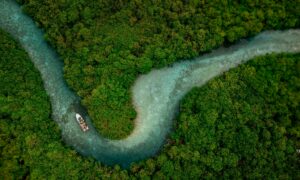
The Amazon basin is home to extraordinary biodiversity and to communities whose lives are deeply tied to the river. Yet illegal gold mining and mercury pollution pose serious threats to both ecosystems and human health.
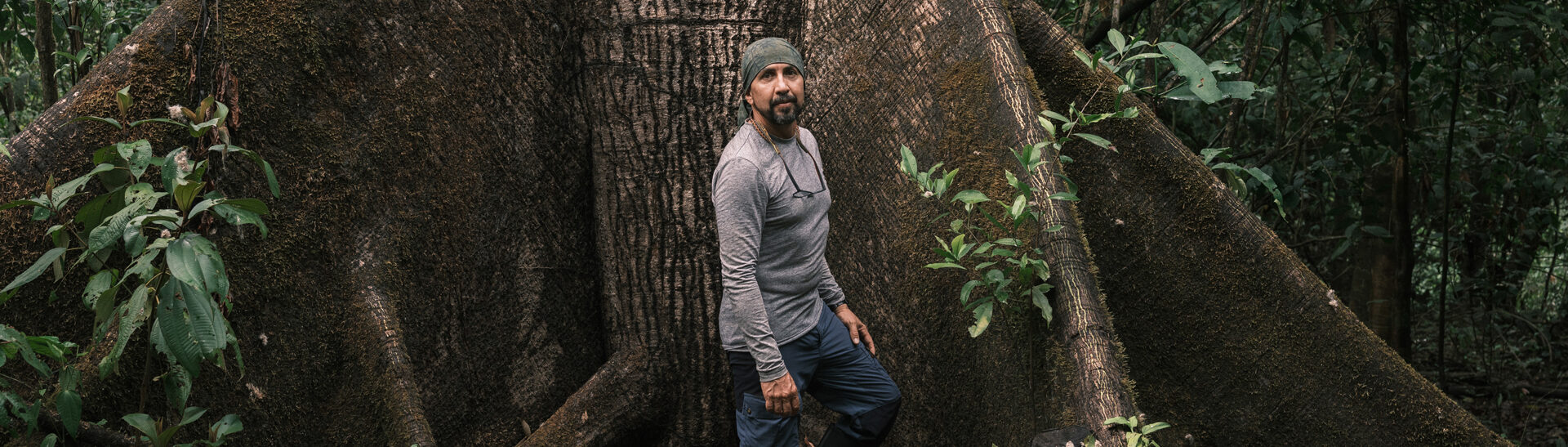
This special event highlights the work of Fernando Trujillo, renowned conservation scientist and NatGeo Rolex Explorer of the Year. Through his decades of research on pink river dolphins and his advocacy against mercury pollution, Fernando exemplifies how science can inspire action and support decision-making.
Adding historical perspective, Aileen Mioko Smith—Executive Director of Green Action in Japan and co-author of Minamata (1975) with photographer W. Eugene Smith—will connect the legacy of Minamata disease to current challenges in the Amazon and introduce the COP-6 photo exhibit Minamata: Photographer’s Eye Project. Aileen Mioko Smith is also the Recipient of the Nuclear-Free Future Award (2014) in recognition for her contributions to education and activism in the anti-nuclear movement.
The dialogue will be followed by the screening of the documentary Amazon, the New Minamata?, which portrays the impacts of mercury on Indigenous Peoples of Brazil’s Tapajós River. The film reveals how mercury contamination threatens Amazonian communities with the specter of Minamata disease, while following the Munduruku people’s struggle to defend their ancestral territory from the destructive effects of gold mining.
By bringing together science, testimonies and historical experiences, this session will encourage reflection on how lessons from the past and knowledge from the field can guide current and future action against mercury pollution.
The event will begin with a light reception and a networking opportunity.


Film Screening
The event will include the screening of Amazon, the New Minamata film. The documentary reveals how mercury contamination threatens the inhabitants of Amazonia with the shadow of the Minamata Disease, as it follows the saga of the Munduruku people to contain the destructive impact of gold mining in their ancestral territory.
The film was released in October 2022.
Director | Jorge Bodanzky
Written By | Tiago Carvalho and Nuno Godolphim
Language | Portuguese
Runtime | 76 min
Trailer
Minamata COP-6
The sixth meeting of the Conference of the Parties to the Minamata Convention on Mercury (COP-6) will take place in Geneva, from 3 to 7 November 2025. As part of the preparation for the meeting, online events will take place from 13 to 17 October 2025.
Speakers
André SIMAS MAGALHÃES
Minister-Counsellor, Permanent Mission of Brazil to the United Nations in Geneva
Fernando TRUJILLO
Rolex National Geographic Explorer

Aileen Mioko SMITH
Executive Director, Green Action in Japan | Photographer and co-author of Minamata (1975), with W. Eugene Smith, and founder Green Action Japan
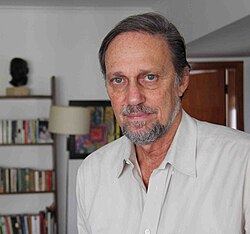
Jorge BODANZKY
Film Director
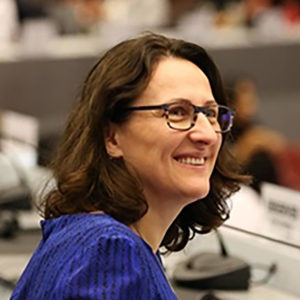
Monika STANKIEWICZ
Executive Secretary, Minamata Convention Secretariat
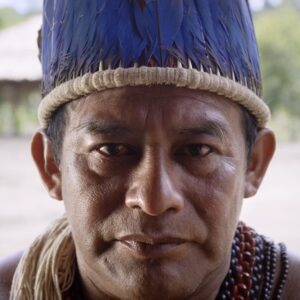
Jairo Saw MUNDURUKU
Indigenous Leader, Munduruku people and Chief, Sawre Aboy Village in the City of Itaituba
Highlights
Video
Summary
Monika STANKIEWICZ | Executive Secretary, Minamata Convention Secretariat
Provides deep gratitude to all the remarkable speakers: « Each of you really inspired me—and I’m sure you will also inspire our audience to do everything we can to make mercury history. »
- Fernando Trujillo — I would say your passion and optimism really give me hope that we can protect human health and also preserve biodiversity.
- Eileen Mioko Smith — We met in Minamata, and my meeting with you really impacted me in many ways. I feel that you embody respect and human dignity, and it comes from this profound understanding that environmental crises such as what happened in Minamata are not only about the environment, but have many more effects—and lasting effects.
- Andreas Magalhães — Thanks to you and to the government of Brazil, for championing the rights of Indigenous Peoples on the global level, and also for Brazil’s leadership on the full and meaningful engagement of Indigenous Peoples in the work of the Minamata Convention.
- Jorge Bodanski — Thank you for creating this powerful documentary. I think no one can really stay indifferent to the tragedy caused by illegal gold mining in the Amazon after watching the film.
- Jairo Saw Munduruku, the Indigenous leader — We look forward to hearing your message, grounded in the lived experience of the Munduruku people, who have suffered through the crisis caused by illegal gold mining in the Amazon.
I had the privilege of meeting Alessandra Korap, who is featured in the film. I approached her after watching it because I was really moved. She said, “Good. Now you can do something about it.” Since then, these words are staying with me—and I hope also that what you will hear today from inspiring speakers and from watching the documentary will also stay with you.
I would like to simply wish you an inspiring and purposeful evening, which I think will also set the scene for the negotiations that will start next Monday to achieve the next milestones under the Minamata Convention.
Fernando TRUJILLO | Rolex National Geographic Explorer
Today, I will take you on a journey through the Amazon, focusing on the river dolphins.
Mercury and gold mining in the Amazon
Mercury is an invisible threat, but it’s everywhere. I’ve had the pleasure of working in the Amazon for the last 40 years, and I’ve witnessed its deterioration over time. It’s not just one threat—it’s a combination of threats. We produced a map with National Geographic to illustrate the impact of illegal gold mining, dams, and agriculture. We’ve already lost millions of square kilometers of the Amazon—almost nine times the size of Switzerland. These threats have been exacerbated by economic activities in the region.

I’m from Colombia, which unfortunately has the highest mercury contamination per capita in the world. Mercury is a threat not only to humans but also to animals and environmental health. The story of mercury in the Amazon dates back four centuries of gold extraction. We estimate that nearly 200,000 tons of mercury have been dumped into the rivers of the Amazon.
Testing mercury levels in humans is complex and sensitive, so we looked for alternatives, specifically aquatic vertebrates. This is a sensitive topic that some governments and politicians avoid. For example, telling people they can’t eat fish in a region like the Amazon is controversial. Implementing governmental action to solve this problem is challenging. Solutions are complex, but I’ll provide some context.
Our planet is facing serious conflicts. Not since World War II have we seen such a situation. Markets are volatile, and the rising price of gold puts more pressure on regions like the Amazon. We have substantial evidence of mercury pollution among Indigenous Peoples and dolphins.
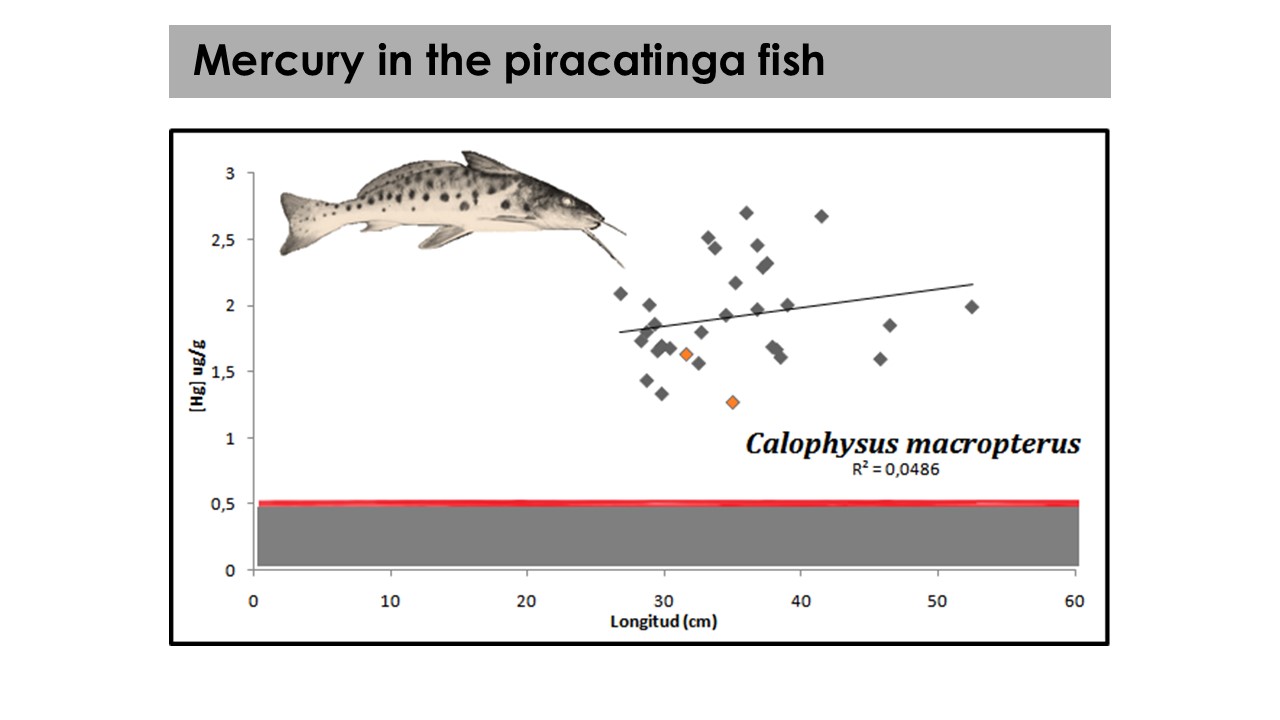
We selected dolphins for study because they are top predators in the Amazon. They face numerous threats and are endangered throughout their distribution in the Amazon and Orinoco. About 10–12 years ago, there was a collapse in Amazon fisheries, especially big catfish. Traders began hunting a scavenger fish called piracatinga. To catch piracatinga, thousands of dolphins were killed annually in small areas of central Brazil, driven by a transboundary market.
We sought to stop the killing of dolphins. Piracatinga is a scavenger, so we began mercury sampling on this species. The red line in our data represents the maximum allowable mercury level for human consumption. Almost all the fish we tested exceeded this limit.
Where does the mercury come from in the Amazon? Primarily from gold mining, both legal and illegal. Natural mercury in the soil becomes exposed through deforestation, then washed into rivers by rain. Mercury is also transported atmospherically from mining areas.
Assessing mercury contamination dolphins
We selected dolphins because they have very high food requirements. Their trophic level is very broad, with more than 63 different fish species. They have very active behavior and extensive migration, covering more than 2,000 kilometers. They can move along rivers. They have high biomass and prolonged longevity, almost 50 to 55 years of life: a species very similar to us.
We started to do all our assessment of mercury in 2006 in the Amazon and 2008 in the Orinoco, especially with fish that people used to consume in the areas of the rivers. But then we had the opportunity in 2017 to start to capture dolphins in a program to put satellite tagging, and we started to do mercury samples in these animals. The first 10 animals we collected samples from, all of them had mercury. So we created this health assessment program, and now we have more than 100 samples in dolphins in different countries, and we have about 400 fish species evaluated.
The samples were taken in different countries, but mainly in Colombia and in the border with Peru and with Venezuela. And what we found is very high levels of mercury. You can see in yellow the number of samples, in gray the maximum rank, and in green the minimum rank. So we have very high levels of mercury in dolphins.
The fish samples were collected as well in 10 different locations in different areas of the countries, and we collected different species of fish. We found more mercury in carnivorous species and less in the herbivorous species. The results vary a lot. But here the point is that in some areas, dolphins and fish have a lot of mercury, and they were far away from gold mining activity. So how is that possible?


We have atmospheric movements of mercury, but also the fish migrate. Catfish produce long migrations—more than 6,000 kilometers from Brazil to Peru—and they are collecting mercury in their migration. So there’s a transfer of mercury downstream with the current, and there is mercury coming upstream with the fish. So it’s a transboundary problem.
At the end, we found that all dolphins we evaluated have some concentrations of mercury. There’s no conclusive information about the mercury related with sex, gender, and weight, because we have mercury in juveniles, in calves, in adults, females, and males. We know that males used to move more along the rivers—400 to 500 kilometers—and females remain more in the same areas with calves.
There are some high levels of mercury reported in gold mining areas like the Tapos or in the Orinoco close to the mining arc. We don’t have evidence of mortality in dolphins because of the mercury, and it’s not very easy to see the symptoms in dolphins, as is the case with people. So when we are talking about this with traders—fish traders—they say, « We never have seen a sick fish. » They don’t want to recognize the problem.
This is very scary because we know mercury is an invisible threat. You don’t eat a fish and then have a stomach ache. The mercury is going inside your body in silence.
What are the effects we infer by mercury contamination in mammals? Several pulse abnormalities, blindness, problems in cardiovascular systems—we don’t know. We know that marine dolphins have some selenium crystals in the kidneys, and they can reduce the amounts of mercury in their bodies. We are not sure about the river dolphins. We know humans—we don’t have this capacity to reduce the mercury.
We were doing, three years ago, a survey with the Washington Post to try to see and to show the work we are doing with dolphins. I remember this time they asked me about my levels of mercury, and I said, « Well, I never did. » So they asked me to do that, and I did the test. I was expecting two milligrams per kilogram, and my surprise was I had 36.4—more than some of the dolphins I was reporting to have very high levels of mercury. So I started to work with a toxicologist, taking selenium pills, and already I have reduced my amounts of mercury to 7.4.
Finding solutions to illegal gold mining in the Amazon
So there are some solutions, there are some possibilities, but trying to do this in an environment like the Amazon is very difficult. We have very low governance in the Amazon in all the countries. But the organized crime—they are very well organized there. There is an estimation of 500,000 people working in these criminal organizations, and the gold is an incredible opportunity for them to launder money. And it is very difficult to denounce, to talk about this issue in the Amazon.
I know we are not going to stop the gold mining, but we need to look for other solutions, like technology transfer. So we have some steps in front of us to address the mercury pollution.
- One is to continue the study of health impacts of mercury on people, river dolphins, and other aquatic species.
- We need to support the Minamata Convention through local involvement and action.
- Strengthen environmental education to influence the value change and empower consumers.
- We need to establish permanent monitoring programs for public health and biodiversity. Here I want to emphasize something. So far, most of the information comes from NGOs and universities and independent studies. We want to ask you—the governments—to be more involved, to lead this monitoring of mercury in the rivers. Don’t be afraid to do that. We need the governments to be involved.
- We need to promote gold traceability for favor low-impact producers.
- And the other thing is—we have a lot of information on mercury, a lot—but it is dispersed. We don’t have a single database. We cannot show to the governments a map showing all this data. We need more cooperation. In my country, there are several organizations doing an alliance trying to address this problem with mercury. They are going to talk in the next days here. But we need to move to other countries and try to produce a database, and the Minamata Convention will be a very good frame to do that. We need to share information. Scientists—we used to be a little bit selfish, and we keep the information for ourselves. But we need to put it in a public database.
During CBD Biodiversity COP 16 in Cali, there was an initiative to address illegal gold mining in the Amazon. They recommended seven specific actions. I’m not going to read all these, but some of them that are very relevant are to combat illicit finance. We need to track the money that is going around the gold.
What is the solution for all this mercury pollution in the Amazon? We cannot change the economy of the planet, but again, we can transfer technology, and we can involve more people. And we need to give voices to the Indigenous People in the region and change this vision that the Indigenous and the local people are the object of our studies. We need to transform them into subjects that can lead their own destiny in the region.
Finally, here we are talking about One Health. We are talking about environment, biodiversity, and people. We are very naive if we think that only the fish has mercury pollution or the ecosystems—and we are safe. We are not safe. And I want to invite you to take a mercury sample for yourself. $10. $10—and you will change your perspective of this problem.
Aileen Mioko SMITH | Executive Director, Green Action in Japan | Photographer and co-author of Minamata (1975), with W. Eugene Smith, and founder Green Action Japan
Minamata offers lessons for today’s challenges.
I come from a family of diplomats—foreign minister, UN ambassador—and international businessmen. But meeting the Minamata methyl mercury victims when I was 21 changed my life. The victims have grounded me, and in these few minutes I would like to convey my message.
(SMITH shares a series of images, which can be seen in this part of the video.)
- This is the movie Minamata, the Hollywood film that was mentioned. The premiere of the movie made me realize that we still have a long way to go to inform the world about the dangers of mercury.
- This is the book that my first husband, Eugene Smith, and I did, called Minamata. It was published in 1975, and the movie was based on that. At the premiere of the movie, IPEN and my group Action issued a flyer which we distributed. It highlighted the fossil fuel industry and gold mining.
- This is a book called Minamata, published by Harvard Monographs. As you can see, the title is Pollution and the Struggle for Democracy in Post-War Japan. This is not just about PPM; it’s about the struggle for democracy.
- I will now show you 15 photographs that Gene and I took. These are all photographs taken in Minamata in the early 1970s.
- The discovery of Minamata disease was in 1956, and next year marks the 75th anniversary of that discovery. But even today the issue is very prominent and ongoing. This is the factory Chisso to the right and Minamata Bay to the left. That is the bay that got contaminated, and because of negligence it spread to the much wider Shiranui Sea.
- Minamata showed that mercury pollution can endanger the next generation. In other words, the methyl mercury went through the placenta into the fetus.
- This is the president of Chisso, the polluter, meeting victims.
This is Nangai Isamu, a congenital Minamata disease victim. He called me yesterday, but I didn’t answer the phone because I knew he’d be charged an international phone call.
This is Han Isamu, also a congenital Minamata disease victim, in a facility called Meuen where he still lives 53 years after this photograph was taken.
This is Mr. Sato. His son attended the last COP convention, COP 5, with his wife.
This is Shobu’s mother. I’ll introduce you to her in a few minutes—speaking, holding a megaphone to the president.
- This is the president of Chisso, the polluter, meeting victims.
- This is the victory that the victims won: Chisso was found legally liable for Minamata disease. And this is the verdict, which I feel is one of the biggest lessons of Minamata.
- This is Shobu attending the first UN environmental conference held in Stockholm in 1972.
- This is Shobu today, speaking about all the people who are still filing lawsuits to try to get relief. There are currently nine lawsuits, including Minamata and Niigata. This is a recent lawsuit from last year where the court recognized people polluted in an area that the government still doesn’t recognize.
- This is Mr. Sato to the right and his son and his wife, who are now heading a lawsuit of people who were toddlers during the peak of the pollution.
Youth going to Minamata and learning about Minamata is very important. If you want to see the photographs more, the website will be renewed in two days.
There are many lessons to be learned about Minamata—especially creating a certification system. We need a different way of helping victims and a different standard where we can recognize that very low levels of mercury can cause damage.
As I mentioned, Minamata is a very ongoing issue. Last month, exactly a month ago, the EPA—the Environment Ministry—announced a new study. But there’s never been a comprehensive study in Minamata. And the Japanese Environmental Council a week ago stated that there should be a different way of studying the situation, including an epidemiological study that is required and very important to hold.
Now, in the last one or two minutes, I would like to introduce you to the Minamata Photographer’s Eye Project. The exhibit is right outside, between here and the security. There are nine photographers, and this is the Instagram of the project. I’m going to show this Instagram at the end again. Our mission is to preserve and share these images, educate, raise awareness, and prevent future environmental disasters.
Here are the nine photographs, and I end my talk with that. These are all photographs—the slips displayed in the lobby. This is Han Isamu, who was in that hospital for 53 years.
André SIMAS MAGALHÃES | Minister-Counsellor, Permanent Mission of Brazil to the United Nations in Geneva
It is an honor for the Permanent Mission of Brazil to take part in this screening of Amazon: The New Minamata. I thank the Secretariat of the Minamata Convention and the Geneva Environment Network for organizing this important event.
The film amplifies the voices of those who stand at the forefront of the fight against mercury contamination caused by gold mining. It sheds light on how we, as a global community, address the intersection of environmental protection, human rights, and social justice.
There are still many challenges ahead, but Brazil has been making strong efforts to implement actions to address the challenges posed by mercury. Brazil developed the National Action Plan on mercury use in artisanal and small-scale gold mining, supported by the Global Environment Facility and the United Nations Environment Programme through the project Gold Without Mercury. This plan seeks to replace mercury with cleaner technologies, strengthen inspection, train miners, and ensure a just transition for traditional communities.
Brazil has also implemented measures to combat illegal mining and reduce mercury contamination in indigenous lands. Operation Munduruku has removed thousands of illegal miners, recovered large forest areas, and now focuses on dismantling camps and cutting supply routes to stop mercury pollution at its source. In the Yanomami land, coordinated actions have reduced illegal mining by 98%, while complementary health and food programs have expanded social protection and reduced malnutrition-related deaths by 68% between 2023 and 2025.
These initiatives reflect Brazil’s commitment to the Minamata Convention, to human dignity, and to Indigenous participation. At COP-5, Brazil called for stronger participation of Indigenous Peoples and local communities in the Convention’s governance and implementation. At COP-6, Brazil now proposes to update the guidance that the Minamata Convention provides to the GEF regarding financing and implementation activities. It will request that the fund prioritize initiatives for monitoring environmental and human health exposure to mercury, with the participation of Indigenous Peoples and local communities in their implementation.
As we watch this film tonight, let us reflect on the communities who live with mercury pollution and on our shared responsibility to ensure that no new Minamata ever happens again.
Jorge BODANZKY | Film Director
I am a Brazilian filmmaker and documentarian. I have been working in the Amazon region for over 50 years. In 2016, while making a documentary about the Trans-Amazonian Highway, I passed through the Munduruku Indigenous Reserve, where a meeting of chiefs was being held to discuss the issue of a dam planned for the Tapajós River.
There I met a doctor, Dr. Eric Jennings, and I asked him what he was doing there. He told me he had come because there was an unusually high demand for wheelchairs for children, and he wanted to investigate what was happening. He suspected it might already be a consequence of mercury contamination—which was later confirmed.
He told me that the symptoms he was observing there were the same as those seen in Minamata Bay in Japan in the 1950s. That caught my attention. I thought, Wow, interesting. We can see through what happened in Minamata a glimpse of the Amazon’s future. And that inspired me to make this documentary.
We faced many challenges in making this film. It took us nine years. First, there was the challenge of getting funding. Then we were caught off guard by the pandemic and also by the previous governments, which encouraged and protected the miners, making it very difficult for us to complete our film.
It took nine years to make the film. Initially, we were hit by COVID, which prevented us from filming in Japan at the moment we needed to do so. Fortunately, we managed to find a team in Japan who helped us greatly, and we received invaluable support from the Minamata Museum, which was extremely helpful and deeply sympathetic to the people of the Amazon.
Then we had to face the previous government, which protected illegal mining. That made things very difficult for us because a small number of Indigenous People had been co-opted by the miners and tried to stop our filming.
This film was finally made possible thanks to the collaboration of a few groups present here, and by Dr. Paulo Basta and Dr. Claudia Vasconcellos. It was through their work that we were able to accompany their team, which allowed us to access Indigenous reserve areas and ultimately made this film possible.
To be continued.
Photos
Photos can be found on the Minamata Convention on Mercury Flickr account.