Événement Conférence
Briefing on the first meeting of the Open-Ended Working Group for the Global Framework on Chemicals
20 Mai 2025
13:00 – 14:30
Lieu: International Environment House I, Room 2 & Online | Webex
Organisation: Global Framework on Chemicals, Geneva Environment Network
This briefing, organized within the framework of the Geneva Environment Network, provided updates on the preparations for the first meeting of the Open-Ended Working Group (OEWG) for the Global Framework on Chemicals (GFC), that will take place from 24–27 June 2025 at the Convention and Exhibition Centre in Punta del Este, Uruguay.
About this Event
The first meeting of the Open-Ended Working Group for the Global Framework on Chemicals will be held from 24–27 June 2025 at the Convention and Exhibition Centre in Punta del Este, Uruguay. The meeting is held back-to-back with the resumed third session of the ad hoc Open-Ended Working Group of the science-policy panel to contribute further to the safe and sustainable management of chemicals and waste.
The OEWG meeting is open to all stakeholders committed to sustainable global chemicals management, particularly professionals representing governments, industry, health and labour, business and industry associations, academia, and non-governmental associations. It will include discussions and work on the Framework’s resolutions, including those focused on implementation programmes, the Global Alliance on Highly Hazardous Pesticides, the Global Framework on Chemicals Fund, and the Gender Action Plan.
This briefing, organized by the Global Framework on Chemicals Secretariat and the Geneva Environment Network, provided the latest information on the preparations for the OEWG meeting and other important moments taking place in parallel to the meeting.
Speakers

Kay WILLIAMS
Head, Global Framework on Chemicals
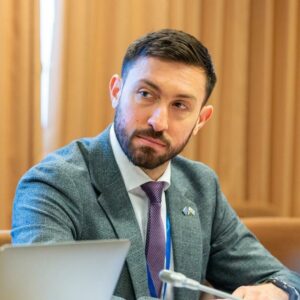
Federico GONZALEZ
Minister Counselor, Permanent Mission of the Eastern Republic of Uruguay to the UN Office and other international organizations in Geneva
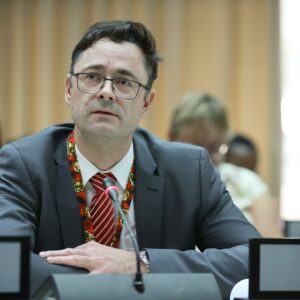
Přemysl ŠTĚPÁNEK
Head, Multilateral Relations Unit, Department of International Relations, Ministry of the Environment of the Czech Republic | Co-Chair, OEWG

Beatrice VASKYTE
Sustainable Textiles Specialist in Private Sector Unit, Industry and Economy Division, UNEP
Oliver WOOTTON
Senior Programme Officer, Chemicals & Waste, UN Institute for Training & Research
Virunya BHAT
Technical Officer, World Health Organization

Yuyun ISMAWATI
Co-Chair, IPEN & Senior Advisor and Co-Founder, Nexus3 Indonesia

Shannon LISA
Global Focal Point, Chemicals and Waste Youth Platform, Major Group for Children and Youth
Chaz KYSER
Communications Consultant, Global Framework on Chemicals Secretariat | Moderator
Highlights
Video
Summary
Opening Remarks
Kay WILLIAMS | Head, Global Framework on Chemicals
- The Global Framework on Chemicals (GFC), adopted in Bonn in 2023, is a multistakeholder and multisectoral agreement where all participants, including industry, NGOs, civil society, and governments, had an equal voice. Unlike previous efforts, this framework includes five strategic objectives and 28 specific targets, and it was adopted alongside the Bonn Declaration, a political statement that underscored the urgency of action on chemical management by senior-level officials.
- A key element of the new framework is the establishment of the Global Framework on Chemicals Fund, which recently completed its first round of applications and currently holds approximately US $28 million. The fund aims to support implementation projects, with the first batch of funded initiatives expected to be announced shortly, thanks in large part to contributions from the German government.
- Chemicals are deeply embedded in modern production, comprising about 95% of manufactured goods. The framework represents a unique and inclusive approach due to its equal representation model and has gained strong engagement from international organizations (IOMC organizations), which are increasingly collaborating to ensure the framework’s implementation is effective and coordinated.
- The current focus is on moving from negotiation to implementation. Efforts are being organized through Global Implementation Programs, which are central to operationalizing the framework. These programs will be a recurring theme during the open-ended working group sessions, signaling a shift towards practical, measurable progress.
- An intersessional process has been underway to address how to measure and report outcomes under the framework. This process involves collaboration between technical experts, policy officials, and regulators to determine how best to assess both the benefits of the framework and the real-world impacts of its application.
- Alongside implementation and measurability efforts, the framework also considers the cost of inaction and the potential role of finance and investment. Discussions are being held on how financial tools and investor engagement can serve as catalysts for the changes businesses and other actors need to make in order to adopt sustainable chemical management practices.
- The upcoming open-ended working group meeting in Punta del Este, Uruguay, will be the first formal gathering under the new framework. Its purpose is to prepare for effective implementation and to lay the groundwork for the first international conference. It will serve as a platform for renewed stakeholder engagement and onboarding of new participants, supported by hybrid meeting options including a multistakeholder day and daily lunch sessions during the June 24–27 event.
- The event aims to align global efforts on chemical and waste management with national and regional initiatives, creating a unified direction for action across different levels of governance and sectors.
Host Country Update
Federico GONZALEZ | Minister Counselor, Permanent Mission of the Eastern Republic of Uruguay to the UN Office and other international organizations in Geneva
- Uruguay is hosting the first meeting of the Open-ended Working Group (OEWG) for the GFC for a planet free of harm from chemicals and waste. The event will be held at the Convention and Exhibition Center in Punta del Este from 24 to 27 June, marking a key moment for advancing international chemical safety frameworks.
- This meeting will be held back-to-back with other significant events: the resumed third session of the ad hoc OEWG of the Science-Policy Panel from 14 to 18 June, followed by an intergovernmental meeting on 19 and 20 June to consider the panel’s establishment. These sessions collectively contribute to shaping a cohesive global chemicals and waste policy architecture.
- Prior to the GFC OEWG meeting, a Global Multistakeholder Workshop is scheduled for 22 and 23 June in the morning. The workshop will focus on developing a GFC implementation program that aims to enhance national legislation and institutional capacities related to chemicals management.
- Additional preparatory events include informal regional and stakeholder consultations and technical briefings on key issues such as measurability, indicators, and the GFC fund, all taking place on the afternoon of 23 June. These sessions are intended to build understanding and consensus ahead of formal discussions.
- The Uruguayan Ministry of Environment is responsible for organizing these meetings in close coordination with UNEP. Regular coordination meetings are being held to ensure all logistical and content-related preparations are on track and comprehensive.
- Over 600 delegates are expected to participate, representing a wide range of stakeholders including governments, civil society, academia, the private sector, and media. This diverse participation reflects the global relevance and multi-sectoral nature of the issues under discussion.
- Attendees are encouraged to frequently consult the dedicated meeting page on UNEP’s website. The site includes essential logistical details such as registration procedures, visa requirements, accommodation options, and transportation information, compiled Information for Participants document.
- Uruguay expresses its readiness to welcome delegates for what promises to be an intensive and productive series of meetings, with the shared goal of achieving significant progress on the global chemicals agenda. Sincere appreciation is extended to the donors whose support has made the convening of these meetings possible.
Overview and Purpose of Plenary Sessions and Side Events
Přemysl ŠTĚPÁNEK | Head, Multilateral Relations Unit, Department of International Relations, Ministry of the Environment of the Czech Republic | Co-Chair, OEWG
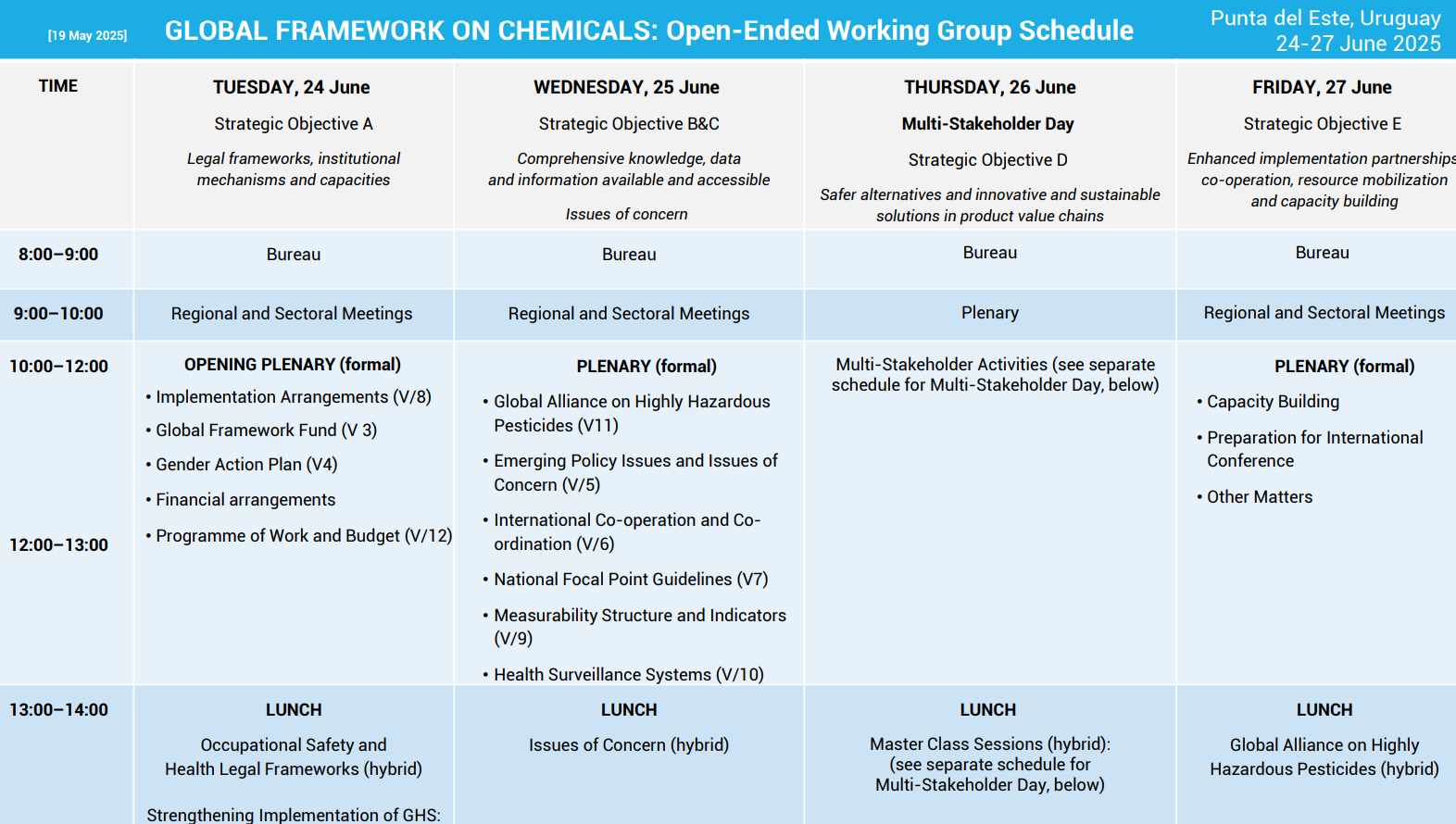
- The plenary sessions of the open-ended working group in Uruguay will take place in a structured, chronological format across Tuesday, Wednesday, and Friday, with Thursday set aside for a multistakeholder day. The sessions will alternate between morning and afternoon meetings, and the primary mode will be plenary discussions, supplemented by contact and breakout groups when necessary.
- The formal discussions will begin on Tuesday, 24th June, with the opening plenary focusing on organizational matters, including adoption of the agenda, election of two co-chairs, and the overall organization of work. Immediately after, the group will dive into substantive agenda items, which are based on resolutions adopted at ICCM5 in Bonn, particularly Resolution V/8.
- Key topics on Tuesday include implementation arrangements, the global framework fund, the gender action plan, financial arrangements, and the program of work and budget. These will be addressed in the morning plenary session, with side events and master classes scheduled during the lunch break. The side events will explore specific topics, while master classes are designed as workshops to enhance understanding of issues related to the sustainable management of chemicals and waste.
- In the Tuesday afternoon session, plenary discussions will continue with the possibility of establishing contact groups on implementation arrangements and programs. There may also be other contact groups as necessary, depending on how efficiently the agenda progresses. One contact group scheduled for the evening will focus on the program of work and budget.
On Wednesday, plenary sessions will cover additional substantive topics such as the global alliance on highly hazardous pesticides, emerging policy issues and issues of concern, international cooperation and coordination, national focal point guidelines, measurability structures and indicators, and health surveillance systems. Master classes and side events will again take place at lunch, with one focusing specifically on issues of concern. - The Wednesday afternoon session will continue formal exchanges on resolutions and may also include the creation of a contact group on emerging policy issues and concerns. Breakout groups on specific topics may also be formed, with clear mandates set by the plenary to ensure proper reporting and coordination. Evening sessions may be scheduled if necessary, though the preference is to avoid late meetings if progress during the day is sufficient.
- Thursday is designated as the multistakeholder day and will be covered by another speaker. The final day of the meeting, Friday 27th June, will begin with a focus on capacity building and preparations for the first international conference on the GFC, planned for 2026 as an outcome of ICCM5.
- On Friday afternoon, a master class will be held on setting up networks for implementing the GFC. The meeting will conclude with a final plenary session dedicated to closing business, adopting the outcomes from both the plenary and contact group discussions, and finalizing the meeting report.
- All side events and master classes will be available in a hybrid format, allowing participation both on-site and remotely. Links for these sessions are already accessible on the event website, enabling thorough preparation for both in-person and virtual attendees.
- The entire work of the open-ended working group is aligned with five strategic objectives outlined in the GFC. These objectives are distributed across the week’s sessions, with each day focusing on specific goals, from A to E, ensuring comprehensive coverage of the framework’s priorities.

Overview and Importance of Multi-Stakeholder Day Activities
Kay WILLIAMS | Head, Global Framework on Chemicals
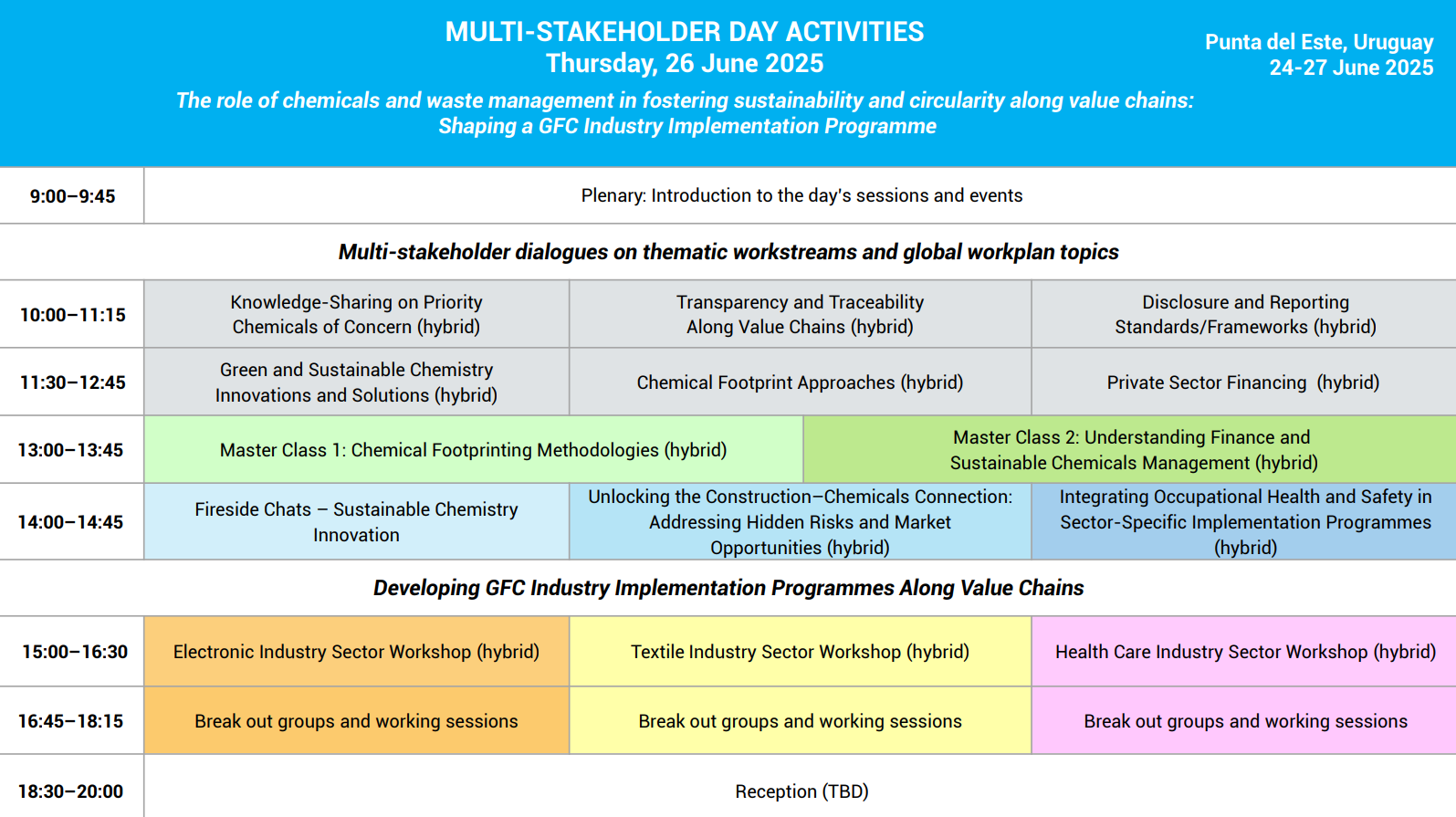
- The multistakeholder day offers a more informal setting than the plenary and contact groups of the open-ended working group, providing a space to initiate progress on the implementation of what are termed « implementation programs. » These programs are being developed in close coordination with other Inter-Organization Programme for the Sound Management of Chemicals (IOMC) organizations, building on prior work and webinars conducted since the adoption of the global framework.
- Initial discussions are focused on crosscutting themes essential to effective implementation. These include identifying priority chemicals of concern and exploring what is meant by chemical footprint approaches, terms that are gaining relevance as stakeholders look to integrate more systemic perspectives on chemical management.
- A significant area of emerging focus is the intersection of finance and chemicals, particularly in terms of disclosure and reporting. Unlike climate and biodiversity sectors, where such practices are well-established, the chemicals sector has only recently begun to explore how financial systems and transparency mechanisms can support safer chemical management.
- There is a concerted effort to embed principles of green and sustainable chemistry throughout supply chains and to integrate these concepts into higher education curricula and industry practices. This involves not only developing knowledge but also implementing systems that support sustainable practices from production to end-of-life.
- Data management is another critical focus, emphasizing the need for transparency, accessibility, and traceability. Stakeholders are examining whether available data truly allows for tracking chemical components through supply chains, ultimately aiming to ensure clarity about the chemical composition of final products.
- Attention is turning toward areas where the community is just beginning to deepen its understanding, such as chemical footprinting and financial disclosure. Despite chemical footprinting being a concept with existing foundations, there are varying methodologies that require further alignment and clarification across sectors.
Youth engagement is being highlighted through startup presentations, reflecting new and innovative approaches. Additionally, chemicals in the construction sector are receiving renewed attention, shifting some of the prior climate-focused discourse to include chemical safety as a crucial aspect of sustainable building practices. - Labor-related chemical exposure remains a critical concern, with alarming statistics such as one worker dying every 30 seconds globally due to hazardous chemical exposure. Addressing this issue is framed as a pressing human and labor rights imperative.
- Later in the day, three sectors: electronics, textiles, and health, will be the focus of dedicated sessions, aiming to explore sector-specific implementation strategies. These discussions are designed to translate broader themes into actionable approaches within each industry.
Beatrice VASKYTE | Sustainable Textiles Specialist in Private Sector Unit, Industry and Economy Division, UNEP
- The session on textiles is structured with two main objectives: first, to raise awareness about the importance of establishing a textile-specific implementation program and to showcase what the industry is already doing in this space; and second, to actively co-develop this implementation program with the leadership and input of diverse stakeholders from across the sector, specifically in alignment with achieving target D6 for textiles.
- The textiles industry is recognized as a high-impact sector concerning chemical usage. Although numerous standards and initiatives already exist worldwide, these efforts are often fragmented. The session aims to bring these diverse efforts together under the GFC umbrella, in order to identify gaps, avoid duplication, and promote a more coherent and coordinated approach.
- The session is divided into two parts, each lasting an hour and a half, and offered in a hybrid format. The first part includes panelists from industry, governments, labor groups, and standards organizations sharing practical insights and existing real-world solutions on sustainable chemical management throughout the textile value chain, followed by a Q&A session. This segment also explores the broader vision for textiles under the GFC.
- The second part of the session consists of interactive workshops where participants will be divided into small groups to discuss critical issues that the textile-specific implementation program should address. These issues are being defined in consultation with stakeholders and may include chemical traceability, innovation for safer alternatives, labor conditions, financing mechanisms, and identifying key existing gaps.
- While the first session focuses on presenting existing solutions, the second is dedicated to collaboratively drafting a clear structure, scope, and long-term vision for the textiles implementation program, ensuring that the output is grounded in the practical realities and priorities of the sector.
- By the end of the event, the intended outcomes include a deeper understanding of the necessity for sound chemical management in achieving sustainability in textiles, a consolidated vision and scope for the future implementation program, and tangible commitments from stakeholders to contribute to and support its development under the GFC.
- Overall, the session represents an opportunity to influence and shape global action on chemicals within the textile sector, reflecting the collective needs, experiences, and ambitions of stakeholders. Contributions from participants, whether attending online or in person, are seen as essential to the success of the initiative.
Oliver WOOTTON | Senior Programme Officer, Chemicals & Waste, UN Institute for Training & Research
- The implementation programs supporting the GFC stem from Resolution V/8 of ICCM5, which invited IOMC organizations, governments, and stakeholders to collaborate on proposals that define mandates, terms of reference, work plans, and other mechanisms to support GFC implementation. These proposals are intended for possible adoption at the 2026 international conference, but immediate action from stakeholders is encouraged and already underway.
- Three implementation programs have already begun progressing, reflecting the value of integrated chemicals and waste management. A significant development was the IOMC workshop held in Paris in February 2025, hosted at the OECD, which focused on promoting industry action along value chains to support the development of the industry implementation program and address relevant GFC topics.
- Outcomes and highlights from the Paris workshop have been documented and published on the IOMC webpage, offering a foundation for continued activities. These include thematic work streams with specific proposed actions such as knowledge sharing, identifying guidance for implementation, and exploring coordination, alignment, and harmonization opportunities. These themes carry through from Paris to the upcoming Uruguay meeting, ensuring consistency in approach.
- Thematic work streams and sector-specific programs have been identified, including electronics, healthcare, and textiles, with additional attention on occupational safety and health and the construction sector. These areas were emphasized in previous discussions and were major themes at the Paris workshop, showing strong continuity in the GFC implementation efforts.
- A multistakeholder session on transparency and traceability along value chains is scheduled for Thursday morning during the upcoming event. The session aims to review previous initiatives, understand current stakeholder experiences, and identify challenges and future needs. Interactive discussions will gather insights on information needs across user groups and highlight good practices and tools, all while maintaining a multisectoral, inclusive approach aligned with outcomes from the Paris workshop.
- An IOMC workshop is also planned on 22 and 23 June 2025, focusing on strengthening national chemicals legislation and institutional capacities. The workshop will examine current legislative and institutional frameworks and seek input on innovative approaches to inform the development of Implementation Program 1 (IP1), which will be discussed at the OEWG. Participation is encouraged, and details are available online and through the registration process.
Virunya BHAT | Technical Officer, World Health Organization
- A healthcare sector industry implementation program is currently under active development, with efforts focusing on creating a robust framework that addresses environmental sustainability and resilience within the health sector. This initiative is progressing through a series of consultations and meetings with stakeholders to ensure its relevance and applicability.
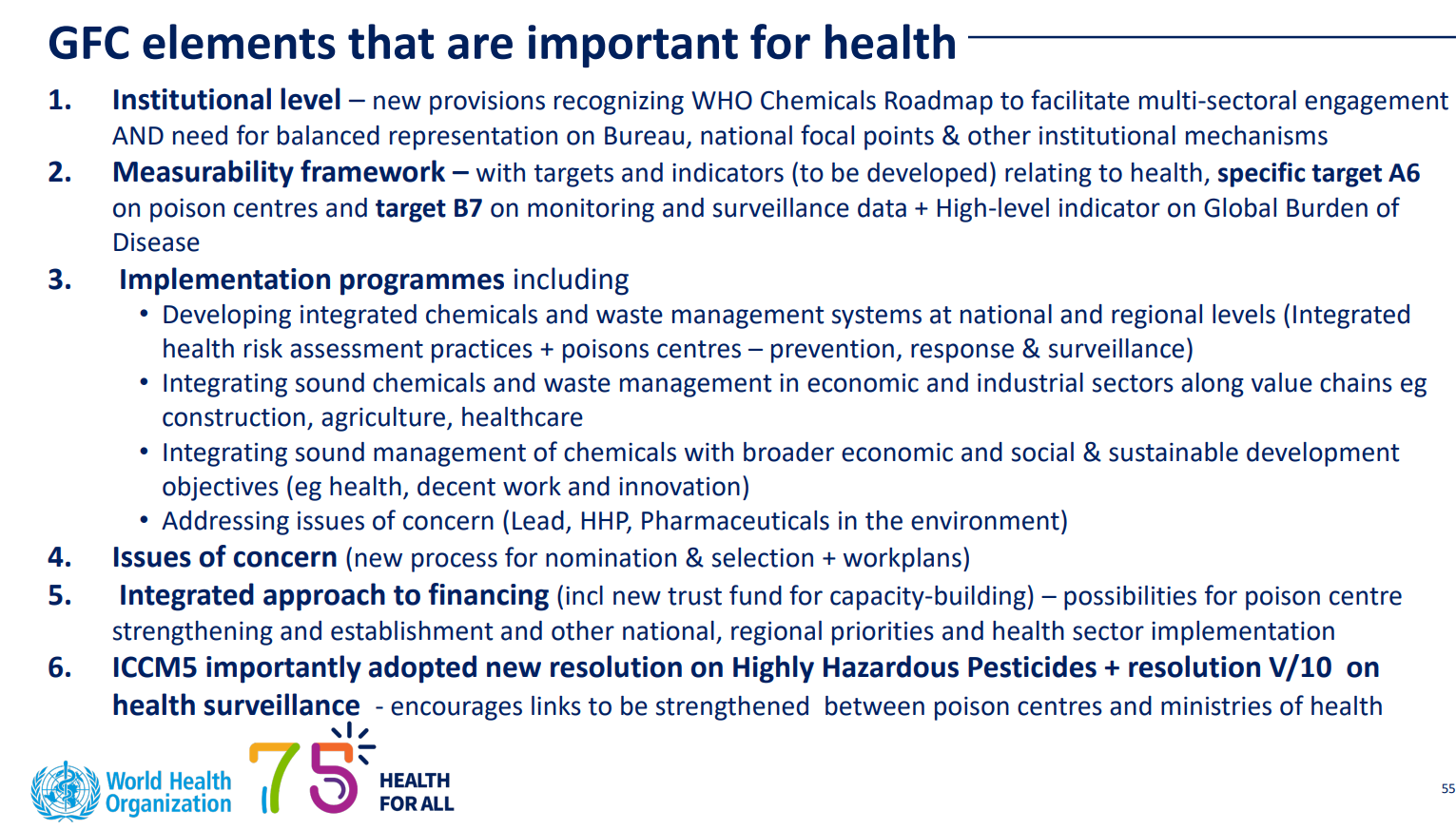
- The 76th World Health Assembly adopted Resolution 76.17, acknowledging the detrimental impacts of chemicals, waste, and pollution on human health. This resolution called for a multisectoral and multistakeholder approach, recognizing the dual role of the health sector as both a contributor to pollution and a critical actor in mitigating its health effects.
- Several elements of the GFC are highly relevant to health. Notable components include the WHO chemicals roadmap for promoting multisectoral engagement and ensuring balanced representation within national focal points and related institutional mechanisms. These structural elements are essential for effectively integrating health considerations into chemical safety governance.
- The GFC includes a measurability framework with targets and indicators specifically tied to health outcomes. Among them are Target A6, which addresses poison centers; Target B7, which pertains to monitoring and surveillance data, including a global burden of disease indicator; and Target E6, which focuses on strengthening synergies between environmental health and policies related to climate change, biodiversity, human rights, and universal healthcare.
- The healthcare sector implementation program aligns closely with these health-centric GFC targets, embedding health perspectives in efforts to reduce pollution and chemical risks. The program’s design reflects a deep integration with existing health and environmental policy frameworks.
- Development of the implementation program began over a year ago and has involved extensive engagement with experts and stakeholders. This includes consultations on climate-resilient and environmentally sustainable supply chains in the health sector, such as the expert consultation in Geneva and participation in the IOMC workshop in Paris.
- Additional progress was made during a recent technical meeting involving the WHO-hosted Alliance for Transformative Action on Climate and Health (ATACH), a broad coalition with nearly 100 partners. This meeting continued critical dialogue on shaping the program.
- Engagement is ongoing with the WHO Global Chemicals and Health Network, consisting of various health ministries. This network is providing further input and refinement of the draft terms of reference for the implementation program.
- A key milestone will be a workshop hosted at the first OEWG meeting in June, which will feature both in-person and hybrid participation. This session aims to advance the working draft of the program’s terms of reference, with a goal of having them considered and adopted at the sixth session of the International Conference on Chemicals Management next year.
GFC Partner Perspectives on the OEWG
Yuyun ISMAWATI | Co-Chair, IPEN & Senior Advisor and Co-Founder, Nexus3 Indonesia
- Stakeholders in the GFC include a wide array of actors such as labor groups, consumers, manufacturers, industry, and finance representatives. While these groups have diverse roles and interests, sometimes even being profit makers, they are also rights holders. The GFC offers a platform to affirm and uphold fundamental rights, including the right to a healthy environment, access to science, the right to know, occupational health and safety, and indigenous peoples’ rights to participate in decision-making, especially regarding chemicals and waste.
- The GFC is unique due to its emphasis on multistakeholder collaboration, where efforts are voluntary but collectively directed toward shared objectives aligned with the Sustainable Development Goals. Its structure encourages cooperation between traditionally opposing groups, offering a space for inclusive and constructive engagement.
- Over time, GFC has evolved from the Strategic Approach to International Chemicals Management (SAICM) and now focuses on five key issues of concern: PFAS chemicals and products, highly hazardous pesticides (HHPs), endocrine disrupting chemicals (EDCs), hazardous substances in the electronics lifecycle, and the continuation of previously identified chemicals needing global action. These priority areas reflect a consolidation of past concerns into a more actionable and targeted agenda.
- The lead paint elimination initiative stands as a model of successful multistakeholder collaboration, where IPEN’s participating organizations have been instrumental in pushing for regulatory changes. The campaign, supported by UNEP and WHO, has resulted in numerous national policies eliminating lead paint, showing that civil society can be a key driver in environmental health reforms when working in alliance with international bodies and governments.
- Looking ahead, the Global Alliance to Eliminate HHPs is expected to build on lessons from the lead paint campaign. There is a call to replicate the multistakeholder, multisectoral strategy used there, emphasizing that such collaborative approaches are essential for tackling deeply entrenched chemical safety challenges.
- For the successful implementation of the GFC, it is vital to distinguish between “multistakeholder” and “multisectoral” approaches; both governments and civil society are necessary and complementary. Civil society, in particular, plays a multifaceted role by offering citizen science, raising public awareness, and bridging gaps between sectors. Their participation must be institutionalized, especially in decision-making, funding access, and program implementation, to ensure that the GFC remains inclusive and effective.
- The open-ended working group is encouraged to institutionalize meaningful participation from civil society and maintain a strong focus on the five issues of concern. There is a collective hope that a Global Alliance to Eliminate HHPs will be formally adopted and adequately resourced during this first meeting in Uruguay, marking a critical step toward broader chemical safety reforms.
Shannon LISA | Global Focal Point, Chemicals and Waste Youth Platform, Major Group for Children and Youth
- The Chemicals and Waste Youth Platform serves as the largest global coordination hub for youth and youth-led organizations focused on chemicals, waste, and pollution, now comprising over 2,000 members from 150 countries. It continues to channel youth perspectives into the implementation of the GFC, particularly following significant engagement at ICCM5, with further involvement anticipated at OEWG1.
- During ICCM5, the youth constituency played a constructive and solutions-oriented role by presenting the Global Youth Declaration on Chemicals and Waste, a collective statement developed through contributions from hundreds of young people. This declaration outlined 14 core demands for a sustainable, equitable, and toxic-free world, including prioritizing protection from hazardous exposure for children and adolescents, and integrating chemicals and waste issues into education systems at all levels. It now serves as a roadmap guiding youth engagement with the GFC.
- The youth constituency is actively contributing the priorities outlined in the declaration to the open-ended ad hoc group on measurability and indicators, with OEWG1 seen as a crucial platform to further these efforts. A particular focus is on ensuring that youth engagement in chemicals and waste governance is sustained, meaningful, and visible.
- Ahead of OEWG1, a series of preparatory events were held, designed by youth for youth. A notable event took place on April 16, bringing together youth and key secretariats from major chemicals and waste conventions and negotiations, facilitating a dialogue on the interconnections between these processes and creating accessible entry points for youth participation on critical issues in the chemicals and waste agenda.
- Another major event was the second edition of the Youth Forum on Chemicals and Waste during the BRS COPs on April 27. Centered on the theme of « Making Youth Solutions to Pollution Visible, » the event featured an intergenerational panel and workshops focused on developing a strategy for youth engagement in policy instruments, securing financing for sound chemicals management, and promoting youth-driven innovation through dialogue with the Global Environment Facility.
- A youth event is being organized at OEWG1 to spotlight education and innovation for sustainable chemistry and zero waste, aiming to unite youth leaders with government, UN agencies, academia, and industry. This event will include a « Youth Pollution Solutions Showcase », a Shark Tank-style session to highlight youth-led initiatives across sectors such as health, textiles, and agriculture, with the goal of raising visibility and support for grassroots solutions.
- Over 50 youth delegates from all world regions are expected to attend OEWG1 in Punta del Este. However, financial barriers remain a major obstacle to inclusive youth participation, especially for those from least developed countries, small island states, and marginalized backgrounds like waste pickers or smallholder farmers. Continued and expanded support, particularly through travel grants, is essential to address this challenge.
- Collaborative efforts are encouraged to co-develop educational resources, provide technical training opportunities, and ensure youth have a seat at the table in national implementation efforts. The GFC represents a global commitment to a future free from toxic harms, and youth are already contributing to this vision. What is needed now is enduring engagement, strong intergenerational partnerships, and enhanced support to scale youth efforts in chemicals and waste governance.
Q&A
Q: Will the conference be offered virtually?
Kay WILLIAMS | Head, Global Framework on Chemicals
- The plenary sessions of the conference will not be streamed and will not have a hybrid format. However, all interactive sessions, which are designed to encourage broader multi-sectoral and multi-stakeholder participation, will be conducted in a hybrid format. These sessions will be accessible via open links that are publicly available.
Q: What is the difference between contact groups and breakout groups?
Kay WILLIAMS | Head, Global Framework on Chemicals
- Contact groups are informal but more structured than breakout groups. They are typically formed during plenary sessions when co-chairs recognize substantial interest or the need for deeper discussion on a particular topic raised through a working document. These groups meet in a different setting to facilitate more focused deliberation and can report outcomes back to the plenary. All related working documents are accessible under the pre-session document tab on the official website.
- Breakout groups are designated for topics that already have their own intersessional processes and subsidiary bodies. The term is used intentionally to preserve the independence and mandate of these existing bodies, ensuring their discussions remain within their terms of reference. For example, measurability and indicators are discussed within a specific ad hoc open-ended working group, which can meet in person during the session if there is sufficient interest, outside of the main OEWG1 framework.
- The measurability discussions are accompanied by a technical briefing scheduled for the Monday of the session. Participation in these discussions is open to all, but they remain part of a separate intersessional process distinct from OEWG1, emphasizing the importance of maintaining the integrity of that subsidiary process.
- Similarly, the global framework on chemicals fund is governed by its own subsidiary body, an executive board with clearly defined terms of reference. Informal discussions may occur in Uruguay with the board’s co-chairs present, depending on participant interest, but these discussions will remain outside the formal OEWG1 setting.
- In summary, contact groups are semi-formal settings that report back to plenary, while breakout groups are more informal and associated with existing intersessional mechanisms, preserving their autonomy and mandate.
Q: The schedule mentions the adoption of a final resolution. Will the work focus on amending existing resolutions, or will entirely new resolutions be adopted?
Kay WILLIAMS | Head, Global Framework on Chemicals
- The current session of the open-ended working group (OEWG1) is viewed primarily as a technical progress checkpoint rather than a platform for adopting major resolutions.
- While working documents are available, any decisions to put forward a resolution to the international conference will be made in plenary, depending on the will of the conference participants at that time.
- The focus is not specifically on amending existing resolutions or creating entirely new ones during this session. However, if there are items that are sufficiently developed and ready, recommendations or draft resolutions may be adopted or advanced by Friday.
- Ultimately, the session is intended to assess progress and facilitate technical discussions, with the possibility of proposing outcomes to be further considered at the international conference.
Q: Will there be a scenario note, and when will this be available?
Kay WILLIAMS | Head, Global Framework on Chemicals
- It is currently under draft.
Q: How will the results of the workshops be conveyed at the plenary meeting?
Kay WILLIAMS | Head, Global Framework on Chemicals
- Note-takers will be present during the workshops, particularly on Multistakeholder Day, to capture ideas and proposed activities.
- The workshops are not an end in themselves; rather, they contribute to the broader journey of implementing programs and making progress before the international conference.
- The results from Multistakeholder Day are expected to be reported back to the plenary and included in the official meeting report.
- Additionally, each sectoral program is expected to build on the suggested activities identified during the Paris meeting and the current session, and make arrangements to advance this work during the intersessional period leading up to the international conference.
- The long 18-month lead time before the international conference provides a unique opportunity to make substantive progress on implementation efforts.
Q: Could you provide some background on the IOMC workshops, which haven’t been covered in this briefing? Also, how will participants know if their registration for the IOMC workshops has been accepted?
Oliver WOOTTON | Senior Programme Officer, Chemicals & Waste, UN Institute for Training & Research
- The IOMC workshop is divided into two parts:
- Monday morning: Held at the OEWG conference center, which has a large capacity and is open to all attendees present on that day.
- Sunday: Held at a hotel with more limited capacity, making attendance more restricted.
- Coordination is currently ongoing, supported by the GFC team and colleagues managing travel logistics, to determine who will be present in Uruguay a day early for the Sunday session.
- Participants will begin receiving notifications this week regarding whether they’ve been accepted and invited to the Sunday workshop.
- As for virtual participation, the workshop will not be fully hybrid; however, efforts are being made to stream parts of the Sunday session for those who wish to follow remotely.
Q: Is there still time for people to get sponsored (funding for travel) for the OEWG?
Kay WILLIAMS | Head, Global Framework on Chemicals
- No, I don’t think this will be possible.
Q: Can you provide information on how the GFC fund will be allocated, and what details regarding the fund allocation will be discussed at the OEWG?
Eduardo Caldera Petit | Fund Coordinator, Global Framework on Chemicals Fund
- The new GFC fund, established alongside the global framework on chemicals, has received pledges totaling up to $28 million.
- The fund launched its first round of applications from October 2024 to January 2025, receiving a large global response with 105 applications from various regions.
- The executive board is the decision-making body for funding approvals. They met in March and will reconvene at the end of May 2025 to finalize which projects will be funded in this first round.
- Preparations are underway for a second round of applications, likely to launch at the end of 2025, offering another opportunity to apply.
- The fund primarily supports developing countries, especially least developed countries and small island developing states, to implement the framework’s five strategic objectives and 28 targets.
- More details on the fund’s structure, priorities, and application guidelines (revised for the second round) are available on the UNEP website.
- The OEWG meeting will include a technical briefing on June 23, 2025 (the day before the OEWG starts), providing updates on the first round outcomes, lessons learned, and insights from the executive board co-chairs about the way forward.
- Stakeholders are encouraged to attend the briefing for more information and to raise questions. Finally, an email address for fund-related queries will be shared in the meeting chat for any pre-meeting questions.
Q: Is it expected that formal texts will be negotiated and adopted in the contact groups and plenary sessions? If so, which texts are anticipated?
Kay WILLIAMS | Head, Global Framework on Chemicals
- Many of the working documents focus on next steps and are relatively brief, aiming to guide future actions.
- Contact groups will be available if formal negotiations are required, which would then be reported back to the plenary sessions.
- Formal discussions and negotiations are expected, particularly around the program of work.
- However, the financing for the framework has already been agreed upon until 2026 by the ICCM5 resolution, making the program of work more of a staging post with updates rather than new financial negotiations.
- Therefore, while formal negotiations may occur, they are mostly expected to result in recommendations to the international conference rather than major new agreements.
Q: Could you please explain what the implementation programs are and how you are working on them with other stakeholders?
Oliver WOOTTON | Senior Programme Officer, Chemicals & Waste, UN Institute for Training & Research
- The concept of integrated chemicals and waste management was introduced during the Bucharest intersessional meeting before ICCM5, focusing on three dimensions: national legal systems, industry engagement, and integration with sustainable development issues.
- These dimensions were discussed in two IOMC workshops in 2023.
- At ICCM5, a resolution was adopted to establish implementation arrangements and encourage the formal development of implementation programs.
- There are currently implementation programs one and two, with a third focused on sustainable development issues, which is less advanced.
- The programs aim to encourage action toward achieving the five objectives and related targets of the global framework, generally supporting all objectives and targets.
- The programs engage all stakeholders, including those directly involved in the GFC and, importantly, new stakeholders along the entire value chain, beyond just the chemicals industry associations.
- Implementation Program 2 specifically targets engagement along the value chain to bring in new stakeholders and enhance action.
- Current activities include outreach, webinars, and workshops to develop terms of reference and mandates with broad stakeholder involvement.
- The IOMC is co-leading the process, aiming for formal adoption of the implementation programs at the international conference in 2026 to advance these efforts.
Q: Will there be a session at the OEWG focused on building synergies with key relevant MEAs, such as the UN plastics treaty and the Basel and Stockholm Conventions?
Kay WILLIAMS | Head, Global Framework on Chemicals
- The OEWG will include working papers on international cooperation that address synergies with other multilateral environmental agreements (MEAs).
- The third implementation program track, which is focused on interlinkages with MEAs like the UN plastics treaty and the Basel and Stockholm Conventions, is somewhat behind the other implementation programs.
- This track will provide an opportunity to strengthen cooperation and synergies with relevant MEAs.
- Discussions on these topics will take place under the international cooperation working document during the OEWG.
Q: Is there an official list of government departments or ministries, including policymakers, that will be participating in the OEWG?
Kay WILLIAMS | Head, Global Framework on Chemicals
- The official list published includes contact details of all registered participants attending the OEWG in person, while those joining online will not have their details published.