
Événement Virtuel
Exporting Lead Poisoning: The Toxic Trade in Lead Chromates | Road to 2025 BRS COPs

04 Fév 2025
14:00 – 15:30
Lieu: Online | Webex
Organisation: International Pollutants Elimination Network, Geneva Environment Network
This event, organized with the International Pollutants Eliminations Network (IPEN), takes place within the framework of the Road to 2025 BRS COPs organized in the run-up to the upcoming 2025 Meetings of the Conferences of the Parties to the Basel, Rotterdam and Stockholm Conventions (2025 BRS COPs) to be held in Geneva.

About this Event
Lead paint is one of the most widespread sources of childhood lead exposure, which can lead to damage to the developing brain, as well as the nervous, immune, reproductive and cardiovascular systems even at very low levels of exposure. Health impacts include loss of IQ, attention deficit disorder, hypertension, and other physical and behavioral problems. Often, these effects are permanent, irreversible, and untreatable.
While an increasing number of countries have banned lead paint, it is still allowed in more than half of the world’s countries. Also, many countries face challenges to monitor and enforce lead paint bans. One of the final remaining types of lead compounds used in paint are lead chromate pigments, even though cost-effective alternatives are widely available. That means that countries that have put lead paint regulations in place have also banned or severely restricted the use of lead chromates in their countries. If they are Parties to the Rotterdam Convention, this means that they should also notify the Convention Secretariat about this. Still, only Cameroon and Morocco has provided such notifications.
A recent report from IPEN finds that while the EU and other countries have banned the use of lead chromates, they continue to allow production and export of this paint ingredient with very little ability or capacity for importing countries to know and control what come in over their borders, putting children and families in recipient countries at risk from lead poisoning. To assess the trade in lead chromates, the IPEN study reviewed thousands of records from several data sources, including publicly available trade data and data on exports from India purchased from a company that collects detailed import-export information. The data showed that significant quantities of lead chromates are exported to many countries, including countries that have banned or restricted lead paint.
The Rotterdam Convention requires countries that are Parties to the Convention to ensure that certain hazardous chemicals are only exported to a country that has given its explicit consent, through a so-called Prior Informed Consent (PIC) procedure. By listing lead chromates under the Convention’s PIC procedure, countries that ban lead paint will be better equipped to enforce their ban, and countries without lead paint restrictions will be incentivized to adopt a ban.
Leading experts invited to speak at the event in the run-up to the 2025 BRS COPs discussed the findings of the IPEN report and other similar studies, and insist on the importance of agreeing on having lead chromate listed in the Rotterdam Convention.
English to French interpretation were available during this event.
Road to 2025 BRS COPs
In the lead up to the 2025 Meetings of the Conferences of the Parties to the Basel, Rotterdam and Stockholm Conventions, taking place from 28 April to 9 May 2025 in Geneva, the Geneva Environment Network is collaborating with various partners, including the BRS Secretariat, for a series of events providing information on preparations and facilitating dialogues on key issues to be discussed at the meetings.
Speakers
By order of intervention.

Sara BROSCHÉ
Science Advisor, IPEN

Gilbert KUEPOUO
Executive Director, Centre de Recherche et d’Education pour le Developpement (CREPD)

Amadou HAMADJODA
Rotterdam Convention Official contact point, Ministry of the Environment, Nature Protection and Sustainable Development, Cameroon

Hanane CHAOUI
Moroccan Association Health Environment and Toxicovigilance (AMSETOX)

Jordane WODLI
Chargé de mission, DG Environment, European Commission

Gretchen FONTEJON-ENARLE
Pacific Paints (Boysen), Philippines

Halshka GRACZYK
Technical Specialist, Occupational Safety and Health, International Labour Organization (ILO)

Diana RIZZOLIO
Coordinator, Geneva Environment Network | Moderator
Highlights
Video
Summary
Scene Setting: What is the Problem With Lead Chromates and Why is the Rotterdam Convention a Tool to Reduce Lead Exposure Globally
Sara BROSCHÉ | Science Advisor, IPEN
- Lead paint remains one of the most widespread sources of lead exposure in children globally and is still available on the market in most countries due to a lack of regulation. Without proper monitoring and enforcement, lead-containing paints continue to be sold, posing significant risks to public health.
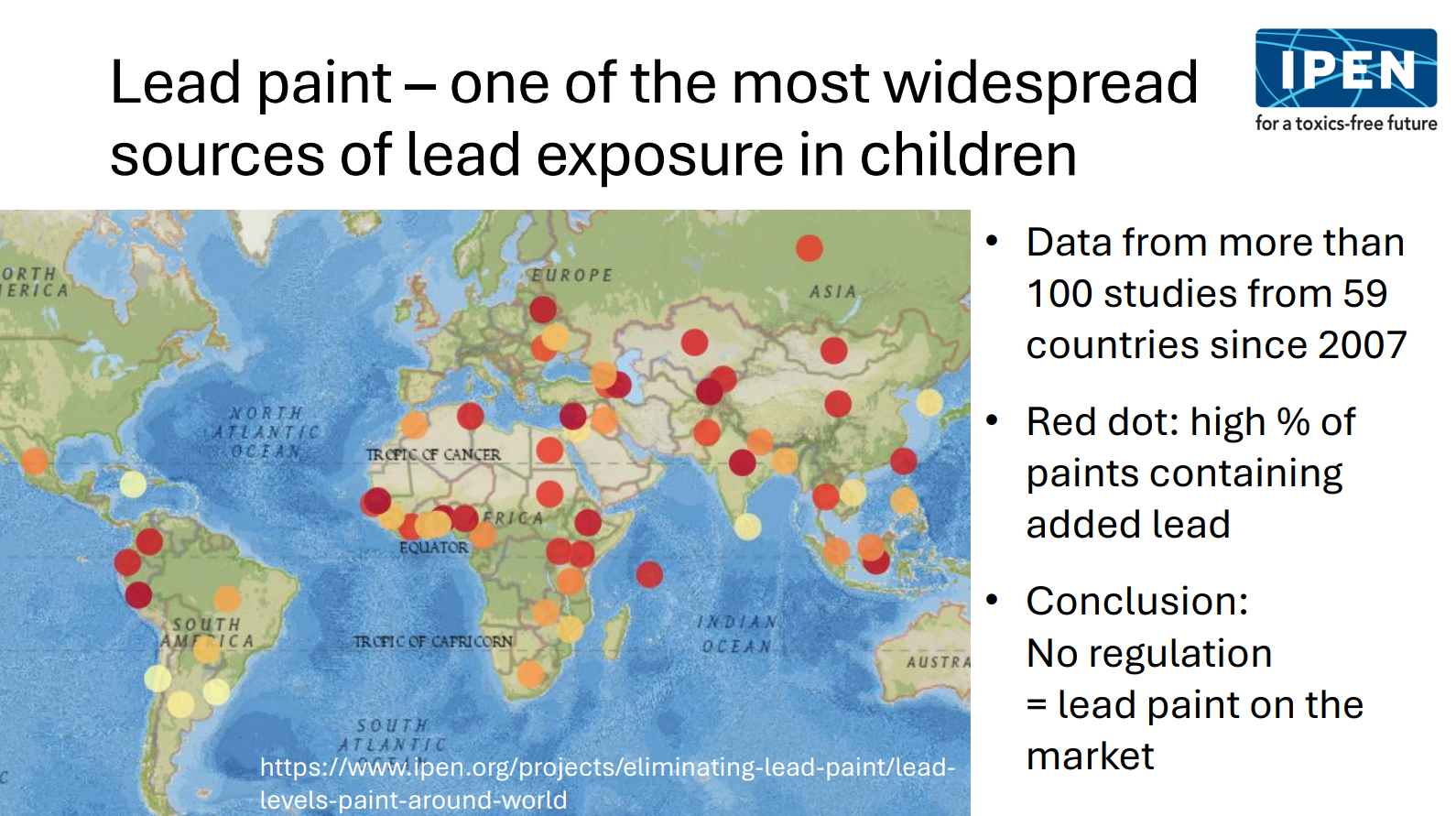
- The developing brain is highly sensitive to lead exposure, and there is no known safe level for children. Even low levels of exposure can cause irreversible and lifelong impacts on cognitive development, learning ability, and overall health, with broader economic and societal consequences.
- Occupational exposure to lead also presents serious risks, particularly for workers involved in the production, application, or removal of lead-based paints. Studies have shown that workers in paint factories often have elevated blood lead levels (for adults, over 5 µg/dL is considered elevated), leading to long-term health issues, including a significant increase in lifetime cancer risk.
- Many countries have only partial regulations on lead paint, and while adopting regulatory measures is a crucial first step, enforcement remains a major challenge. Without effective monitoring, countries struggle to control what enters their markets, allowing lead-containing products to persist despite official restrictions.
- Lead chromates, which are commonly used as pigments in paints, are still being exported to countries that have banned lead paint, creating continued exposure risks. Since only a few countries produce lead chromates, many others rely on imports, making it difficult to track their trade due to insufficient or incorrect reporting.
- Analysis of detailed trade data has confirmed that lead chromates are still being imported for use in paint production, even in countries where lead paint is officially banned. This ongoing trade means that children, workers, and the general population remain at risk of lead exposure despite regulatory efforts to eliminate it.


- Countries with lead paint regulations should formally notify the Rotterdam Convention Secretariat to enable the listing of lead chromates under Annex III, which would strengthen global trade control measures. The Prior Informed Consent (PIC) procedure under the Convention allows countries to regulate imports and reject hazardous chemicals, helping prevent lead exposure at a broader scale. Parties to the Rotterdam Convention are obliged to notify the Secretariat of the Convention under Article 5.1, yet only 2 countries to date have submitted such notifications, namely Cameroon and Morocco.
- To advance the listing process, more countries from different regions need to submit their reports and engage in the regulatory framework. Given the continued export and use of lead chromates in paints, urgent action is needed to strengthen international oversight and protect public health.
Gilbert KUEPOUO Executive Director, Centre de Recherche et d’Education pour le Developpement (CREPD)
- Since its creation in 2004, CREPD has focused on addressing lead exposure as a critical issue, particularly in Cameroon, where high lead concentrations in paint have become a significant public health concern. The organization’s efforts have been driven by the urgent need to protect vulnerable populations, especially children, from the harmful effects of lead.
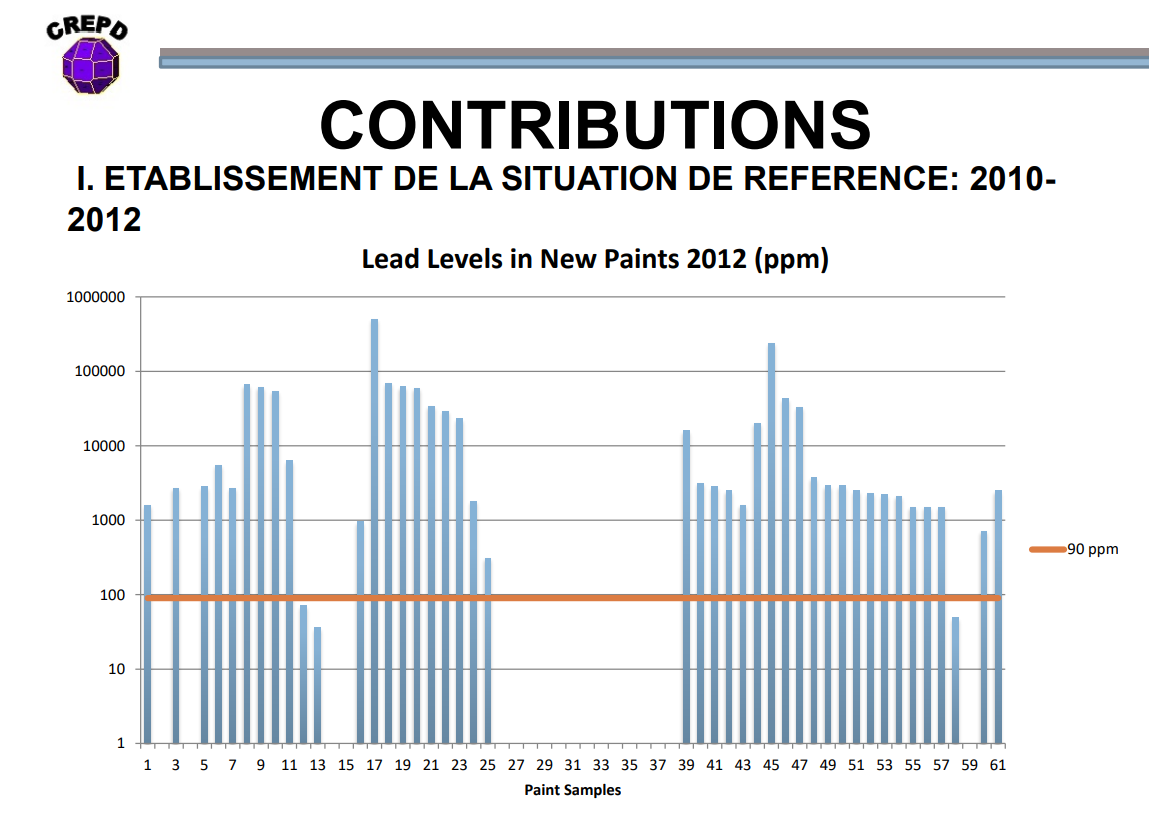
- Between 2011 and 2015, CREPD conducted studies that helped establish the « baseline situation » of lead contamination in Cameroon. These studies revealed that paints widely used in the country contained significant amounts of lead (above 90 ppm which is the recommended value by the CDC in the United States), providing a critical foundation for the organization’s efforts to raise awareness and take action on the issue.
- A pilot biosurveillance study revealed a strong correlation between the high levels of lead in paint and elevated lead levels in children and adults in Cameroon. Imported paints were found to contain lead concentrations more than six times higher than those allowed in industrialized countries. This prompted national awareness campaigns and workshops aimed at informing the public about the health risks associated with lead exposure.
- CREPD’s study led to strong reactions from international manufacturers, who could no longer ignore the scientifically rigorous data. The organization worked closely with pediatricians and the Ministry of Public Health, ensuring the study’s findings were communicated to key stakeholders, including government officials, to push for action on lead contamination.
- National workshops and awareness campaigns were organized to make the dangers of lead exposure widely known, with a particular focus on children’s health. As a result, the Cameroonian government took proactive steps to develop legislation banning lead paint. In 2017, Cameroon adopted one of Africa’s most stringent regulations on lead in paint, a result of collaboration between the private and public sectors.
- While the situation is improving, CREPD emphasizes the need for legally binding regulations, rather than just standards, to address the ongoing risk of lead exposure. The organization continues to push for more robust national and international action to protect public health and prevent further harm from lead-based products.
Country Perspectives on the Trade of Lead Chromates and how the Rotterdam Convention Can Provide Crucial Support to Prevent Lead Exposure
Amadou HAMADJODA | Rotterdam Convention Official Contact Point, Ministry of the Environment, Nature Protection and Sustainable Development, Cameroon
- Cameroon’s government recognizes the importance of listing lead chromates under the Rotterdam Convention, especially as paints containing lead above 90 ppm are still widely available in the market, despite regulatory efforts. The inclusion of lead chromates in the Convention would help regulate their use more effectively and eliminate the risks of exposure.
- While regulations have been in place for over six years, paints with lead concentrations above 10,000 ppm are still being sold in Cameroon, highlighting significant challenges in enforcement. Despite the legal framework, high levels of lead paint remain on the market, posing a serious health risk to vulnerable populations, especially children.
- Implementation challenges persist due to insufficient infrastructure and financial resources. The government struggles with a lack of analytical tools to properly measure lead concentrations in paint products, hindering effective regulation and enforcement.
- The Cameroonian government’s decision forbidding the use of lead chromates in paint manufacturing is a strong foundation for advancing efforts to list these chemicals under the Rotterdam Convention. However, the current decision does not fully restrict other uses of lead chromates, which can still be imported for non-paint applications. Expanding this ban through the Convention would allow Cameroon to protect its population from further exposure.
Arreté No. 004 and the Rotterdam Convention
- Cameroon’s Arreté/Order No. 004 bans the use of lead chromates as an intentional ingredient in paints, providing a strong legal basis for submitting a notification to the Rotterdam Convention. This decision aims to further restrict the use and importation of lead chromates, protecting public health while supporting global regulatory action.
- While Arreté No. 004 bans the use of lead chromates in paint, it does not restrict other uses of lead chromates, allowing for their importation for other purposes. Including lead chromates in Annex III of the Rotterdam Convention would enable a complete ban on their importation and use, offering stronger protection for public health, particularly for young children.
- If lead chromates are added to Annex III of the Rotterdam Convention, it would provide a more robust framework to ban the use and import of these harmful chemicals across all sectors, strengthening public health protections in Cameroon.
Hanane CHAOUI | Moroccan Association Health Environment and Toxicovigilance (AMSETOX)
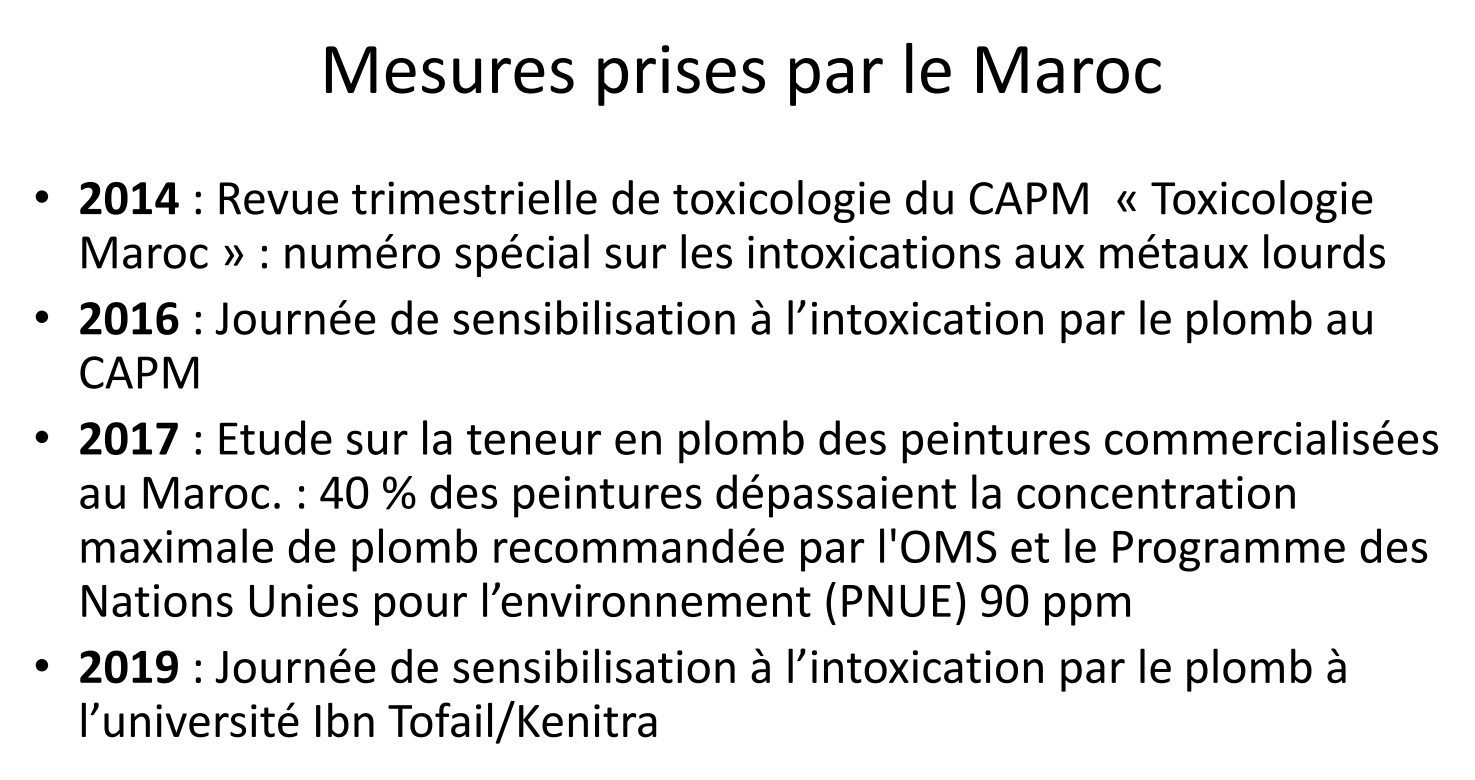
- Morocco recognized lead exposure through paint as a national issue following a 2014 report from the Poison Control and Vigilance Centre (Centre Antipoison et de pharmacovigilance du Maroc (CAPM)), which revealed that 40% of paints sold in the country contained lead levels above WHO’s safety limits. This prompted immediate action to address the widespread problem of lead poisoning.
- In response to growing concerns, Morocco initiated awareness-raising activities, including organizing a Lead Poisoning Awareness Day in 2016, and publishing a quarterly toxicology review by the CAPM, which focused on heavy metal poisoning. These efforts were aimed at educating the public about the dangers of lead exposure, particularly through painted surfaces.
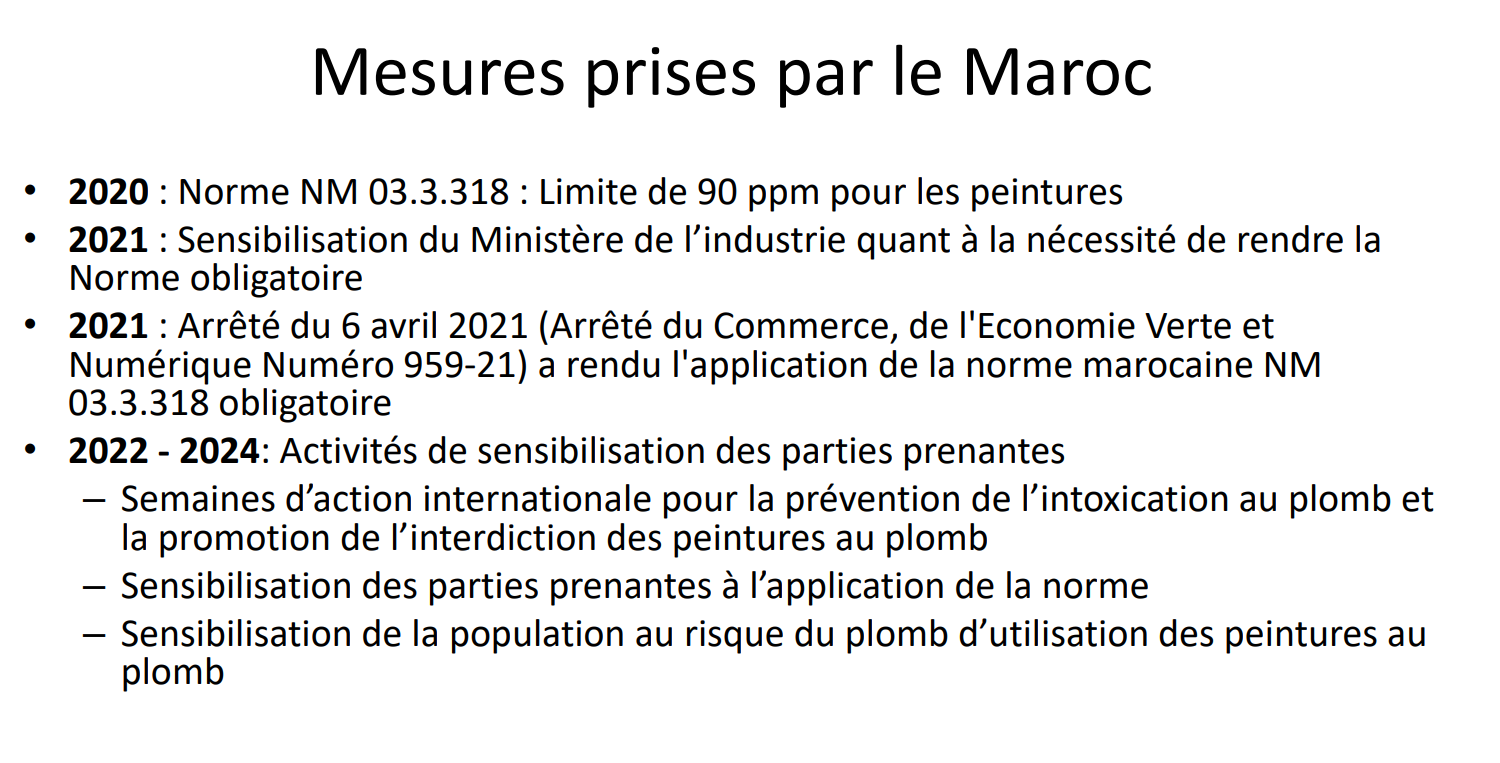
- The Moroccan government introduced legally binding standards for manufacturers, limiting the concentration of lead in paints to 90 ppm. This regulatory action was part of a broader effort to protect public health, particularly vulnerable groups such as children, from the harmful effects of lead exposure.
- Awareness campaigns in Morocco, including lead awareness weeks and public education materials in various languages, played a key role in informing citizens about the risks of lead in paint. These activities contributed to public pressure for stricter regulations and greater control over the sale of lead-containing paints.
- In addition to the principal regulations taken by Morocco in restricting lead in paint, Morocco has implemented several standards to limit lead chromate content in various consumer products, including textiles, toys, baby diapers, plastic packaging, ceramic tableware, glassware in contact with food, and ceramic cookware. The country has also introduced the « Madmoune » standard to further ensure product safety and reduce lead exposure risks.
- Morocco’s efforts to regulate lead in paint have been bolstered by evidence of the health and environmental risks associated with lead chromates. The country believes that including lead chromates in Annex III of the Rotterdam Convention is crucial to strengthening international control over these harmful chemicals.
- By listing lead chromates in Annex III, Morocco aims to reduce the health risks posed by these substances, particularly in the paint industry. The inclusion would help prevent the importation and use of paints with dangerous levels of lead, thereby protecting both public health and the environment.
- Successful implementation of Morocco’s regulatory efforts requires ongoing collaboration at both the national and international levels. Strong cooperation is needed to ensure that lead-containing products are properly controlled and that Morocco can continue its progress in safeguarding the health of its population from the dangers of lead exposure.
Jordane WODLI | Chargé de mission, DG Environment, European Commission
- The European Union implements the Rotterdam Convention through the EU Prior Informed Consent (PIC) Regulation, which governs the export and import of hazardous chemicals.
- The EU PIC Regulation goes beyond the Rotterdam Convention by covering additional chemicals and applying its provisions to all importing countries, not just those that are parties to the Convention. It includes a wider range of chemicals than those listed under the Rotterdam Convention, strengthening the EU’s chemical management framework. In addition, under the regulation, export notifications are required for all listed chemicals, regardless of their intended use, ensuring transparency and control over hazardous substances.
- Lead chromate is classified as a Category 1A carcinogen, toxic for reproduction (1A), and hazardous to aquatic environments (Aquatic Acute 1, and Aquatic Chronic 1). Moreover, it is banned for consumer use in the EU and subject to export notification under the PIC Regulation.
- While the EU already enforces strict regulations on lead chromate exports and acknowledges its hazardous nature, additional measures, such as requiring explicit consent from importing countries, could further enhance protection against its risks.
How Control on Lead Chromate Trade Protects Workers and Benefit Paint Manufacturers
Gretchen FONTEJON-ENARLE | Sustainability Leader, Pacific Paints (Boysen), Philippines
- Pacific Paints (Boysen) in the Philippines embarked on a long journey to produce lead-free paints, starting with a voluntary phase-out in 2009 and completely eliminating lead from all paint products by 2013.
- The transition involved replacing lead-based materials, including the removal of lead chromate pigments, while ensuring that the new products remained of high quality, low risk, and environmentally sustainable.
- Challenges in the paint industry included replacing lead octoate in oil-based enamels and eliminating lead chromate pigments in anti-corrosion and vibrant colors, setting new benchmarks for safety and environmental responsibility.
- Seven paint companies in the Philippines now hold lead-safe certification, demonstrating the industry willingness to engage in the elimination of lead-based ingredients and commitment to public health.
- Legally binding regulations, like those under the Rotterdam Convention, are necessary to ensure industry-wide adherence to lead elimination standards and secure public health protection.
- Despite progress, challenges persist, particularly in the transportation and sale of products, highlighting the ongoing work required to ensure lead-free paint production across the country.
- A multisectoral approach, including collaboration between industry, government, and civil society, has been crucial to the Philippines’ success in reducing lead exposure from paint, but further work is needed, especially in regulating imports.
- The collective experience of industry stakeholders in the Philippines underscores the importance of collaboration and legally binding tools to control hazardous substances entering the market and ensure lasting improvements in public health and environmental safety.
Halshka GRACZYK | Technical Specialist, Occupational Safety and Health, International Labour Organization (ILO)
- The first legally binding standard on lead in paint was established in 1921, published by the ILO, recognizing the toxicity of lead and its dangers over 100 years ago. Despite this, lead exposure continues to occur in various forms today, such as in industrial settings, artisanal/industrial painting, from lead-acid batteries, and various other manufacturing components.
- Despite bans on lead paint, significant exposure to lead still occurs at the industrial level, emphasizing the need for a comprehensive approach to address all sources of lead toxicity, not just in paint but also in other areas like batteries.
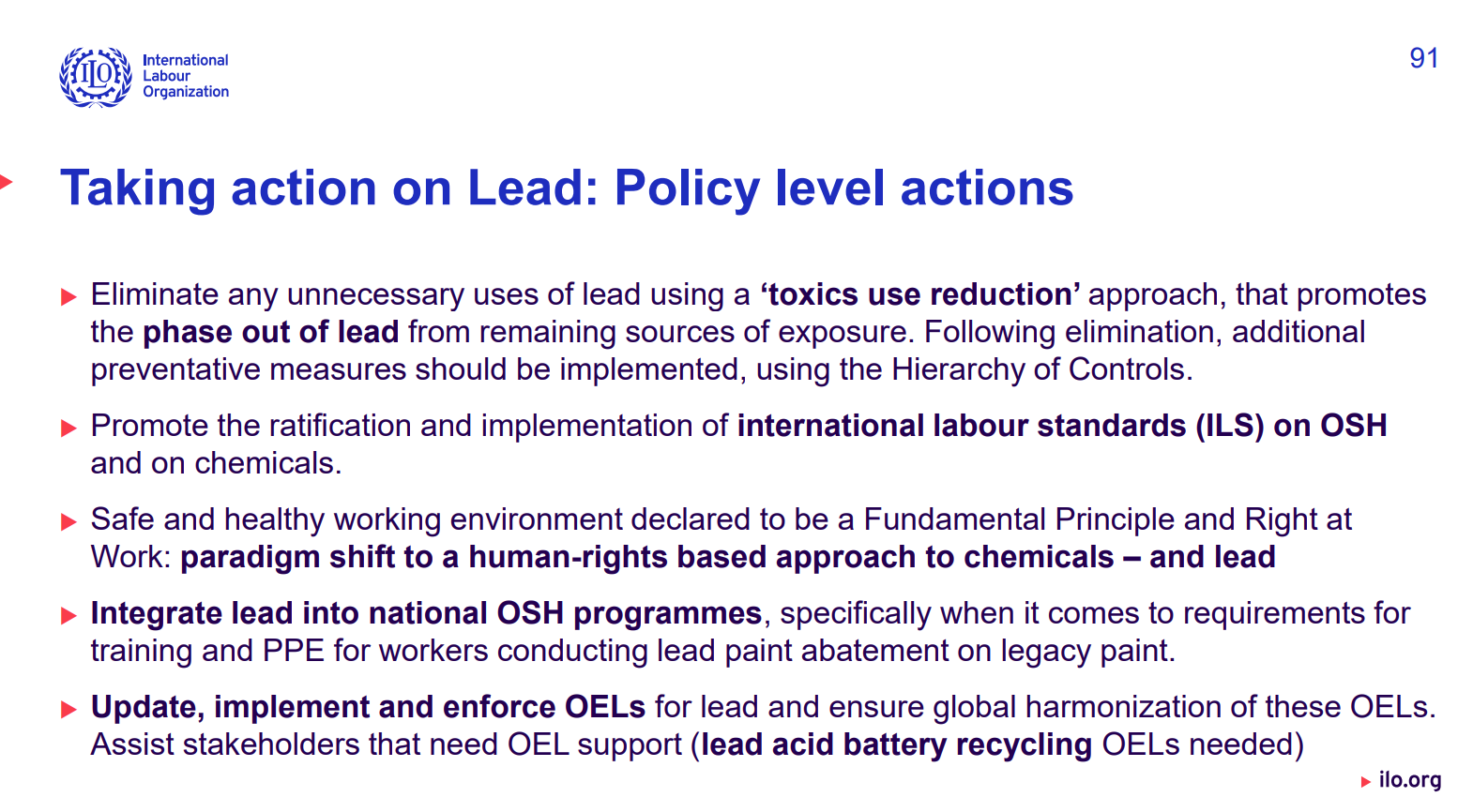
- The ILO recommends a toxics-use reduction approach, calling for the phase-out of lead and the ratification and implementation of international labor standards to protect workers from hazardous exposures.
- Workers face a heavy burden of lead exposure, working 8-12 hours a day, 5 or more days a week, for several years, resulting in prolonged and significant health risks. In addition to workplace exposure, these workers are also affected environmentally, compounding the issue. This vulnerable population, particularly when considering the intersection with childhood exposure—due to millions of child laborers still being exposed to chemicals and lead in paint—is a major problem that must be addressed urgently in 2025.
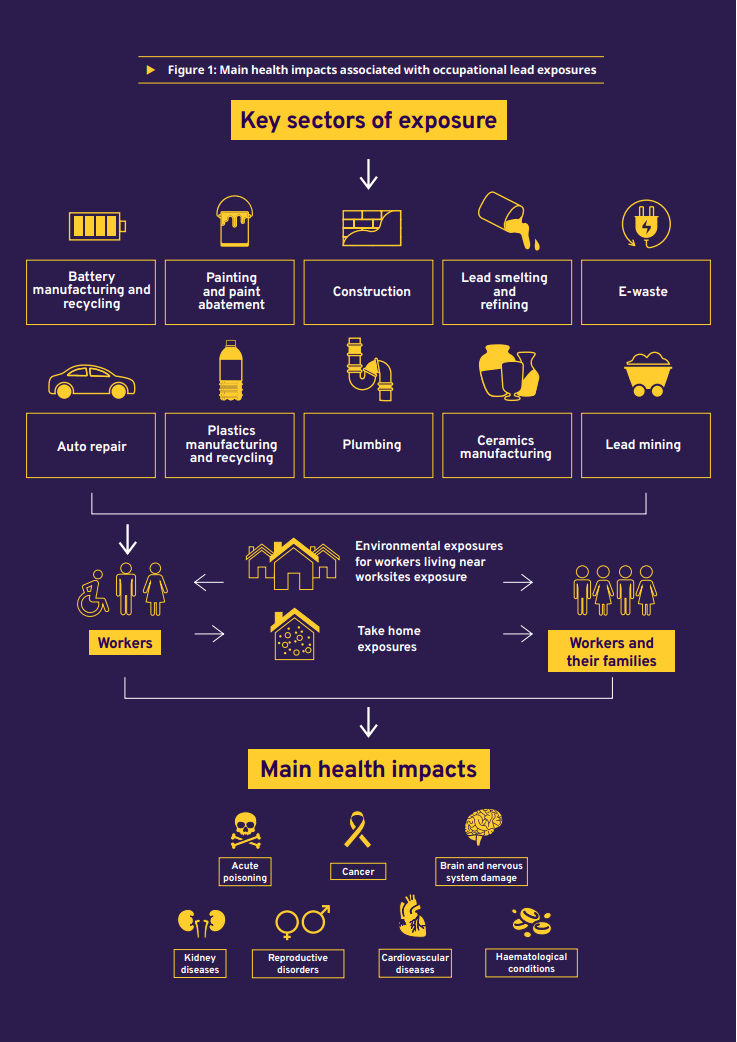
- A human-rights-based approach is central to ILO’s work, recognizing that all workers worldwide have the right to a safe and healthy working environment, which includes the elimination of harmful substances like lead.
- Harmonized and evidence-based occupational exposure limits are crucial for addressing lead exposure in the workplace. Collaboration across multiple sectors and ministries is key and essential for raising awareness and addressing lead exposure comprehensively.
- ILO emphasizes the importance of multisectoral collaboration, ensuring that key stakeholders, such as ministries of health and labor, are involved in efforts to reduce exposure to lead in all sectors.
- ILO provides diagnostic criteria and exposure guidelines for occupational diseases, offering recommendations on how to manage and treat workers affected by lead exposure.
- Banning lead paint has made significant strides in reducing one of the primary sources of lead exposure. However, this action alone is not enough, and there is a need for continuous effort to tackle other sources of lead toxicity.
- ILO urges countries to submit notifications regarding lead exposure to help ensure that proper measures are taken, reinforcing the importance of international cooperation and commitment to workers’ health and safety.
Q&A
Sara BROSCHÉ
- Many of the questions focused on the procedure for submitting notifications to the Rotterdam Convention regarding regulatory actions. In short, banning lead paint means you have severely restricted one of the major sources of lead chromate used in your country, making it eligible for notification to the Convention.
- Another potential use of lead chromates—though its extent is unclear—is in plastics, which varies by country. In most countries, lead paint remains one of the two major sources, or the primary source, of lead exposure.
- There are various templates, examples, and guidance documents available on both the Rotterdam Convention and IPEN websites. Additionally, we highly recommend reviewing health impact data from different countries, as this information should be included in notifications.
Q: The 2025 Meetings of he BRS COPs will take place at the end of April. What can be done in the months before the parties meet in Geneva?
Gilbert KUEPOUO:
- We encourage our colleagues and Parties that have passed national regulations on lead chromates or lead paint to leverage these regulations and initiate the notification process. If more regions submit notifications before the next COP, we can push for the listing of lead chromate on the Rotterdam Convention agenda.
- It would also be beneficial if key countries took the lead in organizing a side event at the next COP meeting in Geneva, allowing countries that have successfully submitted notifications to share their experiences and insights.
Sara BROSCHÉ:
- Governments that have already regulated lead chromates or lead paint should use this as a basis to submit notifications. Many countries already have all the necessary evidence to proceed with this right away, and we strongly urge them to review the notification procedure and take action.