
Événement Virtuel
Road to OEWG 3.2 Series | Information Session on Foundational Document and Rules of Procedure
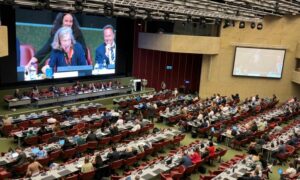
10 Oct 2024
14:00 – 15:30
Lieu: Online | Webex
Organisation: Groupe de travail spécial à composition non limitée chargé d’examiner la création d’un groupe d’experts sur l’interface science-politiques au service de la gestion rationnelle des produits chimiques et des déchets et de la prévention de la pollution, Geneva Environment Network
This online event is part of the "Road to OEWG 3.2 Series", co-organized by the Secretariat of the ad hoc open-ended working group (OEWG) on a Science-Policy Panel to Contribute Further to the Sound Management of Chemicals and Waste and to Prevent Pollution and the Geneva Environment Network.

About this Event
The ad hoc open-ended working group (OEWG) on a science-policy panel to contribute further to the sound management of chemicals and waste and to prevent pollution is approaching a critical juncture with the upcoming negotiations at its resumed third session (OEWG 3.2). Negotiations have progressed in June 2024 in Geneva, yet the OEWG was not able to conclude its work and there are still some main areas for discussions.
Key documents to be finalized at OEWG 3.2 will be the foundational document to establish the panel and the draft rules of procedure. The foundational document sets out the objective and functions, operating principles and approaches, and institutional arrangements for the science-policy panel, while the draft rules of procedure establishes the framework for decision-making and operational aspects of the panel.
This event provided an opportunity for governments and other stakeholders to be informed of the process at the close of OEWG 3.1.
Road to OEWG 3.2 Series
In March 2022, the United Nations Environment Assembly at its resumed fifth session (UNEA-5.2) agreed to establish an independent, intergovernmental science-policy panel to contribute further to the sound management of chemicals and waste and to prevent pollution. An ad hoc open-ended working group (OEWG) process has been initiated to prepare proposals for the panel.
As set out in UNEA resolution 5/8, the panel will support countries to take action on chemicals, waste and pollution, including to implement various international instruments such as multilateral environmental agreements (MEAs), by providing policy-relevant scientific advice. The Panel will also further support relevant MEAs, other international instruments and intergovernmental bodies, and other relevant stakeholders in their work.
The OEWG concluded its third session in June 2024, in Geneva and despite making significant progress, delegates were unable to finalize the work and will meet for a resumed session (OEWG 3.2) in early 2025, back to back with an intergovernmental meeting to consider the establishment of the SPP.
Speakers
By order of intervention.
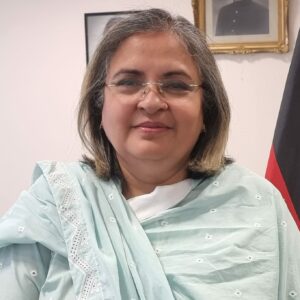
H.E. Amb. Saqlain SYEDAH
Ambassador of the Islamic Republic of Pakistan in Germany | SPP OEWG Bureau Member
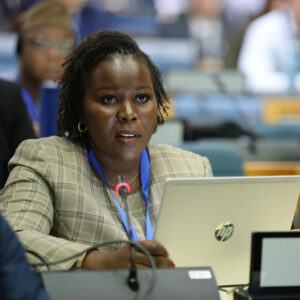
Linda KOSGEI
Head of MEAs, Ministry of Environment, Climate Change and Forestry, Kenya | SPP OEWG Bureau Member and Rapporteur
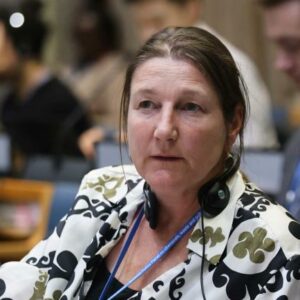
Tessa GOVERSE
Principal Coordinator, SPP OEWG Secretariat
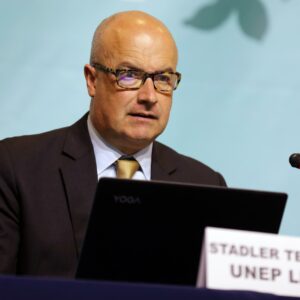
Stadler TRENGOVE
Principal Legal Officer, UNEP
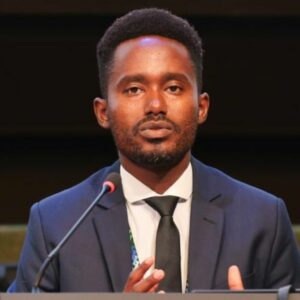
Alvin GACHIE
Legal Officer, Law Division, UNEP

Océane DAYER
Waste and Chemicals Focal Point, Federal Office for the Environment, Switzerland

Nalini SHARMA
SPP OEWG Secretariat | Moderator
Highlights
Summary
Opening Remarks
H.E. Amb. Saqlain SYEDAH | Ambassador of the Islamic Republic of Pakistan in Germany | SPP OEWG Bureau Member
- The ad hoc working group on the Science-Policy Panel for chemical, waste and pollution prevention is approaching a critical juncture with the upcoming resumed third session (OEWG 3.2) in 2025. Negotiations, which began in 2022, progressed during the third session in June 2024. However, several important areas of discussion remain, including the finalization of the foundational document and the draft rules of procedure.
- UNEA Resolution 5/8, adopted in 2022, calls for the creation of an independent, intergovernmental Science-Policy Panel to contribute to the sound management of chemicals, waste, and pollution prevention. The Panel will have a program of work approved by member governments, delivering scientific evidence relevant to policy without being policy prescriptive.
- The objective of the Panel is to strengthen the science-policy interface for the sound management of chemicals, waste and pollution prevention, and protect human health and the environment. Four core functions include horizon scanning, conducting assessments, providing up-to-date information and raising public awareness, sharing information, and capacity building.
Status of Negotiations at the Close of OEWG 3.1
Linda KOSGEI | Head of MEAs, Ministry of Environment, Climate Change and Forestry, Kenya | SPP OEWG Bureau Member and Rapporteur
- In accordance with UNEA Resolution 5/8, OEWG started its work in October 2022 in Nairobi. Next, the OEWG convened in Bangkok in February 2023 for our resumed first session, where we exchanged views in “Deep Dive Dialogues” and set to work on proposals for the panel’s operation. We then met in Nairobi in December 2023 for our second session, where we agreed to work on the basis of a skeleton outline and draft text of proposals for the panel. Progress was made in focused contact groups and this work was also used to identify intersessional work that the secretariat would undertake in advance of the third session in Geneva in June 2024.
- At OEWG-3.1, important progress was made, but the OEWG was not able to conclude its work during this week. It was therefore agreed to resume the work at a later date, back-to-back with the Intergovernmental Meeting.
Outcomes of the Negotiations
- The meeting report (UNEP/SPP-CWP/OEWG.3/5) contains all the text as it stood at the close of OEWG-3.1. Each annex includes a draft decision and an associated annex (or annexes).
- The first contains the draft decision on the establishment of the Panel as described in the Foundational Document: the compilation of proposals for the establishment of the panel. This sets out the panel’s objective and functions, operating principles and approaches, institutional arrangements, and evaluation mechanisms.
- The second contains the draft of the decision including recommendations to the first session of the Governing Body of the Panel, including the draft rules of procedure.
Key Areas of Progress at OEWG 3.1.
- Foundational Document | Significant progress was made regarding the capacity-building function. Africa, EU and GRULAC put forward a new joint text proposal that was accepted as a basis for negotiations. The only remaining brackets relate to whether the Panel should ensure “gender-balanced”, “gender inclusive” or “gender-responsive” participation.
- Operating Principles of the Panel | Good progress was made in contact groups and informal groups and streamlining the text, with agreement that the section would be titled: Operating principles and approaches of the panel. Noting the instrument will be non-legally binding, participants agreed that the panel “will” rather than “shall” be guided by a set of operating principles and approaches in carrying out its work.
- Institutional Arrangements | Section of the foundational document, that sets out the architecture of the panel, there was general agreement on the structure of a Panel with a Governing Body (or Plenary), a Bureau, subsidiary bodies – notably an Interdisciplinary Expert Committee, and a secretariat. All sections of the Institutional arrangements were discussed with significant progress in contact groups and informal groups. Discussions on what was needed for the establishment of the Panel vis a vis what can be decided by the Panel itself at a later date helped moved forward the process. for example, detailed text on strategic partnerships may not need to be defined in the foundational document
- Draft Rules of Procedure | Several sections were identified as having significant overlap with the foundational document.
- Process for Determining the Work Programme | The contact group reached some consensus in taking a tiered approach for information requirements and the Procedures for the preparation and clearance of panel deliverables, were also tabled at OEWG 3.1 for further consideration by the panel’s governing body. The contact group clarified the definition of several deliverables, including assessments and synthesis reports. While much work remains on this document, it was helpful for building understanding of the panel’s work and helping progress on other issues.
- Conflict of Interest Policy | The contact group continued negotiations which had already begun at the second session of OEWG. Discussion focused on implementation procedures for identifying and managing Conflicts of interest.
- The draft proposal for financial procedures was not considered during OEWG 3.1. This document will be forwarded to the second part of the third session as an information document.
- At OEWG-3.1 the Africa Group advanced a proposal for a name for the panel which sparked further suggestions from others.
- In addition to the 129 governments that participated in the meeting, OEWG 3.1 was also attended by stakeholders from a broad array of non-governmental, industry, academic and other groups as well as by representatives from intergovernmental organizations, multilateral environmental agreements and other science-policy interfaces. Delegates’ engagement in the third session reflects our ongoing commitment to think across sectors and connect with those involved in, and affected by, the sound management of chemicals and waste and the prevention of pollution.
Tessa GOVERSE | Principal Coordinator, SPP OEWG Secretariat
Main elements of the Foundational Document 
- There was early recognition of the important linkages between the foundational document and the draft rules of procedure.
- There are ongoing discussions regarding several items in the foundational document on consistent terminology, such as the use of “governing body” or “plenary”, and references to gender.
- Other main discussions include membership, decision-making, roles of stakeholders, financial arrangements, and the Secretariat.
- Membership | The OEWG will need to decide who the members of the governing body of the Panel are, how they can become members, as well as clarify in what capacity members can participate in meetings.
- Decision-making | In carrying out its work, the science-policy Panel will be guided by the following operating principles and approaches, as exemplified in paragraph 2 in (a) ter [Ensuring][Finding] consensus in its decision-making process on matters of substance.
- Role of stakeholders | As described in paragraph 17, decisions should be taken by the non-governmental participants’ representatives as well as the Chair of the United Nations Environment Management Group participation in Interdisciplinary Expert Committee meetings.
- Financial arrangements | Linked to submissions for the work program, financial arrangements regarding contributions to the trust fund, and whether funding can be earmarked for specific activities.
- Secretariat | There has been informal engagement with UNEP and WHO on the provision of Secretariat services.
- The resumed third session will be held back-to-back with the intergovernmental meeting. The expected outcome of OEWG 3.2 is the finalized proposals for the Science-Policy Panel, decisions for the intergovernmental meeting, and the draft rules of procedure. This would allow the intergovernmental meeting to decide on the establishment of the Panel.

Technical Discussion on Rules of Procedure
Alvin GACHIE | Legal Officer, Law Division, UNEP
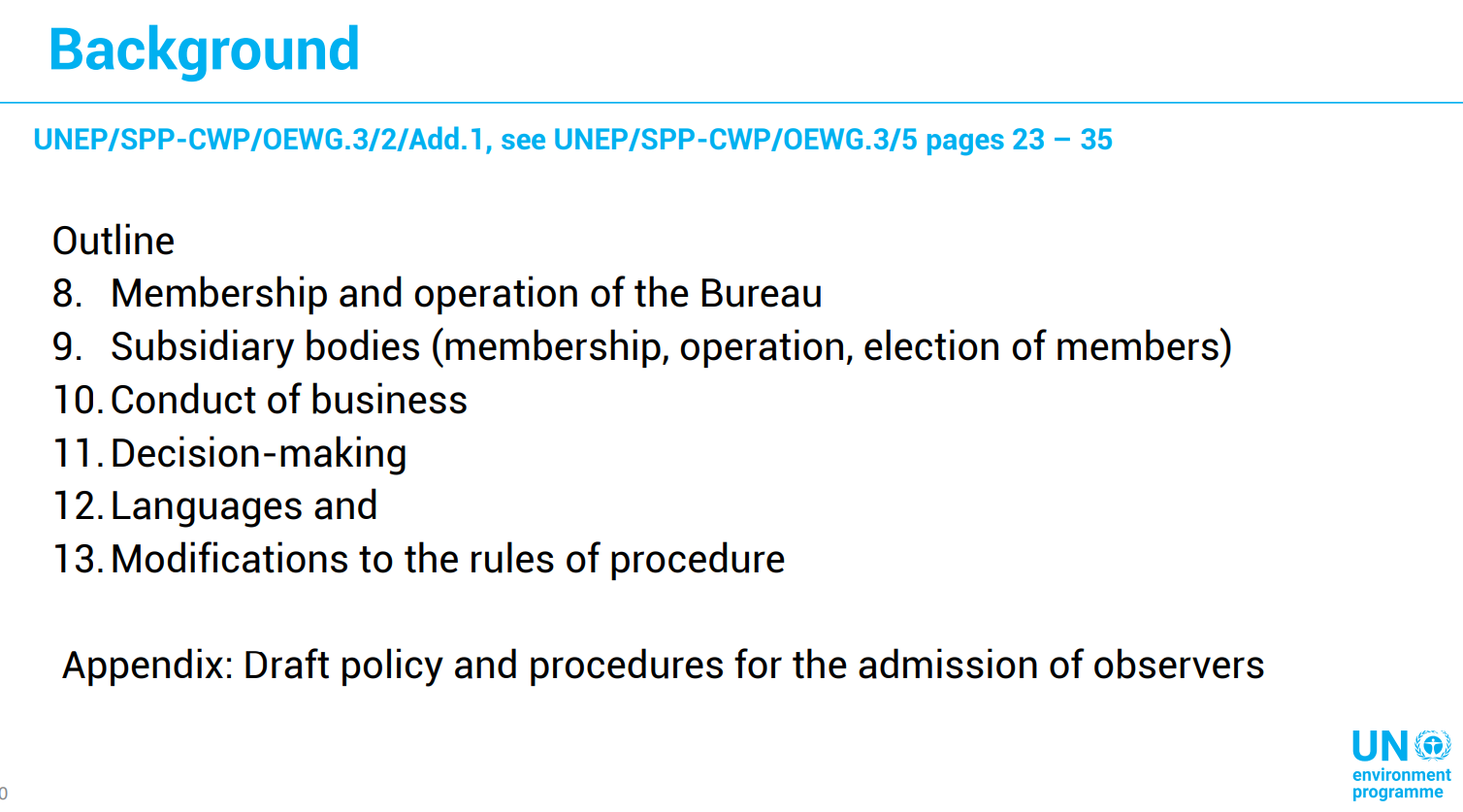
- The draft rules of procedure, drafted by the Secretariat with inspiration from established bodies such as IPCC, IPBES, and UNEA, are crucial in shaping the operation of the Panel. They cover important aspects including the scope or purpose of the rules, definitions, session logistics, and membership details.
- The rules also outline the different modalities of participation in sessions of the governing body, including members and observers, as well as rules on admission and participation of observers, representation and accreditation. The section on the Panel’s organizational framework addresses the membership and operation of the Bureau, and processes of nomination and election.
- The rules establish protocols for conducting business during the sessions, covering decision-making processes, elections, language usage, rule modifications, and draft policy and procedure for admitting observers.
Stadler TRENGOVE | Principal Legal Officer, UNEP
- Members and Observers | Rule 5 of the rules of procedure deals with membership of the Panel, opening the governing body to member states of the UN and specialized agencies that have expressed their intent to do so.
- Admission and participation of observers | According to Rule 7, any member state or member of a specialized agency that is not a member of the Panel, any UN entity, or secretariat of a multilateral environment agreement, will be considered as admitted by the governing body of the Panel as an observer. Bodies, organizations and agencies with observer status with any UN system entity or are accredited to UNEA or to any MEA are considered observers of the Panel if they so request, except as the governing body of the Panel otherwise decides.
- Representation, credentials and accreditation | As per Rule 12, each member participating in a session will be represented by a delegation, and the credentials of the representatives have to be an official communication of the member, signed on behalf of an appropriate government authority.
- Reviewing credentials is an intergovernmental responsibility; the Bureau examines the credentials and submits a report to the governing body of the Panel. Representatives are entitled to participate provisionally but do not have the right to take part in decision-making until their credentials are accepted.
- Membership and operation of the Bureau | The Bureau comprises two members from each of the five regional groups, including one Chair and nine Vice-Chairs, one of whom acts as Rapporteur. Members of the Bureau are nominated by regional groups and elected by the governing body of the Panel, considering disciplinary, geographical, regional and gender balance. The Bureau may invite experts to attend its meetings as observers.
- The term of office of the Bureau can be two or three years, with the opportunity for re-election. The Chair will be rotated among the five UN regions every three years, without possibility of re-election. Bureau members are elected by the governing body by consensus, unless the body agrees to use other forms of election. Each subsidiary body will elect its own officers.
- Subsidiary Bodies | As described in Section 9, each subsidiary body will elect its own officers. The membership of the Interdisciplinary Expert Committee will rely on the provisions in the foundational document and its members serve three-year terms, with the opportunity for re-election, ensuring staggered terms and a balance of disciplines, geography, and gender. Members will usually be elected by the governing body of the Panel by consensus. Co-chairs will be elected by members of the Committee, with rotation at regular intervals.
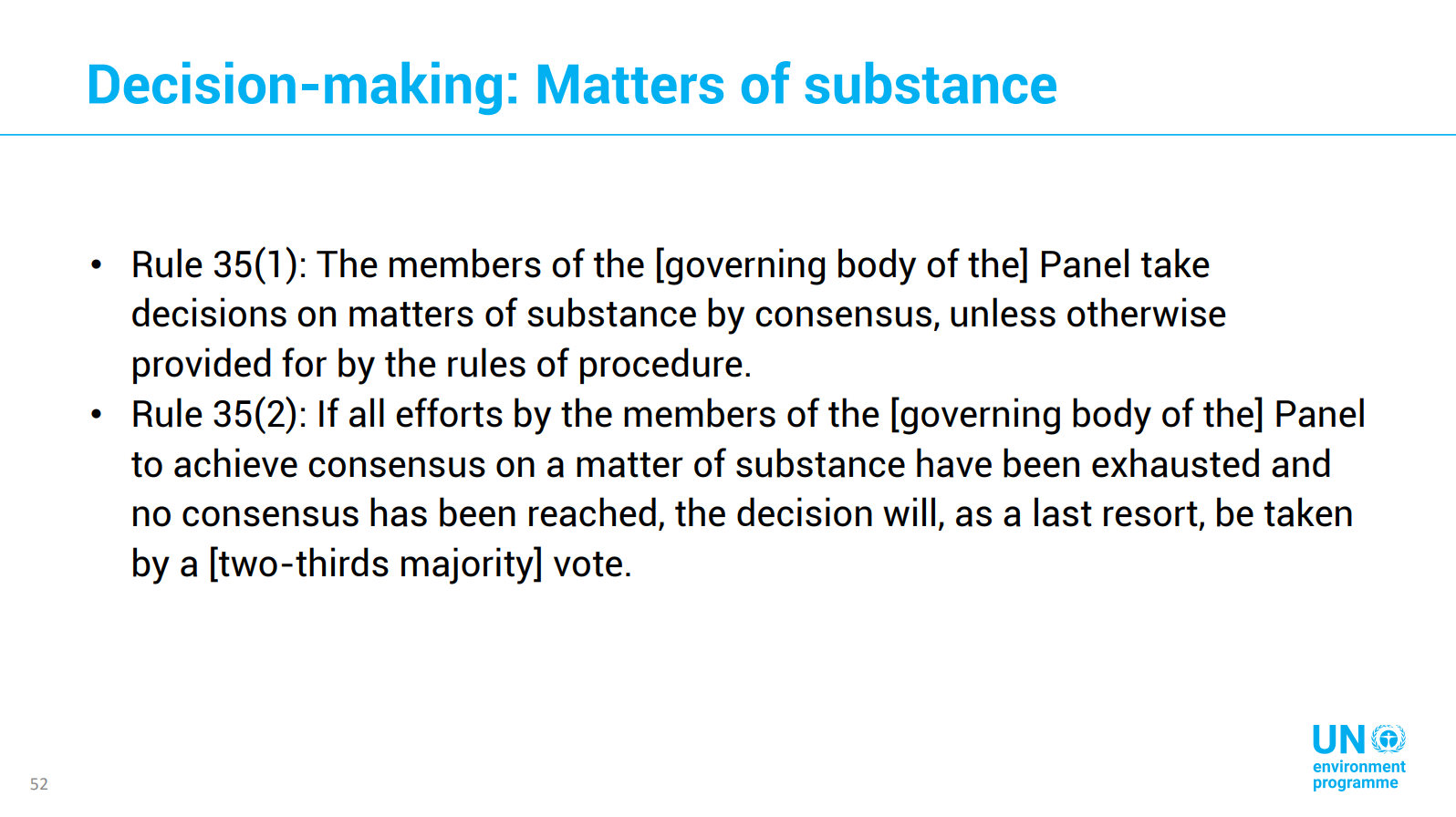
- Decision-making: Matters of substance
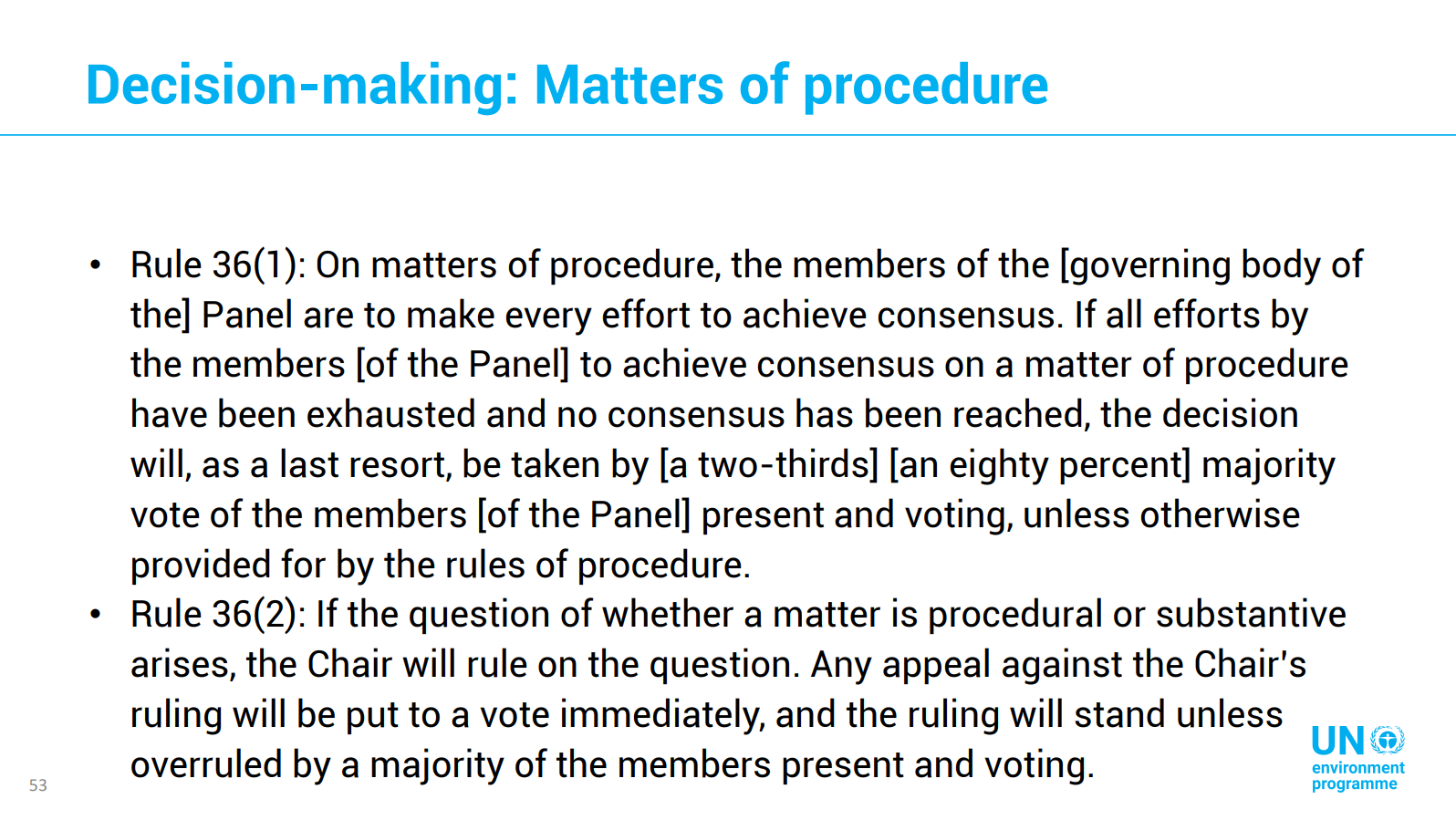

Q&A
Q: Clarification of the status of the draft rules of procedure – The rules of procedure are not agreed until everything is agreed?
Stadler TRENGOVE: Since the rules of procedure are still a draft, there are brackets indicating areas that may be revisited in cases where member states have questions or do not agree to specific wording. In terms of chronology, the foundational document will be adopted first, followed by other documents including the rules of procedure.
Q: Will voting be permitted online as the IPCC did during the COVID-19 pandemic, in case the need arises? Are there provisions for undertaking online voting in circumstances where in-person meetings are not possible?
Stadler TRENGOVE: Both OEWG 3.2 and the intergovernmental body will be in-person only and it is very unlikely that online voting would be allowed. Online voting in the future will depend on the nature of the body, and will require agreed modalities to ensure clarity and careful review of credentials of the participants. However online voting is a highly exceptional measure that is not generally applied to UN meetings.
Closing remarks
Océane DAYER | Waste and Chemicals Focal Point, Federal Office for the Environment, Switzerland
- The establishment of the Science-Policy Panel on chemicals, waste, and pollution is essential to informing, strengthening, and further advancing international governance on chemicals and waste.
- There is no need to reinvent the wheel. We can draw on the strengths of existing models such as IPCC and IPBES, while learning from their challenges.
- The governing body of the panel will be able to determine and refine the panel’s processes and work after its establishment. Not everything has to be decided now.
- We need to focus on the foundational document as we prepare for the Intergovernmental Conference, with some aspects linked to the rules of procedure that may be agreed upon now.
- Overall, we made good progress during OEWG 3.1, and only a few, but important, aspects remain to be resolved. These solutions exist, and will emerge through continued dialogue and cooperation.
- We are fortunate to have Geneva as a global governance hub for chemicals and waste management, with many MEAs, International Organization and NGOs working on the topic. Let’s use this platform to strengthen dialogue and cooperation and ensure the successful conclusion of our work.
- I am convinced of the necessity of establishing this panel, and I trust in the international community’s ability to achieve this. As pollution remains the largest environmental risk factor for premature death globally—responsible for 9 million deaths annually—the world is watching us. We must not let it down.
Video
Documents
Links
- Ad hoc open-ended working group on a science-policy panel on chemicals, waste and pollution prevention
- Report of the first part of the third session of the ad hoc open-ended working group on a science-policy panel to further contribute to the sound management of chemicals and waste and to prevent pollution (UNEP/SPP-CWP/OEWG.3/5)
- Developing a Global Science-Policy Panel on Chemicals, Waste and Pollution Prevention | GEN