Événement Virtuel
Briefing on the Preparations for the Resumed 3rd Session of the Ad Hoc Open-ended Working Group on a Science-Policy Panel on Chemicals, Waste and Pollution Prevention | Road to OEWG 3.2 Series

29 Mai 2025
14:00 – 15:30
Lieu: Online | Webex
Organisation: Groupe de travail spécial à composition non limitée chargé d’examiner la création d’un groupe d’experts sur l’interface science-politiques au service de la gestion rationnelle des produits chimiques et des déchets et de la prévention de la pollution, Geneva Environment Network
This online event is part of the "Road to OEWG 3.2 Series", co-organized by the Secretariat of the ad hoc open-ended working group (OEWG) on a Science-Policy Panel to Contribute Further to the Sound Management of Chemicals and Waste and to Prevent Pollution and the Geneva Environment Network.

About this Event
In its resolution 5/8, the United Nations Environment Assembly (UNEA) decided that a science-policy panel should be established to contribute further to the sound management of chemicals and waste and to prevent pollution. UNEA further decided to convene an OEWG to prepare proposals for the science-policy panel, to begin work in 2022 with the ambition of completing it by the end of 2024.
The third session of the ad hoc open-ended working group to prepare proposals for a science-policy panel to contribute further to the sound management of chemicals and waste and to prevent pollution (OEWG 3) took place in June 2024 in Geneva. Despite making significant progress, delegates were unable to finalize the work. The resumed third session of the OEWG will take place from 15 to 18 June 2025 in Punta del Este, Uruguay, with the aim of finalizing the key documents enabling the establishment and operationalization of the SPP. The meeting will be preceded by regional consultations on 14 June 2025.
OEWG 3.2 will be organized back to back with an intergovernmental meeting, to consider the establishment of the science-policy panel, to take place on 19 – 20 June 2025. This would then allow the convening of the first session of the governing body of the panel in the following months and the launching of the substantive work of the science-policy panel.
This Briefing provided updates on the preparations for OEWG 3.2 and close the « Road to OEWG 3.2 Series » of events organized by the OEWG Secretariat and Geneva Environment Network to build bridges and promote collaboration and knowledge sharing between and among stakeholders, and to raise public awareness about the ad hoc open-ended working group.
Road to OEWG 3.2 Series
In the lead-up to the establishment of a science-policy panel (SPP) to contribute further to the sound management of chemicals and waste and to prevent pollution, a series of webinars and events are being organized by the OEWG Secretariat and Geneva Environment Network to build bridges and promote collaboration and knowledge sharing between and among stakeholders, and to raise public awareness about the ad hoc open-ended working group (OEWG) preparing proposals for the scope, shape and functions of the panel.
Speakers
By order of intervention.

Gudi ALKEMADE
Chair, Bureau of the ad hoc open-ended working group on a science-policy panel to contribute further to the sound management of chemicals and waste and to prevent pollution
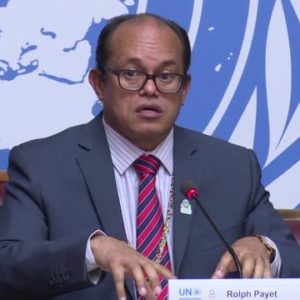
Rolph PAYET
Executive Secretary, Basel Rotterdam and Stockholm Conventions

Nalini SHARMA
Secretariat of the ad hoc OEWG on a Science-Policy Panel on Chemicals, Waste and Prevention of Pollution

Kay WILLIAMS
Head, Global Framework on Chemicals

Anna BECKER
Policy Director, International Sustainable Chemistry Collaborative Centre (ISC3)
Steven SETIAWAN
Children and Youth Major Group to UNEP (CYMG)

Sherika WHITELOCKE-BALLINGSINGH
Poison Information Coordinator, Caribbean Poison Information Network (CARPIN), College of Health Sciences, University of Technology, Jamaica

Li GU
Director Level Official at Department of International Cooperation, MEE, China
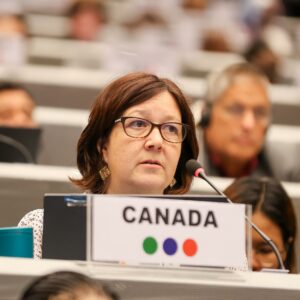
Isabelle MAYR
Head, International Engagement on Chemicals, CMD, Environment and Climate Change Canada

Lenn GOMAH
SPP OEWG National Focal Point, Liberia
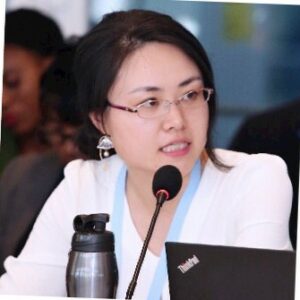
Melissa WANG
Honorary Research Fellow, University of Exeter | Senior Scientist, Greenpeace International

Alejandro NARIO
National Director, Quality and Environmental Assessment, Ministry of Environment Uruguay

Tessa GOVERSE
Principal Coordinator, Secretariat of the ad hoc open-ended working group on a science-policy panel to contribute further to the sound management of chemicals and waste and to prevent pollution | Moderator
Highlights
Video
Live on Webex.
Summary
Opening Remarks
Gudi ALKEMADE | Chair, Bureau of the ad hoc open-ended working group on a science-policy panel to contribute further to the sound management of chemicals and waste and to prevent pollution
- On the path to establishing a science-policy panel to support the sound management of chemicals and waste and prevent pollution, the urgency and importance of the work ahead are clear, especially the need to finalize the foundational document, rules of procedure, and three key draft decisions on the panel’s establishment, interim arrangements, and transmission of proposals to its governing body.
- Success depends on flexibility, consensus-building, and focusing on unresolved issues like functions, membership, decision-making, and institutional arrangements. The work will build on progress already made, not from scratch, with a focus on aligning related rules and foundational elements.
- The panel is a historic opportunity to improve access to science for informed national policies and the implementation of MEAs.
- Unity, preparation, and commitment to multilateralism, to protect human health and the environment are needed.
Rolph PAYET | Executive Secretary, Basel Rotterdam and Stockholm Conventions
- 2025 Meetings of the Conference of the Parties to the Basel, Rotterdam and Stockholm Conventions took place from 28 April to 9 May 2025.
- The conventions are part of the chemicals and waste cluster under UNEP, working in coordination with others such as the Minamata Convention on Mercury, the Montreal Protocol, and the Global Framework on Chemicals. Together, they share a vital common goal: protecting human health and the environment from the harmful effects of chemicals and waste through their environmentally sound management across their entire life cycle.
- Science has always been central to decision-making under the BRS Conventions, from chemical listings to technical guidelines and progress assessments. The proposed science-policy panel presents a critical opportunity to enhance science-based global decision-making and strengthen international efforts to combat pollution.
- There is an urgency for Parties to advance this panel at the upcoming third resumed session, drawing on the BRS Conventions’ experience in running inclusive, balanced, and effective scientific bodies. Key lessons include the importance of interdisciplinary expertise, regional and gender balance, stakeholder participation, and clear procedures and methodologies to ensure legitimacy, quality, and policy relevance.
- The BRS Conventions have requested their Secretariat to continue and strengthen cooperation with the future science-policy panel. The Conferences of the Parties emphasized the importance of coordination, complementarity, and alignment between the panel and the scientific and technical bodies of the conventions.
- The BRS Secretariat will also contribute to the panel’s development and remain engaged during its establishment, including sharing expertise and supporting its integration into existing scientific and policy frameworks.
- There is still a need to determine how to create strong links between the science-policy panel’s outcomes and other international bodies. Key questions remain: How will the panel’s information be used? Which topics will it address to inform global decision-making?
- All participants are encouraged to come prepared, engage in meaningful negotiations, and work toward clear decisions at the upcoming meeting in Uruguay. The goal is to ensure the panel becomes a powerful tool in addressing chemicals and waste globally.
Update on Preparations
Nalini SHARMA | Secretariat of the ad hoc OEWG on a Science-Policy Panel on Chemicals, Waste and Prevention of Pollution
- The panel stems from UNEA resolution 5/8 (2022) to support sound management of chemicals and waste and prevent pollution. The ad hoc OEWG began work in 2022, aiming to conclude by end of 2024, with its proposals to be considered at an intergovernmental meeting.
- The first part of OEWG3 (OEWG3.1) was held in June 2024 in Geneva. Outcomes are detailed in a meeting report (UNEP/SPP-CWP/OEWG.3/5), with annexes containing draft decisions and foundational documents.
- Recent and upcoming activities include webinars, briefings, and regional meetings that have been conducted to prepare participants.
- OEWG 3.2 will be held from 15 to 18 June 2025, preceded by consultations on 14 June, and followed by an intergovernmental meeting on 19 and 20 June, all in Punta del Este, Uruguay.
- Key documents include:
- Foundational Document (UNEP/SPP-CWP/OEWG.3/6): Defining the structure and purpose of the panel.
- Draft Decisions (UNEP/SPP-CWP/OEWG.3/6; UNEP/SPP-CWP/OEWG.3/7; UNEP/SPP-CWP/OEWG.3/8): Cover panel establishment, interim arrangements, and proposals for its governing body.
- Information Docs (UNEP/SPP-CWP/OEWG.3/INF/8; UNEP/SPP-CWP/OEWG.3/INF/9; UNEP/SPP-CWP/OEWG.3/INF/10) Include scenario notes, financial procedures, and written submissions.
- The meeting objectives are to finalize two key documents the foundational document which sets out key elements for the panel’s establishment and the draft rules of procedure to be adopted by the panel once it is established.
- The open-ended working group will also need to finalize three draft decisions that are necessary for the intergovernmental meeting to establish the panel and set its work in motion.
- Meeting Structure & Modalities are the following:
- UNEA rules of procedure apply mutatis mutandis.
- Use of contact and informal groups, working in English only.
- Focus areas are divided among three contact groups addressing membership, rules, foundational elements, and interim decisions.
- In terms of logistics:
- Venue: Convention and Exhibition Center, Punta del Este.
- 623 participants registered for OEWG 3.2; 534 for the intergovernmental meeting.
- Visa exemption letters are available with an urgent deadline.
- Transport & Accommodation: Airport transfers, hotel guidance, and scheduled shuttles provided.
- Catering: Food available on-site; outside delivery not permitted.
- Participants are encouraged to come well-prepared, ready to negotiate and finalize decisions to establish a strong, effective science-policy panel.
Updates
Kay WILLIAMS | Head, Global Framework on Chemicals
- The Global Framework on Chemicals, agreed upon in 2023, is a multi-stakeholder, multi-sector agreement featuring five strategic objectives and 28 targets, underpinned by a strong political commitment that recognizes the urgent need for action in the areas of chemicals and waste management.
- A fund amounting to approximately 28 million USD has been established to support the framework, with the executive board having recently approved the first round of projects to be financed, signaling the beginning of tangible implementation efforts.
- The development of the science-policy panel originated in discussions within the earlier Strategic Approach to International Chemicals Management (SAICM), aiming to strengthen the science-policy interface; this connection continues to be essential for ensuring that all actions under the new framework are rooted in robust scientific evidence.
- Emphasis is placed on transforming current practices related to chemicals through a transition to safer, more sustainable management systems, which includes close collaboration with businesses to reform supply chains and encourage the adoption of innovative sustainable chemicals.
- The integration of sustainable chemistry into mainstream practices is a core objective, with the science-policy panel expected to play a critical role by providing policy-relevant, evidence-based recommendations that help avoid harmful decisions such as regrettable substitutions that could adversely impact human health and the environment.
- The upcoming period will involve intensive activity, with key meetings including a back-to-back session with the open-ended working group on the science-policy panel, an intergovernmental meeting, and an INC meeting, all scheduled to take place over two weeks in Punta del Este, Uruguay.
- These meetings are intended to be interactive and hybrid in format, serving as a milestone for reviewing and advancing the framework’s implementation efforts as preparations begin for the 2026 International Conference.
- Looking ahead, there is a strong intention to build close linkages between stakeholders and the science-policy panel, with hopes for a successful outcome in the ongoing negotiations and collaborative work towards effective chemicals and waste governance.
Anna BECKER | Policy Director, International Sustainable Chemistry Collaborative Centre (ISC3)
- The SPP Science Alliance was established in December 2023 during the second meeting of the SPP open-ended working group, emerging from the energy and involvement of the science and technology major group, with the core goal of strengthening the science-policy interface within the framework of the SPP.
- This alliance is envisioned as an international, interdisciplinary, and independent network of scientific and technical experts that reflects diverse social, geographical, and disciplinary backgrounds, aiming to bring together the necessary expertise to address complex global environmental challenges.
- Since its creation, a dedicated core team and a broader volunteer network have been meeting regularly to shape the alliance’s direction and implement its collective goals.
- An official kickoff meeting in early 2024 marked the formal launch of its activities, after which the alliance formed working groups focused on key tasks such as formulating a clear vision and mission, proposing governance structures, identifying potential flagship products, and planning steps toward securing sustainable funding and a suitable host organization.
- Progress updates have been shared through webinars held throughout the past and current year, maintaining transparency and engagement with a broader community.
- A key milestone in 2025 was the launch of a science-for-policy training program in May, created to equip scientists operating at the science-policy interface with relevant skills and competencies to enhance their influence and effectiveness in policy processes.
- Further information about the training program is planned to be shared in person during the meeting in Uruguay on June 14th, highlighting the Alliance’s commitment to outreach and capacity-building.
- Priorities for the upcoming OEWG session include convening in-person working meetings to foster deeper collaboration and to address two of the most pressing challenges: obtaining financing and securing a host institution for the alliance.
- Despite ongoing challenges, the alliance remains strongly committed to its mission, continues to receive interest and positive feedback, and is motivated by the momentum and potential for impactful science-policy engagement that has grown since its inception.
Steven SETIAWAN | Children and Youth Major Group to UNEP (CYMG)
- The Children and Youth Major Group to UNEP (CYMG) has been actively preparing for OEWG 3.2 and the upcoming intergovernmental meeting through a series of consultations with its members during the intersessional period. These consultations were aimed at identifying key deliverables and engagement strategies that reflect youth perspectives and ensure meaningful youth participation in the process.
- A key proposal is the recommended name for the future panel: the Intergovernmental Panel on Chemicals, Waste and Pollution (IPCWP). This name is intended to reflect the panel’s core mandate and ensure alignment with the objectives set out in UNEA resolution 5/8, which focuses on the sound management of chemicals and pollution.
- Two virtual roundtables were held to gather youth input, resulting in the identification of ten priority areas for presentation at OEWG3.2. These priorities include principles such as intergenerational equity, inclusive plenary functions, and the establishment of a youth expert advisory group, among others, all rooted in extensive consultations with young people.
- General comments and textual proposals were submitted to UNEP on documents UNEP/SPP-CWP/OEWG.3/6, 3/7, and 3/8. For document 3/6, the feedback emphasized the need for more explicit language on youth engagement and clearer operational commitments. For document 3/7, suggestions included incorporating indicative language that promotes inclusive and participatory stakeholder engagement modalities.
- Five concrete proposals have also been submitted to enhance meaningful youth engagement. These include the creation of a youth expert advisory group, a fellowship program, a PhD scholarship scheme, a structured youth network, and the development of youth-friendly deliverables and outreach strategies to ensure accessibility and relevance for young stakeholders.
- All related deliverables and submissions have been made accessible via a QR code shared in the chat, with a strong emphasis on continued negotiation and collaboration with all participants throughout OEWG3.2 to ensure youth voices are integrated effectively into the process.
Country and Stakeholders’ Perspectives
Science | Sherika WHITELOCKE-BALLINGSINGH | Poison Information Coordinator, Caribbean Poison Information Network (CARPIN), College of Health Sciences, University of Technology, Jamaica
- To confront the intricate and intertwined challenges of the triple planetary crisis, including the catastrophic impacts of climate change, the alarming loss of biodiversity and the pervasive threat of pollution, policy development must be deeply rooted in thorough and interdisciplinary scientific research. This multifaceted approach should encompass a broad spectrum of scientific domains extending beyond the traditional boundaries of the natural sciences to incorporate insights from the social sciences, economic evaluations, and diverse local knowledge systems.
- Also important is the integration of the rich and invaluable perspective of Indigenous communities, whose unique understanding of their environments often unveils context-specific solutions that can effectively address pressing global issues.
- It is vital for the panel to nurture a vibrant reciprocal relationship between scientific inquiry and policy making. This entails not only translating empirical research and compelling scientific data into actionable and pragmatic policy recommendations but also establishing dynamic challenge channels for policymakers to articulate their specific inquiries, concerns, and priorities back to the scientific community. By fostering this two-way dialogue, the panel will ensure that scientific research remains relevant and adeptly responds to the urgent and evolving challenges of chemical management, waste reduction, and pollution prevention. This will also create a synergy that empowers both scientists and policymakers.
- There is an eager anticipation within the scientific community for the panel to make meaningful advancements in delineating a clear, inclusive and ambitious framework complete with a well-articulated set of functions. This guiding structure should mirror the intricate complexities and interconnections inherent in the challenges surrounding chemicals, waste and pollution, ensuring that all dimensions of these issues are comprehensively addressed, embracing the principles of inclusivity and sustained engagement.
- This includes a focused effort to amplify diverse voices, especially those of early career researchers, scientists ailing from the global South and representatives from underrepresented academic disciplines. While the specific process and modalities will be defined by the panel once it’s convened, there is palpable enthusiasm within the scientific community to remain actively involved both in the open-ended working group discussions and the panel’s future initiatives. This commitment ensures that a rich tapestry of knowledge holders is represented in crucial decision-making processes and this will cultivate a more holistic and effective approach to global challenges.
Li GU | Director Level Official at Department of International Cooperation, MEE, China
- The establishment of a new science-policy panel focusing on chemicals, waste, and pollution prevention represents a critical advancement in global environmental governance, following in the footsteps of the IPCC for climate change and IPBES for biodiversity loss.
- This panel aims to strengthen coordinated global efforts by offering scientific and political support, ensuring that no country or community is excluded from collective actions to combat pollution, protect human health, and drive sustainable development.
- The Chinese government has prioritized the environmental management of chemicals and waste by embedding it into national socio-economic development plans, viewing it as essential to achieving the vision of a “beautiful China” and a model of modernization in harmony with nature.
- The journey toward creating the panel has been shaped by continuous dialogue and the integration of diverse perspectives, with the current session serving as a crucial milestone to consolidate collective efforts and establish a strong foundation for its operational structure.
- Reaching consensus on clear procedural rules and governance mechanisms is essential to ensure the panel’s future work remains transparent, inclusive, and effective; this foundational framework is viewed as indispensable for its success.
- China has actively contributed to the panel’s formation process and expresses its commitment to collaborating with all stakeholders in building a shared vision and advancing the sound management of chemicals and waste.
- This moment is seen as a unique opportunity to transform shared aspirations into concrete actions that pave the way for a healthier and more sustainable future for upcoming generations.
Isabelle MAYR | Head, International Engagement on Chemicals, CMD, Environment and Climate Change, Canada
- The upcoming OEWG 3.2 meeting is seen as a pivotal step toward finalizing discussions on key documents to be forwarded to the intergovernmental meeting for the establishment of the science-policy panel. This process is expected to build on the collective progress made during previous meetings and align with elements already outlined in the relevant UNEA resolution to ensure efficiency and continuity.
- The panel is envisioned to be responsive to advancements in scientific knowledge, innovation, and development in the areas of chemicals, waste management, and pollution prevention. It should serve as a mechanism that strengthens evidence-based policymaking across national, regional, and global levels, contributing directly to the protection of human health and the environment.
- Canada’s national chemicals management framework serves as a reference point for its expectations from the future panel. This domestic plan includes comprehensive elements such as risk assessment, risk management, enforcement of regulations, monitoring, and evaluation of outcomes, and underscores the country’s commitment to science-based and results-oriented approaches.
- The panel is expected to provide timely, accessible, and policy-relevant scientific information tailored to country-specific contexts. It should also play a key role in identifying and addressing knowledge gaps, handling cross-cutting challenges beyond the mandates of existing multilateral environmental agreements, and supporting agile policy responses to emerging risks, while raising awareness on the importance of sound chemicals and waste management globally.
- Given the multitude of international platforms already operating in the chemicals and waste space, the panel’s added value lies in addressing emerging and complementary policy challenges that are not yet covered elsewhere. Its structure should promote collaboration and knowledge-sharing with other relevant entities to maximize collective expertise and ensure synergistic efforts.
- As a non-binding instrument, the panel will rely heavily on meaningful cross-sectoral engagement to ensure its relevance and effectiveness. This includes contributions from a broad spectrum of disciplines across natural sciences, social sciences, and indigenous knowledge systems, ensuring that diverse forms of expertise are reflected in its work.
- Strong engagement from the health sector is considered critical, especially in tackling the human health dimensions of chemical, waste, and pollution-related challenges. The panel’s work should reflect health impacts comprehensively and integrate health expertise from the outset.
- The panel must also work in partnership with organizations and stakeholders that represent and advocate for underrepresented and disproportionately affected groups such as women, children, youth, workers, and indigenous communities. Recognizing these groups not only as vulnerable but also as essential contributors to change is crucial for inclusive environmental governance.
- Embedding gender responsiveness and equity into the panel’s processes is seen as vital. This includes the active and meaningful participation of women and girls in all their diversity, not just as beneficiaries but as decision-makers and leaders in the environmental domain, to ensure the panel’s outcomes are both impactful and inclusive.
- The overarching aim is to establish a reputable and well-recognized international panel that will offer practical, interdisciplinary solutions to real-world challenges in chemicals and waste management and pollution prevention. There is optimism that OEWG 3.2 will lay a strong foundation for this future entity, and there is readiness to contribute constructively toward a successful outcome.
Lenn GOMAH | SPP OEWG National Focal Point, Liberia
- The establishment of a science-policy panel on chemicals, waste, and pollution is seen as a landmark decision, especially from an African perspective, where it holds significant implications for sustainable development, environmental health, and economic progress. Africa disproportionately faces risks due to the improper management of hazardous chemicals and waste, making this initiative crucial for the continent.
- Challenges in Africa include weak regulatory systems and limited enforcement capacities, which hinder effective chemical and waste management. Global commitments often fail to translate into local action due to disconnects between scientific bodies and policy authorities or a lack of access to independent scientific assessments that could inform policy development and enforcement.
- A science-policy panel that provides accessible, timely, and evidence-based data tailored to local realities is considered transformative. Such a panel would help bridge the gap between science and policy, enabling more effective implementation of international agreements such as the chemicals and waste conventions, the Global Framework on Chemicals, and other relevant frameworks.
- Capacity building is emphasized as a vital function of the panel, especially for developing countries. It is seen as essential to enable African scientists and policymakers to effectively utilize the panel’s outputs and recommendations. The inclusion of capacity building in the panel’s functions is viewed as a significant achievement after persistent advocacy.
- The process leading up to the panel’s formation, from Nairobi to Bangkok and Geneva, is a long but rewarding journey, marked by teamwork and commitment. Although some tasks remain, substantial progress has been made, and there is a strong sense of anticipation and optimism around the panel’s final establishment.
- The negotiations so far have been inclusive, recognizing the diverse needs and capacities of different member states and stakeholders. There is a hope and expectation that this inclusive spirit will continue in the final OEWG3.2 negotiations, with all parties maintaining a mindset of flexibility, compromise, and a shared goal of completing the work.
- The panel is envisioned as a unique and essential mechanism to address global chemical and waste pollution, safeguard human health, and ensure a sustainable future for future generations. It is viewed not just as a technical body but as a vital lifeline for global cooperation and progress on these pressing environmental issues.
Stakeholders | Melissa WANG | Honorary Research Fellow, University of Exeter | Senior Scientist, Greenpeace International
- Inclusivity has been a central element in the Open-Ended Working Group (OEWG) process, with increased participation from organizations and stronger communication and coordination among major groups. This inclusivity must not only be preserved but actively enhanced as the science-policy panel becomes operational, ensuring transparency, meaningful participation, and the representation of voices from marginalized and disproportionately affected communities.
- The unprecedented joint opening statement from all nine major groups at the previous OEWG highlighted two key demands: the preservation of inclusivity and the establishment of a strong and rigorous conflict of interest policy held to the highest standards. While a subsequent, more detailed submission on conflict of interest was endorsed by only five major groups, this was due solely to time constraints and not a lack of consensus.
- Although discussions around the conflict of interest policy may be deferred to the panel’s future governing body, it remains a critical issue with widespread support across major groups. This underlines the importance of addressing the topic seriously to uphold credibility, fairness, and trust in the panel’s work moving forward.
- Despite the diversity in perspectives, knowledge bases, and priorities, major groups have worked collaboratively to align on joint statements, agendas, and speaker selections. This process required constructive dialogue, good faith, and flexibility, not a compromise that dilutes outcomes, but one that respects scientific integrity and integrates multiple viewpoints to produce balanced, trusted results for the communities these negotiations aim to serve.
- The demand for a robust conflict of interest policy within the joint statement illustrates the cooperative and principled spirit guiding major group contributions. As negotiations near their conclusion, this spirit is crucial to finalizing the establishment of a science-policy panel that is inclusive, credible, and representative.
- The pollution pillar of the triple planetary crisis has long awaited a dedicated science-policy interface. Various speakers, including those from the BRS and GFC Secretariats, have emphasized both the urgency of this need and the potential for collaboration that such a panel could unlock.
- A co-authored paper by scientists from academia, government, and civil society drew on collective experience in science-policy interfaces, emphasizing the importance of building trust and rapport. This foundational approach is seen as essential for the panel to function effectively and credibly.
- A personal reflection on attending an IPCC meeting in Monaco in 2019 highlighted the challenges and inspiration found in the collaborative process of scientific report adoption. A symbolic moment occurred when a co-chair, upon completing their task, passed the responsibility on to the next generation to protect the planet, underscoring the importance of continuity, responsibility, and shared effort.
- Major groups have worked tirelessly to contribute knowledge, narratives, and recommendations through submissions, presentations, and bilateral discussions. The responsibility now lies with governments to finalize negotiations and establish a science-policy panel that is inclusive, transparent, and governed by strong conflict-of-interest policies, one that reflects national and scientific pride and serves both people and the planet effectively.
Q&A
Q: In the context of protecting human health and the environment, how can we strengthen the integration of risk assessment, risk management, and regulatory enforcement both at the domestic level, and through international cooperation to ensure effective monitoring and performance evaluation?
Isabelle MAYR | Head, International Engagement on Chemicals, CMD, Environment and Climate Change, Canada
- Strengthening the integration of risk assessment, risk management, and regulatory enforcement can benefit from approaching the management of chemicals and waste as a continuous, interconnected cycle. This means planning each step: assessment, management, monitoring, and evaluation, in a way that they complement one another and are not treated in isolation. Such an approach allows early consideration of how monitoring and performance evaluation will be carried out, based on insights generated during the risk assessment and management phases. Emphasizing this cyclical and forward-thinking method enables more coherent and effective implementation across both national and international levels.
Closing Remarks
Alejandro NARIO | National Director, Quality and Environmental Assessment, Ministry of Environment, Uruguay
- The establishment of a global scientific panel on chemicals, waste, and pollution is in its foundational phase, marking the beginning of a meaningful international initiative aimed at deepening understanding of how these issues affect human health and the environment. This panel is not being formed as a legally binding agreement but rather as a collaborative, science-based structure designed to inform decision-making with urgency and precision.
- The structure and guiding principles for the panel stem from a resolution adopted by the United Nations Environment Assembly, which provides both the mandate and the strategic framework to move forward. This framework allows for flexibility, ensuring that the panel can develop in an inclusive, functional, and responsive manner that evolves over time.
- Like other established scientific bodies such as the IPCC and IPBES, the governance and procedures of this new panel are expected to be refined progressively. While initial arrangements will be important, they must not constrain the panel’s long-term ambition or adaptability. The goal is to allow space for the panel’s organic development in response to emerging global needs.
- Broad participation from the global scientific community is essential to ensure the panel remains grounded in real-world issues and delivers practical, science-based solutions. Involvement from scientists across all regions, disciplines, and backgrounds is critical to building a panel that is relevant, inclusive, and reflective of diverse perspectives.
- It is important to consider provisional measures that will allow the panel to begin critical operations immediately. These measures should be designed to support urgent needs while enabling the formation of strategic partnerships and collaborations that can be adapted as the panel grows and its work expands.
- As the host of the upcoming conference in Punta del Este, Uruguay extends a warm welcome to participants and emphasizes the importance of values such as openness, dialogue, and collaboration. These values are not only representative of the host country but are also envisioned as the foundation for collective efforts moving forward in building the panel and addressing global environmental challenges.
Documents
Links
- Road to OEWG 3.2 Series | Establishing a Science-Policy Panel On Chemicals, Waste and Pollution Prevention
- Road to Punta del Este
- Ad hoc open-ended working group on a science-policy panel on chemicals, waste and pollution prevention
- Report of the first part of the third session of the ad hoc open-ended working group on a science-policy panel to further contribute to the sound management of chemicals and waste and to prevent pollution (UNEP/SPP-CWP/OEWG.3/5)