Nouvelle
Summit of the Future & The Role of Geneva
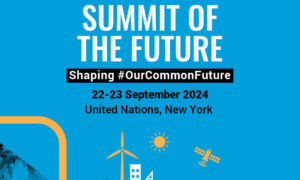
The United Nations General Assembly will hold a Summit of the Future on 22-23 September 2024, to be preceded by Action Days on 21 and 22 September 2024. The Summit is a high-level event, bringing world leaders together to forge a new international consensus on how we deliver a better present and safeguard the future. This page will gather information and map contributions by actors in Geneva and beyond.
Summit of the Future: Multilateral Solutions for a Better Tomorrow
The Summit of the Future is a high-level event that will bring world leaders together to forge a new international consensus on how we deliver a better present and safeguard the future. It represents a once-in-a-generation opportunity to mend eroded trust and demonstrate that international cooperation can effectively tackle current and potential challenges.
While many existing agreements and commitments, such as the UN Charter, the Universal Declaration of Human Rights, the 2030 Agenda, the Paris Agreement, the Addis Ababa Action Agenda and many others, set the « what » of international action, the Summit of the Future will look at the « how » – how do we cooperate better to deliver on the above aspiration and goals? How do we better meet the needs of the present while also preparing for the challenges of the future?
The overarching purpose of the Summit, and the Pact are:
- to reaffirm the UN Charter,
- to reinvigorate multilateralism,
- to boost implementation of existing commitments,
- to agree on solutions to new challenges, and
- to restore trust.
Pact for the Future
One of the major outcomes is the adoption by consensus of an inter-governmentally negotiated, action-oriented Pact for the Future on Sunday 22 September 2024 – with a small group of just seven countries holding out, having failed to pass a last-minute amendment. The adopted document also includes a Global Digital Compact and a Declaration on Future Generations. The importance of building the future sustainably and the need to address the triple planetary crisis of climate change, biodiversity loss and pollution are recognized across the documents.
The negotiation of the Pact began on 26 January 2024, with Germany and Namibia, co-facilitators of the Summit, announcing the release of the zero draft of the Pact for the Future. The draft is a starting point for intergovernmental deliberations this year and supports the adoption of an ambitious, concise, action-oriented Pact for the Future, per resolution 76/307. Following various readings and the inclusion of feedback by stakeholders, the pact has been revised four times: Revision 1 | Revision 2 | Revision 3 | Revision 4.
→ Learn more about how the zero draft tackles the environment in the dedicated section below.
Road to the Summit of the Future
On the occasion of the 75th Anniversary of the United Nations, Member States issued a declaration including 12 overarching commitments and a request to the Secretary-General for recommendations to address current and future challenges. In September 2021, the Secretary-General responded with his report, Our Common Agenda, a wake-up call to speed up the implementation of the Sustainable Development Goals and propel the commitments contained in the UN75 Declaration. The report called for a Summit of the Future to forge a new global consensus on readying ourselves for a future that is rife with risks but also opportunities. The General Assembly welcomed the report and agreed to hold the Summit on 22-23 September 2024 and held a preparatory ministerial meeting in 2023.
The 2024 Summit of the Future relies on various building blocks and UN processes initiated in the past years:

2015
- UN Member States agreed upon the 2030 Agenda as a plan of action for people, planet, prosperity and peace outlined through 17 Sustainable Development Goals (SDGs) and related targets.
2020
- Member States issued the UN75 Declaration, which included twelve overarching commitments along with a request that the Secretary-General report back to the General Assembly with recommendations to address current and future challenges.
2021
- The Secretary-General responded to this call with Our Common Agenda, a wake-up call to speed up the implementation of the SDGs as well as recommendations to address strategic gaps in global governance arrangements. It called for a Summit of the Future to forge a new global consensus on multilateral solutions to current and future problems.
2023
- Marking the mid-point of the implementation of the 2030 Agenda, the SDG Summit was convened on 18-19 September 2023 to “mark the beginning of a new phase of accelerated progress towards the Sustainable Development Goals”.
2022-2024
- Having welcomed the submission of Our Common Agenda, the General Assembly passed a resolution in 2022 (A/RES/76/307) to hold the Summit on 22-23 September 2024.
2024
- An action-oriented Pact for the Future will be endorsed by Heads of State/Government at the Summit, showcasing global solidarity for current and future generations.
Preparations for the Summit of the Future:
Preparations for the Summit of the Future began in 2022 and will continue throughout 2024.
- The Secretary-General updated the General Assembly in August 2022 and February 2023 on progress relating to Our Common Agenda discussing the Summit.
- Practical consultations on preparations for the Summit began in February 2023, with help from co-facilitators, the Permanent Representatives of Germany and Namibia and consultations cover a broad array of proposals, including with Member States, regional groups, the UN system, and multi-stakeholder partners. The aim of consultations is for Member States to decide on the outcome of the Summit of the Future, under the guidance of the agenda outlined by the Secretary-General.
- The preparatory Ministerial Meeting for the Summit of the Future took place on 21 September 2023
Areas of Potential Action
Member States will ultimately decide the outcome of the Summit of the Future, but the Secretary-General has outlined an ambitious agenda for their consideration. These are further elaborated in the Secretary-General’s Our Common Agenda Policy Briefs.
Our Common Agenda Policy Briefs Series
Th series ‘Our Common Agenda’ Policy Briefs launched by the Secretary-General in March 2023 provides an elaboration of the topic defined in Our Common Agenda and aim at preparing Member States for the Summit.

To Think and Act for Future Generations
March 2023



A New Agenda For Peace
July 2023

Transforming Education
July 2023
Policy Briefs Summary
September 2023
Environment @ Pact for the Future
Final Version
The environment features prominently in the final version of the Pact for the Future:
- stresses how climate change, biodiversity loss, desertification and sand and dust storms, pollution and other environmental challenges pose immense risks to our natural environment and our prospects for development;
- stresses the importance addressing and promoting the prevention of water scarcity and build resilience to drought to achieve a world in which water is a sustainable resource and ensure the availability and sustainable management of clean and safe water, sanitation and hygiene for all;
- promotes equitable, resilient, inclusive and sustainable agrifood systems so that everyone has access to safe, affordable, sufficient and nutritious food
- pledges in Action 9 to strengthen actions to address climate change.
- commits in Action 10 to accelerating efforts to restore, protect, conserve and sustainably use the environment.
- pledges in Action 28 to seizing the opportunities presented by science, technology and innovation for the benefit of people and planet.
- commits in Action 52 to accelerating the reform of the international financial architecture so that it can meet the urgent challenge of climate change.
Environment @ Declaration on Future Generations
In its decision 77/568, the General Assembly committed to adopting a Declaration on Future Generations which would, if intergovernmentally agreed, be annexed to the Pact for the Future and form one of the outcomes of the Summit of the Future.
As a result of stakeholder consultations and compilation of Stakeholders’ written inputs, a zero draft of the Declaration on Future Generations has been circulated in April 2024. After the first reading on 14 May, a first draft of the Declaration was circulated on 31 May. Following the second reading on 10 June, the co-facilitators issued a second draft on 17 July 2024. In the third draft, explicit reference to the triple planetary crisis of climate change, biodiversity loss and pollution have been made. The third draft was adopted as Annex to the Pact of the Future on 22 September 2024.
The environment features among the various general principles and commitments of the second revision of the declaration with Heads of State and Government representing the peoples of the world at the Summit of the Future committing to:
Guiding Principle:
A clean, healthy, and sustainable environment, where humanity lives in harmony with nature, must be created and maintained by urgently addressing the causes and adverse impacts of climate change, and scaling up collective action to promote environmental protectionCommittment:
Prioritize urgent action to address critical environmental challenges, as well as climate change and its adverse impacts, based on the principle of common but differentiated responsibilities, noting the importance for some of the concept of “climate justice”, and implement measures to reduce disaster risk and build resilience, reverse the degradation of eco-systems, and ensure a clean, healthy and sustainable environment.
Environment @ Digital Compact
The purpose of the Global Digital Compact is to establish an inclusive global framework, essential for multi-stakeholder action required to overcome digital, data and innovation divides. The compact is expected to outline principles, objectives and actions for advancing an open, free, secure and human-centered digital future for all, one that is anchored in universal human rights and that enables the attainment of the Sustainable Development Goals.
Principles
- Digital technologies unlock new capabilities and opportunities for advancing environmental sustainability. The infrastructure required to deliver digital goods and services currently consumes substantial resources and produces significant carbon emissions as well as e-waste. Our cooperation will leverage digital technologies to solve environmental challenges while minimizing their negative environmental impacts;
Committments by 2030
- Digital technologies unlock new capabilities and opportunities for advancing environmental sustainability. The infrastructure required to deliver digital goods and services currently consumes substantial resources and produces significant carbon emissions as well as e-waste. Our cooperation will leverage digital technologies to solve environmental challenges while minimizing their negative environmental impacts.
2024 UN Civil Society Conference
The United Nations Civil Society Conference took place from 9 to 10 May 2024, in Nairobi, Kenya. The Conference offers civil society organizations an opportunity to put a global perspective on a specific issue and brings together senior UN System officials, prominent international civil society organizations, youth changemakers, academia, public opinion makers, and international media to discuss issues of global concern. This international forum, expected to host some 1500 participants, will provide preliminary discussions and data ahead of the Summit of the Future.
Regional Forum on Sustainable Development for the Economic Commission for Europe Region 2024
Held under the theme « Reinforcing the 2030 Agenda for Sustainable Development in the Economic Commission for Europe region in times of multiple crises: The effective delivery of sustainable, resilient and innovative solutions », the 2024 Regional Forum for the ECE Region served as a platform for further engagement with stakeholders on the Pact for the Future.
Summit of the Future Action Days
To generate additional opportunities for the engagement of all actors, the Secretary-General of the United Nations is convening the Summit of the Future Action Days on 20 and 21 September 2024 at the United Nations Headquarters in New York.
Bringing together representatives from Member States, civil society, private sector, academia, local and regional authorities, youth, and many more, the Action Days will provide an opportunity for broad engagement and inclusion. These stakeholders have all played a key role in shaping the Pact for the Future and will be critical to its implementation.
The Action Days will kick off with a dedicated, youth-led afternoon followed by a Saturday programme which will focus on three priority themes – digital and technology, peace and security, and sustainable development and financing. In addition to the three themes, there will also be a dedicated focus throughout the day on future generations.
The Role of Geneva
Building Bridges
Building Bridges is a joint initiative, launched in 2019 by Swiss public authorities, the finance community, the United Nations and other International partners to accelerate the transition to a global economic model aligned with the SDGs.
DCAF – Geneva Center for Security Sector Governance
DCAF – Geneva Center for Security Sector Governance is dedicated to making states and people safer, within a framework of democratic governance, the rule of law and respect for human rights. Ahead of the Summit, DCAF organized a session investigating how security sector governance can be leveraged as an important tool for advancing the New Agenda for Peace, and the UN Common Agenda more broadly, thus providing Member States and broader communities with recommendations for the Summit for the Future.
Geneva Centre for Security Policy | GCSP
The GCSP is an international foundation with the mission to advance peace, security and international cooperation. Their work focuses on the complex inter-linkages amongst various human security challenges with a special focus on health and environmental security. As a centre of expertise, the GCSP offers various courses on environment and security. In preparation for the Summit GCSP has organized various events investigating the future of multilateralism and of the security sector in shaping the Agenda for the Future.
Geneva Peacebuilding Platform
The Geneva Peacebuilding Platform is a knowledge hub that connects the critical mass of peacebuilding actors, resources, and expertise in Geneva and worldwide. In preparation for the Summit of the Future, the Geneva Peacebuilding Platform with the Geneva Centre for Security Policy, the Stimson Center, and the UN University Centre for Policy Research organized a briefing on the role of Geneva actors on collective security and conflict prevention.
Global Cities Hub – Geneva
The Global Cities Hub (GCH) aims to better connect cities, local and regional governments to the International Geneva ecosystem. GHC contributed to the preparatory process of the UN Summit of the Future by submitting inputs to Chapter V. “Transforming global governance”. To enable sustainable engagement of LRGs and therefore achieving effective and inclusive multilateralism, GHC suggested two important steps: establishing a specific UN status for LRGs; and considering elevating the Forum of Mayors in the UN hierarchy and developing this Forum as the main entry point for mayors worldwide in the UN system.
IISD SDG Knowledge Hub
The IISD SDG Knowledge Hub is an initiative by the International Insitute for Sustainable Development (IISD) that offers SDG Updates, which contain the latest news, original commentary from our experts, and guest articles from key actors. The SDG Knowledge Hub also provides a calendar of upcoming events related to the 2030 Agenda.
International Labour Organization | ILO
The only tripartite U.N. agency, since 1919 the International Labour Organization (ILO) brings together governments, employers and workers of 187 member States, to set labour standards, develop policies and devise programmes promoting decent work for all women and men. ILO views the Summit of the Future as an opportunity to reflect on a new global governance that encompasses the world’s needs for a more human-centered global governance system that is better able to manage the challenges and opportunities created by global trends, build shared prosperity, and avoid adverse impacts on the poorest and most vulnerable.
- ILO will co-organize during the Action Days a side event « Empowering Youth for Sustainable Futures: Intergenerational Responsibility and Skills for a Just Transition on Friday, 20 September 2024.
International Union for Conservation of Nature | IUCN
The International Union for Conservation of Nature (IUCN) is a membership Union of government and civil society organizations working to advance sustainable development and create a just world that values and conserves nature. IUCN has released a briefing on the Sumit of the Future highlighting how environmental issues have so far been largely absent from the Our Common Agenda process and have not featured prominently in the discussions on the scope for the Summit of the Future, with none of the policy briefs produced to inform the summit focusing on the environment. As there can be no future without nature IUCN considers it essential that environment and climate is mainstreamed throughout the text of the Pact for the Future and feature prominently in the agenda of the Summit of the Future.
SDG Lab at the United Nations Office in Geneva
The SDG Lab is a multi-stakeholder initiative that contributes to the implementation of the Sustainable Development Goals (SDGs). The SDG Lab supports Geneva actors in fostering action and developing policies to deliver the SDGs. Along with policy and practice innovation work, the SDG Lab is home to various projects like the Geneva 2030 Ecosystem in partnership with the International Institute for Sustainable Development (IISD) and learning intiatives. → Read the SDG Lab and IISD SDG Knowledge Hub commentary on the Summit of the Future
United Nations Economic Commission for Europe | UNECE
The United Nations Economic Commission for Europe (UNECE) supports countries in the implementation of the 2030 Agenda and the Sustainable Development Goals (SDGs) thanks to its role as a platform for governments to cooperate and engage with all stakeholders on norms, standards and conventions, its unique convening power across the region, its multisectoral approach to tackle the interconnected challenges of sustainable development in an integrated manner and its transboundary focus, which helps devise solutions to shared challenges.
United Nations Environment Programme | UNEP
To better navigate current and future uncertainty and disruptive change in line with the UN 2.0 Quintet of Change, UNEP is advancing its strategic foresight and futures-thinking work, putting in place an institutionalized approach to strategic foresight and horizon scanning to provide real-time monitoring of emerging signals of change that could have implications for the environment and our future workstreams. The foresight process will include a scenario building exercise and an exploratory scanning of signals largely derived through digital surveys. The first phase of this process will culminate in the delivery of a biennial Global Environmental Foresight Report as input to the 2024 Summit of the Future.
United Nations Office in Geneva
The United Nations Office in Geneva integrates the SDGs in all its actions and it is active in fostering their implementation across international Geneva and beyond. UN Geneva contributes to the implementation of the SDGs in 9 key areas: Communication and outreach activities; Leveraging the Geneva Ecosystem to support SDG implementation; SDG Financing; Peace and Mediation; Disarmament; Gender Equality; Fostering partnerships with key stakeholders; Environmental Sustainability, Accessibility of Conference Services and Fostering dialogue with civil society. UNOG also sponsors and supports various projects and programmes for activating the 2030 Agenda.
Academic Institutions
University of Geneva | UNIGE
The University of Geneva opened in 2017 the SDG Solutions Space. The Space hosts education and research activities that support innovation for the SDGs, in collaboration with a wide range of partners in International Geneva and around the world.
Events
In preparation for the Summit of the Future, various events took place in Geneva.
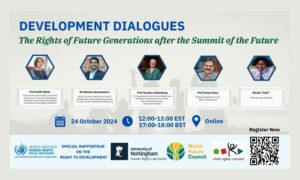

The Human Rights of Future Generations and Sustainable Development | HRC57 Side Event
16 September 2024
Special Procedures of the UN Human Rights Council, Center for International Environmental Law, FIAN International
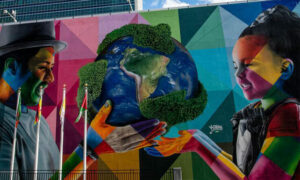
UNOG Executive Briefing with Michèle Griffin, Director, Summit of the Future
25 January 2024
United Nations Office at Geneva

NGOs exchange with Michele Griffin, Director of the Summit of the Future / Common Agenda team
25 January 2024
United Nations Office at Geneva

Informal Geneva Civil Society Breakfast Briefing On The Summit Of The Future And Related Un-Civil Society Conference In Nairobi The Pact For The Future?
18 January 2024
Geneva Peacebuilding Platform, Geneva Centre for Security Policy, the Stimson Center, and the UN University Centre for Policy Research
Building Trust, Building Peace: Actionable Priorities for the Summit- A Conversation about the Future
1 November 2023
Geneva Centre for Security Policy | GCSP

Breakfast Briefing: The Road to the Summit of the Future: A Dialogue with the SG’s Director of Our Common Agenda
30 June 2023
Geneva Peacebuilding Platform, UN University Centre for Policy Research
Learning
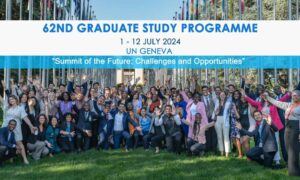
62nd Graduate Study Programme | Summit of the Future: Challenges and Opportunities
1 – 12 July 2024 | Course in Geneva
News and Resources
- UN 2.0 Quintet of Change
- World leaders adopt pivotal UN Pact for the Future | UN News | 22 September 2024
- The UN Optimist Behind the Summit of the Future | Pass Blue | 5 June 2024
- Youth Open Letter to World Leaders | 12 April 2024
- The world can’t afford a water dry Summit of the Future | Stockholm International Water Institute | 14 February 2024
- WCC submits comments on draft UN “Pact for the Future” | World Council of Churches | 12 February 2024
- UN “Summit of the Future” Must Deliver for the Planet| IPI Global Observatory | 7 February 2024
- Breathing new life into the SDGs: What is the UN Summit of the Future in 2024? | World Economic Forum | 8 November 2023
- The uncertain prospects of the UN’s future summit | Geneva Solutions | 2 June 2023
- Accelerating the SDGs Through the 2024 Summit of the Future | IISD Knowledge Hub | 1 February 2023
- Summit of the Future | IUCN Policy Brief | November 2023