Événement Conférence
Actions to Breathe Clean Air: Protecting Public Health and Ensuring a Healthy Environment | HRC61 Side Event
09 Mar 2026
13:00 – 14:00
Lieu: Palais des Nations, Room IX
Organisation: Procédures spéciales du Conseil des droits de l’homme, Slovénie, Monaco, Maroc, Maldives, Costa Rica, Suisse, Organisation mondiale de la santé, Programme des Nations Unies pour le développement
This side event to the 61st session of the Human Rights Council is organized by the UN Special Rapporteur on the human right to a clean, healthy and sustainable environment, and co-sponsored by the Permanent Missions of Slovenia, Monaco, Morocco, Maldives, Costa Rica, Switzerland, World Health Organization, UN Development Programme, Laboratorio de Justicia Ambiental de la IBERO, and the Geneva Environment Network.

About this Event
Clean air is an element of the human right to a clean, healthy and sustainable environment, and is essential for the enjoyment of all human rights, including the rights to life and health. However, approximately 99% of people globally remain without access to clean air. Air pollution transcends borders, causing transboundary impacts, while systematic inequalities, climate change, ecosystem loss and toxic pollution aggravate the impacts.
There is extensive and conclusive scientific evidence of the health risks posed by air pollution, which has an impact on all organs of the human body throughout life and in utero. Children are the most vulnerable, along with older persons, pregnant people, people with pre-existing health conditions, and marginalized groups living in low-income settings. Currently, air pollution is linked to an estimated between 6 to 8 million premature deaths each year worldwide. It triggers or exacerbates multiple diseases, from respiratory and cardiovascular conditions to stroke, leading to reduced productivity and substantial economic losses.
As economic growth and industrial activity is prioritized, the extraction and use of fossil fuels, inadequate urban and land use planning, the lack of sustainable public transport, use of biomass for cooking and heating, and unsustainable industrial agricultural practices severely degrade the air everyone breathes.
For the 61st session of the Human Rights Council the UN Special Rapporteur on the human right to a clean, healthy and sustainable environment decided to deepen the understanding of air pollution impacts on human rights. The report of the Special Rapporteur to HRC61 is focused on the protection of marginalized groups based on updated science and legal advances. The UN Special Rapporteur identifies priority actions for States and businesses to improve air quality with a human rights perspective, highlighting urgent actions required to protect the health of the most vulnerable people.
The UN Special Rapporteur highlights the severity of air pollution, especially in low- and middle-income countries and contrast this with existent solutions and actions that must be improved and or further scale up, including transitions to cleaner energy, appropriate monitoring and emissions control, improved planning, and better transport systems, among others. The report calls for a health-based approach that recognizes the profound risk and harm air pollution poses, prioritize effective actions, and applies intersectional perspective that respond to the needs of the most vulnerable people and ensuring their protection.
This side event presented and discussed the UN Special Rapporteur’s report, including its key recommendations and possible ways forward. The side event tackled the root causes of air pollution with an emphasis on urgent preventive and corrective actions targeting both transboundary and localized sources through short and long-term measures. The event explored States obligations to prevent harm, exercise stringent due diligence, and implement effective measures to guarantee clean air for all. It addressed business responsibilities to prevent, avoid and halt activities that worsen air pollution and associated health risks, especially for children, workers and others in vulnerable situations. The panel reflected on the need for strong coordination between health, environment and policy and justice sectors when developing institutional capacities, policies, regulations and guidelines on air quality, and when leveraging the rights to a healthy environment.
Environment @ HRC61
The 61st Regular Session of the Human Rights Council (HRC61) is taking place in Geneva from 23 February to 31 March 2026. Consult this regularly-updated page that highlighted the environmental-related activities of this session.

Speakers
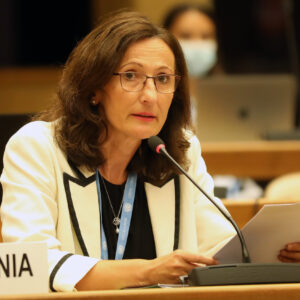
H.E. Amb. Anita PIPAN
Permanent Representative of Slovenia to the UN Office and other international organizations in Geneva
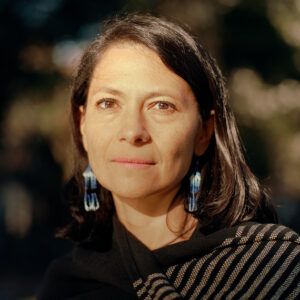
Astrid PUENTES RIAÑO
UN Special Rapporteur on the human right to a clean, healthy and sustainable environment
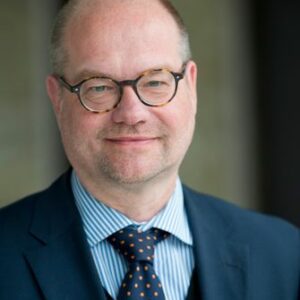
Rüdiger KRECH
Acting Director of the Department of Environment, Climate Change, One Health and Migration, World Health Organization
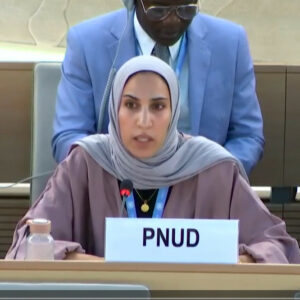
Roqaya DHAIF
Human Rights Policy Specialist, UN Development Programme
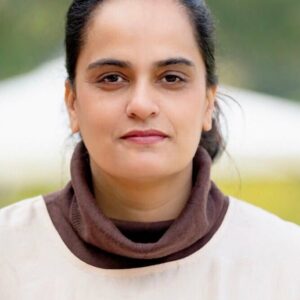
Bhavreen KANDHARI
Co-founder of Warrior Moms Movement

Weenarin LULITANONDA
Co-founder of the Thailand Clean Air Network

Roberto CÉSPEDES GÓMEZ
Minister-Counsellor, Permanent Mission of the Republic of Costa Rica to the UN Office and other international organizations in Geneva

Diana RIZZOLIO
Coordinator, Geneva Environment Network | Moderator
Highlights
Video
Live from Palais des Nations
Photo Gallery


Summary
Opening
Astrid Puentes Riaño | UN Special Rapporteur on the human right to a clean, healthy and sustainable environment
- Opened the event by situating the discussion within the presentation of her report to the Human Rights Council on air pollution and human rights, emphasizing that the event aimed to deepen dialogue and identify actionable pathways forward.
- Reaffirmed that clean air constitutes an essential component of the human right to a clean, healthy and sustainable environment, and is indispensable for the effective enjoyment of a wide range of human rights, including the rights to life, health, and development.
- Highlighted that, despite growing scientific consensus and legal recognition, a significant implementation gap persists, with the most vulnerable populations continuing to bear the disproportionate burden of air pollution.
- Underscored the importance of multi-stakeholder engagement, bringing together States, international organizations, civil society, and affected communities to advance coherent and rights-based responses.
H.E. Ambassador Anita Pipan | Permanent Representative of Slovenia to the UN Office and other international organizations in Geneva
- Emphasized that access to clean air should be understood not as a privilege, but as a fundamental human right, intrinsically linked to human dignity and well-being.
- Noted that air pollution constitutes one of the most pressing global public health crises, contributing to approximately 8 million premature deaths annually, while also exacerbating inequalities within and across countries.
- Highlighted the disproportionate impacts of air pollution on individuals and groups in vulnerable situations, including children, older persons, pregnant women, and low-income communities, who are often more exposed and less able to mitigate risks.
- Called for strengthened regulatory frameworks, including the adoption and enforcement of stringent emission standards, the transition to cleaner energy systems, and the development of sustainable urban planning and transport policies.
- Stressed the importance of embedding human rights considerations into environmental policymaking in order to ensure that economic development does not come at the expense of public health and environmental integrity.
Panel Discussion
Astrid Puentes Riaño | UN Special Rapporteur
- Presented key findings from her report, noting that air pollution remains one of the leading environmental causes of mortality and morbidity worldwide, with an estimated 6 to 8 million premature deaths annually.
- Highlighted that air pollution affects all organs of the human body throughout the life cycle, including in utero, with particularly severe consequences for children and other vulnerable populations.
- Identified fossil fuel combustion as a primary driver of air pollution, linked to energy production, transport, industrial activity, and household use, thereby underscoring the interconnected nature of air pollution and climate change.
- Observed that, while legal and scientific frameworks have significantly advanced in recent years, including recognition of the right to a healthy environment, implementation remains insufficient and uneven across regions.
- Called for urgent and coordinated action by States and businesses, including the rapid transition to renewable energy, strengthened monitoring and enforcement mechanisms, and the prioritization of preventive measures grounded in a human rights-based approach.
Rüdiger Krech | World Health Organization (WHO)
- Provided an overview of the latest scientific evidence on the health impacts of air pollution, noting that fine particulate matter penetrates deep into the lungs and bloodstream, contributing to a wide range of diseases, including respiratory illnesses, cardiovascular conditions, cancer, and adverse developmental outcomes
- Highlighted that air pollution places a significant burden on public health systems, increasing healthcare costs and reducing productivity, thereby reinforcing its characterization as both a health and economic issue
- Drew attention to the continued prevalence of household air pollution, particularly in low- and middle-income countries, where reliance on polluting fuels disproportionately affects women and children
- Called on States to adopt and implement the WHO Air Quality Guidelines (2021), integrate health considerations across all relevant policy sectors, and strengthen data collection, monitoring, and health impact assessments.
- Outlined WHO’s role in supporting Member States through the provision of technical guidance, capacity-building initiatives, and global coordination efforts aimed at reducing the health impacts of air pollution.
Roqaya Dhaif | United Nations Development Programme (UNDP)
- Framed air pollution as a multidimensional development challenge, closely linked to structural issues in energy systems, transport infrastructure, urban planning, and industrial production
- Emphasized the need for integrated policy approaches that simultaneously address environmental sustainability, economic development, and social equity, ensuring that transitions to cleaner systems are just and inclusive
- Highlighted the importance of scaling up investments in renewable energy, sustainable mobility, and resilient urban infrastructure, as well as promoting circular economy models to reduce emissions from industrial processes
- Identified key enablers for effective implementation in low- and middle-income countries, including strengthened governance frameworks, access to financing, technology transfer, and institutional capacity-building
- Underscored the importance of international cooperation and partnerships in supporting countries to develop and implement rights-based air quality policies that are responsive to national contexts and priorities
Bhavreen Kandhari | Warrior Moms
- Provided a civil society perspective, emphasizing the lived realities of air pollution and its direct impacts on children and families, particularly in highly polluted urban contexts
- Highlighted the severe and often irreversible effects of air pollution on children’s health and development, including impacts on respiratory, cardiovascular, and neurological systems.
- Identified critical policy gaps, including weak enforcement of existing regulations, insufficient accountability mechanisms, and a lack of political will to address the root causes of pollution
- Emphasised the role of grassroots movements in raising awareness, amplifying the voices of affected communities, and advocating for stronger policy action and accountability from both States and businesses.
- Called for the recognition of clean air as a legally enforceable right, ensuring that individuals and communities have access to remedies when their rights are violated
Weenarin Lulitanonda | Thailand Clean Air Network
- Highlighted the scale and severity of air pollution in Thailand and the broader region, noting its significant impacts on public health, life expectancy, and economic productivity
- Emphasized that air pollution represents not only an environmental and health crisis, but also a major economic burden, with substantial losses in GDP linked to reduced productivity and increased healthcare costs
- Identified systemic challenges, including limited financial investment in clean air initiatives, the influence of corporate interests, and the transboundary nature of pollution linked to global supply chains
- Stressed the importance of multi-level governance, including coordinated action at the global, regional, and national levels, as well as stronger accountability mechanisms for corporate actors
- Highlighted the potential of embedding the right to a healthy environment into legal frameworks as a means of strengthening enforcement, enhancing transparency, and enabling affected communities to seek justice.
Cross-Panel Reflections and Discussion
- Panellists collectively emphasized that the primary challenge is no longer a lack of scientific knowledge or policy solutions, but rather insufficient political will and inadequate implementation of existing commitments
- Reiterated the importance of adopting a human rights-based approach to air quality, including ensuring access to information, meaningful public participation, and access to justice for affected individuals and communities.
- Highlighted the need to address structural inequalities, recognizing that marginalized populations are disproportionately exposed to air pollution and often excluded from decision-making processes
- Underscored the misalignment of financial flows, noting the continued subsidization of fossil fuels alongside insufficient investment in clean air and sustainable alternatives
- Called for stronger international cooperation and policy coherence across sectors, including climate, health, and development, in order to effectively address the root causes of air pollution
Closing Remarks
Roberto Céspedes Gómez, Permanent Mission of Costa Rica
- Reaffirmed the importance of framing clean air as a human rights issue, thereby strengthening accountability and elevating the urgency of action at national and international levels
- Emphasized that environmental protection and economic development are not mutually exclusive, but rather mutually reinforcing when approached through sustainable and rights-based policies.
- Highlighted the importance of ensuring that the voices of affected communities are heard and reflected in policymaking processes.
- Called for increased investment, enhanced international cooperation, and strengthened solidarity to support effective action on air pollution, particularly in countries with limited resources
Key Conclusions
- Clean air is a fundamental component of the human right to a clean, healthy and sustainable environment and is essential for the realization of multiple human rights
- Air pollution constitutes a global crisis with significant health, environmental, economic, and social implications, disproportionately affecting vulnerable populations
- While scientific evidence and legal frameworks are well established, there remains a critical gap in implementation, requiring urgent and coordinated action
- Effective responses must address the root causes of air pollution, including fossil fuel dependence and unsustainable development practices, while ensuring a just and equitable transition.
- Strengthened governance, increased financing, and enhanced international cooperation are essential to advancing clean air policies and protecting public health
Links
- A/HRC/61/47 | Priority actions towards breathing clean air, protecting public health and ensuring a healthy environment | UN Special Rapporteur on the human right to a clean, healthy and sustainable environment