
Événement Conférence
Briefing on the 2025 Meetings of the Conferences of the Parties to the Basel, Rotterdam and Stockholm Conventions | Road to 2025 BRS COPs
05 Déc 2024
10:00 – 11:30
Lieu: International Environment House I | Room 2 & Online | Webex
Organisation: Conventions de Bâle, Rotterdam et Stockholm, Geneva Environment Network
This briefing, organized within the framework of the Geneva Environment Network, launched a series of events organized in the run-up to the upcoming 2025 Meetings of the Conferences of the Parties to the Basel, Rotterdam and Stockholm Conventions (2025 BRS COPs) to be held in Geneva. It provided an update on the preparations for the COPs.

About this Event
The Parties to the Basel, Rotterdam and Stockholm Conventions meet every two years to advance multilateral action to protect human health and the environment from hazardous chemicals and wastes.
The seventeenth meeting of the Conference of the Parties to the Basel Convention (BC COP-17), the twelfth meeting of the Conference of the Parties to the Rotterdam Convention (RC COP-12) and the twelfth meeting of the Conference of the Parties to the Stockholm Convention (SC COP-12) will be held back-to-back in Geneva from 28 April to 9 May 2025. The meetings will include a high-level segment on the afternoon of Wednesday, 30 April 2025 and the morning of Thursday, 1 May 2025. Preparatory meetings will be held on 27 April 2025. The theme of the meetings and the high-level segment in 2025 will be “Make visible the invisible: sound management of chemicals and wastes”.
This event, organized by the BRS Conventions Secretariat and the Geneva Environment Network, provided updates on the preparations and explored ongoing synergies within the chemicals and waste global governance cluster in the run-up to the 2025 BRS COPs.
Speakers
By order of intervention.

Rolph PAYET
Executive Secretary, Basel, Rotterdam and Stockholm Conventions | Chair

Juliette KOHLER
Senior Legal Officer and Chief (officer-in-charge), Governance Branch, BRS Secretariat
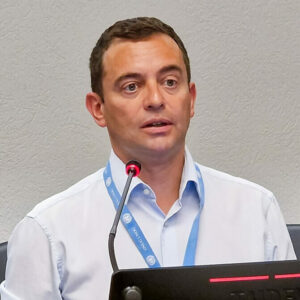
Ludovic BERNAUDAT
Head, Knowledge and Risk Unit, Chemicals and Health Branch, UNEP

Rebecca CHUDASKA
Associate Expert, Global Framework on Chemicals Secretariat
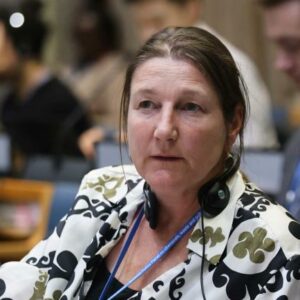
Tessa GOVERSE
Principal Coordinator, SPP OEWG Secretariat

Océane DAYER
Waste and Chemicals Focal Point, Federal Office for the Environment, Switzerland
Highlights
Video
Live on Webex.
Summary
Opening
Rolph PAYET | Executive Secretary, Basel, Rotterdam and Stockholm Conventions | Chair
- The fifth session of the INC, aimed at developing a legally binding agreement on plastic pollution, was adjourned in Busan and will resume in 2025. In Busan, Parties demonstrated a strong commitment to building on existing conventions and advancing global efforts to address plastic pollution.
- We are on the last step of preparations for the upcoming Conference of the Parties (COPs) in four months, with a full agenda reflecting substantial intersessional work under the three conventions. The meeting will include a high-level segment to enhance the global visibility of the conventions’ work, alongside updates on preparations and key agenda items guided by the three Bureaus.
- While progress has been made, there are new challenges including the emergence of new chemicals, the growing complexity of supply chains, and the continuing rise in volumes of waste and specific waste streams. These require a multifaceted and collective approach.
- The engagement of all Parties and partners is particularly important in advancing the objectives of the three Conventions. Parties, the three Bureaus, partners, and the Swiss government have shown strong commitment and support to enable the work under the Conventions.
Preparations for the 2025 Meetings of the Conference of the Parties of the Basel, Rotterdam and Stockholm Conventions
Juliette KOHLER | Senior Legal Officer and Chief (officer-in-charge), Governance Branch, BRS Secretariat
- The upcoming meetings are the 17th COPs to the Basel Convention and the 12th COPs to the Rotterdam and Stockholm Conventions, scheduled in Geneva from 28 April to 9 May 2025, with pre-meetings on 27 April. Invitation letters have been sent, with registration using a new electronic system.
- COP Presidents:
- Basel Convention: Anita Sowińska, Poland
- Rotterdam Convention: Hammad Shamimi, Pakistan
- Stockholm Convention: Maya Berci, Canada
Registration
- A high-level segment will also be taking place, and invitation letters will be sent out, with registration open until the end of January.

Financial Support
- Financial support is planned for eligible parties, aiming to fund one representative per convention, up to three per party, for the two-week meetings, and one minister per eligible party for the high-level segment. Requests for financial assistance must be included in the official nomination letter or note verbale until 24 January for delegates, and 31 January for ministers.
Meeting Documents
- The meeting documents are available on the website, along with a provisional agenda for the meetings. The budget document will be posted by 28 January and the documents by 28 February.
- The first week will be devoted to joint issues, the Stockholm Convention and the Basel Convention, along with high-level segments. The second week will focus mainly on Rotterdam and Basel Conventions.
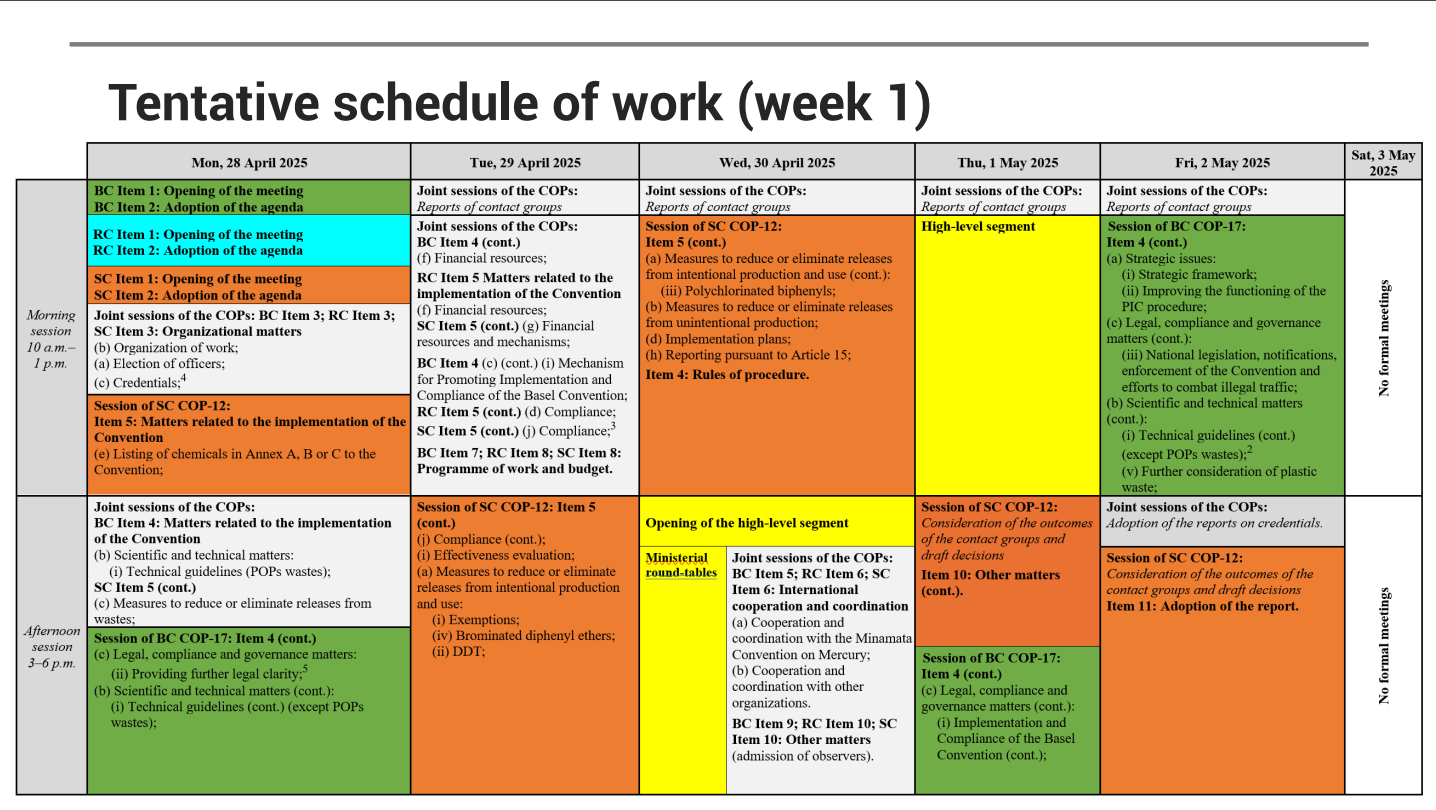

- The meetings will include contact groups focusing on joint issues such as the program of work, budget, technical assistance, and convention-specific groups.
High-Level Segment
- The high-level segment will occur on 30 April and 1 May 2025, with an open plenary, ministerial round tables, and panel discussions for ministers and deputy ministers. Simultaneous interpretation will be available in plenary and language-specific arrangements will be made for round tables.
Election of Officers
- The election of officers will also be considered during the meetings, and the identification of candidates and support of regional nominations is underway. Elections include the OEWG Bureau, Implementation and Compliance Committee (ICC) and Environmental Network for Optimizing Regulatory Compliance on Illegal Traffic (ENFORCE) for Basel, Compliance Committee and Chemical Review Committee (CRC) for Rotterdam, and Persistent Organic Pollutants Review Committee (POPRC) and Compliance Committee for Stockholm. Nomination of candidates should consider gender balance and should be submitted until 1 February.
- Candidate selection from each region will be facilitated by five regional election focal points. There are restrictions on nominating candidates for positions in the Basel, Rotterdam, and Stockholm COPs Bureaus or their subsidiary bodies for Parties in arrears for two or more years.
Theme and Related Events
- The theme of the COPs is “Make visible the invisible: sound management of chemicals and waste”, aiming to bring visibility to workers in the Conventions.
- A fair with booths will be available for interested observers or parties, with a registration deadline of 14 February 2025. Side events can be proposed by parties or observers, and selection will consider alignment with the meeting’s theme, objectives, and factors such as multiple organizers, gender, and geographical balance.


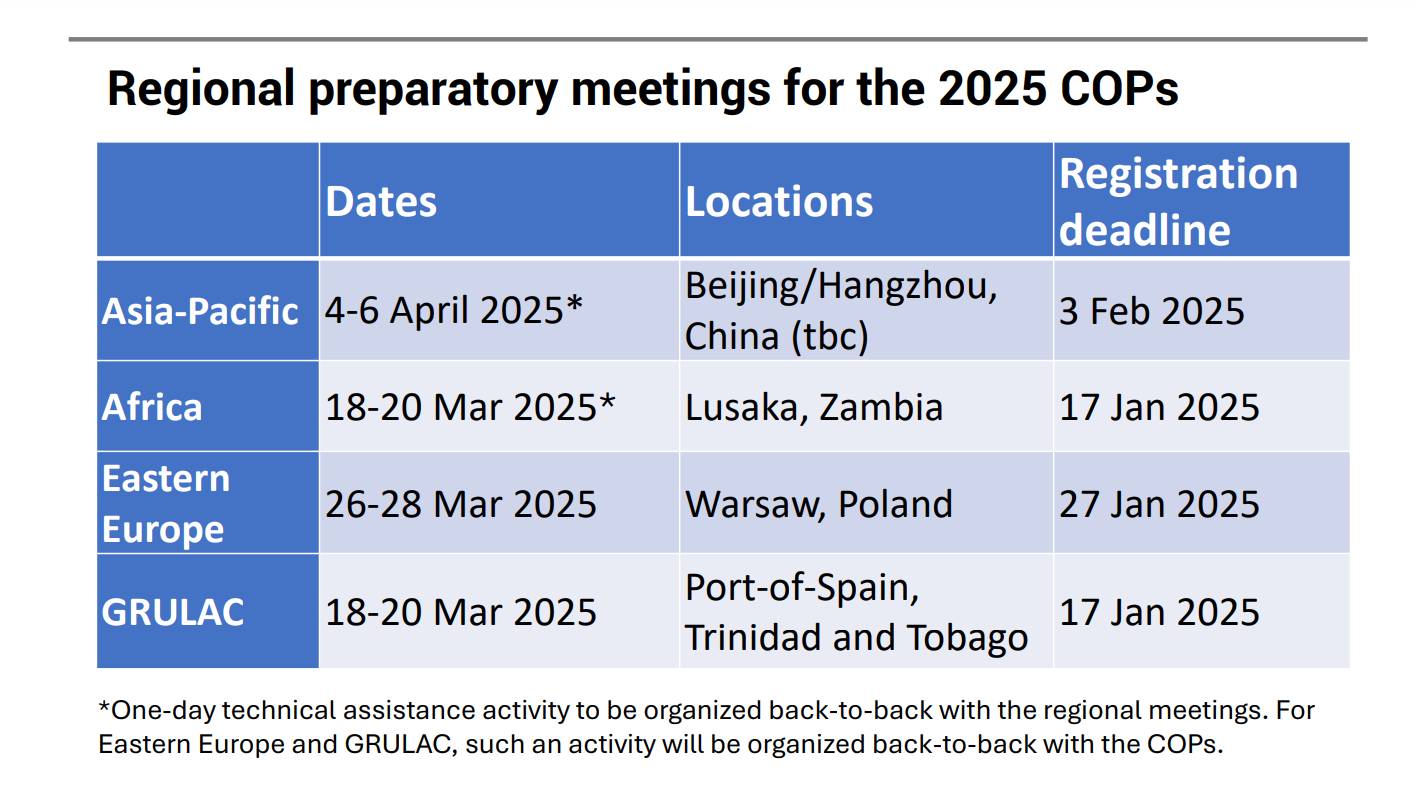
Regional preparatory meetings
- For the Basel Convention, there are two amendment proposals before the COPs: one regarding Annex four on disposal operations, and another from the Russian Federation related to paragraph two of Article 6 on the prior informed consent (PIC) procedure.
- Under the Rotterdam Convention, amendment proposals include adding four new chemicals and six returning chemicals to Annex 3. For the Stockholm Convention, proposals include listing chemicals in Annexes A, B, or C, and Ethiopia has proposed an amendment to Annex A to include a specific exemption for UV-328, which will take effect in February 2025. More briefings will be taking place to provide more information.
Latest Developments from UNEP Chemicals and Health Branch Relevant to BRS Parties
Ludovic BERNAUDAT | Head, Knowledge and Risk Unit, Chemicals and Health Branch, UNEP
- UNEP Chemicals and Health branch works to link science to the sound management of chemicals and waste policy action.
- For the Stockholm Convention, we are currently supporting 32 National Implementation Plans and their updates worldwide, enabling Parties to access financing for larger projects related to specific chemicals.
- UNEP Chemicals and Health branch collaborates with the Basel Convention Secretariat on the issue of lead, focusing on the unsound management of lead-acid battery waste. The partnership was launched at the UN General Assembly in September, involving multiple agencies.
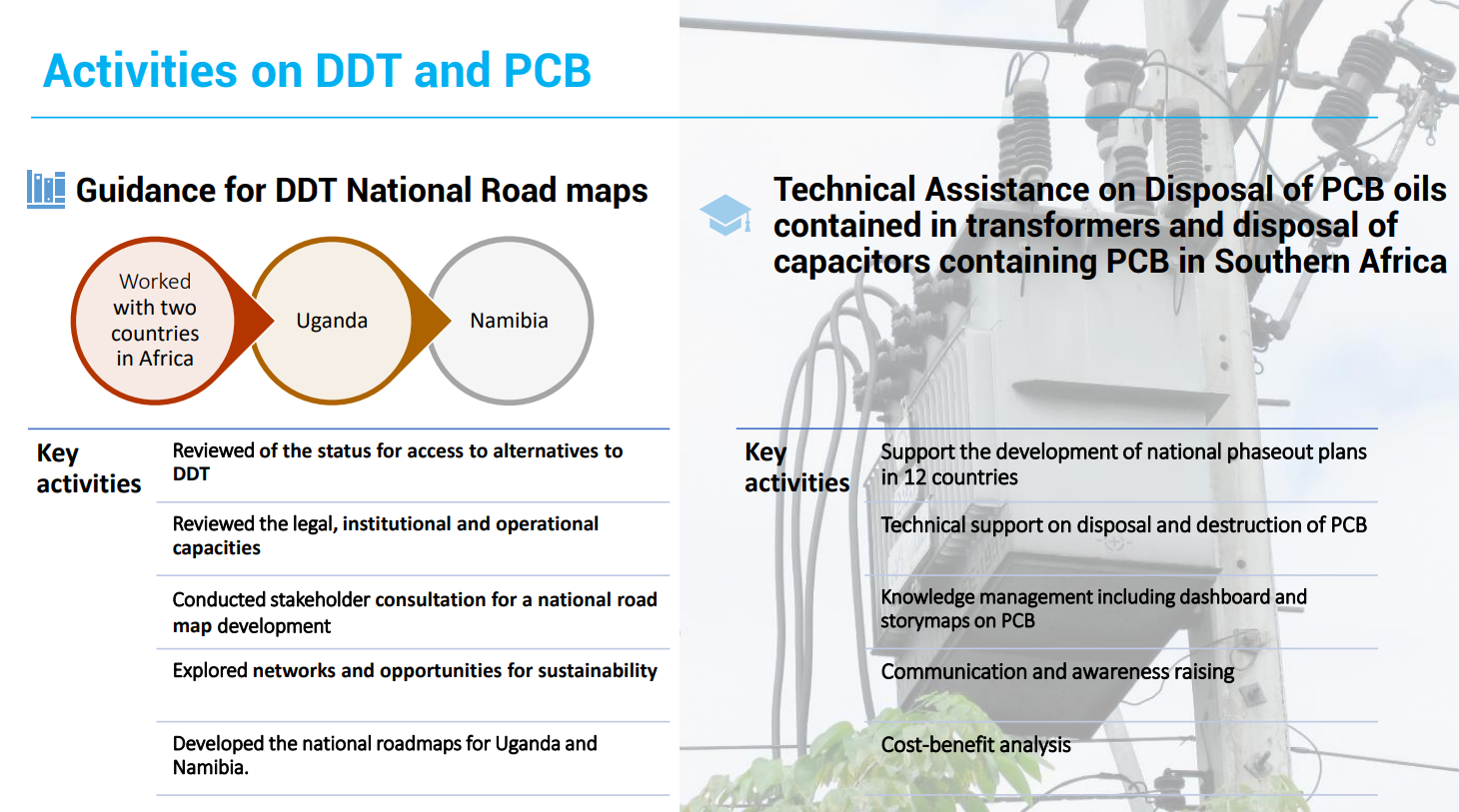
- Work on the list of chemicals in the Stockholm Convention continues with advances on Dichlorodiphenyltrichloroethane (DDT), supporting guidance for DDT National road maps. Although societies are slowly moving away from DDT, there are still steps to be taken in key countries.
- UNEP Chemicals and Health branch also provides technical assistance on the disposal of PCB-containing transformers for countries where PCB transformers are still in operation. Our collaboration with the BRS Secretariat involved a cost-benefit analysis of replacing old PCB transformers with more energy-efficient mineral oil transformers, offering advantages for both utilities and private owners, such as oil companies, by saving energy.
- With the Stockholm Convention and support from the Global Environment Facility (GEF), we have been working on the Global Monitoring Plan project of Persistent Organic Pollutants (POPs), helping countries analyze 30 POPs and produce examples. Most of the data in the POPs data warehouse comes from developing countries, which is crucial for evaluating the effectiveness of the convention.
- We will also launch the third phase of the Global Chemical Monitoring Programme with support from GEF, which will include mercury but focus on the effectiveness evaluation of the Stockholm Convention. The major challenge is regionalizing the work and reinforcing countries’ capacities to generate POPs data, by building regional capacity through Basel and Stockholm Convention regional centres, which will manage local projects and identify laboratories capable of conducting the analysis.
- A major focus of our unit is the development of the green and sustainable chemistry framework manual, aiming to work with regulators and the private sector to change practices along value chains and stop using hazardous chemicals.

- There is a strong link between the conventions and key sectors like electronics, textiles, construction, plastics, transport, and agrifood, which use chemicals at various stages of their value chains. Hazardous chemicals will pose long-term issues if not removed, especially in the construction sector, where chemicals used in new buildings could cause problems for up to 40 years, well beyond current targets.
- UNEP is working with other partners on implementation programs of the Global Framework on Chemicals. Because chemical use is often invisible in daily lives, it is crucial that the public understands the need to change and to make informed decisions, as well as push industries to adopt better practices and remove the use of regulated chemicals.
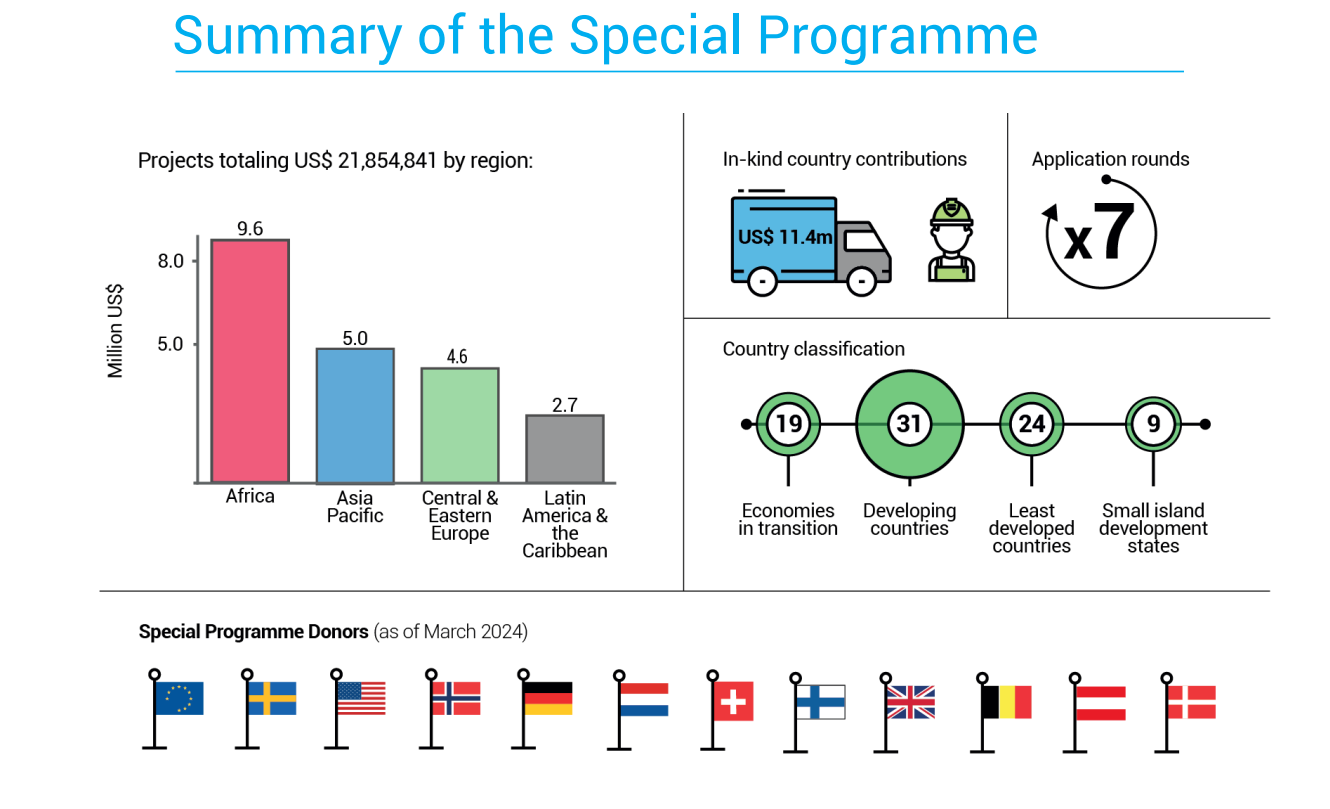
- The UNEP Chemicals and Health Branch hosts the Secretariat of the Special Programme to support institutional strengthening, which has funded 83 projects across eight rounds. Recently extended at UNEA 5, the programme is a key part of international chemicals and waste management. The funding has been primarily allocated to Africa, and efforts are made to encourage more applications from underrepresented countries, supported by a wide range of donors.
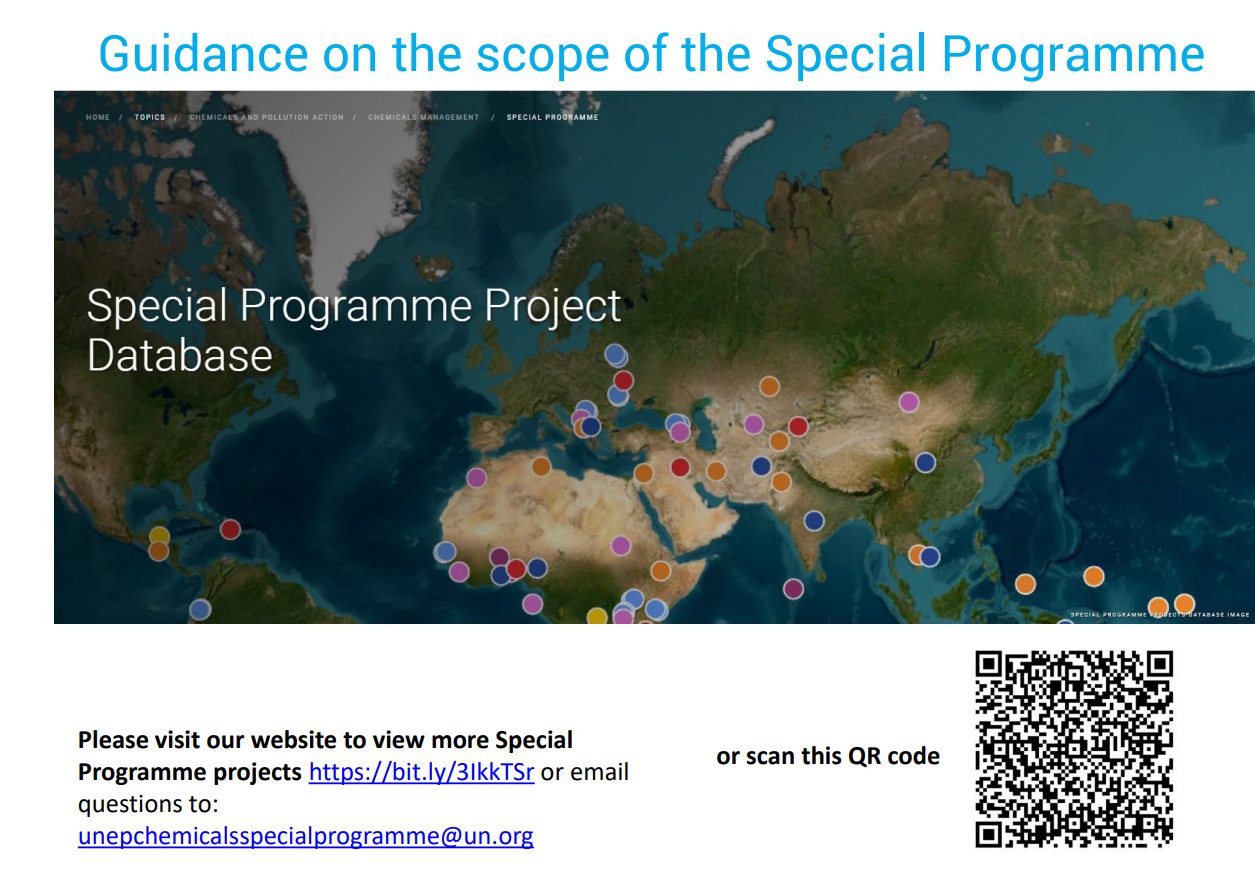
- Our unit is also assisting the Special Programme Project Database, which will be launched soon and will show geospatial information on the 83 approved projects. The tool will help development partners align future projects with existing efforts and strengthen institutional capacities.
Latest Developments from the Global Framework on Chemicals Relevant to BRS Parties
Rebecca CHUDASKA | Associate Expert, Global Framework on Chemicals Secretariat
- Progress has been made since the fifth International Conference on Chemicals Management (ICCM 5) within the Global Framework on Chemicals, including the development of measurability indicators, a gender action plan, and implementation programs. Efforts have been made to raise awareness and building relationships.
- The GFC aligns with other international agreements, notably the Global Biodiversity Framework, which has 19 targets that are related to chemicals and waste. The GFC Secretariat is currently working with the BRS secretariat on interlinkages between biodiversity and chemicals and waste.
- The Global Framework on Chemicals Fund was launched at ICCM 5, aiming to support countries in building long-term capacities for the safe and sustainable management of chemicals and waste.
- The first round of applications is open until 31 January 2025, it complements existing mechanisms by encouraging innovative ideas and multi-stakeholder alliances.
- We are working closely with the Special Programme Secretariat, taking a life cycle approach of chemicals and building on existing efforts made by countries and regions.
- Two implementation programs are carried out, on developing national and regional chemical management systems and promoting best practices for its management in the industrial sector. Both address the chemical life cycle, operationalizing elements of the Basel Convention.
- The Bureau is aligning efforts with the Secretariat, with the fund’s first application round closing in January and an executive board meeting planned for March. This aligns with the open-ended working group in June, complementing the BRS COPs schedule and building momentum. The first international conference under the GFC is set for the fourth quarter of 2026, and we are putting effort into communications and raising awareness.
Updates on the Science-Policy Panel on Chemicals, Waste and Pollution Relevant to BRS Parties
Tessa GOVERSE | Principal Coordinator, SPP OEWG Secretariat
- Improvement in the availability of scientific information can enable more effective and efficient action to address the triple planetary crisis.
- While science-policy panels such as IPCC and IPBES have played an important role in combating climate change and biodiversity, there has been no equivalent for pollution. In 2022 UNEA decided to establish a science-policy panel to strengthen the science-policy interface for chemicals, waste, and pollution prevention. This independent intergovernmental body will provide policy-relevant scientific evidence, and an ad hoc open-ended working group (OEWG) and an intergovernmental meeting will be convened to prepare proposals for its establishment.
- UNEA resolution 5/8, acknowledging the existing efforts of multilateral agreements, emphasizes that the new science-policy panel could support countries and multilateral agreements by providing policy-relevant scientific evidence that complements existing agreements. The principal functions of the panel were listed in the resolution: horizon scanning, conducting assessments, information sharing, public awareness, and capacity building, particularly for developing countries.
- The OEWG began its work in 2022 and met for its third session in June, but was unable to complete its work and has requested a resumed session to be held alongside the intergovernmental meeting on the panel’s establishment, with the dates and venue to be confirmed. The resumed session will focus on the finalization of the foundational document and draft rules of procedure, including proposals on the scope, objective, and functions of the panel. Topics to be further discussed include membership and decision-making of the panel, the role of stakeholders, financial arrangements, and the secretariat.
- The OEWG Secretariat is exploring further collaboration with the BRS Secretariat, providing updates at conferences of the parties, seeking opportunities for regional engagement, and considering the submission of an information document and a side event at the BRS COPs.
Open discussion
FAO: FAO has played a central role in the implementation of the Rotterdam Convention, providing technical expertise, financial support, and in-kind contributions to help achieve its objectives since 2004. Through its contributions, including $18.2 million in funding and organizing key meetings, FAO has reinforced the convention’s mission to protect human health and the environment from hazardous chemicals and pesticides.
Q: The preparatory meetings have been scheduled in March, but the ILO governing body meetings are from the 10th to the 20th. Could you consider adjusting the timing so more delegates could attend?
Rolph PAYET: We will try our best, but the calendar is very packed, with limited windows due to overlapping meetings and religious holidays like Ramadan, making scheduling difficult both in Geneva and globally.
Q: What are your personal perspectives on a chemicals and waste management issue that you believe is not receiving enough visibility?
Juliette KOHLER: While issues related to further developments or amendments tend to attract more attention, the actual implementation often receives less focus, despite being equally important alongside the broad portfolio of the three conventions.
Rolph PAYET: Among the pillars of the triple planetary crisis, pollution is often overlooked until it becomes a local issue like poor air or river quality. However, pollution is a global problem and driver of climate change and biodiversity loss, as harmful chemicals accumulate in our bodies and ecosystems, affecting fertility and species survival. Addressing this requires a holistic approach that tackles pollution alongside climate change and biodiversity, and COPs are expected to raise awareness of this connection.
Rebecca CHUDASKA: Making the invisible visible to new stakeholders, particularly in the health and labor sectors, will be crucial in the coming year. It is important to highlight the presence of chemicals in products and raise awareness among those who currently overlook this issue.
Closing remarks
Océane DAYER | Waste and Chemicals Focal Point, Federal Office for the Environment, Switzerland
- The theme « Make visible the invisible » is a reminder of our shared responsibility to address challenges that may be hidden from view but are central to protecting human health and the environment. BRS conventions are examples of leadership that is needed to address this.
- The conventions are not just treaties, but important mechanisms that create technical guidelines, advance informed decision-making, and establish standards for the sound management of chemicals and waste.
- We have an ambitious agenda for 2025, with the conventions focusing on updating guidelines, reviewing frameworks, adding new chemicals, and making key decisions on governance including the election of its compliance committee and the adoption of its work plan.
- Strengthening synergies must remain a priority. We must keep up the coordination between the 3 conventions, as well as leverage further connections with other instruments, such as the Minamata Convention, Global Framework on Chemicals, and forthcoming science-policy panel on chemicals, waste, and pollution prevention.
- Geneva as a hub for chemicals and waste governance plays a key role. We have the expertise, dialogue, and innovation that comes together from various stakeholders, including the Secretariat of the BRS conventions, the Chemicals and Health Branch of UNEP, and WHO, to shape a sustainable future.
- Achieving the sound management of chemicals and waste is a journey that requires vision, cooperation, and sustained commitment.
Photo Gallery


