
Événement Conférence
Chemical Pollution: From the Field to Global Action to Protect Health | Geneva Health Forum Conference
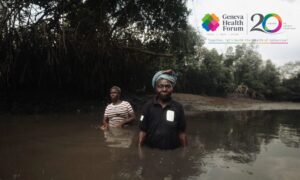
This session, organized as part of the Geneva Health Forum Conference, takes place just days before the first International Conference of the Global Framework on Chemicals, scheduled for 16–20 November 2026 at the International Conference Centre Geneva. As global stakeholders prepare to advance the sound management of chemicals, this is a timely opportunity to discuss how local experiences can inform international decision-making and strengthen cooperation to protect health.

About this Event
Every day, we are exposed to numerous chemical substances through our diet, environment, workplace, and the products we use. Some of these can have significant, long-lasting health effects. How can we better prevent these risks and move from exposure to action?
This session will draw on real-world experiences to explore various courses of action: preventing pollution, identifying sources of exposure, generating and using scientific data, and engaging in dialogue with authorities.
Since chemical pollution often crosses borders, local action must also be supported by international frameworks and cooperation. The Global Framework on Chemicals plays a vital role in this regard by supporting local initiatives, facilitating cross-border responses, and feeding on-the-ground experiences into global decision-making processes.
The session will address a central question: how can we strengthen the link between local action and international cooperation to better prevent chemical pollution and protect health?
This session takes place just days before the first International Conference of the Global Framework on Chemicals, scheduled for 16–20 November 2026 at the International Conference Centre Geneva (CICG), Switzerland. As global stakeholders prepare to advance the sound management of chemicals, this is a timely opportunity to discuss how local experiences can inform international decision-making and strengthen cooperation to protect health.
Speakers

David AZOULAY
Director, Switzerland & Environmental Health Program, Center for International Environmental Law
Lilian CORRA
International Secretary, International Society of Doctors for the Environment (ISDE)

Maria Paola LIA
Director, Global Alliance on Health and Pollution

Dorothy Amaleck NGAJILO
Programme Management Officer (Health and Labour), Global Framework on Chemicals

Diana RIZZOLIO
Coordinator, Geneva Environment Network | Moderator
Highlights
Video
Summary
Opening Remarks
Diana RIZZOLIO | Coordinator, Geneva Environment Network | Moderator
- In Geneva, we have over one hundred institutions that contribute to the global environmental agenda, and there is a lot ongoing. Pollution is particularly important in Geneva because it is the global hub for pollution action in the UN multilateral system, as the secretariats of many institutions are here, including the one for the Global Framework on Chemicals.
- Chemical pollution is one of the defining environmental and public health challenges of our time. Exposure to chemicals contributes to disease, disability, and premature death, disproportionately affecting vulnerable populations and communities with the least resources to respond.
- The World Health Organization, in a report that was updated five years ago, finds that at least two million deaths annually are attributed to exposure to selected chemicals.
- This figure is widely considered an underestimate because data exists for only a limited number of chemicals and exposure pathways. A large proportion of those deaths are linked to lead exposure.
- These chemical exposures are also responsible for approximately 53 million disability-adjusted life years lost each year. More than one hundred and sixty million chemicals are known, with 40 to 60 thousand chemicals in commercial use, and chemical production continues to grow rapidly. I do not even know if those numbers are correct, but I can tell you that, for example, for chemicals in plastics, we have over 16.000 chemicals that have been documented.
- At the same time, scientists have concluded that humanity has already exceeded the planetary boundary for so-called novel entities, including synthetic chemicals, plastics, and other human-made substances, meaning we are operating beyond the Earth’s safe capacity to absorb and manage these pollutants.
- What do we know about the impact of chemicals on human health? What practical actions are available to reduce exposure to prevent harm, particularly at the international level? And how can the Global Framework on Chemicals help translate commitments into measurable actions?
Dorothy Amaleck NGAJILO | Programme Management Officer (Health and Labour), Global Framework on Chemicals
- The Global Framework on Chemicals (GFC) was adopted in 2023, but that does not mean there was no chemical action globally before that. It comes after the Strategic Approach to International Chemicals Management (SAICM).
- What sets the GFC apart from the SAICM process is that, based on the lessons learned from that process, the GFC comes with strategic objectives and targets, so it is more focused in terms of what needs to be done to reach the targets that stakeholders agreed on in 2023 in Bonn.
- The scope of the Global Framework on Chemicals is all chemicals, looking at chemicals from a life cycle approach, from extraction and production up to use and disposal of chemicals, at all levels: national, regional, and global. The five strategic objectives span from strengthening legislation and institutions, to providing information and available data, to focusing on the supply chain and having safer alternatives within the supply chains, to cooperation, and to having enough resources, as we can appreciate that in the current global situation resources are scarce, so it is important to make sure that resources are directed toward where there is greatest need.
- The implementation of the framework hinges on four main mechanisms, such as implementation programs. These are where all these ambitions that stakeholders came up with in Bonn can be implemented, mostly with action at the country’s level. We also work a lot at the regional level, as I said, and at the national level. At the national level, we have focal points in almost every country. These are the points where action at the country level occurs and where they make sure there is coordination across sectors, because we know chemicals affect all sectors. So we make sure that there is a focal point in every country to make sure that there is coordination at the country level.
- So what it means for the health sector: as medical personnel, or people within the health sector, we see a lot of effects from chemicals in terms of diseases and injuries, but the health sector can also do something in terms of implementing preventive measures for the Global Framework on Chemicals.
- The health sector represents ten percent of the global economy, and that means that if the health sector counts for something in terms of its purchasing power, there is something we can do other than being on the receiving end of diseases and injuries.
Panel Discussion
Why should chemical pollution be treated as a major public health priority?
David AZOULAY | Director, Switzerland & Environmental Health Program, Center for International Environmental Law
- Chemical pollution is really at the heart and at the origin of every single major trend that the world is seeing. From issues of infertility, issues of brain development, illness and damage, cancers, and others, you can trace all of this back to pollution and chemical exposure. Not necessarily exposure to one single chemical, but it is really at the heart of it.
- The other thing, if you want to think not just in terms of illnesses or health impact, is costs. The costs of the health impacts of chemical exposure and chemical pollution are staggering. There are still a lot of studies that need to be made about the cost of inaction or the cost of impact, but every single study that has been made about specific classes of chemicals or specific types of chemicals gives me vertigo every time I look at it.
- The scale is in terms of global GDP points, again for exposure to just a limited set of chemicals. There are studies on the cost of inaction or the cost of exposure to some endocrine-disrupting chemicals, for example, or the health cost and the societal cost of exposure to highly hazardous pesticides in Sub-Saharan Africa.
- A powerful example is that the health cost of exposure to highly hazardous pesticides in Sub-Saharan Africa is greater than the total sum of public development aid for malaria, AIDS, and tuberculosis. These are just the costs of exposure to one single sort of chemical, pesticides, in one specific region.
What are the consequences of waiting until exposure is detected instead of preventing it in the first place?
Lilian CORRA | International Secretary, International Society of Doctors for the Environment (ISDE)
- Thank you very much for the question. I have to say that we medical doctors fail, because our role is to act in prevention. The role of a medical doctor and of public health is keeping people healthy.
- Chemical pollution has been invisible for a very long time. Even today, when I talk with my colleagues or we have conversations about that, the question that I receive is: is that true? Should we expect cancer or, I do not know, asthma or other burdens from chemicals in the environment? Where is pesticide pollution? How can we measure our exposure to pesticide pollution?
- My colleagues, for example in Europe, when I talk to them about lead pollution and the importance of addressing lead pollution, the medical doctor says, “Oh no, in Europe we do not have lead pollution. That is not our problem.”
- It looks like we still have a long way to go, not only as medical doctors, but in the public health sector. If you look at how the public health sector is organized administratively, in the different sections of the ministries, the area of health and environment, or chemicals and health, is sometimes nonexistent and sometimes has very, very low resources. The interaction of this area with production, for wxample, is very low.
- If we do not react as medical doctors, if we do not teach our students, who will be medical professionals, about how we are polluting or how we are using chemicals in our daily life, it will be very, very difficult for doctors to understand what is happening to the patients, what is happening to the community they are responsible for. We have to start. We are already arriving late. We have a lot to do.
- The participation of the health sector in the Global Framework on Chemicals, for example, is very low. Why is health not more represented? Why is the International Labour Organization not a very strong presence in the Global Framework on Chemicals? The workers’ exposure to lead, or the workers’ exposure to pesticides or to other chemicals, like nanoparticles, where workers know very little about how to protect themselves from these nano-particles.
- So we are arriving late, and we really need to work together to make these things happen, to make change, and to update the education of the health professions on chemicals and health, because the burden of disease is not only important but is something preventable.
Lead, and indeed lead has emerged as one of the clearest examples of the connection between chemicals and harm, and despite decades of scientific evidence, lead exposure remains widespread in many countries. Why does that problem persist? How can people still be exposed to lead today?
Lilian CORRA | International Secretary, International Society of Doctors for the Environment (ISDE)
- Why do we choose to focus on lead among the many chemicals that we have in the environment? First, because it is easy to speak of or to give an example of something that we know and have evidence of.
- We know exactly how lead and other heavy metals produce disease, you may say, how they interact since the moment of conception. Lead is there at the moment of conception, so it is present in early brain development and is creating, to give a very graphical example, a disorder in the organization of the brain.
- And it is also leaving an imprint in other organs and on cardiovascular diseases later on. So that is why we have to be focused on it.
- The other factor that is important when we focus on lead is that if we reduce lead pollution and exposure, we will also reduce other heavy metal exposure as well. So we have a secondary action coming from there.
- We are exposed to lead in what we call the environmental media, that means water, air, soil, and food. Lead is persistent because we cannot destroy it. It concentrates in the environment; that means it concentrates in living things, and so it passes to food, and this is the first exposure pathway.
- We also find lead in the soil; the main exposure now, the main source of pollution, is the informal management of used lead-acid batteries in many developing countries.
- The secondary way of exposure is through air because in many countries open burning of urban and industrial waste is still happening. This is also producing pollution that goes into the soil, foods and beyond. As a result, we find lead in almost every medium, and that is why we are very worried and why we have to tackle the main sources of lead pollution in the environment first.
Is it true that we had lead in gasoline cars, and we have successfully eliminated it.
Lilian CORRA | International Secretary, International Society of Doctors for the Environment (ISDE)
- Yes, this is a very successful example. It is important to highlight that it was a regulation but also a voluntary action from the private sector in many countries to reduce the lead in gasoline and reduce the emissions in the air, and of course there was a correlation with the blood lead levels in children. We know that if we reduce the sources of emissions, we will have a very important impact on health.
The Global Alliance on Health Pollution GAP, has proposed lead as an issue of concern under the Global Framework on Chemicals. What practical difference could international recognition make for countries trying to address this problem? Maybe you can explain what an issue of concern is?
Maria Paola LIA | Director, Global Alliance on Health and Pollution
- We decided to nominate lead because there is always a need to invest in the high burden of disease and in what is creating this burden of disease. In some countries it might be lead, but lead comes very often into the equation.
- If lead gets recognized as an issue of concern, it will be recognized as a public health concern, as it already is with lead in paint. On the World Health Organization website, they list several chemicals as public health concerns, which means they are dangerous for our health if not managed correctly.
- The first reason we put lead forward as an issue of concern is because of environmental exposure, and so we looked at it as an environmental problem, but then we heard that it creates diseases and deaths. So this is a public health concern, and that is the first reason.
- The second reason why we proposed lead as an issue of concern, and honestly, I am very surprised that others have not done this before*, is that if we know that exposure creates disease, why should it not be recognized as an issue of concern for public health? It is obvious. If workers are exposed to lead and then develop a lot of cardiovascular diseases, or if children exposed to lead, as happened in countries like Morocco, for example, to mention one, die because mothers stock batteries in the house to resell them, why do we not address this as an issue of public health concern?
*The Global Chemicals Outlook II (UNEP, 2019) identified lead as a chemical group presenting emerging evidence of risks that require urgent international action. - So we did this. The Global Alliance on Health and Pollution put the proposal together under the Global Framework on Chemicals with the support of a number of states. Last year it was Uganda, Paraguay, Brazil, UNEP itself, but also support from Japan and endorsement from Switzerland and others, to say we need to act collectively and address the whole supply chain issue.
- We might think that we are not exposed, but we are, in different ways. It might be through spices that we buy when we travel; it might be from ceramics that we buy when we visit countries; it might be from the things we eat in different restaurants, or it might be that we are workers and we are exposed through the different supply chains and the work we do, through batteries but also smelters and other processes.
- The main point is how we can collectively make sure that this issue is not just a national regulation, which varies depending on countries, or a program or a project. Here, the community must come together, united, and stakeholders need to work together, and that means indicators, commitment, and financing, so that countries can really fully address this, and then we do not create different mechanisms and different series of interventions.
We have heard that health professionals are the ones who are also dealing with the consequences of chemical exposures, yet they are not consistently involved in shaping the policies that determine those exposures in the first place. So why do you think health voices remain underrepresented in chemical policy discussions? How many years have you been involved in chemicals policy discussions?
David AZOULAY | Director, Switzerland & Environmental Health Program, Center for International Environmental Law
- I have been involved in this for almost twenty years, and yes, I have noticed the health sector being largely underrepresented during all these years.
- There has been some evolution, some progress, but I also want to take a step back and mention that there is a disconnection between what is identified as environmental issues and health issues. It is true for pollution and chemicals. The reality is that it is true for climate change and for biodiversity.
- The disconnection between the health world and what is so often identified as the environmental world exists throughout. So this is a systemic issue. There is something additional, or even more specific, in the case of chemicals and pollution, but by no means is it strictly limited to chemicals.
- So that is something that we do need to address more largely, because those three environmental crises, pollution, climate change, and biodiversity collapse, are interrelated and all connected and related to the impact that they have on human health and on animal health. This is what the WHO tried to approach with the One Health approach, trying to bring those different worlds together, but there is still that distance.
- Going back to your question of why, I would, in fact, like to ask this question of some of the health professionals and people in the room: some of the things that we have observed and seen in the past are related. First of all, we must consider the separation, the silos in which those things are organized.
- There is WHO, UNEP, and they have their own priorities, their own governance mechanisms, and it is difficult for these organizations to come together. There is the IOMC, the Inter-Organization for the Management of Chemicals, that brings together WHO, UNEP, ILO, OECD, and others, but it is extremely complex to have those different large, complex organizations work together.
- On the ground, doctors are overburdened with just providing care and health care, and it is sometimes very difficult for many of them to have the time to connect to environmental discussions. It does happen; do not get me wrong. On the ground, there are thousands, if not hundreds of thousands, of doctors who mobilize and make this connection and try to foster dialogue and better communication between the issues.
- But it remains a challenge also because of limited resources. Resources are separated through funding for health projects or for environmental projects, but those that bring them together, from the funders’ perspective, are still very difficult.
- In governments, there are different institutional structures for health and for the environment, and there is a real global effort to be made to bring these different pieces together.
- I would say that there is one additional aspect that sometimes makes it difficult, or can discourage health professionals from engaging in questions related to policy, which is the very strong corporate capture that exists around questions related to disease and health related to chemicals.
- Because we are exposed to a very large variety of chemicals, it is technically difficult to make the causal link between exposure to a single chemical and one particular health condition and disease.
- There is a lot of evidence showing how they influence one another, but to get accountability or reparation, whether in court or otherwise, you usually have to prove a direct causal link, and that causal link is difficult to prove.
- People working on this, whether they are scientists or doctors, are subject to incredible pressure from the corporate sector, who manufacture or benefit from those chemicals, and that can also be a put-off for health professionals who are not activists.
- They are in this business to care, and to care for the health of individuals, and when you are faced with this kind of pushback, this kind of pressure, this kind of threat, and sometimes violence in a lot of countries, it is actually very difficult to engage in those issues. That plays an important role in why the health sector is sometimes absent. But it is really a systemic issue.
How is the Global Framework on Chemicals helping strengthen the collaboration between the health ministries and other sectors?
Dorothy Amaleck NGAJILO | Programme Management Officer (Health and Labour), Global Framework on Chemicals
- It is indeed a systemic issue. As much as there is collaboration at the international level between WHO, for example, ILO, and UNEP on issues related to chemicals, and many other IOMC organizations, this does not really translate at the country level. I have struggled to make ministers of health speak to ministers of labor at the country level.
- It is also a mandate issue. Health is mandated to deal with diseases and, if it is prevention, not really upstream prevention measures, whereas the environment can sometimes be territorial about the issues of chemicals. For example, we do have a lot of focal points from environment ministers who may think chemicals are an environmental issue.
- So that is where the Global Framework on Chemicals comes in. We are trying to make sure that whatever we are doing at the international level with the health, labor, environment, and agriculture organizations translates at the country level. One thing that we do, I mentioned in my opening, is that we have focal points. Traditionally, the focal points usually come from environment ministries.
- So we have been engaging more and more with ministries of health to make sure that they also nominate focal points, and also to make sure that at the country level there is a coordination mechanism. This can look different in different countries.
- For some countries, they have a structure, maybe a working group or a committee on chemicals that includes all stakeholders, not just health and environment but also civil society and others. But for others it is just an ad hoc working group, because, again, when you set up a structure, it becomes expensive.
- For different countries, it looks different, but since I started, we see more and more ministries of health nominating focal points for the Global Framework on Chemicals, and they are doing quite a lot.
- As an example of the strengthened collaboration, the conference next week will be our first international conference, which will decide on a few issues that we need to work on over three years.
- There is unprecedented representation from the ministers of health. This is partly because of the engagement that we have done with the ministries of health, but also from WHO’s work, trying to make sure that more and more ministers of health are engaged in the Global Framework on Chemicals.
Q&A
Q: Why do we not address all products? Why are we selecting only certain issues of concern and not addressing all products?
David AZOULAY | Director, Switzerland & Environmental Health Program, Center for International Environmental Law
- First of all, it costs a lot. It is uncomfortable. We live in an economy-driven world. Most of you are probably health professionals, and you know that most of the decisions being taken in the world are not based on health and scientific information. They are based on economic and profit-related information. Who profits from all these products and chemicals being on the market?
- Regulating this is really an uphill battle. There are enormous market and capitalist forces that make it impossible, or extremely difficult, to address all these products.
- We are seeing this in the discussions around plastics. Some of you may know that there are discussions about a new treaty on plastics. There is very clear and uncontested scientific evidence demonstrating that around 16,000 types of chemicals are currently used in plastics. Out of those 16,000 types of chemicals, there are about 4,000 for which we actually have health and environmental data and information.
- Out of those 4,000, there are about 1,800, representing at least 10% of all the chemicals and about 35% of those for which we have information, that have been demonstrated to be toxic to human health and the environment.
- Yet, at the political and geopolitical levels, there are still some countries that are strongly arguing against addressing this through policy because each country has a right to development. This is an area where the right to development clashes with the right to health.
- There is still an ideological issue where people oppose the right to development and the right to growth to the right to health and the right to a healthy environment. People do not consider that you can have both, or do not understand that there is no development by poisoning your population. There is no growth by poisoning your environment.
Maria Paola LIA | Director, Global Alliance on Health and Pollution
- The Global Alliance on Health and Pollution is a United Nations Environment Programme-implemented partner in a major consultation on UNEA 7/8, which addresses all chemicals comprehensively.
- If we invest in something, we should look at the whole supply chain and the various chemicals.
- The main point is this: what are the chances of being attacked by a lion in Switzerland? It is the same with some chemicals. This is an exaggerated example, but the point is to consider which chemicals we are going to be more exposed to. Which ones are creating a greater burden in terms of disease and costs?
- This is why we all agree that we have to address all chemicals, but we also agree that some are persistent pollutants, highly toxic and prevalent, and that we have all the data on them.
- If we have to start investing, we have to start by prioritizing the ones that are more likely to cause damage, deaths and pollution. That is why we prioritize.
- In this particular case, the question is why this is an issue of concern. It is because we have to act together and recognize that this is a public health concern for everyone, not just for my sector, my organization, or my country.
Interventions from the Floor
- My name is Neils. I work for Doctors Without Borders as a community manager in the field.
- I would like to bring a field perspective to this discussion. As a field worker, I am regularly confronted with barriers in the field, including reporting, diagnosis and measuring the impact.
- When I hear you say that it is concerning that this issue is insufficiently addressed on the global health agenda, I agree with you.
- What I would like to ask is: how exactly is the impact measured at the field level? How is this information reported, especially in low- and middle-income countries? And how can this evidence perhaps be used as a channel towards improving or increasing the visibility of this topic on the global health agenda?
Maria Paola LIA | Director, Global Alliance on Health and Pollution
- We should not confuse having data available with knowing that something is a public health concern. We all know that exposure to chemicals creates problems.
- What we do not often know is to what extent a particular country is suffering from lead pollution or pesticide exposure. In many cases, particularly in low- and middle-income countries where the Global Alliance on Health and Pollution operates, the answer is unfortunately that all of these issues are relevant.
- The Global Alliance on Health and Pollution works by creating multi-stakeholder working groups, with the government leading or heavily participating in them. These working groups look at how we prioritize the issues affecting our countries because all of these issues are present everywhere.
- The main question is: if I have one dollar, where should I invest that dollar to make sure that I prevent the greatest number of deaths and diseases?
- In areas such as the Democratic Republic of the Congo, when you have Ebola or an infectious disease, a country has to prioritize what is visible and what is killing its people because it is infectious.
- We have a difficult job because we are putting a lens on something that is somehow invisible. Chemicals are not visible, and what is in your environment or in your water is not always known or visible. These chemicals have been used for many decades, and people have become accustomed to living this way.
- When we put that lens on the issue and say that this is what is creating your cardiovascular problems, it is not very obvious, and the data are not always available. We therefore work with governments to make sure that we produce those pieces of data and support research.
- Nevertheless, there are so many things that countries have to address and so many priorities. Interestingly, more and more often, the policies already exist. They have the policies in place, but the problem is enforcement, technical capacity and financing to make them happen.
- Sometimes we bring experts and think that we are going to support countries in writing their policies. They do not need us for that. They need technical skills, technology and financing.
- The situation is still imperfect. The last thing I want to add is that we talk about low- and middle-income countries, but this is too generic and broad. I work in Uganda, and the situation there is completely different from the situation in Nigeria or Senegal. These countries have completely different landscapes in terms of their industrial processes, exposure and population size.
- There is therefore no single answer. But if we recognize that lead and other chemicals need to be addressed comprehensively throughout the whole supply chain, then production cannot be managed differently depending on whether it takes place in China, Europe or Uganda. Otherwise, the consequences will depend on where I was born.
Lilian CORRA | International Secretary, International Society of Doctors for the Environment (ISDE)
- If we do not breathe clean air, drink clean water and have healthy food, we have health problems. This is the relationship that we, as human beings, have with the environment.
- In the previous question, there was also a discussion about the relationship between health and the environment. As doctors, we are not taught how important the relationship between human beings and the environment is.
- If we do not have clean air, we cannot live. So, when we ask what the burden of disease is, the problems we are facing today with pollution are clearly a global issue. It is not a problem affecting developing countries only; it also affects developed countries. We have chemicals in products and chemicals in food.
- We have to understand that the deterioration of health comes with the deterioration of the environment.
- Sometimes we can detect a very specific indicator, and sometimes we cannot, as is the case with endocrine disruptors. We know that there is pollution caused by endocrine disruptors, but this is pollution that is sometimes very difficult for us to correlate with a specific disease.
- We also have to consider multiple exposures. It is important to improve the environment, reduce the number of chemicals we use and reduce exposure. This situation is already taking place. We are not talking about the future; this is the situation now.
Maria Paola LIA | Director, Global Alliance on Health and Pollution
- At GAHP, we have an environmental health module with the University of Geneva. We are also often invited to the Cantonal Hospital.
- Last year, one of the students who was going to Senegal for a field mission asked me, “I was not aware of all this chemical impact.” We are talking about a student who was about to become a doctor. They then asked, “What is the treatment for lead?”
- The first thing I told them was to identify the source of exposure, so the people they treat, care for, or assess are removed from it. That is how the environment and health are connected. If you do not remove exposure to the source, you may learn how to treat the disease.
- We still have to treat many diseases and address many symptoms. But is it not better to prevent them and understand what is causing the disease, rather than treating the symptoms? This is a question for the medical community.
Intervention from the Floor
- My first question is about shifting the focus from global action to the field level. Do you have any additional recommendations, beyond training, to help doctors navigate this topic in their daily work?
- My second question is about communication with the general population. Is there a strategy? Chemical anxiety is a fact. Today, I feel a little more anxious than I did half an hour ago because we all have this feeling that we are surrounded by chemicals that are going to kill us soon.
- Communication should therefore be an important consideration. If you have a few points on this topic as well, that would be helpful.
Lilian CORRA | International Secretary, International Society of Doctors for the Environment (ISDE)
- I have been working on chemicals and health for decades, and I have participated in many World Health Organization initiatives to develop tools to help doctors address environmental issues, such as the environmental health history and the Green Page.
- There is a gap and a barrier in the way medical doctors think. Why? Because at university, we start by studying diseases and how to treat them, but not how to prevent them. Public health policies are also generally oriented towards treatment rather than prevention. That is the first gap we have to close.
- One thing that I consider central for us is to ask patients about the environment in which they live, work, teach and play, and to teach doctors to ask patients these questions.
- I can give you a very short example. Less than two years ago, we saw a child, who was three or four years old, who died from lead poisoning. This should not be happening nowadays because it is easy for a doctor to detect the disease. But the doctor did not think about the environment. He thought the child was epileptic and treated her for epilepsy.
- He never looked into or asked where the child was living. She was living with her family in an informal facility that recycled used lead-acid batteries. So she died from that.
- This is a big mistake. Why? Because the doctor never considered that there was a relationship between the disease and the environment in which the child was living. This happens every day.
- For me, this is the first thing we have to ask doctors to do: think about the environment. I am sure that many of you have gone to the doctor for a consultation, and the doctor did not ask: What is your job? Where do you live? Do you travel a lot? What kind of environment are you exposed to?
- This is very important. If we do not close this gap, we will always be working within a very narrow area.
David AZOULAY | Director, Switzerland & Environmental Health Program, Center for International Environmental Law
- There are two things doctors can do. The first thing is what you are already doing: asking questions and making the connection. Doctors are not only in charge of treating patients. You are also major prescribers and consumers of many products that are connected to chemicals.
- As health professionals, you have the capacity to raise awareness and change practices and consumption patterns. More importantly, this connects to your next question. According to all the surveys that have been conducted, doctors are the most trusted source of information for the general public. It is therefore very important for doctors and medical professionals everywhere to be able to engage in this process, share information and become public spokespeople.
- This connects to the last point in your question. You mentioned chemical anxiety, eco-anxiety and other forms of anxiety. This is an essential element, and this is where there is some training, learning and capacity-building to do for all of us.
- Our communication cannot just be about what individuals can do in their lives to protect themselves, because, spoiler alert, we cannot. We are exposed to so many chemicals everywhere that it is impossible, at an individual level, to really protect ourselves from exposure to many of those chemicals.
- That does not mean that we cannot do anything about it. It does not mean that all the efforts to eliminate chemicals that we know about are pointless. Eliminating plastic from your kitchen is a good place to start. There are some very individual things that people can do, but it is not enough, and it can create anxiety.
- The answer to this overall question is about organizing and creating collective forces. This is true for chemical pollution, and it is true for every major societal issue. We are made to feel powerless as individuals, but there is power in groups. There is power in numbers. There is power in how we can organize collectively and change supply chains, distribution and consumption patterns. We can change some corporate practices that are poisoning us. But this is impossible to do at an individual level.
- I am the party spoiler. My superpower is to bring the mood down at any dinner in town. When people ask me about my job and what we do, my first question is, “Do you really want to know?” People say, “Yes, it is interesting.” After five minutes, they are like, “Okay, maybe I should not have asked.”
- It is the same in my family. I have children, and my sister has children too. She comes to me and says, “They really like this. I know it is bad. What can I do?” This is where it is really important to be able to communicate that it is okay.
- Stress is also very bad for your health. If you stress about things that you can do nothing about, you are actually impacting your health. The idea is to communicate that you should do as much as you can, while understanding that you cannot individually protect yourself from everything.
- If you really care about this, if you are really anxious or afraid, or if you really want to change things, it goes through collective organization, as it does for anything you want to change in society. That is the message we need to build and develop.
- This is why we need to work together collectively: environmentalists, labour representatives, health specialists, health professionals, policymakers and communication professionals. We need to develop these kinds of messages and learn how each of us, in our individual lives, can become conduits for better practices, better health and better societal health, which again requires collective organization.
- I thought I would add that on the issue of communication.
Dorothy Amaleck NGAJILO | Programme Management Officer (Health and Labour), Global Framework on Chemicals
- Before moving on to communication, I just wanted to add something about doctors. Most of the time, as healthcare professionals, when we think about these issues, we think about communities and think less about ourselves as healthcare workers. I have Baba here from PSI, who would also advocate for this.
- Yes, we think about the community, but what about us as healthcare professionals? There are many chemicals in hospitals and healthcare environments. What are we doing about that? This not only affects us, but these chemicals also end up in the environment, affecting other people.
- I have experience working at a hospital where we had to set up a procurement group. It included many people, including doctors and people from occupational health and safety. We had to look at whether what we were procuring was safe enough for us and for the patients we were taking care of. This applied even to something like toilet paper or hand sanitizer: we had to look at the ingredients and ask whether these were good products that we could use to protect our healthcare workers.
- Most of the time, when we think about health and health effects, we think, “How do we protect the public?” That is a very natural way of thinking, given how we have been trained as health professionals. However, we tend to forget that we are also exposed to these health effects.
- I would encourage healthcare providers to think about the chemicals we are using in the workplace, whether in gloves, cleaning agents or other products used around us.
- On communication, there is more to it than simply providing information. I just wanted to touch on the targets of the Global Framework on Chemicals. Strategic Objective B is very specific about data and information. Under it, we have targets on what we need to do to provide information to communities, including work on transparency and traceability, and working with value chains to ensure that consumers receive information about the products they are using.
- There is a lot of work going on in that area, also under the programme.
Maria Paola LIA | Director, Global Alliance Health Pollution
- Information is part of all the programmes we carry out. When we work with governments, one of the components is how we inform communities so that they can protect themselves.
- Communication varies and depends a lot on the context. There are two things we should not forget: how long we are exposed to something will determine a person’s health status. If we come into contact with something, it is not the end of the world. We should all acknowledge that we cannot be perfect, and we will not be able to avoid every exposure; and then, if we provide training on pesticide use and train farmers on how they should spray and protect themselves. In some contexts, they do not have any protective equipment, so we have to train them to minimize the risks, taking into account what they have available and their environment.
- Communication really depends on the people you are targeting, but it is definitely a must. We should not be afraid of chemicals. We need chemicals; it is the mismanagement of chemicals that causes problems.
- The main point is how we prevent harm. The core message is that everyone can be empowered to make decisions and be aware.
David AZOULAY | Director, Switzerland & Environmental Health Program, Center for International Environmental Law
- I just want to add something about the role of health professionals. There is also a role in identifying trends and pointing to the most vulnerable populations. We are not all equally affected by chemical exposure.
- Health professionals also have a role to play in highlighting the specific vulnerabilities of children, women, workers, and specific populations. This is something that should be included in how we think about communicating the connection between chemical pollution and health.
Interventions from the Floor
- I am Francesca, a Catholic sister from the Daughters of Charity of St. Vincent de Paul. I am a teacher by profession, but I have a great interest in environmental health.
- Listening to the conversations, I heard about the impact of pollution on humans and animals. I did not hear anything about plants, and yet plants are the first contributors to the purification of air and the environment.
- I have lived in Nigeria, which most of you will know is an oil-producing area. I have seen gas flares burning into the air because there was no other way of controlling them. The impact was that, whenever this happened, there was black soot everywhere: on the floor, on the leaves, in the books, and in the chapel. If you touched a book and then rubbed your eye, your eye would nearly go mad.
- I wonder what the contribution of plants is to our environment and how they help protect it.
Maria Paola LIA | Director, Global Alliance Health Pollution
- We do address the One Health concept, which includes the environment, animals and plants. My organization focuses mostly on human health, but ultimately, if we resolve contamination issues, we have to start with everything: plants, soil, air and water. These are at the core of our lives, so one cannot be considered separately from the others.
- We all agree with you, and it is fundamental that the messages we communicate reflect what you are saying. If our food is contaminated or polluted, and if our water is polluted, we will not be healthy.
Lilian CORRA | International Secretary, International Society of Doctors for the Environment (ISDE)
- This goes a little deeper, but I understand that there is a concept in pollution that relates to protecting keystone species when they are affected.
- We are here to talk about human health, but we live in an ecosystem. We are part of an ecosystem, a very small part, but still part of it. The ecosystem has a foundation and a way of functioning. In general, we have keystone species, which can be microorganisms. This is why pharmaceutical pollution is so important, because it can affect very basic elements that sustain ecosystems. These keystone species may be microorganisms, mammals or plants.
- This is how we have to approach environmental equilibrium when we pollute it. Your question was very important because it made us think beyond human health. Of course, we need the environment and the equilibrium of ecosystems to survive. We are becoming increasingly aware of this concept nowadays.
Intervention from the Floor
- My name is Babai. I am the Health and Social Services Officer of Public Services International, the global trade union federation representing 30 million workers delivering public services across the world.
- To the panellists, David really hit the nail on the head in highlighting the systemic nature of the issue. I am also very happy with David’s position regarding the fundamental place of the economy and organizing.
- My question is for David, and it is about drawing lessons from the past in the context of today. When you look at the turn towards international law on environmental issues in the 1970s, this emerged from social movements, including efforts to break down complex issues through language that communicated with the masses, with works such as Silent Spring in the 1960s.
- We are now at a juncture where the situation is even more existential. Despite the fact that a lot of work has been done, it seems that there is more of a technical approach than a political one, compared with the past, in terms of building power. That is not necessarily a bad thing.
- But, from your experience and historical understanding of this, how can we deepen the process of building power to make governments confront the profit-seeking extractivism of private interests that is at the heart of the crisis we face?
David AZOULAY | Director, Switzerland & Environmental Health Program, Center for International Environmental Law
- The answer is almost in the question: organizing and building collective power.
- We all have experiences of trying to do this in different ways in our lives, and we actually work with Public Services International, so I am glad to learn more about this and the importance of this work.
- Since we are here, just one week before the Global Framework on Chemicals (GFC), it is an excellent opportunity to do this kind of work. You were talking about the similarities with the Paris Agreement. The GFC has something unique that cannot be found in any of the other instruments: a multi-stakeholder and multisectoral approach to this question.
- This is one place where, unlike the Paris Agreement, the biodiversity negotiations or other processes, but quite a bit like what is happening at the International Labour Organization (ILO), different stakeholders have equal footing and equal standing in the process. Trade unions, health professionals and environmentalists are not observers. We are active participants in a process where we sit around the same table as governments, and we have a chance to influence and prioritize, and to decide where the funding should go, what emerging issues should be identified, and what we should work on in the future.
- I would therefore say that this is almost a call and an appeal to look at this process and engage in it.
- The other added value of the GFC is that, because all these groups and sectors come together, it is an opportunity not just to influence policy, but also to build power among ourselves. This is a place to meet, learn from each other and build each other’s capacity. I can learn from trade unionists and health professionals, and they can learn from my experience and from others. We can build this power together.
- That is almost a plea and an encouragement to engage in the GFC, because it offers something important.
- There is a new briefing written by a CIEL colleague with the Global Health Institute at the Geneva Graduate Institute that summarizes and addresses these very questions.
- What is the added value of the GFC for health communities and for all the different groups represented in this room? Why is it worth engaging, and what can it add to your work? What can you add to this collective organizing?
- It is really well done and relatively short. It is something that even I can read, because it is around five pages. I strongly encourage you all to take a look at it. This would be a way to go deeper into the conversation we are having.
Intervention from the Floor
- My name is Marina Braa, and I am from JFA, the Ukrainian Swiss Project Act for Health. I am coming from Ukraine.
- This is not a question, but perhaps another issue to bring to the table. As you know, we are in the midst of a genocidal war caused by Russia, and pollution from missile and drone attacks occurs every day. This is something that we, as Ukrainians, experience every day.
- You get up in the morning, and it is really difficult to breathe because you can see what you are breathing in. Of course, we receive recommendations from public health services, such as closing our windows and drinking more water. But, in comparison with being killed, this may seem like a lesser issue.
- This is a really important issue to take into account at this moment, because it causes a great deal of damage to the natural environment and to people’s health.
Diana RIZZOLIO | Coordinator, Geneva Environment Network | Moderator
- I just want to bring to your attention that last week, on 6 November, we marked the International Day for Preventing the Exploitation of the Environment in War and Armed Conflict. A few resources were issued by the Red Cross and other actors on how we need to address this issue. Even the International Court of Justice is looking into these kinds of topics.
- In the Geneva Environment Network newsletter on Monday, we shared a few resources. This is not to undermine what we have discussed, but there are indeed over 130 conflicts ongoing in the world, with significant impacts on the environment, starting, of course, with pollution, as you raised.
- I am not turning to the panel just yet, but when you were asking your questions, I was thinking about multinational companies. I read an article last night or this morning about a company in Valais that produces pesticides. They told the journalists that if they only produced products authorized in Switzerland, they would have to close. The comments on that article were then closed. This is quite shocking.
- Last week, I also attended a presentation by Rémi Camus, a French explorer who travelled from the glacier to the Camargue, collecting water samples along the way. He found PFAS in all the places where he collected water. We cannot say that PFAS are something we have only just discovered, because doctors helped bring this issue to the forefront in the United States decades ago. Now we have PFAS everywhere.
- You know that PFAS are used in battery insulation. As we are now electrifying societies, this is certainly not the end of the story, because they are one of those components for which we have not yet found a substitute product. David, this is another debate we will have later.
We have this conference taking place next week, so I would like to ask all the panellists, in your concluding remarks, to share one action you would most like participants to take away from this discussion. Looking ahead to next year’s conference, what would success look like? What concrete outcomes should emerge from the conference, and what should be prioritized?
Maria Paola LIA | Director, Global Alliance on Health and Pollution
- First, commitment. Second, clear indicators, because whatever we commit to or agree on, if we do not measure the progress we are making, how will we know next year that this has started?
- And third, financing, because without resources, how can we support countries in achieving those targets? Even if we have the right indicators, these three things are essential. It is not just about what we agree on here in Geneva, but ultimately about the impact this can have on preventing harm in countries.
David AZOULAY | Director, Switzerland & Environmental Health Program, Center for International Environmental Law
- In addition to the policy decisions that will happen, and there are some very important ones around emerging issues and financing, the one thing that I would like to see as a sign of success is what we were talking about earlier: organization and the building and strengthening of a movement.
- If this conference could spark new alliances, new movements and the building of new collective power, I would see that as a success as well. These are the two feet we need to stand on: policy decisions and the power that we are building collectively to achieve more and more concrete decisions.
Lilian CORRA | International Secretary, International Society of Doctors for the Environment (ISDE)
- I will come back to the example of the Global Framework on Chemicals, which is a multisectoral and participatory forum. It is very important to replicate this at the national level.
- It is essential to have multisectoral dialogue involving public and private associations, as well as civil society and governmental associations, to move things to the next step and align objectives.
- If we do not work together, if we compete as we did in the past, we will never be able to reach our goals at the national level.
Dorothy Amaleck NGAJILO | Programme Management Officer (Health and Labour), Global Framework on Chemicals
- As the Global Framework on Chemicals community, we have three priorities.
- First is implementation. We are putting forward two implementation programmes. These are where action will take place at the country level. We are hoping those will be adopted at the conference. Within these programmes, there are sub-programmes on healthcare, including specific actions that we propose should take place in the healthcare sector. We are hoping there will be agreement on the two major implementation programmes.
- Secondly, there is our measurement structure, which will measure our progress on the 28 targets that I mentioned. We have 63 indicators and two high-level indicators, one of which concerns the global burden of disease. We are hoping this set of indicators will be agreed upon so that, during the intersessional period between now and the next conference, we can measure our progress on the targets we have to protect health.
- Lastly, there is financing. As you mentioned, we would like to have sustainable financing for chemicals at the country level, growing not only from the usual funders but also considering other alternative ways. As mentioned, we do have a private sector that could be engaged more effectively, so that it can also contribute to protecting not only the health of workers and people, but also the environment, including plants and animals.
Documents
- New policy brief on the GFC released by the Global Health Centre at the Graduate Institute