Newsletter 09 Nov 2026
Environment: What’s Up in GENeva | 9 – 15 November 2026

The Geneva Environment Network’s weekly newsletter includes the latest information on the global environmental agenda, main events, job vacancies, as well as other useful resources and updates. The Geneva Environment Network is not responsible for the content of any linked site or any link contained in a linked site. Stay tuned and follow us on X (Twitter), Facebook, LinkedIn, Instagram, Bluesky, Youtube, and WhatsApp, or visit our website regularly for additional updates.
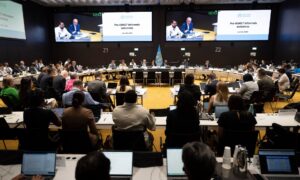
Image of the week | A non-exhaustive snapshot of last week’s events at the Palais des Nations, the International Environment House, the World Trade Organization, Maison de l’avenir and the International Conference Center Geneva (CICG), highlighting ongoing efforts to advance the global environmental governance agenda. © UNEP/GEN, UNECE & WTO.
Geneva Health Forum 2026 | Rethinking Cooperation for Health in a Changing World
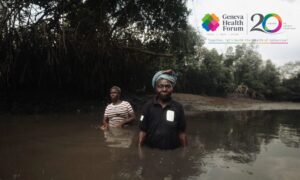
Since 2006, the Geneva Health Forum Conference has brought together key stakeholders in global health to exchange knowledge, share experiences, and work collectively to address today’s most pressing global health challenges. The 2026 edition takes place from 10 to 12 November 2026 at Campus Biotech under the theme “Rethinking Cooperation in Global Health.” Over three days, participants will explore innovative approaches to collaboration and discuss practical solutions around three key areas: New Forms of Collaboration in Global Health, Health Promotion and Community Engagement, and Access to Healthcare in Conflict and Crisis Settings. Researchers, practitioners, policymakers, representatives of international organizations, civil society, and the private sector are coming together to exchange ideas, share experiences, and develop new partnerships that contribute to stronger and more equitable health systems. The Conference is preceded by a seminar, “Sustainable AI use: from 2026 and beyond” on 9 November 2026 to explore practical solutions for sustainable AI use in healthcare. The environment is featured in various sessions of the Conference, addressing topics such as chemical pollution, One Health, and leveraging human rights for a healthy environment. → Consult the full programme
On the Conference programme, just days before the First International Conference of the Global Framework on Chemicals (GFC IC1), the session “Chemical Pollution: From the Field to Global Action to Protect Health,” co-sponsored by the Geneva Environment Network, will examine the impacts of chemical pollution on human health and explore practical actions to reduce exposure and prevent harm. It will discuss how the Global Framework on Chemicals can support countries and communities in addressing chemical pollution. As stakeholders prepare for GFC IC1, the session offers an opportunity to connect local experiences with international action to better protect health. → Register to attend in person in Room B1-06 at Campus Biotech (or follow online via Youtube) the event taking place on 10 November 2026 from 09:00 to 10:30 CET.
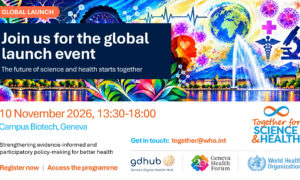
The Conference will also feature the launch of the Together for Science & Health movement on 10 November 2026, coinciding with World Science Day for Peace and Development. Initiated by the World Health Organization (WHO), Together for Science & Health is a global movement bringing together scientists, policy-makers, health professionals, communicators, civil society organizations, young people and communities around a shared commitment to science as a foundation for better health. Through three interconnected areas of collaboration, science-policy, science-society and science-communication, it will foster exchange, strengthen dialogue and better connect scientific knowledge with policy-making and societal needs. WHO invites organizations and institutions that share the movement’s vision to join by endorsing the Declaration of Commitment and completing the affiliation form, supporting the movement’s principles and values, and indicating how they can contribute to its three pillars. By affiliating, organizations can contribute expertise, networks, and practical solutions to strengthen trust in science and improve health outcomes through cross-sector collaboration.
Momentum Builds Towards the First International Conference of the Global Framework on Chemicals
The Global Framework on Chemicals – For a Planet Free of Harm from Chemicals and Waste (GFC), adopted in Bonn in September 2023 and supported by a Secretariat hosted in Geneva, is the main international policy framework for tackling pollution from chemicals and waste, much as the Paris Agreement guides global climate action and the Kunming-Montreal Global Biodiversity Framework targets nature loss. The First International Conference of the Global Framework on Chemicals (GFC IC1) is convening in Geneva from 16 to 20 November 2026, bringing together governments and stakeholders to advance its implementation. As delegates begin arriving in Geneva this week for preparatory regional and sectoral meetings on Sunday 15 November, a series of events are helping build momentum towards the conference.
Global Framework on Chemicals: A Public Health Agenda for Action
A new policy brief on the GFC released by the Global Health Centre at the Graduate Institute highlights the growing health burden of chemical pollution and calls for stronger engagement from the health sector in implementing the GFC. With chemical exposure linked to an estimated two million deaths annually, the brief stresses the need for prevention, stronger monitoring, poison centres, and cross-sector cooperation to reduce risks throughout the chemicals life cycle. The brief urges health actors to help shape implementation, financing and accountability mechanisms. It underscores the importance of integrating public health priorities into chemicals and waste management, while strengthening national capacities to prevent exposure and protect vulnerable communities.
Two events this week will focus on the health agenda of GFC:
- Chemical Pollution: From the Field to Global Action to Protect Health, organized as part of the Geneva Health Forum 2026 on 10 November, will explore the health impacts of chemical pollution and the role of the GFC in advancing solutions to protect people and the environment.
- A Health Sector Briefing for the First International Conference of the Global Framework on Chemicals will be hosted by the World Health Organization (WHO), focusing on health-related aspects of the GFC, including occupational and labour sector perspectives, health surveillance, disease burden indicators, toxicovigilance and the role of the healthcare sector in implementation. → Register to attend on Zoom on 12 November 2026 from 14:30 to 16:30 CET
Global Supply Chains Forum
The First Global Supply Chains Forum – Advancing Circular and Chemical-Safe Supply Chains in Fashion and Construction, convened under the GEF-8 Integrated Programme Eliminating Hazardous Chemicals from Supply Chains and led by UNEP in partnership with UNDP, UNIDO and FAO, takes place on 12 and 13 November in Room VII at the Palais des Nations. The forum will bring together policymakers, industry, finance, technical experts and civil society to discuss practical approaches for more sustainable, circular and transparent supply chains. The Forum will feature high-level dialogues and technical sessions on enabling conditions for sustainable fashion, showcase practical solutions and innovations from country projects and value chain actors, and present a dedicated Sustainable Fashion Presentation highlighting materials, design approaches and innovations that reduce hazardous chemicals and advance circularity.
Additional News
Recent developments highlight growing concerns over the health and environmental impacts of chemical pollution, from calls to tighten global drinking water standards and landmark PFAS litigation to consumer awareness on contaminants reaching wastewater systems. Together, these stories underscore increasing scrutiny of hazardous substances and the need for stronger prevention, regulation and accountability measures. Read more at:
- Global coalition urges WHO to update decades-old drinking water guidelines as studies link nitrate pollution to cancer and birth risks | Greenpeace International | 3 November 2026
- 3M commits $7.35 billion to settle ‘forever chemicals’-related claims | Reuters | 3 November 2026
- Test papier toilette: ce qui part avec la chasse d’eau | Fédération romande des consommateurs | 3 November 2026
All Eyes on Antalya for the UN Climate Change Conference COP31 | Stakeholder Engagement and New Reports
The 2026 UN Climate Change Conference (UNFCCC COP31) is convening in Antalya, Türkiye, from 9 to 20 November 2026. Under the Türkiye-Australia Partnership Modalities, Murat Kurum of Türkiye will serve as COP31 President-designate, and Australia’s climate minister Chris Bowen will be President of the Negotiations. Taking place ten years after the entry into force of the Paris Agreement on 4 November 2016, COP31 marks the beginning of the second global stocktake (GST2) of progress in achieving its goals, expected to conclude at COP33 in November 2028. Under the pillars of dialogue, consensus and action, key items to be discussed are mitigation, adaptation, just transition, and climate finance, among others.
Following COP31
To dive into COP31 negotiations, follow on the virtual meeting platform, consult the side events schedule and watch the livestream, and catch up with UNFCCC updates | COP31 Presidency News | UNEP Highlights | WMO Daily Updates (coming soon) | Earth Negotiations Bulletin Daily Coverage | Climate Action International (CAN) UN Climate Talks | Eco Newsletter | Loss and Damage Collaboration Daily Updates | Carbon Brief resources | Third World Network (TWN)
International Geneva at COP31
The UN Climate Change Conference will see strong inputs from international Geneva. As the world capital for multilateralism, Geneva is at the centre of numerous debates and negotiations in the fields of climate, science, health, human rights, development, trade and green finance, employment, peacebuilding and security, disaster risk reduction, humanitarian response, nature conservation, chemicals and pollution, as well as new technologies and innovation. This interdisciplinarity allows International Geneva to have unique cross-disciplinary expertise on climate and enables it to be a global hub and a key catalyst of climate action. → Find more on how Geneva contributes to COP31.
Geneva stakeholders will be engaging in hundreds of events, thematic days, and in pavilions led or co-led by Geneva stakeholders: Brazil Pavilion (Mutirão) | Buildings and Cooling Pavilion | Business Pavilion | Health Pavilion | IOM Pavilion | Just Transition Pavilion | SDG Pavilion | Standards Pavilion | Water for Climate Pavilion | WWF Pavilion
Key Reports Launched Last Week
Several major reports released in the lead-up to COP31 provide fresh evidence on the growing impacts of climate change, persistent adaptation and finance gaps, and opportunities for accelerating climate action. Covering adaptation, health, cryosphere change, oceans, displacement and climate finance, these publications are expected to inform discussions in Antalya and shape negotiations on resilience, just transition and implementation.
Adaptation Gap Report 2026 | UNEP’s 2026 Adaptation Gap Report: Ready? Not., released on 4 November, finds that adaptation finance remains far below developing countries’ needs, estimated at US$305 billion annually by 2035. Even tripling international adaptation finance would cover only a fraction of projected needs. The report warns that climate impacts are intensifying faster than adaptation efforts and calls for significantly scaled-up investment in resilience. → Rewatch the press conference and read more at:
- Adaptation Gap Report 2026. Ready? Not. | UNEP | 4 November 2026
- As world heads for overshoot of 1.5°C, adaptation is too slow | UNEP | 4 November 2026
- UNEP Executive Director media statement for the Adaptation Gap Report 2026 | UNEP | 4 November 2026
- ‘The world is not ready’: Climate adaptation cash falls far short as warming heads past 1.5°C | UN News | 4 November 2026
- The billion-dollar climate adaptation gap: a material risk and opportunity for the finance industry | Eric Usher, UNEP FI | 4 November 2026
- WWF: Tripling adaptation finance is not enough – it must turn promises into protection | WWF International | 4 November 2026
- Growth in Finance Insufficient to Meet Needs: Adaptation Gap Report 2026 | IISD | 4 November 2026
- Action needed as UNEP adaptation report exposes climate finance injustice | Greenpeace International | 4 November 2026
- UNEP report: Tripling adaptation finance would leave over 70% of developing countries’ needs unmet | CAN International | 4 November 2026
- Tripling Climate Adaptation Aid Leaves Developing Nations 70% Short | Health Policy Watch | 5 November 2026
Overshoot and the Cryosphere: Averting Global Meltdown | Overshoot and the Cryosphere: Averting Global Meltdown, developed by the International Cryosphere Climate Initiative (ICCI) in coordination with UNEP, sets out the global impacts of ice loss with overshoot, exploring which ones are locked in – and how more urgent climate action can still stop or slow the worst of this damage. The report highlights the escalating risks associated with exceeding 1.5°C warming and emphasizes that rapid fossil fuel phase-out and large-scale emissions reductions remain essential to avoid irreversible ice loss. Read more at:
- Overshoot and the Cryosphere: Averting Global Meltdown | ICCI in coordination with UNEP | 2 November 2026
- Averting Global Meltdown’: Report Details Ice Risks Beyond 1.5°C – and Paths to Return | ICCI | 2 November 2026
- UN warning on accelerating ice sheet loss must be a call to action | Greenpeace | 2 November 2026
- Averting Global Meltdown: New UN Report Details Ice Risks Beyond 1.5°C – and Paths to Return | Mountain Research Initiative | 3 November 2026
Global Ocean Observing System Status Report 2026 | The Global Ocean Observing System (GOOS) is led by the UNESCO Intergovernmental Oceanographic Commission (IOC) and supported by WMO, UNEP and the International Science Council. The Global Ocean Observing System Status Report 2026 highlights the latest progress in strengthening the world’s capacity to deliver long-term marine and ocean monitoring and identifies remaining gaps and risks. Read more at:
- Global Ocean Observing System Status Report 2026 | WMO | 5 November 2026
- Global Ocean Observing System Status Report 2026: Tracking progress in global ocean observing | GOOS | 5 November 2026
Benefits and Costs of Prioritized Actions on Climate Change and Health | The WHO technical report Global benefits and costs of prioritized actions on climate change and health presents a global assessment of the health, environmental and economic benefits and costs of scaling up six prioritized climate–health actions. WHO estimates that scaling up six priority climate-health interventions could prevent 1.6 million deaths annually, avoid 17 billion tonnes of greenhouse gas emissions, and generate approximately US$4 trillion in annual economic benefits. According to the report, every dollar invested could yield roughly US$24 in benefits. Read more at:
- Global benefits and costs of prioritized actions on climate change and health: technical report | WHO | 3 November 2026
- Six climate and health actions could save 1.6 million lives and deliver trillions in benefits each year | WHO | 3 November 2026
- WHO’s Trillion-Dollar Climate-Health Case Rests on Taxing Fossil Fuels | Health Policy Watch | 5 November 2026
90 Million Displaced People Face Severe Climate Risks | According to UNHCR’s report, nearly 90 million forcibly displaced people – three in four globally – are living in countries facing high to extreme exposure to climate-related hazards, including severe droughts, deadly floods and extreme heat, while climate finance continues to fall far short of the needs of vulnerable and conflict-affected populations. Read more at:
- Ahead of COP31, UNHCR warns nearly 90 million displaced people face severe climate risks | UNHCR | 6 November 2026
Weather and Climate Services for Ski Resorts | WMO and the International Ski and Snowboard Federation (FIS) issued a joint report on Weather and Climate Services for Ski Resorts to support the winter sports and tourism industry at a time of rising temperatures and more uncertain snow conditions. The report examines how the winter sports sector can adapt to rising temperatures and increasing snow variability through improved climate and weather services. In addition to the full report, there is also a shorter practical resource guide explaining what types of information are useful and where they can be obtained. Read more at:
- Weather and Climate Services for Ski Resorts | WMO | November 2026
- Report on weather and climate services for ski resorts supports winter sports | WMO | 3 November 2026
- New FIS–WMO report brings weather and climate guidance to snow sports | FIS | 3 November 2026
- Hot summer of 2026: what it means for the winter | SLF | 6 November 2026
NZAOA 2026 Progress Report | The UN-convened Net-Zero Asset Owner Alliance (NZAOA) released its 2026 Progress Report, showing signatories are delivering on ambition as they enter their second target-setting period. The UN-convened alliance reports that investments in climate solutions reached US$787 billion in 2025, highlighting growing momentum among institutional investors toward net-zero objectives. → Read more in UNEP FI press release
COP30 Presidency: Implementing the Baku to Belém Roadmap to 1.3T | Released on 6 November 2026, the COP30 Presidency’s latest report identifies pathways to mobilize more than US$1.3 trillion per year for developing countries by combining public finance, multilateral development bank reform, private investment and innovative financial instruments. The report aims to support implementation of climate goals and accelerate investment in mitigation, adaptation and resilience ahead of COP31. → Read more in press release
The Climate Action Monitor 2026 | The OECD warns in the report The Climate Action Monitor 2026, issued on 5 November, that increasing exposure to extreme heat and drought is creating mounting risks for economic growth, infrastructure, agriculture and public health across OECD countries. The report calls for accelerated adaptation and resilience investments to reduce the escalating costs of climate impacts and strengthen long-term economic stability. → Read more in OECD press release
Reports to be Launched this Week
Reports to be launched at COP31 include:
- WMO State of Climate 2026 Update | WMO | 9 November 2026
- Fifth Edition of the WIPO Green Technology Book. Solutions for Restoring Climate-Impacted Ecosystems | WIPO | 11 November 2026
- Retaining atmospheric and biogenic carbon in the global materials economy | UNEP | 13 November 2026
Spotlight on Human Rights at COP31
The interlinkages between human rights and climate change will be in the spotlight at various moments at COP31. More than 40 side events and exhibits will explore issues ranging from climate justice and civic space to just transition and environmental defenders. International Geneva stakeholders, including UN human rights experts, the UN Special Rapporteur on climate change and human rights, Elisa Morgera, UN Special Rapporteur on the right to a healthy environment, Astrid Puentes Riaño, and UN Special Rapporteur on environmental defenders under UNECE Aarhus Convention, Michel Forst, will be actively engaged throughout the programme.
Protecting Environmental Human Rights Defenders | Environmental human rights defenders (EHRDs) are essential to advancing climate justice, yet they continue to face intimidation, criminalization, and exclusion from climate decision-making. Over 100 organizations from all regions have published a joint NGO “Briefing for UNFCCC COP31 on Environmental Human Rights Defenders (EHRDs)” that sets out key priorities for COP31 that can translate recognition to action: protect civic space and participation, advance gender justice, put human rights into climate accountability, recognize defenders as climate actors, embed rights and safeguards in the Belém–Antalya Mechanism, and make adaptation inclusive. → Consult the briefing and statements from CIEL, FIDH and OMCT.
Climate Action and Right to Science | On Wednesday 11 November, the Office of the High Commissioner for Human Rights (OHCHR) is organizing a side event, “Climate action and the right to science: implications for just transition, the GST, NDCs, and more”. The event will explore the role of the right to benefit from science in advancing effective climate action. Discussions will examine how the latest climate science can inform the Global Stocktake, nationally determined contributions (NDCs), biennial transparency reports (BTRs) and just transition processes.
Human Rights Experts Call for Greater Climate Ambition | Ahead of COP31, UN human rights experts urged Australia to match its role as co-host of the conference with stronger rights-based climate action. They called for accelerated efforts to phase out fossil fuels, align climate commitments with the 1.5°C pathway, and better protect communities, particularly children and Pacific Island populations, from the escalating impacts of climate change. The experts also welcomed a recent court ruling that strengthens consideration of climate impacts in project approval processes. These concerns have been brought to the attention of the Government of Australia. The experts acknowledged the reply received and look forward to continuing this dialogue at COP31 and in the lead up to the second International Conference on Transitioning Away from Fossil Fuels. → Read more in the press release Australia’s global leadership must be underpinned by ambitious human rights-based climate action: UN experts issued on 5 November.
Recommended Reading
For an introduction to key issues at and expectations for COP31:
- Get ready for COP 31 | UNFCCC
- Here are the seven issues expected to dominate the upcoming UN Climate Change Conference | UNEP | 6 November 2026
- Inside COP 31 | International Institute for Sustainable Development
- The climate is changing. We have the science. COP31 must be where we pick up the pace | Celeste Saulo, Secretary-General in World Meteorological Organization | 6 November 2026
- COP31 preview – comments from UN Climate Change Executive Secretary Simon Stiell, COP31 President Designate Murat Kurum, President of COP31 Negotiations Chris Bowen | UNFCCC | 5 November 2026
- Interactive: Tracking negotiating texts at the COP31 climate summit | Carbon Brief | 5 November 2026
- Why I’m optimistic about COP 31 and all the days beyond | Erin Roberts, The Loss and Damage Collaboration | 5 November 2026
- The World is Burning: Climate Multilateralism Needs a Reboot | CIEL | 5 November 2026
- Ten years of the Paris Agreement: Has the world kept its climate promises? | Al Jazeera | 5 November 2026
- COP31 explained: What’s at stake at this year’s UN climate summit? | UN News | 4 November 2026
Ahead of COP31, organizations across the climate community have released messages highlighting priorities for the negotiations, including:
- COP31: IFRC calls for urgent investment to protect world’s most vulnerable | IFRC | 4 November 2026
- Global Roadmaps on forests and fossil fuels offer an innovative model for climate action | WWF | 4 November 2026
- COP30 Presidency launches international roadmaps to accelerate transition away from fossil fuels and halt deforestation and forest degradation by 2030 | COP30 Brazilian Presidency | 3 November 2026
- COP30 roadmaps are a critical step, but urgent 1.5°C action needed at COP31 | Greenpeace International | 4 November 2026
- WHO at COP31: climate change and health briefing and key messages | WHO | 3 November 2026
- Innovative Financing at COP31 | UNHCR | 3 November 2026
- No Climate Justice Without Peace, No Peace Without a Fossil Fuel Phase Out | CIEL | 3 November 2026
- Key Messages on Loss and Damage for the thirty-first Conference of Parties (COP 31) | Loss & Damage Collaboration | 2 November 2026
- COP31: Can Climate Multilateralism Deliver in a World of Crisis and Conflict? | CIEL | 2 November 2026
- Carbon Credits Under Scrutiny: What a New UN Report Means for COP31 | CIEL | 29 October 2026
Other recent updates highlight emerging climate-related risks and opportunities, from accelerating renewable energy deployment and the growing impacts of El Niño to climate-driven health threats and the public health implications of petrochemical pollution:
- Renewables 2026. Analysis and forecasts to 2031 | IEA | 6 November 2026
- Small Changes Could Mean Big Gains for Ocean Carbon Sink Estimates | WMO | 6 November 2026
- From a ship frozen into Arctic ice, a warning to world leaders: Trust the science | UN News | 6 November 2026
- Western Pacific faces drier months as El Niño strengthens | WMO | 5 November 2026
- Is climate change propelling the rise of superbugs? | UNEP | 4 November 2026
- A warning from Europe’s hot summer | Christine Lagarde, ECB | 4 November 2026
- The Kigali Amendment’s 10th anniversary – and a call for renewed ambition | EIA | 3 November 2026
- Dangerous But Disregarded: Health Officials’ Duty to Warn on Petrochemical Emissions | CIEL | November 2026
- New cluster munition action plan shows continuing momentum on climate and environment | CEOBS | 2 November 2026
- How COP31 can address displacement | Internal Displacement Monitoring Centre | November 2026
Conflict, Humanity and the Environment | Strengthening Protection in Times of War
With more than 130 armed conflicts currently affecting people around the world, States are taking steps to strengthen respect for international humanitarian law (IHL) and reduce civilian suffering. Ahead of the Global IHL Dialogue hosted by Switzerland and the International Committee of the Red Cross (ICRC) in Geneva last week and the High-Level Conference on Humanity in War to be hosted by His Majesty King Abdullah II in Jordan in December, practical guidance has been developed to help translate political commitments into concrete action. Reflecting this momentum, more than 160 States meeting last week in Geneva agreed on practical measures to uphold humanity in war, identifying ways to strengthen compliance with international humanitarian law and enhance the protection of civilians affected by armed conflict. → Read the press release.
Armed conflicts not only cause immense human suffering but also leave lasting damage to ecosystems, natural resources and the communities that depend on them. To safeguard the environment of conflict-affected communities and future generations, States and non-State armed groups need to accelerate the implementation of IHL provisions protecting the natural environment. The ICRC highlighted the growing importance of protecting the environment during warfare and, in an article published ahead of the International Day for Preventing the Exploitation of the Environment in War and Armed Conflict, observed on 6 November, recalled that IHL contains rules aimed at limiting environmental harm. The ICRC’s recent report examines how environmental protection can be better integrated into military practice and conflict response, at a time when environmental degradation is increasingly recognized as a driver and threat multiplier in conflict settings. → Read the article, Protecting the natural environment in armed conflict, and access the accompanying ICRC implementation guidance.
Beyond damage to ecosystems, armed conflicts are increasingly affecting essential civilian infrastructure needed for health and survival. A new UNICEF report, Water Under Fire, Volume 4. An Urgent Call to Protect Water, Sanitation and Hygiene in Conflict, released on 5 November 2026, documents a growing pattern of attacks on water, sanitation and hygiene (WASH) systems worldwide. Covering the period from January 2021 to June 2026, the report identifies seven categories of attacks recorded across 23 countries and territories and highlights how humanitarian actors are adapting to sustain essential services in increasingly constrained environments. The findings underscore the critical role of international humanitarian law in protecting civilian infrastructure and preventing long-term environmental and public health impacts of conflict. → Read the report Water Under Fire, Volume 4. See also the related UN News article, Children at risk as war zone attacks on water and sanitation more than triple.
This growing focus on environmental protection is also being reflected in international justice. In December 2025, the International Criminal Court’s Office of the Prosecutor launched a new policy to strengthen the investigation and prosecution of crimes involving environmental damage under the Rome Statute. The policy addresses the environmental dimensions of crimes under the International Criminal Court’s jurisdiction, including genocide, crimes against humanity and war crimes. Recognizing that environmental exploitation and degradation can both contribute to and result from Rome Statute crimes, it provides a framework for addressing environmental harm through international justice and is now being actively implemented by the Office of the Prosecutor. → Learn more about the policy in a video and in the Questions & Answers developed by the ICC.
Complementing these efforts, a recent UNIDIR study explores how non-state armed groups operate at the intersection of climate change, environmental degradation and conflict, highlighting emerging risks and policy challenges. The report presents recent research findings and identifies policy responses to better address the growing climate-environment-conflict nexus in peace and security efforts.
Marking the International Day for Preventing the Exploitation of the Environment in War and Armed Conflict, the Geneva Centre for Security Policy (GCSP) also drew attention to the often-overlooked environmental impacts of war, including ecosystem destruction, pollution and resource depletion. Those interested in exploring these issues further can learn more through the upcoming Environment and Security 2026 course, which examines the links between conflict, environmental degradation and peacebuilding. → Learn more.
Preparing for the Next Round of Plastic Treaty Talks
The Chair of the Intergovernmental Negotiating Committee (INC) to develop an international legally binding instrument on plastic pollution, including in the marine environment, H.E. Amb. Julio Cordano, continues to communicate with Member States and Observers about how he intends to move forward with the negotiations, providing regular written updates (letters or reflection notes) to support transparency and guide Member States:
- In his fifth letter, dated 2 November 2026, the Chair reports that negotiations are now past the halfway point between INC-5.3 and INC-5.4, with growing signs of convergence but significant political issues still unresolved. The letter urges countries to focus on compromise, flexibility and pragmatism to finalize a global legally binding treaty on plastic pollution. The Chair mentions that a second iteration of the Aid to Negotiations is due in November and will be part of the discussions at the next informal meeting in Nairobi in January 2027. He proposes working through continuous iterations of the text rather than live editing, with a shift toward discussing packages and trade-offs across the text.
- The fifth informal webinar with Observers to the INC is taking place on 12 November 2026 in two alternative sessions to facilitate participation across time zones: Session 1 (13:00–14:30 CET) / Session 2 (19:00–20:30 CET). This webinar with Observers is convened to provide an update on the last informal meeting and next steps leading to INC-5.4. Observer organizations will have the opportunity to ask questions and share their reflections and views. → Webinar outline
The road towards INC-5.4 continue to advance in the context of COP31, held in Antalya, Türkiye from 9 to 20 November 2026, with multiple events discussing the plastics agenda, including a UNEP/INC High-Level Plastics Treaty Informal Breakfast taking place next week on 19 November 2026.
New reports and analyses also continue to inform the debate on plastics, circular economy solutions and waste management, from the growing market for non-plastic substitutes to the risks associated with waste-to-energy incineration. Read more at:
- Trade in non-plastic substitutes is worth $484 billion. Who captures the value? | UN Trade & Development | 5 November 2026
- Waste-to-Energy Incineration: The Facts, Costs & Risks | GAIA | October 2026
- The Burn Book: Incinerators that Threaten the Climate, Public Health, and our Finances | GAIA | October 2026
- Vehicle tyres – A key source of microplastics to the environment: Fate, effects, and mitigation strategies | Andy Booth, Susanne Brander, Judith Weis et al. | Scientists’ Coalition for an Effective Plastics Treaty | 20 October 2026
Key Decisions from CITES SC81 | Strengthening Enforcement, Protecting Species, Preparing for CoP21
The 81st meeting of the Standing Committee of the Convention on International Trade in Endangered Species of Wild Fauna and Flora (CITES) concluded in Geneva on 6 November 2026, advancing work on wildlife trade regulation, compliance and enforcement, species conservation, and preparations for future decisions by Parties. Discussions covered a wide range of issues, including elephants, rhinos, great apes, marine species, timber species and efforts to combat illegal wildlife trade, reaffirming the role of CITES as a key global mechanism for protecting biodiversity through sustainable and legal trade. SC81 laid important groundwork for discussions at SC82 and the 21st meeting of the Conference of the Parties (CoP21). This meeting also marked “the end of an era” as the tenure of Ivonne Higuero as CITES Secretary-General concludes in January 2027. → Read more in CITES Executive Summaries
Throughout the week, parties and observers navigated over 90 working documents across 67 agenda items and engaged in 20 side events. As highlighted during the meeting, the growing workload reflects both the increasing complexity of international wildlife trade regulation and the expanding responsibilities entrusted to the Convention by its Parties.
Key outcomes included:
- 82nd meeting of the Standing Committee (SC82) to be held in Geneva the week of 8 November 2027.
- Indonesia offered to host the 35th Animals Committee (AC35) and the 29th Plants Committee (PC29) meetings.
- Elephant poaching in Africa reached its lowest level on record, but Parties were urged to strengthen ivory market controls, stockpile management and forensic investigations.
- A Great Ape Enforcement Task Force was established to combat illegal trade in live great apes.
- International cooperation to tackle totoaba trafficking was strengthened.
- Trade restrictions on West African rosewood (Pterocarpus erinaceus) were maintained for several range States pending stronger scientific and legal safeguards.
- Work advanced on jaguars, seahorses, sharks and rays, rhinos, tigers, tortoises and freshwater turtles, with new recommendations and intersessional work programmes.
- A captive-breeding operation for totoaba in Mexico was approved under strict conditions.
- Guidance was strengthened on legal acquisition findings, captive breeding, timber traceability and trade reporting.
- Parties were encouraged to enhance the participation of Indigenous Peoples and local communities in CITES processes.
- The Committee agreed to explore longer validity periods, of up to 10 years, for certificates covering the cross-border movement of musical instruments containing CITES-listed species.
- Significant progress was reported under compliance and enforcement processes.
Additional coverage includes:
- EIA campaigners intervene on behalf of elephants at CITES Standing Committee in Geneva | EIA | 4 November 2026
- Illegal trade from tiger farms still threatens the recovery of wild tiger populations | EIA | 3 November 2026
- 81st meeting of the CITES Standing Committee: Opening Statement by CITES Secretary-General Ivonne Higuero | CITES | 2 November 2026
Enjoying a Green Autumn in Geneva
This autumn brings a wide variety of experiences, from cultural festivals and thought-provoking exhibitions to outdoor walks, forums, and community events, while offering opportunities to connect with nature and enjoy the beauty of the changing landscape. Activities to help you make the most of a Green Autumn this week include:
- Action Lumières – Ville de Genève | From 9 to 11 November 2026 | Jardin Anglais
This event is dedicated to raising awareness of the visibility of cyclists in Geneva. You can expect to find practical information and tips on bike safety, as well as discounts on essential bike safety items including lights and reflective materials. - A la ferme! | 11 November 2026 | WWF Switzerland | Ferme de Budé
Curious about November’s seasonal fruits and vegetables? Come visit the Ferme de Budé, where you will discover the secrets of organic agriculture and the journey food takes to get from the farm to your plate. Wear clothes you can move in (and get a little dirt on), since you’ll be helping the gardeners bring in the harvest! (This event is intended for children between 6 and 12 years old.) - Couleurs d’automne et structures végétales | 11 November 2026 | Jardin Botanique de Genève
The Geneva Botanical Garden invites children to explore the colours, shapes and textures that make autumn so special. Young participants will go on a discovery walk through the gardens, observing the different fruits and natural elements that can spark their creativity. Accompanied by nature professionals, they will then have the opportunity to turn their discoveries into their own temporary works of art, enjoying an afternoon outdoors while learning more about the natural world. - Visites guidées de l’exposition – Fleuves de vie, vie des fleuves | 12 November 2026 | Plateforme interreligieuse de Genève (PFIR) | Maison de l’Avenir
Interested in learning about the spiritual importance of rivers and what indigenous knowledge can teach us about conservation? The “Fleuves de vie” (Rivers of life) exhibition explores the two-way relationship between rivers and humans, and how it can be strengthened. The exhibition covers 10 major global rivers, revealing their cultural, ecological and economic impact on society. As viewers, we are encouraged to reflect on the gifts, resources, food, and transport that rivers have provided us for centuries, and on the importance of protecting these natural environments. - FILMAR 2026 | From 14 to 25 November 2026 | Various Locations
As Switzerland’s first festival dedicated to Latin American cinema, it features a rich programme of more than 70 films that explore issues of gender, memory, the environment, and Indigenous struggles. This year’s edition highlights Latin American music through its CINE MÚSICA section, featuring films that celebrate the world of music, as well as concerts and discussions to extend the festivities and foster a dialogue between cinema and live music. Teresa Sánchez, a Mexican artist, is the MUESTRA’s guest of honour. A carefully curated selection of four of her films kicks off the discussion about this multifaceted actress with her unique acting style! - The second-hand car exhibition | From 12 to 15 November 2026 | Palexpo
Visit the biggest second-hand car show in Switzerland. The event will be supported by experienced and qualified professionals, answering any questions and helping you find your perfect car. Expect to find over 700 high-quality second-hand cars, fully guaranteed, and at competitive prices, as well as an evaluation of the trade-in of your vehicle with free technical inspection. - La « Nuit du conte » | 13 November 2026 | ASL | Espace Léman
The ASL is joining forces with La Nuit du Conte to present an evening of storytelling under the theme “The Voice of Lake Geneva: Waterways, Sounds of Water.”Join at the Espace Léman to discover stories and legends of Lake Geneva told by Danielle Roesch. - Animaux du Bioparc | 14 November 2026 | WWF Geneva | Bioparc Genève
Is your child fascinated by animals? Come meet birds, monkeys, and lemurs up close at the BioParc in Geneva! Children can feed the animals and learn all about them through fun, interactive games. - Une Marche du Temps Profond à Genève, édition 2,3km | 14 November 2026 | Mission Genève Durable | Jardin Botanique de Genève
Join this immersive voyage of 4.6 billion years to explore the history of the Earth and of life on Earth. An experience designed to bring awareness to our link with the planet, and what the future might hold. The event involves 18 different stations spread across the Botanical Garden in Geneva. The walk will include scientific stories, moments of reflection and silence and sensory experiences. There is the option of continuing the experience by dining with the other participants at the end of the walk. - 56e Bourse aux minéraux, fossiles et gemmes de Genève | 14 and 15 November 2026 | Event Center de l’hôtel Ramada Praille
Find your favorite crystal, jewellery piece, mineral stone or fossil at Geneva’s 56th annual mineral show organized by the Geneva Mineralogy Society. This year’s event will showcase minerals from around the world, including unusual and rare specimens, recent discoveries from Swiss crystal specialists, and even gemstones from the Jura Alps. Highlights include a free analysis of any jewellery you own, offered by jewellery specialists, as well as meteorite fragments from the Moon and Mars. - Les Automnales | Until 15 November 2026 | Palexpo
The Automnales are back at Palexpo from 6 to 15 November! This popular event offers a wide range of activities for all interests, from markets and culinary demonstrations to international cat shows and cycling exhibitions. With workshops, competitions and interactive experiences, there is something for everyone to enjoy. - Des histoires de la Terre: Les minéraux – magie aux mille facettes | 15 November 2026 | Musée d’Histoire des Sciences
Discover the fascinating and varied uses of crystal throughout history. From the advent of crystallography in the 18th century made it possible to understand their fascinating geometric shapes to their influence on societies and culture, join this event to learn more about these beautiful stones. - Des Histoires de la Terre: Archéoptéryx et ses descendants | 15 November 2026 | Musée d’Histoire des Sciences
Discover all about the Archaeopteryx in this museum exhibit dedicated to exploring how Archaeopteryx came to be, and its evolution from dinosaurs into birds with teeth. The exhibit also explores the morphological characteristics of the dinosaurs, from the excavation of the first fossil to the study of the bird’s morphological features – all highlighting how “birds” are in fact, well and truly dinosaurs. - Hortus Botanicus Helveticus: Together for 30 years | Until 29 November 2026 | Jardin Botanique de Genève
Marking the 30th anniversary of Hortus Botanicus Helveticus, this outdoor exhibition celebrates the work of Switzerland’s 30 botanical gardens. As you walk through the Jardin Botanique de Genève, discover 30 illustrated displays, each featuring a representative plant species and highlighting the important role these gardens play in protecting biodiversity and preserving plant life for future generations. - Look up ! Cent montgolfières dans le ciel | Until 5 December 2026 | Bibliothèques municipales de Genève
What would our world look like without an atmosphere? Through her original installation “Look Up”, artist Rosanna Baledda invites visitors to look up at a sky filled with a hundred hot-air balloons and reflect on the vital role the atmosphere plays in protecting life and maintaining the Earth’s climate balance. This exhibition is available at the Bibliothèque des Eaux-Vives from 6 November to 5 December, as part of Geneva’s Climate Week. - Atelier découverte de la nature pour enfant | Until 12 December 2026 | Swiss Food Academy | Espace de quartier Le 99 aux Charmilles, Plainpalais et Eaux-Vives
This autumn, children can discover the chestnut through a fun and sensory workshop! They will explore, taste and learn about this seasonal Swiss favourite while taking part in a gardening activity and enjoying a comforting chestnut tasting. - Create Your Own Rousseau-Style Herbarium | Until 23 December 2026 | Jardin Botanique de Genève
Discover the art of herbarium making in this hands-on workshop inspired by Jean-Jacques Rousseau. Using dried flowers, plants, and traditional paper, participants can create their own herbarium sheet while learning about plant identification and the scientific techniques behind this botanical practice. The activity is free and suitable for visitors aged four and above.
What (Else) to Read Next?
- CBD COP17: Did the world deliver for wildlife? | Born Free | 6 November 2026
For Born Free, the decisions taken in Yerevan will only matter if they lead to lasting change for wild animals and the places they call home. That means turning global commitments into effective legislation, policy and practical action, alongside adequate funding, while recognizing that animal welfare is not separate from conservation, but an essential part of it. Protecting biodiversity must mean protecting wild animals, not simply managing them as resources.
- Belgium and Chile decide to join their candidatures for the seat of the BBNJ Secretariat | Kingdom of Belgium Federal Public Service | 6 November 2026
Belgium and Chile assign the highest importance to a successful COP1 of the BBNJ Agreement (Biodiversity Beyond National Jurisdiction) and to a swift implementation of its provisions. […] In line with this fruitful cooperation, Belgium and Chile have decided to join their candidatures for hosting the Secretariat, also as a contribution to facilitate an effective decision at COP1. This joint candidature provides for the Secretariat being based in the city of Valparaíso, Chile, from which its main functions will be delivered as expressed in the BBNJ Agreement, including the operationalization of the financial mechanism. - Next Steps: 5 Years of the Human Right to a Healthy Environment | Astrid Puentes Riaño, UN Special Rapporteur for the human right to a healthy environment | 5 November 2026
A human right without implementation is just good intentions. Five years after the recognition of a clean, healthy and sustainable environment as a universal human right by the UN Human Rights Council, States and institutions must move forward with its implementation.
- Director-General: Leverage trade and partnerships to build a resilient ocean economy | WTO | 5 November 2026
The multilateral trading system provides important tools for the development of a healthy and prosperous ocean economy, Director-General Ngozi Okonjo-Iweala said in her keynote speech at an event on Trade, Biodiversity and the Ocean Economy: Pathways to Resilience at the WTO on 5 November. Highlighting the importance of strengthening support for coastal and island economies, she said: Trade is part of the answer. The oceans are an asset of the global commons that can best be managed through multilateral approaches. - Critical Minerals Diplomacy: What over 200 agreements reveal | IISD | 3 November 2026
The last 2 years have brought a new priority to global economic diplomacy: critical minerals now feature in most trade and economic agreements. The rush to secure resources needed for the climate and digital transitions has pushed all large consumers to compete for availability and security of supply. IISD’s Trade & Climate Tracker provides insight on where to build on existing cooperation to better impact climate and communities.
- Mauritania Joins UN Water Convention as 62nd Party, Completing Coverage of the Senegal-Mauritanian Aquifer Basin | UNECE | 3 November 2026
Mauritania’s decision comes at a critical time. Heavily affected by decades of drought and desertification, the country faces increasing pressure on its water resources. 58% of the rural population in eastern and southern Mauritania relies heavily on the Senegal-Mauritanian Aquifer Basin (SMAB) for access to water, while more than 40% of the national livestock depends on seasonal migration routes sustained by the basin’s resources. Cooperative, sustainable management of this transboundary basin is therefore essential for the country’s pastoral economy and food security. - Michel Forst à propos de la situation des défenseurs de l’environnement au titre de la Convention d’Aarhus | La Nation | 2 November 2026
This urgency stems from a deeply troubling trend we are seeing worldwide. Environmental activists are not mere protesters: they are people fighting for the survival of our ecosystems, biodiversity, and climate stability. Yet, all over the world—including in established democracies—we are witnessing an unprecedented crackdown on environmental activism. We see peaceful protesters vilified in public discourse, subjected to heavy-handed police tactics, facing disproportionate criminal charges, and targeted by SLAPP suits—strategic lawsuits against public participation.
- Biodiversity COP17: A turning point for incentive reform | Business for Nature | 2 November 2026
While incentive reform dominated, COP17 also reinforced the importance of integrating biodiversity across the wider economy. […] For business, the significance lies in the growing recognition that implementation of the Global Biodiversity Framework will require closer collaboration between governments, business and financial institutions. The decisions encourage stronger integration of biodiversity across sectors, reinforce expectations for business action on biodiversity (linked to Target 15 of the Global Biodiversity Framework), and support greater business engagement in national biodiversity strategies. - The true scale of species in the global wildlife trade is at least twice previous official estimates | UNEP-WCMC | November 2026
A paper published in the journal Science Advances provides the first comprehensive estimate of species in trade and use across all taxa. Three of UNEP-WCMC’s biodiversity experts contributed to this analysis, which shows that the number of species currently in trade is at least double the previous estimate, at 107,356 species used and traded globally. This includes up to 47,685 animal species, comprising 42% of all described vertebrate species. - Members review 34 notifications, share experiences at Fisheries Subsidies Committee | WTO | 29 October 2026
At a meeting of the Committee on Fisheries Subsidies on 29 October, WTO members conducted the first review of notifications under the WTO Agreement on Fisheries Subsidies and shared experiences on how they are implementing the Agreement since it entered into force just over a year ago. - Information Note: What are Rights of Nature? | UNEP | 27 October 2026
This information note aims to unpack the concept of “rights of nature” which is generally understood as the recognition of nature’s rights and protections. The note examines this emerging legal trend in the context of different developments at national, regional and international levels. It is written primarily for policymakers, advocates and practitioners, international or regional organizations and civil society actors.
Events
See all
Body Meeting
9th meeting of the Intergovernmental Working Group (IGWG) on the WHO Pandemic Agreement
02 – 13 Nov 2026
WHO Headquarters
WHO

Conference
Semaine des droits humains 2026 | Pour une santé globale et durable
09 – 13 Nov 2026
Uni Dufour, Uni Mail, Campus Biotech
UNIGE

Conference
Sustainable Use of AI : From 2026 and Beyond
09 Nov 2026 | 09:00 – 17:30
Campus Biotech
GHF, gdhub
Conference
After shedding: the environmental fate of Enteroviruses
09 Nov 2026 | 12:15 – 13:15
CMU | Auditoire: J-L Reverdin
UNIGE
Workshop
Workshop on Measuring Planetary Boundaries
09 Nov 2026 | 13:00 – 16:00
Palais des Nations | Room H.542
UNECE

Conference
Hoffmann Centre High Level Lecture with Diego Känzig | Global Temperature and Global Mortality
09 Nov 2026 | 17:15 – 20:00
Domaine Barton | Auditorium Jacques-Freymond
IHEID

Body Meeting
4th Meeting of the Small Intersessional Working Group on the Technical Guidelines for the Environmentally Sound Management of Used and Waste Pneumatic Tyres
10 – 12 Nov 2026
Online | Zoom
BRS

Conference
1st session of the Joint Working Group on Environmental Statistics and Indicators
10 – 11 Nov 2026
Palais des Nations | Room III
UNECE
Conference
Chemical Pollution: From the Field to Global Action to Protect Health | Geneva Health Forum Conference
10 Nov 2026 | 09:00 – 10:30
Campus Biotech | Room B1-06
GHF, GEN

Conference
Analogues et vitesse: visualiser le changement climatique
10 Nov 2026 | 14:30 – 16:00
Théâtre de l’Espérance
UNIGE
Virtual
Turning sustainability disclosures into risk insights: New sustainability risk management tools and research
10 Nov 2026 | 14:00 – 15:30
Online | BrightTalk
UNEP FI

Body Meeting
Eleventh Meeting of the Effectiveness Evaluation Group (EEG-11)
11 – 13 Nov 2026
International Environment House
Minamata Convention
Conference
Science–Policy Briefing | Green Chemistry and the Future of Sustainable Industry (By Invitation Only)
11 Nov 2026 | 12:30 – 14:15
Geneva
GSPI, UNU-CPR
Conference
Global Supply Chains Forum: Advancing Circular and Chemical-Safe Supply Chains in Fashion and Construction
12 – 13 Nov 2026
Palais des Nations | Room VII
UNEP Chemicals and Health Branch, GEF, UNDP, UNIDO, FAO

Virtual
Health Sector Briefing for First International Conference of the Global Framework on Chemicals
12 Nov 2026 | 14:30 – 16:30
Online | Zoom
WHO
Virtual
COP17 debrief on Peace for Nature. Nature for Peace.
12 Nov 2026 | 15:00 – 16:00
Online | Zoom
ECCP
Local
Séminaire énergie-environnement 2026-2027 | SIG, bras industriel de la transition énergétique.
12 Nov 2026 | 17:15 – 18:45
UNIGE Carl-Vogt | Room CV1
UNIGE
Body Meeting
COP-7 Bureau 1st Meeting
14 Nov 2026 | 09:00 – 17:00
International Environment House & Online
Minamata Convention
Jobs
See all
Intern
Intern for Risk Management and Peacebuilding Section
09 Nov 2026
UNEP Disasters and Conflicts Branch