
Événement Conférence
Just Transition and Human Rights: Key Issues for COP30 | HRC60 Side Event
18 Sep 2025
13:00 – 14:00
Lieu: Palais des Nations | Concordia 1
Organisation: Franciscans International, Lutheran World Federation, Earthjustice, Friedrich-Ebert-Stiftung, Groupe Consultation Changement Climatique Genève, Geneva Environment Network
This side event to the 60th Regular Session of the Human Rights Council (HRC60), convened by Franciscans International, the Lutheran World Federation, Earthjustice, Friedrich-Ebert Stiftung, the Geneva Environment Network and Geneva Climate Change Consultation Group (GeCCco), identified the key takeaways from the UN Human Rights Council processes to COP30 negotiations, in particular on the intersectionality between Just Transition and Human Rights.

About this Event
Climate change poses a profound threat to human rights, disproportionately affects vulnerable populations—threatening their access to clean water, food, health, and shelter, and even their right to life and culture identity. Recognizing this, the UN Human Rights Council continues to address the adverse impacts of climate change for the enjoyment of human rights, establishment of relevant mandate, resolutions, studies and reports. One of the key climate change themes currently addressed is the intersection between Just Transition and Human Rights. A just transition seeks to ensure that the shift to a low-carbon economy protects workers, communities, and marginalized groups from economic and social displacement, while promoting sustainable livelihoods.
On 30 June, at the 59th Session of the UN Human Rights Council, the UN Special Rapporteur on the promotion and protection of human rights in the context of climate change, Elisa Morgera, issued a landmark report, The Imperative of Defossiliting Our Economy, explaining the human rights harms caused by fossil fuels and the legal obligations of States to prevent such harms.
The report reaffirms that “(…) each stage of the fossil fuel life cycle entails significant and pervasive risks and harm for the rights to life, health and an adequate standard of living and for cultural rights throughout the whole of people’s lives and across different generations. Such harm is due to toxic pollution and biodiversity loss, impacting the right to a healthy environment and further exacerbating climate change impacts. One of the key recommendations to the States is immediately “Prioritizing the phaseout of fossil fuel production and of the use of fossil fuels, as the main cause of climate change.”
At the same session, the Council adopted Resolution HRC/RES/59/25 on “Climate Change and Human Rights.” The resolution that was adopted by consensus failed to accept proposed language to “transition away from fossil fuels in energy systems, in a just, orderly and equitable manner” proposed by Republic of Marshall Islands and Columbia and supported by civil society organization. Despite the failure to have a progressive language at the Council, we are very much encouraged by landmark Advisory Opinion the International Court of Justice (ICJ) issued on July 23, 2025, on “The obligation of States with Respect to Climate Change”. The Court confirms the application of existing international law, clarifying that climate “harms” can be clearly linked to major emitters and fossil-fuel producers. The Court also recognizes the urgent and existential threat of climate change to human rights and concludes that those harmed by human-caused climate change may be entitled to “reparations”.
At the current 60th session, the UN Secretary General presents his synthesis report on “Just Transition and human rights” to the Council. The report aims to identify the opportunities, best practices, actionable solutions, challenges and barriers relevant to a just transition and the full realization of human rights for all people.
This report arrives at a pivotal moment, we are preparing ourselves toward the 30th Conference of the Parties (COP30) to the UN Framework Convention on Climate Change (UNFCCC), set to take place November 2025, in Belém, Brazil.
One of the key themes of the negotiation at COP30 is the Just Transition Work Programme (UEA – JTWP). In its 62nd Session of the Subsidiary Body (SB62), there were some progresses in the JTWP negotiation, including a growing openness to more rights-based, inclusive approaches that prioritise workers, frontline communities, and youth. This vital step opens the door in the fight for transitions that put people first – ensuring climate action centres justice, dignity, and decent work, rather than enabling corporate greenwashing or elite control. We expect a significant push to operationalize UEA JTWP at COP30, in particular by establishing practical governance, funding mechanisms, and tools to support countries in their low-carbon transitions while ensuring socioeconomic justice for workers and communities.
This side event aimed to identify the key take aways from the UN Human Rights Council processes to COP30 negotiations, in particular on the intersectionality between Just Transition and Human Rights.
Environment @ HRC60
The 60th Regular Session of the Human Rights Council (HRC60) is taking place in Geneva from 8 September to 8 October 2025. Consult this regularly-updated page that highlighted the environmental-related activities of this session.

Speakers
By order of intervention
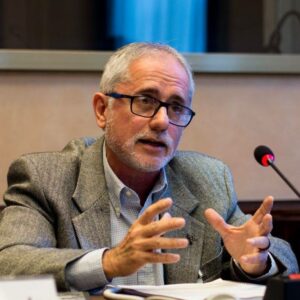
Br. Rodrigo PERET OFM
Franciscans friar working with the communities affected by extractivism in Brazil, Franciscans International

Benjamin SCHACHTER
Coordinator, Environment and Climate Change Team, Office of the United Nations High Commissioner for Human Rights (OHCHR)

Elena CEDILLO
Program Executive for Climate Justice, Lutheran World Federation

Lien VANDAMME
Senior Campaigner for Climate & Energy Program, Center for International Environmental Law (CIEL)
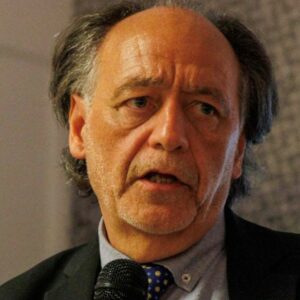
Yves LADOR
Representative to the United Nations in Geneva, Earthjustice | Moderator
Highlights
Video
Live from Palais des Nations