Événement Virtuel
Launch and Panel Discussion | Safeguarding the Integrity of a Science Policy Panel on Chemicals, Waste and Pollution Prevention
12 Juin 2024
14:00 – 15:00
Lieu: Online | Webex
Organisation: Haut commissariat des Nations Unies aux droits de l'homme, International Pollutants Elimination Network, Center for International Environmental Law, Children and Youth Major Group to UNEP, Geneva Environment Network
This event was organized by the Office of the High Commissioner for Human Rights, the UN Special Rapporteur on toxics and human rights, IPEN, the Center for International Environmental Law, Children and Youth Major Group to UNEP, and the Geneva Environment Network, in preparation of the third session of the Ad Hoc Open-Ended Working Group on the Science-Policy Panel to contribute further to the sound management of chemicals and waste and to prevent pollution (OEWG 3) taking place in Geneva, from 17 to 21 June 2024. The event launched and discussed a new OHCHR Information Note.

About this Session
In March 2022, the United Nations Environment Assembly (UNEA) decided that a Science-Policy Panel should be established to contribute further to the sound management of chemicals and waste and prevent pollution. Through Resolution 5/8, UNEA recognized the importance of science-based assessments to inform decision-making, and the role of sound management of chemicals and waste in protecting human health and the environment. On the road to the establishment of the Science Policy Panel (SPP) on Chemicals, Waste and Pollution Prevention, the third session of the ad hoc open-ended working group (OEWG-3) will be held in Geneva from 17 to 21 June 2024.
Science has shown us how pollution and the unsound management of chemicals and waste have become a threat to human rights, including the right to a clean, healthy, and sustainable environment, life, health, food, water and sanitation, a healthy work environment, and equality and non-discrimination, amongst others.
Decision-making and action related to the protection of human health and the environment from hazardous substances must be guided by robust, independent science. Information and data submitted to and used by the panel should be publicly available. The principles of integrity, transparency and participation are essential to ensure that this science is objective and reliable, that it is not subject to interests that are not scientific or are inconsistent with fundamental human rights principles, and the welfare of society.
In this event, leading experts discussed why the new panel must include safeguards to avoid the risks associated with the existence of conflicts of interest by creating an environment in which actual or perceived conflicts of interest are adequately disclosed and prevented.
Speakers
By order of intervention.
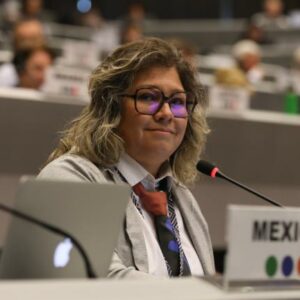
Maria Eugenia GONZÁLEZ ANAYA
First Secretary of Legal Affairs and Environment, Permanent Mission of Mexico to UN Office in Geneva
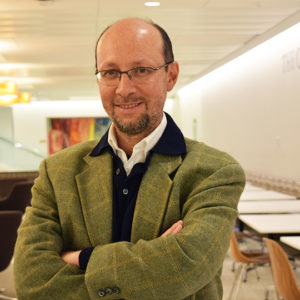
Marcos ORELLANA
UN Special Rapporteur on toxics and human rights

Kritika KHANIJO
Technical Officer (Legal), Public Health Law and Policies Team, World Health Organization

Therese KARLSSON
Science and Technical Advisor, IPEN

Martin WAGNER
Professor, Onsager fellow, Department of Biology, Norwegian University of Science and Technology
Frankie ORONA
Executive Director, Society of Native Nations

Olga SKAREDINA
Science-Policy Thematic Facilitator, Children and Youth Major Group to UNEP
Chinkie PELIÑO-GOLLE
EcoWaste Coalition | Southeast and East Asia Regional Coordinator, IPEN

Rachel RADVANY
Environmental Health Campaigner, Center for International Environmental Law

Ana Paula SOUZA
Human Rights Officer, Office of the High Commissioner for Human Rights | Moderator
Highlights
Video
Summary
Event Summary
During the event “Safeguarding the integrity of a Science-Policy Panel (SPP) on Chemicals, Waste and Pollution Prevention”, the panelists discussed key issues that the OEWG3 would need to address in order to ensure that a Science-Policy Panel on Chemicals, Waste and Pollution Prevention is compliant with the right to science, credible and unbiased, and fit to inform decision-making.
Panelists have emphasized the detrimental impact of corporate influence and manipulation of scientific research, employed as a tactic to delay environmental decision-making. Industries, such as plastics, tobacco, pharmaceutical and agriculture, have blocked regulation processes, suppressed scientific research, discredited scientists, harassed them, to manipulate science and decision-making. The need for a strong policy to avoid conflict of interest was central to the discussion, to ensure the credibility and reliability of the SPP work. A strong conflict of interest policy should be applicable to all experts and partnerships, for both current and previous engagements that could pose a real of potential conflicts of interest. A body should be established to evaluate and manage conflict of interest.
Panelists also argued that transparency of scientific research is key to the Panel’s credibility. Data and sources used to inform decision-making should be made public and information regarding health and the environment should never be regarded as commercially sensitive information.
A credible Panel also requires inclusive participation, involving civil society organizations, citizen scientists, Indigenous Peoples, children and youth, and most affected communities. Recognizing Indigenous knowledge as science is essential, and must be supported by facilitated participation, including through capacity building. Participation of children and youth should be strengthened in an innovative way, such as by creating youth advisor groups and addressing persistent barriers preventing their meaningful participation. Local and national communities facing direct social and environmental challenges as a result of chemicals, waste and pollution, have also played a critical role as researcher, experts, and policy watchdogs and their participation in every stage of the decision-making process will be key. Concretely, inclusive participation involves creating space for observers in subsidiary bodies, in particular, in the interdisciplinary expert committee, as well as in the decision-making process. That means welcoming submissions from observers, being transparent about the process, and integrating indigenous knowledge systems and citizen science in the work of the Panel.
Speaker Points Summary
Maria Eugenia GONZÁLEZ ANAYA (Permanent Mission of Mexico) emphasized the critical threat that pollution constitutes for human rights, including the right to a healthy environment, food, water, sanitation, and to a healthy work environment. She highlighted the disproportionate impacts on certain groups, including Indigenous Peoples, women, children, frontline communities and workers. She calls for the Panel to adopt a right-based approach, ensuring decision-making to be grounded in robust, independent, scientific research that is free from conflict of interest. To ensure its objectivity, reliability and accountability, the Panel should be inclusive, transparent, diverse and balanced, includes capacity building and have a strong conflict of interest prevention and management process.
Ana Paula SOUZA, moderating the panel as a representative of UN Human Rights Office (OHCHR), affirmed for right of everyone to enjoy the benefits of scientific progress and its applications requires that policies be based on the best available, generally accepted scientific evidence. OHCHR Position Note on OEWG3 argues that a SPP compliant with the right to science, that is credible and unbiased, and fit to inform decision making, must include the following elements: 1) a clear commitment to respect and protect human rights; 2) a conflict of interest policy that protects the right to science; 3) transparency and the right of access to information in environmental matters; 4) the right to participation in environmental matters; 5) Enabling a safe space for scientific enquiry, which requires a mechanism to prevent and address intimidation and reprisals against anyone engaging with the work of the Panel; and 6) international cooperation, including through capacity building.
Marcos ORELLANA (UN Special Rapporteur on toxics and human rights) first, made clear that conflicts of interest would discredit the work of a such a Science-Policy platform (see as well his 2021 report on the Right to science) and that a specific body to examine disclosure would be useful in ensuring the integrity of the SPP. Second, he called for guidance for standards for scientific work and compensation for communities and Indigenous Peoples whose knowledge is being subject to extractive scientific work. Third, he recalled that Indigenous Peoples are the first scientists and should not be excluded from scientific assessments. He questions whether the SPP could establish a mechanism for dialogue between scientists and Indigenous Peoples and communities impacted by chemicals, waste and pollution, possibly through a working group.
Kritika KHANIJO (WHO) recalled that WHO takes conflicts of interest very seriously, as it sets global norms and standards on health based on the collection of data and on the best available science. Unbiased decision-making is critical. In the context of health, they have already witnessed vested interests, such as for the tobacco industry, and links it with the conflict of interest policy in the UN Tobacco Control Framework Convention. She took as an example the WHO Guideline Development Handbook, providing clear indications on how to deal with conflicts of interest, including through a dedicated committee for evaluation.
Therese KARLOSSON (IPEN) emphasized that the discussions at OEWG3 must be focused on the integrity of the Panel (see IPEN views). She dived into the issue of safeguarding commercially sensitive information, which would significantly harm the Panel: first, because there is no agreed definition of the term; second, because other science-policy platforms do not have such procedures and rather promote transparency; and third, it would critically harm the credibility of the Panel. For policy-relevant and credible outputs, there must be transparency on the data used for the output.
Martin WAGNER (Norwegian University of Science and Technology) detailed the lived experience of many academic scientists, to contextualize the need to shield the SPP from conflicts of interests. The industry has been working on manufacturing doubt, putting uncertainty on scientific research to delay decision-making. Industries have manipulated science, produced their own sources, hidden information, discrediting scientists on social media, defaming them, sending aggressive emails, and much more. These actions have impacts on scientists’ careers and wellbeing and have created a climate of distrust within the scientific sector. The agenda setting must be conducted without involving parties with conflict of interest, to avoid the risk that the SPP becomes another arena for vested interests, and delay addressing the triple planetary crisis.
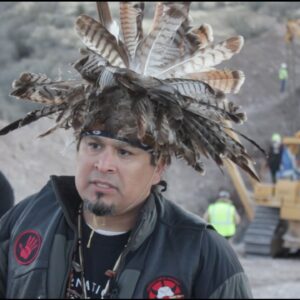
Frankie ORONA (Society of Native Nations) started by recalling that Indigenous knowledge is science, passed from generations to generations. The issues faced with chemical management in communities are human rights violations, affecting their lands, territories and resources, and the environment. He emphasized the need for a more equitable participation of Indigenous Peoples, including capacity building, for them to share their lived experience in processes affecting them. Noting that we live in a “fishbowl”, sharing the same water and the same air, he asked: “how dirty or how would we like this fishbowl to be?”.
Olga SKAREDINA (Children and Youth Major Group – CYMG) highlighted the importance of the inclusion of children and youth in the work of the Panel. Chemicals, waste and pollution are confirmed to have enduring effects on future generations. Embedding intergenerational equity into the operational principles will ensure assessments and policy recommendations are viable for long-term perspectives. Young people are critical stakeholders, who bring knowledge, skills and lived experiences. Although other existing science-policy interfaces have established processes and programmes to engage youths, they do not fully capture their expertise. The CYMG called for innovation in integrating children and youth, addressing persistent barriers, such as limited knowledge, including through the creation of youth expert advisory group.
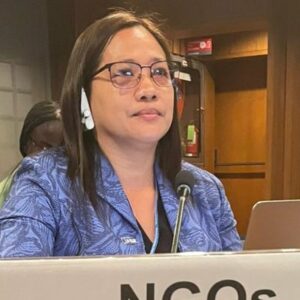
Chinkie PELIÑO-GOLLE (EcoWaste Coalition) shared her experience working with local and national environmental NGOs in the Philippines, where she witnessed social and environmental issues faced by local communities due to development interventions, such as mining and coal plants. They support communities to become citizen scientists and advocate for policy legislation and implementation on environmental issues. Local communities are key researchers, educators, experts, and policy watchdogs that need to be included in every stage of decision-making. The participation of CSOs, experts and citizens scientists in the SPP will provide relevant knowledge, information based on scientific studies, ground realities, and actual experiences working with impacted populations.
Rachel RADVANY (CIEL) affirmed that ensuring inclusive participation means creating space for observers in the subsidiary bodies, in particular, in the interdisciplinary expert committee, as well as in the decision-making process. That means welcoming submissions from observers, being transparent about the process, and integrating Indigenous knowledge systems and citizen science in the work of the Panel. The current text that safeguards observer participation should be maintain throughout the OEWG3, while the conflict of interest policy should be strengthened to avoid potential conflicts of interest, and to be applicable to all experts and partnerships engaging in the work of the Panel, for both current and previous engagements that could pose real or potential conflict of interest.
Documents
- Information Note | Inputs to the third session of the ad hoc open-ended working group to prepare proposals for a science-policy panel to contribute further to the sound management of chemicals and waste and to prevent pollution | OHCHR | 10 June 2024
- Environmental and health advocates call for strong conflict of interest policies, open access, and transparency in global policy deliberations | CIEL & IPEN | 10 June 2024
- Presentations made during the event
Links
- Ad hoc open-ended working group on a science-policy panel on chemicals, waste and pollution prevention | UNEP
- Road to OEWG 3 | Science-Policy Panel to Contribute Further to the Sound Management of Chemicals and Waste and to Prevent Pollution
- Developing a Global Science-Policy Panel on Chemicals, Waste and Pollution Prevention | GEN
- Geneva addressing Hazardous Substances | GEN
- IPEN’s submission to the secretariat for the Ad hoc Open Ended Working Group on a Science-Policy Panel to contribute further to the sound management of chemicals and waste and to prevent pollution | IPEN
- IPEN’s quick views on OEWG-3
- Conflicts of Interest in the Assessment of Chemicals, Waste, and Pollution | Andreas Schäffer,, Ksenia J. Groh, Gabriel Sigmund, David Azoulay et al. | Environ. Sci. Technol. | 9 November 2023
Photo Credit
OHCHR / Getty Images