
Événement Virtuel
POP Contaminated Sites: New Guidance for Sustainable Remediation | Road to 2025 BRS COPs
20 Mar 2025
11:00 – 12:30
Lieu: Online | Webex
Organisation: International Pollutants Elimination Network, Geneva Environment Network
This event, co-organized by the International Pollutants Elimination Network and the Geneva Environment Network took place within the framework of the Road to 2025 BRS COPs organized in the run-up to the upcoming 2025 Meetings of the Conferences of the Parties to the Basel, Rotterdam and Stockholm Conventions (2025 BRS COPs) to be held in Geneva.

About this Event
This event features a discussion of the new Guidance on best available techniques and best environmental practices for the management of sites contaminated with persistent organic pollutants, recently finalized by the Stockholm Convention Best Available Techniques (BAT) and Best Environmental Practices (BEP) Expert Group. The guidance has a focus on sustainable management and remediation of POP contaminated sites using techniques that avoid unintentional creation of POPs (so-called UPOPs) and maximise soil conservation. The guidance is designed for parties seeking to establish or improve their contaminated site framework including technical, policy, legal and financial issues. Speakers will also discuss emerging remediation techniques and hotspots affected by POP PFAS, brominated POPs, dioxins and PCBs.
Road to 2025 BRS COPs
In the lead-up to the 2025 Meetings of the Conferences of the Parties to the Basel, Rotterdam and Stockholm Conventions, the Geneva Environment Network is collaborating with various partners for a series of events providing information on preparations and facilitating dialogues on key issues to be discussed at the meetings.
Speakers
By order of intervention.

Lee BELL
Technical and Policy Advisor, IPEN | Stockholm BAT BEP Expert Group
Boudewijn FOKKE
Soil Consultancy & Stockholm BAT BEP Expert Group

Yuyun ISMAWATI
Co-Chair, IPEN & Senior Advisor and Co-Founder, Nexus3 Indonesia

Sam ADU-KUMI
Executive Director, EnviroHealth Consult Ltd and Environment Youth Action Network

Zuzana VLASATÁ
Reporter and Deputy Editor-in-Chief, Deník Referendum

Jindrich PETRLIK
Head of the Toxic and Waste Programme, Arnika & Stockholm BAT BEP Expert Group

Diana RIZZOLIO
Coordinator, Geneva Environment Network
Highlights
Video
Summary
To be continued.
Overview and Statues of the BAT BEP Guidance on POP Contaminated Sites
Lee BELL | Technical and Policy Advisor, IPEN | Stockholm BAT BEP Expert Group
Article 6 of the Stockholm Convention refers to measures to reduce or eliminate releases from stockpiles and wastes, and indicates that parties shall endeavor to develop appropriate strategies for identifying sites contaminated by chemicals listed in Annex A, B, or C. If remediation of those sites is undertaken, it should be performed in an environmentally sound manner.
- While previous guidance on Persistent Organic Pollutants (POPs) contaminated sites, such as the UNIDO 2010 guidance, did address some of the original 12 POPs and provides some information on contaminated site cleanup, there was a need for updated and comprehensive guidance to address those POPs, as well as new POPs and to present a holistic framework including contemporary examples of technical site management and remediation, but also issues like policy, legislation, and finance mechanisms to address the issue.
- This guidance is not legally binding and it’s not intended to replace the operational management framework of any party. Rather, it’s intended to support parties who’ve yet to establish their POPs contaminated sites framework, or who wish to improve their existing framework. Therefore this guidance is meant to support parties who have yet to establish a POP contaminated sites management framework or who wish to improve their existing framework.
Status and development of the guidance. The guidance was initiated by the Stockholm Convention Best Available Techniques and Best Environmental Practices (BAT BEP) Expert Group in 2016. The mature document developed through the numerous internal and public and party consultation rounds is now under consideration. It was finalized at the BAT BEP Expert Group meeting in October 2024 and is being tabled at the Stockholm Convention COP12, at the BRS COP.
- A key principle: Sustainable remediation. The guiding focus of the document is sustainable remediation. Older management and remediation methods often perpetuated the POPs cycle by shifting contaminated soils from one site to another with dig-and-dump proposals or destroying contaminated waste with technologies that generate further Unintentional Persistent Organic Pollutants (UPOP) pollution, emissions and residues. With climate change and rising ocean levels there’s now an increased risk of POP re-releases as more legacy and burial sites are now under flood risk. The article from Weber et al. 2025 looks closer at the issue of resuspension of POPs as a result of climate change and rising sea levels.
- This guidance centers around sustainable remediation with technologies and techniques that avoid UPOP pollution, minimize waste generation, restore soil sediment and water functions, all while reducing exposure and risk to human and environmental receptors from POP contamination.
- Where POP waste is encountered on a site or generated through the remedial techniques, its management through the Basel Convention guidance management methods is indicated.
- Cleaner techniques: Ending the legacy cycle of POPs. Sustainable remediation encompasses the precautionary principle, intergenerational equity, and the polluter-pays principle. Remediation should be as thorough as resources allow to avoid legacy contamination remaining on site for future generations and shifts costs to the polluter. The proximity principle should also be emphasized in using the guidance to avoid transporting contaminated materials long distances for treatment.
- Where possible, the guidance emphasizes the use of commercially proven technologies and techniques that avoid UPOPs generation, can be transported to the site where the contamination exists, are modular and scalable, and minimize hazardous residues. Combinations of technologies such as treatment trains are described and they reduce the amount of POP-contaminated material requiring final destruction and thereby minimize treatment costs.
- From Inventory to Remediation: A Phased Approach. The Guidance takes a holistic approach to the identification, investigation and management of POP contaminated sites from the early stage of inventory development through investigation, site characterisation to management, remediation and aftercare. Scarce resources make it important to prioritise clean up of the highest risk sites first. Inventory development and initial site investigations allow for parties to compare risk between sites and apply resources in the most effective way to minimise ongoing exposure.
- Soil, sediment and groundwater functions. A key principle of the guidance is to restore, as far as practicable, the natural functions of soil, sediment and groundwater associated with a POP contaminated site. This provides a sound basis for the ecological restoration of a site and begins the process of resuming productivity of land that has been quarantined due to contamination. This can be especially important in locations where biodiversity needs to be protected or restored. Passive clean up techniques such as phytoremediation and POP extraction (e.g. ecoSPEARS) are explored that minimise site disturbance while also reducing the burden of POPs on the site and leading to greater soil and sediment function.
- Cultural awareness is also included in the guidance. Historical site remediation techniques often employed crude ‘dig and dump’ procedures that shifted contamination from one site to another with little net gain. This also resulted in the destruction of the topography, subsurface watercourses and socio-cultural heritage, including Indigenous sacred sites.
- The guidance includes a structured public consultation framework and policy approaches that take into account more than basic economic cost/benefit analysis. This permits assessment of cultural sensitivities that may be attached to a given site and allows management techniques to be matched with social objectives that preserve cultural values where possible. This can include passive remedial techniques that minimise topography disturbance.
- Breaking the cycle of toxic persistence. The Stockholm Convention seeks to end the use and production of some of the world’s most toxic, persistent and bioaccumulative pollutants. Eliminating POPs stockpiles is an objective of the convention and in cooperation with the Basel Convention, POP wastes have extensive destruction guidance.
Guidance on managing POP stockpiles in the form of contaminated sites is a gap that has required better coordination and more comprehensive information and is now available in a single location. Use of the guidance will help address the gap left after POP use, production and waste destruction have been resolved and complements the existing range of measures required to break the cycle of toxic persistence and bioaccumulation presented by POPs.
Structure and Contents of the BAT BEP Guidance on POP Contaminated Sites
Boudewijn FOKKE | Soil Consultancy & Stockholm BAT BEP Expert Group
The presentation delves into the details of the guidance for managing persistent organic pollutants (POPs) contaminated sites, which is structured across nine modules. It provides an overview of each module’s content, with a focus on key aspects such as the Conceptual Site Model and its importance in the management approach. The presentation will also cover essential principles in managing contaminated sites, highlighting specific tools, techniques, and strategies that are pivotal for remediation. The discussion concludes with a case study from Vietnam, showcasing practical applications of the guidance.
Module 1 offers a comprehensive introduction to POPs-contaminated sites, beginning with a background on the characteristics of POPs. It defines contaminated sites according to various national standards, explaining the differences between background and screening values. Examples of screening levels for soil and groundwater are provided, alongside an explanation of the biological, chemical, and physical processes that govern the fate and transport of POPs in the environment. Each module ends with a list of references for further consultation.
Module 2 focuses on the principles and approaches for managing and remediating POPs-contaminated sites, emphasizing the evolution of contaminated site management over recent decades. It underscores that contaminated sites are not isolated but interact with complex ecosystems, requiring an integrated approach to remediation that includes sustainability principles, cost-benefit analysis, and socio-cultural awareness. The module outlines five phases of contaminated site management: preliminary site investigation, detailed site investigation, remediation assessment, site remediation management, and monitoring aftercare. It stresses the need for continuous monitoring after remediation, especially in cases where residual contamination may pose ongoing risks.
- The guidance also emphasizes that contaminated soil only qualifies as waste once it loses all its soil functions, providing a rationale for distinguishing between waste and soil during remediation. The remediation of POPs-contaminated sites must aim to degrade or eliminate contaminant concentrations to meet acceptable, site-specific levels, while considering the potential for generating waste that must be destroyed or irreversibly transformed. This approach ensures that remediation efforts are in line with the Stockholm Convention’s Article six on waste disposal.
Module 3 explains the step-by-step process for conducting site investigations, including both preliminary and detailed site investigations. The first phase involves a desktop study, where all available information is collected and analyzed, followed by a site visit to verify the data and collect additional site information. A Conceptual Site Model (CSM) is then created based on this data. In phase two, a gap analysis is performed to identify what information is missing from the initial CSM. This analysis forms the basis for planning a more detailed site investigation, including field sampling, data interpretation, and the creation of an updated CSM. The CSM plays a crucial role in assessing contamination pathways and risks, forming the foundation for environmental risk assessments.
- The Conceptual Site Model is crucial for understanding the site conditions, contaminant transport, and exposure pathways to both human and environmental receptors. It serves as a tool for making informed decisions about site management, including whether to continue remediation efforts or contain the contamination. Risk assessments are an essential component of this process, providing the motivation for further action or for concluding the management of the site.
- The investigation strategy for the Preliminary Site Investigation (PSI) begins with a desktop study, which reviews all available information and evaluates whether a previous phase one survey has been conducted. If not, a new PSI is carried out, including the creation of an initial CSM. Based on this, a Tier 1 Risk Assessment is performed, which serves as the foundation for the next phase. If risks are identified, the investigation proceeds to phase two; if not, the process is concluded, and a report is finalized.

- Phase two, the Detailed Site Investigation (DSI), builds on the results of the preliminary investigation. It begins with a gap analysis of the initial CSM to identify what additional information is needed. This leads to the creation of a site investigation and sampling plan, which is followed by obtaining any necessary permits, preparing a cost estimate, and ensuring that risk control measures are in place. Site visits are then conducted, and samples are taken for laboratory analysis. These samples are processed and integrated into a GIS model alongside data from drone surveys, allowing for the creation of detailed maps and models that inform the updated CSM. After the investigation, a higher-level risk assessment is conducted, which can include Tier 2 or more advanced assessments depending on the complexity of the contamination.

The focus of Module 4 is on “Environmental Risk Assessment,” which is central to motivating investments in site remediation. It compares different levels of risk assessments across countries, distinguishing between tier one, tier two, and tier three assessments.
- The module introduces the concept of when each risk assessment level should be applied, explaining the necessary data for performing these assessments. A simple tier one risk assessment method is provided in an Excel template, making it easily accessible for users. For tier two, a detailed conceptual site model is required, alongside methods for comparing analytical results with reference values. The tier three assessment is the most detailed and might involve additional field sampling, such as plant tissue samples. This tier requires specialized models, often necessitating expert involvement to assess the contaminant’s fate and transport through the environment. The differences between tier two and tier three risk assessments are discussed, emphasizing that tier three is applied when mitigation measures are costly, public concern is high, or when environmental policy mandates detailed risk analysis. This tier involves adjusting default transport parameters based on local conditions and may require more investigation.
In Module 5, titled “Remediation Technology and Techniques,” the emphasis is on reducing POPs concentrations in soil, sediments, and groundwater below acceptable risk threshold values. The module highlights non-combustion technologies for POP destruction, which have the added advantage of not generating Unintentional POPs (UPOPs), making them a sustainable option. It also aligns with the Stockholm Convention’s precautionary approach. Various technologies are discussed, along with examples of treatment trains that combine primary techniques for extracting POPs with secondary processes for destruction. The module concludes by providing references for more detailed information on soil, solids, and groundwater remediation techniques.
Module 6 introduces a “Technology Selection Tool” to aid in the selection of remediation options in phase three of site remediation. It uses a PCB-contaminated site in the Balkans as a case study. The module includes six sections explaining the tool, with appendices providing detailed information on soil and groundwater remediation technologies. It also offers cost estimates for three different remediation options for the same site, supporting a Multi-Criteria Decision Analysis (MCDA) to select the best option. The selected option should minimize risk, fit within the budget, avoid excessive costs, and have a low environmental impact. The module guides users in designing remediation strategies that address the maximum risk possible, the minimal containment option, and an intermediate option based on the analysis.
Module 7, “Stakeholder Engagement, Public & Worker Safety & Health,” emphasizes the importance of involving stakeholders in the remediation process to avoid project failure. It highlights the need for continuous engagement with stakeholders to ensure that remediation efforts meet public expectations and comply with safety standards for both workers and the community.
Module 8 focuses on “Contaminated Sites Remediation and Monitoring and Aftercare,” detailing the steps involved in remediation, monitoring, and aftercare. It stresses that monitoring is crucial to sustain the results of remediation efforts, especially since many projects leave residual risks. Aftercare includes managing remaining risks and ensuring that the site remains safe for future use, emphasizing the need to contain these risks effectively.
In Module 9, “Getting Started: Legislation, Policy, Inventory Development and Financing Remediation,” the process of initiating remediation is explored, with a focus on legislation, policy, and the creation of a contaminated site inventory. It also delves into financial instruments necessary for managing the remediation process. The module outlines the steps of raising awareness, setting policies, developing legislation, and educating the professional community. Once these steps are established, they pave the way for the implementation of contaminated site management strategies.
The final slide of the presentation reviews the phases of remediation, with particular attention to the Conceptual Site Model.
- Phase one involves creating the initial CSM and conducting a first-level risk assessment, which forms the foundation for phase two, where a gap analysis, investigation, and data interpretation refine the understanding of the contaminated site.
- Phase two may require multiple rounds of investigation to fully understand the site’s condition.
- Once the CSM is improved, phase three begins, with additional analysis and sampling to ensure accurate remediation design.
- After the remediation phase, the CSM is updated to reflect the changes, and monitoring and aftercare ensure the long-term success of the remediation process.
- The updated CSM is crucial for communicating the post-remediation site conditions, facilitating better decision-making in the aftercare phase.
The speaker concludes by encouraging the use of the provided guidance to support the effective management of contaminated sites.
Challenges of POP Contaminated Sites in Indonesia
Yuyun ISMAWATI | Co-Chair, IPEN & Senior Advisor and Co-Founder, Nexus3 Indonesia
Indonesia’s National Implementation Plan (NIP) has been updated in 2021 to implement the Stockholm Convention and include chemicals listed up COP 9 (2019) including the initial 12 POPs, the “Dirty Dozen”, but also pesticides and unintentionally produced POPs.
- A gap exists in addressing the newly-listed chemicals, prompting Indonesia to update Government Regulation No. 74/2001 on Hazardous Substances Management. The key challenges that were identified include limited stockpile data, lack of infrastructure for POPs analysis, lack of laboratory capacity and ongoing imports of banned pesticides as well as waste potentially containing POPs.
A question that is raised is how to have a reflection on how to use the technical guidance of POPs contaminated sites.
- First case study. Indonesia has more than 400 cities and each of them has landfills. Many landfills are open-dumping and many cases of landfills on fires have been observed, both small and big, especially during the dry season.
- The new Minister of the Environment also identified the issue of open dumping landfills being everywhere and in most of the 400 Indonesian cities. In 2023, the burnings happened all year long, not only because of the La Nina effect but also because of the situation in the landfill, which is open-dumping without any mechanism to control it or to cover it with soil every day. Fires last between two days and a whole week, requiring a lot of efforts in the field including the role of firefighters to put it out.
- Due to concerns about the situation at landfill sites, cooperation with communities located near landfill sites has developed so they can benefit from being situated next to a landfill. Communities were allowed to graze cattle on landfills, either cows, goats or pigs.
- To find out more about the impact of the fires and given the limited budget, samples were collected from two landfills which have constantly had fires the last year, and from one cow, looking at their blood meat and at the viscera part of the cows. Microplastics were found in high concentrations. For both the meat and the viscera parts of the cattles, POPs, especially dioxins and dioxin like PCB, are seen in high concentrations, both in Semarang and in Solo. While in Semarang, concentrations are higher in the viscera, they are higher in the meat in Solo.
- The compositions of the congeners of POPs in both landfills are different. The dioxin light congeners also can be seen a bit higher in the Semarang landfill but it’s almost the same composition.
- Currently there is no regulation setting up the standard about how much POPs can be in meat.
- The new Minister of Environment of Indonesia announced the closing down of 348 open dumping landfills, but hasn’t displayed how this will be done and may not know that open dumping landfills are a potential POPs contaminated site.
- Second case study. Indonesia also suffers from POPs contamination resulting from waste colonialism. The waste and garbage mainly comes from overseas and is imported by plastic recyclers and paper manufacturers to be recycled under the label of circular economy. However, what happens on the ground is that unwanted plastics that came together in bales with the importation are burnt by paper manufacturing or plastic recycling companies and then are donated to the communities to be used as fuels.
- A study from 2019 shows very high concentrations of dioxins detected in eggs. This study of IPEN identified how high dioxins in eggs are as compared to the data collected by IPEN in the span of 15 years. The eggs from Tropodo (where the case study took place) presented the fifth highest concentrations. Comparing it to the Vietnam Agent Orange, it’s about the same category and concentration.
- While the landfill case happens in rather formal settings, who is responsible can be traced. The setting in the case of waste dumping sites from waste importation, however, mostly is a bit illegal and informal and is therefore harder to address.
- Third case study. There is a growing hype and vibe around green energy. Indonesia is the largest producer of nickel, and the government takes this opportunity to support the industry to have more smelters and more nickel mining.
- As there are around 120 nickel smelters now, in addition to copper and aluminum smelters, alloys can be made that will be useful for renewable energy batteries. Although Indonesia doesn’t have lithium yet, it has cobalt in small amounts, which is adding to the dynamics of the renewable energy hype. The slags of nickel are also being dumped in valleys as a landfill or to be used for a better economic value.
- In 2021, the government of Indonesia excluded nine hazardous waste, considering it as non-hazardous waste or registered hazardous waste. It includes Steel Slags, Nickel Slags, Spent Bleaching Earth (from palm oil purification), Fly Ash, Bottom Ash, Electric Arc Furnace Dust (from the smelters activities), PS Balls (also the byproducts of the smelters), Foundry Sand (used to cast some shapes) and then Mill scale (also the byproducts). Although it depends on the chemicals they use in the process, most of them potentially contain POPs. The locations of those potential registered non-hazardous waste can be accessed here.
- The company Harita is one of the largest nickel smelter producers. It dumped the nickel slags in an open space and then said they could make a good quality of bricks. Because the community was complaining about the pollution, the company made a housing complex and gave them compensation with a new house made out of the bricks from the slag. It will be interesting to see how the approach of the technical guidance can be used for informal setting as well as for formal settings.
Final reflections.
- For the inventory, a clear guidance of how to identify potential POPs contaminated sites will be needed. This entails better preparation and preventive measures or precautionary principles that need to be put in place. In Indonesia, there is a mechanism for industries to report into certain platforms on their emissions and waste generations, but most of the time it’s not accessible to the public and therefore is not really transparent.
- Regarding remediation, once the locations and characterization of sites are identified and mapped, more guidance on how to approach the informal settings against the formal settings is needed as well as technical standards and affordability of technology that are very important to support the remediation plan.
- Regarding the monitoring, a strong laboratory capacity is needed. In developing countries, laboratory capacity to analyze POPs is very low, and this should be an opportunity for businesses who want to invest in a new business in developing countries to open laboratories to analyze POPs. It is important to increase the capacity of experts on how to collect samples properly and not dilute it in order to have good results or representative results.
Overview on the Status of the Agbogbloshie Contaminated Site, Ghana
Sam ADU-KUMI | Executive Director, EnviroHealth Consult Ltd and Environment Youth Action Network
Agbogbloshie is situated about 1 km from the central business district of Accra. It forms a triangular-shaped area bounded by Abossey Okai Road, the Odaw River, and the Korle Lagoon. The site occupies 1.5 km2, and the scrap yard accounted for a smaller section, 0.5 km2, within the settlement.
- At its peak, the scrap yard encompassed 167 enterprises concentrating on e-waste activities and an array of informal ancillary activities in the amalgamation of the scrap, repair (e.g., welding, metal work/fabrication), recycling (e.g., electronics, vehicle parts, furniture, timber, batteries, machinery components, oil), food and retail (various stalls), makeshift workspaces and storage spaces for supplies and wastes that connected with transporters (« okada » [motorcycle], flatbed trucks, etc.
- On July 1, 2021, Agbogbloshie was demolished by a joint regional and municipal team. This operation was part of the “Make Accra Work” initiative, led by then Greater Accra Regional Minister, Henry Quartey. It aimed to address the “indiscipline of the informal sector,” encourage residents to “clean your frontage,” and eliminate “the world’s largest dumpsite at Agbogbloshie”.
- The demolition completely leveled the entire area, except for the Agbogbloshie Recycling Centre (ARC), a formal e-waste processing facility.
E-waste refers to discarded electrical and electronic equipment (EEE). It can be televisions, monitors, DVDs, CD players, radios, Wi-Fi sets, PCs, telephones or printers (electronic waste), or washing machines, dryers, vacuum cleaners, toasters, irons, refrigerators (electric waste).
- Many Ghanaians cannot afford new products and therefore depend on secondhand or discarded EEE, which mainly come from Europe and North America. The demand because of no affordability has really kept on increasing.
- Ghana has been part of the Basel Convention since 2004 and the Environmental Protection Authority (EPA) has a new law, the Environmental Protection (EP) Act 2025 (Act 1124), which is responsible for the control, management and regulation of hazardous waste and other wastes and related matters.
- The informal e-waste sector people or a lot of people dismantle and recycle these discarded equipment. Since many of them contain persistent organic pollutants, they get into the sites, and informal e-waste dismantling and recycling has proven to be a significant source of POPs and other contaminants in the environment.
- E-waste recycling activities remain unregulated in Ghana and this has led to the release of various hazardous chemicals, including chlorinated dioxins, brominated dioxins, PCBs, PBDE and SCCPs, and toxic trace metals into the environment.
Many studies have investigated contamination from POPs at e-waste scrap yard and medical waste incineration sites in Ghana, focusing on POPs levels in various matrices, which include free-range chicken eggs, soil, water, air, as well as human hair and breast milk. A lot of studies have been conducted in various matrices to elicit contamination levels of POPs in the Agbogbloshie enclave and, in all these studies, alarming levels of various POPs have been detected.
- Studies from 2016 and 2018 show that informal e-waste recycling with simple techniques including open burning results in polluted sites in Africa (including Ghana) with multiple pollutants: POPs (PBDEs, HBCD, PCBs, PCNS), unintentional POPs (PCDD/F, PBDD/F, PXDD/F), PAHs, Br-PAHs and also heavy metals (Pb, Cd, Hg, Cr, rare earth metals).
- From their studies, the median toxic equivalence (TEQ) in open burning soil was about 7 times higher than the US action level (1000 ng/kg).
- A recent research from IPEN and Basel Action Network (BAN) reveals dire human exposures and food chain contamination from highly toxic plastics in waste in Ghana that includes toxic e-waste shipped from developed countries, including Europe.
- Free-range chicken eggs were sampled from e-waste scrap yard at Abgogbloshie in Accra, as well as from hospital incineration sites in Accra and Kumasi in Ghana. Results from the Agbogbloshie e-waste site revealed the highest levels ever found of brominated dioxins (PBDD/Fs), the second highest levels ever found of chlorinated dioxins (PCDD/Fs) and very high levels of dioxin-like PCBs (dl-PCBs), brominated flame retardants (PBDEs and HBCDs), and short chain chlorinated paraffins (SCCPs); all of these listed under the Stockholm Convention for elimination.
- Levels of PCDD/Fs and PCBs in eggs are extremely high, such that an adult eating just one egg from a free-range chicken foraging in the Agbogbloshie scrap yard and slum would exceed the the European Food Safety Authority (EFSA) tolerable daily intake (TDI) for chlorinated dioxins by 220-fold. The typical daily egg consumption per person in Ghana is less than one egg a day, however, even eating 2.5 grams of an egg per day would exceed the EFSA TDI by more than 15 times.
- PCBs (banned in the US in 1979, the UK in 1981, the EU in 1987) in these eggs were four-fold higher than the EU standard and 171-fold more elevated than the standard for dioxins and dioxin-like PCBs. The eggs also contained very high levels of PBDE flame retardants as well as relatively high levels of other POPs, such as pentachlorobenzene (PeCB) and hexachlorobenzene (HCB).
- The results on SCCPs are among the few measurements reported from Africa. The eggs also contained the metal cutting and PVC processing chemical SCCP as part of the suite. The issue of SCCPs in Ghana may be related to the influx of SCCP products into the country for use as engine cleaning fluids in automobiles. Paraffin wax/grease is still commonly used as lubricants, especially in automobile garages, in Ghana.
Another study is on Health and Socio-Economic Assessment of POPs in Vulnerable Populations of Ghana.
- Ghana did its first Stockholm national action plan in 2008-2009 and did a revision in 2018. Many chemicals have been added to the convention. Now, Ghana is thinking of the next revision because many more have been added since then. The study revealed that Ghana’s e-waste situation sustained the livelihoods of at least 200,000 people nationwide and that activities generate generate USD 105-260 million annually. The Agbogbloshie site alone provided livelihood to approximately 4,500 to 6,000 workers and perhaps another 1,500 indirectly with people moving in and out.
- The study had several objectives, the two prominent ones were (i) to identify areas of use or production of substances containing POPs among vulnerable or exposed groups of workers ; and (ii) to identify processes that might predispose vulnerable workers to POPs and other pop pollutants and their impacts.
- All these things also go into the sea. It’s close to the Atlantic Ocean and the Gulf of Guinea.
- While a range of studies on environmental contamination have been conducted, there was no study on levels in humans at the time of the study. Different exposure pathways were obvious for pollutant uptake by workers and the families living at the Agbogbloshie site.
The studies concluded that people living in Agbogbloshie are potentially exposed to high levels of not only chlorinated but also brominated dioxins/POPs.
- Workers indicated that they often experience coughs, chest pain, eye irritation, darkening of their skin and sometimes injuries from the heat. A resultant effect of such activities implies high costs for medication for their own healthcare. The workers confirm that they spend a lot of the little money they get on their medication, which is also affecting their ability to fend for their families and communities.
- Workers also indicated that a number of lives have actually been lost through illnesses due to the prolonged exposure to the smoke and pollution at the site.
A New Model for Journalist and Scientist Partnerships to Identify PFAS Contaminated Sites
Zuzana VLASATÁ | Reporter and Deputy Editor-in-Chief, Deník Referendum
Sharing experiences on international cross border collaborative journalism with an aspect of collaboration with scientists, Zuzana Vlasatá highlights that this is that this is in the journalistic scene something that has been developing in recent years.
- Given shifts in the media landscape we have been facing in the last decades, with digital companies and money pouring out of the media sector, journalists are trying to find new approaches to either finance their work or conduct challenging investigative work. This is an example which took place in Europe within the last three years. She highlights that she was not an organizer or facilitator of the example, but a small part of the Forever Pollution Project.
- The project was coordinated by the French well-known newspaper Le Monde, by journalist Stéphane Horel. It was a two-part cross border interdisciplinary journalism investigation into the PFAS crisis across Europe.
PFAS are persistent organic pollutants. They were invented in the first half of the last century, and then came into industrial and consumer use later on. Since then, they have polluted literally every corner of the planet. They can be found in the bloods of polar bears, in snow and ice in the Arctic, in rain, and in the blood of probably every human.
- They are not only persistent but they have many other properties. They are a group of around 10,000 different substances, of which many are highly toxic. It has been proven that they cause different fatal diseases.
Part 1. The group of journalists decided that, to face the challenge of vast contamination of countries by PFAS, that there could be high value added in working in a huge international team. We took inspiration from several US NGOs that have created a map of PFAS pollution in the United States. We copied the methodology, and in this first part of the Forever Pollution Project, the team of journalists worked on mapping the contamination.

- A product of the collaborative effort, the project located for the first time 20 PFASmanufacturing facilities in Europe also almost 23,000 contaminated sites and over 21,000 presumptive contamination sites and 231 known PFAS-users across Europe.
- Five European countries – Belgium, Germany, Denmark, Sweden, and Norway – proposed a universal ban of the PFAS in Europe. Whether it was somehow a result of the journalistic work, we cannot know exactly because these were a result of different efforts. However, the response to the coverage of the work was very good. It was also recognized by different awards. It was quoted by many other media, NGO’s, and politicians. When the proposal for the universal ban came, the group of journalists again gathered together, as the funders behind the project seemed very supportive of a follow-up. We were looking for ways to continue the work.
- After the proposal for the universal ban, hundreds of industrial lobbies flooded the European institutions. We decided to look at the lobby efforts and also create a taxonomy of the lobby arguments that kept repeating, and kept flooding the European officials who are looking at the proposal for the universal ban. We considered this as possibly an important input of journalists into the whole discussion at the European level.
Part 2. In the follow-up of the project – the Forever Lobbying Project – we also took on board a group of many more journalists and news organizations. It was more than a year long’s worth of intensive work. Apart from analyzing the lobby tactics, arguments and methods, we also used methodology to calculate how much it would cost to remediate Europe from the legacy PFAS.
- We evaluated the cost to remediate the legacy PFAS and ongoing emissions in Europe at up to €2 trillion over a 20-year period with a cost of over €100 billion per year if PFAS emissions are not restricted. The group of journalists selected 1,178 lobbing arguments from over 8,189 documents collected in order to stress-test them. Over half of these documents were gathered through freedom of information requests in 16 countries. Others were shared with the team of journalists by Corporate Europe Observatory, a Brussels watchdog organization which filled 66 FOI requests to EU institutions and additional 3,393 documents appeared in submissions to European Chemical Agency during the public consultation on the universal PFAS ban between March and September 2023.
- Our investigation exposes a massive orchestrated lobbying and disinformation campaign that has the ears of leading decision makers in Europe such as the President of the EU Commission Ursula von der Leyen, and figures in the German regional and federal governments. It shows that the plastic industry resorts to influence tactics typical of the corporate world used through the decades to defense tobacco fossil fuels and other chemicals and pesticides- The documents altogether number 14,000, which are also published on the website of the forever pollution project
- These are examples of the lobby arguments that kept repeating.
- Not all PFAS are the same.
- Fluoropolymers, a concrete group of PFAS, are not toxic.
- The industry also invented a group of polymers of low concern, according to the criteria established by the Organization for Economic Cooperation and Development (OECD) which the organization denied to have established. Still this group of polymers of low concern keeps appearing in lobby documents again and again.

On materials and method. 30 journalists in 12 countries were involved in the first part and in the second part on lobby tactics and the cost for remediations counted 46 journalists in 16 countries. Both investigations build upon the concept of “expert-reviewed journalism” by facilitating a collaboration with 7 and 18 scientists and academics, respectively for the two parts. The interdisciplinary team drew on both scientific methods and investigative journalism techniques just such as FOI requests and open-source intelligence, including public databases, satellite imagery, and social media content.
What the project showed is that PFAS emissions and the ongoing contamination of our environment, water and food resources threaten the wealth and economic balance of European nations. The lobbying strategies employed by the PFAS industries, straight out of the corporate disinformation playbook, perpetuate the status quo. There is an urgent need to assess the cost of human exposure to PFAS to healthcare systems and its burden on society to inform public decision making.
Case Study of a Multi-POP Contaminated Site in Pardubice, Czech Republic
Jindrich PETRLIK | Head of the Toxic and Waste Programme, Arnika & Stockholm BAT BEP Expert Group
Arnika Association is a Czech-based nonprofit, non-governmental organization and we coordinate some parts of the work also for IPEN, which is a global network of more than 620 civil society organizations in 125 countries.
- In 2009, Arnika and IPEN published a map which highlighted some places affected by persistent organic pollutants containing wastes. This year for the BRS COPs, we are going to publish a Global Map of POPs contaminated sites. Examples of the sites which will be included in that map include:
- Accra, Ghana: abandoned medical waste incinerator with ash containing high levels of dioxins and other unintentional POPs.
- Greenland Ice Sheet: abandoned or unremediated US military base called Camp Century which has also quite a volume of waste containing polychlorinated biphenyls (PCBs), another POP listed under the Stockholm Convention.
Pardubice: Lhotka settling pond & Velká Strouha creek
This is a not-so-well known site which has long been identified to be contaminated with POPs in the Czech Republic. We tried to identify whether it is still contaminated with POPs. It is located in Pardubice, close to our largest river Labe (or Elbe) and to a Synthesia chemical plant. We obtained samples at settling points of this chemical plant which has been used for a long time, as well as in the wetlands nearby, where there is a flow of industrial waste waters. This is the the place where this creek flows into the Labe river.

Last year, during the site visit three pool samples of sediments were collected, which were also quite representative.
- The analysis for broad range of the chemicals, mainly POPs which are already listed under the convention, were ordered. The results show that the they contain high levels of pollutants listed at the beginning of the Stockholm Convention as well as new ones including brominated flame retardants. Highlighted are those whose levels exceed the indicators based on rules set up by the Czech Ministry of the Environment. When the site exceeds such levels it needs remediation, and the results show that there are very high levels of dioxins in this case, as well as polychlorinated biphenyls, hexachlorobenzene and some POPs pesticides like hexachlorocyclohexane or DDT.
- The results also found chemicals which are not yet listed under the Convention like polyaromatic hydrocarbons. There are also significant levels of the chemicals which don’t exceed the Ministry of Environment indicators, but are considered really high. It not only includes some brominated flame retardants but also chlorine plus which is another flame retardant.
- If we look at the sites closely, such as the Velká Strouha creek where we took samples at the wetland area and found high levels of polychlorinated biphenyls, this is another part of the site where we do sampling. It’s a settling point at Elbe which receives waste waters from the chemical plant Synthesia for a long time, and has been a kind of storage of sewage sludge and other industrial waste.
- When trying to find sources of the contamination, it was found that it was not only Synthesia chemical plant which used the settling pond in Lotka, but in previous times even before the revolution in 1989, the company also invited others to bring their industrial waste to the hazardous waste dump site nearby. Therefore, high levels of DDT were found because some obsolete pesticides like DDT and HCH were brought to this landfill.
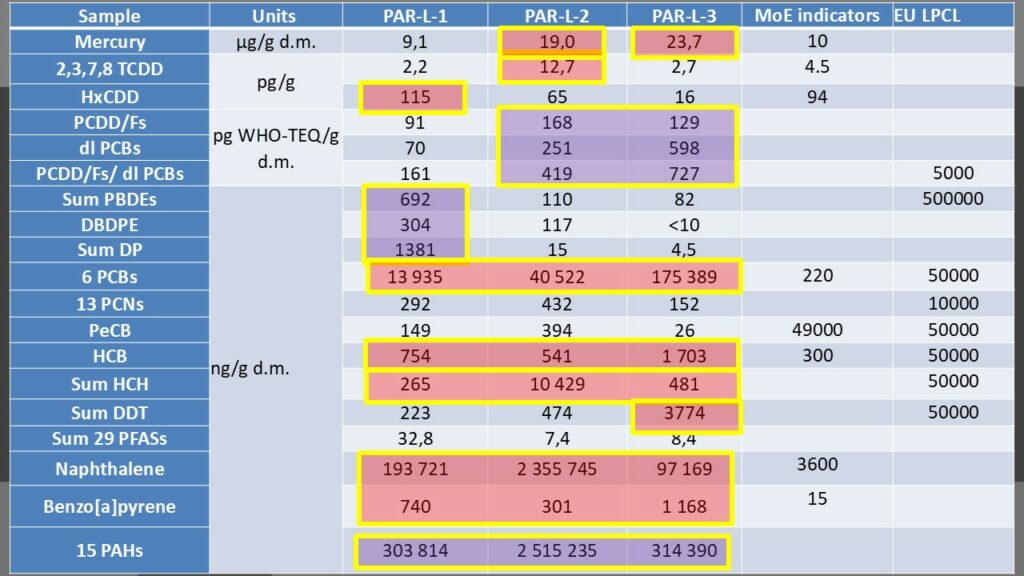
This makes the contamination of the site very complex, and it can be hard to find solutions for such a site. The solution might be remediation technologies which can destroy persistent organic pollutants like gas phase chemical reduction or supercritical water oxidation. However, it also includes mercury contamination which is not a POP, and it can be critical for remediation. Therefore, as a better approach to destroy POPs, it could be very efficient to use indirect thermal desorption at the first stage for the contamination of such a site.