
Événement Virtuel
RFSD2022 Peer Learning Round Table | Rebalancing people, planet and prosperity: ESD as key enabler for the 17 SDGs and Agenda 2030

07 Avr 2022
10:00 – 12:00
Lieu: Online | Webex
Organisation: Organisation des Nations Unies pour l'éducation, la science et la culture, Commission économique pour l'Europe des Nations Unies, Bureau régional du PNUE pour l'Europe
This Regional Forum on Sustainable Development event was organized by UNESCO, UNECE and UNEP with the support of the Geneva Environment Network. This session highlighted global and regional ESD policy actions, including the upcoming High-Level Education and Environment Ministers meeting in Cyprus, and illustrated how ESD strategies can help advance, amplify, and scale up transformative education for sustainable development and strengthen cooperation between the education, environment and other sectors to prepare learners for the future.
About the Regional Forum on Sustainable Development
The Regional Forum on Sustainable Development was established by the Economic Commission for Europe at its sixty-seventh session in April 2017, with the aim to create “a regional mechanism to follow-up and review the implementation of the 2030 Agenda for Sustainable Development” (E/ECE/1480, Decision B (67)).
At the 2022 Regional Forum the following Sustainable Development Goals (SDGs) were reviewed:
- SDG 4 | quality education and lifelong learning
- SDG 5 | gender equality and empowerment of women and girls
- SDG 14 | life below water: oceans, seas and marine resources
- SDG 15 | life on land: terrestrial ecosystems, forests, desertification, land degradation, biodiversity
- SDG 17 | partnerships for the goals
About this Event
The COVID-19 pandemic has exposed the weaknesses in our education systems and compelled us to innovate to make education systems more resilient to future disruptions. It has focused attention on the key interconnections between societies, economies and environment. SDG 4.7 recognizes the central role of Education for Sustainable Development (ESD) to empower and equip people with knowledge, skills, values, and attitudes to take informed decisions needed for the transformational changes for environmental integrity, economic viability and a just society.
UNESCO’s landmark Futures of Education report calls for forging a new social contract for education as a critical step towards reimagining our futures together. It calls for urgent rebalancing of our relationships with each other, nature and with technology, as well as for pedagogies of collaboration, cooperation and solidarity that treasure and sustain diversity and pluralism.
Various initiatives are thus underway to reimagine education to better address the planetary crisis. Building on the global ESD for 2030 framework and its Roadmap, the 2021 Berlin Declaration on ESD, the new UNECE Strategy for ESD implementation framework (2021 – 2030), this roundtable aims to showcase how ESD can help to scale up the role of education to tackle future crisis, reorient learning to empower learners of all ages to act for environmental integrity, economic viability, a more just, equitable society, and a healthy and sustainable planet.
The session highlighted global and regional ESD policy actions, including the upcoming High-Level Education and Environment Ministers meeting in Cyprus, and illustrated how ESD strategies can help advance, amplify, and scale up transformative education for sustainable development and strengthen cooperation between the education, environment and other sectors to prepare learners for the future.
Speakers
Wondwosen Asnake Kibret
Policy and Partnerships Coordinator, Europe Office, UNEP
Vibeke Jensen
Director, Division for Peace and Sustainable Development, UNESCO

Marco Keiner
Director Environment Division, UNECE
Kakha Khandolishvili
Head of International Relations and Strategic Development Department, Ministry of Education and Science, Georgia
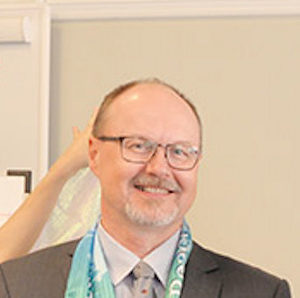
Hannu Vainonen
Senior Ministerial Adviser, Internatonal Relations, Ministry of Education and Culture, Finland

Roel van Raaij
Senior Policy Advisor, Ministry of Agriculture, Nature and Food Quality, The Netherlands

Vladislav Kaim
UN Secretary General's Youth Advisory Group on Climate Change

Simon Herteleer
UNECE ESD Youth Platform
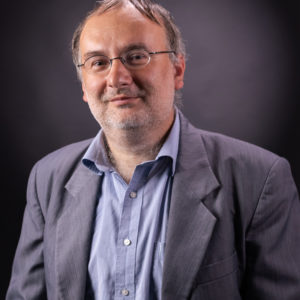
Jan Činčera
Associate Professor, Masaryk University, Czech Republic

Maja Rentrop-Klewitz
Policy Officer, Federal Ministry of Education, Germany
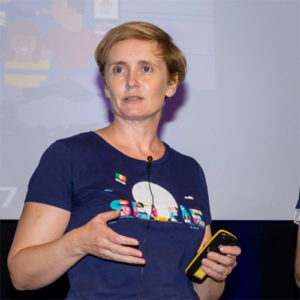
Deirdre Hodson
Policy Officer, European Commission
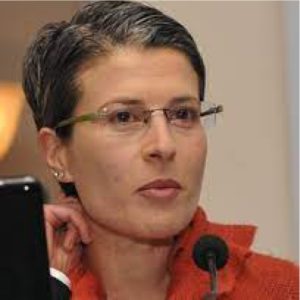
Aravella Zachariou
Chair of the UNECE Steering Committee for ESD

Monika Reti
Policy Officer, Ministry of Human Capacity, Hungary

Gilmor Keshet-Maor
Director of Science and Mathematics Division , Ministry of Education, Israel
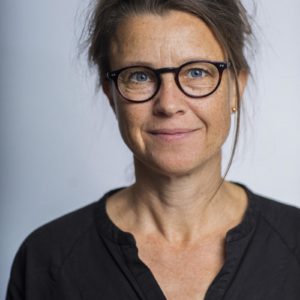
Sille Stidsen
Department Director, Human Rights and Development, The Danish Institute for Human Rights
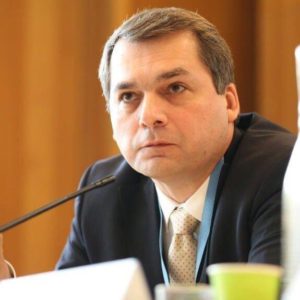
Zaal Lomtadze
Chief of Section, Environment Division, UNECE
Agenda
Welcome
- Wondwosen Asnake Kibret, Moderator
Introductory remarks by the co-organizers
- Vibeke Jensen | Director, Division for Peace and Sustainable Development, UNESCO
- Bruno Pozzi | Director, UNEP Europe Office
- Marco Keiner | Director, Environment Division, UNECE
Commitments of governments to make ESD a core element of education programmes to accelerate 2030 agenda and build forward better
- Kakha Khandolishvili | Head of International Relations and Strategic Development Department, Ministry of Education and Science of Georgia | Progress since the Batumi meeting of the Education and Environment Ministers and ESD in the VNRs
- Hannu Vainonen | Senior Ministerial Adviser, Internatonal Relations, Ministry of Education and Culture, Finland | Intergration of ESD in National Sustainable Development Roadmaps
- Roel van Raaij | Senior Policy Advisor, Ministry of Agriculture, Nature and Food Quality, The Netherlands | Whole institution approach to ESD as a driver to advancing 2030 Agenda
Engagement of youth in ESD and in building a sustainable future for all
- Vladislav Kaim | UN Secretary General’s Youth Advisory Group on Climate Change | What are the systems and tools needed to effectively engage young people in sustainable development issues?
- Simon Herteleer | UNECE ESD Youth Platform | The role of ESD in facilitating cooperation and exchange among youth, and in promoting active, informed and responsible citizenship
- Jan Činčera | Associate Professor Masaryk university, Czech Republic | The importance of ESD in creating climate positive futures, lessons learnt from the 11th World Environmental Education Congress
Multi-sectoral and multi-disciplinary collaboration on ESD, and cooperation between the Education and Environment sectors
- Maja Rentrop-Klewitz | Policy Officer, Federal Ministry of Education of Germany | How did the German multi-stakeholder process come about and at what stage is it at today?
- Deirdre Hodson | Policy Officer at the European Commission | How do we use ESD to increase resilience and preparedness of society for the for the green transition and to take action on environmental sustainability at the rate and scale needed?
- Aravella Zachariou | Chair of the UNECE Steering Committee for ESD | How to strengthen new framework for the implementation of UNECE Strategy for ESD 2021 – 2030
Good practices in the implementation of education in the areas of sustainable development
- Monika Reti | Ministry of Human Capacity of Hungary
- Gilmor Keshet-Maor | Director of Science and Mathematics Division Ministry of Education of Israel | Challenges in Education for Sustainable Development
- Sille Stidsen | Department director, Human Rights and Development at The Danish Institute for Human Rights | ESD for advancing human rights
Q&A
Wrap up of the Peer Learning Round Table and Concluding Remark
- Zaal Lomtadze | Chief of Section, Environment Division United Nations Economic Commission for Europe (UNECE)
Documents
Video
In addition to the live WebEx and Facebook transmissions, the video will be available on this webpage.