
Événement Conférence
Tackling Land Inequality to Advance Climate Justice and Just Transition | HRC56 Side Event
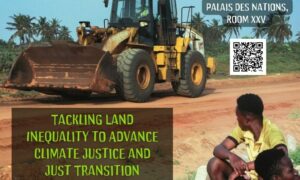
02 Juil 2024
15:00 – 16:00
Lieu: Palais des Nations | Room XXV
Organisation: FIAN International, CETIM, IPES Food, Katarungan, Rosa-Luxemburg-Stiftung
This side event to the 56th session of the Human Rights Council aims to contribute to emerging discussions about the best ways to address land concentration and inequality.
About this Event
Land and other natural resources are disputed resources, and their distribution is an indicator for structural inequalities, discrimination and marginalization in societies. Historical phases of enclosures and dispossession have concentrated control over natural resources in the hands of powerful actors, generating domination, exclusion and exploitation, including in the context of colonialism and occupation. Over the past two decades, the most recent global land rush has triggered a new wave of land grabs and speculation, leading to massive dispossession and new levels of land concentration around the world. Land and other natural resources are also central to tackling the triple crisis of climate change, pollution and biodiversity loss. On the one hand, demand for raw materials needed for the energy transition, offsetting markets and land-based conservation have led to “green land grabs.” On the other hand, the promotion of equitable tenure rights for people and communities is critical for sustainable management and use of ecosystems.
Redistributive agrarian reform policies have long been a key demand of social movements and organizations representing rural people. The International Conference on Agrarian Reform and Rural Development (ICARRD) held in Brazil in 2006 marked a milestone at UN-level to turn away from market-based land policies that have been promoted by the World Bank for many years. But with the advent of land grabbing the focus of many actors in land policy circles shifted from a pro-active agenda, which focused on ensuring broad, equitable and secure access to land for landless, to more defensive approaches. Responses to the most recent surge of large land acquisitions have overwhelmingly focused on reducing their negative impacts or embedding them in rural development strategies.
New data has revealed, however, that land concentration has steadily increased over the past decades. Consequently, the issue is slowly returning to the agenda and concerns about land inequality have started featuring in policy discussions again. However, appropriate policy responses are still largely absent. Indeed, today, the only country actively trying to redistribute and return land to dispossessed rural communities is Colombia. Perhaps unsurprisingly, the Colombian government has recently announced its intention to host a second ICARRD in 2026.
The renewed attention on land concentration calls for imagining new approaches to agrarian reform within broader discussions about wealth redistribution and just transitions.
Speakers
By order of intervention.

Zainal FUAD ARIFIN
La Via Campesina

Sofia MONSALVE SUAREZ
General Secretary, FIAN International and member of IPES Food
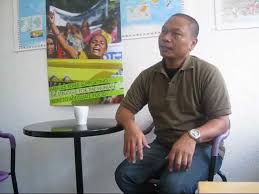
Danilo TANAEL CARRANZA
Katarungan, Movement for Social Justice and Agrarian Reform, Philippines

Elisa MORGERA
UN Special Rapporteur on Climate Change
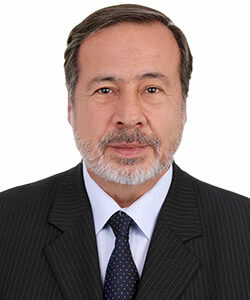
H.E. Amb. Gustavo GALLON
Permanent Representative of Colombia to the UN office and other international organizations in Geneva
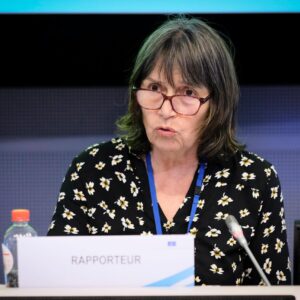
Geneviève SAVIGNY
Chair, UN Working Group on the Rights of Peasants and other People Working in Rural Areas

Therese ARNESEN
Human Rights Officer, Environment and Climate Change, Office of the United Nations High Commissioner for Human Rights

Diana RIZZOLIO
Coordinator, Geneva Environment Network | Moderator
Highlights
Summary
Opening
Sofia MONSALVE SUAREZ | General Secretary, FIAN International and member of IPES Food
Key insights from The Land Squeeze
- A lot of attention is given to food systems transformation in the context of climate change and the ecological crisis we live in, while little attention is paid to the fact that small-scale food producers, including Indigenous Peoples, peasants, fishers, and pastoralists, are facing a land squeeze.
- We are risking a tipping point for smallholder agriculture because they are controlling less and less land.
- The pressure on farmland is global and impacts food insecurity, rural poverty, and ecological destruction. It is a complex, multi-dimensional land squeeze. Land degradation plays an extremely important role, but land concentration— the concentration of ownership and access to land— is also a significant factor.
- The latest data on land concentration worldwide shows that 1% of farms control 70% of farmland globally. This represents an incredible concentration of farmland, and it varies across different regions of the world. It is important to note that the data is limited and outdated. We welcome the report that the FAO, in collaboration with several UN agencies, including the Office of the High Commissioner for Human Rights, is preparing for next year, which will provide a more updated picture of land concentration.
Drivers of land inequality worldwide:
- Land Grabbing 2.0: The financialization of land, considering land as a financial asset, is driven by the deregulation of land markets and the passing of many pro-investor policies. Agricultural investment funds have increased tenfold from 2005 to 2018, and agricultural commodity traders speculate in farmland through their private equity subsidiaries. Land price inflation has been reported in all regions of the world, particularly in Europe, where it has tripled, but it has nearly doubled globally.
- Food System Reconfiguration: 70% of global farmlands are under industrial agriculture, a system that is heavily reliant on capital, technology, and fossil fuels due to the agrochemical inputs required. We see extreme concentration across the supply chain and food system, including agricultural inputs, commercial seeds, grain traders, and retailing. This concentration occurs through vertical integration and now, with the digitalization of agriculture, we see deals between large oligopoly structures in agriculture and big tech. This environment makes it impossible for smaller-scale food producers to survive economically.
- Green Grabs: International environmental agreements have goals related to land-based conservation, carbon removal, and carbon offsets, creating enormous pressure. Combined with financialization, many carbon market projects are made possible through a significant influx of financial capital. For instance, 20% of the documented land deals in the Land Matrix Initiative, which tracks land deals, are linked to these new green grabs. These unregulated carbon markets, particularly the voluntary carbon markets, have led to conflicts within communities and loss of control over territories by Indigenous Peoples. The UN Special Rapporteur on Indigenous Peoples’ Rights has called for a moratorium on carbon markets on indigenous lands.
- Expansion and Encroachment due to Extractive Industries: mining, as well as urbanization, industrialization, and infrastructure for global trade, also affect the availability and access to land for small-scale food producers.
- Together, these drivers create land inequality, which is connected to ecological destruction. Environmental and climate policies that do not address land inequality risk becoming ineffective by not tackling the structural factors of ecological destruction. Therefore, redistributive agendas must be part of climate policies. Indigenous Peoples, peasant communities, and other small-scale food producers are safeguarding biodiversity and natural resources.
- We must prioritize, in the Rio Conventions, the right to land as recognized in the UN Declaration on the Rights of Indigenous Peoples and the UN Declaration on the Rights of Peasants.
- Communities need their own governance systems over natural resources. Democratic spatial planning is essential to reconcile different needs for energy transitions and food production. Additionally, we need to get speculative capital out of land markets, possibly through a cap on farmland investments, and prioritize non-market mechanisms for carbon offsets.
- A new generation of land and agrarian reform is needed, where agroecological transition, redistribution, and environmental protection are central.
Zainal FUAD ARIFIN | La Via Campesina
- In our movement, comprehensive, territorial, integrated, popular and genuine agrarian reform is one of our crucial struggles. In the work rooted in the genesis of the UN Declaration on the Rights of Peasants and Other People Working in Rural Areas, we have said that one of the underlying causes of conflict, discrimination, and the vulnerability of peasants and other rural workers is the absence of agrarian reform and rural development policies. There is also a kind of land grabbing based on food, forest carbon projects, biofuel, mining, infrastructure, and more.
- We need to protect the right to land, as outlined in Article 17 of the Declaration. This right is essential if we want to transform our world. For us, peasants, the right to land is crucial to produce healthy and nutritious food.
- We also urge you to commit further to maintaining and implementing the Declaration in public policies within your countries. This will improve the livelihoods of peasants and other rural workers by securing land and other basic rights such as seeds, water, and access to markets.
- By securing these rights, we can feed the people and drive movements to change the world. With hope and struggle, we can reform and create a better future for all.
Danilo TANAEL CARRANZA | Katarungan, Movement for Social Justice and Agrarian Reform, Philippines
- Land is a finite resource, and its use should serve the highest and most just societal purpose, especially in the era of climate change.
- The lived experiences of peasants clearly show that without control of the land, it is difficult to survive and live a life with dignity. Peasants compete with the most powerful forces in society, such as landlords, corporate owners, and even government agencies working with landlords and big claimants who want to control the land mainly for market and profit-driven initiatives. These initiatives often involve converting agriculturally productive lands into commercial, industrial, tourism, and residential areas, or setting up special economic zones.
- In the Philippines, the struggle for redistributive agrarian reform is a continuing process. A major turning point, a product of decades of struggle for land, was the 1987 Constitution, which recognized the rights of tillers to own directly or collectively the land they till. However, the law created to implement the constitutional mandate was full of loopholes. It allowed individual and corporate landowners to evade or delay the implementation of agrarian reform, such that despite the existence of a relatively progressive agrarian reform law, land grabbing continues and is further exacerbated by climate change and natural disasters. Landlords and corporations resist agrarian reform intensely, resulting in peasants claiming land rights being subjected to various forms of repression, including killings and assassinations, forcible evictions, and criminalization that attack their basic freedoms.
- The right to land is linked to other rights that rural citizens must have guaranteed. The right to land is a difficult struggle for peasants. Despite these difficulties, we have had some modest successes in land redistribution over the last 10 years. Our organization struggled for the successful distribution of close to 14,000 hectares of land to around 8,000 previously landless farmers. However, redistribution of land without the necessary support for farmers to make the land more productive can only lead to the bankruptcy of farmers and the reconsolidation of reformed lands in the hands of new owners through various formal and informal land transactions.
- This difficult struggle for distributive agrarian reform requires a strong mass movement of peasants with the capacity for protracted struggle for the recognition of land rights. The guarantee of the exercise of basic rights and freedoms to organizations and mobilization for demand-making helps in asserting peasants’ rights. Peasants need to be free from violence and criminalization to pursue and assert their rights more effectively and peacefully. States that cannot stop violence against peasants should be held accountable for human rights violations.
- In this regard, we see the need to inform our national human rights institutions about the discourse on the rights to food and nutrition of peasants, including the UN draft as part of human rights that need to be complied with by states. It is also important that there are national laws that recognize the right of peasants to redistributive reforms. The UN draft can be an important international instrument that should inform state laws and policies in fully recognizing the rights of peasants.
- We need transformative redistributive agrarian reform to facilitate systems-wide agroecological transition, not just localized project-based agroecological alternatives. A land reform process that starts and ends with land redistribution without agroecological transformation is not enough. Land in the hands of farmers, primarily used to feed the world through ecologically sustainable means, is what is needed in this era of climate change.
Geneviève SAVIGNY | Chair, UN Working Group on the Rights of Peasants and other People Working in Rural Areas
- This working group on the rights of peasants and other people working in rural areas is a new working group.
- I have been nominated as the provisional chair since we have not had our session yet. I am the only peasant in this group, which is a symbol of the group’s development after the will of many peasants and rural workers to defend their rights. After several years, the UN Declaration on the Rights of Peasants has been adopted by the UN General Assembly. After a resolution last autumn, we now have a working group, which is very important for all peasants and rural workers to face the struggles described in the previous statements.
- The right to land is developed in the UNDROP in several parts. The definition of a peasant itself describes the relationship of peasants with the land, highlighting their dependency on and attention to the land to survive and their responsibility towards natural resources. The right to land, further elaborated in Article 17, is linked to sustainability, stating the right to access, sustainably use and manage land, water bodies, coastal waters, fisheries, pastures, and forests. States are required to take measures for the conservation and sustainable use of land and other resources, including through agroecology, and ensure conditions for the regeneration of biological and natural capacities.
- Agroecology works with nature to develop farming within planetary boundaries, including the necessity to preserve the land (as an area and as the quality of the soil). It also involves incorporating organic matter and manure to offset greenhouse gas emissions. Regenerative agriculture, claimed by both small-scale peasants and some companies, aims to preserve land quality.
- Article 18 of the declaration, which covers the right to conservation and protection of the environment, is also crucial as it can serve as a basis to enforce environmental laws within national policies.
- Articles 20 and 21 further address the rights to biological diversity and clean water, underscoring the importance of sustainable practices and the protection of traditional knowledge.
- These articles describe how peasants and rural workers are committed to farming for food production while also protecting the environment. We probably need more evidence, and our working group is currently developing our methods of work and program. Although it is too early to detail our exact plans, certainly, the right to land and how to articulate it with the development of peasant farming will be at the core of our work in the coming months and years.
H.E. Amb. Gustavo GALLON | Permanent Representative of Colombia to the UN office and other international organizations in Geneva
- Historically, land distribution in Colombia has been among the most unequal in the world, negatively impacting the social fabric and productivity.
- According to the report of the Colombian Truth Commission issued two years ago in 2022, the land index Gini coefficient in Colombia is 0.92. For comparison, in Europe it is 0.57, in Africa 0.56, in Asia 0.55, and in the whole of Latin America 0.79. Due to this extreme inequality, the first point of the peace agreement signed with the FARC-EP guerrilla in 2016 aimed to transform the distribution of land through the design of mechanisms that improve agricultural productivity and competitiveness.
- Colombia has been implementing agrarian reform to achieve the goal of total peace in our country based on access, formalization, and regularization of rural property. The comprehensive rural reform constitutes one of the pillars of the peace agreement’s implementation, with the premise of reducing gaps between the countryside and the cities. This reform represents a substantive transformation of the living conditions and productive activity of the Colombian countryside. To comply with this first point of the peace agreement, comprehensive rural reform was included in our national development plan.
- We are engaging in dialogues with landowners, peasants, ethnic communities, and the international community as a mechanism to guarantee significant progress in the reform. For Colombia, it is important to have broad and active participation of civil society with a focus on the economic, social, and cultural rights of the population to transform land distribution and overcome existing inequalities by promoting family and peasant agriculture.
- One of the most notable events has been the approval of the Legislative Act 01 of July 5, 2023. This Constitutional amendment recognizes peasants as subjects of special constitutional protection in Colombia, according to the UN Declaration on the Rights of Peasants, a recognition that had not been accepted by the authorities before. The Declaration was included as part of the Constitution after a long period of rejection by previous governments.
- On the other hand, the just or fair transition strategy prioritizes energy generation and empowers communities to produce their own energy resources from non-conventional sources of renewable energy. The expansion of renewable energies must occur progressively in accordance with the availability of natural resources, with a commitment to protect ecosystems and safeguard protected areas. Just transition addresses social conflicts and inequalities by promoting access to energy services and implementing social and environmental safeguards for communities seeking to improve their living conditions.
- Therefore, just as with agrarian reform, for the just transition to be successful, it is necessary to adopt an approach focused on the promotion and respect of human rights.
Therese ARNESEN | Human Rights Officer, Environment and Climate Change, Office of the United Nations High Commissioner for Human Rights
- Land is the foundation for the enjoyment of many human rights.
- Both UNDRIP and UNDROP have recognized land as a human right for the rights holders in their respective declarations.
- As we all depend on land in one way or another, land and other natural resources are under unprecedented pressure. This is caused by their financialization and commodification. Resources are treated as commodities and assets used for generating wealth and profits rather than as rights. This undermines the effective enjoyment of human rights.
- The triple planetary crisis certainly adds pressure on land and natural resources. As competition and conflict over land arise, we see the loss of livelihoods, population displacements, food insecurity, and loss and damage resulting from climate impacts, which again have particularly adverse effects on livelihoods and agriculture. The realization of land-related rights is key to addressing and overcoming these crises and is really at the center of the solution.
- Both historical and structural discrimination related to land distribution and ownership result in inequitable access to land. Those most impacted are always the ones left behind, such as Indigenous Peoples, peasants, and others working in rural areas, but also women and girls. Women have limited access to land, with only about 13% of agricultural landholders being women, which significantly limits their role as agents to realize human rights related to land, including the right to adequate food.
- OHCHR is engaged in shedding light on the situation faced by everyone defending lands in one way or another, as this often includes the intimidation and violence, whether they are human rights defenders, peasants, or Indigenous Peoples. The numbers of such incidents are increasingly disturbing, as documented both by our office and civil society organizations.
- It is essential to stress that states have the primary responsibility to respect, protect, and fulfill human rights, which includes land-related decision-making and extends to climate mitigation measures. People most affected by climate change and its mitigation measures need to meaningfully participate and benefit from the just transition.
- The UN Guiding Principles on Business and Human Rights are also key in this regard. Businesses have a responsibility to respect human rights, not infringe upon them, and address adverse human rights impacts when they are involved. This responsibility relates to land, climate action, and the role businesses play in exacerbating biodiversity loss and climate change. Businesses have a key role in the decarbonization of the economy and are important players involved in these discussions.
- Extractive industries, development projects, and industrial agriculture impair people’s enjoyment of rights related to land, particularly when these activities contribute to land grabbing and land degradation. The Secretary-General’s report on climate change and the right to food recommended that a conversion to agroecology would require investments in traditional and indigenous knowledge, scientific practices dedicated to agroecology, a just transition for workers, security of tenure, genuine agrarian reform, and effective regulation of agro-businesses. This ties together the points mentioned earlier.
- OHCHR works at the global and local levels to address land inequality and increase tenure security. In Chad, for example, OHCHR is promoting the right to food in the context of local land-related conflicts between farmers and herders. Throughout Latin America, including in Honduras and Colombia, our office works with affected communities, rights holders, and peasant organizations to address conflicts related to land, territories, and natural resources. By taking a human rights-based approach to climate action, just transition, and land-related conflict, we put people at the center of policymaking, which is crucial for sustainable action.
Elisa MORGERA | UN Special Rapporteur on Climate Change
- In my first report to the Human Rights Council, I reflected on the work that other special rapporteurs and treaty bodies have already done in clarifying state obligations on climate change and human rights. Several of these international processes have referred to the importance of land and natural resources.
- The Special Rapporteur on the Human Rights to a Healthy Environment and the Special Rapporteur on Toxics have both emphasized the role of conservation and restoration of land and terrestrial ecosystems for climate mitigation.
- The Committee on the Rights of the Child has indicated the need for states to take immediate action to transform agricultural practices as part of efforts to protect children’s rights to a healthy environment, with a particular focus on climate change.
- The Committee on Economic, Social and Cultural Rights has also clarified that states must avoid mitigation policies that may lead to land grabbing and consider the potential impacts on disadvantaged groups from any form of land use change induced by climate change.
- The Special Rapporteur on Internally Displaced Persons has called attention to preventing displacement associated with adverse climate change effects, enhancing mitigation efforts, and adopting comprehensive mitigation action as part of rural development and land use.
- The UN Special Rapporteur on the Right to Adequate Housing has cautioned against post-disaster reconstruction efforts that may lead to the privatization of land or land grabbing.
- The Special Rapporteur on the Human Rights of Indigenous Peoples has noted the need for climate funding allocated to projects on indigenous territories to include specific resources to support Indigenous People’s efforts to secure their land rights.
- It is important to explicitly consider land and water connections when thinking about natural resource use. It is essential to consider the specific needs and human rights of small-scale fishers and other ocean-dependent communities, taking into account the recent guidance from the International Tribunal for the Law of the Sea, which has clarified state obligations at the ocean-climate nexus. This guidance is also relevant for the protection of marine resources on which many communities depend. Additionally, guidance adopted by consensus by 196 parties under the Convention on Biological Diversity addresses tenure questions in the context of ecosystem-based approaches to climate change mitigation, adaptation, and disaster risk reduction.
- At the end of this week, we will see the second Small-Scale Fisher Summit being held at FAO in Rome. The importance of access to traditional fishing grounds and land-based activities related to small-scale fisheries, which are very much affected by climate change, will be a key focus. I expect that climate change will be a significant consideration in that forum.
- I look forward to collaborating with the UN Working Group on the Rights of Peasants and Other People Working in Rural Areas to further explore the connections between land and natural resource tenure and climate change.
- I offer my collaboration and congratulations to the Colombian government for supporting considerations of the connections between climate change, biodiversity, tenure, and human rights as the host of the UN Biodiversity Conference in October this year, and for announcing the intention to host a second International Conference on Agrarian Reform and Rural Development in 2026. I look forward to remaining in touch with all the experts and participants in this event and learning from your efforts to document and understand these crucial interactions.
Way Forward
Sofia MONSALVE SUAREZ | General Secretary, FIAN International and member of IPES-Food
- There will not be climate or biodiversity protection if we do not tackle the issue of land inequality. There is no land left for communities to live on. Therefore, we need to interpret international commitments to protect land rights.
- It is essential to address existing land rights and redistribute land because the current figures show it is impossible to survive on these lands. We need Indigenous Peoples and peasant communities to be stewards of our lands, rivers, and forests.
- Redistributive policies must be part of climate and environmental policies, in conjunction with the transformation of industrial agriculture towards agroecology.
- We have all highlighted the urgency and importance of agroecology for this transformation. However, we also need to address land inequality. We see significant advancements in discussions around wealth redistribution through taxation, and a complementary measure must address land inequality within the context of environmental, biodiversity, and agrarian reforms.
Video
Links
Photo Credits
Endorois Indigenous Women Empowerment Network, 24 July 2024