
Événement Virtuel
The Pact for the Future & Declaration on Future Generations: Unpacking the Opportunities to Engage Young People in Policy & Decision-Making Between Now and up to 2030 | RFSD 2025
02 Avr 2025
08:45 – 09:45
Lieu: Palais des Nations | Room H-342 & Online | Webex
Organisation: Bureau régional du PNUE pour l'Europe, Geneva Environment Network, Commission économique pour l'Europe des Nations Unies
This side event to the 2025 Regional Forum on Sustainable Development is co-organized by UNEP, the Geneva Environment Network and UNECE in partnership with the UN Youth Advisory Council (UNYAC) under UNCT Azerbaijan, UNESCO Youth Climate Action Network, UNESCO/ESD Youth Network, Foundation for Environment Education (FEE) and Government of Cyprus.

About this Event
The Pact for the Future and Declaration on Future Generations made a strong link and support to the role of youth as agents of change and the need to consider the interests of future generations in current policy and decision-making processes, including investment in the social and economic development of young people to reach their full potential.
This event will hear innovative ideas and opportunities on how young people can engage in policy and decision-making between now and 2030.
2025 Regional Forum for Sustainable Development
The 2025 Regional Forum on Sustainable Development for the UNECE Region – the region’s official input to the High-level Political Forum on Sustainable Development and the UN’s main platform for global follow-up on the 2030 Agenda – will convene in Geneva on 2 and 3 April 2025, under the theme “Advancing Sustainable, Inclusive, Science- and Evidence-based Solutions for the 2030 Agenda for Sustainable Development and its SDGs in the ECE region, Leaving no one Behind.”
Speakers

Olivia COPSEY
Director of Education, Foundation for Environmental Education

Kelsey BELTZ
Head, Global Partnerships, The Good Lobby

Samia KASSID
Senior Programme Manager, Rights of Children and Youth, The World Future Council
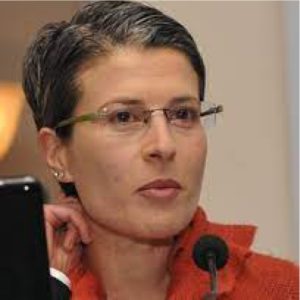
Aravella ZACHARIOU
Coordinator of Environmental Education and Sustainable Development Department, Ministry of Education and Culture, Cyprus

Zohra ABILOVA
UN Youth Advisory Council (UNYAC)

Simon HERTELEER
Coordinator, UNECE ESD Youth Platform

Sébastien DUYCK
Human Rights & Climate Campaign Manager, Center for International Environmental Law (CIEL)

Wondwosen ASNAKE KIBRET
Policy and Partnerships Coordinator, Europe Office, United Nations Environment Programme (UNEP) | Moderator
Highlights
Summary
Olivia COPSEY | Director of Education, Foundation for Environmental Education (FEE)
- The Global Action Day (GAD) represents a significant opportunity to activate youth agency by engaging young people in leadership roles—both in their own right and on behalf of future generations—towards achieving a clean, healthy, and sustainable environment.
- The Foundation for Environmental Education (FEE) has been operating for 40 years. Its programmes primarily focus on environmental education, including initiatives such as 52,000 Eco-Schools in 100 countries, Young Reporters for the Environment, outdoor learning, and more. FEE’s overarching objective is to implement a whole-of-system approach to environmental education, encompassing formal, non-formal, and informal learning contexts.
- GAD is FEE’s annual flagship campaign, organized every year. Although a few weeks remain before the launch of the 2025 edition, nearly 300,000 individuals across 115 countries have already registered to participate. The reach of Global Action Day extends beyond the FEE network, allowing members to broaden their programmes in alignment with targets such as the Greening Education Partnership and other global environmental education commitments. The theme of the 2025 campaign is ecosystem restoration, with a particular focus on providing platforms for youth-led initiatives.
- Each campaign centres around specific topics, such as the bioeconomy or the role of trees and forests in climate adaptation, allowing FEE to tailor its educational messages for maximum impact during the campaign period.
- These campaigns also offer opportunities for participants already engaged in FEE programmes to connect beyond their individual schools and communities. This not only demonstrates their strong voice and capacity but also their ability to participate as policy influencers, reflecting the dedication of both communities and youth to environmental issues.
- Furthermore, these campaigns foster the development of collaborative partnerships and projects. FEE is actively involved in various strategic initiatives, such as the Decade on Ecosystem Restoration and the Greening Education Partnership, and maintains strong partnerships with other organisations sharing similar goals. These collaborations are vital not only for FEE but also for the schools and young people involved. Through these campaigns, FEE seeks to establish focal points for local collaboration, which are essential to building momentum for environmental action and achieving global commitments.
Kelsey BELTZ | Head, Global Partnerships, The Good Lobby
- It is insufficient to expect youth alone to safeguard the rights of future generations. Placing this responsibility on youth activists imposes an unfair burden, particularly when it is incumbent upon policymakers to undertake the necessary legislative and policy work themselves.
- Policymakers often operate within the constraints of election cycles, which hinders long-term thinking. In contrast, the interests of future generations extend 50, 100, even 200 years into the future. We must begin to consider what the state of the planet will be over such extended timelines.
- To help address this need, The Good Lobby co-founded the Fit For Future Generations Coalition. This coalition has grown to include 28 members and supporters, with the aim of promoting concrete legislative measures that safeguard the rights of future generations.
- The coalition’s key demands are as follows: the introduction of a European Commissioner for Future Generations with a horizontal mandate, and the creation of a Future Generations Impact Assessment as part of the Better Regulation Guidelines. Although these proposals are EU-focused, their principles are globally applicable. How might regulatory and legislative frameworks be reformed in your country? Who should bear the responsibility? And how can we ensure that the interests of future generations are represented in today’s policymaking?
- The Pact for the Future represents a promising beginning, but it needs teeth, through binding commitments and national implementation plans. These plans should not only prioritize the concerns of youth but also account for the needs of generations yet to come.
Samia KASSID | Senior Programme Manager – Rights of Children and Youth, The World Future Council
- Since its founding, the World Future Council (WCF) has been a strong advocate for future and intergenerational justice, including the rights of future generations of all living beings. Its mission is to ensure that long-term thinking and the rights and needs of future generations are respected and embedded in today’s decision-making processes and legal frameworks. The WFC has been a global thought leader in institutionalising the rights of future generations, promoting both legal and ethical frameworks, including at the UN level and advocating this at every level of governance, regional, such as at the EU, national and subnational. The WCF advocates for legal innovations that give standing to future generations in courts and political processes, and calls for global recognition of the Rights of Nature and the principles of Earth Trusteeship, fundamentally linked to the role of humans within the community of life including the well-being of future generations.
- The UN Summit of the Future, along with The Pact for the Future and The Declaration on Future Generations, are a once-in-a-lifetime opportunity to strengthen global governance for the benefit of current and future generations. The WCF actively engaged in shaping these debates—raising awareness and promoting the representation of future generations. It then advocated for the appointment of a UN Special Envoy for Future Generations with a clear mandate, and we supported language in the draft Declaration that emphasised legal accountability, intergenerational equity, and safeguards in policy evaluation. Future generations, by definition, are not here to stand up for their rights—so someone must do it for them. An ombudsperson, envoy or guardian for future generations can institutionalise this role.
- One of the flagship initiatives of the WCF is the World Future Policy Award, which honours future-just policies worldwide that create enabling environments for future generations.
- Intergenerational justice means that we must always consider the needs and rights of future generations. While we may not know exactly how their lives will look, what we do know is what humanity and nature need in order to survive and thrive: clean water, healthy food, access to energy, safe environments to live, work, and learn, a thriving cultural heritage, and more.
- The adoption of the Declaration on Future Generations was includive and participatory in many ways. UN-level consultations included Member States, UN agencies, youth representatives, civil society organizations, Indigenous Peoples, and academic institutions. The Global Futures Forum and the Summit of the Future consultations included civil society briefings and youth dialogues, such as those led by the UN Major Group for Children and Youth (UNMGCY). Online platforms were also made available for open submissions to the zero draft. In addition, the High-Level Advisory Board on Effective Multilateralism supported the process by incorporating references to future generations in its policy recommendations. Furthermore, Children and youth are explicitly mentioned as critical agents of positive change The Pact states, and not merely beneficiaries of future policy.
- However, the process fell short of fully embodying a co-creative approach that truly centres the needs and rights of future generations. Power asymmetries and top-down structures remained: the process was largely state-led and often lacked transparency, many Global South representatives and grassroots actors felt their concerns were not equally reflected, and the voices of youth and Indigenous Peoples sometimes only played advisory or tokenistic roles. The language of the draft Declaration has been criticised for being non-committal, with limited operational mechanisms for accountability or enforcement. Furthermore, there was no formal mechanism for future generations themselves to shape the draft. Children’s right to participation also missed a stronger recognition.
- Moreover, while the Pact treats children and youth as distinct from future generations, many hoped that more substantive commitments to protect and represent future generations would be embedded directly within the Pact, not just in the Declaration annexed to it.
- The outcomes of the Declaration must also be implemented. These include the definition and promotion of the principle of intergenerational justice; the proposal of institutional mechanisms to safeguard long-term interests—such as the now-confirmed United Nations Special Envoy for Future Generations; the reaffirmation of global commitments to sustainability, peace, climate action, and future-oriented policymaking; and the encouragement of national and local integration of the needs of future generations into legal and policy frameworks.
Aravella ZACHARIOU | Coordinator of Environmental Education and Sustainable Development Department, Ministry of Education and Culture, Cyprus
- In 2024, Cyprus hosted the UNECE Regional Forum on Education for Sustainable Development (ESD) in Limassol. That event brought together over 50 countries and served as a catalyst for a groundbreaking international initiative—the Green Jobs and Skills Assessment project, developed in partnership between Cyprus and UNEP.
- At the Summit of the Future in New York, Cyprus and UNEP co-convened the high-level side event “Empowering Youth for Sustainable Futures: Intergenerational Responsibility and Skills for a Just Transition.” This event deepened the messages from Limassol: that ESD must be front and centre in our efforts to build a just, inclusive, and climate-resilient future.
- A crucial driving force behind these developments is the UNECE Steering Committee on Education for Sustainable Development (ESD SC), which Cyprus currently chairs. The ESD SC plays a pivotal role in aligning regional education policies with global climate and sustainability goals. The Committee’s emphasis on youth innovation and entrepreneurship has directly shaped the priorities of the Green Jobs and Skills Assessment project, making it a blueprint for regional collaboration under the Green Pact.
- The high-level event on “Empowering Youth for Sustainable Futures: Intergenerational Responsibility and Skills for a Just Transition” organized in the summit of the future on 20 September 20, 2024, in New York, recognized that young people must be central in shaping and leading the transition to sustainable societies. The principle according to which today’s decisions do not compromise the prospects of future generations is now embedded in the broader Pact for the Future, especially through the Declaration on Future Generations.
- The event served as a platform for announcing new commitments to the Green Jobs for Youth Pact, led by UNEP, ILO, and UNICEF, aiming to create 1,000,000 green jobs and support 10,000 youth-led green enterprises by 2030. Participants emphasized that nearly every job is set to change, and education must adapt to prepare young people accordingly.
- Speakers from UNEP, ILO, UNICEF, and LinkedIn called for systemic reforms in national education policies, vocational training systems, and labour market frameworks. They underscored the importance of mainstreaming green jobs and skills, shifting from knowledge-based to competence-based education, encouraging interdisciplinary learning, and integrating Education for Sustainable Development (ESD) across formal, non-formal, and informal education systems.
- The event highlighted the necessity of collaboration across governments, youth organizations, the private sector, civil society, and multilateral agencies. Cyprus’ initiative with UNEP was recognized as a regional model of multi-stakeholder cooperation, contributing to regional and global policy reviews (e.g., HLPF, SDG 4 and SDG 8). This systemic collaboration with UNEP aims to reshape education, support the green economy, and provide real pathways to decent, future-oriented work for youth.
Zohra ABILOVA | UN Youth Advisory Council (UNYAC)
- Youth councils can play a significant role in advancing the implementation of the Pact for Future Generations. Organizing public awareness campaigns on behalf of the UNYAC, particularly targeting youth audiences, would be highly beneficial. Indeed, young people constitute the group most affected, both now and in the future, by political decisions.
- It is equally important to support local initiatives that may not be financed by major organizations or endorsed by governments. In this regard, the UNYAC can provide valuable assistance to such projects, thereby promoting youth engagement in both environmental matters and decision-making processes.
- The UNYAC was invited to participate in discussions surrounding the development of the United Nations Sustainable Development Cooperation Framework (UNSDCF) for Azerbaijan, as well as in monitoring the implementation of its objectives. Additionally, the UNYAC has collaborated with other NGOs and organizations, including a partnership with the Conference of Youth, funded by UNICEF.
- The UNYAC also seeks support from the United Nations Country Team (UNCT) in Azerbaijan, particularly through financial assistance. While the UNYAC aspires to initiate various projects, a lack of funding has hindered their realization. Furthermore, the provision of technical expertise would be greatly appreciated.
- Policy decision-making represents a critical step, yet youth participation in such processes remains limited. UNCTs could potentially support UNYAC members in taking part in these policy discussions, thereby influencing lawmakers and contributing meaningfully to the drafting of legislation.
Simon HERTEELER | Coordinator, UNECE ESD Youth Platform
- If COVID-19 were our Titanic, we have failed—and continue to do so. The pandemic has not led to significant transformations within the global health system. The Millennium Development Goals, the Sustainable Development Goals, and now the Pact for the Future appear akin to throwing buckets of water at an iceberg in the hope it will melt. This approach is proving ineffective. A core issue lies in the functioning of many of these systems. The solution is not to continue on the current trajectory, hoping the issue will resolve itself, but rather to shift course and seek genuine, practical solutions.
- The Declaration for Future Generations and the Pact for the Future continue to expose existing asymmetries. The process has been largely top-down and government-led, whereas what is truly needed is a participatory approach that listens to and collaborates with the people these initiatives aim to serve.
- Presently, global priorities emphasize industrialization, defence, and security, while international solidarity appears to have diminished in importance, particularly at a time when many governments are increasingly focused on national sovereignty.
- In considering future generations, we must also reflect on how our actions impact people in other contexts. Conversely, investments in other regions can ultimately benefit us as well.
- It is imperative to invest in resilience and public health, particularly in relation to strengthening health systems. One possible avenue is to promote intergenerational solidarity. Older generations rely on younger ones to lead meaningful lives. To support this, we must equip younger generations with the tools to lead long, fulfilling lives – that may involve extended participation in the workforce.
- Finally, accountability must be ensured. The creation of these documents, and the time and resources devoted to them, must lead to mechanisms that hold individuals and institutions responsible for their actions. Future governments, in particular, must be held accountable for upholding the decisions, agreements, and commitments made today.
Sébastien DUYCK | Human Rights & Climate Campaign Manager, Centre for International Environmental Law (CIEL)
- The imperative to place future generations at the core of sustainable development has been discussed for decades. Yet, the accelerating triple planetary crisis highlights the lack of effective enforcement and impact on policymaking. The principle of intergenerational equity is often treated as a secondary slogan rather than a guiding framework for policy decisions.
- From a legal perspective, the Pact for the Future and the Declaration for Future Generations were disappointing for CIEL, as they fail to reference the rights of future generations explicitly.
- Nevertheless, recent developments offer some promise. Certain countries, such as Wales and Hungary, have established institutions to advocate for the voices, perspectives, needs, and rights of future generations, ensuring these are not sidelined in decision-making and trade-offs. However, greater momentum is needed to integrate these concerns more effectively.
- The UN Secretary-General’s decision to appoint a Special Envoy for Future Generations, an initiative long called for by civil society, marks an important institutional shift. Similarly, the EU’s designation of a Commissioner for Intergenerational Fairness is noteworthy, though its practical influence on policy remains to be seen. The Council of Europe’s environmental strategy, which emphasizes protecting the rights of future generations, is also encouraging.
- Discussions on intergenerational justice must go beyond interests and be grounded in states’ existing legal obligations. Human rights law, rooted in the principle of non-discrimination, does not permit the marginalization of future generations
- Rather than drafting new pacts, focus must shift to implementing and upholding existing legal obligations. Jurisprudence, such as Neubauer v. Germany, demonstrates the legal recognition that insufficient climate action violates the rights of future generations.
GEN @ RFSD 2025
Addressing Environmental Risk Factors for the Prevention and Control of Noncommunicable Diseases (NCDs) | RFSD 2025
1 April 2025 | 13:15 – 14:15 CEST
Young People Driving Transformation: Education for Biodiversity and Sustainable Development Goals in Action | RFSD 2025
1 April 2025 | 15:15–16:15 CEST