Event Virtual
Young People Driving Transformation: Education for Biodiversity and Sustainable Development Goals in Action | RFSD 2025
01 Apr 2025
15:15 – 16:15
Venue: Online | Webex
Organization: UNEP Europe Office, Geneva Environment Network, United Nations Economic Commission for Europe
This side event to the 2025 Regional Forum on Sustainable Development is co-organized by UNEP and Geneva Environment Network, UNECE, UNESCO, IUCN, Foundation for Environment Education (FEE) and Government of Cyprus.

About this Event
The last UN Biodiversity Conference (COP16) has called upon relevant organizations to collaborate together to develop a global plan of action for education on biodiversity, in order to support transformative actions needed to halt and reverse biodiversity loss by 2030 and to live in harmony with nature by 2050.
This event will bring together experts and young people to discuss what a global plan of action for education on biodiversity looks like and how it can build on the outcomes of the Summit of the Future.
2025 Regional Forum for Sustainable Development
The 2025 Regional Forum on Sustainable Development for the UNECE Region – the region’s official input to the High-level Political Forum on Sustainable Development and the UN’s main platform for global follow-up on the 2030 Agenda – will convene in Geneva on 2 and 3 April 2025, under the theme “Advancing Sustainable, Inclusive, Science- and Evidence-based Solutions for the 2030 Agenda for Sustainable Development and its SDGs in the ECE region, Leaving no one Behind.”
Speakers
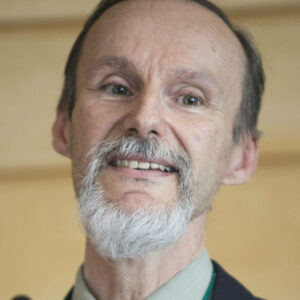
Bernard COMBES
Programme Specialist, United Nations Educational, Scientific and Cultural Organization (UNESCO)

Sean SOUTHEY
Chair, Commission on Education and Communication, International Union for Conservation of Nature (IUCN)

Katalin CZIPPÁN
Strategic Advisor & Nature Education for Sustainability Co-Chair, IUCN Commission

Charles KARANGWA
Global Head, Nature-based Solutions, International Union for Conservation of Nature

Tural ALIZADA
UN Youth Advisory Council (UNYAC)

Pramod KUMAR SHARMA
Senior Director of Education, Foundation for Environmental Education

Wondwosen ASNAKE KIBRET
Policy and Partnerships Coordinator, Europe Office, United Nations Environment Programme (UNEP) | Moderator
Highlights
Summary
Bernard COMBES | UNESCO
The following strategies have been identified as key to raising awareness and fostering education for a citizenry committed to conservation efforts.
- It is essential to define identify the minimum environmental knowledge necessary for individuals to be environmentally literate, meaning to possess the critical competencies to understand complex systems and solve related problems. However, an analysis of national curricula from 100 countries reveals that that three-quarters of them do not mention biodiversity.
- Sustainable development requires the integration of social, economic and environmental dimensions of development. Educational activities should address these three dimensions and help learners understand their interdependence and act accordingly. These activities must also be inclusive, activities responding to the diverse of all learners, and adopt a transversal approach by combining various disciplines, methodologies, and societal perspectives – and thereby promoting holistic learning experiences.
- Activities should promote transformative education and learning, empowering learners to instigate individual and social change. This includes taking action on issues like climate change, changing consumption patterns, fostering social entrepreneurship, and supporting sustainable livelihoods. Innovative approaches in both content development and methodologies should be used to provide a comprehensive understanding of the environmental, social and cultural dimensions of sustainability.
- Educational activities must emphasize long-term planning and holistic perspectives, integrating environmental, social, cultural and economic dimensions to maximize positive impacts and minimize harm to both the environment and local communities. These activities should have lasting impacts on sites and communities, guided by sustainability values such as respect for the environment, humanity, solidarity and intergenerational responsibility.
- Active participation of stakeholders is pivotal in educational activities, including local communities, Indigenous people, educators and visitors, is crucial for the success of educational activities. Engaging these stakeholders fosters a sense of ownership and responsibility towards preserving natural and cultural heritage.
A Global Plan of Action on Education for Biodiversity should include the following elements.
- Promote an integrated and innovative vision of lifelong learning and awareness-raising on biodiversity and natural heritage, as part of a global strategy.
- Embed biodiversity education at the heart of Education for Sustainable Development (ESD) and the SDGs, making environmental education mandatory in school curricula and aligned with all sustainability goals.
- Foster stewardship, active citizenship, and intergenerational responsibility by promoting the principles of the Earth Charter and the UNESCO Declaration on responsibilities towards future generations.
- Highlight the interconnections between ecosystems, livelihoods, culture, society, and economy, encouraging everyday actions that protect biodiversity without compromising quality of life.
- Use a whole-sector approach to ESD through policy and curriculum reforms, ensuring all educators are trained in transformative, action-oriented teaching methods, and shift CEPA (Communication, Education, Promotion and Awareness) efforts towards Co-creation, Empowerment, Participation, and Advocacy, emphasizing sustainability and human well-being.
- Support place-based, culturally relevant biodiversity education that draws on traditional knowledge, promotes intergenerational learning, and reflects local contexts and values. This can facilitate the exchange of knowledge, best practices, and teaching materials, especially those relevant to Indigenous and local communities.
- Empower youth to lead biodiversity awareness and action, fostering a generational shift towards sustainability and environmental advocacy.
Sean SOUTHEY | Chair, Commission on Education and Communication, International Union for Conservation of Nature (IUCN)
The Global Plan of Action is essential because a culture change, financing, and systemic transformation are required. We are currently not succeeding in addressing the crises of climate change and biodiversity loss, and we cannot reverse this trajectory without re-examining the foundational architecture of how decisions and behaviour are shaped—an architecture that is fundamentally embedded in education at large.
- To effectively implement nature-based solutions, we must first establish nature-based education, including climate and biodiversity literacy. At present, a significant opportunity is emerging: the education sector is increasingly advocating for the inclusion of biodiversity in curricula, while the biodiversity community is simultaneously calling for broader access to education. This convergence presents both a timely opportunity and a clear imperative for collaborative action.
- There is a unique opportunity to initiate and develop a robust campaign aimed at transforming the design of education. However, the success of such a campaign depends on collective action—it requires the active participation of organizations, practitioners, and citizens at the local, sub-regional, national, and international levels.
- The IUCN has dedicated the past four years to reflecting on how best to advocate for the integration of education into environmental efforts. The World Environmental Education Congress, held in Abu Dhabi in January 2024, prompted IUCN to deepen its engagement with education as a central component of its work. It recognizes the need for education that places nature at its core—achievable through fostering more champions of holistic education, securing significantly more funding, nurturing greater aspirations, and ensuring that teachers are well-equipped, empowered, and possess both efficacy and agency. This education must also promote justice, including social justice and environmental equity.
- The IUCN has initiated a task force to support education at scale. One of its ten working groups focuses on the Global Plan of Action, adopted at the CBD conference in Cali in October 2024. The upcoming CBD meeting in November 2026 is expected to deliver a comprehensive plan, aligning the Global Biodiversity Framework agreed upon in Montreal. All 23 goals outlined in that framework must be underpinned by a strong educational dimension, underscoring the comprehensive and multifaceted nature of education, and emphasizing the importance of capacity-building and financing.
- To effectively implement this vision, the IUCN must foster national alignment in education strategies and bring stakeholders together at the international level to explore avenues for financing, identifying and scaling best practices, and facilitating knowledge-sharing.
Katalin CZIPPÁN | Founding Co-chair, Nature Education for Sustainability, IUCN Commission on Education and Communication, Blue Planet Foundation Hungary
- The IUCN is recognized as the global authority on the status of the natural world and the measures required to safeguard it. It comprises over 1,600 Members across 170 countries, including governments, non-governmental organizations, youth and Indigenous Peoples’ organizations, as well as experts from its Commissions. IUCN therefore holds significant potential and played a key role in the development of Environmental Education 55 years ago. Currently, the Commission on Education and Communication includes more than 1,700 educators worldwide. This Commission contributed to the creation of the first toolkit for the Convention on Biological Diversity (CBD), which later served as the foundation for a global training series.
- Nature-based education is not a new educational approach. Its objective is to demonstrate the essential role of nature in our lives and the critical importance it should have in our education systems. Everything around us is connected to nature. However, we often forget that we ourselves are part of nature. This initiative seeks to re-establish that connection by placing nature at the heart of education and promoting a holistic learning experience rooted in nature. As part of a living system, it is imperative that we understand and approach it from a systemic, holistic perspective.
- The Global Plan of Action for Biodiversity, currently under development by the IUCN Commission on Education and Communication, aims to support formal, non-formal, and informal learning. It emphasizes the integration of learning with creativity and play. The establishment of a task force with relevant partners will also be essential in this effort.
- Research shows that nature literacy and nature connectedness are vital for the future of conservation and sustainability. There is a need for improved education frameworks, greener learning environments, and well-prepared educators and media professionals. Additionally, it is necessary to share information widely, engage and motivate individuals, foster political commitment, build partnerships, and create spaces that facilitate meaningful connections with nature.
Charles KARANGWA | Global Head, Nature-based Solutions, IUCN
- Engaging with the education sector entails addressing the question of transformation, as we are all shaped by what we have learned. Education represents one of the most powerful tools to drive such transformation and should be considered a cornerstone in advancing sustainable and inclusive change.
- The multilateral definition of “nature-based solutions” was developed between 2009 and 2022, when it was formally agreed upon. This process involved a wide range of actors, including the IUCN, civil society organizations, and academics. The definition introduces a nuanced understanding of how nature-based solutions should deliver benefits both to people and biodiversity. Biodiversity, therefore, remains a critical component of nature-based solutions—for example, tree planting should support both human well-being and ecosystem biodiversity.
- Nature-based solutions have the potential to significantly reduce economic losses. They could help the world save up to $125 trillion annually and thereby reverse the trend of nature degradation. According to the latest IPCC report, nearly 37% of cost-effective climate solutions could be achieved through nature-based solutions.
- The transformative potential of nature-based solutions can be further enhanced at the national level, particularly through the education sector, which currently lags behind. It is essential to mainstream NBS not only into crisis-response and economic policies, but also through systemic changes in how education is delivered. This includes integrating NBS into curricula, organizing outdoor learning experiences such as camping schools, engaging in mangrove and forest restoration, promoting sustainable agricultural practices, and investing in teacher training and professional capacity building. Furthermore, there is ongoing consideration of aligning policies and positioning education as a key driver of change at the heart of biodiversity conservation.
Tural ALIZADA | UN Youth Advisory Council (UNYAC)
- Education is a driven of environmental transformation, positioning youth not only as learners but also co-authors of the future.
- Home to 9 of the world’s 11 climate zones and rich in biodiversity, Azerbaijan faces urgent environmental threats such as climate change, habitat loss, and pollution. Since 2019, the Convention on Biological Diversity (CBD) has supported national biodiversity education efforts.
- UNYAC has scaled up school eco-clubs, inspired by Azerbaijan’s 2,500-strong Green Network, and promoted experiential learning through national park eco-tours. It has also launched youth-led biodiversity strategies aligned with SDGs and COP goals, supported initiatives like the Biodiversity Youth Ambassador Program, COP simulations (e.g. Baku’s COP29 Student Forum), and developed open-source digital learning tools for broader access.
- Continued support from the UN Country Team is essential to mainstream youth in national plans, UNSDCFs, and VNRs; to provide seed funding, mentorship, and small grants; and to foster cross-country learning via replicable models like WWF & IDEA biodiversity camps. Formal youth policy roles, such as advisory councils, are also needed.
- COP29 has sparked momentum for biodiversity education, empowering youth to lead through initiatives like Eco-Schools, ecological forums, and climate diplomacy via Youth Climate Envoys.
Pramod KUMAR SHARMA | Senior Director of Education, Foundation for Environmental Education
- For over 40 years, the Foundation for Environmental Education (FEE) has engaged students and educators worldwide through hands-on programmes like Eco-Schools, LEAF, and Young Reporters for the Environment (YRE), reaching over 53,000 schools. These initiatives go beyond knowledge transfer: they foster environmental connection, responsibility, and action. Through LEAF, students actively contribute to conservation efforts such as planting pollinator gardens and reforesting landscapes, making biodiversity an integral part of school life.
- FEE supports place-based learning and scalable environmental solutions. From hydroponics in The Bahamas to tree planting in India, biodiversity exploration in Cyprus, and pollution storytelling in New Zealand, young people are driving meaningful climate and conservation actions. These projects demonstrate how education, rooted in real-world contexts, can inspire practical, impactful environmental solutions across diverse regions.
- Recognizing teachers as key changemakers, FEE empowers them through flexible tools, networks, and platforms like the FEE Academy. Campaigns such as Global Action Days 2025 mobilize joyful, community-based engagement in environmental restoration activities. By combining pedagogical frameworks with local action and global collaboration, FEE is shaping a generation that is not only informed but also motivated and prepared to tackle environmental challenges now, and not just in the future.
Video
Live on Webex.
GEN @ RFSD 2025
Addressing Environmental Risk Factors for the Prevention and Control of Noncommunicable Diseases (NCDs) | RFSD 2025
1 April 2025 | 13:15 – 14:15 CEST