Événement Conférence
Two-Speed Multilateralism: Can It Address the Climate & Health Agenda?
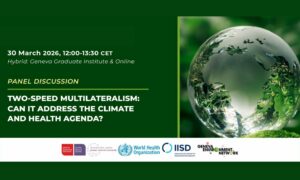
30 Mar 2026
12:00 – 13:30
Lieu: Maison de la Paix | Auditorium A1B
Organisation: Institut de hautes études internationales et du développement, Organisation mondiale de la santé, International Institute for Sustainable Development, Geneva Environment Network
This event, organized by the Geneva Graduate Institute Global Health Centre, the World Health Organization, the International Institute for Sustainable Development and the Geneva Environment Network, will bring together governments, international organizations, civil society, and academia to take stock of outcomes of the 2025 UN Climate Change Conference (UNFCCC COP30), explore opportunities to strengthen the climate–health agenda in the lead-up to COP31, and examine how new coalitions and political initiatives can accelerate action.

About this Event
Climate change is one of the defining public health challenges of the 21st century, with impacts ranging from heat-related mortality and air pollution to food insecurity, vector-borne diseases, and mental health risks. While health received increased political attention at the 30th Conference of the Parties to the UN Framework Convention on Climate Change (COP30), important questions remain about how effectively health considerations are integrated into climate mitigation, adaptation, finance, and just transition frameworks.
At the same time, global climate governance is evolving— alongside the traditional consensus-based UN process, a form of “two-speed multilateralism” is emerging, where coalitions of willing countries and non-state actors advance practical initiatives and voluntary roadmaps. As the world looks toward COP31 and the implementation of the World Health Organization’s Global Action Plan on Climate Change and Health, this evolving governance landscape raises important questions about how climate action can better advance health outcomes.
This hybrid event will bring together governments, international organizations, civil society, and academia to take stock of COP30 outcomes, explore opportunities to strengthen the climate–health agenda in the lead-up to COP31, and examine how new coalitions and political initiatives can accelerate action.
Speakers
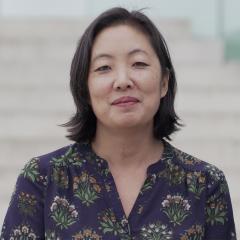
Suerie MOON
Co-Director, Global Health Centre and Professor of Practice, International Relations, Geneva Graduate Institute
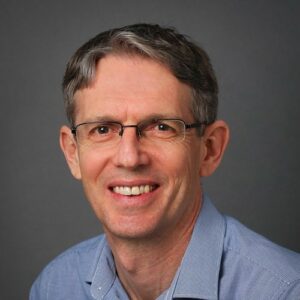
Diarmid CAMPBELL-LENDRUM
Head of Unit, Climate Change, Energy, and Air Quality, World Health Organization
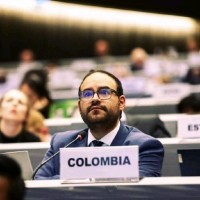
Miguel RUIZ BOTERO
Second Secretary, Permanent Mission of Colombia to the UN office and other international organizations in Geneva

Margarita GUTIERREZ
Policy Advisor, Friends of Climate and Health, International Institute of Sustainable Development (IISD)

Ömer ÖZTÜRK
Head of the Department of Adaptation to Climate Change and Local Policies at the Directorate of Climate Change, Ministry of Environment, Urbanization and Climate Change, Türkiye
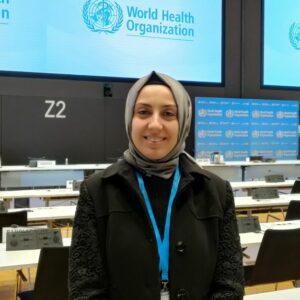
Gül MERSINLIOGLU SERIN
Health Expert, Ministry of Health, Türkiye
Daniela MORICH
Head of Policy Engagement & Global Health Platform, Global Health Centre, Geneva Graduate Institute | Moderator
Highlights
Video
Live from Maison de la Paix
Coverage
By Felix Sassmannshausen, Health Policy Watch
From stalled Pathogen Access and Benefit Sharing (PABS) negotiations to failing consensus in global climate policies, United Nations structures face a profound crisis. Diplomats are currently being forced to explore alternative governance models to bridge the disconnect between sluggish, power-driven diplomacy and the rapid, equitable action required in health and climate crises.
This institutional rupture and the resulting emergence of two-speed multilateralism took centre stage during a critical panel hosted by the Global Health Centre in Geneva on 30 March.
“The world order and the postwar institutions that were created to address global problems are at a unique moment of rupture, possibly collapse or transformation, depending on where we go from here,” said Professor Suerie Moon, co-director of the Global Health Centre at the Geneva Graduate Institute, during her opening remarks of the expert panel discussion.
The event was co-hosted by the Centre’s International Geneva Global Health Platform, alongside the World Health Organization (WHO), the International Institute for Sustainable Development (IISD) and the Geneva Environment Network.
There was clear unity among the expert panellists – ranging from global health researchers and climate adaptation advisors to international diplomats – that when traditional, consensus-based multilateralism stagnates, the international community must pragmatically turn to alternative, faster diplomatic channels.
This “two-speed multilateralism” combines the universal legitimacy of consensus-based UN negotiations with the rapid implementation capabilities of smaller, highly ambitious “coalitions of the willing”, aiming at preventing single nations from vetoing desperately needed progress on environmental and public health protections.
“Consensus has been, in essence, weaponised by a few countries to obstruct progress,” said Miguel Ruiz Botero, second secretary at the Permanent Mission of Colombia to the UN in Geneva, during the panel discussion.
For example, as global temperatures reach record levels, experts argue that traditional structures are simply not mobilising political action fast enough to protect vulnerable populations affected by climate change.
To bypass this gridlock, Colombia is hosting the Santa Marta Conference on 28-29 April , which will serve as a prime example of this accelerated diplomatic speed.
Co-hosted by the Netherlands, the summit aims to establish a clear pathway for transitioning away from fossil fuels outside the traditional UN architecture.
This parallel track aims to establish a strict division of diplomatic labour, as COP30 President André Aranha Corrêa do Lago recently outlined.
While the “first tier” ensures universal legitimacy and sets the collective legal direction, the “second tier,” or fast track tier, focusses exclusively on rapid implementation by mobilising finance and deploying solutions at scale without reopening debates already settled by consensus.
Photos


