
Événement Conférence
The Plastics Crisis as a Health Crisis: How Can the International Health Community Support the Global Response to Plastic Pollution & the Plastics Treaty?
28 Mai 2024
08:00 – 09:30
Lieu: Maison de la Paix | Petal 3, Level 4, Room S10 & Online | Webex
Organisation: Forum on Trade, Environment & the SDGs
As the international health community gathers for the 77th World Health Assembly, this roundtable reviewed the evidence on human health impacts of plastics, chemicals of concern and plastic pollution; highlight the importance of the protection of human health as a core objective of the future legally-binding instrument to end plastic pollution; and explore how the international health community can support the global response to the plastic pollution and the future plastics treaty. This event was organized by the Forum on Trade, Environment & the SDGs (TESS), the Geneva Environment Network, and the Geneva Graduate Institute’s Global Health Centre, as part of the Geneva Beat Plastic Pollution Dialogues.

About the Event
The plastics crisis is a health crisis. While we are still discovering the extent to which plastics affect human health, what is known is of great concern. A growing body of scientific research has documented the wide range of adverse implications that plastics and plastic have for human health, especially for people and communities in the most vulnerable situations, including neurotoxic, carcinogenic, immune- and endocrine-disrupting impacts.
In light of the World Health Assembly agenda item on the impacts of chemicals, waste and pollution (including plastic pollution) on human health this year, it is imperative to strengthen the public health community’s understanding of the harms to human health that plastics pose throughout the full lifecycle. While communities on the frontline of plastic production and manufacturing face some of the highest risks, reports have shown that plastics are entering our bodies worldwide as it leaches into our food and water and contaminates every compartment of the environment. Further risks to human health exist through the plastics burning, incineration and recycling processes which have a particularly severe impact on already vulnerable communities and are interfering with critical infrastructure to deliver clean water and sanitation.
This event is an opportunity for ministry of health representatives and members of the global plastics treaty negotiations to develop an understanding of the harms posed by plastics to human health, the public health dimensions of the plastics crisis, and the role of the public health community in addressing the plastics crisis as a health crisis in the context of the global plastics treaty negotiations.
The session aims to foster shared understanding of the latest evidence on how plastics poses harms to human health, the public health dimensions of plastic pollution, the role of the public health community in addressing the plastics crisis as a health crisis in the context of the global plastics treaty negotiations. In so doing, the session fostered a dialogue on coherent approaches and frameworks to support the public health community’s engagement in the global plastics treaty process and tackle the plastics crisis in ways that are environmentally sound while promoting the highest attainable standard of health in the context of sustainable development priorities.
Geneva Beat Plastic Pollution Dialogues

The world is facing a plastic crisis, the status quo is not an option. Plastic pollution is a serious issue of global concern which requires an urgent and international response involving all relevant actors at different levels. Many initiatives, projects and governance responses and options have been developed to tackle this major environmental problem, but we are still unable to cope with the amount of plastic we generate. In addition, there is a lack of coordination which can better lead to a more effective and efficient response.
Various actors in Geneva are engaged in rethinking the way we manufacture, use, trade and manage plastics. The Geneva Beat Plastic Pollution Dialogues aim at outreaching and creating synergies among these actors, highlighting efforts made by intergovernmental organizations, governments, businesses, the scientific community, civil society and individuals in the hope of informing and creating synergies and coordinated actions. The dialogues highlight what the different stakeholders in Geneva and beyond have achieved at all levels, and present the latest research and governance options.
Following the landmark resolution adopted at UNEA-5 to end plastic pollution and building on the outcomes of the first two series, the third series of dialogues will encourage increased engagement of the Geneva community with future negotiations on the matter.
Speakers
By order of intervention.

H.E. Amb. Luis VAYAS VALDIVIESO
Chair, INC Plastic Pollution, Ecuador

Sarah DUNLOP
Minderoo-Monaco Commission on Plastics and Human Health

Jane MUNCKE
Managing Director and Chief Scientific Officer, Food Packaging Forum | Scientist Coalition for an Effective Plastics Treaty

Adetoun MUSTAPHA
International Science Council, Adjunct Researcher for Nigerian Institute of Medical Research
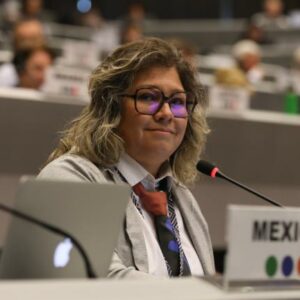
Maria Eugenia GONZÁLEZ ANAYA
INC Focal Point, First Secretary of Legal Affairs and Environment, Permanent Mission of Mexico to UN Office in Geneva

Albert Altarejos MAGALANG
INC Focal Point, Chief of Climate Change Service, Department of Environment and Natural Resources, Philippines

Kate ROBERTSON
Technical Officer (Legal), Public Health Law and Policies Unit, World Health Organization (WHO)

Kei OHNO
Senior Coordination Officer, Secretariat of the Basel, Rotterdam and Stockholm Conventions

Vito BUONSANTE
Technical and Policy Advisor, International Pollutants Elimination Network (IPEN)

David AZOULAY
Director of Environmental Health, Centre for International Environmental Law (CIEL)
Highlights
Summary
This roundtable brought together health and environment officials based in Geneva with leading experts from international organizations, research centres, and civil society organizations to:
- highlight the importance of the protection of human health as a core objective of the future legally binding instrument to end plastic pollution,
- review the evidence on the human health impacts of plastics, chemicals of concern, and plastic pollution, and
- explore how the international health community can support the global response to plastic pollution, including in the context of the global plastics treaty.
The roundtable aimed to foster dialogue on how the treaty can address human health protection in ways that are environmentally sound while pursuing the highest attainable standard of health in the context of sustainable development priorities.
Among the key questions for discussion were:
- What does the latest evidence tell us about the human health impacts of plastics and plastic pollution across the life cycle of plastics?
- What kinds of measures can effectively prevent the human health impacts of plastics and plastic pollution, and how can these be addressed in the context of the global plastics treaty?
- How can research, data, and transparency be harnessed to ensure the international community is responsive to new evidence on impacts to human health?
- How is the objective of human health being addressed by the International Negotiating Committee (INC) for the plastics treaty and how can the international health community support the treaty and effective implementation?