Event Virtual
Global Framework on Chemicals Fund: Launch of the Second Round of Applications
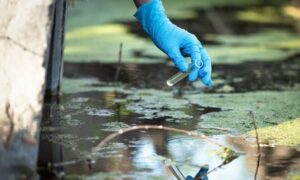
This online event, organized by the Global Framework on Chemicals Secretariat with the support of the Geneva Environment Network, presented the Global Framework on Chemicals Fund's second call for applications. The event informed applicants about the Global Framework of Chemicals as well as the eligibility criteria for applying for funding.
About this Event
The Global Framework on Chemicals Fund will launch its second call for applications on 30 September 2025. The Fund aims to support countries in implementing this international agreement that guides governments and stakeholders in jointly addressing the lifecycle of chemicals, including products and waste.
The Fund provides financial support of 300,000 to 800,000 USD for an implementation period of up to three years. Governments from developing countries, Small Island Developing States, and countries with economies in transition can apply for funding. Civil society networks may also apply, provided they have an agreement with the relevant government. The Fund also encourages regional or multi-country applications.
The event will inform applicants about the Global Framework of Chemicals and its Fund, the Fund’s priorities, application forms and provide guidance on integrating multi-stakeholder and multi-sectoral approaches.
Unlike the first call for applications, this round introduces a streamlined two-stage process. In a first stage, applicants submit a brief concept note outlining project goals, partners, and expected outcomes. Shortlisted applicants will then be invited to submit a full proposal, with expert feedback to help strengthen their submissions.
Applicants are encouraged to join the event to learn more about the application process. In addition to the webinar, a guidance document outlining the Fund’s scope, strategic priorities and eligibility criteria as well as application guidelines are available in English, French and Spanish.
The morning sessions of the event will be conducted in English only, while the afternoon session will be held in English with simultaneous translations into French and Spanish. Access to the translated webinar will be provided through a separate link on the Framework’s website.
Speakers
By order of intervention.

Kay WILLIAMS
Head, Global Framework on Chemicals
Eduardo CALDERA PETIT
Global Framework on Chemicals Secretariat
Rebecca CHUDASKA
Global Framework on Chemicals Secretariat

Dorothy NGAJILO
Global Framework on Chemicals Secretariat
John J. MAUGHAN
Global Framework on Chemicals Secretariat

Jorge OCANA
Manager, Chemicals and Waste Management Programme, UNITAR | IOMC Representative

Diana RIZZOLIO
Coordinator, Geneva Environment Network
Highlights
Video
Global Framework on Chemicals Fund: Launch of the Second Round of Applications Afternoon Session
Register for the Afternoon Session
1 October, 14.00-16.00 CEST
Summary
Opening & Welcome
Kay WILLIAMS | Head, Global Framework on Chemicals
Kay Williams opened the session with an update on the Global Framework on Chemicals (GFC). She reminded participants that the Framework builds on decades of international effort, following the path of the Strategic Approach to International Chemicals Management (SAICM), which helped raise awareness, provide tools, and place chemicals and waste on the global agenda.
SAICM laid important groundwork in raising awareness and providing tools for chemicals and waste management, but significant gaps remain in achieving global safety and sustainability. To address these challenges, the Global Framework on Chemicals was adopted in September 2023 at the Fifth International Conference on Chemicals in Bonn. At that same meeting, ministers, heads of delegation, and stakeholder leaders endorsed the Bonn Declaration, which set out the vision of a planet free of harm from chemicals and waste and recognized chemicals and waste as a central pillar of the triple planetary crisis.
The Framework is built around five strategic objectives and 28 targets that guide global and national action. For more details, see the Global Framework on Chemicals brochure.
- Implementation activities have accelerated since ICCM5. The Open-ended Working Group (OEWG) met in Uruguay in June 2025 to take stock of the Framework’s implementation. Work also continues on topics such as the Gender Action Plan, designed to integrate gender perspectives and highlight vulnerable groups, including women in informal employment or cleaning roles who are often overlooked in chemical safety. New implementation programmes are being launched in sectors such as health, textiles, agriculture, and electronics, supported by partnerships with governments, industry, civil society, and the IOMC.
Williams concluded with a call to action, urging stakeholders to align national policies and budgets with the Framework, to participate in regional and global partnerships, and to apply for funding opportunities under the GFC Fund. She stressed that whether working in health, labour, education, civil society, or industry, every contribution matters. Looking ahead, she emphasized that the coming months are critical milestones on the road to the First International Conference on Chemicals, scheduled for late 2026, which will serve as a landmark gathering to consolidate progress and chart the way forward.
The Fund: Overview, Governance, Priorities, Eligibility, Application cycle etc.
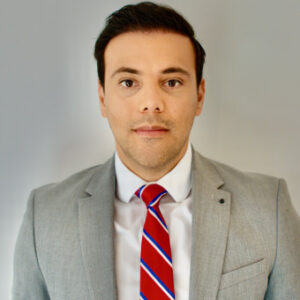
Eduardo CALDERA PETIT | Global Framework on Chemicals Secretariat
Eduardo Caldera Petit provided an overview of the Global Framework on Chemicals Fund. Established at ICCM5 in 2023 and administered by UNEP, the Fund was created to support countries in implementing the Framework through targeted projects.
The second round of applications, launched on 30 September 2025 and open until 15 December 2025, follows a two-stage process: submission of a concept note, followed by a full proposal for shortlisted applicants in 2026.
Eligibility extends primarily to governments of developing countries, least developed countries (LDCs), small island developing States (SIDS), and countries with economies in transition (CEITs). Civil society networks may also apply in exceptional cases, provided they have the endorsement of a national focal point.
Funding parameters include project grants of USD 300,000 to 800,000 for a maximum duration of three years. Projects must demonstrate at least 25 percent co-financing, which can include in-kind contributions.
Caldera Petit outlined the strategic priorities of the Fund:
- Strengthening institutional capacities and ensuring long-term ownership.
- Targeting high-impact sectors such as electronics, textiles, agriculture, and construction to reduce pollution, mobilizing sustainable finance and establishing enabling conditions.
- Delivering positive impacts with regional cooperation, multisectoral engagement and scalable solutions
The Fund is governed by an Executive Board with representatives from each UN region and donor countries, while the Secretariat manages the application process.
Caldera Petit also shared lessons from the first round of applications, which attracted 105 submissions. Approved projects included initiatives on agroecology in East Africa, alternatives to highly hazardous pesticides in West Africa, industrial chemical management in Latin America, and GHS implementation in Central America.
Multi-Stakeholder and Multi-sectoral approaches: Examples of how to include health and labor
Dorothy NGAJILO | Global Framework on Chemicals Secretariat
Dorothy Amaleck Ngajilo focused on the multi-stakeholder and multi-sectoral nature of the GFC and highlighted how health and labour aspects can be effectively integrated into chemicals management.
She explained that chemicals governance requires a whole-system approach, connecting multiple sectors — health, labour, environment, agriculture, trade, finance, and industry — and operating at different levels: global, national, subnational, and community levels. This ensures that interventions address both systemic issues and local realities of exposure and risk.
Amaleck Ngajilo emphasized that stakeholder engagement should be meaningful and structured throughout the entire project cycle. At the design stage, key actors must be identified and included in setting priorities and defining success. In the planning stage, objectives, roles, and indicators should be co-developed with stakeholders. Implementation requires coordination across ministries and sectors, leveraging systems such as health services and labour inspections. Monitoring and evaluation should be participatory, with feedback loops that allow projects to adapt and improve.
She warned against common pitfalls such as tokenistic, late or short consultations, stressing instead the need for early, ongoing, and adequately resourced engagement. Health and labour institutions, she noted, add legitimacy and trust to projects by connecting directly with workers, patients, and the public, and by making visible the risks faced by vulnerable populations.
IOMC support opportunities
Jorge OCANA | Manager, Chemicals and Waste Management Programme, UNITAR | IOMC Representative
Jorge Ocana introduced the role of the Inter-Organization Programme for the Sound Management of Chemicals (IOMC), which brings together ten international organizations, including FAO, WHO, ILO, UNDP, UNIDO, UNEP, UNITAR, the World Bank, OECD, and the Basel, Rotterdam, and Stockholm Conventions.
The IOMC provides technical expertise, scientific knowledge, policy guidance, and training to countries, while also fostering coordination to avoid duplication of efforts. Its IOMC Toolbox, with over 500 resources and six toolkits, offers practical support to governments developing or strengthening national chemicals management systems.
Since ICCM5, the IOMC has been deeply engaged in GFC governance, contributing to the Executive Board, the OEWG, and the development of implementation programmes. Ocana highlighted the example of Central America, where UNITAR provided technical support that enabled the successful submission of a regional project on GHS implementation during the first funding round. He encouraged applicants to seek IOMC support when preparing or implementing proposals under the Fund.
The Fund: Deep dive into application forms, Results-based management and budget
Rebecca CHUDASKA | Global Framework on Chemicals Secretariat
Rebecca Chudaska concluded with a detailed walkthrough of the application process, focusing on results-based management and budgeting.
The process consists of two stages. In Stage 1, applicants must submit a signed concept note by 15 December 2025, endorsed by a designated national focal point. In Stage 2, shortlisted applicants will be invited to submit a full application in 2026, including a detailed proposal, a logical framework, budget documents, and letters confirming co-financing and stakeholder support.
Chudaska emphasized the importance of applying a results-based management approach, where applicants clearly describe activities, outputs, and outcomes, accompanied by measurable indicators and means of verification. Sustainability is a key requirement: projects should demonstrate how results will continue beyond the Fund’s support, by linking activities to national priorities, budgets, and long-term financing mechanisms.
While a full project budget is not required at the concept note stage, applicants should familiarize themselves with the different budget classes that UNEP uses and the budget caps that the Executive Board has specified. Further details on the topics covered during Chudaska’s presentation can be found in the guidelines for applicants which applicants should review thoroughly while developing their concept note.
Finally, she reminded applicants that only the updated application forms for 2025–2026 are valid and that submissions must be sent in both Word and PDF formats to the Fund Secretariat.
Documents
- Presentation made during the event
- Application guidelines and templates are available in English, French, and Spanish on the GFC Fund website
- Application guidance: Eng – Fre – Spa
- Application guidelines: Eng – Fre – Spa