
Event World Day
International E-Waste Day 2026
Each year, International E-Waste Day is held on 14 October, an opportunity to reflect on the impacts of e-waste and the necessary actions to enhance circularity for e-products. International E-Waste Day was developed in 2018 by the WEEE Forum to raise the public profile of waste electrical and electronic equipment recycling and encourage consumers to recycle.
About E-Waste
According to the latest UN’s General E-Waste Monitor, in 2022, 62 billion kg of e-waste were generated globally. This means 1.55 million trucks filled with e-waste lined up along the Earth’s equator. The quantity of e-waste is expected to rise to 82 billion kg by 2030. Currently, the amount of e-waste is growing five times faster than formal recycling collection rates since 2010.
The International Telecommunication Union (ITU) also indicates that e-waste is one of the largest and most complex waste streams in the world. According to the Global E-waste Monitor 2020, the world generated 53.6 Mt of e-waste in 2019, only 9.3 Mt (17%) of which was recorded as being collected and recycled. E-waste contains valuable materials, as well as hazardous toxins, which make the efficient material recovery and safe recycling of e-waste extremely important for economic value as well as environmental and human health. The discrepancy in the amount of e-waste produced and the amount of e-waste that is properly recycled reflects an urgent need for all stakeholders including the youth to address this issue.
2026 Theme | Fast Tech: Don’t Bin It, Bring It!
For its 9th edition, International E-Waste Day 2026 turns the spotlight on Fast Tech: the small and inexpensive electronic products that have become part of everyday life.
What is fast tech?
Fast Tech describes the expanding universe of low-cost electrical and electronic items that consumers purchase, often on impulse, and discard without a second thought. Think earphones bought at the airport, fancy charging cables, USB adapters, LED string lights, mini fans, single use vapes, toys and other type of gadgets. The term draws a deliberate parallel with fast fashion. Just as disposable clothing culture reshaped how people think about garments, a comparable shift has taken place with small electronics. The result is a large and growing volume of items that exit everyday use each year, the vast majority of which are never properly collected or recycled.
Why is fast tech a unique challenge?
Unlike large household appliances, which consumers generally recognise as items requiring responsible end-of-life disposal, Fast Tech products are rarely perceived as electronic waste. A broken pair of earphones is thrown in the general bin. A tangled charging cable ends up in a drawer, forgotten.
It is also one of fastest growing waste streams. According to Material Focus study, in UK alone the total spend on Fast Tech has nearly quadrupled from £2.8bn in 2023 to £11.6bn in 2025 and the country has already binned over half of it’s Fast Tech: 589 pieces a year were uncorrectly disposed of. This means 11.3 million items every week or 19 items a second!
The challenge is also structural. The rapid growth of online retail has made it easier than ever to purchase Fast Tech from platforms and sellers that may not be registered as producers under national WEEE legislation. When such a platform is not registered, no recycling fee is paid, the collection infrastructure is not funded, and no take-back obligation is met, leaving the cost of end-of-life management to be absorbed by national systems or, more often, left unaddressed entirely.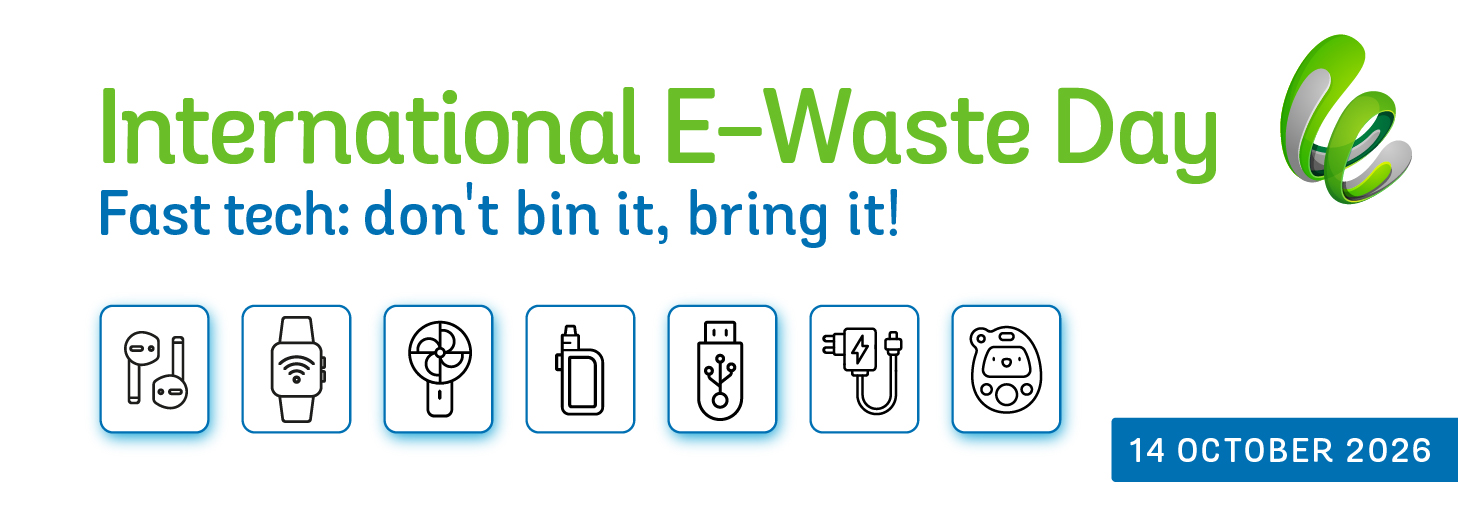
On 14 October 2026, the WEEE Forum and its member organisations invite consumers, recyclers, retailers, regulators, and civil society to focus on three practical steps:
- Recognise: every small device with a plug, cable or a battery, no matter how little or inexpensive, is e-waste at the end of its life and requires proper treatment. Do not chuck it in the general bin.
- Return: bring fast tech items to official collection points, in-store take-back locations, or dedicated e-waste drop-off sites. In the EU, online retailers are legally obliged to accept small, discarded electronics free of charge.
- Demand compliance: consumers and regulators alike should ensure that online platforms selling electronics are registered as producers and contribute to funded recycling systems. Non-compliance undermines the circular economy for all.
Addressing E-Waste From Geneva
E-waste can be toxic, is not biodegradable and accumulates in the environment, in the soil, air, water and living things. A 2019 joint report, “A New Circular Vision for Electronics – Time for a Global Reboot” calls for a new vision for e-waste based on the circular economy concept, whereby a regenerative system can minimize waste and energy leakage. The report supports the work of the E-waste Coalition, which includes the ILO, ITU, UNEP, UNIDO, UNITAR, UNU and Secretariats of the Basel and Stockholm Conventions. The organisations and many more in Geneva are actively working to reduce the environmental and health risks of e-waste. Learn more in our thematic page below.
Events in Geneva

E-waste Refurbishment, Repair and Repurpose: Towards Zero Waste Goals to Protect the Environment and Human Health - Celebrations for International E-waste Day 2026
14 October 2026 | 13:00 to 14:30 CEST
Organized by BRS Conventions
Latest News
- From Challenge to Change: Extended Producer Responsibility in a New Policy Era | WEEE | 2 October 2026