Event Conference
Policy Briefs on Global Water Governance by the Special Rapporteur on the human rights to safe drinking water and sanitation
15 Oct 2026 – 16 Oct 2026
Venue: Palais des Nations | Room XI & Online | Webex
Organization: Special Procedures of the UN Human Rights Council
In the lead-up to the 2026 United Nations Water Conference, the UN Special Rapporteur on the human rights to safe drinking water and sanitation, Pedro Arrojo-Agudo, is hosting a series of briefings this week at the Palais des Nations to share the findings and recommendations of three policy briefs he prepared on multilateral challenges in water governance, on the human rights to safe drinking water and sanitation in Amazonia, and on the weaponization of water.
About the Launch
With less than 100 days remaining until the 2026 United Nations Water Conference, co-hosted by the United Arab Emirates and Senegal in Abu Dhabi from 8 to 10 December 2026, preparations are intensifying across the water community.
As his mandate draws to an end, the UN Special Rapporteur on the human rights to safe drinking water and sanitation, Pedro Arrojo-Agudo, is hosting a series of briefings this week at the Palais des Nations (Room XI) and online to share the findings and recommendations of three policy briefs he prepared:
- Multilateral Challenges in Water Governance | 15 October 2026, 10:00 CEST | Webex
- Human rights to safe drinking water and sanitation in Amazonia | 15 October 2026, 15:00 CEST | Webex
- The Weaponization of Water | 16 October 2026, 10:00 CEST | Webex
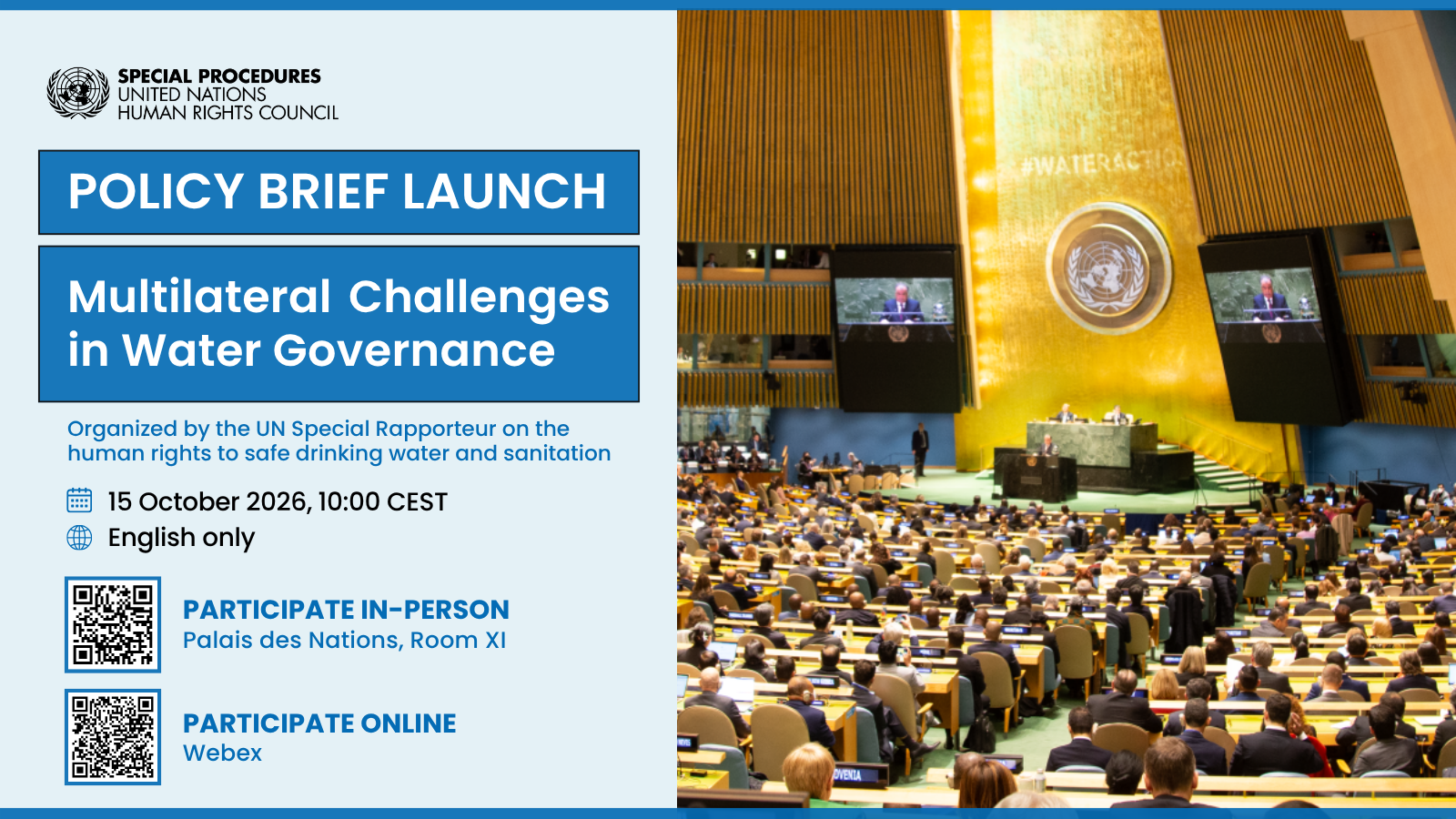
Multilateral Challenges in Water Governance
Thursday, 15 October 2026 | 10:00 CEST | English only
About this Policy Brief
The holding of the UN Water Conference in New York in 2023 raised hopes that the UN would assume its responsibilities in the face of the global water crisis, by institutionalising the regular convening of this conference under the auspices of the UN. In this new policy brief, the Special Rapporteur presented a number of recommendations how to address current challenges to multilateralism that directly impact global water governance.
Highlights
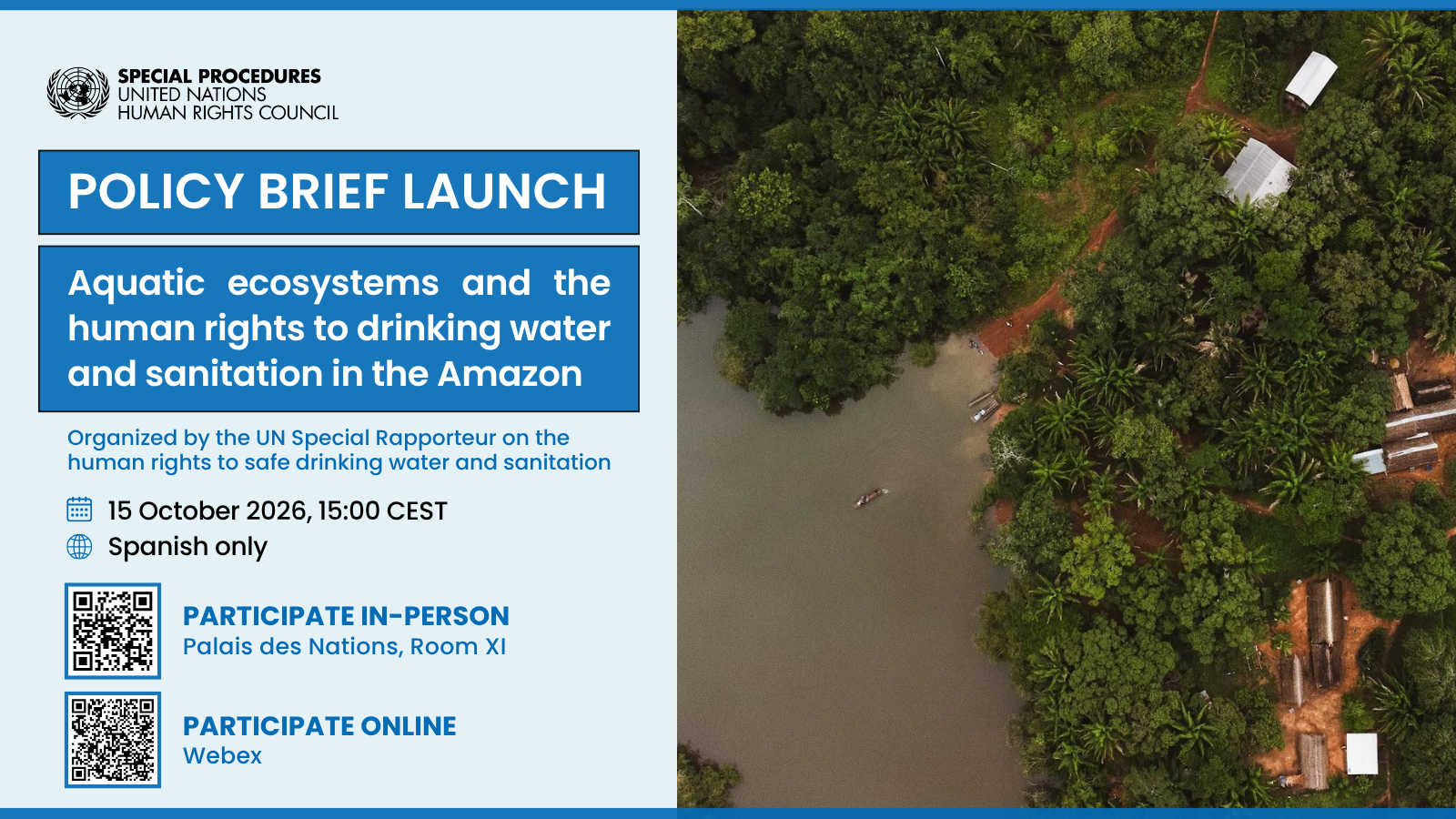
Aquatic ecosystems and the human rights to drinking water and sanitation in the Amazon
Thursday, 15 October 2026 | 15:00 CEST | Spanish only
About this Policy Brief
The current extractivist model in the Amazon violates the human rights to water and sanitation of millions of people in the world’s most water-rich region, by poisoning rivers, fish stocks and food supplies through mining activities, massive oil spills and agrochemicals. The construction of large dams is ruining the fisheries. At the same time, massive deforestation threatens to reach a ‘point of no return’ at which much of the rainforest would be transformed into dry savannahs. In this policy brief, the Special Rapporteur proposes a new approach to progress based on the principles of sustainability, prioritising human rights and respecting the rights of Indigenous Peoples and riverine communities.
Highlights
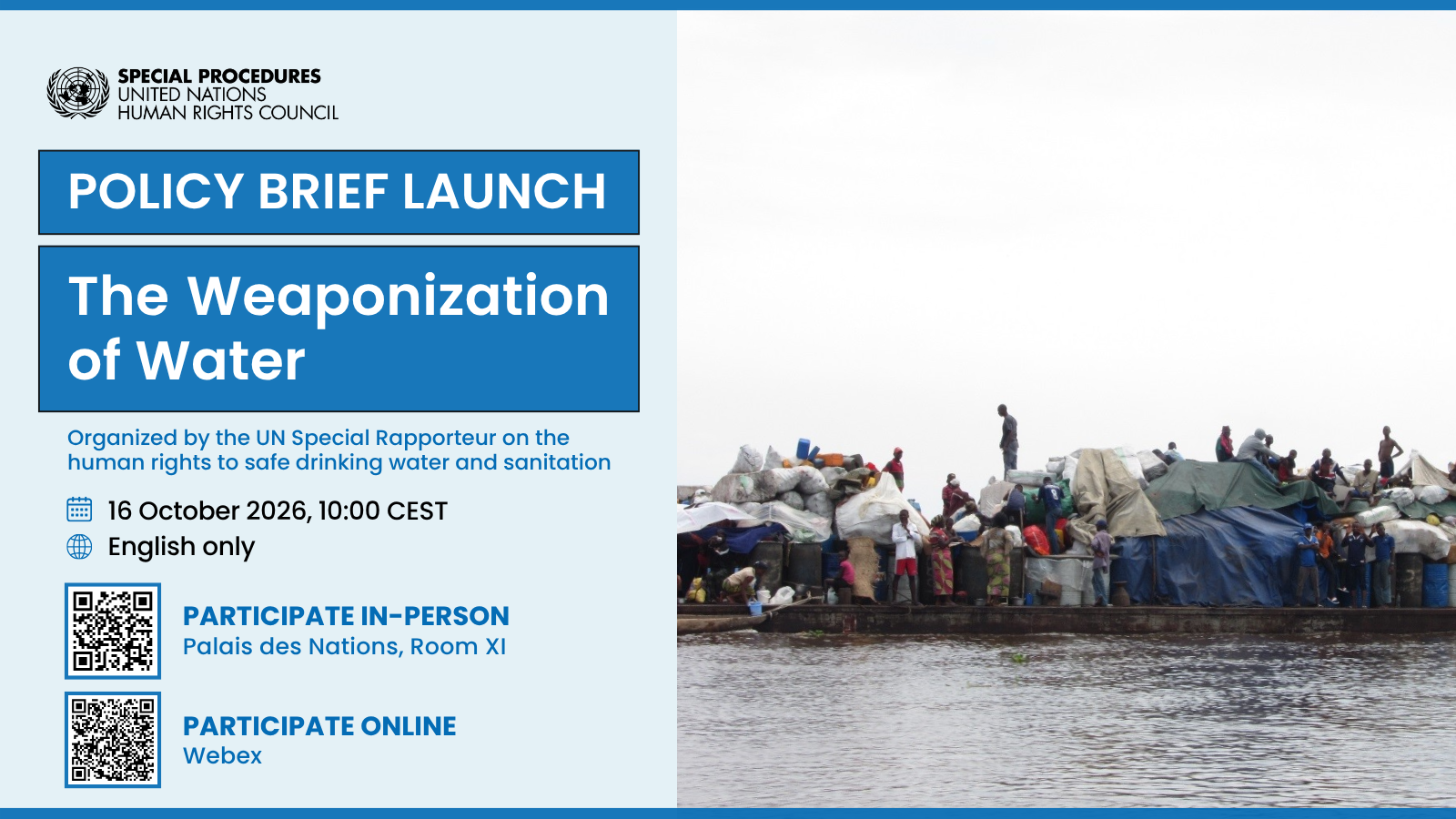
The Weaponization of Water
Thursday, 16 October 2026 | 10:00 CEST | English only
About this Policy Brief
At a time when the global water crisis affects more and more regions and exacerbates transboundary tensions between States, water is increasingly being used as a weapon of war against the civilian population, thereby flouting international law. In this new policy brief, the Special Rapporteur puts forward key recommendations how to strengthen prevention, the protection of civilians, water resources and civilian water and sanitation infrastructure during conflict; and eventually accountability, thereby contributing to long-term peace.