Event Conference
Turning the Spotlight on the Right to Sanitation | HRC63 Side Event
16 Sep 2026
14:00 – 15:00
Venue: Palais des Nations | Concordia 1
Organization: Special Procedures of the UN Human Rights Council, Germany, Spain, International Dalit Solidarity Network, ONGAWA
This side event to the 63rd session of the Human Rights Council (HRC63) will expand the conversation beyond the constraints of the interactive dialogue at the Human Rights Council, feed into discussions on the right to sanitation at the 2026 Water Conference, the forthcoming review of the 2030 Agenda for Sustainable Development, and deliberations on the post-2030 agenda, promoting a human rights-based approach to sanitation. This side event is organized by the UN Special Rapporteur on the rights to water and sanitation, Germany, Spain, International Dalit Solidarity Network and ONGAWA, with the support of the Geneva Environment Network.

About this Event
The human right to sanitation was recognized 16 years ago, with General Assembly resolution 64/292. Despite incremental progress, however, as a human right, it remains to be realized and it has remained in the shadow of the more popular human right to safe drinking water.
Only a handful of States recognize the human right to sanitation in their Constitution or other domestic laws.
Although some countries have nevertheless made remarkable progress, as of 2024, 3.4 billion people still lacked safely managed sanitation services, including 1.9 billion with basic services, 560 million with limited services, 555 million with unimproved services and 354 million practising open defecation, nearly all of them in rural areas.
1.7 billion people still lacked basic hygiene services (availability of a handwashing facility with soap and water at home), including 1 billion with limited services (availability of a handwashing facility lacking soap and/or water at home) and 611 million with no handwashing facility at home.
Menstruation is a normal biological process experienced by an estimated 2.1 billion adolescent girls and women, in addition to 129 million adolescent girls who begin menstruating before the age of 15, as well as transgender men, non-binary people and intersex persons who also menstruate. Despite the normality of this process, 500 million worldwide still lack access to menstrual products and adequate menstrual hygiene management facilities.
Behind these numbers, certain populations in marginalized situations experience very specific vulnerabilities. Among them are: women and girls, children, persons with disabilities, older persons, rural communities, people living in informal settlements, Indigenous Peoples, communities facing discrimination on the basis of work and descent, displaced populations, persons deprived of liberty, people living in homelessness, transgender and gender-diverse persons. Under international human rights law, States have an obligation to take immediate measures to address discrimination in the access to sanitation.
With his new and final report (A/HRC/63/34) to the Human Rights Council, the Special Rapporteur on the human rights to safe drinking water and sanitation calls for a renewed commitment to the full realization of sanitation as a human right. Sanitation is not only a fundamental human right in itself, but also an indispensable enabler of numerous other human rights, including the human rights to safe drinking water, health, education, adequate housing, clean, healthy and sustainable environment. It has long been recognized as a strong determinant of human development and was consistently included as part of the millennium development goals (Goal 7), followed by the sustainable development goals (Goal 6).
Leading experts joining the panel of this event will expand the conversation beyond the constraints of the interactive dialogue at the Human Rights Council, feed into discussions on the right to sanitation at the 2026 Water Conference, the forthcoming review of the 2030 Agenda for Sustainable Development, and deliberations on the post-2030 agenda, promoting a human rights-based approach to sanitation.
Environment @ HRC63
The 63rd regular session of the UN Human Rights Council (HRC63) will take place in Geneva from 7 September to 7 October 2026. Consult this regularly-updated page that highlighted the environmental-related activities of this session.

Speakers
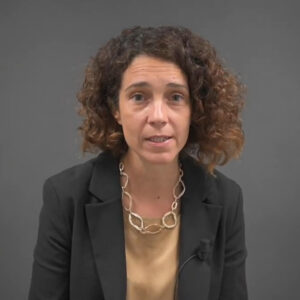
H.E. Amb. Clara CABRERA
Deputy Permanent Representative of Spain to the UN Office and other international organizations in Geneva

Pedro ARROJO AGUDO
UN Special Rapporteur on the rights to water and sanitation

Bethanie CARNEY ALMROTH
UN Special Rapporteur on toxics and human rights

Rick JOHNSTON
World Health Organization Lead, WHO/UNICEF Joint Monitoring Programme for Water Supply, Sanitation and Hygiene (JMP)
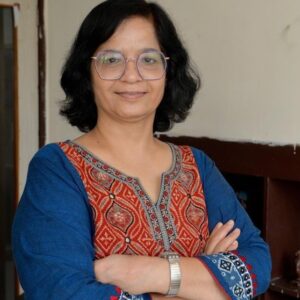
Manjula PRADEEP
Dalit human and women’s rights activist, International Dalit Solidarity Network (video message)
Gunnar BERKEMEIER
Head of Political Section, Permanent Mission of Germany to the UN Office and other international organizations in Geneva | Moderator
Highlights
Video
Live from Palais des Nations
Summary
Pedro ARROJO AGUDO | UN Special Rapporteur on the rights to water and sanitation
- The central concerns and ideas of my report can be summarized in six points.
- Although the General Assembly clarified the status of sanitation as a distinct human right, we often relegate it to the background, prioritizing instead drinking water, of course, which holds greater political appeal. However, without adequate sanitation, it is impossible to guarantee safe drinking water or the rights to health, healthy food, decent housing and a healthy environment.
- It is crucial to understand that, as a human right, states have an obligation to guarantee it by implementing sewage infrastructure in cities, supporting impoverished families in building toilets properly and eliminating open defecation, and ensuring the provision of wastewater treatment plants and the management of fecal sludge from septic tanks in rural areas. This is not up to the communities or the development of dry sanitation systems.
- It is unacceptable to consider these responsibilities to lie with families or communities when they lack the necessary means. It is an obligation of states.
- Menstruation is a natural part of female biology and it is thanks to it that we all exist.
- Ensuring menstrual hygiene today is essential to protecting the health of 2.2 billion people every day. It is crucial to recognize menstrual health as part of the human right to sanitation.
- We have problems with this depending on some ways of thinking, but we need to insist on this.
- There is an absolute necessity of incorporating into the human right to sanitation the fight against pollution caused by productive activities responsible for the growing toxic contamination of rivers and aquifers and, consequently, of household water supplies.
- It is urgent to rigorously apply the polluter pays and restores principles, even going so far as to ban activities that cause irreversible, cumulative and progressive poisoning affecting hundreds of millions of people, regardless of how profitable those activities may be for those who carry them out.
- The unavoidable and growing need to ensure adequate sanitation services presents an enormous financial challenge.
- Therefore, there is a need to apply the principle of priority to guarantee human rights in general, but in particular these human rights, based on available public budgets.
- Talking about poverty, the most poor, the most impoverished people in the world, the most important question, the principal priority, is water, and women are in charge of it and they do all kinds of efforts to get it as a priority.
- I urge all governments: pay attention and follow the example of these women.
- I suggest supplementing these funds where needed with capital raised by governments on capital markets and through multilateral banks, to create public financial platforms focused on basic water and sanitation needs.
- Considering the challenge of ensuring sanitation for indigenous people, rural communities and residents of impoverished peri-urban settlements, there is a need to value and strengthen the community management models already in place among these populations.
- For example, the public-community partnership strategy promoted by the Government of Colombia in recent years, at the proposal of the network of community aqueducts of Colombia.
- It is a practical issue. It is possible to do this instead of thinking of this approach as, you know, indigenous people’s practices, marginalizing them and saying we will have modern approaches.
- It is a treasure. It is a political and cultural treasure to have this kind of involvement of communities. Instead of marginalizing it, put value on it and reinforce it.
- There is an urgent, uncompromising need to eradicate caste-based discrimination, which continues to subject some 250 million people to inhuman exploitation, including humiliating work such as the manual collection of excrement, with a specific impact on women.
Khadi SAMB | ONGAWA
- In the rural area where we work, sanitation is a real challenge.
- Many households do not have access to latrines at home. This situation specifically affects women and girls who, to have a moment of privacy, need to move away from homes and schools.
- We have encouraged the creation of “tontines”, saving and credit groups run exclusively by women, which build a community self-financing mechanism.
- Women organize themselves into groups of 20 to 30 members. They elect their steering committee democratically, which guarantees the legitimacy of the process and full trust.
- Members’ dues are kept within the community, in a safe that needs three keys to be opened. The keys are held by three members who are not related to one another.
- The ONGAWA team gives the tontine a catalog featuring different technologies. ONGAWA provides a fixed grant. The rest is self-financed by each family in installments, so that no household is excluded for financial reasons.
- Beyond building latrines, these tontines have let women discover that sanitation is a right that belongs to them and that they have become the owners of their own future and well-being.
Rick JOHNSTON | World Health Organization Lead, WHO/UNICEF Joint Monitoring Programme for Water Supply, Sanitation and Hygiene (JMP)
- WHO produces normative guidance. We have guidelines on sanitation and health that underpin our recommendations to Member States, but we also play a monitoring role in the progress made by Member States. These go together because we see that countries that are implementing the risk-based management approaches do make important progress in service levels.
- First, some of the important progress that has been made.
- When monitoring sanitation, we can have a “sanitation ladder”, because there are different service levels and countries can make different levels of progress to the different service levels, with a perspective of progressive realization. At the very bottom, you have open defecation, and at the top of this global ladder, you have safely managed sanitation, which relates to the SDG target.
- If we think about open defecation, which the Special Rapporteur refers to as the toilet as the first step, there has really been tremendous progress over the past 20–25 years.
- In 2000, there were about 1.3 billion people who did not have any toilet at all and practiced open defecation. Now, that is down to 354 million. So, it is a drop of a billion people while, at the same time, the population increased by two billion people.
- That is already tremendous progress. We have seen huge drops in Cambodia, in India, in Nepal, in Ethiopia. And I have to call out India in particular because of its vast population, but also because of its political commitment through the Swachh Bharat programme, which started in 2014. They have reduced the number of people practicing open defecation by 700 million just in India. So, globally, one billion less; 700 million of that in India. So, tremendous progress there.
- In the middle of the sanitation ladder, we have a limited service rung, which refers to people who have a fixed place for defecation. It is an improved toilet. It might be a latrine, or it might connect to a sewer, but it is a shared facility.
- This is not ideal. There are reasons for public health, where we know that people are more likely to get infections when using shared facilities, but also for dignity, for privacy, for safety.
- So we have seen big improvements. In some different countries, though, we have seen that Gambia, Mongolia, Colombia and Ghana have all had high proportions of people sharing sanitation that have come down over the past 25 years.
- If we look at the top of the service ladder, at basic sanitation, which is not shared, and also the SDG indicator, safely managed sanitation, which considers not only the toilet and the privacy and the safety of the user, but what happens to the waste – does it get some kind of treatment, whether that is on-site treatment or off-site treatment – we again see some countries making tremendous progress.
- Especially China, India and the Lao People’s Democratic Republic have seen safely managed sanitation increase tremendously over the past 20–25 years.
- India and China are very interesting because both have increased by about 800–900 million people. But in China, this has been driven by sewer sanitation and centralized wastewater treatment, whereas in India it is more decentralized sanitation, twin-pit latrines, and offset septic tanks.
- So, the future trajectory will be different for the two countries, and maybe one of the challenges will be for India to transition from decentralized to more centralized management of wastewater.
- But again, this is a political priority for the country. They are investing tremendous resources, both financial and human resources, and political resources, towards improving sanitation, including treatment.
- As far as inequalities are concerned, a country can make great progress but some groups can be left behind.
- The first inequalities are between countries, of course. We see that the lowest service levels are among the low-income countries, the fragile countries, the least developed countries. But also, within a country, rural areas tend to lag behind. The poorest always lag behind, but there are good examples of progress in both of those areas.
- Cambodia has really reduced the gap in basic sanitation between urban and rural areas, while Nepal has seen very strong growth not only in the richest but in the poorest, and really across all of the wealth quintiles.
- The last inequality is gender, because there are so many ways in which sanitation impacts gender, not least the measures of safety. If you have shared sanitation or open defecation, safety impacts men and women very differently.
- I want to commend the Special Rapporteur for highlighting in his recent report that sanitation is not just about excreta management and treatment, but it includes these broader issues of stormwater drainage and solid waste management.
- Hygiene and menstrual health are also critical, but we do see emerging indicators around these important areas.
H.E. Amb. Clara CABRERA | Deputy Permanent Representative of Spain to the UN Office and other international organizations in Geneva
- I am pleased to talk about menstrual health and sanitation because we have a society in Spain that profoundly believes in gender equality and therefore profoundly looks at the barriers that obscure that gender equality.
- One of them is menstrual health and how it is at risk when we do not have access to sanitation or access to drinking water.
- Progress was made because we have this topic on the agenda of the Human Rights Council. We do have a very strong resolution, and we have been debating everything that is related to the rights to water and sanitation.
- The first thing I would like to say is: political commitment. That is something that we have to work together on: organizations, states, and also the private sector, although the responsibility is a different one, in seeing that menstrual health is really an issue of human rights.
- Why? Because when women cannot have access to products and services, this undermines their rights to health, to education, and the right to the dignity of women. So this is a very strong barrier to access and to exercising the main human rights.
- It was also mentioned that the lack of access to water and sanitation has a disproportionate impact on women, and of course on their security, but also on menstrual health and access to water and sanitation services, and on others also.
- This is something that has a lot to do with stigma and taboos. We have listened to the video of ONGAWA in Senegal, and we have listened to two very important things: there is a stigma, and therefore the women do not want to really address this matter publicly; and secondly, finance and the investment in water and sanitation. We have listened to her talk about the tontine, which we all know in many communities is a very effective way to obtain services, but it is not their responsibility to obtain services.
- That is why we also brought this to the global conversation in the Sevilla Conference on Financing for Development. If we do not have gender-responsive finance policies internationally, we would not achieve the Sustainable Development Goals. We will not achieve human rights.
- So even though we can feel compelled to see how these communities really manage to have those services, it is not a responsibility that only lies on the communities. We really need to bring this to the global conversation.
- As states that are promoting water and sanitation and the rights to water and sanitation, we would also do this.
- I would like to finish with the importance of public policy. In our case, we do have a feminist foreign policy. We do have a feminist cooperation policy, and that makes us work with all our countries and all our partners in that sense.
- Not every country has a feminist foreign policy. Not every country wants to have a feminist foreign policy. But what we would have to push together is that every country incorporates menstrual health and gender-responsive policies in their water and sanitation strategies and in their water and sanitation legal frameworks.
- That is what we should be pushing as countries, and of course with the organizations and different actors.
Bethanie CARNEY ALMROTH | UN Special Rapporteur on toxics and human rights
- Sanitation systems and water treatment facilities are designed to protect human health and dignity. This is primarily through the removal of nutrients to prevent eutrophication in the environment, but also to reduce the spread of pathogens if we are talking about the function of the facility itself.
- What we put into these systems does matter. Water and wastewater can contain a lot of hazardous chemicals. These can be from industrial discharges, pesticides, pharmaceuticals, metals, cleaning products, personal care products, PFAS, things that we are using in all of our different systems in society.
- Most treatment facilities do not degrade chemicals. Many chemicals are very persistent, so they do not disappear when they enter into a sewage or wastewater treatment facility. Many of them persist. They might accumulate in the sludge. Some of them might pass through the treatment system into receiving waters like rivers or surface waters. They might leach into groundwater. They can create additional risks for sanitation workers and for communities living nearby, or people living downstream who are using the water downstream.
- I presented this week to the Council a report on PFAS, which is a group of chemicals that is highly persistent and highly mobile and, once released, do accumulate in the environment. We know that they move. We know that there are no technologies that are scalable and effective at removing them. So they are referred to as forever chemicals.
- They can enter the wastewater from the different uses we apply them in: textiles, pesticides, consumer products, firefighting foams, and will also persist in landfills.
- So this illustrates a much bigger problem. When hazardous chemicals enter into sanitation systems, the problems do not disappear. They move. We move them around.
- This means that we move chemicals from industrial facilities or our homes to sewers, to rivers, to groundwater, into our agricultural lands. Contaminated water and contaminated soil contaminate our food. They contaminate, ultimately, our bodies, and they cause ecosystem damage and health impacts.
- This becomes even more important as we discuss more circularity in our societies: reuse of wastewater, reuse of nutrients, reuse of sludge, reuse of products. So circularity can bring benefits, but it circulates chemicals through our systems.
- This is where sanitation also very clearly becomes a human rights issue in relation to chemicals. We can consider the entire chain from collection, transportation, treatment, and disposal, and also the workers who are working in these systems and surrounding communities.
- People are exposed to chemicals that they are not aware of. They do not have access to information about what is in the water that is coming in or what is in the systems that they are working with.
- So this raises questions around sanitation itself and wastewater, but also workplace safety and exposures. It raises issues of environmental justice.
- We see repeated exposures to toxic chemicals, and this harm is not equally distributed. As we have heard repeatedly, there are different groups of people that are exposed via these systems more than others.
- We need to move a lot of our actions upstream.
- Wastewater treatment cannot be our solution to chemical pollution. This is a very end-of-life technology that is not designed to address chemical pollution and will fail to do so.
- We need to look at what we are producing and why. We need to prevent persistent chemicals from entering our water systems and our soil. We need to work better at remediation and removal when possible, though oftentimes it is extremely difficult, if not impossible, and also very expensive.
- We need increased transparency and information about chemicals because you cannot manage a chemical if you do not know where it is or what it is doing.
- Sanitation workers and people in industries need to know what is being discharged. Regulators need reliable information for monitoring. Communities need to know what chemicals they might risk being exposed to.
- So producers need to provide this information. They need to provide information about what they are producing, where it is being used, and what the hazardous properties are.
- We need to think across systems. So we can connect chemical regulation, sanitary policies, waste management, occupational health, agriculture, environmental protections, and all of these bodies of legislation and knowledge cannot act in silos. They need to reach across borders and work together.
- So a decision about chemicals at a production stage- what we are making and how- can also determine our water health. It can determine how well our water treatment facilities are working, how safe our sanitation workers are, our farmers, and our communities.
- It is therefore essential to take a full life-cycle approach.
- The toilet is not the end of the sewage treatment plant, nor is the wastewater treatment facility. It is our entire planet.
- If we want to make sanitation systems that truly protect human health and dignity, we must prevent pollution from entering them, and we must prevent people from being exposed, and we must make sure that any costs that are incurred are shared equally.
- Prevention is really the best source of action here: preventing toxic pollution before it enters our systems.
Manjula PRADEEP | Dalit human and women’s rights activist, International Dalit Solidarity Network (video message)
- Being a Dalit woman and a human rights defender from India, for me, the right to sanitation is deeply connected to the question of caste.
- In India, caste has historically determined not only who has access to resources, but also who is expected to clean others’ waste. For generations, Dalit communities have been pushed into degrading and hazardous sanitation work, including the manual cleaning of human excrement, toilets, pits, sewers, and septic tanks.
- And within these communities, Dalit women carry a particularly heavy burden. They experience discrimination at the intersection of caste, gender, poverty, and occupation. Women engaged in sanitation work face stigma and untouchability, serious risk to their health, economic exploitation, and vulnerability to sexual harassment and violence.
- This is why I want us to look beyond toilets. When we talk about the right to sanitation, we must ask who cleans our toilets, who enters our sewers, who handles our waste, and what price do they pay for our sanitation.
- Despite laws prohibiting manual scavenging in India, caste-based sanitation practice continues. This tells us something very important. We cannot eliminate an inhuman occupation without confronting the caste system that sustains it.
- There is another painful contradiction. Communities expected to keep our cities and villages clean are themselves often denied equal access to safe water, sanitation, housing, and public services.
- For Dalit women, therefore, sanitation is not simply about infrastructure. It is about dignity, bodily autonomy, safety, equality, and freedom from caste discrimination.
- Governments must move beyond constructing toilets and measuring sanitation coverage. They must ensure that no human being is forced to handle human waste manually, that sanitation workers have safe and dignified working conditions, that those trapped in manual scavenging have access to rehabilitation and alternative livelihoods, and that violations result in accountability.
- Most importantly, Dalit women and sanitation workers must not merely be treated as beneficiaries. Their voices and leadership must shape sanitation policies and programs.
- As the international community renews its commitment to the human right to sanitation, I leave you with one message.
- Sanitation cannot be considered safe if the person doing the cleaning is unsafe.
- Sanitation cannot be called dignified if it depends upon another person’s indignity.
- And sanitation cannot be a human right unless dignity and equality belong to everyone.
Open Discussion
Intervention from the floor
- We are seeing a double burden in occupied territories where climate-induced water insecurity is exacerbated by the restrictive controls of water resources by the occupying power.
- In such a context, how can the Human Rights Council move beyond monitoring to ensure that water allocation is based on human rights needs rather than political or military leverage?
Intervention from the floor (State of Palestine)
- For example, the Special Rapporteur, in his report, documented that 700,000 women and girls, for example, in the context of the OPT in Gaza, lack menstrual health, and we right now are at like five liters of water per day per person.
- The case shows that, in the conflict zones, such serious restrictions severely obstruct sanitation systems. For example, in Gaza, I believe all sanitation systems are destroyed.
- In the first steps of what you call the early recovery process, what can we do now? Because the point of prevention, we are way past that. We are overdue, long overdue.
Intervention from the floor (Ghana)
- For Ghana, the central issue is no longer whether water and sanitation are human rights. The critical question is: how do we translate those rights into services that reach the household, the school, the health facility, and most importantly, the person who is furthest behind?
- It is precisely this challenge that Ghana and Switzerland seek to address as co-chairs of an interactive dialogue entitled “Water for People” at the 2026 UN Water Conference in Abu Dhabi.
- One of Ghana’s most important experiences in water and sanitation management is the Greater Accra Metropolitan Area Sanitation and Water Project, for short GAMA, which was highlighted in the Special Rapporteur’s report.
- The program seeks to expand access to water and sanitation services in low-income urban communities and institutions where conventional infrastructure investment often fails to reach households.
- The GAMA model offers five practical lessons with relevance to the broader human rights agenda.
- Universal access requires deliberate pro-poor targeting.
- Water supply and sanitation must be planned together.
- Affordability is integral to access.
- Infrastructure must be inclusive by design.
- Infrastructure must be supported by strong institutions, local ownership, and accountability.
- These lessons underpin Ghana’s strong support for the Special Rapporteur’s effort to bring sanitation out of the shadow of drinking water. In practice, the two rights are inseparable.
- So, as we look towards Abu Dhabi, the success of the 2026 United Nations Water Conference should be measured not only by the declarations it adopts, but more critically by the implementation that follows.
- Water for people must translate into safe, affordable, accessible, and sustainable water and sanitation for all.
- We reaffirm our commitment to working with all partners to translate this vision into tangible results.
Pedro ARROJO AGUDO | UN Special Rapporteur on the rights to water and sanitation
- This is a situation I have approached, but I inform you that I will give a specific policy brief document in the near future that will be presented, on 16 October 2026. One of the reports I will present is just on this topic: water and sanitation in armed conflicts.
- The situation in Gaza every day breaks my heart. It is not supportable. It is inhumane. This is public genocide, and we are supporting this.
Intervention from the floor | Dinesh Suna, Programme Executive for the Ecumenical Water Network (EWN) and Land, Water and Food Advocacy at the World Council of Churches
- I am very happy you brought sanitation and menstrual hygiene up in your last report, and it is what nutrition is to food; sanitation is to water, unfortunately not given its priority. But as rightly pointed out by my sister Manjula and by you as well, mere infrastructure building- millions of toilets- would not help.
- India was declared in 2019 as an ODF country, open defecation-free country, where I was, as a panelist, invited to that event, a national conclave on sanitation. But behavioral changes are what is most important, and faith communities have a very important role to play.
- Because those toilets were the only concrete building, a concrete structure, in a poor family who lived in a hut, but the toilet was concrete. So they filled the pit and used it as a grain storage house. That is one example of how not addressing behavioral changes can cause a failure, including this mission.
- Truly, India has reduced the numbers. As an Indian, I am telling you this, but it is still, you take a train, you would see open defecation on the railway tracks every single day.
- So faith communities, please include this in addressing the issue.
Intervention from the floor
- India has a law, the 2013 legislation, which specifically prohibits manual scavenging. There is a new policy of the government, a new progressive mechanization policy, which has come in, which is called the NAMASTE framework, which is the National Action for Mechanized Sanitation Ecosystem, which is working on this as well.
- As of December 31, 2025, we have also started profiling the workers and working on how to improve their situation.
- So yes, it is a work in progress. But I would be glad to say that those are inputs which have been well taken and are being worked on.
Pedro ARROJO AGUDO | UN Special Rapporteur on the rights to water and sanitation
- Two questions just for finishing: a hopeful appeal and a call to alarm.
- The strengthening of recognition and support for the community-based water and sanitation management model, systems and institutions in indigenous peoples, rural communities, and even urban peripheral communities is essential.
- It is a treasure to have these traditions, sometimes out of necessity for the people, but it is a treasure. So please pay attention to it and develop this community-state partnership; it is very important.
- The call to alarm about the various issues raised here and in the report.
- The one that concerns me the most is toxic contamination because it is a form of progressive poisoning that goes unnoticed by the public, yet poisons them in a progressive and irreversible manner.
- Still, it is often concealed to avoid public alarm, or even very often justified in the name of necessary economic development. And it is growing, and it is not transparent because of these reasons.
- I go to the countries. I never, for instance, cried more than in a country I do not name, receiving 200 communities, most of them women, coming from their community and with a little paper saying, “Mr., this is the analysis, the blood analysis of my children poisoned by heavy metals. At that time, she began to cry, and they said, “What can the United Nations do to help us? No one did anything for us, and they have poisoned my children without knowing. What can you do for us?”
- Because if people know this, this is a crime against humanity. Because I know no one wants to kill anyone. But everyone knows that they are killing people.
- So we cannot justify it. We have to bring out the information and avoid it. We can do it.
Photo Gallery
Links
- Environment @ 63rd Session of the UN Human Rights Council
- A/HRC/63/34: Making the human right to sanitation a reality for all | UN Special Rapporteur on the human rights to safe drinking water and sanitation