
Event World Day
World Migratory Bird Day 2022
World Migratory Bird Day - celebrated on the second Saturday in May and second Saturday in October - is an annual global campaign dedicated to raising awareness of migratory birds and the need for international cooperation to conserve them.
About
World Migratory Bird Day (WMBD) is an annual awareness-raising campaign highlighting the need for the conservation of migratory birds and their habitats. It has a global outreach and is an effective tool to help raise global awareness of the threats faced by migratory birds, their ecological importance, and the need for international cooperation to conserve them. WMBD is organized by a collaborative partnership among two UN treaties -the Convention on Migratory Species (CMS) and the African-Eurasian Migratory Waterbird Agreement (AEWA) -and the non-profit organization, Environment for the Americas (EFTA).

Sanderlings – small long-distance migratory shorebirds – spotted in Geneva. This migratory species, breeding mostly in Siberia, moves south with different breeding populations, a trip of at 18,000 kilometers twice per year. © Etat de Genève/Gottlieb Dandliker
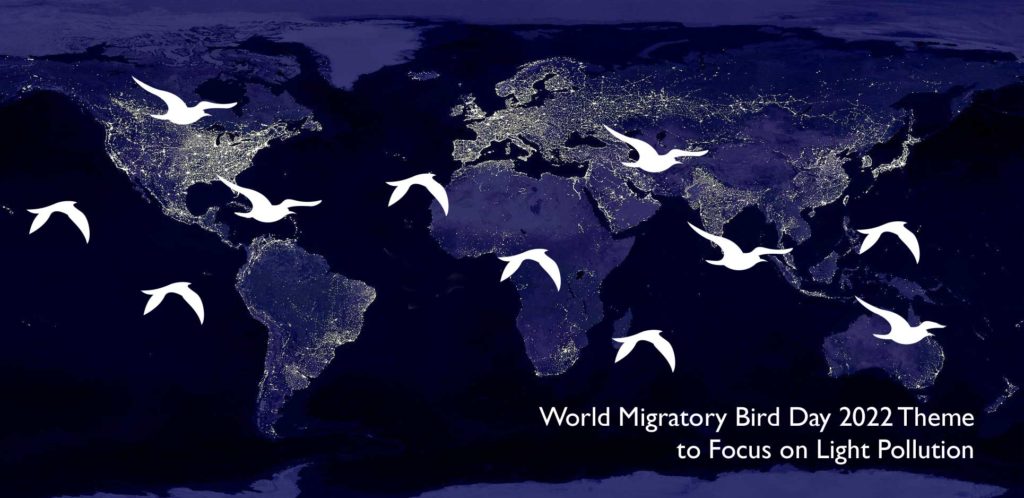
2022 Theme: Light Pollution
Artificial light is increasing globally by at least 2 per cent per year and it is known to adversely affect many bird species. Light pollution is a significant threat to migratory birds, causing disorientation when they fly at night, leading to collisions with buildings, perturbing their internal clocks, or interfering with their ability to undertake long-distance migrations.
Solutions to light pollution are readily available. For instance, more and more cities in the world are taking measures to dim building lights during migration phases in spring and autumn. Best practice guidelines are also being developed under the Convention on Migratory Species to address this growing issue and ensure that action is taken globally to help birds migrate safely.
CMS COP13 Resolutions and Decisions on Addressing Light Pollution
- Resolution 13.5 | Light Pollution Guidelines for Wildlife
- Annex of Resolution 13.5 | National Light Pollution Guidelines for Wildlife including Marine Turtles, Seabirds and Migratory Shorebirds
- Decisions 13.138 to 13.139 | Light Pollution Guidelines for Wildlife
Light Pollution in Geneva
In Geneva, it is estimated that outdoor artificial light has doubled within the past 30 years. Over the past few years, the local authorities have recognized the negative impacts of light pollution on biodiversity and have supported research and new policy in this area. These efforts to address light pollution are in synergy with the Biodiversity Strategy of the Canton. In 2019, the City of Geneva decided to revise its “Light Plan”, the reference document for public light management, with the aim to integrate biodiversity and energy-saving concerns, while improving lighting especially for walking and cycling. In 2021, the Grand Conseil (parliament of the Canton of Geneva) adopted a motion to limit the use of outdoor illuminated signs and night lighting visible from the outside of non-residential buildings between 1.00 and 6.00 am. Other municipalities in the region (both in Switzerland and France) are pledged to turn off or reduce light at night; find the list here.
More resources on light pollution in Geneva are available below (in French):
- Pollution lumineuse | GE-EN-VIE
- Protéger la nuit | Canton of Geneva
- Plan lumière | City of Geneva
- Carte des communes qui éteignent au quotidien | La nuit est belle!
- Genève va limiter la lumière à l’extérieur durant la nuit | RTS | 12 November 2021
- Question / réponse: pollution lumineuse | Bibliothèques municipales de la Ville de Genève | 18 February 2020
- Une étude cartographie la pollution lumineuse à Genève | UNIGE | 21 November 2019
- La pollution lumineuse du bassin genevois passée à la loupe | HEPIA | November 2019
Protecting Migratory Birds from Geneva
Migration is a perilous journey and involves a wide range of threats, often caused by human activities. Climate change, habitat loss, plastic pollution are just a few of the diverse threats that the birds face. As migratory birds depend on a range of sites along their distribution area, the loss of wintering and stopover sites could have a dramatic impact on the birds’ chances of survival. Flying long distances involves crossing many borders between countries with differing environmental politics, legislation and conservation measures. Thus, international cooperation among governments, NGOs and other stakeholders is required along the entire flyway of a species in order to share knowledge and to coordinate conservation efforts. The legal framework and coordinating instruments necessary for such cooperation is provided by multilateral environmental agreements such as CMS and AEWA.
Switzerland is of particular importance as a wintering and resting place for various migratory waterbird species. The Geneva region contains some important ecosystems for migratory birds, with several protected areas of international and national importance. The region also hosts many international organizations and local associations who are active in protecting bird species. Learn more in our update below.
Events

EuroBirdwatch
2 October 2022, 7:15 CEST | Jetée des Pâquis | Organized by the Groupe Ornithologique du Bassin Genevois (GOBG)

Birdwatching with Nos Oiseaux
1 Octobre 2022, 7:30 CEST | Rade de Genève | Organised by Nos Oiseaux | Registration compulsory
Conférence | Situation des Hirondelles des fenêtres et des rivages à Genève
11 octobre 2022, 20:15 CEST | Museum d’histoire naturelle | Organisé par la Société Zoologique de Genève, en collaboration avec le le Groupe Ornithologique du Bassin Genevois (GOBG)
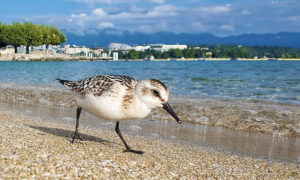
Observation du Bécasseau sanderling
Discover the migratory bird species which stop in Geneva through the cantonal platform “Dans ma nature”

La nuit est belle!
Opération festive visant à sensibiliser la population du Grand Genève aux impacts de la pollution lumineuse causée par l’éclairage artificiel excessif | 23 septembre 2022

Birdwatching with the eBird App
The eBird app helps you explore birds and hotspots near you. By recording your sighting, you can also contribute to advancing science and conservation.
Latest News
- EuroBirdwatch: embouteillage dans le ciel au-dessus de la Suisse | BirdLife | 3 October 2022
- La Suisse, aire de repos pour oiseaux migrateurs | Le Temps | 30 September 2022
- Countries commit to strengthen resources for the conservation of rapidly declining migratory waterbirds | UNEP | 30 September 2022
- La migration des oiseaux, un phénomène naturel en pleine mutation | BirdLife Suisse | 26 September 2022
- Take someone under your wing this World Migratory Bird Day | BirdLife International | 26 September 2022
- Rareté à observer ! Bécasseau sanderling | Dans ma nature | 9 September 2022
- World Migratory Bird Day illuminates the dark side of light pollution | UN News | 13 May 2022