
Event World Day
World Soil Day 2026
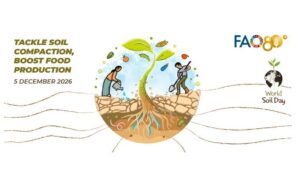
World Soil Day (WSD) is held annually on 5 December as a means to focus attention on the importance of healthy soil and to advocate for the sustainable management of soil resources. The establishment of an international day to celebrate soil was recommended by the International Union of Soil Sciences (IUSS) in 2002. After being endorsed at the FAO Conference in 2013, World Soil Day was formally recognized by the UN General Assembly.
About World Soil Day
World Soil Day (WSD) is held annually on 5 December as a means to focus attention on the importance of healthy soil and to advocate for the sustainable management of soil resources. The establishment of an international day to celebrate soil was recommended by the International Union of Soil Sciences (IUSS) in 2002. After being endorsed at the FAO Conference in 2013, World Soil Day was formally recognized by the UN General Assembly.
2026 Theme – Tackle Soil Compaction, Boost Food Production
The World Soil Day 2026, with the theme of “Tackle soil compaction, boost food production,” draws global attention to soil compaction that can significantly affect soil functions and agricultural productivity. Soil compaction can alter soil structure, restrict root development and the movement of water and nutrients, reduce infiltration, increase surface runoff, and affect soil biodiversity and gas exchange.
The international celebration of World Soil Day 2026, led by the Food and Agriculture Organization of the United Nations (FAO) and its Global Soil Partnership (GSP), will be hosted by the Government of Uzbekistan in Tashkent, taking place on 3 December 2026 at 14:00 (Uzbekistan time, UTC+5). The celebration will bring together policymakers, international organizations, scientists, farmers,pastoralists, young professionals, innovators and technology providers to exchange knowledge and identify practical solutions.
The celebration provides an opportunity to connect the global soil agenda with national and regional priorities on soil health. In addition to the official World Soil Day celebration, an international conference will also be organized by the government of Uzbekistan, which provides the opportunity for countries to share experiences and perspectives on soil health and sustainable soil management.
Did you know?

- 95% of our food comes from soils.
- 33% of soils are degraded.
- It can take up to 1 000 years to produce just 2-3 cm of soil.
- Soils supply 15 of the 18 naturally occurring chemical elements essential to plants.
- There are more living organisms in a tablespoon of soil than people on Earth.
- 2 billion people worldwide suffer from lack of micronutrients, known as hidden hunger.
- Up to 58% more food could be produced through sustainable soil management.
- Soil is home to nearly 59% of Earth’s species
Soil and the Role of Geneva
In the face of the triple planetary crisis of climate change, biodiversity loss, and pollution, our soils are being degraded and polluted, putting excessive pressure on this precious resource and the food systems that depend on it. Learn more about these issues and the role of Geneva-based organizations to promote the sustainable management of soils towards a food-secure world and stable and sustainably used ecosystems.
More on Soils, Food and the Environment
Food is at the center of human lives, and so are the soils that support food systems. However, unsustainable food production and consumption practices have led to environmental degradation, including soil degradation, and exacerbated climate change. In return, food systems suffer from climate change, biodiversity loss and pollution.
Land and soil degradation pose a major threat to global food security and to the achievement of the Sustainable Development Goals (SDGs) – compromising the well-being of at least 3.2 billion people around the world. Loss of soil biodiversity, soil erosion, pollution and salinization are all critical issues that need to be addressed to ensure food security, livelihoods, and health for all.
As the leading organization on the issue, FAO provides numerous resources to better understand the role of soil and food systems for a sustainable future, as well as challenges and ways forward. From a Geneva perspective, our dedicated page provided useful resources on this nexus and the organizations in Geneva working on these issues. In light of recent international negotiations and debates on plastic pollution, the role of plastics in agriculture and the subsequent soil pollution has also been under focus. Find more information in our Plastics and the Environment series.