
Événement Conférence
2025 Geneva Dialogues on Human Rights and Climate Change: The Role of Geneva in Building on the Historic Advisory Opinions on Climate Change
03 Sep 2025
15:00 – 17:00
Lieu: Palais des Nations | Room XXIII
Organisation: République des Îles Marshall, Vanuatu, Luxembourg, Haut commissariat des Nations Unies aux droits de l'homme, Center for International Environmental Law, Earthjustice, Friedrich-Ebert-Stiftung, Geneva Environment Network
The 2025 Geneva Dialogues on Human Rights and Climate Change built on previous editions to discuss how Geneva-based human rights institutions can contribute to further advancing human rights-based climate action. This year's edition was organized by the Center for International Environmental Law (CIEL), the Office of the High Commissioner for Human Rights (OHCHR), the Permanent Missions of the Republic of the Marshall Islands and Vanuatu, the Geneva Environment Network, Earthjustice, and the Friedrich-Ebert-Stiftung (FES) Geneva Office, with the support of the Government of the Grand Duchy of Luxembourg.

About this Event
The Advisory Opinion of the International Court of Justice (ICJ) on the obligations of States in respect of climate change, delivered on 23 July 2025, unequivocally confirms that States have obligations to prevent climate harm and protect human rights, including the right to a healthy environment, by exercising enhanced due diligence in putting in place effective measures with the aim of keeping global average temperature rise below 1.5°C, including by regulating private actors. The Court further specified that “ [f]ailure of a State to take appropriate action to protect the climate system from GHG emissions — including through fossil fuel production, fossil fuel consumption, the granting of fossil fuel exploration licenses or the provision of fossil fuel subsidies — may constitute an internationally wrongful act which is attributable to that State”.
This ruling expands upon similar conclusions included in the International Tribunal on the Law of the Sea (ITLOS)’s Advisory Opinion (21 May 2024) addressing States duties to protect the marine environment from climate harms and that of the Advisory Opinion of the Inter-American Court of Human Rights (IACtHR) (3 July 2025) that highlighted in particular States obligations regarding the rights of future generations, human rights defenders, corporate accountability, the right to a healthy environment, the right to remedy, rights of nature, procedural rights, inter alia.
Geneva-based human rights mechanisms, through their wealth of resolutions, authoritative statements, and reports have informed the advisory opinions and continue to guide States in developing national policies and measures. They now have the opportunity and the responsibility to build on the findings by the ITLOS, IACtHR and ICJ to advance effective human rights-based climate action.
The 2025 Geneva Dialogues on Human Rights and Climate Change built on previous editions to discuss how Geneva-based human rights institutions can contribute to further advancing human rights-based climate action. This year’s edition unpacked the landmark advisory opinions on climate change by the International Tribunal of the Law of the Sea, the Inter-American Court of Human Rights, and the International Court of Justice, and discuss the role of Geneva-based human rights institutions in elevating and building on these rulings.
Speakers

H.E. Amb. Doreen DE BRUM
Permanent Representative of the Republic of the Marshall Islands to the UN Office and other international organizations in Geneva
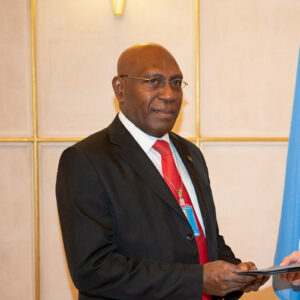
H.E. Amb. Sumbue ANTAS
Permanent Representative of Vanuatu to the UN Office and other international organizations in Geneva

Sandra MERENS
Deputy Permanent Representative of the Grand Duchy of Luxembourg to the UN Office and other international organizations in Geneva
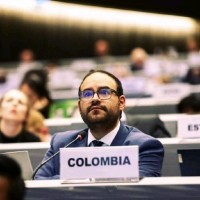
Miguel RUIZ BOTERO
Second Secretary, Permanent Mission of Colombia to the UN Office and other international organizations in Geneva

Elisa MORGERA
UN Special Rapporteur on climate change and human rights

Benjamin SCHACHTER
Coordinator, Environment and Climate Change Team, UN Office of the High Commissioner for Human Rights
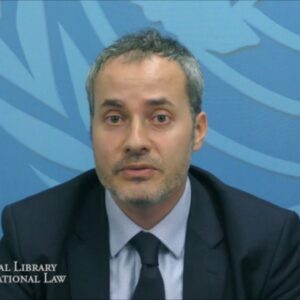
Jorge E. VIÑUALES
Harold Samuel Chair of Law and Environmental Policy, University of Cambridge | Research Professor of International Law, LUISS

Jule SCHNAKENBERG
Chief Executive Officer, World Youth for Climate Justice

Ana Maria SUAREZ FRANCO
Secretary General, FIAN International

Margaretha WEWERINKE-SINGH
Legal Counsel for Vanuatu | Associate Professor of Sustainability Law, University of Amsterdam (Video Message)

Francesca MINGRONE
Senior Attorney, Center for International Environmental Law | Moderator

Joie CHOWDHURY
Senior Attorney, Center for International Environmental Law | Moderator
Highlights
Video
Live from Palais des Nations
Summary
Diplomatic Panel
Francesca MINGRONE, Senior Attorney, Center for International Environmental Law | Moderator
- Recalling the recent 3 key advisory opinions (AOs):
- ICJ AO (July 2025) | The first time the court mandated to address climate change obligations across treaty law, customary law, international environmental law and human rights law. It provides guidance on due diligence, science, remedies and redress, statehood and the right to a healthy environment
- IACtHR AO (July 2025): A progressive ruling that clarifies that clarified human rights obligations; addressed rights of future generations, defenders, corporate accountability, rights of nature, right to a clean, healthy and sustainable environment and procedural rights.
- ITLOS (2024): Under UNCLOS, although it does not touch on human rights because it is outside the scope of the UNCLOS, it declared that in order to protect oceans, states must take all measures to cut greenhouse gas emissions which pollute the marine environment.
- Other interesting developments: the African Court on Human and People’s Rights was asked to weigh in on states climate obligations with the potential to further deepen the landscape of climate jurisprudence.
- The leadership of youth and civil society (Pacific youth, Vanuatu, Colombia, Chile mobilised support) was stressed.
- Geneva really is a fertile ground for further reflection, with clear links to civil society, UN agencies and various technical bodies.
- The objective of the session is to take stock in all of this, hear from those countries and also individuals that really spearheaded these initiatives and reflect on the role that Geneva has played in influencing the process. The session will also aim to define moreover its role in ensuring AOs have a real impact.
Sandra MERENS, Deputy Permanent Representative of the Grand Duchy of Luxembourg to the UN Office and other international organizations in Geneva
Opening Remarks
- In today’s context with the liquidity crisis, it is all the more important for us to recognize and bring forward international Geneva’s role.
- A long time supporter of Geneva Dialogues, Luxembourg welcomed the ICJ AO and, in particular, welcomes this important decision which paves the way and confirms states obligations to prevent climate harm and protect human rights.
- Luxembourg will continue supporting HRC action, especially on loss and damage and fossil and damage of fossil fuels.
H.E. Amb. Sumbue ANTAS, Permanent Representative of Vanuatu to the UN Office and other international organizations in Geneva
Brief reflection on the ICJ AO from Vanuatu’s perspective
- Admitting that the legal text was dense with « a lot of lawyery-speak”, he “didn’t really absorb the magnitude and the extent of the decisions that were made of the advisory opinion rendered by the ICJ”. He was shocked to see the vast opinion that was delivered that day in the media.
- The ICJ clarified sources and the content of states climate related obligations as well as the legal consequences of the breach. If they are not following this, breaching this, what are the legal consequences? And these are very important questions and even today as we sit and discuss this as these have profound impact on the conversations going ahead.
- The AO confirmed “that every state has erga omnes obligations grounded in custom” and stated out the relevant treaties that protect the climate system and other parts of the environment. These duties must be taken with respect to common but differentiated responsibilities (CBDR). The principle of non-refoulement applies where climate harm risks life.
- He highlights that « Every breach triggering obligations of cessation, non-repetition and full reparation. »
- The AO further clarified maritime baselines and outer limits of maritime zones which remain unaffected by sea-level rise (and this is critical for SIDS).
- Concerning the next steps: 1) a dedicated UN resolution needs to be adopted by the plenary main resolution, and 2) the annual resolution of the protection of global climate adopted by UNGA second committee.
H.E. Amb. Doreen DE BRUM, Permanent Representative of the Republic of the Marshall Islands to the UN Office and other international organizations in Geneva
Perspectives on the Court’s arguments with regard to fossil fuels and the 1.5°C temperature limit
- It felt overwhelming but mostly emotional, and I’m sure it wasn’t just us. A lot of us here heard our own words. Take sea level rise. For years, we’ve been adamant that rising sea levels can’t take our territory or sovereignty, and the court agreed. Take fossil fuels which we know we must leave behind us. The court confirmed that continuing to extract, use and subsidize fossil fuels may all constitute internationally wrongful acts or emissions pledges from richer countries. We’ve long argued that these aren’t just voluntary offerings made out of charity. And the court agreed. These are legal obligations under international law. But perhaps one of the biggest moments for me was when the court affirmed the temperature limit of 1.5°.
- To hear the world’s highest court play back the very same words, very same truths that in the pacific have been speaking for so long, it felt so surreal.
- Of course, we in the Pacific are probably not the people who needed to hear the court say this because long before the IPCC was documenting the difference between 1.5 and 2° of warming, we were living it. […] But it’s clear that others still needed to hear because even 10 years on from Paris, we still hear people pushing back on 1.5 degrees as the limit. So now we can say definitely this isn’t just our view. This is the ICJ’s view as well. This is the legal view.
Miguel RUIZ BOTERO, Second Secretary, Permanent Mission of Colombia to the UN Office and other international organizations in Geneva
Leveraging AOs in support of Latin America and ways human rights-based institutions in Geneva can contribute
- Positively surprised and moved by the IACtHR AO: proud of Colombia/Chile initiative.
- The Court declared that “not only states have clear obligation to prevent, mitigate and remedy the adverse effects of climate change, but also something that’s been in practice in my country for many years, and that is that nature and its components are subjects of rights as well, which is strong innovation in international law and something that we do think is important to build on both in the work of the human rights council and other human rights based institutions.”
- Happy for the recognition of vulnerable groups, intergenerational equity, the importance of indigenous peoples in particular, but also people of African descent, peasant communities, and those that hold traditional and indigenous knowledge, which is crucial to responding to the challenges of climate change.
- Recalling the Court’s words, “It’s no longer a moment where we can have any room for indifference.”
- Criticizes Geneva’s limited engagement in regards to discussions on fossil fuels, 1.5°C, and that “human rights implications have been swept under the rug”.
- Colombia will push HRC to expand resolutions and integrate AO findings.
H.E. Amb. Sumbue ANTAS
Next steps in the international arena
- The international scenario we saw in July has changed and will continue to change. The diplomatic next steps are fundamental in implementing the advisory opinion.
- How to holistically approach these diplomatic steps: states remain at the center of implementation of the UN system and the UNGA will be the first arena to implement this.
- UNGA opportunities:
- 1) dedicated resolution on the AO should recognize the contribution of the three advisory opinions, linking climate obligations to human rights mechanism; establish methods for fossil fuel phaseout, finance, capacity building, maritime boundaries, reparations – all grounded in cooperation, CBDR and equity
- 2) during the annual UNGA climate resolution (scheduled in December), there should be momentum to embed the ICJ AO into practice; “universalize the opinions and conclusions”. It is also an opportunity to correct the current climate limitations by ensuring climate action is grounded not only in environmental treaties but also in human rights law
- Stresses that states must ensure “structural change needed to move us beyond the limitations of the consensus based decisions on the climate regimes and operationalize climate justice based on the rule of law and equity.” This must be done before COP30.
- Emphasizes the need to mainstream the federal operationalization of the advisor opinions through the UN bodies here in Geneva but also in each jurisdiction and within each home.
- Encourages human rights bodies to embed AO findings into resolutions, periodic reviews, and consequently monitoring the impacts of the rights of life, health, food, water and culture. Additionally, provide “authoritative guidance to states on compliance with human rights based obligations”.
H.E. Amb. Doreen DE BRUM
Next steps at the diplomatic level in Geneva
- The Marshall Islands is on its second term on the HRC and feels the responsibility of being “one of only four SIDS on the Council, and the only Pacific state. We take these responsibilities very seriously.”
- “For many islands and coastal communities in all parts, the enjoyment of human right is tied to climate change” therefore they positively acknowledge the Court’s confirmation that climate change causes a threat to the right to life, health, women, children and indigenous peoples
- The first task that they can do is to “feel emboldened in our convictions.” It invites “ [everyone who does not realise that there’s a role in climate discussions] to please take a look at the ICJ decision and not just read it, but understand it and together with us embrace it.”
- Expresses gratitude towards the UN Special Rapporteur on HR and climate change and the Dominican Republic for taking the pen on a resolution on sea level rise which can be an opportunity to immediately make use of the ICJ’s conclusions
- Recalled the negotiations on HRC’s climate resolutions during its 59th session: although able to strengthen the text, they did not secure everything that they had proposed. It therefore calls for commitment to advocate for a strong text next time it comes at the Council
- Highlighting a “wonderful cross-regional network of ambitious states” (developed and developing) and confidently establishes that “armed with the ICJ decision, we will see the Human Rights Council reach new levels of ambition.”
Miguel RUIZ BOTERO
Securing remedy and reparation in the face of climate harm
- The IACtHR AO should trigger an obligation for states to make sure that remedies are available at the national level by domestic courts and make sure that they are protected. If they aren’t available that would bleed over the internal system.
- Finds particularly important “the emphasis that the court put on the differentiated obligation to protect communities that are most impacted by climate change. We think that will potentially help frontline communities to make sure that their rights are protected at the national level.”
- Additionally, they reflect upon how the ICJ framed state obligations over private actors. Not only taxation and licensing for transition but also potentially ceasing harmful operations and demanding reparations where HR are violated.
- The AO provides a step towards more sincere conversations on finance and loss and damage. Nonetheless it acknowledges the frustration induced by the slow progress on NCQG and with the loss and damage fund.
- He calls upon state action now that legal obligations are clearer: the AO clarified that obligations include finance, capacity building, technology transfer and technical assistance.
- He rejects the view that regulatory obligations only apply when financial means are provided: « that is incorrect – legally and morally”.
Expert Panel
Joie CHOWDHURY, Senior Attorney, Center for International Environmental Law | Moderator
- The ICJ AO has “delivered now unprecedented legal clarity on states obligations in relation to climate change; spotlighting in particular climate destructive corporate conduct, providing a robust legal blueprint to hold polluters accountable under multiple and complimentary sources of international law, putting the weight of international law behind just and equitable climate action.”
- The AOs did not come “in a legal vacuum” and they are the reflection of years of growing body of jurisprudence that is redefining climate governance for generations
- AOs can be invoked in rulings across a variety of cases and inform national legislation and policies. For instance “there have been the use of arguments based on the ruling in a legal appeal against offshore deep water drilling and a recent declaration endorsed by 22 countries in Latin America and the Caribbean expressing support of COP 30 and making clear reference to the ICJ climate advisory opinion.”
- This panel will discuss what role Geneva plays and recalls the need to bridge institutions and people.
Role of youth in shaping international law and climate action | Jule SCHNAKENBERG, Chief Executive Officer, World Youth for Climate Justice
- In 2019, law students from the University of the South Pacific approached Vanuatu’s Minister of Foreign Affairs with the idea of bringing climate change to the ICJ; motivated by lived experiences of climate harms and frustration with insufficient results from the global climate regime.
- “We collectively fought for this climate ruling not to remain an abstract legal conversation.”
- Youth campaigners are already mobilising around implementation of the AO: 1) In Nepal, youth invited to brief judges of the High Court on the AO, 2) In the Philippines, youth consulted on national loss & damage policy
- She calls on states to remind them “to not forget why this case was initiated and who it was meant to serve.”
- Youth and civil society, together with states, “managed to depoliticize the case and raise its profile,” shifting focus onto the most affected communities.
Margaretha WEWERINKE-SINGH, Legal Counsel for Vanuatu & Associate Professor of Sustainability Law, University of Amsterdam | Video Message
- Commenting on the three AOs:
- ITLOS declared that anthropogenic GHG emissions are pollution of the marine environment; states must exercise stringent due diligence to prevent, reduce, and control them.
- IACtHR clarified that human rights duties in climate emergencies cover future generations, right to a healthy environment, access to justice and remedies.
- ICJ confirmed that a clean, healthy and sustainable environment is protected under international law and that HR law must guide climate obligations. Where wrongful acts occur, there are consequences of cessation, guarantees of non-repetition, and reparations.
- Geneva’s contributions (including HRC, treaty bodies and special procedures) were cited and relied upon.
- She expresses that Geneva provides a “ready-made foundation for implementation”.
- Concerning treaty bodies, AO standards should be integrated systematically into concluding observations and views. Additionally, it should insist on preventive measures (e.g. regulation of licensing and subsidies). Lastly, ensure remedies where rights have been violated
- With regards to special procedures and the OHCHR, they should develop practical guidance on climate-related remedies and how to assess loss and damage in HR terms. Additionally, how to operationalize procedural rights in remedy frameworks and how to secure cross border remedies.
- The HRC can mandate an ongoing work program on human rights based remedies for climate harm grounded in the advisory opinions and the latest science on risk and attribution. All of this would directly contribute to the UNGA’s work on climate justice which “will be carried forward in a resolution following up on resolution 77/276 and the ICJ’s opinion”.
- “Together, the advisory opinions have given us a coherent legal compass. Geneva has the tools and the responsibility to ensure that the compass guides concrete outcomes.”
Jorge E. VIÑUALES, Harold Samuel Chair of Law and Environmental Policy, University of Cambridge & Research Professor of International Law, LUISS
Implications for Geneva human rights institutions
- The advisory opinion removed the lock that was placed on climate change.
- Stresses how the human rights focus is extremely important because the main body of IL that is applicable in domestic courts. Geneva institutions (esp. treaty bodies and special procedures) are where the “actual detail of human rights is being developed and fleshed out
- ICJ AO states “All doors are open.” Climate can be advanced outside UNFCCC structures.
- Reflects on the unanimity of the AO: the ICJ AO was rendered unanimously and the judges’ declarations and separate opinions are separate extensions, not contradictions (e.g. the content of the R2HE which is not achieved politically but now it is fleshed out in the AO and further expanded in separate opinions)
On human right to a clean, healthy and sustainable environment | Benjamin SCHACHTER, Coordinator, Environment and Climate Change Team, UN Office of the High Commissioner for Human Rights
- “It is incredibly validating to see that the ICJ and the Inter-American Court both reaffirm the right to a healthy environment and elaborate on it in important ways.”
- For what regards the ICJ AO, they affirmed that it is clear that there is a duty to protect the environment under CIL and “there are a number of separate opinions which go even further in terms of articulating the right to a healthy environment and explicitly declaring it recognized under customary international law.
- The right to a clean, healthy and sustainable environment should be interpreted “in light of the broader body of law and of the findings of course of the ICJ”.
- Finds fundamental that the environment was recognized “as a precondition for the enjoyment of many human rights.”
- For what regards the IACtHR AO, they recognize that it went further, articulating the right to a safe climate as an element of R2HE. Some judges in separate opinions wanted an even stronger articulation of R2He in customary international law.
- The substance of R2HE has been identified in its core elements: safe and stable climate; healthy ecosystems and biodiversity; non-toxic environments, clean air and water, safe and nutritious food; participation, access to information, access to justice in environmental matters… etc.
- The ICJ drew extensively on the work of Geneva mechanisms (HRC resolutions, treaty bodies, special procedures, OHCHR’s climate and environmental mandates) and it has synthesized and elevated Geneva’s contributions
- He calls to move forward with implementation.
Elisa MORGERA, UN Special Rapporteur on climate change and human rights
On fossil fuels
- The ICJ gave a groundbreaking clarification that is both explicit and extensive. It mentioned that not only consumption but indeed also production, exploration licenses and subsidies may constitute internationally wrongful acts.
- “For decades within the climate regime, and even recently at the HRC, it has been difficult to explicitly name fossil fuels as the main cause of climate change.”
- She recognizes the importance of the legal clarification in regards to phasing out fossil fuels in the broader context of the obligations of prevention, stringent due diligence.
- Additionally, states obligations have been clarified to encompass obligations to protect the life supporting systems including the climate system on our planet.
- Fossil fuels are “hiding at plain sight” across sectors such as plastics and petrochemicals. The expansion of these industries contribute to climate harm and other HR violations.
- We need to implement phasing out in light of the interdependence of human rights that are affected by climate change (e.g. right to self determination and prohibition of racial discrimination, both of which are jus cogens norms). There needs to be an imperative to reflect on “those very bold findings by the Interamerican Court and I think needs to be also a guide for thinking about reparations.”
- Reparations and the right to remedy are “essential to create a space for reclaiming self determination” of affected peoples. Implementation of reparations can enable economic and social transformation.
Ana Maria SUAREZ FRANCO, Secretary General, FIAN International
On corporate accountability
- “The corporations are part of the problem”, including the industrial food system which are major contributors to GHG emissions. The energy sector, the food sector and others are also relevant contributors.
- She calls for a just transition: “if we want the transitions to be just they have to include corporate accountability.” Emphasizes the importance of investigating corporate accountability because many of the grassroot communities are directly affected by corporations.
- The ICJ made very clear which are the obligations of states and “emphasize on the obligations to protect and prevent” environmental harm linked to R2HE.
- The AO was built on CESCR jurisprudence (duty to regulate, monitor, investigate, enforce, and provide remedy for non-state actors)
- Ms. Suarez Franco builds upon Prof. Wewerinke-Singh’s analysis of the stringent due diligence: describes how in law there are multiple understandings of due diligence:
- Roman law: “good pater familias” standard.
- UN Guiding Principles on Business and HR ( described as weaker and company-focused)
- The AO clarified that here it is state due diligence to regulate and prevent corporate harms which must be based on precautionary principle (“if there is doubt caution is ordered”), risk assessment and consultations and notification when activities may affect other states
- One major conclusion made by the AO: the affirmation of extraterritorial obligations of states in HR and environmental law
- The IACtHR, which has taken a further step by directly referring to corporate accountability and obligations, « says that the court recalls that states must adopt legislative and other measures to prevent human rights violations committed by state and private corporations.”
- There is an emphasis on enforcement. Importantly, it mentions “ that is very relevant that states adopt a series of standards to discourage greenwashing and undue corporate influence in the political and regulatory sphere”
- Concerning the implications for the treaty process, these AO clarifications provide “important inputs” for the ongoing legally binding instrument on TNCs and other business enterprises at the HRC.
- Moving forward, they stress that R2HE and environmental standards must be firmly embedded in the treaty text.
Jorge E. VIÑUALES
Duty to prevent significant harm to the environment and due diligence
- The ICJ made clear that obligations are separate. Therefore, they emphasise that fulfilling one obligation does not mean that others are automatically met.
- Some delegations argued meeting the Paris Agreement obligations would suffice for all climate related obligations. The Court rejected this.
- The ICJ addressed “the relationship between the climate change treaties that the court characterized as the UNFCCC, the Kyoto protocol and the Paris agreement and the very specific customer international law, the principle of prevention of significant harm to the environment”. According to the court (in principle), compliance with treaty obligations as interpreted by the Court may indicate compliance with the stringent due diligence required under customary law
- Two caveats:
- Obligations under the Paris Agreement and related treaties must be met in the way the Court has reinterpreted them. Therefore “much closer to the spirit of Paris »
- Even then, the Court declares that this is only an indication, not a guarantee of compliance with other obligations.
- The ICJ rejected the idea of the Paris Agreement as “a safe harbour” insulating states from other international obligations.
- Lastly, they emphasize that obligations must be read cumulatively, not interchangeably.
Benjamin SCHACHTER
Centrality of science
- Both the ICJ AO and the IACtHR AO make clear that science and the right to science must guide the interpretation of climate treaties and obligations
- The objectives of the UNFCCC and the Paris agreement (including the protection of human health and welfare, sustainable development, the eradication of poverty, and respect for human rights) must be read together with science to determine the level of ambition.
- Ambition itself is a matter of human rights obligation and not merely a political choice.
- Before Paris, the High Commissioner for Human Rights was the only UN principal to call for a 1.5°C limit, drawing on HR based analysis of the difference between 1.5°C and 2°C warming
- Today we are already close to 1.5°C and experiencing unprecedented, preventable human rights violations from climate change
- The ICJ AO explicitly addressed attribution and causation, confirming that science provides a method for this analysis.
- While causation assessments must be case-by-case, they are nonetheless feasible and reliable. “So when we start thinking about loss and damage and reparations in that context we have a way forward clearly identified.”
- Recalls that the IPCC’s work was explicitly relied upon as the “best available science” in the advisory opinions
- He warns that debates within the UNFCCC about whether to rely on the IPCC are not in good faith and should be “shut down” in light of the clarity from the courts.
- Highest courts demonstrate how science should inform state obligations, and Geneva mechanisms must carry this forward.
- A human rights–based, science-driven approach is not only the right legal and moral choice but also the most effective and sustainable policy option
Elisa MORGERA
Implementing AO in implementation phase
- Special Procedures have already begun integrating AO findings into their thematic reports, country visit reports and communications. This includes working directly with affected rights-holders to apply the findings in concrete situations
- Press releases and statements will be used to call upon states, UN bodies, and international fora to apply AO findings in national action, NDC negotiations, and other processes
- “I think the reference to the negotiations on an international legally binding instrument on business and human rights there’s a lot that we can also contribute there and also that need which has been reiterated several times in the context of the human rights council to reform international investment law and particularly the role that that area of international law is playing is obstructing the phase out of fossil fuels.”
- Special Procedures can advise treaty bodies, NHRIs, and other actors on priority legal and institutional reforms
- Amici curiae interventions will continue in litigation to ensure that the full body of clarified international law is applied.
- The role of Special Procedures is not only to secure progressive decisions, but also to ensure their meaningful implementation leading to transformative processes.
AOs and frontline communities | Ana Maria SUAREZ FRANCO
- Stringent due diligence does not have a fixed formula and must be defined in line with the principle of CBDR and capacity. Furthermore, country visits by special procedures provide an opportunity to contextualize this principle in concrete recommendations
- Communications to states, often initiated by affected communities or their advocates, should incorporate community knowledge and experiences alongside “hard science.” Stresses the importance of citizen science “ as part of the right to science which means not only looking into the hard science but also in the knowledges and experiences of the communities”
- Treaty bodies could expand their guidance on issues like the liability of major polluters, drawing on the ICJ’s evolving approach and the IACtHR’s recognition of strict liabilities. Upcoming general recommendations could integrate this principle into states’ obligations.
- The ICJ encouraged states to draw on all available science in finding solutions, such as regenerative agriculture. Warns, however, that some proposed solutions (e.g., geoengineering) carry risks. Therefore, treaty bodies and special procedures could highlight these risks in reports to ensure advisory opinions “land in the evolving character of our societies.”
- The importance of hearing rural communities, Indigenous peoples, and especially youth.
- Youth have been less visible in treaty body processes, and calls for stronger connections given that this movement is “extremely effective”.
Jule SCHNAKENBERG
Implications for intergenerational equity and the rights of future generations
- “It’s always a big responsibility to speak on behalf of future generations.”
- Both advisory opinions interpreted intergenerational equity, peace, and the rights of future generations in ways that can help close this gap and “raise ambition on all levels.”
- The ICJ confirmed that the rights and interests of future generations are equitable considerations that “ need to be taken into account where states contemplate, decide on and implement policies and measures in fulfillment of their obligations. Therefore a justice focused interpretation would mean that “when we assess states compliance with their obligations we are to consider whether or we are to consider the impact on future generations concretely and taking into account the effect of cumulative emissions which the courts have acknowledged”
- This interpretation raises the bar for state action in areas such as national planning processes, adaptation measures, and legislation.
Open Discussion
Brazil
- Advisory opinions reaffirmed CBDR and the historical responsibilities of developed countries.
- “COP30 Brazil must be a turning point, a moment to uphold multilateralism, connect the climate regime to people’s lives, and accelerate our hopes. People must be at the center of our talks, and we must show the world that the transition can and must be just for all.”
- The climate fight must be linked to the fight against fight against poverty and hunger.
Marshall Islands
- “Countries will be wondering how much this is a call to action for the UNFCCC and how much action needs to be taken outside. And I’m just interested in your views of that. How much can we use the instruments we have within the UNFCCC and how to pull up socks versus how much do we really need to look at to build on that?”
Jorge Viñuales
- The two ordinary UNGA Resolutions (second committee and the one in the plenary) will follow, adopted by majority
- Transitioning from fossil fuels “has not popped up sufficiently” in the last COPs
- This issue is important and could emerge in the UN General Assembly (UNGA).
Elisa Morgera
- COP has its own institutional function and culture, which may limit how far the AO findings on fossil fuel phase out go.
- She proposes a complementary process to be developed (potentially mandated by the UNGA) for something beyond interstate approach: including bottom up initiatives, cities, subnational states in monitoring and supporting fossil fuel phase out.
- Reform of international investment law is essential and that the GA could launch a process based in Geneva with the OHCHR, HRC and UNCTAS to ensure a legal framework supportive of a just transition
Benjamin Schachter
- « It is absolutely imperative that we think about just transition as something grounded in human rights.” The forthcoming UN Secretary-General report to the HRC which is relevant to this topic
- The ICJ AO confirmed that climate obligations exist outside the UNFCCC, “we are in what they themselves describe as an existential battle and and they’re closing to address the climate crisis. »
- The UNFCCC process, while useful, is limited by consensus rules. Therefore, we must also use other tools to create” a monitoring and implementation framework that works. We have to look at how do we address the harms and ensure access to effective remedies and access to justice for the people affected by climate change in a meaningful way.”