
Événement Conférence
Climate Change, Energy Transition and Adaptation: Advancing Resilient, Inclusive and Rights-Based Energy Transition Frameworks | HRC62 Side Event
18 Juin 2026
13:00 – 14:00
Lieu: Palais des Nations | Concordia 1
Organisation: Malaisie, Maldives, République des Îles Marshall, Philippines, Vietnam, International Institute for Sustainable Development, Soka Gakkai International, Earthjustice, Geneva Environment Network
This side event to the 62nd session of the Human Rights Council provided a platform for practical and forward-looking discussions on how energy transition policies can simultaneously advance climate adaptation, resilience-building and human rights protection. The event, organized by Malaysia, in collaboration with Maldives, Marshall Islands, the Philippines, Vietnam, the International Institute for Sustainable Development, Soka Gakkai International, Earthjustice, and the Geneva Environment Network, also highlighted the importance of ensuring that energy transition pathways remain equitable, inclusive and responsive to the needs of developing countries and climate-vulnerable communities.

About this Event
Climate change represents one of the greatest threats to the enjoyment of human rights worldwide. Its adverse impacts continue to undermine the rights to life, health, food, water and sanitation, housing and development, with developing countries and Small Island Developing States (SIDS) disproportionately affected due to their heightened vulnerability to rising temperatures, sea-level rise and increasingly frequent natural disasters.
The United Nations General Assembly, through resolution 76/300, recognised the right to a clean, healthy and sustainable environment as a universal human right. In parallel, the Human Rights Council, including through resolution 48/13, has reaffirmed the importance of addressing climate change in a manner that promotes and protects human rights, while ensuring international cooperation and sustainable development.
In this regard, energy transition has emerged as a critical component of global climate action. The transition towards cleaner, more sustainable and resilient energy systems is essential not only for mitigation efforts, but also for strengthening national adaptation capacities. For many developing countries and SIDS, resilient energy systems are increasingly necessary to sustain critical infrastructure, support food and water security, maintain healthcare and communication systems during climate-related disruptions and ensure continuity of economic activities.
Across many developing countries, energy transition strategies are increasingly being designed not only to reduce emissions, but also to strengthen resilience and adaptation capacities. Emerging national and regional frameworks increasingly emphasise energy efficiency, renewable energy deployment, resilient infrastructure, energy storage systems and sustainable grid modernization as critical enablers of climate adaptation and long-term sustainable development.
At the same time, there is growing recognition that climate action and energy transition efforts must remain inclusive, equitable and development-oriented. Adaptation-oriented energy policies can support communities in maintaining access to essential services, strengthening food and water security, enhancing disaster preparedness and improving resilience against climate-induced disruptions, particularly for climate-vulnerable countries and communities.
Against this backdrop, the side event provided a platform for practical and forward-looking discussions on how energy transition policies can simultaneously advance climate adaptation, resilience-building and human rights protection. The discussion will also highlight the importance of ensuring that energy transition pathways remain equitable, inclusive and responsive to the needs of developing countries and climate-vulnerable communities.
Environment @ HRC62
The 62nd regular session of the Human Rights Council (HRC62) will take place in Geneva from 15 June to 10 July 2026. Consult this regularly-updated page that highlighted the environmental-related activities of this session.
Speakers

Suraya AHMAD PAUZI
Chargé d’Affaires a.i., Permanent Mission of Malaysia to the United Nations Office and other international organizations in Geneva

Elisa MORGERA
UN Special Rapporteur on climate change and human rights

Ahmad Farid MOHAMMED
Undersecretary, Climate Change Division, Ministry of Natural Resources and Environmental Sustainability, Malaysia
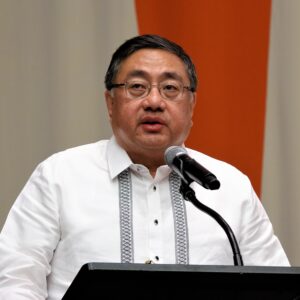
H.E. Amb. Carlos D. SORRETA
Permanent Representative of the Philippines to the United Nations Office and other international organizations in Geneva

H.E. Amb. Doreen DEBRUM
Permanent Representative of the Republic of the Marshall Islands to the United Nations Office and other international organizations in Geneva

Phil GASS
Director, Energy Programme, International Institute for Sustainable Development
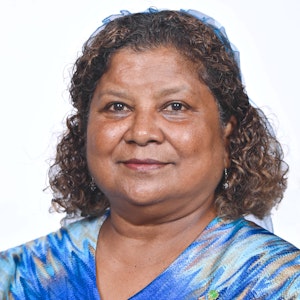
H.E. Amb. Salma RASHEED
Permanent Representative of the Republic of the Maldives to the United Nations Office and other international organizations in Geneva

Francesca MINGRONE
Senior Attorney, Climate & Energy Program, Center for International Environmental Law | Moderator
Highlights
Video
Summary
Welcome
Suraya AHMAD PAUZI | Chargé d’Affaires a.i., Permanent Mission of Malaysia to the United Nations Office and other international organizations in Geneva
- On behalf of the Permanent Mission of Malaysia, I would like to welcome and thank everyone for taking the time out of their busy schedules to attend this side event on Climate Change, Energy Transition and Adaptation: Advancing Resilient, Inclusive, and Rights-Based Energy Transition Frameworks.
- (Ms Ahmad Pauzi thanks the Malaysian team, the panelists, partners)
- Malaysia is pleased to convene this side event given the ever-increasing urgency of climate change and its significance to the work of the Human Rights Council.
- Climate change is no longer only an environmental concern. Its impacts are clearly affecting the enjoyment of human rights, including the rights to life, health, food, water, housing, and development. I do not speak only for myself when I say that we also look forward to the report of the Special Rapporteur, Professor Morgera, during the interactive dialogue tomorrow.
- For many countries, especially developing countries and small island developing States, the challenge is twofold. We recognize the need to accelerate the transition towards cleaner and more sustainable energy systems while balancing domestic needs and demands.
- Malaysia is of the view that energy transition must therefore be inclusive, equitable, and development-oriented. It should not leave behind vulnerable communities, nor limit the developmental aspirations of countries that are still prioritizing policies and efforts to address more immediate challenges, such as eradicating poverty, expanding access to essential services, and building resilience, among others.
- For Malaysia, energy transition has become a key component of our national development agenda. Three years ago, we launched our National Energy Transition Roadmap. This policy framework guides our efforts to accelerate the shift towards a low-carbon and sustainable energy future while supporting economic growth, investment, and social inclusion.
- We will hear more about this during the panel discussion, and I am pleased that, in addition to the Malaysian experience, we will also have the opportunity to learn from the national good practices of at least three other Member States. I believe many others will also be keen to contribute to this discussion.
- It is in this spirit that Malaysia convenes this panel today. We believe that every country has valuable and unique experiences and perspectives to share, and we want to contribute to enriching—and, more importantly, sustaining—this conversation moving forward.
Panel Discussion
H.E. Amb. Carlos D. SORRETA | Permanent Representative of the Philippines to the United Nations Office and other international organizations in Geneva
- When we first tabled the Human Rights Council resolution on climate change (A/HRC/RES/7/23) with the Maldives in 2008, the discussion on climate change was confined largely to its environmental aspects. As you can imagine, when we tried to bring human rights into the conversation, it was not welcomed with a red carpet by the major emitters. We also received pushback from veterans of the COP process and from developing countries, who felt that it would complicate negotiations and divert attention from what they were trying to achieve on the environmental front.
- But human rights is ultimately about accountability. If you look at the broad range of human rights resolutions, the vast majority—if not all—are directed against states for one reason or another, and often against developing countries. The climate change and human rights resolution is one of the few cases where the shoe is on the other foot. We are trying to hold developed nations accountable, as well as other countries that significantly contribute to climate change through emissions and pollution. At its core, this is about accountability.
- You can imagine that it was not easy when the Maldives and the Philippines came together to try to hold some of the most powerful nations in the world accountable for decades, if not centuries, of actions that have contributed to the climate crisis.
- For the Philippines, the Maldives, and many other countries, this is a deeply important issue. We are among the countries most affected by climate change. When we are not being hit by typhoons and floods, we are suffering from El Niño and droughts. Some of the most powerful typhoons in the world pass through the Philippines.
- One of the great ironies, and one of the reasons we sought to create a new dimension of accountability, is that the Philippines and many developing countries have a net-negative carbon footprint. We remove more carbon from the atmosphere than we emit, largely because of our forests. We are able to absorb significantly more carbon than we produce.
- There is a profound irony in that. We looked at the resolutions in the Human Rights Council and saw that accountability is a central theme. Climate change is a major issue affecting the right to life and the right to a healthy environment, yet no one was taking up the cause in that forum. That is how we began this effort.
- I have to say that it has not been easy to build consensus around this resolution. What started as a relatively short text has grown substantially as we have tried to accommodate everyone’s concerns. The resolution now includes many qualifications and compromise formulations.
- At present, we are negotiating particularly difficult language on this issue, and I continue to meet with the different sides involved. For us, what matters is progress. The resolution must continue to move forward, and progress must be both substantive and participatory.
- It is important that we continue making advances in the language, content, and substance of the resolution, even when compromises are necessary. These are incremental gains, and we do not want to slide backward. Equally important is ensuring that we do not lose supporters or attract negative votes. That is the central challenge we face.
- The larger objective is that many of us who participated in the ITLOS and ICJ advisory opinion processes hope that this resolution helps create what is known as opinio juris—the belief that a legal norm exists. The principle is not only that harmful conduct should be avoided, but also that those responsible should be accountable for the consequences of their actions.
- The challenge, however, is that this resolution, like similar resolutions in New York, has also become a platform for states that oppose our efforts to position themselves as what are known as persistent objectors. While we are advancing these norms, they are formally placing on the record their view that such norms do not exist and are not even emerging. That is where the struggle lies.
- Turning to the question of the Human Rights Council and its impact beyond Geneva, I believe our resolutions have had a meaningful effect.
- The International Court of Justice recently issued a very strong advisory opinion. Yet, in paragraph 455, the Court essentially stated that it is not for the Court itself to resolve these issues. If states wish to establish accountability for climate change, they must negotiate it among themselves. Ultimately, it is for states to decide.
- After an extensive and thoughtful discussion, the dispositive portion of the opinion resembles the ICJ’s 1996 advisory opinion on the legality of the threat or use of nuclear weapons. In that opinion, the Court effectively said that if states wish to prohibit nuclear weapons, they must negotiate an agreement and those that wish to join can do so.
- Today, we have the Treaty on the Prohibition of Nuclear Weapons, but the states possessing nuclear weapons have generally not joined it. As a result, the situation remains incomplete.
- The difference with climate change is that our resolutions have helped create a framework for accountability in other venues. In my view, the most important venue is not necessarily the ICJ or ITLOS, but domestic courts.
- Advisory opinions are not binding on states. However, decisions of national courts—and in some cases regional human rights tribunals—can be binding where jurisdiction exists and the legal merits are established.
- Our resolution has been cited in numerous climate justice cases before domestic courts and regional human rights courts. That is one of the contributions we have been able to make. According to the Sabin Center for Climate Change Law at Columbia Law School, there are now dozens of active cases in national courts dealing with climate change, responsibility, accountability, and remedies.
- When you read the pleadings in those cases, many of the principles we have sought to advance in our resolutions are already reflected there. They are frequently cited as authoritative sources. At the same time, governments have also become very effective at drawing upon statements made in plenary sessions in New York and at the Human Rights Council to support their own arguments.
- So there has been progress, but it remains difficult. I hope domestic courts will continue moving in the direction we advocate, because the fundamental irony remains that many of those suffering the most from climate change did not create the problem.
- Those of us most affected had little role in causing this crisis. Throughout the period of industrialization, our natural resources were extracted and utilized, yet we are not responsible for the resulting emissions. Nevertheless, we are among the hardest hit.
- If accountability is to mean anything, it must recognize that we are the victims, not the perpetrators. We did not benefit from decades of environmental degradation and climate damage.
- On the ASEAN side, we are very grateful to Malaysia. Under Malaysia’s chairmanship last year, ASEAN adopted the Declaration on the Right to a Safe, Clean, Healthy and Sustainable Environment. The declaration reflects the close links between human rights, environmental protection, and climate change.
- This year, as Chair, we are advocating a people-centered approach to climate action in line with ASEAN Vision 2045. At the recent summit in the Philippines, our leaders reaffirmed the importance of strengthening regional cooperation on climate adaptation, disaster resilience, climate finance, and sustainable development.
- Even within ASEAN, there is not yet consensus on issues of accountability and state responsibility. For now, much of our focus remains on mitigation and on addressing the immediate challenges people are facing.
- The Philippines is often seen as ASEAN’s first line of exposure to major typhoons coming from the Pacific. These storms frequently strike us first, lose strength, and then move on to other parts of the region.
- Our experience in ASEAN demonstrates that cooperation is essential in addressing immediate challenges. At the same time, we must also examine the underlying causes of these problems. That is the broader objective of the work we are pursuing.
- To conclude, this is ultimately about human rights, climate change, and accountability.
Ahmad Farid MOHAMMED | Undersecretary, Climate Change Division, Ministry of Natural Resources and Environmental Sustainability, Malaysia
- We are currently facing a new phase of climate variability, namely a super El Niño, which we have declared to be ongoing from June until early next year. We expect its magnitude to increase toward the end of next year.
- As a result, we anticipate lower rainfall in Malaysia. Normally, Malaysia is a country with abundant rainfall, averaging around 3,000 mm per year. However, based on projections by our scientists, rainfall could decrease by as much as 40%, particularly in the northern regions. Previous projections, made before the emergence of the super El Niño, estimated a reduction of only 20–22%.
- This slide illustrates Malaysia’s projected climate scenario. Our temperature is expected to increase by 1.7°C to 2.5°C by 2100. I also mentioned earlier that rainfall in Peninsular Malaysia could decline significantly by 2050, contributing to increased flooding risks. Flood-related damages are projected to result in economic losses of up to RM 1.3 billion.
- This reflects developments following the launch of the National Energy Transition Roadmap (NETR). It also outlines the latest iteration of Malaysia’s Nationally Determined Contribution (NDC) under the Paris Agreement, which we submitted in October last year.
- Under this updated NDC, Malaysia has shifted from an emissions-intensity target to an absolute emissions reduction target, aiming to reduce greenhouse gas emissions to below 2020 levels by 2030 . This demonstrates a higher level of ambition than previous commitments.
- We are also developing our National Adaptation Plan, which we expect to complete by early next year. The plan focuses on water resources, infrastructure, food security, biodiversity, and health.
- Malaysia is also rich in forests, with more than 50% forest cover. These forests play a significant role in absorbing carbon and offsetting a substantial portion of our emissions.
- This illustrates what we call a unified ASEAN framework, connecting energy transition, climate mitigation, and sustainable development.
- Energy remains one of Malaysia’s largest sources of emissions. At the same time, we recognize the importance of the human right to a clean, healthy, and sustainable environment, as reflected in UN General Assembly Resolution 76/300.
- A just energy transition must ensure equitable outcomes for vulnerable communities and provide inclusive solutions.
- As mentioned earlier, under Malaysia’s leadership ASEAN adopted the ASEAN Declaration on the Right to a Safe, Clean, Healthy, and Sustainable Environment. Malaysia also helped advance discussions on strengthening ASEAN cooperation in environmental governance.
- My ministry has organized several regional workshops, including one focused on sea-level rise, bringing together ASEAN participants to identify challenges and possible responses. Several ASEAN countries, including Indonesia, are increasingly affected by rising sea levels.
- Climate patterns are becoming less predictable. Last year, Malaysia experienced a typhoon-related event affecting the state of Melaka. Traditionally, typhoons form over large ocean areas, particularly in the Pacific, and Malaysia has rarely experienced such impacts directly.
- One of my colleagues from the Philippines recently told me that the Philippines experiences more than 14 typhoons each year. Regardless of the exact number, it is clear that the country faces frequent and severe tropical storms. By comparison, Malaysia has had far less exposure, although we are increasingly feeling indirect impacts after storms pass through neighboring countries such as Indonesia.
- Looking ahead, rising temperatures may create conditions that support more intense weather systems throughout the region.
- This slide highlights the human-rights dimensions of climate change in Malaysia.
- Particularly vulnerable groups include:
- Small-scale farmers
- Coastal fishing communities
- Women
- Youth
- The Orang Asli, Malaysia’s Indigenous Peoples – Many Orang Asli communities live in remote forest areas. During floods and other disasters, they may face difficulties accessing emergency assistance because of their geographic isolation.
- One of our challenges is ensuring that communities have access to sustainable energy, clean water, healthy living conditions, and adequate protection from climate-related disasters such as flooding.
- We must also promote intergenerational equity, ensuring resilience through investments in health, education, and social protection.
- In addition, government policies must support economic opportunities for lower-income groups and ensure that development remains inclusive.
- This slide presents the energy trilemma, which consists of three objectives:
- Energy Security
- Sustainability
- Affordability
- Balancing these three objectives is one of our greatest challenges.
- We want to pursue sustainability and reduce emissions, but we must also ensure energy security. This means maintaining adequate fuel supplies, reliable electricity generation, sufficient coal stocks for power plants, and secure supplies of natural gas.
- At the same time, energy must remain affordable so that ordinary people can continue to access and pay for it. Malaysia remains among the countries with relatively affordable electricity tariffs.
- Under the National Energy Transition Roadmap, we have identified six key transition levers.
- The first is energy efficiency. Simple behavioral changes, such as switching off lights when not in use, can reduce energy consumption.
- The second is renewable energy. Malaysia is progressing toward its renewable energy targets, particularly through solar power.
- The third is hydrogen, which we see as an important clean-energy carrier.
- The fourth is bioenergy, including biodiesel and sustainable aviation fuels that can reduce dependence on conventional aviation fuel.
- The fifth is green mobility, especially the electrification of transport systems and the reduction of reliance on diesel-powered vehicles.
- The sixth is carbon capture, utilization, and storage (CCUS). Malaysia has already introduced legislation in this area and is working to attract investments, including potential cooperation with Singapore and Japan. We believe these initiatives could reduce emissions by approximately 10 million tonnes of CO₂ annually and generate up to RM 35 billion in investment.
- We also face a number of environmental and economic risks, including stranded assets in the oil and gas sector and high capital costs associated with the transition.
- To address these challenges, we are implementing a new industrial master plan, exploring carbon-pricing mechanisms, and developing a Climate Change Bill. This legislation will provide a pathway toward implementing a carbon tax, as announced by the Prime Minister.
- This section concerns Malaysia’s adaptation planning framework. Our adaptation strategy is built around five pillars and focuses on ensuring the availability of critical resources, including water, food, and natural ecosystems.
- The framework integrates both ecosystem-based adaptation and community-based adaptation approaches.
- A key priority is advancing gender equality and social inclusion, including greater participation of women in adaptation planning and decision-making processes.
- This slide explains our governance arrangements. Malaysia has established a climate governance structure led by a council chaired by the Prime Minister. Various ministries participate through specialized technical working groups, including ministries responsible for energy, natural resources, food security, agriculture, housing, local government, and public works.
- Finally, our pathway toward net-zero emissions includes:
- Finalizing the Climate Change Bill;
- Operationalizing Malaysia’s national carbon market initiative
- Achieving emissions peaking by 2030; and
- Reaching net-zero emissions by 2050.
- Malaysia is undertaking a comprehensive climate transformation that seeks to balance energy security, sustainability, affordability, adaptation, and social inclusion. We believe this approach can serve as a model for developing countries in the Global South, while ensuring that vulnerable communities remain at the center of climate action.
Phil GASS | Director, Energy Programme, International Institute for Sustainable Development
- I think it’s no secret that we’ve had some challenges with consensus-based processes under the UN and other areas over the past several years. We have issues where not everybody agrees. We agree on a high-level goal of 1.5 degrees, and even that can be a challenge, but we are not seeing huge strides forward.
- I think the response to that, as well as the global instability we’re seeing now—particularly with energy pricing, which has impacts on human rights and resilience as people lose access to affordable energy when prices go up—is that we’re seeing increasingly motivated coalitions.
- One example is the group focused on the transition away from fossil fuels, which recently had a meeting in Colombia. They wanted to bring together countries that are motivated to move forward. It’s certainly not a closed list. My understanding is that they are open to others who want to contribute and who want to be positive voices in the transition away from fossil fuels, so that they can grow and drive momentum on addressing climate change from both mitigation and adaptation perspectives going forward.
- This by no means mitigates or negates the role of multilateral processes and bodies such as those under the UNFCCC. In fact, there is potential for these two channels to be mutually beneficial.
- We have rules and established architecture from the UNFCCC COP process. We’ve got global goals that we have all agreed to, and even if there isn’t full agreement on exactly how to achieve those goals, there is agreement on the goals themselves.
- What these informal processes do is allow some flexibility for solutions-oriented discussions. If you get over 80 countries together that are willing to say, « Look, we agree on these solutions, » we can start putting in place architectures for what those solutions might look like outside the consensus process and then bring those solutions back into the consensus process.
- An example of this is how we’re starting to see increasing discussion about how to bring together National Adaptation Plans and Nationally Determined Contributions. We’ve got these two processes developed under consensus in formal forums, but we can have them feeding into each other rather than operating in parallel and independently, even if it’s not a formal requirement for them to be fully integrated.
- We see, for example, in a number of NDCs, increasing references to fossil fuel subsidy reform, carbon pricing, and other greenhouse gas mitigation strategies that are structured around financial policy.
- At the same time, we know that the goal is to mitigate emissions and reduce the impacts of energy pricing on vulnerable groups. These mechanisms also present a significant opportunity to raise revenue for climate resilience, adaptation, and human rights.
- We need to have those discussions in parallel. If carbon pricing is designed to mitigate emissions in the industrial sector, can some of that revenue be used to support climate resilience and adaptation strategies? Likewise, we have to consider the human-rights and energy-access implications of carbon pricing. It’s not just an industrial policy—it impacts communities and vulnerable groups as well.
- So we need greater integration.
- This discussion about transitioning away from fossil fuels to clean energy can also feed into other areas. For example, if we’re talking about phasing away from coal power or coal mining, we can link that to biodiversity strategies as well.
- Increasingly, the more we see these tools and architectures as integrated, and the more we see informal processes helping us achieve the goals established under the architecture of formal processes, the stronger our outcomes can be.
- That’s why we at IISD are supporters of both the formal processes—including negotiations and the human rights work—and the meeting that happened in Colombia and the follow-up work on transitioning away from fossil fuels.
- There is a role for both, and the more integrated they are, the better.
- The last thing I’d say is that international law and international processes also play an important role in guiding how these processes should take place.
- For example, we have clear guidance on principles for a just transition from the ILO. These provide specific roles and responsibilities for governments, employers, workers, and other stakeholders, as well as strong provisions for civil society participation.
- Operating under these internationally agreed principles and guidance grounds the process in equity and inclusivity and helps contribute to outcomes that support human rights.
- I often say that an engagement process done badly is worse than not doing one at all. You lose trust, you lose the ability to achieve positive outcomes, and getting the process right from the start is really critical.
- If engagement processes—whether for a National Adaptation Plan or an energy transition strategy—follow principles that guide inclusive and equitable approaches to policymaking, you’re more likely to achieve buy-in from affected groups.
- You’re more likely to have policy processes and outcomes that are championed, not merely accepted, and you’re more likely to achieve better outcomes overall.
- At a very concrete level, IISD works extensively on subsidy reform. If governments and their partners are looking to reform subsidies during an energy-pricing crisis and the process doesn’t go well, public opposition can emerge. That can lead to protests and even the reversal of reforms.
- If a carbon price or subsidy reform is repealed and you return to a system that was problematic to begin with, you’re much less likely to see governments, partners, employers, and workers willing to try again.
- The view becomes: « We tried this. We failed. Why would we try it again? »
- And to connect it back to what I was saying earlier, not only do you lose momentum on emissions reductions and energy-pricing reform, but you also potentially lose revenue that could have been invested in resilience, adaptation, and human rights.
- From our perspective, bringing these issues together, keeping in mind the rules and guidance provided by formal processes, while also looking at solutions-oriented approaches that can be pursued informally—whether at the national, regional, or international level—provides a great deal of guidance and benefit that we can build upon.
H.E. Amb. Doreen DEBRUM | Permanent Representative of the Republic of the Marshall Islands to the United Nations Office and other international organizations in Geneva
- A just, orderly, and equitable energy transition means finding resilient and inclusive solutions that can be tailored to local contexts such as the Marshall Islands. International cooperation and climate finance both play a critical role in supporting this transition.
- As we have made consistently clear, the Marshall Islands fully supports a transition towards cleaner, more sustainable, and more resilient energy systems, and away from fossil fuels. Renewable energy sources such as solar and wind are available to us every day. More resilient energy systems allow us to withstand sudden shocks, including climate-induced events. Renewable energy offers the promise of stable, locally generated power.
- In the Marshall Islands, we are trying to manage our own national energy transition while responding to the daily impacts of a climate crisis we did not cause. We must ensure that those who have already suffered from the reckless consumption of fossil fuels by others do not also suffer from the energy transition itself.
- Every Marshallese community member knows what it feels like to be on a roller coaster of fossil fuel prices. Just recently, my country declared a 90-day state of economic emergency after fuel prices reached US$8 per gallon.
- While we consume among the least when it comes to fossil fuels, in times of crisis we bear some of the highest costs despite our minimal consumption. This diverts already limited resources away from national development, health systems, and education. That is the reality of being dependent on imported fossil fuels.
- This speaks to the inequity that is embedded in and perpetuated by the fossil fuel system, as well as the need for a just and equitable transition to renewable energy systems.
- We are already working with international partners such as UNDP and the World Bank to develop renewable energy sources, strengthen local energy infrastructure, and increase our energy security. However, we remain constrained by limitations in the availability of climate finance and international cooperation.
- Pacific SIDS, including the Marshall Islands, receive around 2% of global adaptation finance commitments. The finance that is available is often limited in quantity, quality, and accessibility.
- Countries like ours are not able to fully engage with a fragmented system of donors, each with different eligibility requirements, conditions, and time-intensive application processes. Our small population size, geographical remoteness, and lack of economies of scale are often not taken into account.
- Support is frequently designed in a standardized way for developing countries generally, leaving us with two options: either try to meet complex conditions that are not adapted to our national circumstances, or engage in the lengthy process of customizing standardized approaches.
- Debt and co-financing requirements also place pressure on our already constrained national budgets. They increase our debt burden and force us to divert resources away from other essential social and rights-based services.
- This is particularly significant given that a substantial share of available adaptation finance arrives in the form of debt. Around 44% of public international adaptation finance receipts are provided as loans.
- Collectively, these limitations have a considerable impact on our ability to implement national energy transition policies. For example, our electricity roadmap was adopted seven years ago, but funding for its implementation is still not fully secured.
- Our inability to finance resilient development plans at scale increases our adaptation and loss-and-damage needs as the climate crisis worsens. As a result, the global adaptation finance gap continues to grow.
- To address this, a human rights-based approach to international cooperation and climate finance should be adopted by all actors. The current system should also be urgently simplified and harmonized to prevent SIDS such as our country from missing opportunities because of administrative hurdles.
- This support is not charity. It is about accountability through climate justice in action. It is about helping us adapt to and address the impacts of a crisis we are being forced to face—a crisis that we did not cause.
- For all of us here in Geneva, we ask that you continue supporting the voices of small island developing states, including the Marshall Islands, in conversations such as the one taking place today.
- We ask that you continue efforts to identify and advocate for innovative forms of climate finance and international cooperation. The Marshall Islands is actively engaged in these discussions with other SIDS and through our role as a member of the Global Solidarity Levies Task Force.
- We thank those of you who are also engaged in this work, and we support continued constructive dialogue on this topic.
Elisa MORGERA| UN Special Rapporteur on climate change and human rights
- It’s so beautiful to see this room so full, and I would really like to honor the leadership of the Permanent Mission of Malaysia for bringing us together and for having this conversation at both the level of detail we’ve heard in approaches that are integrating mitigation, adaptation, and also the more principled and structural elements of that transition.
- I would first of all emphasize how important it is to have an integrated approach. Mitigation, adaptation, and also prevention and responses to loss and damage can, and must, be looked at together when thinking about the opportunities and challenges of the energy transition.
- I appreciated the initial framing around how we can support aspirations for development, balancing and tailoring approaches to local contexts. I’m hoping that, through my work as UN Special Rapporteur, the clarification of available evidence, the alignment of the best available science across different areas of knowledge, and the alignment with the lived experiences of individuals and peoples most affected by climate change, together with the consequent clarification of state obligations and business responsibilities, can provide all the necessary elements for every state to engage in the balancing, tailoring, and shaping of their pathways towards a safer climate.
- As you know from my work last year on defossilizing our economies (A/HRC/59/42), one of the key points was the importance of taking a whole-of-economy approach. We’ve seen today how helpful that can be in thinking through all the elements of the right to development, all the elements of the human right to a healthy environment, and the interdependence of those human rights.
- What that also means is understanding the potential negative impacts that may arise from different choices, both for the environment and for human rights, and particularly the interdependence of all the substantive elements of the human right to a healthy environment and all other human rights.
- That was very clear in the ICJ Advisory Opinion, which centered the indispensable role of the human right to a healthy environment, but also clarified the applicability of all areas of international environmental law, including biodiversity law, the law of the sea, and law relating to land degradation.
- I think that is an important aspect when looking at opportunities in our energy systems, both in terms of decarbonizing and in terms of being as mindful as possible about avoiding unintended or significant harm to carbon sinks.
- That includes carbon sinks where our understanding is already more advanced, such as forests, but also areas where the science is still developing. One example is soils as carbon sinks and what that means for the security of our economies, as well as for the right to food, the right to water, and the right to health.
- What we are learning from the most recent climate science is that the health of our soils is not only negatively impacted by climate change, but also by fossil fuels, plastics, and petrochemicals in ways that undermine the soil’s capacity to act as a carbon sink, the soil’s capacity to produce food in sufficient quantities, and its capacity to support the production of nutritious food.
- This has implications for children and many others in our societies whose health is particularly at risk when access to nutritious food declines.
- That speaks to the importance, when thinking about the energy transition, of considering the sustainability and viability of whole economies, the role of natural capital, and the role of a healthy environment in supporting resilience and continued habitability.
- One thing I’ve learned in my work, both last year and this year through my new report on food systems, is that the notion of defossilization must be understood not only through the connection between climate and biodiversity, but also through the issue of toxic pollution and the role of fossil fuels in expanding and deepening toxic pollution throughout their life cycle.
- Through that, fossil fuels undermine the human right to a healthy environment, the right to health, and also the long-term opportunities for healthy economies.
- The key is therefore a nexus approach based on available science, but crucially connected to the lived experiences of those most impacted by climate change and those who may already have experienced some negative impacts from particular approaches to the energy transition.
- We need to seek alignment between those perspectives. When people are left behind—particularly those who live in a close relationship with nature and have traditional and spiritual connections to their territories—we lose some of the deepest and most systemic understandings of both the opportunities and the risks associated with different approaches to the energy transition.
- That must be reflected in international cooperation as well.
- Understanding the true priorities for healthy economies and healthy economic transformation also means enabling developing countries, including LDCs and SIDS, to articulate the highest possible level of ambition. Developed countries then have obligations to respond through international cooperation, whether through finance or technology, in ways that genuinely respond to those locally defined visions.
- Support should not be driven by attempts to lock countries into further dependence on fossil fuels, or into pathways that cause further harm to the climate, the environment, human rights, and ultimately the viability of their economies.
Open Discussion
Vietnam
- As a member of the core group of the Human Rights Council resolution on human rights and climate change, Vietnam attaches great importance to advancing climate action that is people-centered, inclusive, equitable, and firmly grounded in human rights.
- Vietnam is of the view that a just energy transition is not only essential for mitigation; it is also a critical pathway for adaptation and resilience.
- We would like to share that Vietnam is strongly committed to a just and inclusive energy transition. We aim to achieve net-zero emissions by 2050, and we are implementing important initiatives, including the Global Methane Pledge and the Glasgow Leaders’ Declaration on Forests and Land Use.
- At the national level, we continue to strengthen climate adaptation, promote the sustainable management of natural resources, modernize infrastructure, and improve energy efficiency, while paying due attention to social protection, including for workers and communities affected by the transition.
- At the same time, we believe that the transition must remain fair, inclusive, and development-oriented.
- For developing countries, ambition should be matched by means of implementation. Predictable climate finance, technology transfer, and capacity-building are indispensable to support adaptation-oriented energy transitions, to avert, minimize, and address loss and damage, and to ensure that no one is left behind.
Closing
H.E. Amb. Salma RASHEED | Permanent Representative of the Republic of the Maldives to the United Nations Office and other international organizations in Geneva
- It is an honor for the Maldives to join Malaysia and the other co-organizers in this discussion on climate change, energy transition, and adaptation.
- I thank all the speakers for their valuable contributions to today’s important discussion.
- We share the concerns expressed by the Special Rapporteur regarding rising sea levels, coral bleaching, and the increasing frequency and intensity of extreme weather events, which directly threaten people’s enjoyment of the rights to life, health, food, and water.
- We reaffirm that the right to a clean, healthy, and sustainable environment, recognized in Human Rights Council Resolution 48/13 and further reaffirmed in General Assembly Resolution 76/300, must underpin all climate action.
- Today’s discussion has reinforced a point that we have long championed: energy transition and adaptation are inseparable.
- For Small Island Developing States (SIDS) such as the Maldives, resilient energy systems are the infrastructure upon which adaptation itself depends, sustaining health care, water security, and economic continuity in the face of climate disruption.
- Last year, the Maldives submitted its enhanced third Nationally Determined Contribution (NDC), strengthening emissions-reduction and climate-resilience efforts through 2035.
- Yet ambition must be matched by adequate support.
- The new collective quantified goal on climate finance of US$300 billion per year remains inadequate for the most vulnerable nations, including ours.
- We reiterate our call to triple adaptation finance by 2030 and to ensure that concessional finance, technology transfer, and capacity-building support are accessible and tailored to the specific needs of Small Island Developing States.
- This includes accelerating the energy transition in countries where renewable energy potential is high but investment barriers remain significant.
- While the world remains off track to meet the 1.5°C target, the challenge is no longer a lack of solutions. Today’s discussion has demonstrated that tools such as human rights law, adaptation finance, and technology transfer already exist.
- What remains is the architecture needed to connect them.
- We call on the international community to translate these commitments into concrete, accessible, and predictable financial support for climate-vulnerable states such as the Maldives.
- We urge our partners to match their commitments with the financing that states need to adapt, survive, and build resilient futures.
Documents
Photo Gallery


