
Update
Environment @ 62nd Session of the UN Human Rights Council

Last updated: 10 Jul 2026
The 62nd Regular Session of the Human Rights Council (HRC62) is taking place in Geneva from 15 June to 7 July 2026. This page highlights the environmental-related activities of this session.
The 62nd regular session of the Human Rights Council takes place in Geneva from 15 June to 7 July 2026. The Council proceedings can be viewed on UN Web TV. The meeting summaries are available on the UN Geneva website and the live-updated programme of work on Sched.
Key Highlights @ HRC62
This section provides a brief overview of highlights on the environment and human rights at the sixty-second session of the Human Rights Council.
Climate Change and Human Rights
- The UN Special Rapporteur on human rights and climate change, Elisa Morgera, presented to the Council a report, Transforming food systems for a safe climate and health for all (A/HRC/62/44), which clarifies human rights obligations and responsibilities to transform food systems in order to effectively mitigate and adapt to climate change and respond to loss and damage. She recommends combining decarbonization, defossilization and detoxification of food systems to prevent localized and global human right harms. She also confirms that prioritizing Indigenous Peoples’ and peasants’ agroecology, small-scale ecosystem-based fisheries and pastoralism enhances the sustainability and resilience of food systems, planetary and human health, including nutrition, to the benefit of all.
- The annual panel discussion on climate change and human rights focused on facilitating actionable pathways for gaining momentum in climate financing in the context of addressing the adverse impacts of climate change on the full realization of human rights for all people, and ways forward to address the challenges thereto, as well as on best practices and lessons learned.
Business and Human Rights
- The Working Group on the issue of human rights and transnational corporations and other business enterprises (also referred to as the Working Group on Business and Human Rights) presented two reports to the Council in this session:
- A report, “Agri-business, food security and human rights” (A/HRC/62/36), that considers how States, businesses, investors and other stakeholders in the food and agribusiness sector can best design and implement sustainable and rights-based food security programmes that address food fraud and advance food justice, in line with the UN Guiding Principles on Business and Human Rights (UNGPs).
- An addendum, “Indigenous Peoples Free, Prior and Informed Consent, Business and Human Rights” (A/HRC/62/36/Add.2) to help States and businesses—including investors—understand and fulfill their obligations and responsibilities related to free, prior and informed consent (FPIC), in accordance with international human rights law and standards, including the UNGPs.
Other Themes
- The UN Special Rapporteur on extreme poverty and human rights, Elena Carolina Díaz Galán, presented the report prepared by the former mandate holder, Olivier De Schutter, to the Council. The report, The manufacturing of poverty (A/HRC/62/42), recalls his main findings and identifies possible ways forward. He explains the fundamental role of anti-poverty strategies in the fight against poverty and inequalities and he introduces, as a contribution to the agenda for change, the Roadmap for Eradicating Poverty Beyond Growth (A/HRC/62/42/Add.2). This builds on the Special Rapporteur’s July 2024 report ‘Eradicating poverty beyond growth’, which challenged the prevailing growth-centric development model and traditional poverty reduction strategies that have failed to deliver on their promises, and advocated for a shift to a human rights economy ‒ an economic system that places the well-being of people and the planet at the heart of economic policies, investment decisions, consumer choices, and business models, with the aim of advancing the effective realization of human rights for everyone.
Highlights
Opening Session and Annual Report of the High Commissioner
The 62nd session of the Human Rights Council kicked off its four-week session in Geneva with the annual report of the High Commissioner for Human Rights, Volker Türk, on the global situation on human rights. The opening took place on 15 June 2026, with a live stream on UN Web TV.
The struggle for human rights is a story of enormous progress, followed by regression of advances and losses, of steps forwards, backwards and sideways, but the trajectory is clear, ultimately it’s towards larger freedom.
Presenting a global snapshot of a “complex mosaic” of very serious human rights challenges we face today, the High Commissioner made clear that human rights need to be placed front and centre of today’s pressing issues, “from the climate crisis to the guidelines around artificial intelligence, from the Ebola outbreak to the men’s world cup.” Her urged all to not get distracted and forge on with our work on human rights. He also encouraged leaders at the G7 Summit taking place in Évian-les-Bains, right across the lake, to put human rights at the core of their discussions.
Human rights work is always unfinished business. We can never take anything for granted, and those on the front lines know that… We know how human rights can unite us.
As we mark 20 years of the Human Rights Council, High Commissioner Türk highlights the launch of the Global Alliance for Human Rights, which over the next two years will become a hive of activity of communities around the world towards building connections, partnerships and a better world for all.
Highlights
Climate Change and Human Rights
Climate change is one of the greatest existential threats for people and the planet. Its harmful effects undermine the full enjoyment and realization of all human rights, posing a serious risk to the fundamental rights to life, health, food and an adequate standard of living of individuals and communities across the world and disproportionately affecting those who are already in situations of vulnerability. International Geneva as a global hub for environmental governance plays a key role in advancing a human rights-based approach to climate action.
Climate change is the usual main environmental theme of the Council’s March sessions, with the UN Special Rapporteur’s annual Report to the Council.

Report | Transforming food systems for a safe climate and health for all
The protection of the human rights of individuals and those of rural and urban communities is interconnected across sectors and scales in the context of climate change. Large-scale food production is increasing dependency on fossil fuels and petrochemicals, while causing multiple harms to the climate system and everyone’s health, particularly that of children and women. Large-scale food businesses, which are most closely tied to fossil fuels, are accumulating unprecedented amounts of finance, market power and natural resources, to the detriment of Indigenous Peoples and peasants. This is creating increasingly existential threats to Indigenous and peasant food systems, at a time when Indigenous Peoples’ and peasants’ knowledge and their human rights protection have been recognized by global scientific assessments as necessary to bring about the transformative change the whole world needs to reverse the planetary crises it is facing.
Building on past reports and research, including the report on the clarification of the human rights-based approach to climate action and just transition to the Human Rights Council (A/HRC/60/52), the report of the UN Special Rapporteur on human rights and climate change, Elisa Morgera, explores why food systems currently generate a third of global greenhouse gas emissions. She also explores the extent to which large-scale food systems specifically are harming the climate system in terms of loss of carbon sinks such as forests, the ocean and the soil. In particular, she sheds light on the growing connections between fossil fuels as energy and primary material for the production of pesticides, fertilizers and plastics that underpin food overproduction, the global expansion of ultra-processed foods, and deeply vested interests in promoting and perpetuating fossil fuel-based industrial systems, including through disinformation and climate obstruction. All these dynamics compound human rights harm and prevent any transition towards a safer climate.
The report, Transforming food systems for a safe climate and health for all (A/HRC/62/44), clarifies human rights obligations and responsibilities to transform food systems in order to effectively mitigate and adapt to climate change and respond to loss and damage. She recommends combining decarbonization, defossilization and detoxification of food systems to prevent localized and global human right harms. She also confirms that prioritizing Indigenous Peoples’ and peasants’ agroecology, small-scale ecosystem-based fisheries and pastoralism enhances the sustainability and resilience of food systems, planetary and human health, including nutrition, to the benefit of all.
Report | Country Visit to Dominica
The Special Rapporteur also presented the report on the country visit to Dominica (A/HRC/62/44/Add.1).
Interactive Dialogue Highlights
An interactive dialogue on the reports with the UN Special Rapporteur took place on 19 June 2026. Highlighting the deepening paradoxes we face on tackling climate change, the UN Special Rapporteur highlights how the thematic report further clarifies the human rights imperatives of defossilizing our economies. It sheds light on who else is part of a fossil fuel-based economy and the extent to which their profits are premised knowingly on harming human and planetary health.
Global food systems are a major driver of climate change, contributing to a third of greenhouse gas emissions which are projected to increase up to 90% by 2050. Emissions, including those of two examples not sufficiently discussed of nitrogen fertilizers and food waste, are only a portion of the environmental harm caused by fossil fuel-dependent food systems, which are proven to be responsible for the transgression of multiple planetary boundaries and deepening economic inequality.
She also warns of unprecedented concentration of corporate power across food systems, linked to well-documented practices of disinformation, greenwashing and climate obstruction, recognizing the “shared playbook” used across fossil fuel-based and related sectors. Though on the one hand, increased climate instability and food insecurity are linked to few identifiable global actors who are evading accountability while exercising disproportionate control over lands and territories over production inputs and markets, it is small-scale farming that produces 35% of food in the world while only using 12% of agricultural land.
The report clarifies the interrelated human rights obligations not only to decarbonize but also crucially to defossilize and detoxify our food systems, in accordance with state obligations to protect the climate system, clarified by the International Court of Justice.
This requires the effective regulation and accountability of large-scale food businesses supporting and expanding the fossil fuel-based economy which should be ensured through all legal means available. On the other hand, it requires prioritizing Indigenous Peoples, peasants, women-led agroecology, ecosystem-based small-scale fishing and pastoralism, which should be effectively protected and supported financially as urgent climate action and a health intervention to the benefit of all.
Panel Discussion | Climate financing in the context of addressing the adverse impacts of climate change on the full realization of human rights
In its resolution 50/9, the Human Rights Council decided to incorporate into its annual programme of work, beginning in 2023, at a minimum a panel discussion on different specific themes on the adverse impacts of climate change on human rights. In its resolution 59/25, it decided that the annual panel discussion to be held at the sixty-second session shall focus on on facilitating actionable pathways for gaining momentum in climate financing in the context of addressing the adverse impacts of climate change on the full realization of human rights for all people, and ways forward to address the challenges thereto, as well as on best practices and lessons learned.
The discussion underscored: climate finance needs to deliver on people’s human rights, urging for an honest society-wide conversation that looks into the long-term and takes climate action accordingly.
Let’s be clear. Without urgent scaled-up climate finance, this crisis will deepen further with even more devastating consequences.
— Volker Türk, High Commissioner for Human Rights
Highlights
Business and Human Rights
Human rights and the environment are intrinsically intertwined. If we are to tackle environmental challenges without leaving anyone behind, the private sector must respect both the environment and environmental rights, and ensure they are not violated in their conduct of business operations and beyond.
Report | Agri-business, food security and human rights
The UN Working Group on the issue of human rights and transnational corporations and other business enterprises (Working Group on Business and Human Rights), in its report to the Council (A/HRC/62/36), explores the implications for human rights of ongoing food security and food systems transformation programmes around the world. The Working Group considers how States, businesses, investors and other stakeholders in the food and agribusiness sector can best design and implement sustainable and rights-based food security programmes, in line with the Guiding Principles on Business and Human Rights. In the report, the agribusiness sector is understood to consist of people, businesses, financial institutions, trade organizations and State-owned enterprises that are involved in the production, aggregation, processing, distribution, consumption and disposal of food and food products that originate from agriculture, forestry or fisheries.
The report is mainly focused on “food fraud practices”, a term that refers to the economically motivated adulteration of food; misleading food labelling and advertising, especially in connection with climate and environmental impacts; fraudulent or unsustainable packaging; seed misinformation and theft; manipulation of food access; abuse of food assistance programmes; and illicit agrifood trade. It considers the adverse impacts of food fraud practices on the promotion and protection of human rights and the effective implementation of food security programmes. In the report, the term “food security programmes” refers to activities, initiatives, policies, projects and investments in the agribusiness sector that are aimed at advancing food security. This may include investments aimed at scaling food production and promoting reliability and resilience across the food supply value chain, food assistance schemes, trade in food and food products and the reporting of food security-related sustainability actions.
The report offers action-oriented recommendations to States, businesses and other stakeholders on how to infuse food security programmes with human rights safeguards to address food fraud and enhance food justice. The recommendations in the present report can also inform wider reforms aimed at integrating and promoting human rights-based and responsible business conduct across the entire food and agribusiness sector value chain.

Report | Indigenous Peoples Free, Prior and Informed Consent, Business and Human Rights
The UN Working Group on Business and Human Rights has systematically stressed that meaningful engagement with Indigenous Peoples and communities includes meeting international standards on the right to free, prior and informed consent (FPIC). However, based on its ongoing engagement with Indigenous Peoples throughout its activities, including country visits, business and human rights Forums and regular consultations, the Working Group has observed a consistent gap in the effective implementation by States and businesses of FPIC requirements in the context of business activities.
Building on the Working Group’s previous work, including the 2014 General Assembly report (A/68/279), “Business-related impacts on the rights of Indigenous Peoples” and the 2016 General Assembly report (A/71/291) entitled “Addressing the human rights impacts of agro-industrial operations on indigenous and local communities: State duties and responsibilities of business enterprises”, but also the body of work produced by other universal and regional human rights mechanisms, such as the study of the Expert Mechanism on the Rights of Indigenous Peoples on Free, prior and informed consent: a human rights-based approach (A/HRC/39/62) and the relevant reports developed by the Special Rapporteur on the rights of Indigenous Peoples, including the report on extractive industries and Indigenous Peoples (HRC/24/41), treaty bodies, regional human rights mechanisms, among other key resources, the Working Group presented to the Council a thematic study to help States and businesses—including investors—understand and fulfill their obligations and responsibilities related to FPIC, in accordance with international human rights law and standards, including the UN Guiding Principles on Business and Human Rights.

Highlights of the Interactive Dialogue
An interactive dialogue with the Working Group on the different reports took place on 23 June 2026.
Other Themes
Report | The manufacturing of poverty
With six years remaining until the 2030 deadline, progress on the Sustainable Development Goals (SDGs) is alarmingly off-track, with many indicators stagnating or reversing. Despite global commitments to poverty eradication, it is anticipated that 575 million people will still live in extreme poverty by 2030. Traditional poverty reduction strategies, which focus on economic growth measured by GDP and post-market redistribution, have exacerbated inequality and environmental degradation while failing to deliver on their promises.
In the 2030 Agenda for Sustainable Development, Heads of State and Government and High Representatives stated that they were determined to “end poverty and hunger, in all their forms and dimensions” by 2030 and resolved to “combat inequalities within and among countries”. These pledges will not be fulfilled… Worse, Governments are also facing what has been recognized as an “inequality emergency”: nine in ten people in the world live in countries that meet the World Bank’s threshold for high inequality (Gini coefficient above 0.4), and wealth inequality in particular has risen dramatically over the past 40 years.
The growth of income and wealth inequalities within countries is a ticking bomb. By reducing social mobility and making it more difficult for the poorest groups to overcome disadvantage, such inequalities transform societies that pride themselves on being “meritocratic” into caste-based societies; a betrayal of the ideal of equal opportunities that has far-reaching political consequences. Indeed, it should come as no surprise that countries such as Brazil, Colombia and South Africa are taking the lead in the global fight against inequalities. In these countries with high inequality and low social mobility, it takes nine generations or more for those born in low-income families to approach the mean income in their society unless significant changes occur. The Governments of these countries understand, better perhaps than others, the huge costs of inaction because the persistence and, even worse, the growth of inequalities breed discontent and distrust towards the State. Countries with high inequality are seven times more likely to experience democratic decline than more equal countries.
Poverty and inequalities are manufactured. While catastrophic for the victims experiencing exclusion, they are not natural disasters: Governments can choose to address them before they happen.
In this report to the Council (A/HRC/62/42), the former Special Rapporteur on extreme poverty and human rights set out his understanding of the challenge. He explains the role of anti-poverty strategies in this regard and he introduces, as a contribution to the agenda for change, the Roadmap for Eradicating Poverty Beyond Growth (see addendum, A/HRC/62/42/Add.2). This initiative builds on the Special Rapporteur’s July 2024 report ‘Eradicating poverty beyond growth’ to the UN Human Rights Council, which challenged the prevailing growth-centric development model and traditional poverty reduction strategies that have failed to deliver on their promises, and advocated for a shift to a human rights economy ‒ an economic system that places the well-being of people and the planet at the heart of economic policies, investment decisions, consumer choices, and business models, with the aim of advancing the effective realization of human rights for everyone.
Taking this report as an initial assessment of why a post-growth approach to poverty eradication is required and what it could look like, the UN Special Rapporteur in his report intends to propose how this transformation could be achieved.
Interactive Dialogue
An interactive dialogue on the report with the UN Special Rapporteur, Elena Carolina Díaz Galán, presenting the report prepared by the former mandate holder, Olivier De Schutter, took place in this session of the Council.
Study | Impact of artificial intelligence systems on good governance
In the present study, submitted pursuant to Human Rights Council resolution 57/5, the Human Rights Council Advisory Committee examines the impact of artificial intelligence (AI) systems on good governance (A/HRC/62/54).
The Advisory Committee identifies how AI may enhance public service delivery, strengthen transparency and anti-corruption efforts and promote inclusive participation. It examines the human rights risks arising from AI deployment in public governance, notably mass surveillance, algorithmic discrimination, opacity in automated decision-making, manipulation of the information environment, labour displacement and environmental harm. It also examines how the concentration of AI development among a limited number of actors risks entrenching patterns of digital dependency and underscores the imperative of inclusive and equitable participation by all States in the formulation of applicable norms and standards.
The Advisory Committee sets out recommendations to ensure that AI deployment in public governance remains consistent with international human rights obligations and the principles of good governance
Appointments at HRC62
The Human Rights Council appointed environment-related expert mechanism and special procedure mandate holders at its 62nd session.
Bethanie Carney Almroth of Sweden was appointed as the new UN Special Rapporteur on the implications for human rights of the environmentally sound management and disposal of hazardous substances and wastes (toxics and human rights). A professor of ecotoxicology and environmental science at the University of Gothenburg, she has a long academic career focused on the environmental and biological impacts of chemicals and plastics. Succeeding former mandate holder Marcos Orellana, she is expected to begin her mandate on 1 August 2026.
With a track record demonstrating scientific leadership and expertise that supports rigorous, evidence-based assessment of human-rights implications via direct and indirect interactions, including in the right to a clean, healthy environment, she has engaged with many Geneva-based processes, including at the 75th anniversary of the Universal Declaration of Human Rights and at the 5th Forum on Human Rights, Democracy and the Rule of Law.
Reactions include:
- IPEN | IPEN Welcomes the Appointment of Bethanie Carney Almroth as Special Rapporteur on Toxics and Human Rights | 9 July 2026
- CIEL | CIEL Statement on the Appointment of Bethanie Carney Almroth as Special Rapporteur on Human Rights and Toxics | 8 July 2026
Leopoldo Maldonado Gutierrez was also appointed as UN Special Rapporteur on the promotion and protection of the right to freedom of opinion and expression.
Events
Date and time of some events subject to change on the live-updated programme of work on Sched.


HRC62 Info-Sharing Session | Human Rights and the Environment
28 May 2026 | 10:00 – 11:00 CEST | IEH1, Room 2 & Online, Webex

Organizational meeting for the 62nd session of the Human Rights Council
1 June 2026 | 10:00 CEST | Palais des Nations, Assembly Hall & Online

Opening of oral statements registration | NGOs
9 June 2026 | 14:00 CEST

Opening of the session
15 June 2026 | 10:00 – 10:30 CEST | Palais des Nations, Assembly Hall & Online
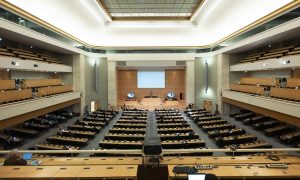
Informal consultations on the draft resolution on human rights and climate change
15 June 2026 | 10:30 – 12:00 CEST | Palais des Nations, Room III & Online
Philippines, Bangladesh & Viet Nam
Informal consultations on the draft resolution on human rights and climate change
15 June 2026 | 16:30 – 18:00 CEST | Palais des Nations, Room III & Online
Philippines, Bangladesh & Viet Nam
Informal consultations on the draft resolution on human rights and climate change
16 June 2026 | 10:30 – 12:00 CEST | Palais des Nations, Concordia 1 & Online
Philippines, Bangladesh & Viet Nam
Informal consultations on the draft resolution on human rights and extreme poverty
16 June 2026 | 10:30 – 12:00 CEST | Palais des Nations, Room IX & Online
France, Albania, Belgium, Chile, Morocco, Peru, Philippines & Romania
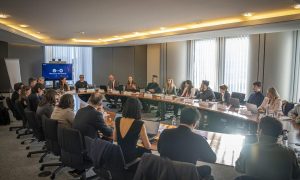
HRC@20 – Roundtable Standard Setting: From the ICED to the Right to Environment
16 June 2026 | 9:00 – 12:00 CEST | Geneva Press Club, Attic Room
Geneva Human Rights Hub
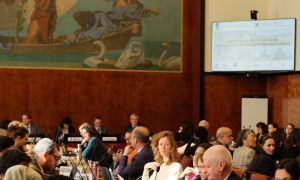
HRC@20 - Track Record of 20 Years of Standard Setting by the HRC | HRC62 Side Event
16 June 2026 | 14:00 – 15:00 CEST | Palais des Nations, Concordia 1
Dominican Republic, Costa Rica, Slovenia, France, Marshall Islands, Maldives, Geneva Human Rights Hub, International Commission of Jurists, CEDI, APT, FIAN Switzerland
Informal consultations on the draft resolution on human rights and climate change
16 June 2026 | 16:30 – 18:00 CEST | Palais des Nations, Concordia 1 & Online
Philippines, Bangladesh & Viet Nam
Informal consultations on the draft resolution on human rights and climate change
17 June 2026 | 10:30 – 12:00 CEST | Palais des Nations, Room IX & Online
Philippines, Bangladesh & Viet Nam
Informal consultations on the draft resolution on human rights and climate change
17 June 2026 | 15:00 – 16:30 CEST | Palais des Nations, Room IX & Online
Philippines, Bangladesh & Viet Nam
Informal consultations on the draft resolution on human rights and climate change
18 June 2026 | 15:00 – 18:00 CEST | Palais des Nations, Room V & Online
Philippines, Bangladesh & Viet Nam
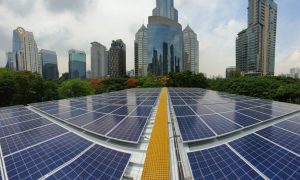
Climate Change, Energy Transition and Adaptation: Advancing Resilient, Inclusive and Rights-Based Energy Transition Frameworks | HRC62 Side Event
18 June 2026 | 13:00 – 14:00 CEST | Palais des Nations, Concordia 1 & Online
Malaysia, Maldives, Philippines, Vietnam, IISD, Soka Gakkai, GEN

Climate Talk: Film-Screening “Stories from the Blue Frontier”
18 June 2026 | 13:45 – 14:45 CEST | Palais des Nations, Room XIV (Cinema Room)
Germany, Fiji
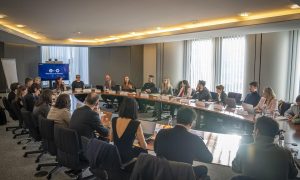
HRC@20 - Roundtable Expanding Participation and Strengthening Implementation
19 June 2026 | 9:00 – 12:00 CEST | Villa Rigot
Geneva Human Rights Hub, Global Cities Hub, GANHRI, ISHR, Geneva for Human Rights and the Swiss Human Rights Institution.
Annual panel discussion on the adverse impacts of climate change on human rights
19 June 2026 | 10:00 – 12:00 CEST | Palais des Nations, Assembly Hall & Online
Informal consultations on the draft resolution on human rights and climate change
19 June 2026 | 10:30 – 12:00 CEST | Palais des Nations, Room III & Online
Philippines, Bangladesh & Viet Nam
Interactive Dialogue with SR climate change
19 June 2026 | 16:00 CEST onwards | Palais des Nations, Assembly Hall & Online
Informal consultations on the draft resolution on human rights and climate change
19 June 2026 | 15:00 – 16:30 CEST | Palais des Nations, Room III & Online
Philippines, Bangladesh & Viet Nam
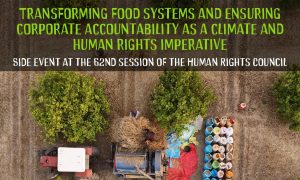
Transforming Food Systems and Ensuring Corporate Accountability as a Climate and Human Rights Imperative | HRC62 Side Event
22 June 2026 | 12:00 – 13:00 CEST | Palais des Nations, Room IX
FIAN International, SR climate change, FES, Franciscans International, CETIM, CIEL, La Via Campesina, Indonesian Peasant Union, Marshall Islands
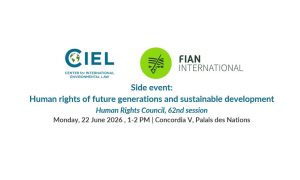
Human Rights of Future Generations and Sustainable Development | HRC62 Side Event
22 June 2026 | 13:00 – 14:00 CEST | Palais des Nations, Concordia 5
CIEL & FIAN International

The Sumaúma Pledging Tree for Human Rights-Based Climate Action | HRC62 Side Event
22 June 2026 | 14:00 – 15:00 CEST | Palais des Nations, Room V
OHCHR, Ministry of Human Rights and Citizenship of Brazil, UN Special Rapporteur on human rights and climate change, UNFCCC COP30 Special Envoy on Human Rights and Just Transition
Informal consultations on the draft resolution on human rights and climate change
22 June 2026 | 15:00 – 18:00 CEST | Palais des Nations, Room III & Online
Philippines, Bangladesh & Viet Nam
NGO Breakfast with the SR climate change and human rights (on invitation only)
23 June 2026 | 9:00 – 10:30 CEST | Palais des Nations
GeCCco
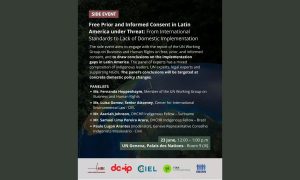
Right to Free, Prior and Informed Consent | HRC62 Side Event
23 June 2026 | 12:00 – 13:00 CEST | Palais des Nations, Room IX
Conselho Indigenista Missionário CIMI

Ship Recycling: The Hong Kong and Basel Conventions | Basel OEWG-15 Side Event
23 June 2026 | 13:30 – 14:30 CEST | CICG, Room 4
BIMCO and the NGO Ship Breaking Platform
Interactive Dialogue with WG on transnational corporations
23 June 2026 | 16:00 – 18:00 CEST | Palais des Nations, Assembly Hall & Online
The Case for Basel Controls on all Plastic Wastes: Local Realities of the Global Waste Trade | Basel OEWG-15 Side Event
23 June 2026 | 18:30 – 19:30 CEST | CICG, Room 4 & Online
Basel Action Network, IPEN
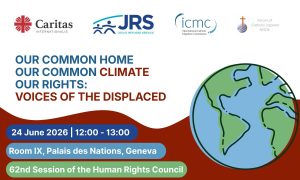
Our Common Home, Our Common Climate, Our Rights: Voices of the Displaced | HRC62 Side Event
24 June 2026 | 12:00 – 13:00 CEST | Palais des Nations, Room IX
Caritas Internationalis, JRS, ICMC, Forum of Catholic Inspired NGOs
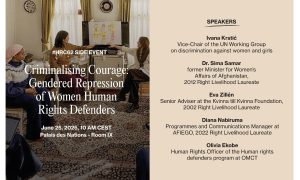
Women Human Rights Defenders | HRC62 Side Event
25 June 2026 | 10:00 – 11:00 CEST | Palais des Nations, Room IX
Right Livelihood Award Foundation
Interactive Dialogue with SR on extreme poverty
25 June 2026 | 11:30 CEST onwards | Palais des Nations, Assembly Hall & Online

Draft Proposals | Submission Deadline
25 June 2026 | 13:00 CEST
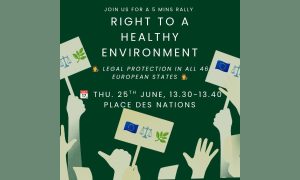
Demonstration on Right to Healthy Environment
25 June 2026 | 13:30 – 13:40 CEST | Place des Nations
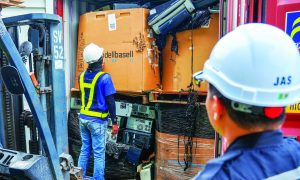
E-Waste Trafficking Out of Control One Year After Basel E-Waste Amendments | Basel OEWG-15 Side Event
25 June 2026 | 13:30 – 14:30 CEST | CICG, Room 4 & Online
Nexus3 Foundation, Basel Action Network, BAN Toxics
Interactive Panel: Principles of the Aarhus Convention in International Forums Dealing with Plastics, Chemicals, Waste and Pollution | Aarhus Convention WGP30
25 June 2026 | 15:00 – 18:00 CEST | Palais des Nations, Room III
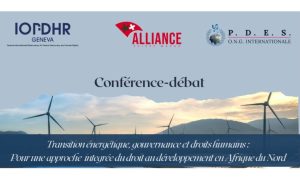
Transition énergétique, gouvernance et droits humains : Pour une approche intégrée du droit au développement en Afrique du Nord
25 June 2026 | 17:00 – 18:00 CEST | Club Suisse de la Presse, Chem. de l’Imperatrice 18
Observatoire International de Genève pour la Paix, la Démocratie et les Droits de l’Homme (IOPDHR), l’Alliance Suisse-Maroc & PDES-ONG

The Forgotten Pacific | Film Screening
26 June 2026 | 13:00 – 15:30 CEST | Palais des Nations, Room XIV (Cinema Room)
Australia, Marshall Islands, Pacific Islands Forum, Micronesia, Fiji, Kiribati, Nauru, New Zealand, Papua New Guinea, Samoa, Vanuatu
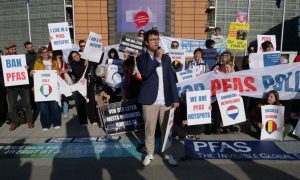
The Threats of PFAS on Human Rights, the so-called “Forever Chemicals” | Geneva Toxic Free Talks
26 June 2026 | 13:45 – 14:45 CEST | Palais des Nations, Room S-29
Rights of Peasants | HRC62 Side Event
26 June 2026 | 14:00 – 15:00 CEST | Palais des Nations
Centre Europe – tiers monde
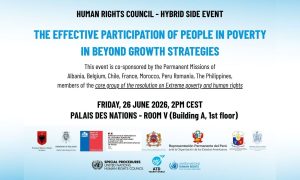
The effective participation of people in poverty beyond growth strategies | HRC62 Side Event
26 June 2026 | 14:00 – 15:00 CEST | Palais des Nations
France & ATD Quart Monde
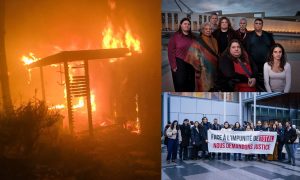
Human Rights Obligations Beyond Direct Emissions, Including Exports of Fossil Fuel: The implications of two recent groundbreaking legal cases | HRC62 Side Event
29 June 2026 | 13:00 – 14:00 CEST | Palais des Nations, Room XI
Earthjustice
Climate Change and Human Rights | HRC62 Side Event
2 July 2026 | 10:00 – 11:00 CEST | Palais des Nations, Room XI
Villages Unis
A Small Island Story: 20 Years of SIDS Advocacy and Influence at the Human Rights Council | HRC62 Side Event
1 July 2026 | 13:00 – 14:00 CEST | Palais des Nations, Concordia 1
Maldives
Mobility and Forced Displacement of Indigenous and Minorities Peoples | HRC62 Side Event
1 July 2026 | 13:00 – 14:00 CEST | Palais des Nations, Room XI
Genève pour les droits de l’homme : formation internationale

The rights of nature: intersections with the right to a healthy environment | HRC62 Side Event
2 July 2026 | 11:00 – 12:00 CEST | Palais des Nations, Concordia 1
OHCHR, Panama, GEN

Human Rights Implications of Crimes that Affect the Environment and Emerging Global Responses | HRC62 Side Event
3 July 2026 | 13:00 – 14:00 CEST | Palais des Nations, Room XI
WWF International, Earthjustice, UNCAC Coalition, OHCHR, GeHRBiL, GEN, GI-TOC and Wildlife Justice Commission
Russia’s Destruction of the Kakhovka Dam: Violation of the Right to Life, Ecocide, and A New Pathway to Justice for Victims | HRC62 Side Event
3 July 2026 | 14:00 – 15:00 CEST | Palais des Nations, Concordia 1
Latvia, Ukraine & EU

Decisions and Conclusions
3-7 July 2026 | Palais des Nations, Assembly Hall & Online
Informal Briefing on OHCHR-UNEP Collaboration to Advance the Right to a Clean, Healthy and Sustainable Environment
9 July 2026 | 13:00 – 14:00 CEST | Palais des Nations, Room H 207-208-209 & Online, Teams
HRC62 Info-Sharing Session
Environmental issues are present in various agenda items of each session of the Human Rights Council and their side events.
In order to develop more synergies among stakeholders and a better outreach on the environmental agenda of HRC62, including the activities taking place in parallel to the Council’s session, the Geneva Environment Network, the Geneva Climate Change Consultation Group (GeCCco) partners will convene an information-sharing session. This event will discuss and share information on planned environment-related activities at and around HRC62, such as in person and online events, publications or exhibitions, among others, and exchange on possible synergies. They feed the GEN page on HRC62 which provide an updated calendar of these environment-related events. → Share information on your activity!

Reports
Reports presented at HRC62 relating to the global environmental agenda are listed below. The full list of reports can be consulted on the HRC website.
Note: During the maintenance of the Official Document System, issued reports for the 62nd session can be found in the United Nations Digital Library.
- A/HRC/62/36 | Agribusiness, food security and human rights | UN Working Group on the issue of human rights and transnational corporations and other business enterprises (UN Digital Library)
- A/HRC/62/36/Add.2 | Indigenous Peoples’ free, prior and informed consent, business and human rights | UN Working Group on the issue of human rights and transnational corporations and other business enterprises (UN Digital Library)
- A/HRC/62/42 | The manufacturing of poverty | UN Special Rapporteur on extreme poverty and human rights (UN Digital Library)
- A/HRC/62/42/Add.2 | Addendum to the report of the Special Rapporteur on extreme poverty and human rights (UN Digital Library)
- A/HRC/62/44 | Transforming food systems for a safe climate and health for all | UN Special Rapporteur on the promotion and protection of human rights in the context of climate change (UN Digital Library)
- A/HRC/62/54 | Impact of artificial intelligence systems on good governance | Human Rights Council Advisory Committee
Resolutions
Resolutions (found on the HRC62 website) relating to the global environmental agenda tabled or adopted by their main sponsors at HRC62 and their subsequent decisions are listed below. A summary of actions on the resolutions is provided by the Geneva Centre for Human Rights Advancement and Global Dialogue.
A/HRC/62/6 | (A/HRC/62/L.2) | Enhancement of international cooperation in the field of human rights | Uganda (on behalf of the Movement of Non-Aligned Countries) | Adopted by recorded vote (29 to 16 with 1 abstentions)
- Urges States to take, upon request by affected States, the measures necessary to enhance bilateral, regional and international cooperation aimed at addressing the adverse impact of consecutive and compounded global crises, such as health crises, financial and economic crises, food crises, climate change and natural disasters, and refugee and internal displacement crises, on the full enjoyment of human rights;
- Urges States to take further steps to develop and diffuse science, and to recognize the benefits to be derived from the encouragement and development of international contacts and cooperation in the scientific fields, reiterates in this respect the right of everyone to enjoy the benefits of scientific progress and its applications
A/HRC/62/11 | A/HRC/62/L.12 | Freedom of opinion and expression | Canada, Brazil, Fiji, Namibia, Netherlands (Kingdom of the), Sweden | Adopted without a vote
- Acknowledging the essential role of, inter alia, journalists and other media workers, members of academic communities, human rights defenders, and other civil society actors in the promotion and protection of the right to freedom of opinion and expression, and in this context expressing alarm at the continued and increasing violations and abuses of the right to freedom of opinion and expression facing them, including increased attacks directed against and killings of journalists and other media workers, including women journalists and journalists reporting on conflict situations, occupation, environmental and climate issues, as well as scholars, academics, students, artists, human rights defenders, including women human rights defenders and environmental human rights defenders
- Strongly condemns the threats, reprisals, harassment and violence against, both online and offline, including through repressive activities conducted abroad by States, or actors under their effective control, and the targeting, criminalization, intimidation, arbitrary detention, torture, disappearance and killing of any individual, including journalists and other media workers, academic communities, artists and cultural workers, human rights defenders, including environmental human rights defenders…
A/HRC/62/14 | A/HRC/62/L.18/Rev.1 | Human rights and climate change | Philippines, Bangladesh, Viet Nam | Adopted without a vote
- Recalling the unanimous advisory opinion of the International Court of Justice of 23 July 2025 on the obligations of States in respect of climate change and the advisory opinion of the International Tribunal for the Law of the Sea of 21 May 2024 on climate change and international law, as well as the final report of the International Law Commission Study Group on sea-level rise in relation to international law.
- Recalling General Assembly resolution 80/263 of 20 May 2026 on the Advisory Opinion of the International Court of Justice on the Obligations of States in respect of Climate Change,
- Stressing the importance of global solidarity in undertaking adaptation efforts, including long-term transformational and incremental adaptation, towards reducing vulnerability and enhancing adaptive capacity and resilience, as well as the collective well-being of all people, the protection of livelihoods and economies, and the preservation and regeneration of nature, for current and future generations,
- Recognizes that the decisions, actions and inactions of present generations have an intergenerational multiplier effect, and resolves to ensure that present generations act with responsibility towards safeguarding the needs and interests of future generations,
- Recognizes the importance for all countries of averting, minimizing and addressing loss and damage associated with the adverse effects of climate change, including extreme weather events and slow-onset events, and the role of sustainable development in reducing the risk of loss and damage;
- Decides that the annual panel discussion to be held at the sixty-fifth session shall be focused on “Human rights and climate adaptation: challenges, good practices, and recommendations on actionable pathways to safeguard the enjoyment of human rights of the present generation and the needs and interests of future generations”
- Requests the Secretary-General to prepare an analytical study on “Human rights and climate adaptation: challenges, good practices, and recommendations on actionable pathways to safeguard the enjoyment of human rights of the present generation and the needs and interests of future generations”
A/HRC/62/16 | (A/HRC/62/L.8) | Mandate of Independent Expert on human rights and international solidarity | Cuba | Adopted by recorded vote (29 to 16, with 1 abstention)
- Requests the Independent Expert to continue to participate in relevant international forums and major events with a view to promoting the importance of international solidarity in the realization of the 2030 Agenda for Sustainable Development, especially the Sustainable Development Goals relating to economic, social and climate issues
- Reiterates its request to the Independent Expert to take into account the outcomes of all major United Nations and other global summits and ministerial meetings in the economic, social and climate fields
- Decides to extend the mandate of Independent Expert on human rights and international solidarity for a period of three years
A/HRC/62/20 | A/HRC/62/L.26 | Protection of healthcare in armed conflict | Qatar | Adopted as orally revised without a vote
- Recognizing that humanitarian emergencies, including those caused by armed conflict, often disrupt not only access to health care services but also the underlying determinants of health, including safe drinking water and sanitation, adequate food, housing, education, work, and clean, healthy and sustainable environment
- Affirms also that the obligation of States, under international human rights law, as applicable, to respect, protect and fulfil the right to the enjoyment of the highest attainable standard of physical and mental health in armed conflict, including situations of occupation, includes reducing the causes of ill-health, and ensuring, without discrimination, the availability, accessibility, acceptability and quality of health care, and addressing the underlying determinants of health, including safe drinking water and sanitation, adequate food, housing, education, work, and clean, healthy and sustainable environment
A/HRC/62/21 | A/HRC/62/L.27 | Human rights and neglected tropical diseases | Malawi, Burkina Faso, Gambia, Kenya, Morocco, United Republic of Tanzania | Adopted as orally revised without a vote
- Recognizing that climate change may alter the transmission and geographic spread of certain neglected tropical diseases, with implications for the enjoyment of human rights, including the right of everyone to the enjoyment of the highest attainable standard of physical and mental health and that such impacts may disproportionately affect persons living in poverty and other situations of vulnerability
- Encourages Member States to consider the implications of climate change and environmental degradation as key risk factors for the transmission and geographic spread of vector-borne neglected tropical diseases and to strengthen surveillance, preparedness, prevention, while scaling up international cooperation for climate change mitigation and adaptation efforts accordingly, with particular attention to protecting the right to the enjoyment of the highest attainable standard of physical and mental health of persons in vulnerable situations and communities disproportionately affected by neglected tropical diseases
- Requests the Office of the United Nations High Commissioner for Human Rights to prepare a comprehensive report on the human rights dimensions of neglected tropical diseases, … and to submit the report to the Human Rights Council at its sixty-fifth session
A/HRC/62/22 | (A/HRC/62/L.7) | The Social Forum | Cuba | Adopted without a vote
- Decides that the 2027 Social Forum should be focused on the achievements, challenges and good practices in the field of social protection for the realization of human rights: the role of international cooperation and solidarity
A/HRC/62/28 | (A/HRC/62/L.22) | Extreme poverty and human rights | France, Albania, Belgium, Chile, Morocco, Peru, Philippines, Romania | Adopted as orally revised without a vote
- Deeply concerned also that progress towards ending extreme poverty has been reversed at the global level by inter alia, increasing adverse impact of climate change, rising inequalities and increasing debt servicing costs, health challenges…
- Decides to extend, for a period of three years, the mandate of the Special Rapporteur on extreme poverty and human rights
- Requests the Special Rapporteur to submit an annual report on the implementation of the present resolution to the Human Rights Council, and, on a biennial basis, to the General Assembly, as of its eighty-first session, and, in accordance with their programmes of work
Call for Submissions
Special Procedures
The special procedure mandate-holders are independent human rights experts who help advance human rights, by reporting and advancing from a country-specific or thematic perspective, some of which are related to the environment. Calls for submissions are made to help mandate-holders prepare their reports to the Human Rights Council.
The International Service Human Rights (ISHR) has published a Practical Guide to the UN Special Procedures provides an overview of the system of independent human rights experts known as the Special Procedures, and the different ways human rights defenders can make use of it to further their human rights causes.
Videos and Highlights
Videos and highlights of related events are featured in this section.
18 June 2026 | Climate Change, Energy Transition and Adaptation: Advancing Resilient, Inclusive and Rights-Based Energy Transition Frameworks | HRC62 Side Event
18 June 2026 | Climate Talk: Film-Screening “Stories from the Blue Frontier”
Videos are available in the page of the event.
22 June 2026 | Transforming Food Systems and Ensuring Corporate Accountability as a Climate and Human Rights Imperative | HRC62 Side Event
22 June 2026 | Human Rights of Future Generations and Sustainable Development | HRC62 Side Event
22 June 2026 | The Sumaúma Pledging Tree for Human Rights-Based Climate Action | HRC62 Side Event
24 June 2026 | Our Common Home, Our Common Climate, Our Rights: Voices of the Displaced | HRC62 Side Event
26 June 2026 | The Threats of PFAS on Human Rights, the so-called “Forever Chemicals” | Geneva Toxic Free Talks
29 June 2026 | Human Rights Obligations Beyond Direct Emissions, Including Exports of Fossil Fuel – The implications of two recent groundbreaking legal cases | HRC62 Side Event
2 July 2026 | The Rights of Nature: Intersections with the Right to a Healthy Environment | HRC62 Side Event
3 July 2026 | Human Rights Implications of Environmental Crime | HRC62 Side Event
Links and Resources
- 62nd session of the UN Human Rights Council
- UNOG Library | Conference Primer – HRC62
- GCHRAGD | Updates on HRC62
- ISHR | HRC62 | Key issues on agenda
- URG | Inside Track: HRC62
- GEN | Human Rights and the Environment
News and Updates
Relevant news and updates are featured in this section.
- As 62nd Human Rights Council closes, WCC supports climate safety, global health | WCC
- Human Rights Council Concludes Sixty-Second Regular Session after Adopting 28 Resolutions | UN Information Services in Geneva | 8 July 2026
- Human Rights Council to Hold its Sixty-Second Regular Session from 15 June to 7 July 2026 | UN Information Services in Geneva | 10 June 2026
Past HRC Sessions
Environment @ HRC61 | Environment @ HRC60 | Environment @ HRC59 | Environment @ HRC58 | Environment @ HRC57 | Environment @ HRC56 | Environment @ HRC55 | Environment @ HRC54 | Environment @ HRC53 | Environment @ HRC52 | Environment @ HRC51 | Environment @ HRC50 | Environment @ HRC49 | Environment @ HRC48 | Environment @ HRC47 | Environment @ HRC46 | Environment @ HRC45 | Environment @ HRC44 | Environment @ HRC43
Who to Follow on X
@UN_HRC | UN Human Rights Council
@IndonesiaGeneva | Permanent Mission of Indonesia to the United Nations Office and other international organizations in Geneva, President of the Human Rights Council in 2026
@ONUGinebraEC | Permanent Mission of Ecuador to the United Nations Office and other international organizations in Geneva
@marcevzb | H.E. Amb. Marcelo Vàzquez Bermúdez, Permanent Representative of Ecuador to the United Nations Office and other international organizations in Geneva, Vice-President of the Human Rights Council in 2026
@EstoniaGeneva | Permanent Mission of Estonia to the United Nations Office and other international organizations in Geneva, Vice-President of the Human Rights Council in 2026
@SpainUNGeneva | Permanent Mission of Spain to the United Nations Office and other international organizations in Geneva, Vice-President of the Human Rights Council in 2026
@UNHumanRights | The Office of the High Commissioner for Human Rights (UN Human Rights)
@volker_turk | UN High Commissioner for Human Rights
@Dabokunda | UN Deputy High Commissioner for Human Rights
@SREnvironment | Astrid Puentes Riaño, SR on the right to a clean, healthy, and sustainable environment (also @astridpuentes)
@SRclimatechange | Elisa Morgera, SR on the promotion and protection of human rights in the context of climate change
@SRtoxics | Marcos Orellana, SR on toxics and human rights
@AlbertBarume | Albert K. Barume, SR indigenous peoples
@SRWatSan | Pedro Arrojo Agudo, SR on rights to water and sanitation
@MichaelFakhri | Michael Fakhri, SR on right to food
@AXanthaki | Alexandra Xanthaki, SR on cultural rights
@SRpoverty | Olivier De Schutter, SR on poverty and human rights (also @DeSchutterO)
@ISHRglobal | The International Service for Human Rights
@FranciscansIntl | Franciscans International
@Geneva_Academy | Geneva Academy of International Humanitarian Law and Human Rights
@hrw | Human Rights Watch
@URGthinktank | Universal Rights Group (URG)
@YvesLador | Special Representative of Earthjustice in Geneva
@duycks | Senior Attorney – Climate and Energy Programme at the Center for International Environmental Law
@katha_nina | Katharina Rall, Senior Environment Researcher at Human Rights Watch
@ChildRightsCnct | Child Rights Connect
@CERI_Coalition | Children’s Environmental Rights Initiative (CERI)
@CRINwire | Child Rights International Network