
Événement Conférence
Human Rights of Future Generations and Sustainable Development | HRC62 Side Event
22 Juin 2026
13:00 – 14:00
Lieu: Palais des Nations | Concordia 5
Organisation: Center for International Environmental Law, FIAN International
At this side event to the 62nd session of the Human Rights Council, human rights experts discussed the legal norms related to the human rights of future generations, and opportunities to guarantee better protection of the rights of present and future generations in the context of relevant policy processes. The side event is organized by the Center for International Environmental Law and FIAN International, with the support of the Geneva Environment Network.
About this Event
Core human rights instruments contain no temporal limitation to the enjoyment of human rights. The Universal Declaration of Human Rights, the International Covenant on Economic, Social, and Cultural Rights, the International Covenant on Civil and Political Rights, and the United Nations Declaration on the Right to Development (UNDRTD), among other instruments, refer to “everyone”, and “every human person and all peoples”, which should be interpreted as including future generations and excluding any form of discrimination between generations.
The triple environmental crisis of climate change, pollution and biodiversity loss is exposing the Earth, and present and future generations to mounting human rights violations. Yet, international governance remains often driven by short-term priorities to the detriment of intragenerational and intergenerational equity.
The international community has given increasing attention to the human rights of future generations within the UN and other multilateral fora. The Maastricht Principles on the rights of future generations, launched in July 2023, seek to consolidate and develop existing human rights standards to enhance the protection and fulfillment of the human rights of future generations. The UN Declaration on Future Generations, adopted at the 2024 Summit of the Future gave greater emphasis on the importance of centering international governance on the cardinal principle of intergenerational equity. Across the world, the number of legal and political initiatives seeking to strengthen the consideration of intergenerational justice in policy making has increased steadily, illustrating the diversity of tools available to promote the protection of the rights of future generations.
At this side event, human rights experts discussed the legal norms related to the human rights of future generations, and opportunities to guarantee better protection of the rights of present and future generations in the context of relevant policy processes.
Environment @ HRC62
The 62nd regular session of the Human Rights Council (HRC62) takes place in Geneva from 15 June to 10 July 2026. Consult this regularly-updated page that highlighted the environmental-related activities of this session.
Speakers

H.E. Amb. Nahida SOBHAN
Permanent Mission of the People's Republic of Bangladesh to the United Nations Office and other international organizations in Geneva

Elisa MORGERA
UN Special Rapporteur on climate change and human rights

Marcos ORELLANA
UN Special Rapporteur on toxics and human rights
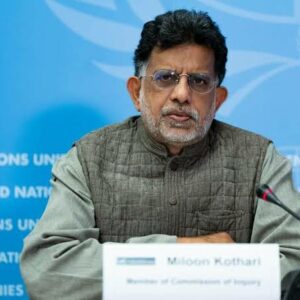
Miloon KOTHARI
International human rights expert and former UN Special Rapporteur on the right to adequate housing

Daouia CHALALI
Project Lead on Future Generations, UN University Centre for Policy Research (UNU-CPR)

Elisabeth JOST
Project Officer, FIAN Austria

Sébastien DUYCK
Senior Attorney, Center for International Environmental Law | Moderator
Highlights
Video
Summary
Sébastien DUYCK | Senior Attorney, Center for International Environmental Law | Moderator
- This event aims to consider the human rights of future generations in the context of sustainable development.
- There is an annual resolution on human rights and climate change that is being negotiated under the leadership of the Philippines, Vietnam and Bangladesh, and addresses this year in particular this question of the relation between human rights obligations and future generations.
Marcos ORELLANA | UN Special Rapporteur on toxics and human rights
- The human rights global policy offers a framework that clearly distinguishes between rights holders and duty bearers’ responsibilities of this generation. These rights of future generations are an integral element of this framework.
- It’s pertinent to draw a couple of distinctions, like the impact of persistent pollution such as exemplified by PFAS chemicals. The strength of this bond means that these chemicals are virtually indestructible. Even at 1400 C°, they may not be eliminated.
- Some may be toxic. None is safe. But there’s a point that sometimes goes unaddressed, which is their hyper-resistance at low levels of toxicity.
- Some may say their toxicity is not acute, and so they do not represent a significant problem, but when we compound the low levels of toxicity of some of the molecules in relation to very long-time frames, we’re talking about centuries, even millennia of persistence. The implications for the effective enjoyment of the right to a clean and sustainable environment become apparent.
- This is the first point the environmental health dimension, and then this needs to be distinguished from the impacts on our bodies and here I would draw attention to three scenarios:
- The first is the disproportionate impacts on children that’s often also characterized as future generations; lead is a good example of the impacts of intellectual coefficients that may hinder development progress for a lifetime.
- A second scenario is on alterations of our DNA. Highly hazardous pesticides have been shown to alter DNA that is then passed on to future generations.
- The third scenario on reproduction and disabilities was discussed in my thematic report on gender and toxics. For example, endocrine-disrupting chemicals cause reproductive injustices that result when certain communities can have healthy babies, and other communities are not.
- The issue of disabilities is also one that concerns the rights of future generations. As can be seen, these issues concern those who are alive today and those who are to come. Much of human rights has been born in the understanding that the individual needs a certain level of autonomy to carry out their full potential, and so that has led to individual rights.
- There is an understanding that humans do not exist in isolation but also exist in communities and shared identities.
- The case of Cannavacciulo versus Italy illustrates this because it speaks of millions of people over decades, in very large areas of land exposed to hazardous waste, burning, dumping, etc. This raises the point of collective rights that the Interamerican system has embraced for a good number of years, building on its jurisprudence and religious people when thinking about the right to a healthy environment.
- This then lays out the foundation for our thinking in human rights in terms of humanity. Not just individuals and collective rights, but interests and rights of humanity, the integrity of ecosystems, and the rights of future generations.
H.E. Amb. Nahida SOBHAN | Permanent Mission of the People’s Republic of Bangladesh to the United Nations Office and other international organizations in Geneva
- Bangladesh is among the most climate-vulnerable countries. The direct disproportionate impact of climate change on people’s lives, livelihoods, ecosystem and environment is a lived reality, and this is not only for today but also for future generations, bringing in huge challenges.
- Bangladesh had to make difficult choices in balancing development imperatives with environmental and climate action. With a large population on a small land and limited resources, Bangladesh faces a dual challenge.
- On one hand, development pathways that create economic opportunity must be pursued and on the other hand, climate adaptation and environmental protection must be strengthened to preserve our ecosystem and natural resources for both the present and future generations.
- In navigating these competing priorities, Bangladesh has consistently placed strong emphasis on environmental protection and consideration of intergenerational equity, recognizing that a healthy and sustainable environment and ecosystems are essential for securing the rights and prospects of future generations.
- Over the decades, Bangladesh has achieved notable progress in poverty reduction, food security, public health and disaster resilience. Particularly, public health has also become one of the priority areas of the current government in Bangladesh.
- However, these gains are now under threat from the adverse impact of climate change, including rising sea level, salinity intrusion, flood, river erosion, biodiversity loss and displacement. This is reversing decades of our development progress which are meant and targeted for future generations.
- Key points:
- National reports alone are insufficient to ensure intergenerational equity. International cooperation must remain at the center of our work as the challenges are driven largely by external factors.
The ability of developing countries to pursue sustainable and resilient development pathways depends on an enabling and effective international environment.
The principles of equity and common but differentiated responsibilities and respective capabilities must guide global efforts for mitigation and our collective work for adaptation and responding to loss and damages. Responsibilities and burdens must be shared clearly, considering the country’s respective capacities and historical contributions. - Sustainable development cannot be achieved without resilience. Development gains that are not climate-resilient and environmentally sustainable will not endure. Investments in climate mitigation and adaptation, disaster risk reduction and management, resilient infrastructure and ecosystem protection are investments not only for the present generation but also for the generations to come.
- Safeguarding the rights and dignity of future generations requires long-term vision in policy and development planning, both at the national level and at the global level. Where the UN and the human rights council see the consequences in the long run on the climate environment, resources should not be overlooked for short-term development and economic gains. The long-term implications of today’s decisions for the climate, ecosystems, biodiversity, and well-being of the upcoming generations should be central to national and international policy frameworks.
- Equally important is the meaningful participation of youth in the planning and in the actions that the government takes meant for future generations. Their perspectives should be integrated into development planning, climate action, and environmental decision-making as they will inherit the consequences of the choices made today.
- Human rights institutions can play a valuable role in promoting intergenerational considerations within laws, policies, and decision-making processes. They can promote accountability by encouraging the assessment of long-term human rights implications of development and environmental policies while fostering transparency, access to information, and inclusive public participation, particularly of young people.
- Human rights institutions can also help bridge science, policy, and human rights by promoting evidence-based approaches to addressing global challenges such as climate change, biodiversity, laws, development, finance, and emerging technologies. At the international level, they can contribute to advancing a coherent approach to global governance and support the effective implementation of commitments under the 2030 Agenda, the Paris Agreement, and the Declaration on Future Generations.
- The choices made today, the decisions taken today, and the actions implemented will shape and define the world that the future generation will inherit.
- Climate change reminds us that the actions of one generation in one part of the world can affect the lives and rights of people elsewhere, including those not yet born. Protecting the interests of future generations must inform our development planning, environmental and climate action, and international cooperation.
- What will shape future generations as we look at the world today must be understood. AI is going to shape our future generations and has already started to do so with the youngest generations now.
- That is the reason why an environment where AI does not shape or control our lives, our environment or the future generation has to be built, but rather we have to find the tools whereby the future generation can use AI for the greater benefit of humanity.
- In terms of things like environment, toxicity, uses of chemicals, climate change, it is very important that an international cooperation to curb digital divide is established in order to have a platform ready for future generations from every corner of the world that can have equal footing in digital education, in translating AI and ability in creating ability for them to connect to the future world of AI.
Elisa MORGERA | UN Special Rapporteur on climate change and human rights
- The chemical evidence around the impacts on our bodies and how that really shows the base that clarifies the links between intra and intergenerational equity as a matter of human rights is really important to provide something very tangible around who’s been impacted and how and what kind of very grounded evidence is available to states, to public authorities to make decisions that can better protect the rights of present and future generations.
- The Convention on the Rights of the Child, which is the most widely ratified convention, and in particular on children’s rights to development, because that’s the right that really considers existing knowledge of how children today, but also children in the near and medium-term future, will be differently exposed to environmental harm and climate impacts across different windows of vulnerability in their development.
- The rights of women, everyone’s right to a healthy environment, and the right to development are crucial to understand as the collective dimension and how it plays out in intergenerational terms. This has been the key to the contribution to the African court of human rights in its advisory opinion on climate change, which is in the making.
- African traditions of communitarianism and philosophy can help all of us to advance that understanding of how well-established international human rights can support scientists, civil society, but ultimately decision makers at every level to fully consider human rights implications across time and space.
- Toxics and their connection with health science are known; it is also important to rely on planetary health science, understanding how our soils and the oceans are both affected by climate change, but also how they’re deeply affected by the root causes of climate change.
- Specific economic activities, toxic substances within fossil fuels and prochemicals undermine our major carbon sinks, but also undermine the capacity of the planet to provide food, to contribute to the global water cycle, to contribute to everyone’s resilience in the context of climate change with predictable impacts across time.
- There is an opportunity to engage with tipping point science. Not because the area of science to tell us exactly when we may be reaching a tipping point is needed, but because the area of science is advanced enough for the purposes of international human rights law to understand foreseeable, likely irreversible harm.
- It gives enough understanding of where obligations of precaution and prevention come into place, as well as how important remedies and reparations are to contribute to moving away from tipping points.
- Youth and children’s participation, the right to be heard, and the creation of intergenerational spaces where we can also hear from our ancestors are fundamental to realizing the rights of future generations.
- Having witnessed this in some transformational science processes, it is possible there are methodologies and we should create space to have that kind of engagement with all knowledge systems that may be more advanced than some of the Western science to support us all in fully engaging with the full potential of human rights to protect right here, right now, the human rights of present and future generations.
Miloon KOTHARI | International human rights expert and former UN Special Rapporteur on the right to adequate housing
- The Maastricht principles are anchored in the universality and equal dignity of all members of the human family without temporal limitations.
- When drafting the principles, an important concept was that human generations exist along a continuum of time, in the same way that historical injustices affect the enjoyment of human rights in the present. The conduct of those presently alive will impact the enjoyment of human rights by individuals who will exist in the future.
- There is a very strong focus on the principles on the interlinkages between intra- and inter-generational human rights obligations and the measures that are required to eliminate intergenerational discrimination and disadvantage.
- An example of the latter is supporting less value to future lives and rights through discounting the impacts and burdens of present conduct of future generations.
- The specific principles also focus on intergenerational duties and trusteeship of the earth and its natural resources. Prevention and precaution in decision-making where there are reasonable grounds for concern.
- The present conduct and definitely the recent grounds may result in violations of human rights of future generations and the crucial importance of building a new international order based on international solidarity.
- The concept of intra- and intergenerational equity is closely associated with international environmental law and the principles of sustainable development.
- These concepts are also integrally linked with several human rights norms, equality, non-discrimination of economic, social and cultural rights, and the right to a clean, healthy and sustainable environment. The obligation to ensure that human rights are enjoyed fully and equally amongst members of present generations and between present and future generations gives rise to intra- and inter-generational human rights obligations.
- The idea of focusing on intra and inter human rights obligations aims to create conditions that will enable full and equal enjoyment of all human rights, each having a different temporal focus. This requires distributive justice within the present generation and between present and future generations.
- It is critical to provide and disseminate information on matters that are important for the effective participation, such as environmental and climate-related information on intergenerational toxic chemical and radiological hazards, technological developments, and scientific research. They must respect, protect, and fulfill the freedom to seek, receive, publish and disseminate information.
- The principles also recognize the need to establish specific institutions and mechanisms for representing future generations in participatory processes concerning decisions that may impact their human rights. Special attention is paid to ensuring representation by traditionally marginalized or disadvantaged groups within such institutions and mechanisms.
- These include some ideas that there are guardians, trustees, commissions and designated seats in parliament, and then the principles further elaborate on duties and responsibilities. Rights, duties and responsibilities are the language we must stay with and completely stay away from the needs of terminology because that takes away from the accountability that is built into human rights instruments. This applies to intergovernmental organizations, non-state actors, corporations, individuals, and communities.
- We need to go beyond just saying to use AI responsibly. We are at a stage where we need to slow down AI. It’s going too fast and it is completely out of control. It is, in a way, a surrender by the human rights community. If we don’t slow it down, there will be nothing of humanity left for future generations. That is a much bigger role than the council and everyone must express outrage at what is happening and in protecting the human rights of future generations.
Daouia CHALALI | Project Lead on Future Generations, UN University Centre for Policy Research (UNU-CPR)
- The Summit of the Future, through its Declaration on Future Generations, brought together a literature around planetary boundaries, tipping points and the old tradition of post-war planning capacity within states, with the need to protect future generations.
- What was not achieved is articulating this within the rights and duties framework. There was a strong push back from member states to achieve that during the negotiations; we stayed within the realm of the language around needs and interests.
- However, since then, there have been great achievements across the world, even before the summit, which had occurred as an acknowledgement of what had already been implemented at the national and regional level.
- Intergenerational equity is translated at the national and regional levels in different policy areas, whereas at the climate debt, fiscality and nuclear waste, there is a growing new recognition within member states. Even though such constitutional articles around protecting future generations, protecting the resources for the sake of future generations exist, it does not necessarily change the way decision processes are systematically made and also the incentives behind it, and it does not necessarily push for strong implementation.
- This is where the literature around long-term governance helps because it identifies concrete policy mechanisms. There are also constitutional provisions, framework clauses, and government planning and foresight capacity. This all helps to stretch the time horizon of governance, because if we started by saying that humanity is a continuum, future generations are, by default, rights holders.
- We need to extend the time horizon, and these are mechanisms that support doing that. Stated below are a few examples where future generations have been well represented in policy, in design, but also in courts, because I think these examples really showcase that it is possible; it is feasible, and it is desirable, and it can be scaled.
- In South Korea, the Constitutional Court (2024) declared unconstitutional the climate targets of the Korean Carbon Neutrality Framework Act because it lacked specific binding targets, and it urged the government to legislate binding targets by 2026. The argument mentioned was a failure to protect future generations and the intergenerational equity principle, which is in the Constitution.
- What is strong about this example is that the petitioners and the people who went into the constitutional court were civil society organizations, youth groups, but also all elderly groups that were holding symbolic visions of unborn people. This was one of the collective moments in a society that really changed something, which prompted the constitutional court to rewrite the government.
-
- In Chile, the Senate Commission on Future Challenges was created in 2012. It supported a constitutional reform on future generations’ rights, and this is one of the pioneer countries, and it is right now pushing for a national council for future studies. It’s really about how we bring the best knowledge and the best science to prevent risks from engaging in disaster risk management, but also in contributing to the further planning of society.
- In Italy (2022), there was a constitutional reform that opened one article, which introduced a change in Article Nine around the protection of resources for future generations. This prompted a litigation case between Greenpeace and the establishment of a law that imposes mandatory impact assessments on present and future generations of any major budgetary.
- These approaches provide great progress, but they remain isolated, leader-dependent and vulnerable to political wins, meaning that every election, people for future generations risk their place. At every election, a parliamentary committee for the future risks being dissolved because of budgetary concerns. A rights-based approach would really support an enduring institutionalization of these approaches, which is not necessarily the case in all countries.
Elisabeth JOST | Project Officer, FIAN Austria
- The Maastricht Principles are very clear and guarantee the possibility for future generations to live a life in dignity. The importance of respecting the precautionary principle in policy decision making to guarantee the participation of those affected by policy decisions within the analysis of risks, potential tradeoffs, or potential adverse effects on them, their children and their communities.
- The principles are also very clear that those who are violating the human rights of future generations must be held accountable for their violations, and that we or future generations have the right to reparations, restitution and compensation for human rights violations that have been passed.
- We experience an increase in war and conflicts across the globe, which lead to starvation, displacement and dispossession of individuals, communities and peoples around the world leaving their land and territories contaminated and leading to a loss of cultural identity for many.
- We see that financial resources are increasingly driven towards military buildup, extractive industries, and infrastructure projects, which well manifest the dependence on fossil fuels and create immense past dependencies not only today but for decades to come.
- We see or experience the dangerous alignment between governments, billionaires and their corporations and organized crime in many cultural contexts at the expense of human rights and environmental health, and that human rights defenders and climate activists across the globe in Europe.
- These defenders and activists are criminalized when they step up to protect our collective future. The concrete policy recommendations to integrate into this discussion is of the utmost importance for the human rights of future generations to be realized. To stop using food also as a weapon in armed conflicts, and to really guarantee that decent livelihoods and social protection are guaranteed to those who for example, feed us today, who are peasants, fishers, pastoralists, but also seasonal and informal workers in food supply chains.
- Agricultural policies that enable access to land, seeds and clean water should be a universal right, the strengthening of local markets and agroecological farming for communities to thrive and also not only focusing on the national context but engaging in fair and solidarity-based trade globally.
- Women and children are those who are disproportionately affected by climate change, we have to guarantee a safe passage to prevent intergenerational trauma for those that are on the move due to conflicts also driven and increased by climate change, and for all governments and representatives to really listen to a growing youth movement and climate and their call for their right to grow up in peace and security.
Closing
H.E. Amb. Nahida SOBHAN | Permanent Mission of the People’s Republic of Bangladesh to the United Nations Office and other international organizations in Geneva
- The human rights council can play an important role in advancing a more adequate consideration of the rights of future generations in climate policy. The Council should:
- Mainstream the rights of future generations across its work, not look into things from the side.
- Recognize the growing reality of migration as an adaptation strategy. Initiatives such as the Pacific Australia Labor Mobility, more commonly known as the PAL scheme, demonstrate how safe and regular mobility pathways can strengthen resilience, support adaptation efforts and continue enjoyment of human rights by affected communities and future generations.
- Encourage states to integrate long-term and intergenerational aspects into climate-related policies.
- Continue to advocate for enhanced international cognition, including climate financing, technology transfer and capacity building. These are particularly important for the well-being of future generations.
- In relation to the advancements of AI, it is high time to slow down its pace and understand it better. The problem with the AI and it it has a lot of effect on climate change and human rights.
- The whole AI system and the platform are in the hands of a handful.
- We need to benefit from it in future generations. We need to make access to the right to access an AI platform digital knowledge for everybody and not just for a handful of people everybody across the globe.