Événement Conférence
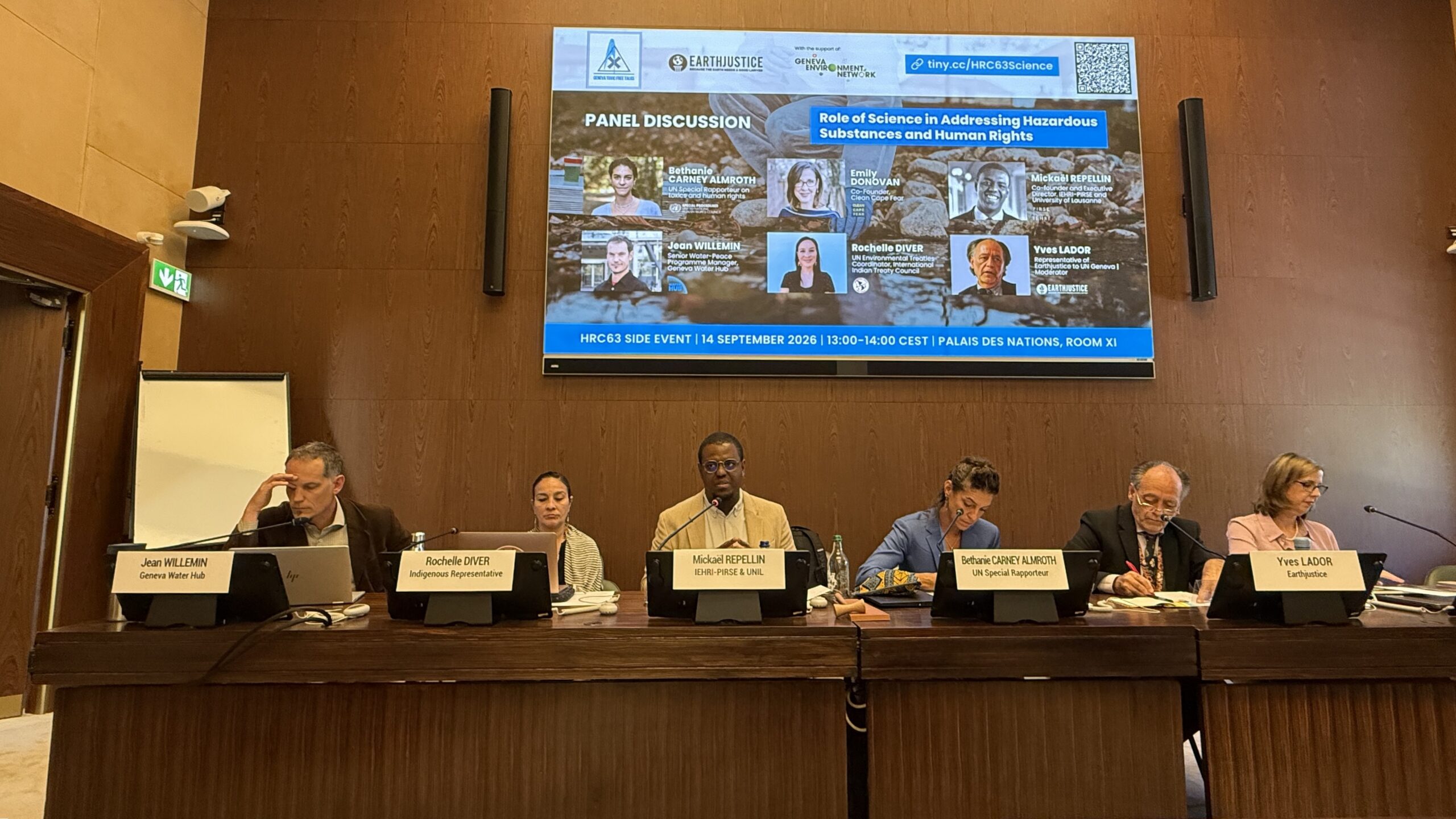
Role of Science in Addressing Hazardous Substances and Human Rights | HRC63 Side Event
This side event to the 63rd session session of the Human Rights Council (HRC63) discussed how the right to science relates to the struggle for the rights of victims of PFAS contamination, to the experience of local communities and to the implementation of the rights of Indigenous Peoples. The side event was organized by Earthjustice, with the support of the Geneva Environment Network, within the framework of the Geneva Toxic Free Talks.
About this Event
Today, chemicals are everywhere: in our buildings, in our clothes, in our cars and even in our medicines and food. This is a striking result of industrial progress. The problem that comes with it is that, because of the ubiquity of chemical pollutants in so many aspects of daily life, we have reached thresholds threatening health and dangerously disrupting the Earth systems, leading UNEP to describe it as the Triple Planetary Crisis (UNEP & ISC, 2024) interconnecting pollution with the two other major threats, biodiversity loss and climate change.
The human rights impacts of chemical pollution, biodiversity loss and climate change remind us that development at the expense of the environment leads to a dangerous road: growing first and cleaning up later cannot be an option.
But as human beings we cannot detect the exact chemical composition of the air we breath or the water we drink. Scientific instruments are needed to accurately measure pollution.
This was what motivated the former UN Special Rapporteur on toxics and human rights, in 2021, to dedicate a report to the human right to science (A/HRC/48/61), examining the dynamics and interconnections between scientific progress, the flow of scientific information and the science-policy interface with the life cycle of hazardous substances and wastes.
The right to science is the right of all people to benefit from scientific progress and its applications, as recognized in Article 27 of the Universal Declaration of Human Rights, and in Article 15 (1) (b) of the International Covenant on Economic, Social and Cultural Rights, highlighting the need of evidence-informed decision-making process. Upholding this right requires adequate and sufficient public funding for science and education, guarantees for academic freedom, data transparency, meaningful participation of diverse knowledge holders and mechanisms to address conflicts of interest.
The report presented at this 63rd session of the Human Rights Council (A/HRC/63/27), which examines how the PFAS class of chemicals impairs the effective enjoyment of human rights, illustrates how crucial is the right to science when facing such profound threats to human rights and the environment.
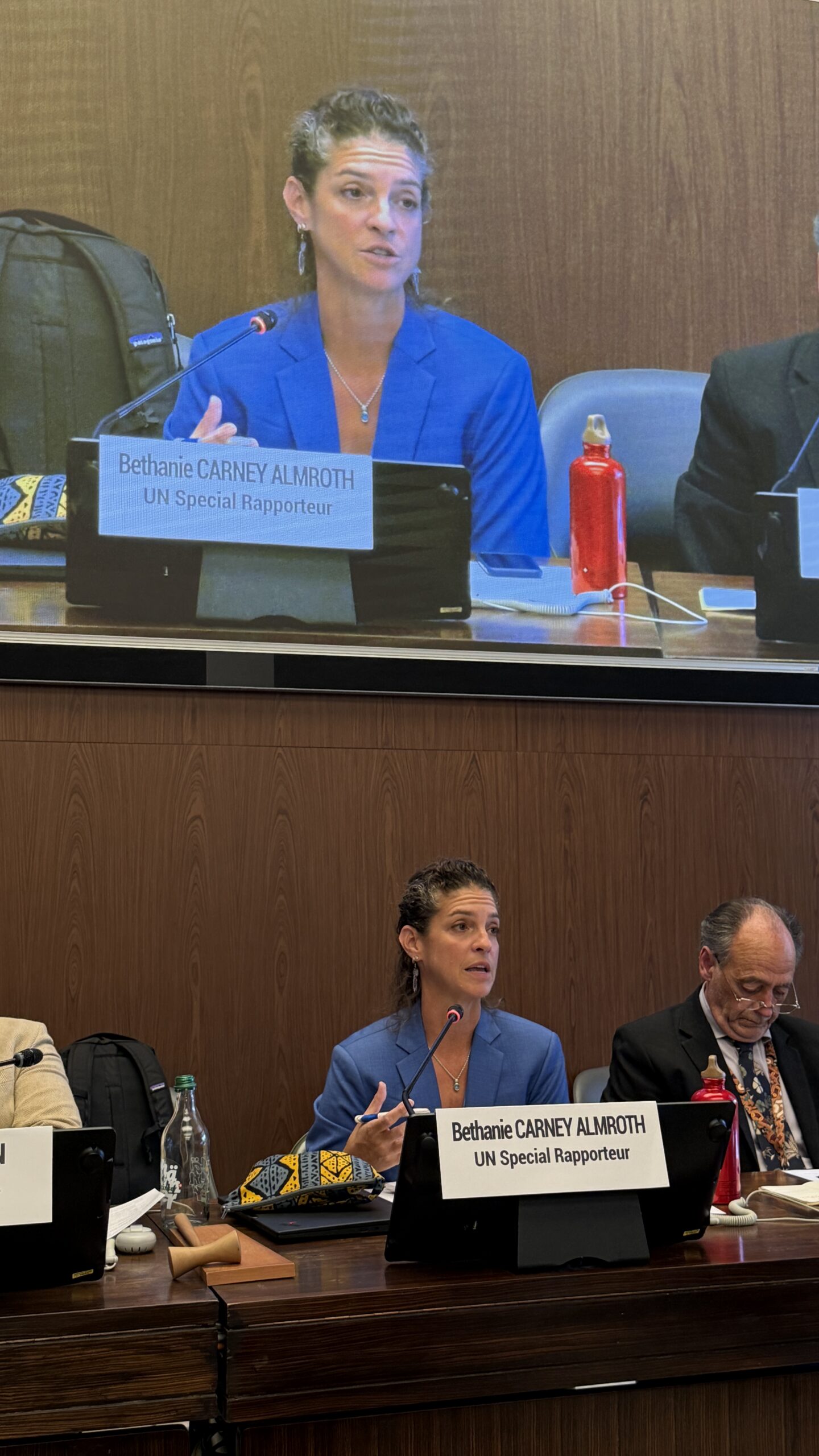
In this side event, the UN Special Rapporteur, Bethanie Carney-Almroth, with her career in ecotoxicology, introduced the issue and discussed with the panellists how the right to science relates to the struggle for the rights of victims of PFAS contamination, to the experience of local communities and to the implementation of the rights of Indigenous Peoples.
Environment @ HRC63
The 63rd regular session of the UN Human Rights Council (HRC63) will take place in Geneva from 7 September to 7 October 2026. Consult this regularly-updated page that highlighted the environmental-related activities of this session.

Geneva Toxic Free Talks
Though integral to almost all sectors of society, the lack of environmentally sound management of chemicals and waste can have long-lasting negative impacts on human health, society and the environment.
The UN Special Rapporteur on toxics and human rights reports every autumn to the Council and to the UN General Assembly on issues related to her mandate. The Geneva Toxic Free Talks aim to harness the opportunity of this moment of the year to reflect on the challenges posed by the production, use and dissemination of toxics and on how Geneva contributes to bringing together the actors working to reverse the toxic tide.
On the margins of HRC63, the 2026 edition of the Geneva Toxic Free Talks is taking place, with conferences and discussions, highlighting the work of the Special Rapporteur and of organizations in the struggle for the right to live in a toxic-free environment.

Speakers

Bethanie CARNEY ALMROTH
UN Special Rapporteur on toxics and human rights

Emily DONOVAN
Co-Founder, Clean Cape Fear

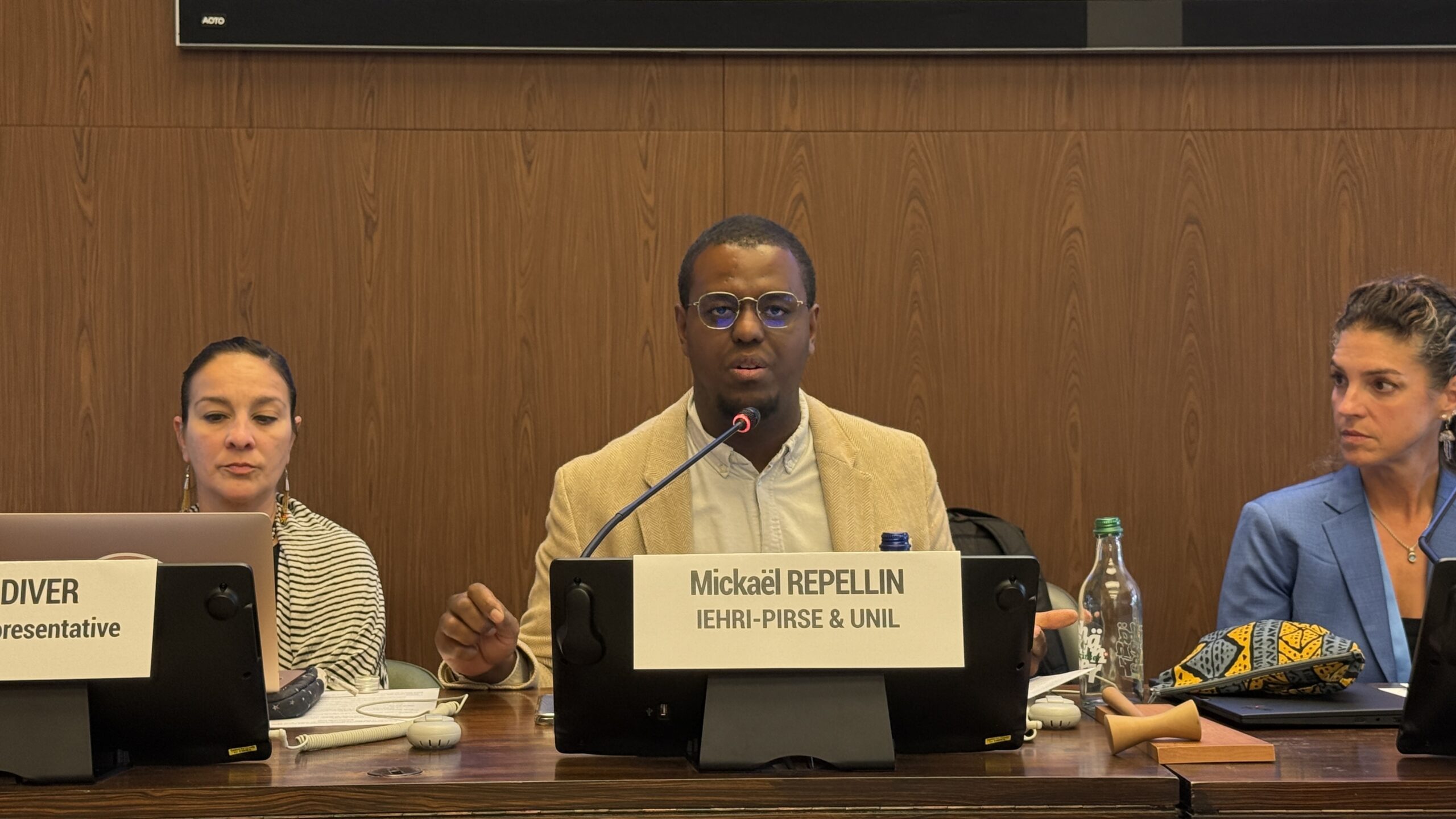
Mickaël REPELLIN
Co-founder and Executive Director, Interdisciplinary Institute for Environmental Health Research and Information (IEHRI-PIRSE) and University of Lausanne
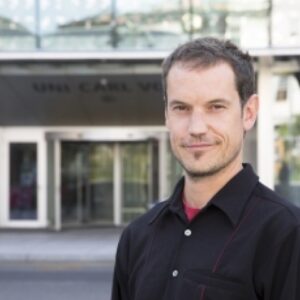
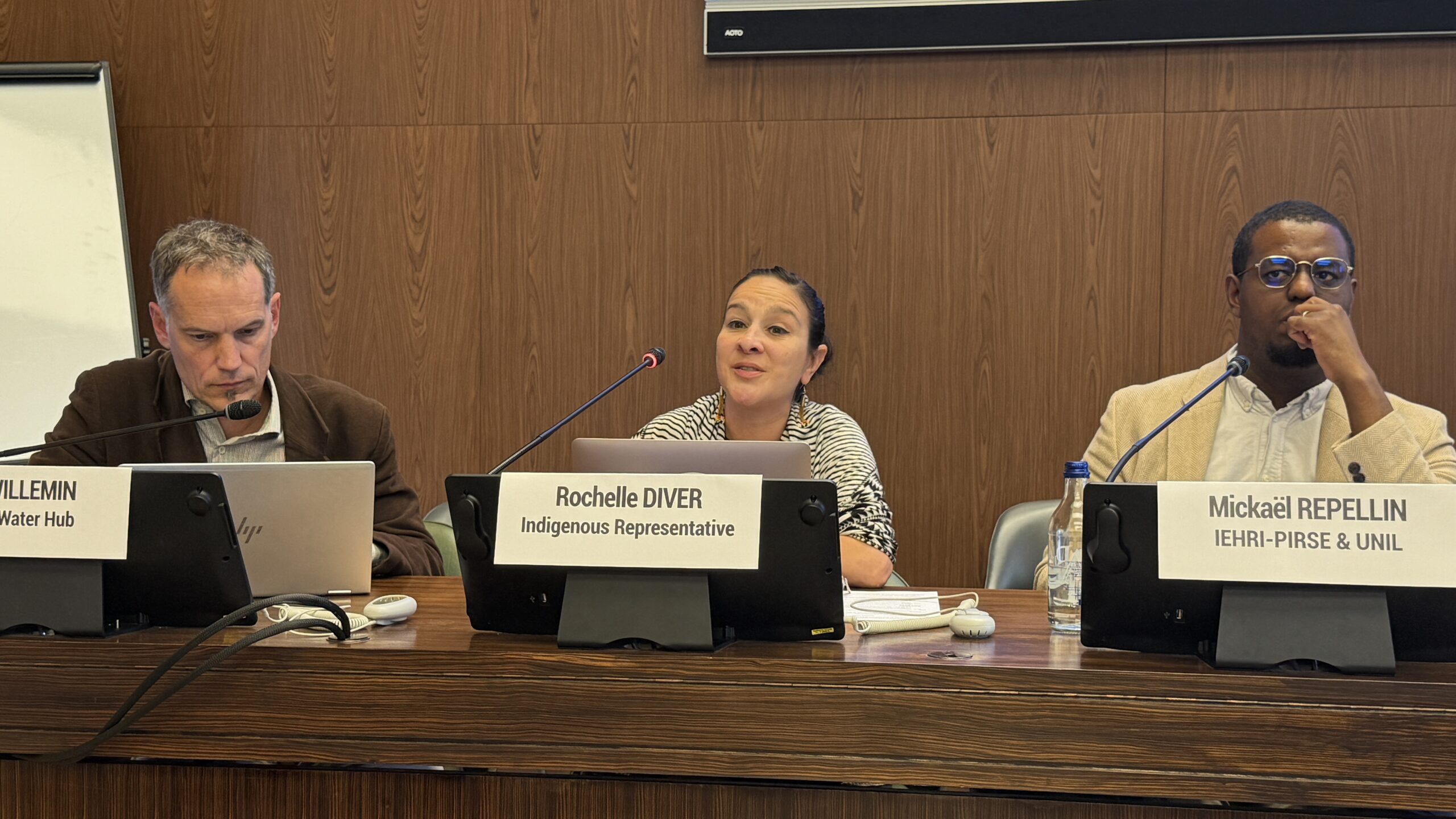
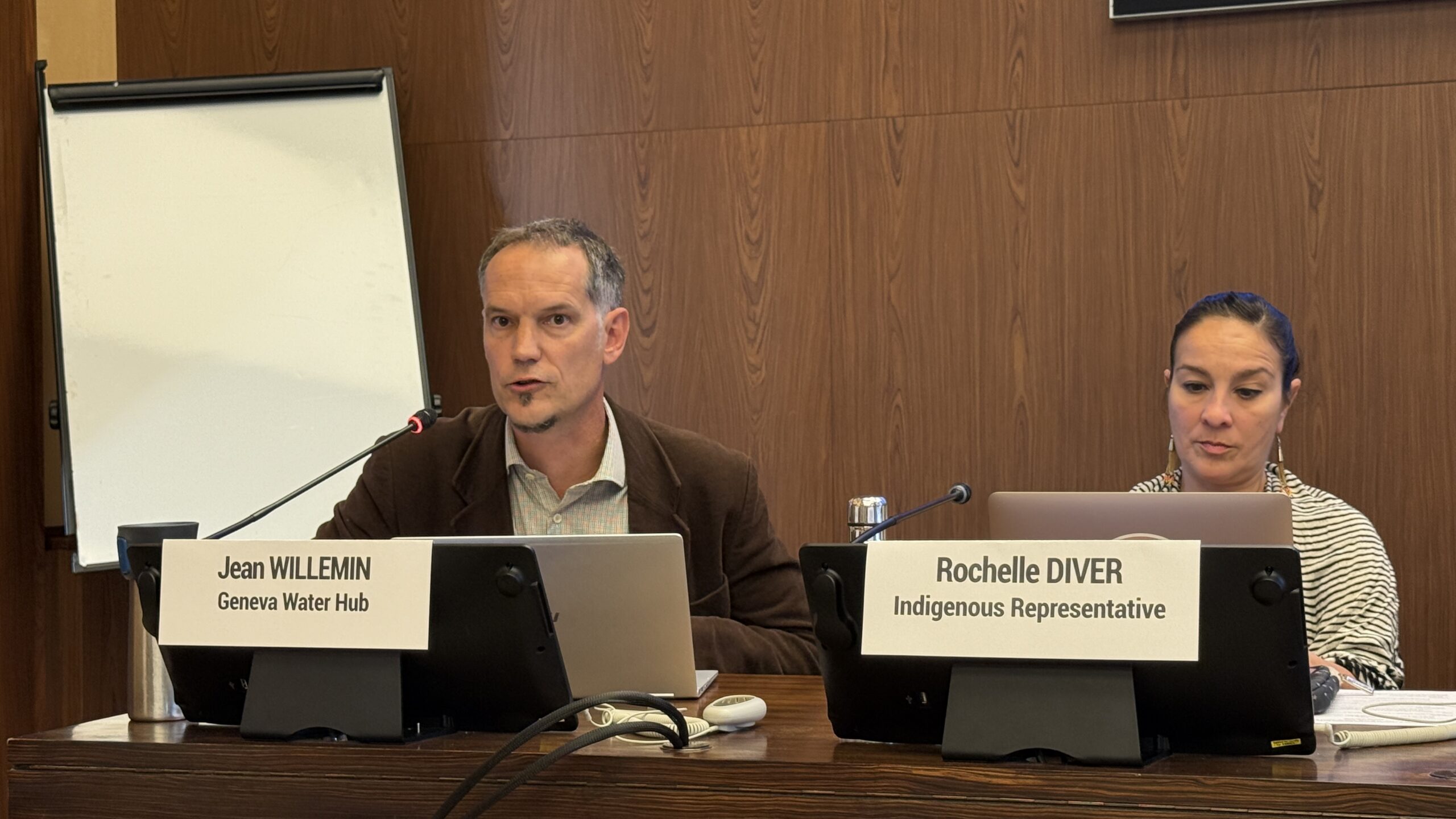
Jean WILLEMIN
Senior Water-Peace Programme Manager, Geneva Water Hub

Rochelle DIVER
UN Environmental Treaties Coordinator, International Indian Treaty Council

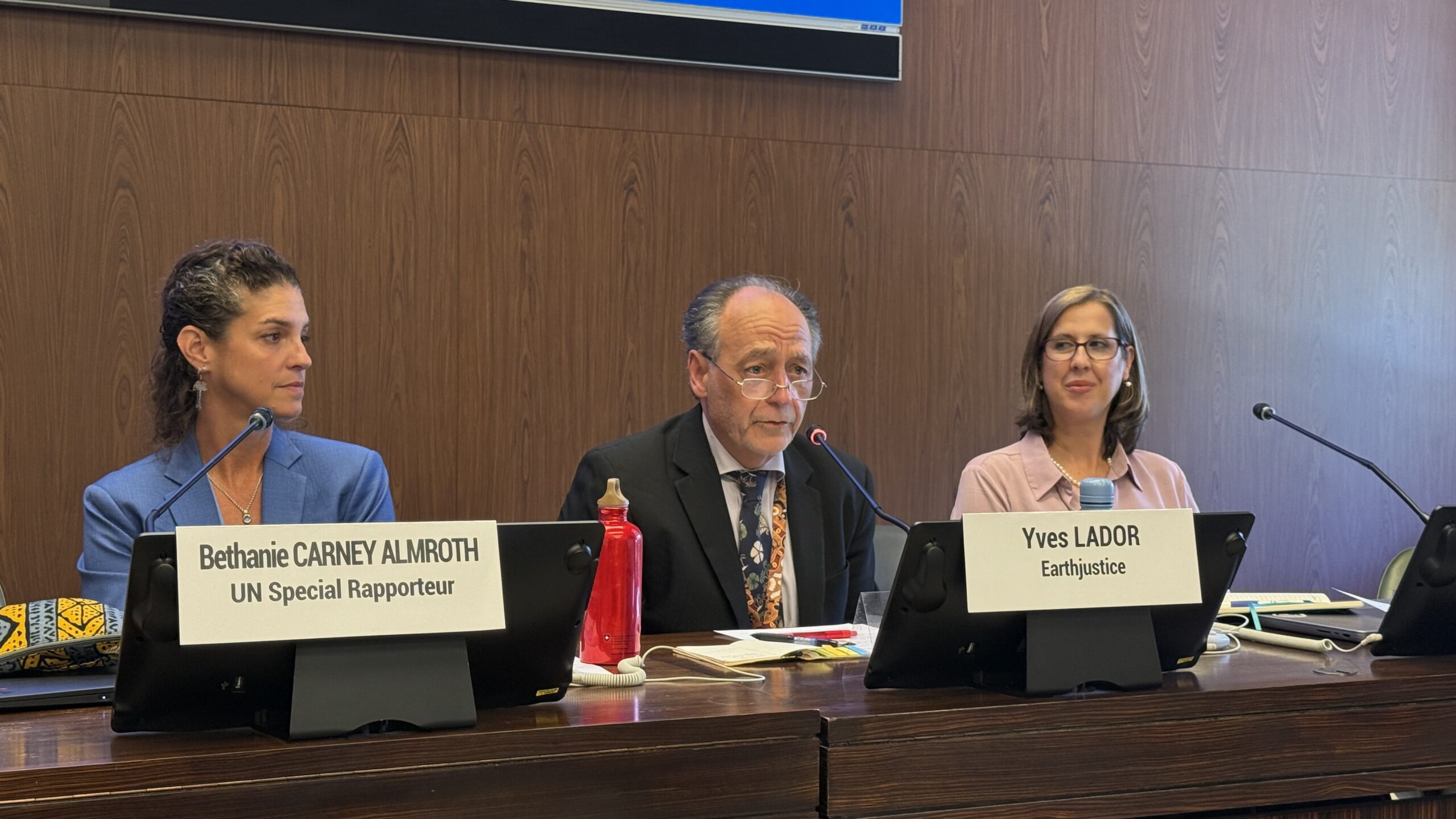
Yves LADOR
Representative of Earthjustice to UN Geneva | Moderator
Highlights
Video
Live from Palais des Nations.
Summary
Bethanie CARNEY ALMROTH | UN Special Rapporteur on toxics and human rights
- The right to science is very dear to me. Science is important to this mandate and in regulating and addressing chemicals.
- There are more than 350,000 chemicals registered for production and use globally. Maybe 140,000 are in use in our societies today, but we do not know the exact numbers because we do not have access to that information.
- We do not have good access to information on what is being produced and what is being used and where they are being used.
- The right to science is recognized in the Universal Declaration of Human Rights under Article 27 and in the International Covenant on Economic, Social and Cultural Rights in Article 15.
- At its core, the right to science is the right for everyone to participate in and enjoy the benefits of science and scientific progress and its applications, while also being protected from the negative impacts of scientific advancement.
- This matters for chemicals because they are present in every part of our society and everything that we do, in every part of our lives. But they present a fundamental problem of access to knowledge, data, and evidence.
- We depend on science to understand which substances are being produced, using which resources, how those are being extracted, which substances are hazardous, what intrinsic properties they have that make them dangerous to us, how they move through our technospheres and our environments, how people are exposed across the full life cycle, what effects the chemicals are having on human health, on environmental health, on ecosystems, and what safer alternatives or solutions might be available.
- They bring many challenges. These are extraordinarily complex molecules and systems that we are discussing, and we are exposed not only to single substances as they usually are tested and regulated, but rather to complex mixtures of chemicals throughout our entire lives, from preconception to in utero life phases, during very critical developmental phases and early childhood phases, so that we have constant exposure throughout our life cycles and through all of the products that we are coming into contact with.
- The right to science therefore has profound implications on the right to health, the right to life, the right to a clean, healthy environment, the right to information and knowledge, and the right to safe working conditions.
- We can also bring in a question or conversation about uncertainty and scientific uncertainty, which comes up a lot in conversations around regulating chemicals. A lack of knowledge of harm does not indicate safety. That cannot be viewed as evidence of safety.
- When there are credible indications or early warning signs that serious or irreversible harm might occur, uncertainty should not justify delay, delayed action, delayed protection. So science and precaution work together.
- But the right to science is about much more than producing scientific studies.
- It requires us to ask important questions such as how knowledge is produced, who has access to that knowledge, who decides which questions we are asking in our societies, which research questions are we addressing, and what kinds of data are we producing, which kinds of issues are we addressing when we are producing new knowledge, whose interests and influences are influencing those questions? These questions are of particular importance in chemical governance, where chemical corporations tend to have a lot of influence in this space. Scientific knowledge is not produced in a vacuum.
- Research priorities can be influenced by who is funding science. There are a lot of actors that are involved in these questions. We need to have better regulations or ways of mitigating conflicts of interest that can introduce biases or affect our access to knowledge. This is also mentioned in a number of existing regulatory frameworks.
- We often hear calls for science-based or evidence-based policies. While science is of central importance, it is not enough.
- We also have to ask about our decision-making structures and whether they generally allow for independent evidence to influence policy, and whether that might be undermined. We have to ask questions about particular economic interests that might be influencing these decision-making processes.
- The right to science gives us a framework for asking not only whether science is present in these spaces, but what science is, who that science is protecting, under what conditions, whether there are transparency mechanisms, and who is able to participate in these conversations.
- This is a very important space where we can connect science with human rights, because science helps us to understand what is happening, but human rights ask us who is protected, who is exposed, who is participating, who is benefiting, and who is held accountable.
- The right to science connects these spaces.
- We are confronting increasingly complex chemical mixtures, life cycles, and value chains that have global implications. So realizing the right to science means that we need to invest in scientific endeavors, in education, in protecting scientific freedoms, ensuring transparency, access to data, mechanisms to address conflicts of interest, creating meaningful opportunities for diverse knowledge holders to participate, and protecting people.
- The right to science is in the work of the public interest.
- In the context of chemicals and toxic pollution, science can help us move upstream and find preventative mechanisms that will prevent pollution and harm from occurring.
- We cannot continue documenting harm after pollution has already occurred. We need to work with preventative actions.
Emily DONOVAN | Co-Founder, Clean Cape Fear
- I am from the United States and I live in a PFAS sacrifice zone near Wilmington, North Carolina. Three years after we moved to the area, my husband developed a brain tumor that required immediate removal. He has fully recovered, but some neighbors have not been so lucky.
- A few years ago, I sat in my doctor’s office explaining the latest blood results from my participation in a regional PFAS exposure study, and I was the one holding the research studies and explaining the results to my doctor. This was backwards and depressing.
- My blood has elevated levels of PFAS well above the US national average. I also have types of PFAS in my blood with no available toxicological information. Even if my doctor knew every PFAS clinical guideline, she would still not be able to explain the health risks associated with 40% of the PFAS detected in my blood.
- Those chemicals came from a company located 80 miles from my house that never shared toxicity information before causing the harm.
- I first learned about PFAS when our local newspaper broke the story nine years ago. A chemical company called Chemours had been dumping extreme levels of PFAS waste into our drinking water supply, the Cape Fear River, for nearly half a century. Chemours is a former DuPont spin-off with a history of PFAS pollution in other states across the country.
- In the early 2000s, Indigenous communities near the Arctic successfully called for a global ban on PFOA. Those global stewardship agreements still did not stop our PFAS polluter from alerting us. It was an independent academic study that documented the inability of our region’s water utilities to filter out these forever chemicals that were, at the time, still unknown.
- It took a legal consent order from the state of North Carolina to force our polluter to publicly report what their facility chronically released into our drinking water supply for nearly half a century. Their own report documented over 300 newly identified PFAS.
- We still lack reliable analytical test standards for much of the list, and we have no access to comprehensive toxicity and human health studies.
- The harm does not stop at contaminated drinking water. We have had to seek independent testing to learn if our land and food supplies are also contaminated and at what levels. We have had to beg academic institutions to do important research where the polluter and regulators have failed to disclose.
- My family collected seafoam samples along our local beaches. The peer-reviewed results showed some of the highest levels of PFAS ever recorded in seafoam along area beaches. These beaches support a billion-dollar local tourist economy every year.
- There are no public health advisories along these beaches, and no toxicologist is able to tell us the health risks of coming into contact with these toxic chemicals.
- Over the last 10 years, communities just like mine all over the United States have fought to gain better access to science.
- We pressured the National Academies of Sciences, Engineering, and Medicine to issue the first-ever clinical guidance on PFAS in the US. We helped secure the first-ever federal drinking water standards, including values for GenX and hazard index mixtures. We got the US EPA to designate PFOA and PFOS as hazardous substances to unlock polluter-pay resources.
- Success addressing PFAS contamination in the United States has occurred primarily when impacted communities are given an equal seat at the decision-making tables.
- Victims carry these burdens out of necessity because our PFAS polluters do not voluntarily share their science with the public, even after the harm is revealed. Every bit of science that has arrived in my community comes from after the harm was committed. Most of the science came because independent researchers and victims demanded the information.
- These data gaps limit what health experts are able to tell communities like mine. These data gaps are by design for communities dealing with PFAS contamination from the US military.
- Access to science is even harder. The military claims national security privilege and sovereign immunity to circumvent the few regulations that do exist.
- For workers in high-exposure occupations like the fire service, their exposures are disproportionate to the general population. Their ability to protect themselves from exposures is nearly impossible when PFAS producers work to make forever chemicals required for use in turnout gear and firefighting foam.
- The United States is a wealthy nation, and yet we struggle to avoid exposures and seek environmental restoration. We simply cannot filter our way out of this global PFAS contamination crisis.
- I am here representing my community and communities all across the United States through the National PFAS Contamination Coalition. We are begging world leaders to come together and solve this problem.
Mickaël REPELLIN |Co-founder and Executive Director, Interdisciplinary Institute for Environmental Health Research and Information (IEHRI-PIRSE) and University of Lausanne
- Through the case of PFAS, I will try to respond to why science is indispensable to protecting human rights in the face of hazardous chemicals and why law and policy still struggle to take it into account, despite all the evidence.
Why is science indispensable?
- There is a gap between what science says and how law reflects science, because science says that most PFAS have non-threshold effects. It means that there is no safe threshold. It has cocktail effects, transgenerational effects, and also affects people in windows of vulnerability.
- It includes both long- and short-chain PFAS, but also ultra-short-chain PFAS, more and more.
- On the other hand, law has a threshold logic, because most current legislation relies on threshold-based standards and also a substance-by-substance approach, banning types of PFAS one after the other.
- Consequences go beyond a mere technical mismatch because it compromises the right to science and then cascades through the indivisibility and interdependence of rights onto other rights, like the right to health and a clean, healthy and sustainable environment.
- If we focus on the right to science, we have two core interesting obligations: the obligation for States to align policy with the best available, generally accepted scientific evidence, and the obligation to refrain from and correct disinformation.
- Alongside this, we have the precautionary principle that plays a central role in implementing the right to science where evidence remains inconclusive.
Why Law and Policy Still Fail to Act Properly
- There are three blockages.
- States’ failure to counter disinformation. Specific non-State actors distort evidence, and States fail to correct it. This is a straightforward breach of the core obligation to correct disinformation.
- Procedural and institutional lock-in in treaty decision-making. In the example of the Rotterdam Convention, we have consensus-based decision-making that can block the listing of hazardous substances already considered harmful by the treaty’s own scientific committee, as in the case of paraquat, a declared hazardous substance.
- Fragmented governance, because historically PFAS, like endocrine-disrupting chemicals, fall under the chemical and waste branch of international environmental law, and there is no specific class of pollutant called endocrine-disrupting chemicals. The Intergovernmental Science-Policy Panel on Chemicals, Waste and Pollution Prevention, created in 2025, and the Global Framework on Chemicals can be places for discussions of interest in terms of global governance. Yet the current void in terms of global governance causes consequences for other branches of international law and international human rights law.
- The direct mention of endocrine-disrupting chemicals has so far mainly appeared in soft law, not in binding instruments. We have cases that do exist, where they link exposure to violation only where harm was immediate and clearly identifiable.
- This tells us something important, because the one model in international human rights law of legal responsibility that has actually worked relies on acute and closely timed harm, not more diffuse and delayed harm, like endocrine-disruptor or PFAS exposure.
- And here, this is precisely where we have this mismatch, because we have a chemical with long latency, epigenetic effects, cocktail effects, critical developmental windows, and it is structurally at odds with classical causation-based proof.
- It could be said that a bridge could be identified, especially with the International Court of Justice 2025 advisory opinion, which grounds action in precaution despite scientific uncertainty and separately tackles causation and attribution in diffuse cumulative harm, in the climate change context.
- The qualification comes back here, and recognizing PFAS and, more widely, endocrine-disrupting chemicals as a specific class of pollutant would itself make the causal link easier to establish before human rights bodies.
- Science is central to making policy and law evolve toward coherence with scientific reality.
Jean WILLEMIN | Senior Water-Peace Programme Manager, Geneva Water Hub
- The Geneva Water Hub is a center of competence on water for peace attached to the University of Geneva and the Graduate Institute, working also with Swiss Cooperation on Blue Peace.
- My contribution today relates to the point raised by the Special Rapporteur on who gets to ask the questions about science and research, essentially promoting the work of our partner, the Dakar Water Hub, which is promoting an Afro-centered approach to hydro diplomacy and specifically working on the pillar of hybrid knowledge.
- How do you match the local customary knowledge with science?
- The Hub was created 10 years ago to support global reflections of the Global High-Level Panel on Water and Peace, which was co-convened by 15 States, among which Switzerland and Senegal. Senegal was volunteering this panel, which released its report, A Matter of Survival, presented to the UNGA in 2017.
- This report had already key recommendations on the need for better data and production of knowledge on our water challenges, specifically looking also at the need for better knowledge on groundwater, on which we rely for 90% of it, and of course on pollution and heavy pollution, which is of course a key driver when it comes to the risk of water-related conflict.
- It was also proposing that any type of diplomacy should take into account what they call people’s diplomacy. So the need to take into account, also in territories beyond interstate relationships, the knowledge and stakes of local communities and other types of local actors.
- In that, Senegal had a very active role in promoting these ideas as a vice-chair. We owe to them the first discussion at the UN Security Council in 2016 on the topic of water, peace and security.
- They hosted the ninth World Water Forum in Dakar in 2022, positioning the themes as the overarching theme and also putting rural development as a key priority, which has not been upheld so far.
- This year, they will be co-chairing the UN Water Conference 2026 that will take place in Dubai in December.
- At the continental level, they did very important work in the recently created Africa Vision 2063 and its policy document, which incorporates the peace and security agenda regarding these key aspects, and which calls also to operationalize social equity and grassroots agency in water governance, specifically looking at the systematic inclusion of women, youth, and marginalized communities, and it calls also to create hydrosocial contracts for international equity, looking also at institutional governance mechanisms by which communities may hold legal rights to protect aquatic ecosystems and creating an enabling environment for water systems to be recognized as living entities.
- The Water Hub has been promoting this idea that hybrid knowledge is a pillar of what is called Afro-centered hydro diplomacy.
- That is a diplomacy that also builds upon the traditional know-how of preventing and mediating local territorial conflicts related to water.
- The first task of the scientific community is to explain what already functions with the local and customary water knowledges.
- Such was the case, for instance, with the Zai culture in the Burkina Faso area, otherwise called the half-moon, which is a technique that can both support crop production and reinforce soil structures. That was then promoted, thanks to the scientific community, up to the eastern coast of Africa.
- But then, also, when there is an issue at stake regarding the coping mechanisms at the local level, you can also provide scientific inputs to what could be a local solution.
- We need to consider local and customary knowledge alongside the role of science, understanding how to build these bridges between scientific knowledge and local knowledge, and certainly take this local knowledge into account when it comes to baseline studies for hazardous substances and their risks to water.
- Specifically engaging with communities closely linked to water, particularly fishing communities, which may share key knowledge.
Rochelle DIVER | UN Environmental Treaties Coordinator, International Indian Treaty Council
- The Anishinaabe Indigenous People reside in the Great Lakes region of what is now known as the United States and Canada. My nation is called Fond du Lac Band of Lake Superior Ojibwe in Minnesota, but all of our territory is known as the Anishinaabeg Nation.
- I will share a bit about what we experience in my community that is very relevant to the topic at hand.
- In my community, our women have been giving birth to babies that are pre-polluted with mercury for over two decades. This is due to our close relationship with the land and our subsistence practices and lifestyles.
- The federal-level Environmental Protection Agency was telling us the levels of mercury in our environment were safe. My nation began to conduct its own testing of the fish and waterways and began to monitor the air as well.
- We found dangerous levels of mercury from three sources: fish, air emissions from coal-fired power plants, and also dental amalgams that some of you today still have in your mouths, but they have been disproportionately used on Indigenous peoples in several countries around the world.
- We found the safe levels the EPA was claiming were not taking into consideration cumulative impacts, only single exposures. So it was our community-based monitoring that gave us a real idea of the exposure our people were experiencing.
- For Indigenous peoples, mercury, POPs, and other toxics impact our health, but also our culture and our cultural practices. Neurological disabilities as a result of exposure to environmental toxics impact our children’s ability to learn our languages, our stories, and our songs.
- The role of Indigenous scientists in the Arctic must also be highlighted. Indigenous women have become known scientists and have scientifically documented the contamination of their peoples.
- A study in the Journal of Environmental Science and Pollution Research, co-authored by International Pollutants Elimination Network co-chair Pamela Miller, with a group of scientists to support her, also from Alaska Community Action on Toxics, and these Indigenous leaders and scientists found high levels of toxic chemicals in the bodies of their seals, whales, and reindeer in the Bering Sea and throughout the Arctic Circle, contaminating their food sources.
- This has caused them to have to make difficult decisions about continuing to eat their traditional foods and expose themselves to harmful chemicals, or what the alternatives are. They go to commercial grocery stores and eat food that is equally or more unhealthy, with the same levels of contaminants, just a different kind, mostly synthetics.
- Community-based monitoring initiatives have also been undertaken by the Inuit Circumpolar Council.
- All of the important efforts by all the groups that I have mentioned have been presented at the Stockholm, Basel and Rotterdam Conventions, as well as the Minamata Convention on Mercury.
- I would like to acknowledge the excellent work by Indigenous scientists Lynn Jacobs, Matt Perryman, and Henny Unwin, and share a few points that Henny has given me as well.
- Indigenous scientists and knowledge holders are the greatest keepers of baseline information and know best what substantial changes have occurred regionally.
- Our relationship with the environment provides better solutions and innovations that will not cause future harm, as we have been living as a part of our environment and will continue to do so.
- Finding better ways to monitor or measure current chemicals in the environment are not a solution to the real issue. All of us in this room must push decision-makers to enact more ethical boundaries on the development and manufacturing of all chemicals.
- We have seen some debate on whether Indigenous peoples’ knowledge is science. Historically, there has been a role for Western science and scientists in taking Indigenous knowledge or perpetuating harm to Indigenous peoples’ communities.
- Therefore, without the role of Indigenous scientists who understand our processes and protocols, we will continue to see impacts to those most vulnerable to chemicals without proper remedy.
- The right to science includes considerations of other forms of knowledge, such as ancestral knowledge and knowledge of Indigenous peoples, and acknowledging that this knowledge is not simply traditional. It is living and it continues.
- Finally, at the February session of the ISP-CAP, Indigenous Peoples launched the International Indigenous People’s Forum on Chemicals, Waste, and Pollution, an Indigenous caucus for this body.
Bethanie CARNEY ALMROTH | UN Special Rapporteur on toxics and human rights
- Science can be understood as a myth, a method of knowledge creation and knowledge curation. There are a lot of ways of knowing and other ways of learning.
- The inclusion and participation of other kinds of knowledge holders can help us to better understand the drivers of pollution, the changes that occur in the environment, shifts away from baselines, the impacts that might be occurring, and also solutions that we can find.
- Science can help us monitor and measure what is happening and what changes are occurring in the environment and in human bodies. But they are not in and of themselves solutions. They can help us understand the effectiveness of our solutions. They can help indicate which other solutions might be needed.
- But the solutions will come from an approach that takes environmental stewardship, where participation and representation matter, including an inclusive understanding of science as knowledge creation and knowledge curation.
Interventions from the floor
- I am an MD trained in preventive medicine. I used to work in tobacco control and regulating tobacco.
- I came to present for Yakutia in partnership with Indigenous leaders who are endangered and at risk of reprisal if they speak directly, on behalf of 5,000 Indigenous children who are being poisoned by heavy metals from profit from a Swiss mining company, Glencore.
- We specifically wanted to address the issue of tobacco control. We know that secondhand smoke is tied to lung cancer, and that helped to regulate the industry, but I am not seeing that kind of action being taken for mining chemicals specifically, although it is the same exact public health pattern.
- I also wanted to address the intersection of these two sciences because we work predominantly with Indigenous leaders, but also with high-level scientists all over the world.
- We have been using low-tech solutions in Indigenous communities, such as biochar to absorb heavy metals. Indigenous leaders have some amazing stuff, like a water hyacinth analog in the Amazon, which is totally unresearched. Then we also have friends in Toronto who do quantum chemistry and AI to develop photocatalysts for PFAS.
- We need to bring these two sciences together and look at the intersections because there is really rich material in the extension of that range.
- How are you looking at a tobacco control model?
Bethanie CARNEY ALMROTH | UN Special Rapporteur on toxics and human rights
- The tobacco industry is our case study of how not to do things right from the beginning. The industry itself, in its undermining of science and the tactics that it uses.
- There is another event related to these questions on disinformation campaigns, but how industries have infiltrated our policy spaces and worked very hard to create doubt, to undermine what we know, to create uncertainties, to delay or block policy actions, and prevent protection of people who were being impacted.
- Learning from that, and the fact that conflict-of-interest policies were strengthened in decision-making around tobacco products, is a very interesting way to protect science, ensuring that independent science that is free of conflict of interest was used in decision-making processes.
- To your points about metals, it is a very big question, but I appreciate your points about bringing together different kinds of knowledge to look at prevention. As we are moving through our societies and looking for transitions, for example, away from fossil fuels as energy sources, or looking for alternatives to the needs that we have in society, metals are becoming more and more of an area of interest. They have been for many, many years, for many decades, and their pollution is very long-term.
- Metals are essential elements. They do not go away. We just move them around and introduce them into different places.
- But as we are looking at mining, we also need to look at how we are mining, at where we are mining, who is doing the mining, how people are protected, and how we are preventing pollution from those metals at that stage, but also at all the downstream stages that are occurring.
- When we are putting into place standards and criteria and best practices to do this, to work with knowledge holders from different places along this life cycle, and bringing these types of knowledge into decision-making spaces to make sure that we are in fact being protective and using raw materials that we need for protecting human health and the function of society without creating harm.
- Protecting our decision-making processes, protecting our access to robust and independent information that is not biased by vested economic interests, in the interest of protecting people and the environment.
Interventions from the floor
- I am specifically looking at is the price of a pack of tobacco went from $6 to $10 because the public health cost of tobacco was included in the product.
- And right now, what I see is a separation between who is profiting from causing this harm and who is paying the costs. Right now, it is Indigenous people in our network who are paying the costs in human health, and it is mining companies in Europe that are profiting.
- As long as we keep those separate and the product does not cover the cost, I do not think we can fix it.
Bethanie CARNEY ALMROTH | UN Special Rapporteur on toxics and human rights
- We sometimes refer to this as externalities, and the benefits that are embedded within an extractive industry and production systems are maintained often in companies that are private or in public-private relationships. While costs are incurred in other places, they are incurred in people. They are incurred in the environment. They are incurred in health and increased mortality.
- There is a plethora of health problems that are associated with exposure to toxic chemicals. This comes at a real cost. It comes at an economic cost, but also comes at a cost to our bodies and to our future generations. It occurs at a cost in our ecosystems and loss of ecosystem services.
- So, your example here is a way of trying to incorporate some of those costs into a product. But these kinds of economic mechanisms can also be a driver for reducing tobacco use. It has multiple benefits there.
- These are really good points, and these are things that I talk about a lot when talking about different kinds of chemicals and plastics products more specifically, and how we can work more fairly with costs, where who benefits and who is paying the price of the decisions we make and the things we are making and using in society.
Emily DONOVAN | Co-Founder, Clean Cape Fear
- We cannot filter our way out of the forever chemical contamination crisis. These are unnatural. It takes an immense amount of energy, time, and money to remove them.
- I fully support the report’s call for a full and complete ban on the entire PFAS category.
Photo Gallery