Événement Conférence
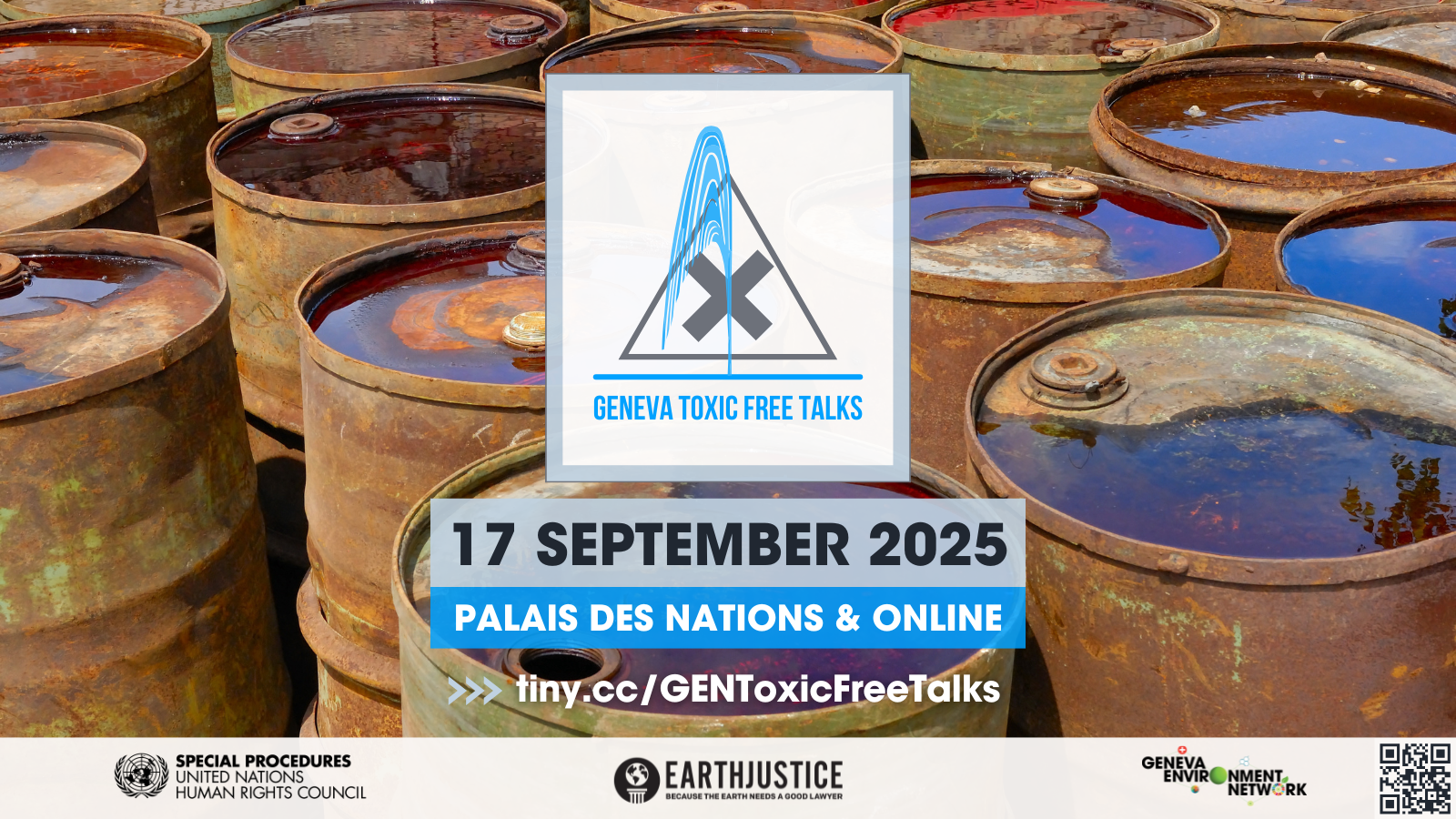
Tackling Toxics on the Ground | Geneva Toxic Free Talks 2025
17 Sep 2025
11:30 – 12:30
Lieu: Palais des Nations, Room H.378
Organisation: Procédures spéciales du Conseil des droits de l’homme, Geneva Environment Network, Earthjustice
On the sidelines of 60th Session of the Human Rights Council (HRC60), this event is part of the 2025 edition of the Toxic Free Talks, highlighting the work of the UN Special Rapporteur on toxics and human rights, and of organizations in the struggle for the right to live in a toxic-free environment.
About this Session
Throughout his mandate as UN Special Rapporteur, Professor Marcos Orellana has conducted field visits and worked with stakeholders on the ground. The purpose of this talk is to illustrate the work that the mandate can accomplish in an area where the human rights dimension remains too little known, while the impact of toxic substances weighs heavily, and increasingly, on the enjoyment of human rights.
Geneva Toxic Free Talks 2025
The Special Rapporteur on toxics and human rights reports every fall to the Council and to the UN General Assembly on issues related to his mandate. The Geneva Toxic Free Talks aim to harness the opportunity of this moment of the year to reflect on the challenges posed by the production, use, and dissemination of toxics and on how Geneva contributes to bringing together the actors working in reversing the toxic tide.
On the sidelines of HRC60, the 2025 edition of the Toxic Free Talks will take place on 17 September 2025, with conferences and discussions, highlighting the work of the Special Rapporteur and of organizations in the struggle for the right to live in a toxic-free environment.
Environment @ HRC60
The 60th Regular Session of the Human Rights Council (HRC60) is taking place in Geneva from 8 September to 8 October 2025. Consult this regularly-updated page that highlighted the environmental-related activities of this session.

Speakers
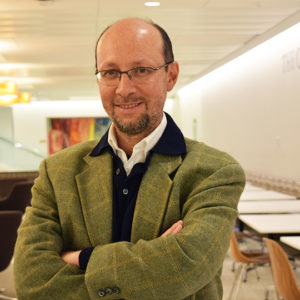
Marcos ORELLANA
UN Special Rapporteur on toxics and human rights

Jitendra SHARMA
Programme Management Officer/GEF Task Manager, UN Environment Programme
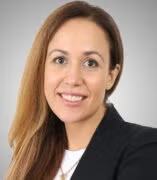
Sarah DÁVILA A.
Associate Professor of Law and Director, International Human Rights Clinic, UIC Law

Natálie ŠELLEOVÁ
Member, Chemicals and Waste Youth Platform, Masters Student in Environmental Health at RECETOX

Yves LADOR
Representative to the United Nations in Geneva, Earthjustice | Moderator
Highlights
Video
Live from Palais des Nations
Summary
Opening
Marcos ORELLANA | UN Special Rapporteur on toxics and human rights
- The UN is often seen as distant and abstract, disconnected from people’s real experiences. To bridge this gap, the Human Rights Council created the system of special procedure mandate holders, who can engage directly with communities, victims, and groups on the ground. This helps bring the UN closer to the people. While this is challenging, there are useful approaches—such as working with clinics, filing amicus curiae briefs, making exploratory visits, and partnering with academic institutions.
- Youth voices are important. In the past, young people were told to prepare for the future, but as shown by the recent International Court of Justice advisory opinion on climate change—an initiative started by students—youth are already leading change. Since they will live with the toxic legacies of past generations, their role at the table is vital.
- Scientists fear speaking out. The 2021 report on the right to science (A/HRC/48/61) highlighted the need for an enabling environment where scientists can work without fear of reprisals. Today, the problem is not only about scientists worrying over credibility when engaging in policy, but also about real threats to their safety. Organized groups target them directly, including climate deniers, while issues like corporate capture and conflicts of interest further complicate matters. This climate of fear risks widening the gap between scientific knowledge and the legal and policy measures needed to tackle toxic challenges.
- The mandate on toxics and human rights, like other UN Human Rights Council special procedures, is primarily a monitoring and reporting mandate, and communications are one of its key tools. Preparing these communications takes considerable time and resources because they require thorough due diligence—fact-finding, verifying credibility of allegations, and grounding them in reality. Communications are vital for visibility and documentation, but resources for the mandate are limited.
- Collaboration with specialized human rights clinics is therefore invaluable. Clinics can analyze cases, interview victims, conduct fieldwork, and frame findings in human rights language, helping ensure due diligence. Given the sensitive information involved, the process often relies on confidentiality or non-disclosure agreements, both to comply with the special procedures’ code of conduct and to protect victims, sources, and the integrity of the mechanism.
- Working in collaboration with clinics worldwide is a good practice—both to enhance the mandate’s limited resources and to provide important educational opportunities for students, who can see human rights law in action.
- The letters sent through my mandate to Namibia, China, Canada, the UK, and several corporations aimed to draw attention to alleged human rights abuses linked to extractive industries in Tsumeb. These letters, along with several other special procedures sent to member states and companies, have been made public. This visibility is already an important element of impact. It is still early to fully assess how actors will position themselves regarding the allegations, but some states have replied and more responses are expected.
- From the information received and what is happening on the ground, there appears to be some movement to address the grave allegations about exposure of workers and communities linked to the operation of the smelter in Namibia.
- When it comes to companies, the reaction is a mixed bag. The human rights system has traditionally been based on state obligations, but communications have also been used to press companies on their responsibilities. Some companies take these procedures seriously, engaging in dialogue; others do not. For example, letters sent to oil companies about divestment in Nigeria and pollution in the Niger Delta did not receive replies from Shell or ExxonMobil. Similarly, Chevron Texaco resisted accountability in its litigation with Ecuador over Amazon pollution, famously vowing to fight “until hell freezes over and then on the ice.”
- At the same time, there are companies that do take the UN Guiding Principles on Business and Human Rights and their responsibilities seriously, and communications can open the door for dialogue. This has happened in cases in Sweden, Ecuador, and elsewhere.
Panel Discussion
Natálie ŠELLEOVÁ | Member, Chemicals and Waste Youth Platform, Master’s Student in Environmental Health at RECETOX
- The Chemicals and Waste Youth Platform aims to combine the perspectives of scientists and lawmakers.
- Alarming research results are not always translated into policy, partly due to a disconnect: scientists focus on accuracy and struggle to communicate, while policymakers often feel alienated from science. Bridging this gap is essential. The new science-policy panel on chemicals, adopted in June, is a promising step but remains only advisory. The Montreal Protocol is given as an example of success due to the strong involvement of scientists, offering not only data but also alternatives and technologies.
- There is a need for stronger science–policy communication alongside practical solutions. The “Pollution Solutions Lab,” launched by the youth platform, maps youth-led initiatives tackling toxic pollution worldwide and shows how young people act as investigators, innovators, and solution-builders. Examples include: students in Ireland developing a magnetic method to remove microplastics; a Kenyan student launching an air pollution monitoring network in Uganda; youth in Syria training communities in lead management; and initiatives that cleared 50 tons of plastics from over 60 countries.
- Youth have enormous potential and should be more involved and consulted in decision-making processes, with their innovations and views taken seriously.
Sarah DÁVILA A. | Associate Professor of Law and Director, International Human Rights Clinic, UIC Law and two student attorneys
Sarah Dávila A. delivered her presentation along with two students from the International Human Rights Clinic, UIC Law.
- The clinic’s mission is to involve youth in human rights advocacy and support the UN mandate on toxics and human rights, particularly in relation to Tsumeb, Namibia.
- The clinic is a nonprofit, nonpartisan program that allows them to directly engage in human rights work under faculty supervision. Their activities include investigating, reporting, advocacy, client representation, systemic projects, research on vulnerable populations, and engagement with both domestic and international courts.
- The students receive an immersive training, including trauma-informed lawyering, legal ethics in public interest, and fact-finding, all aimed at narrowing the access-to-justice gap.
- The clinic carried out the Namibia project, carrying out fact-finding, gathering testimonies, and working with experts in law, medicine, public health, and extractive industries to establish links between hazardous industrial practices, toxic exposure, and human rights violations. Their work substantiated allegations received by the UN Special Rapporteur and supported communications sent to relevant states and corporations. The clinic thus acted as a connector between marginalized communities and UN mechanisms, helping bring forward claims that otherwise face barriers.
- This collaboration provided training for student advocates, enabled communities to access UN processes, and strengthened the capacity of the mandate with technical expertise. The result was that the Special Rapporteur, with support from other mandates, sent letters to Namibia, China, Canada, the UK, and several corporations—drawing attention to alleged human rights abuses linked to extractive industries in Tsumeb.
Jitendra SHARMA | Programme Management Officer/GEF Task Manager, UN Environment Programme
- The Global Environment Facility (GEF) is a financial mechanism that supports certain multilateral environmental agreements on chemicals and waste, including the Basel, Rotterdam and Stockholm Conventions, the Minamata Convention on Mercury, the Montreal Protocol, and the broader global framework on chemical management. Its work is structured around three strategic objectives: creating enabling conditions, eliminating hazardous legacy chemicals, and preventing the buildup of hazardous chemicals in the environment.
- Creating enabling conditions involves awareness, capacity building, technical assistance, and regulation, while elimination focuses on the disposal of stockpiles of hazardous chemicals. Prevention emphasizes promoting safer alternatives to chemicals in current use, such as the significant reduction of DDT through coordinated efforts by the Stockholm Convention, GEF investments, and country-level initiatives.
- A central element of GEF’s approach is knowledge and communication, which are critical from a human rights perspective. Many people, particularly workers in developing countries, are unaware of the hazardous chemicals they handle. For example, in the early days of working on PCB-contaminated sites, workers sometimes used PCB oil directly on their skin for joint pain, not realizing the health risks, and even managers often did not understand the dangers. Similarly, firefighters using PFAS-containing firefighting foams may be exposed directly, while the chemicals also contaminate surrounding communities through water runoff. GEF projects focus on raising awareness, providing information, and helping users transition to safer alternatives to prevent both direct exposure and environmental contamination.
- In addition to downstream interventions, GEF is increasingly working upstream by encouraging producers to adopt non-hazardous or less hazardous chemicals, complementing downstream waste management efforts. Sectoral programs, such as those addressing electronics management, are helping informal workers in recycling and circular economy sectors, who are particularly vulnerable to chemical exposure, move toward safer and more formalized practices.
- GEF also integrates social safeguards, human rights considerations, and gender perspectives into its projects, highlighting the interconnectedness of knowledge, human rights, and chemical management.
- Overall, GEF’s work seeks to reduce hazardous chemical exposure, promote safer alternatives, and support sustainable chemical management globally.
- The GEF’s primary focus is on countries, with each country nominating an operational focal point. Projects are implemented in collaboration with executing agencies designated by the country’s Jeff operational focal point.
- In addition to country-level projects, GEF also runs global and regional initiatives, partnering with experts who provide guidance and technical support, particularly in developing countries where local expertise or information may be limited. Despite these broader collaborations, the first point of contact for all projects remains the country representative nominated by the operational focal point.
Open Discussion
Marcos ORELLANA | UN Special Rapporteur on toxics and human rights
- GEF has a significant impact as a financial mechanism for multilateral environmental agreements, particularly in the chemicals and waste sector, as well as the environment more broadly. Field visits to countries such as Samoa and the Dominican Republic highlighted the tangible effects of GEF-supported projects on the ground. Regarding informal waste pickers, transition, social security, and safe working conditions are important with the example of the Special Rapporteur’s visit to Paraguay, where informal recyclers expressed gratitude for being heard by UN representatives—something they rarely experience from their governments. Contributions from GEF representatives have also informed thematic reports, underlining the relevance of its expertise.
- GEF has safeguards and a grievance mechanism, modeled after the World Bank’s Inspection Panel, which may offer opportunities for synergies.
- Can funding for chemicals and wastes relative to other environmental priorities be considered adequate? Are there ongoing efforts to move toward integrated funding to overcome siloed, convention-specific financing, as highlighted during the most recent GEF replenishment (GEF 8)?
Q&A
Q: When advising or working with countries, does GEF consider recommendations from special mandate holders (e.g., thematic or country-specific reports)? Is there scope for collaboration between GEF projects and special mandate holders in implementing these recommendations?
Jitendra SHARMA | Programme Management Officer/GEF Task Manager, UN Environment Programme
- Funding for GEF projects is acknowledged as never fully adequate, though there have been increases over time. For example, GEF 7 had approximately $600 million, GEF 8 reached around $800 million, and the level for GEF 9 is still pending, as replenishment discussions have just begun. While funding exists, challenges in implementation persist. Some countries discuss projects enthusiastically during large meetings but fail to follow through with concrete proposals or ideas. Greater collaboration is needed, with countries actively bringing forward problems and solutions rather than relying solely on GEF agencies to propose initiatives.
- The integration of human rights recommendations into projects is highly project-specific. It depends on the scope of the project, the agency developing it, and how deeply they intend to address particular aspects of human rights. Each GEF agency operates under its own environmental and social safeguard policies, which can affect how recommendations are applied in practice. Nonetheless, there are opportunities for synergy, and attention should be paid to better incorporate human rights recommendations in projects where they may not be fully addressed.
Q: Is it more effective to start with less adversarial measures (e.g., communications from clinics or mandate holders) rather than moving directly to litigation? Are there evidential or procedural advantages to starting with communications first? What practical considerations arise when local legal support may be limited?
Q: How can legal challenges that initially involve individual cases be scaled up to address systemic or broader issues? What role can civil society organizations play in amplifying individual claims to create a wider impact?
Sarah DÁVILA A. | Associate Professor of Law and Director, International Human Rights Clinic, UIC Law and Student Attorneys
- The choice between pursuing strategic litigation and engaging with special procedures depends on the circumstances of each case.
- In some situations, challenges on the ground—such as limited access to domestic courts—make litigation difficult, and communications with special procedures can serve as a tool to establish the credibility of human rights allegations. This, in turn, can lay the groundwork for future litigation. In other cases, litigation may have already occurred locally, but barriers such as incomplete exhaustion of domestic remedies can prevent full access to justice. In these instances, communications provide an additional platform to advance accountability and address unresolved issues.
Marcos ORELLANA | UN Special Rapporteur on toxics and human rights
- On the question of scaling individual legal challenges, thematic reports are very valuable as a tool to integrate work on multiple individual cases, identify trends and patterns, and draw broader conclusions. This approach was illustrated in the most recent report on access to justice and effective remedies in the context of toxics.
- Connecting with people on the ground is really important, where the effectiveness of special procedure mandate holders depends on strong partnerships and collaboration with local actors and stakeholders.
Links
- Geneva Toxic Free Talks | GEN
- Human Rights, Hazardous Substances, and the Role of Geneva | GEN
- Human Rights and the Environment | GEN
Other Events @ Geneva Toxic Free Talks 2025
Protecting Human Rights in the Face of Ocean Pollution: Access to Justice and a Toxic-Free Future | HRC60 Side Event
17 September | 13:00 – 14:00 CEST
The Toxic Impact of Military Activities | HRC60 Side Event
17 September 2025 | 14:00-15:00 CEST

Challenges for the Right to be Toxic Free
17 September | 16:00 – 17:00 CEST