
Événement Conférence
The Sumaúma Pledging Tree for Human Rights-Based Climate Action | HRC62 Side Event

22 Juin 2026
14:00 – 15:00
Lieu: Palais des Nations, Room V
Organisation: Haut commissariat des Nations Unies aux droits de l'homme
This side event to the 62th session of the Human Rights Council is organized by the Office of the UN High Commissioner for Human Rights (OHCHR), the UN Special Rapporteur on human rights and climate change and the UNFCCC COP30 Special Envoy on Human Rights and Just Transition, with the support of the Geneva Environment Network.

About this Event
For decades, the environmental justice movement, international human rights experts and the people on the frontlines of the human rights crisis have been demanding action, guided by human rights, to stop climate change, build climate resilience and remedy climate harms anchored in the strong principles of climate justice. After decades of demands, and the unequivocal devastation created by climate change and interrelated crises (pollution, biodiversity loss, ocean acidification, water and food insecurity, etc.), the International Court of Justice found that States have human rights obligations relative to climate change and a duty to prevent significant harm to the environment, including the climate system.
The Sumaúma Tree, referred to by many Indigenous Peoples of the Amazon rainforest as the tree of life, is the inspiration for the Sumaúma Pledging Tree for Human Rights-Based Climate Action. The Sumaúma Pledging Tree invites different stakeholders to make commitments for Human Rights-Based Climate Action and be a part of the collective solution, the global mutirão, we need to stop climate change and remedy its worst impacts. These are concrete examples/practices to take specific action, with the aim of promoting, protecting and ensuring human rights in the context of climate change.
The panel introduced the Sumaúma Pledging Tree and highlighted examples of climate action that are transformative, innovative, catalytic and actionable, which brings about positive impacts for the enjoyment of human rights. States and other relevant actors are urged to propose pledges to help the Sumaúma Pledging Tree grow and thrive.
Environment @ HRC62
The 62nd regular session of the Human Rights Council (HRC62) will take place in Geneva from 15 June to 10 July 2026. Consult this regularly-updated page that highlighted the environmental-related activities of this session.
Agenda
Opening Remarks

Janine MELLO
Minister of Human Rights and Citizenship, Brazil

Elisa MORGERA
UN Special Rapporteur on climate change and human rights

Denise DORA
UNFCCC COP30 Special Envoy on human rights and just transition
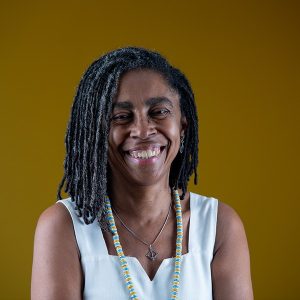
Jurema WERNECK
UNFCCC COP30 Special Envoy for racial equality and peripheries
Statements from the Floor
Statements from the floor included:
- Colombia
- Morocco
- Federal Prosecution Office, Brazil
- FIAN International
- ISHR
- UNEP
Highlights
Video
Summary
To be continued.
Denise DORA | UNFCCC COP30 Special Envoy on human rights and just transition
- The COP30 President’s special envoy for human rights and just transition is a voluntary mandate during the COP Brazilian presidencies established to build dialogues with civil society organizations, governments all over the world, scholars, researchers, UN bodies and staff people and particularly on the intersections of human rights and climate.
- Although it looks obvious that climate change has impacted all populations, particularly those who are suffering from structural discrimination, inequality, women and girls and the evidence built in recent years has shown this very clearly.
- The principle of nondiscrimination that comes from a long history of human rights needs to be applied in every climate change policy, resolution, legislation and must be reinforced.
- Oftentimes, we can really match international human rights law and mechanisms with climate change. But this comes to a more rhetorical frame than a really concrete one, based on the ground experience of people.
- During the process of engagement for COP30, together with the Special Rapporteur on climate and human rights, the High Commissioner for human rights, the Special Envoy for racial equality and other organizations, we decided to build a global initiative based on a very important tree from the Amazon region: the Sumaúma, which is considered the tree of life because the tree saves water for difficult moments and help the whole forest to survive even in in crisis moments.
- The Sumaúma is a global initiative to connect human rights and climate for people on the ground and needs to be based on concrete experiences that bring the human rights language into climate solutions.
- We started last year in November in Belém do Pará, launching the initiative and starting to collect experiences from different countries, organizations and people.
- Over the past 50 years, the human rights movement brought together the experiences of people from different parts of the world, even when it was very difficult to think about a transition that embraces human rights values. This can be similar to what we are experiencing now as a result of climate change harming all over the world, sometimes it’s difficult to think about how to proceed to make a transition.
- The human rights movement has succeeded and can share important principles applicable to this conversation, such as the principles of justice, truth, reparation , which has helped the human rights movement and civil society transition from authoritarian to democratic ones based on principles that respect people, people’s experiences, history and truth.
- This is what we want to do by bringing together human rights and climate change.
Jurema WERNECK | UNFCCC COP30 Special Envoy for racial equality and peripheries
- The Sumaúma Pledging Tree is a tool because it is an opportunity to connect climate and human rights and different UN systems into producing a response to the climate crisis.
- It is also an opportunity to put the rights in the Universal Declaration of Human Rights and the subsequent decisions into practice in this very moment that we are confronting a huge crisis related to human beings.
- This affects especially communities most affected by climate change, who are saying “we are the solution”, such as indigenous people’s representatives, Afro-descendants, women, people of the LGBTQI+ community, and people with disabilities.
- We have the rights and States have the obligations to provide a solution through mechanisms and response, but there’s no mechanism that could succeed without people.
- This is the tool and process to connect all the multilateral and also state subjects with humanity. This is our opportunity.
Elisa MORGERA | UN Special Rapporteur on climate change and human rights
- We hear from the people most affected by climate change that they are the solution, and yet, we might not know what that looks like while it’s already happening. It’s not just a promise.
- The idea of The Sumaúma Pledging Tree for Human Rights-Based Climate Action is to create a space for all of us to see how the people most affected by climate change already are the solution and how we can, in the very different spaces of decision making and power, learn from that.
- The idea is really based on showing how different activities which may or may not be recognized as an expression of the human rights-based approach are in fact a representation of it, but also to provide both imagination and hope to see that things that appear so difficult for governments and for people in decision-making powers to find solution across sectors across, time and space, and also to look at all the different aspect of inequality.
- Sometimes, there is a lack of imagination. Governments may face some locking, leading to the fear that opening Pandora’s box of solutions will just make climate action more difficult.
- It is the opposite that is true. Once we do that work and especially when people are at the front line of climate change, for whom postponing that conversation is not an option, all of this comes together very organically.
- There are no silos in people’s experiences; all the different sectors, all the different impacts, all the divides based on income, race, age, all of that becomes very clear on the table.
- It is how we can make sense of it and also take climate action that is premised on addressing all these human rights dimensions.
- The idea is that the Sumaúma Pledging Tree will be a space for making those initiatives visible and for these to teach us that even if each solution needs to be very localized and contextualized, there are transferable learnings.
- What unlocked an opportunity? What did people learn that allowed for the initiative to be recognized, to be funded, to lead to legal change and how can we, the human rights experts and the movement, learn along the way, and also advice into how those initiatives can further advance the protection of human rights.
- There will be a lot of mutual learning and support for those who will be part of the initiative. There’ll be an advisory board that will help to think about how we maximize that potential for much learning and how to transport that learning at different scales, in different fora such as the Human Rights Council, the UN Climate Process, in parliamentary processes and in other international fora that have to do with tax, debt and corporate accountability.
Statements from the Floor
Teresa Carvalho | National Secretary for the Promotion and Defense of Human Rights from the Ministry of Human Rights and Citizenship of Brazil
- The Sumaúma tree should be backed up on concrete commitments; the climate crisis is also a human rights crisis. This status of the climate crisis was reaffirmed by the ICJ and the Interamerican Court of Human Rights advisory opinion number 32/35.
- Vulnerable groups are more deeply affected by the climate crisis.
- Brazil has undertaken several initiatives to strengthen human rights-based climate response:
- Strengthening the national policy on human rights defenders. Currently, more than 1500 people are supported by this program, with it specifically focusing on indigenous people, activists and social environment leaders working in high-risk contexts.
- A program to accelerate solutions for the protection of environmental defenders through seeking to strengthen partnerships between governments, civil society, international organizations, the private sector and communities. It also seeks to gather unbiased data and support community-based mechanisms, develop innovative solutions and share best practices with the Global South. It is also important to remember that protecting environmental defenders means protecting the environment.
- Brazil reaffirms its commitment to international cooperation, as seen by its actions in the COP30, and partnerships with UN agencies, adoption of the Belém agreement at COP30, support in regional initiatives considering the guidelines set by the Escazú Agreement, and more.
- There is a need for global cooperation, showing the importance of the Sumaúma tree initiative.
Kira Irwin | Monitoring, Evaluation, Research and Learning Coordinator, groundWork
- Cooperation with citizens is extremely important when solving climate issues, as initiatives may be underfunded due to a lack of resources from local governments.
- The importance of community could be seen in groundWorks initiatives in South Africa after the April 2022 floods, where 544 people were lost, when residents’ involvement was what aided humanitarian work.
- People’s plans and initiatives are essential when facing massive inequality.
- We just created a graph with a novel that tells a story about how we came together and what it’s like to actually build a charter, principles and ethics of environmental justice across different groups of people in the system.
- We can take action together. We can plan, prepare and support each other and stand in solidarity.
Representative of Colombia
- The Santa Marta conference – the First Conference on Transitioning Away from Fossil Fuels – acts as an example for the Tree, with its purpose being to complement the UNFCCC by providing input for COP30 and 31 as an innovative horizontal dialogue, to help move from declarations to concrete solutions.
- Its results were:
- The establishment of a panel of scientists for the global energy transition,
- The planning for a second conference co-hosted by Tuvalu and Ireland,
- The start of an international platform for cooperation and political action to accelerate the energy transition,
- The creation of three action-oriented work streams. These workstreams are on national and regional roadmaps, the reform of international financial systems, and the analysis of the decarbonization of the trade balance.
Representative of Morocco
- It is important to consider climate change’s impact on people, especially on vulnerable groups.
- Commitments to sustainable development integrated into the legal framework and contributions may be seen in Morocco, allowing the integration of sustainability into all public policies.
- Morocco has increased their commitment to reduce greenhouse gas emissions, aiming to reduce them by 53% by 2035. This commitment was supported by sectoral policies.
- Morocco is also committed at the international level, as seen by their commitments in COP22; emphasizing that climate action must be guided by the principles of equity, common but differentiated responsibilities, and respective capabilities.
- Developing countries, especially in Africa, contribute the least to greenhouse gas emissions, yet they are some of the most affected. This requires enhanced international cooperation, predictable climate finance, capacity building, and the transfer of technology.
- Morocco also coordinated the World Trade Organization dialogue on plastic pollution and environmentally sustainable plastic trade, also reaffirming that the right of every person to live in a clean, healthy, and sustainable environment is at the heart of the human rights agenda.
- Morocco will continue its commitment by pen-holding resolutions on the human right to a clean, healthy, and sustainable environment as well as the resolution renewing the mandate of the special rapporteur on this issue during the 64th session of the human rights council in March 2027.
Paulo Ivas | Office of the Federal Ombudsman for Citizens’ Rights, Brazil
- Brazil has reinforced its institutional mandate for establishing the national mechanism for monitoring the implementation of international human rights obligations, to implment recommendations and opinions by international human rights bodies.
- One of the challenges faced is ensuring the state follows the defined obligations on climate change. This legal framework has been reinforced, such as by the Interamerican Court of Human Rights advisory opinion number 32, establishing the duty to act with heightened due diligence to mitigate climate change.
- The objective of the court is to prohibit conduct that can cause irreversible climate damage.
-
Brazil’s justice system has recognized the authority of international courts as the legitimate interpreters of international law, and therefore the implications of states regarding climate change.
-
This recognition strengthens the climate litigation in Brazil, where the federal prosecutors are responsible for 67% of climate lawsuits.
-
Two class actions against Petrobras, Brazil’s public oil company, in which we seek the suspension and of auctioning oil exploration licenses, and class actions against allexploration in the Amazon basin, which seeks to halt the license of 19 newly auctioned exploratory blocks until a comprehensive climate impact study is conducted.
Movimento Campesino de El Salvador
- El Salvador is greatly affected by the climate crisis, especially impacting peasants and women.
- Peasants are the guardians of biodiversity and food security, as recognized by the United Nations Declaration on the Rights of Peasants and Other People Working in Rural Areas (UNDROP) to protect rural workers and the need to implement it, focusing on sustainable agriculture and food sovereignty.
- People’s rights to food sovereignty, clean health, and a sustainable environment, and how moving away from monoculture and agro businesses that contribute to climate change could help ensure those human rights.
Anna Maria Suarez Franco| FIAN International
FIAN has conducted various activities that can form part of the Tree Intiative
- Work supporting street vendors in Sri Lanka, supporting local industries that have a lower carbon footprint and helping fight against poverty.
- In Brazilian solidarity kitchens, people get to cook the food produced by peasants from the local market, creating more social fabric, combatting hunger and reducing the carbon footprint.
- In Argentina, youth who have fallen into criminality or delinquency get put into agroecological farms for their rehabilitation, reducing conflict, fostering new plant life and strengthening the right to food of those communities while reducing the carbon footprint.
- Some concerns include the just transition, including the truth about who is harming the planet, what food systems are needed, and how to deal with conflicts of interest for the people suggesting the solutions.
Ulisses Quero | ISHR
- It is important to recognise the initiatives done by civil society.
- The ISHR launched an environmental course to try explain how environmental human rights defenders could benefit from the UN system.
- It is important to remember the importance of defending environmental human rights defenders.
Photo Gallery


