
Événement Conférence
The Toxic Impact of Military Activities | HRC60 Side Event | Geneva Toxic Free Talks 2025
This side event to the 60th Session of the Human Rights Council (HRC60) is part of the 2025 edition of the Toxic Free Talks, highlighting the work of the UN Special Rapporteur on toxics and human rights, and of organizations in the struggle for the right to live in a toxic-free environment.
About this Session
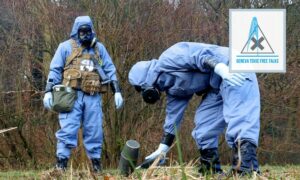
Military activities have a detrimental impact on human rights through the toxics used in warfare, as well as during the preparation of warfare and after. They generate toxic legacies that harm human health, disrupt ecosystems and livelihoods, and undermine peacebuilding and reconstruction efforts.
Based on the UN Special Rapporteur’s report to the UN General Assembly (A/80/174), this event will look at sources of exposure and their impacts on human and environmental health. The event will highlight the need for robust legal standards and measures to prevent, mitigate and remediate the harm caused by military contamination, in line with the human rights obligations of States, and discuss how such a human rights based approach must be developed to mitigate this threat.
Geneva Toxic Free Talks 2025
The Special Rapporteur on toxics and human rights reports every fall to the Council and to the UN General Assembly on issues related to his mandate. The Geneva Toxic Free Talks aim to harness the opportunity of this moment of the year to reflect on the challenges posed by the production, use, and dissemination of toxics and on how Geneva contributes to bringing together the actors working in reversing the toxic tide.
On the sidelines of HRC60, the 2025 edition of the Toxic Free Talks will take place on 17 September 2025, with conferences and discussions, highlighting the work of the Special Rapporteur and of organizations in the struggle for the right to live in a toxic-free environment.
Environment @ HRC60
The 60th Regular Session of the Human Rights Council (HRC60) is taking place in Geneva from 8 September to 8 October 2025. Consult this regularly-updated page that highlighted the environmental-related activities of this session.

Speakers
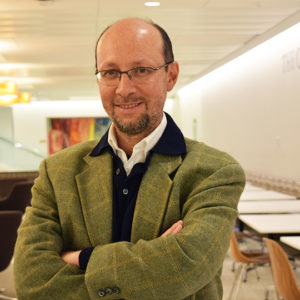
Marcos ORELLANA
UN Special Rapporteur on toxics and human rights
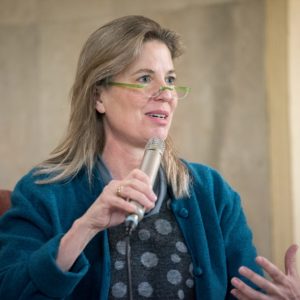
Lindsey Fielder COOK
Interim Deputy Director and Representative for Climate Change, Quaker United Nations Office, Geneva
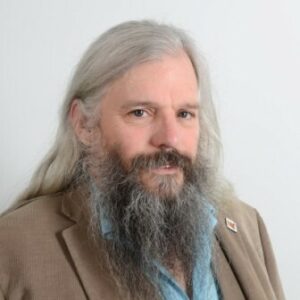
Christophe BARBEY
Main representative to the United Nations in Geneva, Center for Global Nonkilling

Isabel PEREIRA
Senior Coordinator, Drug Policy Area, Dejusticia
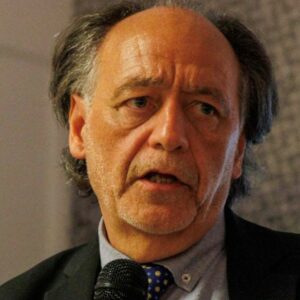
Yves LADOR
Representative to the United Nations in Geneva, Earthjustice
Highlights
Video
Summary
Opening
Marcos ORELLANA | UN Special Rapporteur on toxics and human rights
- The upcoming thematic report to the UN General Assembly will focus on military activities and toxics, building on earlier work about toxic waste and armed conflict. Since then, developments such as the International Law Commission’s principles, ICRC clarifications, and the concept of “toxic remnants of war” have advanced the field.
- The report reflects a broad view of military activities, since not only conflicts but also weapons testing have left legacies of pollution, human rights violations, and long-term harm. Examples include testimony from Indigenous communities in Australia affected by nuclear tests, and the Marshall Islands, where radioactive contamination and the unstable “nuclear dome” remain major threats.
- The report also covers Afghanistan, highlighting contamination’s impact on agriculture, and Ukraine, including damage at Chernobyl from Russian drones, as well as broader threats to nuclear sites and energy infrastructure. It also addresses severe contamination in Gaza.
- Key points of the report include:
- The overlap of human rights law and international humanitarian law, with a call to refine weapons conventions.
- Discussion of proposals to recognize “ecocide” under international criminal law, warning against vague definitions but supporting protecting nature as a right.
- The use of white phosphorus, e.g. in Lebanon, which though not explicitly banned, violates core humanitarian law principles and needs stronger regulation.
- Chemical weapons: the Chemical Weapons Convention should also cover hazardous pesticides when misused, such as in Brazil to displace communities.
- The report contains recommendations on these issues, emphasizing the need to strengthen legal protections, accountability, and safeguards for the environment, human rights, and peacebuilding in relation to military activities and toxics.
Panel Discussion
Lindsey Fielder COOK | Interim Deputy Director and Representative for Climate Change, Quaker United Nations Office, Geneva
- From the pacifist Quaker perspective, war itself is an abomination of human rights. War’s preparation, use, and consequences must all be considered, especially the toxins left behind that harm communities everywhere. The world is at one of the most dangerous moments in decades, with $2.88 trillion spent globally on the military, decisions that put future generations at risk.
- Military emissions are largely hidden: states do not have to report them to the Intergovernmental Panel on Climate Change or include them in their climate pledges under the UNFCCC, meaning the science and urgency are understated. The governments must include military emissions in their NDCs, therefore strengthening both climate action and national interest. There is also a significant emissions impact of bombings and destruction, Gaza as an example where cement use, both in destruction and reconstruction, drives high emissions.
- On accountability, the discussion of ecocide under the International Criminal Court is welcomed, since it could prevent harmful corporate practices by holding leaders personally liable. Protecting the environment is essential for peacebuilding: when toxins destroy food, water, and livelihoods, communities are driven into further conflict.
Christophe BARBEY | Main representative to the United Nations in Geneva, Center for Global Nonkilling
- The universality of human relations and the importance of life as a foundation—life exists to sustain life, and the only way to protect it is not to threaten it. The recent debates in the Human Rights Council were disappointing, focusing heavily on state sovereignty rather than human rights. The Council belongs to the people and must prioritize victims of conflict and violence.
- Renewed attention to the right to life (as a preventive right) and the right to peace (as a proactive right), insisting peace must be actively built at individual, social, and political levels. The use of mechanisms is encouraged, like the Universal Periodic Review to advance peace, mediation, and peaceful settlement of disputes. If people learn to resolve conflicts peacefully, states will follow.
- There is a link between toxics and violence, and a need for cross-sector dialogue and breaking down silos. Practical measures, such as labeling weapons with warnings like those on hazardous chemicals, could raise awareness.
- There is a lack of transparency in military impacts and continued risks imposed by powerful states, unacceptable for the future.
Isabel PEREIRA | Senior Coordinator, Drug Policy Area, Dejusticia
- Eradication policies have fueled human rights violations in Colombia and globally. From 1994–2015, Colombia sprayed two million hectares with glyphosate (the equivalent of the territory of Slovenia)—later declared probably carcinogenic—using military, police, and private contractors, with funding largely from the US. Though the program was suspended in 2015 with WHO declaring glyphosate as probably carcinogenic, attempts from governments to restart it continue but they have not been able to.
- The main victims were peasants and Indigenous communities, already marginalized and without healthcare or income alternatives. Spraying was coupled with militarization, stigmatization as “guerrilla collaborators,” torture, killings, and forced displacement. Complaints mechanisms failed—96% of claims were rejected, often reviewed by the same authorities responsible for spraying.
- Punitive drug policies, promoted even by the UN Office on Drugs and Crime, disproportionately target the weakest actors while leaving consumer countries untouched. While legal action secured suspension, the risk of resumption remains high. Colombia shows how the misuse of pesticides outside agriculture exemplifies the toxic intersection of drug policy and human rights abuses.
Open Discussion
Representatives of the Marshall Islands
- The lasting nuclear legacy continues to threaten the people of the Marshall Islands.
- The Pacific has been used as a testing ground for weapons, including Agent Orange, and remnants from World War II, such as landmines and unexploded ordnance, still endanger ecosystems and communities.
- There is an urgency of international solidarity to prevent similar situations in the Marshall Islands, other Pacific countries, and worldwide.
- The next steps for the specific Human Rights Council resolution on the nuclear legacy in the Marshall Islands will be another resolution in 2026.
- While the first resolution was presented in 2022 and the second in 2023, they were both rooted in the visit of the Special Rapporteur on toxics to the Marshall Islands. One key recommendation from that visit was to engage with the Special Rapporteur on transitional justice—something they hadn’t initially considered but later saw as crucial.
- Transitional justice provides a framework to address the past, particularly since the nuclear testing occurred under UN trusteeship/colonization, involving gross and systematic human rights violations. The approach envisions a long-term process: the first report focused on truth, the next likely on justice, followed by reparations, guarantees of non-recurrence, and eventually memorialization—spanning about 10 years.
- The aim is to create a roadmap for the Marshall Islands to address past violations, strengthen democracy, secure justice, and ensure such abuses never happen again.
- The immediate concrete step is the 2026 resolution and report, with continued dialogue and panels, potentially including the Special Rapporteur on toxics.
- The upcoming report on the Marshall Islands is still open for submissions, with the deadline recently extended (likely to January). Students and others are encouraged to contribute proposals through the call for inputs from the Office of the High Commissioner.
Representative of Bosnia
- As a Bosnian, the sections of the report on toxic and military waste felt very familiar and it is surprising to know that such emissions are neither calculated nor made public. The following question is raised: Are there any plans or strategies in place to ensure that organizations working on climate change integrate this issue and help bring it into the mainstream?
Lindsey Fielder COOK | Interim Deputy Director and Representative for Climate Change, Quaker United Nations Office, Geneva
- The key issue is that states are not required to report their military emissions—so most don’t. As a result, the IPCC cannot mandate such reporting since its authority depends on the UNFCCC framework, which excludes this area. Change has to come from states themselves, recognizing that it is in their own interest to have these emissions calculated.
- Some organizations have raised the issue within the IPCC (the speaker’s own being one of the first and few to do so), but the IPCC’s limited mandate prevents it from fully addressing it. The argument used is that accurate climate modeling requires military emissions to be included if the IPCC is to provide the best available science.
- Meanwhile, independent groups—like CEOBS—are calculating these emissions, estimating that the world’s militaries are responsible for 5.5% of global emissions. However, meaningful progress requires states, including smaller ones, to take the lead in pushing this issue forward.
Closing
Marcos ORELLANA | UN Special Rapporteur on toxics and human rights
- Several chemicals of concern are mentioned in the report.
- Asbestos, for example, is relatively safe when contained, but when buildings are bombed and debris is released, it becomes highly dangerous—as seen in Ukraine and Gaza.
- “Forever chemicals” (PFAS) have been linked to military activities, with some of the world’s highest concentrations reported near an air force base in Sweden, and similar contamination documented in Okinawa near U.S. bases. Depleted uranium, glyphosate, and the legacy of Agent Orange in Vietnam—containing toxic dioxins with intergenerational effects still poorly studied—were also raised as serious hazards.
- The report notes that the most affected groups often include indigenous peoples, frontline communities, and veterans—similar to how small-scale gold miners and indigenous groups suffer most from mercury exposure in other contexts. Veterans exposed to burn pits and other military waste are a key example.
- Sanctions against some organizations cited in the report are unacceptable retaliation against human rights defenders and even against a UN special procedure itself.
- There is an urgent need to protect those who engage with the Human Rights Council and the Special Rapporteur will raise this issue further at UN headquarters in New York.
Photo Gallery


Links
- A/80/174: Military activities and toxics | SR toxics
- Geneva Toxic Free Talks | GEN
- Human Rights, Hazardous Substances, and the Role of Geneva | GEN
- Human Rights and the Environment | GEN
Other Events @ Geneva Toxic Free Talks 2025
Tackling Toxics on the Ground
17 September | 11:30 – 12:30 CEST
Protecting Human Rights in the Face of Ocean Pollution: Access to Justice and a Toxic-Free Future | HRC60 Side Event
17 September | 13:00 – 14:00 CEST
Challenges for the Right to be Toxic Free | Geneva Toxic Free Talks 2025
17 September | 16:00 – 17:00 CEST