
Événement Conférence
World Wildlife Day 2026 | Geneva Celebrating Expertise in Medicinal and Aromatic Plants: Conserving Health, Heritage and Livelihoods

03 Mar 2026
09:30 – 12:00
Lieu: International Environment House I
Organisation: Convention sur le commerce international des espèces de faune et de flore sauvages menacées d'extinction
The World Wildlife Day 2026 Geneva Celebration, organized by the CITES Secretariat and the Geneva Environment Network, showcased the role of Geneva in highlighting the importance of medicinal and aromatic plants in sustaining human health, cultural heritage, and local livelihoods and in advancing collaborative actions needed to ensure that these plants are conserved and used sustainably for future generations to continue benefitting from them. This event took place back-to-back with the Global WWD online celebration.

About this Event
On 20 December 2013, at its 68th session, the United Nations General Assembly proclaimed 3 March as World Wildlife Day to celebrate and raise awareness of the world’s wild fauna and flora. This date is also the day of the adoption in Washington of the Convention on International Trade in Endangered Species of Wild Fauna and Flora (CITES) in 1973, which plays an important role in ensuring that international trade does not threaten the survival of species listed in the CITES Appendices.
World Wildlife Day 2026 will shine a spotlight on the critical role of medicinal and aromatic plants under the theme: “Medicinal and Aromatic Plants: Conserving Health, Heritage and Livelihoods.”
Medicinal and aromatic plants (MAPs) are essential for both human health and ecological balance. The World Health Organization (WHO) recognizes their significance, particularly in developing countries, where 70-95 per cent of the population relies on traditional medicine for primary healthcare. These plants form the foundation of many healthcare systems and remain vital to modern pharmaceuticals, as numerous active drug compounds are derived directly or indirectly from natural sources, despite advancements in synthetic chemistry.
Beyond their medicinal uses, MAPs also contribute to various industries, including cosmetics, food, and luxury goods, and are employed for diverse applications in agriculture, medicine and conservation. Ensuring the sharing of benefits arising from this use is essential and can provide incentives for conservation and sustainable use of wildlife (Target 13 of the Kunming-Montreal Global Biodiversity Framework). Additionally, MAPs play a crucial role in supporting ecosystems by stabilizing soils, promoting biodiversity and providing essential resources for pollinators, such as bees and hummingbirds. However, many of these valuable species face growing threats from habitat destruction, overharvesting and illegal trade, making their conservation a global priority.
In line with the World Wildlife Day 2026 United Nations event taking place online, the CITES Secretariat and the Geneva Environment Network organized the traditional Geneva celebration to showcase the role of Geneva in highlighting the importance of medicinal and aromatic plants in sustaining human health, cultural heritage, and local livelihoods and in advancing collaborative actions needed to ensure that these plants are conserved and used sustainably for future generations to continue benefitting from them.
Following the formal Opening Segment, the celebration featured a series of Lightning Talks – five-minute presentations (PechaKucha format) – delivered by experts exploring MAP-related topics of their choice. These talks highlighted the benefits and applications of MAPs, innovative ways to overcome the pressing challenges they face, as well as the important role played by those who protect them. A dedicated World Wildlife Day Exhibition also took place in parallel.
The in‑person event was followed by the World Wildlife Day 2026 United Nations Virtual Celebration, taking place from 13:30 to 15:30 CET.
World Wildlife Day 2026 in Geneva
The celebration of World Wildlife Day 2026 in Geneva consists of other important moments to discover and learn more about efforts to conserve and protect wildlife in Geneva. Discover more on our dedicated webpage Celebrating World Wildlife Day in Geneva and Beyond!
Opening
By order of intervention

Arnold KREILHUBER
Director, Europe Office, UN Environment Programme

H.E. Amb. Juan Alberto CASTILLERO CORREA
Permanent Representative of the Republic of Panama to the United Nations Office and other international organizations in Geneva

H.E. Amb. Julien THÖNI
Deputy Permanent Representative of Switzerland to the United Nations Office and other international organizations in Geneva

Kristina RODINA DE CARVALHO
Chief, Outreach and Projects Unit, CITES Secretariat

Ivonne HIGUERO
Secretary-General, CITES (Video Message)
Summary
Arnold KREILHUBER | Director, Europe Office, UN Environment Programme
- It is an honor for the United Nations Environment Programme to welcome you for the Geneva celebration of this year’s World Wildlife Day, an occasion that brings global attention to the value of the world’s wild fauna and flora.
- As we will hear from leading experts, this year’s theme “Medicinal and Aromatic Plants: Conserving Health, Heritage and Livelihoods” could not be more timely or more significant.
- The event celebrates the role played by Geneva at the forefront of global efforts to conserve and sustainably use medicinal and aromatic plants.
- Geneva brings together a unique concentration of international organizations, scientific institutions, civil society organizations and policy platforms. This rich network works collectively to address the triple planetary crisis of climate change, biodiversity loss and pollution – three interconnected challenges that increasingly threaten the ecosystems on which medicinal and aromatic plants depend.
- Our traditional Geneva celebration will showcase the role of Geneva in highlighting the importance of medicinal and aromatic plants in sustaining human health, cultural heritage, and local livelihoods and in advancing collaborative actions needed to ensure that these plants are conserved and used sustainably for future generations to continue benefiting from them.
- Leading experts from this vibrant community will help us understand why medicinal and aromatic plants, or MAPs, are essential pillars of both human wellbeing and ecological integrity, and that their importance extends far beyond health. These plants sustain cultural heritage, support local economies, and contribute to key sectors.
- Despite their immense value, MAPs face growing threats from habitat loss, overharvesting and illegal trade, challenges that put both biodiversity and human wellbeing at risk. Ensuring their conservation is therefore not only an environmental imperative, but a social and economic one.
- This event, co-organized with the CITES Secretariat and counting on the rich network of Geneva-based organizations, showcases once again Geneva’s leadership in advancing global cooperation and championing the sustainable use of our planet’s resources. The exhibition and expert Lightning Talks highlight the wealth of knowledge and innovation present in this community – evidence that we have the expertise and partnerships needed to drive change.
- As UNEP, we remain committed to supporting countries and communities in strengthening biodiversity governance, promoting sustainable trade, and ensuring equitable benefit sharing – so that the use of MAPs supports livelihoods while safeguarding ecosystems for generations to come.
- Let us enjoy this celebration and take this opportunity to reaffirm our collective responsibility to protect, to restore, and to sustainably manage the natural heritage that sustains us all.
H.E. Amb. Juan Alberto CASTILLERO CORREA | Permanent Representative of the Republic of Panama to the United Nations Office and other international organizations in Geneva
- At this celebration of World Wildlife Day 2026, we reflect on the importance of medicinal and aromatic plants for conserving health, heritage, and livelihoods.
- CITES species support primary health care for millions of people, maintain ecosystems, and contribute to resilient local economies. Their conservation is therefore inseparable from sustainable development and the protection of traditional knowledge held by indigenous peoples and local communities.
- As a mega-diverse country and committed global partner, Panama understands and is committed to highlighting the profound connection between biodiversity, cultural heritage, and human well-being.
- Our ecosystem grows a rich diversity of medicinal plants that are essential to community health systems and to the preservation of ancestral knowledge. Safeguarding this resource means safeguarding both nature and identity.
- Panama is honored to host the next conference of the parties to the CITES COP21 and we remain firmly committed to advancing ambitious and science-based conservation.
- At the most recent conference of the parties (CITES CoP20) held in Uzbekistan, Panama played a leading role in strengthening protection for marine biodiversity, contributing to the inclusion of several sharks and rays in Appendix 1- an important step towards ensuring their survival and the health of ecosystems that sustain life.
- Panama believes that leadership in biodiversity conservation requires cooperation, equity, and respect for traditional knowledge.
- The sustainable use of medicinal plants can support livelihoods, strengthen climate resilience, and promote inclusive development, particularly for rural and coastal communities.
- We reaffirm our commitment to partnerships that conserve biodiversity, while fostering health, sustainability, and shared prosperity for present and future generations.
H.E. Amb. Julien THÖNI | Deputy Permanent Representative of Switzerland to the United Nations Office and other international organizations in Geneva
- It is fitting that we meet here in Geneva, a hub for global cooperation and action, where many key actors are based and where others come to meetings that are closely connected to nature.
- International Geneva stands as a vital and vibrant ecosystem where governments, international organizations, and civil societies come together to address pressing global challenges.
- Among the many innovations taking place here, this ecosystem plays a key role in fostering solutions to environmental issues. From policy to development to scientific research, many are aimed at safeguarding our planet’s biodiversity and ensuring a sustainable future for all.
- Not losing sight of the added value of international Geneva is of particular importance in the current context. The financial challenges, political attacks against multilateralism, and grave violations of international law put the system in a very challenging situation.
- Switzerland is aware of the need to prioritize multilateral action and of the pressure put on organizations to reduce costs. However, we must be careful not to fall into the trap of short-termism and throw overboard the assets that we have all developed for a long time here in Geneva.
- Our theme for this year, “Medicinal and Aromatic plants: Conserving Health’s Heritage and Livelihoods,” reminds us that our natural world is not only beautiful and diverse, but essential to our well-being and survival.
- For millennia, medicinal and aromatic plants have been the cornerstone of traditional healing systems, cultural practices, and spiritual beliefs across continents. Today, they continue to play a vital role from the formulation of life-saving drugs to the creation of cosmetics and nutritional products.
- Switzerland recognizes this immense value, and we are committed to the conservation and sustainable use of these resources not only through strong domestic legislation but through active participation in global agreements such as CITES and the Convention on Biological Diversity.
- Switzerland is also a significant hub in the international trade and processing of medicinal and aromatic plants, including species like Aloe Ferox and Saussurea Costus.
- With this role comes responsibility. That is why we support a project that promotes sustainable harvesting supply chains and fair benefits for local communities, especially in biodiversity-rich countries. This work is not only about environmental protection, but it is also about preserving cultural heritage and securing liabilities
- Traditional knowledge systems, particularly those of indigenous peoples and local communities, must be respected and protected, not exploited.
- Ethnobotany and ethnomedicine offer rich insights that deserve recognition in research, policy, and trade.
- As science advances, the potential of these plants to contribute to future medical innovation is extraordinary, but many species are under increasing pressure from habitat loss, overharvesting, and climate change. That is why we must invest in both in situ and ex situ conservation, including the vital role played by botanical gardens such as the Conservatory and the Botanical Gardens of Geneva, where activities to raise awareness on the theme of World Wildlife Day have been hosted.
- Let us remember that protecting medicinal and aromatic plants is not a luxury, it is a necessity for health, our heritage, and the generations to come.
Kristina RODINA DE CARVALHO | Chief, Outreach and Projects Unit, CITES Secretariat
- Medicinal and aromatic plants (MAPs) are very close to my heart, because this is how I started my career 15-years ago, working on medicinal aromatic plants projects in Europe with TRAFFIC.
- What amazed me with this topic is that it is quietly overlooked when we talk about biodiversity conservation and international policy, because if you look at your daily lives, you use medicinal plants without thinking about it. These plants are really present in our lives.
- It also made me think of the people who are custodians in many ways who are so often overlooked because for those local communities and indigenous peoples, these plants are not only part of their cultural identity, but also a very important source of income and very often this is the means of survival for these communities.
- Many products, when it comes to the medicinal aromatic plants, come from wild-harvested species, which face very complex sustainability challenges. For example, Frankincense, which comes from the Boswellia trees and is a CITES-listed species, faces a lot of risk when it comes to overharvesting and overlapping habitat pressures. Another example, which is not a CITES-listed species but is very common, is licorice root, which is harvested mostly from wild-harvested species in Eurasia and North America.
- These species, if not sustainably managed, have a lot of risk when it comes to management practices and also overharvesting. We don’t think about this when it comes to our daily consumption of these plants.
- These plants may also be endangered, they may be unsustainably harvested, and their trade may not be well regulated, which is a very common issue.
- As CITES, we are seeing firsthand how cooperation is super important when we talk about conservation and sustainable use of these species. In CITES, we have more than 1’600 species of MAPs, and we are helping to ensure that their trade is sustainable, legal, and traceable.
Ivonne HIGUERO | Secretary-General, CITES (Video Message)
- Around the world, medicinal and aromatic plants are woven into the daily lives of billions of people. They flavor our foods, anchor our healing traditions, support our wellbeing and sustain livelihoods in rural and indigenous communities.
- On this WWD 2026, we shine a spotlight on these remarkable species and on the knowledge systems that have conserved them for generations.
- Medicinal and aromatic plants are part of humanity’s oldest relationship with nature. Long before modern science could explain their properties, communities understood their power. They learned which foods could heal, which leaves could soothe, and which resins could protect. This heritage is still alive today, carried forward by traditional healers, harvesters, growers, and families who rely on these plants for health and cultural identity.
- These species also play a fundamental role in today’s global economy. From ginseng to agarwood, from orchids to aloes, many medicinal and aromatic plants are traded internationally and over 150.00 are regulated under CITES.
- Through CITES, countries work together to ensure this trade is sustainable, legal and traceable so that wild populations are not depleted and that communities can continue to benefit from them.
- Yet the pressures are growing, along with the triple planetary crisis, unsustainable harvesting and illegal trade, threaten the very plants that have supported human health for millennia.
- As demand rises, so does the urgency to strengthen sustainable management, support community-led stewardship, and respect traditional knowledge.
- This year’s theme, medicinal and aromatic plants conserving health, heritage, and livelihoods, reminds us that the benefits of nature are shared fairly and sustainably.
- For this WWD, I invite you to share your ideas. How can we better conserve medicinal and aromatic plants? How can we support the communities that depend on them? And how can we ensure that these species continue to enrich our lives, in our medicines, our traditions, and our economies?
- Conserving medicinal and aromatic plants is a commitment to our collective wellbeing, it is a commitment to the people who have conserved these species for generations and for the future generations who will depend on them.
Lightning Talks
The celebration featured a series of Lightning Talks – five-minute presentations (PechaKucha format) – delivered by experts exploring MAP-related topics of their choice.
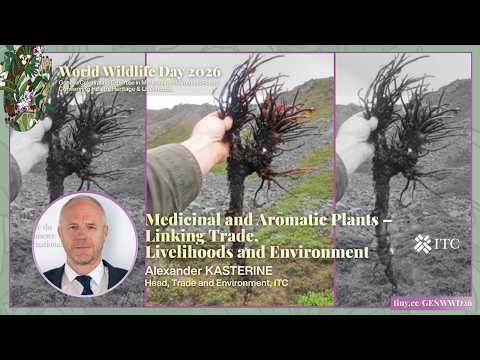
Alexander KASTERINE
Head, Trade and Environment, ITC
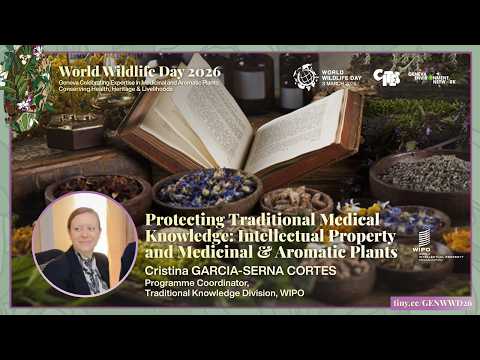
Cristina GARCIA-SERNA CORTES
Programme Coordinator, Traditional Knowledge Division, WIPO
Sangyoung AHN
Technical Officer, Traditional Medicine Norms, Standards, and Systems Integration Unit, WHO Global Traditional Medicine Centre, Health Systems, Access and Data Division, WHO
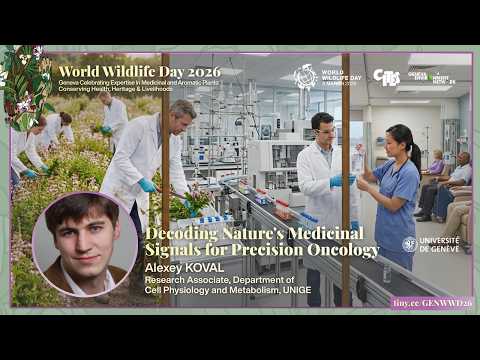
Alexey KOVAL
Research Associate, Department of Cell Physiology and Metabolism, UNIGE
Thea CARROLL
Chief, Science Unit, CITES Secretariat
Colman CRIODAIN
Policy Manager, Wildlife Team, WWF
Simone HAYSOM
Director, Environmental Crime and Head, ECO-SOLVE, Global Initiative Against Transnational Organized Crime
Jamal MAHMOUD
Program Manager, International Partnerships, Biovision
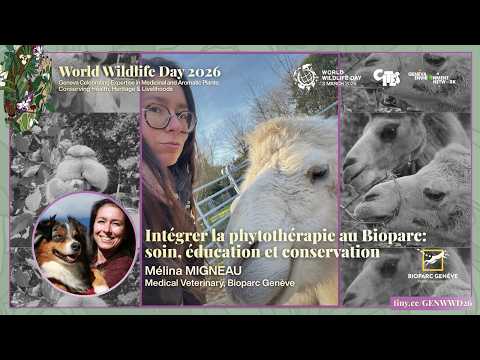
Mélina MIGNEAU
Medical Veterinary, Bioparc Genève
Summary
Alexander KASTERINE | Head, Trade and Environment, ITC
- Rhodiola crenulata is a CITES Appendix II-listed species.
- Common photos of it raise questions: has that plant been ripped out of the ground? Has it been sustainably harvested? Will it grow back again? What are the properties that are linked to that bottle on the right? What’s it going to be used for? What are the communities involved in its collection? What sort of land is it being harvested from? Is it communal land or private land? That’s an interesting place to start and to answer some of the questions.
- The ITC worked in 2014 and prepared a paper with the IUCN Specialist Species Group to look at a framework for analyzing these issues. It was a time when ITC was supporting CITES parties on all value chain aspects of the trade.
- Out of that study came three factors that we think would be elements determining sustainable outcomes in trade.
- The first is species.
- What kinds of species are being harvested? Some species are more resilient than others.
- Some species lend themselves to harvest more than others.
- Some species can be domesticated and produced on a production line, and that has the effect of reducing prices, reducing incentives for unsustainable wild harvest. It can also impinge on biodiversity by creating more plantations, so there are complex trade-offs there.
- The second set of factors is governance.
- Conservation can be delivered through national parks, public spaces or through private land with covenants for conservation.
- Both models have pros and cons, but within those two models a key element is tenure rights.
- What sort of rights do communities have over the resource to harvest it and trade it?
- In Bolivia, we found an example of very weak tenure rights that indigenous communities had for Brazil nuts, whereas in Peru, the rights were stronger. They were not formal, but they had been negotiated by a cooperative.
- The cooperative is a key element of this in terms of increasing the power of local communities.
- Related to that are the strong usufructuary rights of vicuña communities in Peru. Vicuña is a CITES-listed species that we looked at very closely. By assigning rights to those communities, they had the opportunity to allow the species to recover from unsustainable or unregulated hunting.
- The third set of factors is around markets, which is where ITC’s expertise comes in.
- One feature of these markets is that communities often have a very weak bargaining position and this is the concern in terms of development.
- For example, with devil’s claw, communities receive about half a percent of the final value of the product. This is often due to geographical isolation and entrenched local elites who buy the product.
- With vicuña, communities receive around five percent of the final product value. The situation is similar, where local elites are buying the product but this can be mitigated through strengthening local enterprises.
- For instance, Prunus Africana harvesting, where a cooperative was set up in Cameroon to increase bargaining power.
- PhytoTrade Africa, which invests in more innovative enterprises around baobab processing.
- This leads to the second part of the presentation, which is about value chains and what ITC is doing in this area.
- A couple of years ago, we produced a guide for exporters on medicinal and aromatic plants, financed by the European Union.
- Last week we used this guide in Nepal, working with TRAFFIC to support exporters in meeting market requirements and understanding regulations.
- This work also takes the form of one-to-one advisory services, helping companies work through the issues involved.
- One of the main issues companies face is that they cannot raise funding or obtain insurance based on their inventory. This means they cannot invest in sustainability in the value chain.
- Another issue is quality. If products are stored for long periods, the quality deteriorates. Traders sometimes wait for prices to increase before releasing products onto the market.
- One way around this is certification. If companies obtain organic or FairWild certification, they can invest in the value chain and address these issues while also increasing the value of their product through premium prices.
- ITC can also support this through the Standards Map, funded by the Swiss and German governments and other donors, which provides greater transparency around standards such as FairWild and organic.
- We also take companies to trade fairs. For example, medicinal and aromatic plant producers from Albania can meet buyers and better understand market requirements.
- Finally, a key part of marketing and increasing value and sustainability is the ability to tell stories about the product. This can include livelihood stories, for example, investments in education and health in local communities.
- This enables greater partnerships with buyers and supports value addition and sustainability.
Cristina GARCIA-SERNA CORTES | Programme Coordinator, Traditional Knowledge Division, WIPO
- An important part of our work and projects consists of capacity-building activities for Indigenous peoples and local communities by supporting them in protecting their products through intellectual property.
- Examples of plants used in traditional medicine that are currently facing challenges, such as being endangered species, include ginseng, which has been used for many years in traditional medicine. Another example is goldenseal, known for its antimicrobial properties. Centella asiatica is also another example: it is used for healing wounds, reducing inflammation and boosting memory and cognitive abilities.
- So what can we do? Each of us can support in different ways. At WIPO, and more specifically within the Traditional Knowledge Division, we use intellectual property tools to help protect medicinal herbs and traditional medical knowledge.
- How is this done? The intellectual property system offers several mechanisms that can be used to protect traditional medicinal knowledge. These include patents, copyright, trademarks, geographical indications and trade secrets, each of which can protect different aspects of knowledge and products.
- Starting with trademarks: traditional trademarks help Indigenous communities commercialize their knowledge while maintaining control over their use. For example, Swalwin Botanicals, registered in 2022 in Canada, is one such case. Another example is Indigiearth, an Aboriginal-owned business that produces and markets native Australian bush foods and botanicals, including medicinal teas and wellness plant products rooted in Indigenous land knowledge.
- Regarding patents, the Javanji patent case is a good example of how traditional medical knowledge and the patent system can coexist. In this case, traditional knowledge was acknowledged, a benefit-sharing agreement was established with the Kani community in India (holders of the knowledge) and a trust fund was created to distribute royalties from commercialization.
- The turmeric patent case is another landmark example. A patent was granted in the United States for turmeric’s healing properties. India challenged the patent by demonstrating that turmeric’s medicinal uses were long-standing traditional knowledge documented in ancient Sanskrit and Hindi texts. Because the invention lacked novelty, the patent was revoked.
- In the early 2000s, several US patents were granted for products derived from maca. Indigenous communities argued that maca’s medicinal and nutritional uses were traditional knowledge, not new inventions. In response, Peruvian authorities challenged these patents, and many were withdrawn or opposed.
- The Hoodia case involves the San people of Southern Africa. In the 1990s, an appetite-suppressing compound from the Hoodia plant was patented and licensed to pharmaceutical companies without consulting the San people. After public pressure, a benefit-sharing agreement was signed recognizing their traditional knowledge.
- The Training, Mentoring and Matchmaking Program on Intellectual Property and Traditional Medical Knowledge was developed within the Traditional Knowledge Division. This program aims to establish and support an innovation ecosystem based on traditional medical knowledge. Its purpose is to assist communities and traditional medicine practitioners by collaborating with research institutions, intellectual property offices, and other partners to better understand how to protect and benefit from their knowledge.
- Since the launch of the program at the end of 2024, projects have been developed in several countries for traditional healers. The program began in Uganda, and a similar initiative was delivered in Nigeria.
- These projects include a mentoring phase designed to support traditional healers in developing and effectively protecting their knowledge, with assistance from mentors and pro bono lawyers.
- In 2024, WIPO member states adopted the WIPO Treaty on Intellectual Property, Genetic Resources and Associated Traditional Knowledge. This treaty links patent disclosures to Indigenous holders of traditional knowledge related to genetic resources, including medicinal plants. It specifically requires that inventions based on traditional knowledge disclose the source of that knowledge.
- The WIPO Traditional Knowledge Division has also prepared and compiled resources and materials to support Indigenous peoples and local communities by providing information about the available tools to protect their traditional knowledge.
- Another example of WIPO’s activities to highlight and emphasize the importance of protecting Indigenous traditional knowledge, particularly traditional medicine, is the Photography Prize for Indigenous Youth. The 2024 theme was: “Indigenous Peoples’ Ways of Healing and Well-being: Honoring Our Ancestors’ Wisdom and Knowledge.”
Sangyoung AHN, Technical Officer, Traditional Medicine Norms, Standards and Systems Integration Unit, WHO
- I would like to begin with a personal story. My father was born in South Korea but he immigrated to Paraguay in his late thirties. Years later, he suffered from persistent stomatitis. He tried many treatments, but nothing seemed to work well. One of his Paraguayan friends suggested he try “juju,” a medicinal plant sold in local markets in fresh or dried form. He prepared infusions from it for several months, and his condition improved.
- This kind of traditional knowledge has been recorded in historical texts. One of the earliest texts in the so-called “New World” was written in 1552 in the Náhuatl language. Because of my personal interest in migration from Asia to the Americas through the Bering Strait, I had the opportunity to translate this text into Korean around 2011. It was a fascinating experience.
- Other forms of traditional medical knowledge have been systematically organized and recorded. Examples include the Compendium of Materia Medica, the Principles and Practice of Eastern Medicine, and the Yellow Emperor’s Inner Canon, which is listed in the UNESCO Memory of the World Register.
- Traditional medical knowledge has also provided crucial insights for modern medicine. A well-known example is the Nobel Prize awarded to Tu Youyou for the discovery of artemisinin for malaria treatment. She drew inspiration from ancient texts written approximately 1,700 years ago.
- WHO’s formal work on traditional medicine began in 1969, when it was first referenced in World Health Assembly Resolution 22.5 on the production of pharmaceuticals in developing countries. The resolution recognized the widespread use of traditional medicine and the need for scientific research.
- The first issue of World Health magazine dedicated to traditional medicine focused on medicinal plants and was published in 1973. This is significant because it preceded publications specifically on traditional medicine (1977) and acupuncture (1979). Medicinal plants were therefore an entry point for traditional medicine within public health and primary care discussions.
- Earlier this year, I had the opportunity to speak with a Professor Emeritus from the University of Illinois who has collaborated with WHO for more than 50 years on medicinal plant databases and WHO monographs. His work began in 1975 on herbal medicine for fertility. It was inspiring to learn about such long-standing engagement.
- The first coordinator of the WHO Traditional Medicine Programme, Dr. Tu Youyou, discovered artemisinin (derived from the plant Artemisia annua) and later developed dihydroartemisinin, both of which are now key treatments for malaria.
- She noted one challenge in traditional medicine is variation due to geography, seasons, and plant species. In response, WHO developed early guidelines, including the Guidelines on the Conservation of Medicinal Plants in 1993. These were followed by further guidelines on herbal medicines, including Good Manufacturing Practices (GMP) and Good Clinical Practices (GCP), to ensure safety and quality.
- WHO published its first Traditional Medicine Strategy in 2002, covering the period 2002–2005. Since then, traditional medicine has continued to be incorporated into WHO’s broader health strategies. Herbal medicine has consistently been part of this collective work.
- In May of last year, during the 78th World Health Assembly, WHO adopted the Global Traditional Medicine Strategy 2025–2034. This strategy will guide WHO’s work in this area over the next ten years. It begins by recognizing that traditional medicine is used by people across all six WHO regions. According to WHO data, 170 Member States acknowledge the use of traditional medicine, and 67% of respondents report that between 40% and 99% of their populations use it.
- In December last year, the second Global Summit on Traditional Medicine was hosted by the Government of India. During this process, regional videos were produced to highlight key priorities:
- In the Americas: safeguarding Indigenous rights and ensuring sustainable use of traditional knowledge.
- In Africa: preserving generational wisdom and protecting ancestral knowledge.
- In Europe: strengthening scientific integrity.
- In the Eastern Mediterranean: advancing research, education, and policy through capacity building.
- In South-East Asia: integrating cultural heritage, research, innovation, and medicine alongside meditation.
- In the Western Pacific: promoting collaboration.
- For the first time, the newly adopted Global Traditional Medicine Strategy defines “integrated medicine” as an interdisciplinary and evidence-based approach that brings together biomedicine and traditional medicine.
- One of the nine guiding principles of the strategy is the protection of Indigenous Peoples’ rights. It states that Indigenous Peoples have the right to their traditional medicine, to conserve medicinal resources, and to protect their knowledge from misappropriation.
- Under Direction 2.1, the strategy calls for strict regulation to safeguard endangered species, aligned with international agreements such as CITES and national laws. It emphasizes phasing out unsustainable practices and investing in sustainable alternatives. Ethical sourcing, responsible production, and mindful use are essential.
- Under Direction 4.2, the strategy promotes inclusive approaches to protecting traditional knowledge and ensuring fair and equitable benefit-sharing arising from its use. In this context, collaboration with partners such as WIPO is important.
- At the second Global Summit last December, the strategy further promoted participatory research and cross-sector collaboration. Through the WHO Global Traditional Medicine Centre, we aim to better support Member States in implementing these commitments.
- We hope to take this journey together.
Alexey KOVAL | Research Associate, Department of Cell Physiology and Metabolism, UNIGE
- It is an immense honor and pleasure for me to present a bird’s-eye overview of our activities related to medicinal plants at the University of Geneva and how we translate them into the precision oncology of the future.
- Nature is our largest laboratory. It has been performing evolutionary experiments on millions of compounds under conditions that are impossible to replicate in the lab, using mechanisms beyond our imagination. It is therefore no surprise that even today, approximately two-thirds of drugs on the market are of natural origin, either actual natural products or derived from them. Their structures are frequently beyond what can be imagined by chemists.
- We would all be happy to be cured simply by drinking a medicinal tea from nature. However, in many cases, this is not possible because such teas contain only one active ingredient surrounded by thousands of inactive compounds, and many of them can be quite harmful. Therefore, it’s very challenging to identify the one compound which will cure you. Traditional medicines are an excellent head start, but still they suffer the same problem, and their active principles must be understood before they can be converted into modern medicines.
- Thus, in the laboratory, we perform very gentle, automated, and specialized processes for extraction from these medicinal plants, yielding mixtures of thousands, if not tens of thousands, of compounds that we must separate and test individually.
- You can think of the latter as a marathon. Marathon runners become perfectly separated when they run over the terrain simply by interacting with it. We do the equivalent of a molecular marathon for these compounds, except that if scaled to human size, our molecules would run several times around the globe to achieve perfect separation.
- With the compounds so sparse and difficult to obtain in pure form, we perform very miniaturized assays in volumes much smaller than teardrops, using just a few thousand cells, in order to test every compound, because any one of them might become the precision oncology drug of the future.
- I should remind you that we are not just watching how cancer cells die in a tube. We address their very specific mechanisms, based on deep knowledge of cancer as a disease, in order to identify compounds that merit the designation of modern drugs.
- Afterwards, with those showing promise, we need to decode their structure, which, as I already said, frequently surpasses the imagination of modern chemists. For this, we use cutting-edge tools based on magnetic resonance and high-resolution mass spectrometry, combined creatively. We are capable of determining structures like the one you see on the slide.
- This is essential because even tiny changes can convert a toxin into an actual anti-cancer drug like etoposide, which is used in clinics and saves millions of lives against cancer.
- Our lab interacts with local suppliers across the globe. The University obviously has many more collaborations. In these interactions, we are guided by the Nagoya Protocol, which can be summarized simply as fair play, but in reality has clearly defined steps. We need to share intellectual property with our local collaborators, include them as co-authors in our scientific papers, and we also go beyond this. We are very happy to support internships and scientific visits in order to exchange cutting-edge knowledge, provide access to top-notch instruments and promote the circulation of scientific data.
- Just a few highlights of our results:
- For instance, we collaborated with researchers in Uzbekistan, and we identified a very interesting compound which, because of a tiny molecular group, becomes active against deadly cancer.
- We are working with marine biologists and studying organisms living in abyssal darkness so that they can develop photosensitive compounds that would be impossible for terrestrial species. These compounds, when brought to light, can be used for what is called photodynamic therapy because of their high sensitivity to light.
- If I say tannins, many people would associate them only with wine. But some specific plants in Africa used in traditional medicine develop tannins that can be used against cancer, as we have found.
- The future of this is very promising because we can take these already complex scaffolds and, using very special and gentle chemistry, convert them into something even more specific and more similar to modern medicines.
- We can also cross two worlds by exposing fungi to natural products to which they would never have access in their natural habitat, producing compounds that are again highly interesting and very intricate.
- Finally, we are purifying individual enzymes and enzyme systems from living organisms in order to perform extremely precise modifications and fusions. This is extremely scalable and forms the basis of future green synthesis, meaning less toxic waste and less environmental damage.
- These signals, which we decode, are a reminder of something we cannot afford to lose: these habitats. We need to keep our pharmacy of the future clean and open.
Thea CAROLL | Chief, Science Unit, CITES Secretariat
- CITES regulates more than 35,000 plant species listed in the Appendices and these require non-detriment findings, legal acquisition findings, etc. It includes medicinal and aromatic plant species, which we refer to in short as MAPs.
- CITES-listed MAPs species are increasingly important in global trade for addressing wellness issues, health issues, as well as in the cosmetics and food sectors. This highlights the importance of ensuring that science-based assessments are done and that international trade is effectively regulated and monitored to ensure it remains sustainable.
- But MAPs are not only used in consumer products across the world. They are also important in terms of traditional knowledge systems and local livelihoods. Therefore, trade in MAPs provides a bridge between biodiversity conservation, human well-being and wellness, and economic development.
- The global trade in MAP species has been growing. It grew by more than 75% in global trade value and more than 20% in terms of trade volume between 2000 and 2022. This highlights the importance of effective regulation of trade in these species, especially CITES-listed species.
- At the 19th meeting of the Conference of the Parties to CITES, the Parties adopted a number of decisions instructing the Secretariat to undertake a study to analyze trade in medicinal and aromatic plants. This included consideration of the utility of the Medicinal Plant Names Services (MPNS) managed by the Royal Botanic Gardens, Kew.
- This database includes scientific names, trade names, pharmaceutical names and common names for species traded as MAPs. It also includes information on the plant parts used for medicinal purposes and the form in which they are traded. As part of the study, we also considered the link between CITES names and the MPNS database.
- With support from the European Union, which provided funding, we partnered with TRAFFIC and the Kew Royal Botanic Gardens, to undertake the study and analysis of CITES-listed MAP species in trade.
- Main findings include:
- Out of more than 33,000 CITES-listed plant taxa reviewed, 1,500 species were identified in the MPNS database as having medicinal or aromatic properties. That is quite a significant number.
- About 78 CITES-listed species really dominate trade when looking at specific trade terms linked to medicinal and aromatic plants. Trade is therefore highly concentrated in terms of species.
- In terms of sources, about 80% of reported international trade by number of specimens is artificially propagated. However, around 20% of trade reported in volume, such as liquids, gels, saps, essential oils, etc. comes from wild-sourced specimens.
- Aloe ferox and Aquilaria malaccensis are two of the top species traded, both as wild-sourced and artificially propagated. Aloe ferox is used for medicinal purposes and also aromatic uses, for example, in aloe bitters and aloe gels. Agarwood, derived from Aquilaria malaccensis, is well known for its aromatic uses in perfumes and incense.
- Focusing on wild-sourced specimens, the study found that 12 CITES-listed MAP species account for roughly 98% of all wild-sourced MAP exports. This again shows a high concentration and emphasizes the importance of non-detriment findings and effective monitoring of international trade.
- Trade is also geographically concentrated. About 98% of wild MAPs exports come from 10 exporting countries, five of which are located in Africa. Meanwhile, 90% of wild MAPs imports are imported by 20 countries.
- The study also examined online trade, focusing on 15 key priority species traded online. Searches using both scientific and common names resulted in approximately 7.5 million advertisements. This is quite significant and illustrates the challenges Parties face in monitoring online trade.
- The naming system creates further complexities. For those 15 species analyzed, the MPNS database contained 1,100 different names. This makes online monitoring complex and also creates difficulties for Parties, including misidentification and potential regulatory gaps.
- Fewer than 1% of the online advertisements indicated that a CITES permit was required. This suggests gaps in awareness-raising as well as potential compliance monitoring challenges in online trade.
- The study also looked at plant annotations. Annotations specify which parts and derivatives of plants are subject to CITES regulation and which are excluded. For example, finished products packaged and ready for retail trade may be excluded from regulation. This allows Parties to focus their regulatory efforts on raw, wild-sourced specimens while facilitating trade in processed products.
- For Aloe ferox, specific work was undertaken. While there were no immediate conservation concerns, stakeholder engagement during the study highlighted some uncertainty in supply chains and the need for further analysis.
- Moving forward, at the 20th meeting of the Conference of the Parties, a new set of decisions was adopted. These include considering the outcomes of the study, exploring possible cross-referencing between the MPNS database and CITES databases, and encouraging Parties to continue monitoring and analyzing trade in these species.
- Some key takeaways from the study are that international trade in MAPs is substantial and growing. Wild trade is highly concentrated in terms of species and geography. There is also an increase in digital trade, with online platforms becoming important channels.
- This emphasizes the importance of CITES implementation to ensure that trade is sustainable, legal, and traceable, and that it can continue to contribute to conservation, well-being, health, and economic development.
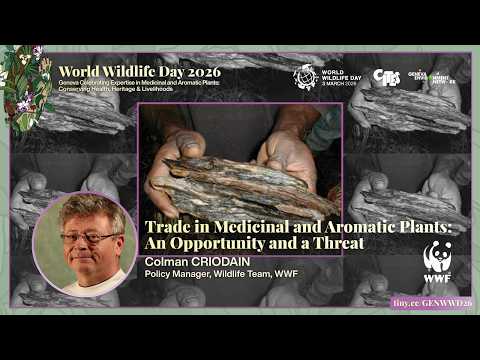
Colman CRIODAIN | Policy Manager, Wildlife Team, WWF
- Medicinal and plant trade: an opportunity and a threat. Two sides of the same coin, as well as the idea of tradition and modernity as two sides of the trade.
- When our communications team was preparing materials around World Wildlife Day, they used the classic example of willow bark being the original source of aspirin, used as a painkiller. They noted it had been used for 2,000 years, but I pointed out it goes back much further. This Assyrian engraving is about 4,000 years old and shows willow bark in use. Similarly, traditional Chinese medicine and Ayurvedic medicine have comparable longevity.
- When it comes to species like Cinchona in South America and many species in Africa, the knowledge is primarily oral, so we don’t know exactly how far back it goes. But again, it goes back a long way. I bring up Cinchona now to transition to the modernity part of the presentation and to echo Christina’s point about the ubiquity of medicinal plants in our lives. Although quinine can now be synthesized, it is still widely used in beverages like gin and tonic. Likewise, taxol, derived from Taxus species as the name suggests, has been widely used in chemotherapy for a long time.
- There are more sophisticated medicines available today, but interestingly, botanical gardens (like Kew) when trimming hedges, send the trimmings for processing by pharmaceutical companies. Similarly, Prunus africana, which we’ve seen in several images, is used in Taden for prostate treatment and related ailments. This is a case where sustainable livelihoods could be supported, but unfortunately, due to demand or lack of training, some trees are ring-barked or cut down to harvest bark, even though the wood is also high-quality.
- This brings us to the threat side of the trade. Agarwood, as previously mentioned, illustrates the challenges of governance and sustainability in the medicinal and aromatic plant sector. Like other high-value species, it is relatively easy to smuggle. Agarwood highlights that many plants serve both aromatic and medicinal purposes. It has a prominent place in traditional Chinese medicine, Ayurvedic medicine, and a long history of use in the Middle East. Unfortunately, it is widely smuggled. Speaking as WWF, I’m glad the personal effects exemption will be scrutinized in the next CITES session, because the financial value of what’s currently covered is too high. Personal effects exemptions should apply to small, reasonable quantities, not products intended for commercial resale.
- Another interesting species is Commiphora wightii (Indian bdellium). Its CITES listing proposal was rescued at the last COP: Pakistan, the main source country, supported the listing, while India, the main consumer country, opposed it – a dynamic that sometimes runs contrary to expectations.
- Another example already mentioned is devil’s claw. When I was at the European Commission, a team secretary with whiplash pain used it and found it effective. Devil’s claw is a strong anti-inflammatory that can be taken alongside proprietary medications. Its secondary tubers contain the medicinal elements and can be harvested sustainably, allowing the plant to regrow. Alexander raised a point in his talk about artificial propagation reducing pressure on wild populations, but where wild harvest is sustainable, it is a crucial source of livelihoods for marginalized communities.
- A classic example is bitter aloe (Aloe vera), which features in the CITES “Sites and Livelihoods” material as a success story. It also touches on gender issues: in many cases, women are primarily responsible for harvesting medicinal and aromatic plants.
- Another success story is FairWild: a certification system that guarantees ethical and equitable harvest as well as sustainability. This highlights the opportunity side of the trade, balancing the threats with the potential for sustainable and beneficial use. FairWild products are available, for example, as teas from the PA Company.
- Finally, a few ongoing issues affect the sector: corruption in its various forms, including elite capture in harvesting, and equity in the harvest process. Addressing these issues will go a long way toward achieving sustainability.
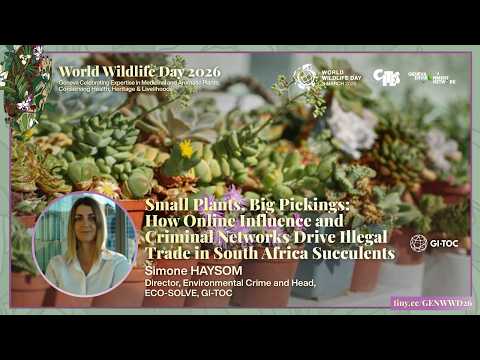
Simone HAYSOM | Director, Environmental Crime and Head, ECO-SOLVE, Global Initiative Against Transnational Organized Crime
- Seeing this map on World Wildlife Day, many people might think it shows illegal flows of rhino horn or another large wildlife species. But it actually shows the journey taken by trafficked plants, some not much bigger than a fingernail. These plants have become part of a significant criminal problem.
- Today, I will not just talk about a conservation issue or a trade issue, but about the harms that arise when people circumvent regulatory frameworks, or when those frameworks are absent or not enforced.
- The routes shown on the map do not only concern South African succulents, which we have studied most recently, but also intersect with broader illicit transnational plant trade networks. These include aromatic sandalwood from East Africa and medicinal species such as hoodia, which has also been discussed today.
- Hoodia was traditionally used by San communities as an appetite suppressant during hunting trips. Later, it attracted global demand, which led to significant illegal harvesting alongside legal harvesting and threatened the continuation of wild populations.
- To protect aromatic and medicinal species from criminal threats, it is important to understand the broader dynamics of plant trafficking and the challenges faced by enforcement actors.
- Our research on the South African plant trade provides several insights. South Africa is home to extraordinary plant diversity, including unique succulents and geophytes, many of which exist nowhere else in the world.
- These plants survive in harsh, dry environments and grow extremely slowly. When they appear only a centimeter or two above the soil, they may already be decades old.
- This makes them biologically unique, rare, and resilient, but also means that surges in market demand cannot easily be met through propagation.
- Many species are found only in very small pockets of southern Africa, particularly in the Karoo and the Cape Floristic Region. If they disappear from those areas, they disappear from the planet. There are no secondary populations. This concentration of rarity makes them prime targets for illegal harvesting.
- Due to illegal trade, what were once essential components of fragile ecosystems have been transformed into high-value collectibles in global markets.
- Between 2019 and 2024, more than 1.6 million succulent plants representing around 650 species were seized in South Africa.
- These official seizures likely represent only a fraction of the actual trade.
- In specialist markets, rarity increases prestige and selling price. The rarer the plant, the more desirable it becomes and the greater the incentive to remove it from the wild.
- Once harvesting begins, these plants rarely remain in the country. Once they reach international consumer markets, they are far from protective national laws and specialist knowledge, and they are rarely detected.
- Most illegally traded plants are taken directly from the wild rather than farmed or sustainably propagated. They are physically extracted from their natural habitat.
- Two external factors have driven surges in this trade.
- Before COVID-19, trade in South African succulents was largely small-scale. International collectors would travel to South Africa themselves, remove the plants, often from protected areas, and smuggle them home in their luggage.
- Lockdowns disrupted travel but not demand. International buyers began working through local intermediaries who harvested plants on their behalf and shipped them internationally.
- This shift fundamentally changed how the trade operated.
- Over the past decade, the trade has increasingly moved online.
- Online platforms collapsed the distance between indigenous landscapes and global buyers.
- Social media platforms and online marketplaces connect sellers and buyers, reducing distance, increasing speed, and lowering risk.
- Traffickers also disguise shipments. For example, bundles of endangered succulents have been labeled as mushrooms inside bags normally used for onions.
- There is increasing sophistication in concealment.
- It is important to be clear about who drives this trade.
- Harvesters are the most visible actors, but they are not the decision-makers. The people removing the plants are not the ones determining their value.
- Demand is driven by wealthy specialist collectors and resellers willing to pay high prices for rarity.
- Removing these plants damages entire ecosystems. These plants play roles in pollination, soil stability and regeneration, and their removal also affects local communities. These losses are not easily reversible.
- There is limited evidence of formal convergence between plant trafficking and other criminal economies.
- However, protected plants in South Africa have been seized alongside cannabis, rhino horn, ivory and even uncut diamonds.
- Investigators report that the same syndicates sometimes traffic multiple commodities, switching opportunistically as risks and rewards change.
- Plant trafficking can function as a lower-risk entry point within established criminal networks.
- It often carries lower penalties and lower detection risks than other wildlife crimes. Because the harms are less visible, links to organized crime are easily overlooked.
- This contributes to what researchers call “plant blindness”.
- Detecting plant trafficking requires significant resources.
- Measures used in South Africa include roadblocks and specially trained sniffer dogs deployed at courier depots to identify parcels containing plant material.
- This represents a significant investment in a context where there are many competing crime priorities.
- Improved detection measures have prompted traffickers to adapt. Harvesters and transporters increasingly operate at night or use new routes, demonstrating the adaptability typical of organized crime dynamics.
- Plants, particularly timber, constitute one of the largest components of global wildlife trade by volume.
- In parts of South Africa, succulent trafficking rose from a small share of wildlife crime to more than half of all wildlife crime cases within a few years.
- Each sack of seized plants represents many decades of lost growth from fragile environments.
- This analysis focuses on one case study, but many of the dynamics relate to broader issues discussed today, including online trade, local communities, and sustainable use.
- We are actively monitoring online trade across multiple species and conducting both online and field research to better understand the dynamics of plant trafficking.
Jamal Mahmoud | Program Manager, International Partnerships, Biovision (Noa)
- Many medicinal plants depend on wetlands, forests and mosaic landscapes; landscapes that have been destroyed by colonial exploitation, mining, industrial agriculture and other extractive practices such as oil drilling in Bulisa, Uganda.
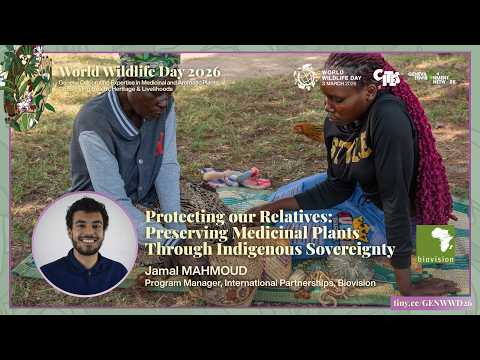
- The destruction often comes at the expense of indigenous people who have protected these landscapes for millennia through highly sophisticated governance systems. The person you see here is a custodian of sacred natural sites. His role is not solely symbolic – custodians hold knowledge, manage access, and enforce rules. This custodian is of the Ataraka people, and this is his home, Taraka, in Kenya.
- Our partner organization, SALT (Society for Alternative Learning and Transformation), founded and led by the Ataraka people, accompanies their community in restoring and managing their ecosystem based on indigenous governance systems, together with AFRE in Uganda and Earth in Zimbabwe. BioVision works with SALT and the other organizations on this multi-country project rooted in indigenous knowledge systems.
- At BioVision, we aim to transform the food system in a sustainable and just way at different levels. We approach this through the framework of agroecology: an integrated approach focusing on the interaction between humans and the environment while taking social aspects into account for a sustainable and just food system transformation.
- Indigenous knowledge systems hold a rich understanding of landscapes and use agroecological practices to manage them. Our partners call these landscapes sacred natural sites. They are places of worship, sites of ritual, and often biodiversity hotspots. At these sites, special ritual medicinal wild food plants have survived despite surrounding pressures. Why? Because customary governance has maintained them. They persisted because the relationship to them persisted, and this persistence is important. That’s why we’re here today.
- About 75% of the world’s population depends on traditional medicine for primary health care. When we lose a species, we don’t lose abstract biodiversity value; we lose a specific treatment option for real people. Medicinal plants also underpin significant economic activity, moving through complex value chains from local markets to international industries. But economic integration creates pressure on ecosystems and traditional livelihoods.
- Prunus africana, widely used across Africa for prostate treatment, suffered when international demand boomed. Bark prices rose, but local harvesters received the smallest share of the value. When the trees died and unsustainable practices continued, communities were left with degraded forests. We need good governance systems for global market integration. However, good governance also requires sovereignty. Sovereignty means the right to say no: no to global markets, no to the use of plants as commodities.
- In many indigenous epistemologies, plants are relatives and exist in relationship. A shrub that provides medicine also provides dry-season fodder. When it grows big, it provides shade and protection. When the wind rattles through its leaves, it brings the ancestors’ voice. When the leaves fall to the ground, they build soil to nourish us all. These are not competing uses; they are integrated functions. Conservation’s challenge is to manage multiplicity rather than single objectives.
- Community-managed systems can perform as well as or sometimes better than strictly protected areas. This is not an argument against protected areas; it is an argument for pluralism. Different governance systems suit different contexts, and indigenous and community-managed systems deserve a place in the toolbox.
- It’s also important to acknowledge history. The establishment of many protected areas involved the displacement of indigenous people, creating lasting harm. Understanding history is not only about guilt – it’s about taking responsibility, understanding the present, and moving forward together.
- Taraka in Kenya offers an example: restoring sacred groves, replanting medicinal plants, and strengthening governance systems integrates science with local institutions. Sacred natural sites achieve conservation outcomes that statutory systems struggle to achieve, particularly where state capacity is limited. Multiple governance systems can coexist, and pluralism is a strength.
- Agroecology in this context becomes more than a production method; it is the relationship to plants. It integrates human needs into the ecosystem and is crucial for integrated conservation. The question is: how do we integrate it? As conservationists, we often ask, “How can we save nature?” Today, I want to reframe the question: “How can we remember our relationship to nature?” Indigenous people lead the way. We just need to be open to different ways of knowing.
Mélina MIGNEAU | Medical Veterinary, Bioparc Genève
- The Bioparc is quite close to here, near the airport. It’s an animal park and in a way a refuge: animals come from trafficking cases and also from people who can’t take care of them anymore.
- I graduated about four years ago, and in my studies, there was a lot on One Health. I grew up with this, it’s really the main part of my job, and I want it to be part of my daily practice.
- Today, animal parks are not only entertainment. They are real places for education and for conservation. We have to consider the whole ecosystem around the animal: the animal itself, the others living with it in the enclosure, the enclosure, but also the keepers and the visitors who can interact with the animals.
- The animals we have in the Bioparc are not ordinary animals. As a vet, it’s more complicated because the medicines and drugs we can use are not designed for these species. So we often use drugs “off-label”, based on related species that we know.
- Using phytotherapy in the Bioparc helps us complement the drugs we may have and have more individualized treatments, more adapted to the metabolism of each species.
- Because animals live together in the same enclosure all the time, sometimes even mixed species, like camels with goats, and different birds together, we have to be careful which drugs we give, and not to have residues in the area.
- You may have heard about the new Bioparc we are trying to build. Our vision for the new Bioparc is for it to be as open as possible, so people can discover the animal in its own environment and move freely. There will be big aviaries where you can walk among animals and nature.
- We also want to add a medicinal plant garden. The idea is to let people know that some plants are endangered too, not only animals. People usually know animals are endangered, but they don’t always know this status exists for plants. We want to talk about medicinal plants, their natural environment, how we can use them, but also their status and how we use them responsibly.
- We want to start with “what effect on the body”. One example is white willow, mainly known because its salicylic components were used to create and develop aspirin. Another example is foxglove, which has been used to develop drugs for cardiac pathologies.
- We also want to explain that it’s not because it’s natural or a plant that it’s not toxic. Foxglove is very toxic. As Paracelsus said, everything can be a poison and nothing can be a poison; it all depends on the dose. That’s something we really want to emphasize. And as a vet, we have to be careful because doses are not the same from one species to another.
- We also can’t just give fresh plants to animals to treat them. It doesn’t make sense ecologically because you would need a very large number of plants, and it doesn’t make sense nutritionally because you could create disorders and the diet would not be balanced anymore.
- And plants don’t always have the same composition of active ingredients. It’s not because you take two leaves of the same plant that the active ingredients will be the same. We need controlled drugs, with a very precise amount of active component inside.
- Another practical example: you can try to give a “stinging nettle” to a cat, but I’m not sure it’s going to take it.
- So we really need controlled active-substance drugs, pills, essential oils, different formulas. But we have limited choice. Registered herbal veterinary medicines are very limited, and mostly for dogs, cats, maybe cows, not for the animals we have in the park.
- We also have constraints with some products: pills are sometimes made with animal proteins or animal oils, which cannot be given to herbivores like our camels and goats.
- There are also species-specific toxicities: for example, white willow cannot be given to cats or felines in general because it’s toxic for them. This is especially important when products mix plants, because we cannot give “everything”.
- We also try to choose the best form depending on species, like liquid forms for birds, because it’s easier than a big pill that will never fit.
- At the Bioparc, many animals come from trafficking situations. This picture is recent, from the beginning of the year, we received parrots from the airport that were illegally imported. These situations are stressful: change of environment, change of living conditions, and even if they had a big place before, now they are in a smaller cage “in the meantime”. It’s stressful also because we examine them and manipulate them, and if they’re not used to it, it can be challenging.
- Some plants can help us. For example, Passiflora (from the south of the US) has sedative, anxiolytic and antidepressant properties. We sometimes see stereotypic movements, animals repeating the same movement in the same place—which is a sign of stress. This kind of plant can help calm them down while we enrich the enclosure.
- Another plant function is anti-inflammatory. We mentioned it earlier, but we value anti-inflammatory properties, joint protection, analgesic properties to reduce pain.
- Here is Akima. She has been with us since 2020. She grew up with an unbalanced diet and had mineralization problems in the bones, leading to chronic joint and bone problems in the front limbs, chronic pain and chronic arthritis. An anti-inflammatory/analgesic approach can be helpful for cases like this.
- Another plant is milk thistle, which is common around here. We use it for liver problems. It has antioxidant and anti-inflammatory properties and helps regenerate liver cells when there is damage.
- This is important in birds too, especially cockatoos and parrots from private owners, because they are often fed mixed grain feed rich in fats and can develop liver lipidosis (fat accumulation / “fatty liver”). This plant can help treat that.
- In general, we would like to have antioxidant plants, because they help with oxidative stress, inflammatory conditions, and overall health. Milk thistle is one, and green tea leaves can also be used.
- At the Bioparc, we want visitors to learn about the animals, their histories, and how they live in natural conditions. But we also want them to interact with the whole environment. It’s not only animals, but they also come to visit plants, and everything around them.
- Bringing phytotherapy to the Bioparc is for us a way to improve our medicinal protocols, more individual, more specific to each species, and also a way to reconnect medicine and its origins with the environment: why we choose a plant, is it safe to use, and does it make sense ecologically to use it.
Closing
Ivonne HIGUERO
Secretary-General, CITES
- I thank you for your spirit of collaboration, innovation, and commitment that has defined this gathering.
- World Wildlife Day reminds us each year of the essential role that wild plants and animals play in sustaining people and the planet. It is a moment to celebrate our shared natural heritage and to reflect on our collective responsibility to ensure that the use and trade and wild species is legal, sustainable, and traceable.
- This responsibility is central to conservation, to community well-being, and to the health of ecosystems that support us all.
- This year’s theme, one of my favorite ones to talk about, medicinal and aromatic plants, conserving health, heritage, and livelihoods, has highlighted the deep connections between people and the wild plants that support traditions and culture, health care systems, and national and local economies.
- With tens of thousands of species used around the world and with demand continuing to grow, sustainable and well-regulated trade is more urgent than ever.
- CITES contributes to this effort through science-based decision-making and by supporting countries in managing international trade sustainably.
- Our recent study on sites listed medicinal and aromatic plants has provided new insights into global trade patterns by the diversity of species involved and the increasing role we are seeing of online markets. These findings are now informing ongoing work under the convention, including in the decisions taken at COP 20 in Samarkand, Uzbekistan, last year.
- The focus on medicinal and aromatic plants also speaks directly to our broader global commitments, ensuring their sustainable use and conservation advances the CITES strategic vision. It contributes to the implementation of the Kunming Montreal Global Biodiversity Framework (KMBGF), especially its goals and targets on sustainable use, traditional knowledge and equitable benefit sharing. It also helps us achieve our sustainable development goals.
- What has truly stood out today is the remarkable diversity of organizations and individuals who came together in Geneva, governments, international organizations, non-governmental organizations, research institutions, and private sector partners all contributed their perspectives and expertise. This is the richness of having these meetings with the Geneva Environment Network in Geneva. This breath of engagement reflects the inclusive and cooperative approach that is essential for wildlife conservation.
- Every one of us has a role to play in the conservation of medicinal and aromatic plants so they can continue to provide essential ecosystem and economic services.
- Let us work together to support the communities that depend on them, ensuring that their knowledge and livelihoods are respected and sustained.
- Let us also ensure that these species continue to enrich our lives, for their sheer existence, and also in our medicines, our traditions, and our economies, not only for ourselves but the future generations who must rely on healthy, resilient ecosystems just as we do today.
Exhibition
Many actors in Geneva are actively working across the many domains where MAPs play a vital role, including healthcare, food security, sustainable livelihoods, diverse industries, responsible trade, and broader environmental protection. Below is a list of stakeholders participating in the World Wildlife Day Exhibition.
Bioparc Genève
Bioparc Genève is home to 250 animals, a third of which are threatened species in the wild. It is a center of competence and expertise on wild, local and exotic animals and an essential player in the field of knowledge about animal species, from information on how to adopt the best behavior towards local wildlife to the training of animal caretakers.

Biovision
Biovision is promoting the implementation of Agenda 2030 at the international level and in Switzerland, networking and fostering dialogue with stakeholders from politics, science, the private sectors and civil society. In Switzerland, Biovision is organizing educational activities to raise awareness among the population, young people in particular, about the effect of our consumer behaviors on human, animal and environmental health and sharing tips to encourage sustainable consumption.

CITES
CITES is a multilateral agreement aiming to ensure that international trade in specimens of wild animals and plants does not threaten the survival of the species. The convention currently forbids international commercial trade of 161 bird species (listed on Appendix I) and regulates trade for another 1,300 more species under specific controlled circumstances (listed on Appendix II).
FAO Liaison Office in Geneva
The FAO Liaison Office in Geneva is working with partners to achieve FAO’s corporate goal and the wider Sustainable Development Agenda. Through the wider work of FAO’s Plant Production and Protection Division, it advances sustainable plant production systems, pest management and agroecology.

The International Consortium on Combating Wildlife Crime (ICCWC)
The International Consortium on Combating Wildlife Crime (ICCWC) is the collaborative partnership of five inter-governmental organizations with complimentary and specialized mandates through which they are uniquely placed to collectively deliver a range of comprehensive interventions to strengthen criminal justice systems and build long-term capacity among authorities to address wildlife crime.

Geneva Environment Network | International Geneva
The Geneva Environment Network will showcase how International Geneva contributes to raising awareness of the multitude of benefits that their conservation provides to people.
Highlights
Video
Live from International Environment House
Photo Gallery
Additional photos can be found on the World Wildlife Day Flickr Album


Documents
Global World Wildlife Day 2026 Virtual Celebration
The Geneva celebration was followed by the annual World Wildlife Day United Nations global celebration, hosted by the CITES Secretariat, in partnership with the United Nations Development Programme (UNDP), International Fund for Animal Welfare (ifaw), Jackson Wild, the Geneva Environment Network, IUCN SSC Medicinal Plant Specialist Group and TRAFFIC.

World Wildlife Day 2026 United Nations Virtual Celebration
3 March 2026, 13:30 – 15:30 CET
Links
- World Wildlife Day Official Website
- United Nations World Wildlife Day 2026: Medicinal and Aromatic Plants and Their Critical Role in Health, Heritage and Livelihoods | CITES | 6 March 2026
- World Wildlife Day 2026 | CITES Press Release
- Celebrating World Wildlife Day in Geneva and Beyond
- Geneva Expertise in Medicinal and Aromatic Plants | Conserving Health, Heritage and Livelihoods