Newsletter 03 Feb 2025
Environment: What’s Up in GENeva | 3 – 9 February 2025
The Geneva Environment Network’s weekly newsletter includes the latest information on the global environmental agenda, main events, job vacancies, as well as other useful resources and updates. Stay tuned and follow us on X (Twitter), Facebook, LinkedIn, Instagram, Bluesky, and Youtube, or visit our website regularly for additional updates.
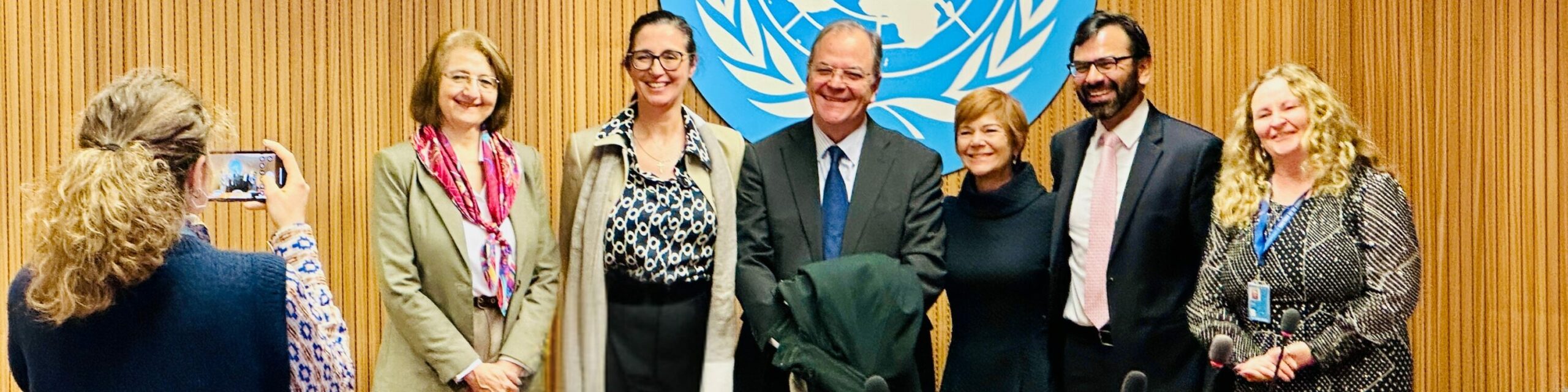
Image of the week | Panelists posing for a group photo after the first section of the event “Achieving Biodiversity Goals Through Trade: Building on Progress Made at UN Biodiversity Conference COP16” co-organized by UN Trade and Development and the Geneva Environment Network on 28 January 2025. © UNEP GEN | Palais des Nations | Room XXVII
Review of Trade Sustainability and Conservation Progress at CITES 78th Standing Committee
Sustainability challenges and conservation progress for a wide range of species will be at the core of the discussions of the 78th meeting of the Convention on International Trade in Endangered Species of Wild Fauna and Flora Standing Committee (CITES SC78). Over 600 registered participants, representing 70 CITES Parties and over 100 observer organizations, will meet this week, from 3 to 8 February, at CICG in Geneva to discuss 87 agenda items and exchange updates and recommendations from the intersessional period since the Committee’s previous meeting in November 2023 (SC77). This meeting also represents the last one before CITES 20th Meeting of the Conference of the Parties (CITES CoP20) to be held at the end of 2025 in Samarkand, Uzbekistan. Decisions and resolutions tabled for adoption at CoP20 will provide insight into how Parties have progressed in the conservation, regulation of trade, combatting wildlife crime, and strengthening the sustainability and traceability of the harvest and trade in CITES-listed species. These outcomes promise to set the stage for the holistic review by CITES CoP20 of the implementation of the Convention, as it reaches its 50th year in effect. → Learn more in CITES Press Release, consult the Annotated Agenda (28 Jan 2025), documents and the side events schedule.
Last week, to support participants’ preparation for the meeting, the CITES Secretariat held a briefing on SC78 within the framework of the Geneva Environment Network. → Rewatch the recording of the event and access resources.
Want to deep dive into CITES SC78? → Consult highlights on our dedicated page, follow the Earth Negotiations Bulletin live coverage or watch SC78 livestream.
Additional news and resources related to CITES 78 Standing Committee include:
- Fungi Foundation Calls on CITES to Strengthen Controls Over Trade in Fungi to Reinforce Fungal Conservation | Fungi Foundation | 27 January 2025
- Highlighting EIA’s illegal trade concerns for wildlife and trees at CITES Standing Committee | EIA | 27 January 2025
- China’s new pangolin quota for TCM sparks conservation concerns | Mongabay | 24 January 2025
- Sustainable use of wild species | IUCN | January 2025
- Mexico has under-reported gillnetting in the Vaquita Refuge | Kristin Nowell | Cetacean Action Treasury | January 2025
- CITES Launches Sponsored Delegates Project for CoP20 in Samarkand | CITES | 24 January 2025
- Evaluation of the effects of African Continental Free Trade Area (AfCFTA) on Africa’s Biodiversity | Augustine Iraoya, Chukwuka Onyekwena et al. | Global Development Network | December 2024
The Toxic Trade in Lead Chromates | Road to 2025 BRS COPs
This week, the Road to 2025 BRS COPs event series will resume for a new session “Exporting Lead Poisoning: The Toxic Trade in Lead Chromates” co-organized with the International Pollutants Eliminations Network (IPEN), this session will discuss the findings of a recent IPEN report and other similar studies, and insist on the importance of agreeing on having lead chromate listed in the Rotterdam Convention. → Register and join us online on Webex on Tuesday 4 February 2025 from 14:00 to 15:30 CET.
Lead paint is one of the most widespread sources of childhood lead exposure, leading to serious and long-lasting health impacts. While an increasing number of countries have banned lead paint, it is still allowed in more than half of the world’s countries. Also, many countries face challenges to monitor and enforce lead paint bans. One of the final remaining types of lead compounds used in paint are lead chromate pigments, even though cost-effective alternatives are widely available. Countries that have put lead paint regulations in place have also banned or severely restricted the use of lead chromates in their countries. If they are Parties to the Rotterdam Convention, they should notify the Convention Secretariat about this. Still, only Cameroon and Morocco have provided such notifications.
IPEN finds that while countries have banned the use of lead chromates, they continue to allow production and export of this paint ingredient with very little ability or capacity for importing countries to know and control what come in over their borders, putting children and families in recipient countries at risk from lead poisoning. The Rotterdam Convention requires countries that are Parties to the Convention to ensure that certain hazardous chemicals are only exported to a country that has given its explicit consent, through a so-called Prior Informed Consent (PIC) procedure. By listing lead chromates under the Convention’s PIC procedure, countries that ban lead paint will be better equipped to enforce their ban, and countries without lead paint restrictions will be incentivized to adopt a ban.
Environment @ 58th session of the Human Rights Council
The environment is high on the agenda of the 58th session of the Human Rights Council (HRC58), taking place from 24 February to 4 April 2025, at Palais des Nations. The right to a clean, healthy and sustainable environment is the usual main environmental theme of the Council’s March sessions, with the Special Rapporteur’s annual Report to the HRC. Human rights defenders, the right to food, and foreign debt are also issues with related to the environment that will be presented by their respective United Nations Special Procedures, also in interactive dialogues with States, international organizations, human rights national institutions and NGOs. → Regular updates on key environmental issues at HRC58, side events, and further resources will be made available on our dedicated HRC58 and the environment update.
In order to develop more synergies among stakeholders and a better outreach on the environmental agenda of HRC58, including the activities taking place in parallel to the Council’s session, the Geneva Environment Network and its partners are convening an information-sharing session. This event will discuss and share information on planned environment-related activities at and around HRC58, such as in person and online events, publications or exhibitions, among others, and exchange on possible synergies. They feed the GEN page on HRC58 which will provide an updated calendar of these environment-related events. → Share your activities and events, and register for the event taking place in person at the International Environment House 1 or online on Thursday 6 February 2025, from 10:00 to 11:00 CET.
Other news relevant to the human rights and environment agenda include:
- Healthy Environment: A Human Right and Customary International Law | UN SR Astrid Puentes | 29 January 2025
The human right to a clean, healthy and sustainable environment can be considered customary international law and, therefore, binding for States. The article describes why the requirements for this recognition are fulfilled and thus, the right should be recognized by the International Court of Justice. - Special Rapporteur on the right to a clean, healthy and sustainable environment welcomes decisions supporting ocean protection in Norway and Thailand, at the beginning of a critical year for the ocean and human rights | SR right to healthy environment | 24 January 2025
Recent decisions in Norway and Thailand mark positive steps towards ocean protection. Ahead of the UN Ocean Conference 2025 in Nice, France, “these decisions align with the urgent need to promote sustainable practices and prevent further severe and irreversible damage, including the increasing impacts of fossil fuels and plastic contamination.” - Ecuador: Expert submits amicus brief in oil exploitation case in Yasuní National Park | SR toxics and human rights | 27 January 2025
The UN Special Rapporteur on toxics and human rights, Marcos Orellana, submitted an amicus curiae brief to the Constitutional Court of Ecuador in the case of the popular consultation on oil exploitation in Yasuní National Park, setting out international standards for compliance with judicial decisions that require States to ensure their effective and prompt execution.
Environment @ 156th Session of WHO Executive Board
On the agenda of the 156th session of the Executive Board of the World Health Organization, taking place from 3 to 11 February, pillar 3 “One billion more people enjoying better health and well-being” will address pollution and climate issues. The board will take positions on three new documents: a new draft Global Action Plan on Climate Change and Health; an updated ‘Road Map’ for addressing the health impacts of air pollution; and a report on the impact of chemicals, waste and pollution on human health, with updates on the adoption of the Global Framework on Chemicals and its implications for the health sector as well as on the engagement of WHO in the establishment of a new intergovernmental science-policy panel on chemicals, waste and pollution.
An interesting development is the introduction of a resolution by Peru, with Malawi, Bangladesh, and Ghana as core group members, aiming at eliminating lead exposure, especially in children, and reduce its negative effects on development, health, and economic productivity. This resolution co-sponsored by other Member States, including Indonesia, Nepal, Vanuatu, Ireland and Chile, calls on States to proactively engage at national, sub-regional, regional and international levels to develop and strengthen holistic, multi-sectoral cooperation for action, including the exchange of scientific data and best practices. It also calls to promote research and risk assessment, as well as prevent and mitigate lead exposure from all sources to reduce related health impacts. It mandates WHO to develop a Global Action Plan on Lead Mitigation, which should include consideration of measures to adapt health systems to address health problems related to lead exposure, to strengthen the global health sector response to lead exposure in line with the interrelated “action areas” set out in the WHO Chemicals Roadmap. It also assigns the Secretariat to support capacity building at all levels to produce timely, credible and appropriately disaggregated data to explore all sources of lead exposure.
In preparation for the Executive Board meeting various stakeholders have prepared briefing notes and held preparatory events, including:
- The Health and Policy Watch article published on 30 January by Finances to Dominate WHO Executive Board Meeting After US Withdrawal Notice” also addresses the ambitious new climate and air pollution action of WHO to be addressed at the Executive Board meeting.
- The Geneva Global Health Hub (G2H2) hosted a series of policy debates from 20 to 24 January 2025, including some addressing environmental-related issues.
- The Drugs for Neglected Diseases initiative (DNDi), a not-for-profit research and development organization, issued a briefing note addressing various topics including agenda item 22 on Climate change and health.
Swiss Citizens to Vote on Environmental Responsibility Initiative
On 9 February 2025, the people of Switzerland will vote on the Federal Popular Initiative “For a responsible economy within our planet’s limits (Environmental Responsibility Initiative)”. Launched by the Young Greens, the Initiative requires that economic activities do not consume more resources and release more pollutants than is permitted for the preservation of natural resources. This goal is to be achieved through measures that are socially acceptable both within Switzerland and abroad. The initiative sets a time limit of ten years: from that point onwards, the environmental impact of consumption in Switzerland must no longer exceed planetary boundaries when measured by Switzerland’s share of the world population.
While opponents say the initiative threatens Switzerland’s prosperity and the recent poll predicts that the initiative will be rejected at more than 60%, numerous experts in Switzerland and beyond have discussed and commented the upcoming votation:
- L’initiative “pour la responsabilité environnementale” soumise à la population suisse le 9 février | RTS | 30 January 2025
- Un vote pour les limites planétaires en Suisse : l’initiative pour la responsabilité environnementale | Timothée Parrique | 29 January 2025
- Feb 9 vote: are you ready? | Swissinfo.ch | 29 January 2025
- Ecological overhaul of Swiss economy faces ballot box defeat, poll finds | Swissinfo.ch | 29 January 2025
- | Swissinfo.ch | 28 January 2025
- Impact of the 9 February vote if accepted |
- Should the Swiss economy be forced to respect the limits of nature? | Swissinfo.ch | 23 January 2025
- Environmental responsibility initiative goes too far for Swiss government | Swissinfo.ch | 10 January 2025
- | Swissinfo.ch | 23 December 2024
America Is All In Doubles Down on Commitment to Paris Agreement
In the past two weeks, States, cities, businesses, local institutions and philanthropy have announced that they plan to continue the shift to a clean energy economy and ensure the United States meets its global climate obligations. Michael R. Bloomberg, the United Nations Secretary-General’s Special Envoy on Climate Ambition and Solutions, announced on 20 January efforts to ensure the U.S. honors Paris Agreement commitments. AMERICA IS ALL IN, a coalition of over 5,000 community leaders in support of climate action in the United States, led by the UN Special Envoy with former Washington Governor Jay Inslee, Charlotte Mayor Vi Lyles, Apple Vice President of Environment, Policy and Social Initiatives Lisa Jackson, and former White House National Climate Advisor and and 13th U.S. Environmental Protection Agency (EPA) Administrator Gina McCarthy, is driving a nationwide movement to cut U.S. emissions in half or more by 2030 from 2005 levels and reach net zero emissions by 2050, while guarding against the impacts of climate disruption.
Simon Stiell, the Executive Secretary of UN Climate Change, acknowledged on LinkedIn, “We deeply appreciate the generous support from Bloomberg Philanthropies and the leadership shown by Mike Bloomberg. While government funding remains the backbone of our mission, contributions like this are critical to ensure the UN Climate Change secretariat can continue supporting countries in meeting their commitments under the Paris Agreement.”
Happening Abroad
The Intergovernmental Negotiating Committee on the United Nations Framework Convention on International Tax Cooperation, established by General Assembly resolution 79/235 of 24 December 2024, aims to develop the text of the UN Framework Convention on International Tax Cooperation along with two early protocols. Pursuant to resolution 79/235, the Committee will hold its organizational session from 3 to 6 February 2025 at the United Nations Headquarters in New York. → Follow the negotiations through the Earth Negotiations Bulletin live coverage.
What (Else) To Read Next?
- European court slams Italy over mafia toxic waste dumping | POLITICO | 30 January 2025
Italy has put the lives of its citizens at risk by not addressing illegal waste dumping by the mafia in the Campania region, the European Court of Human Rights ruled Thursday.
- Patrimoine aquatique local: le canton de Genève récompensé par le prestigieux label de la Convention sur les zones humides (Ramsar) | Republic et Canton de Genève | 30 January 2025
Le canton de Genève s’est vu attribuer par la Convention sur les zones humides (Ramsar) le label “Ville des Zones Humides”, référence internationale pour une communauté urbaine en matière de protection des zones humides. Attaché de longue date à cet enjeu, Genève se caractérise par une gestion active de son patrimoine aquatique, avec des efforts résolus en faveur de leur réhabilitation.
- Ukraine ratifies Aarhus Convention’s amendment on genetically modified organisms, prompting its entry into force | UNECE | 28 January 2025
The amendment will become effective on 20 April 2025. This means that the 33 Parties that have ratified the GMO amendment (including the European Union) as well as all UN Member States joining the amendment or the Convention in the future – must establish in their regulatory framework effective means to ensure transparency and public participation in related decisions. - Global GDP Faces 50% Loss Without Climate Change Action, Study Finds | FORBES | 27 January 2025
The global economy could face a 50% loss in gross domestic product (GDP) unless immediate action is taken to tackle the growing climate crisis, according to a new analysis. The study by researchers at the Institute and Faculty of Actuaries (IFoA) and the University of Exeter warns development, wellbeing and economic health are “intertwined with and dependent” on the stability of Earth’s eco-system. - Environmental Health Groups Seek FDA-Thailand’s Action to Stop Export of Cosmetics Containing Mercury | IPEN | 27 January 2025
Environmental health groups advocating for the protection of people’s health and the environment from mercury-containing cosmetics today urged the Food and Drug Administration (FDA) of the Government of Thailand to take bold measures to halt the export of skin lightening products containing this highly toxic chemical. - UNEP FI’s Human Rights Toolkit: A game changer for financial institutions | UNEP FI | 24 January 2025
Institutions that prioritize human rights not only reduce risk but also gain the trust of investors, regulators, and consumers – positioning themselves as leaders in a rapidly evolving market. On the other hand, those that fail to adapt risk reputational damage, legal consequences and missed opportunities in an increasingly values-driven economy. To help financial institutions navigate this, the UNEP FI launched its updated Human Rights Toolkit. This toolkit offers practical tools and guidance to help financial institutions align with international human rights standards, providing the necessary resources to integrate human rights into their decision-making processes effectively. - Global sustainability agendas: 10 things we’re watching for in 2025 | ICLEI | 22 January 2025
As we begin a pivotal year, many global north countries are facing elections and leadership changes, testing the world’s commitment to sustainable development. Last year, we witnessed several key global processes needing to continue into 2025 – like the biodiversity negotiations and the Plastics Treaty – or delivering a disappointing lack of ambition, such as the climate COP. Because of these global challenges and weakened global processes, we expect in 2025 for the focus within countries to shift more towards concerns at the national level.
- Designation of the President of COP30 | Government of Brazil | 20 January 2025
The Brazilian government announced that the presidency of the 30th Conference of the Parties to the United Nations Framework Convention on Climate Change (COP30) will be entrusted to H.E. Ambassador André Corrêa do Lago, Secretary for Climate, Energy, and Environment at the Ministry of Foreign Affairs. Ana Toni, currently the National Secretary for Climate Change at the Ministry of the Environment and Climate Change, will serve as the Chief Executive Officer of COP30.
Events
See all
Workshop
Training of potential chairs for meetings of the Basel, Rotterdam and Stockholm conventions
03 – 07 Feb 2025
International Environment House II
BRS
Body Meeting
Seventh Hydrological Coordination Panel meeting (HCP-7)
03 – 05 Feb 2025
WMO | Room C1 & Online
WMO
Virtual
Rethinking economic transformation for sustainable and inclusive development
03 Feb 2025 | 13:30 – 14:30
Online | Zoom
ILO
Body Meeting
Committee on Trade and Environment – Thematic Session on Trade Related Climate Measures
04 Feb 2025 | 09:30
WTO
WTO

Local
Visit of Geneva Airport: Aviation & Sustainability
04 Feb 2025 | 13:30 – 16:00
Geneva Airport
2050Today

Virtual
Exporting Lead Poisoning: The Toxic Trade in Lead Chromates | Road to 2025 BRS COPs
04 Feb 2025 | 14:00 – 15:30
Online | Webex
IPEN, GEN
Body Meeting
First Standing Committee on Climate Services (SC-CLI) meeting
05 – 07 Feb 2025
WMO Headquarter
WMO
Conference
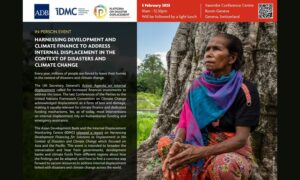
Harnessing Development and Climate Finance to Address Internal Displacement in the Context of Disasters and Climate Change
05 Feb 2025 | 10:00 – 12:30
CCV | Room Geneva
Platform on Disaster Displacement, IDMC

Local
Winter blooms in the Rocailles
05 Feb 2025 | 14:00 – 15:00
Botanical Conservatory and Garden Geneva
Geneva Botanic Garden

Body Meeting
Meeting of the Team of Specialists on Sustainable Forest Products
05 Feb 2025 | 15:30 – 17:30
Online
UNECE Forest and Bioeconomy Section
Conference
Human Rights and the Environment: Meeting on Activities Related to 58th Session of the Human Rights Council
06 Feb 2025 | 10:00 – 11:00
International Environment House I & Online | Webex
GEN
Conference
COP29 Debrief on relevant outcomes and looking ahead to COP30
07 Feb 2025 | 10:00 – 17:00
Palais des Nations | Room VII
UNCTAD
Jobs
See all
Professional
Technical Specialist, Financing Social Protection and Decent Jobs for Just Transition | P4
03 Feb 2025
ILO