
Event Conference
2024 Annual Conference of the Geneva Human Rights Platform
05 Nov 2024
09:15 – 15:00
Venue: Maison de la Paix | Petal 5, Room C1
Organization: Geneva Human Rights Platform
The Annual Conference of the Geneva Human Rights Platform, aimed at the international community both within and beyond Geneva -- including diplomats, experts, NGOs, UN agency staff, international organizations, National Human Rights Institutions, and academics -- focused on the pressing issues and challenges confronting Geneva-based actors in the field of human rights. The 2024 edition highlighted the connectivity between the manifold policy areas addressed in Geneva, in their human rights dimensions.

About the Conference
Human Rights System Under Pressure: A reason to expand connectivity

This public event, aimed at the international community both within and beyond Geneva—including diplomats, experts, NGOs, UN agency staff, international organizations, National Human Rights Institutions, and academics—focused on the pressing issues and challenges confronting Geneva-based actors in the field of human rights.
Despite the challenges, human rights remain the guiding principles that unite humanity and offer a path through the current crises, as recently emphasized by the UN High Commissioner for Human Rights. In these turbulent times, the interconnections between human rights and various policy areas are becoming increasingly evident, including global health, internet governance and new technologies, environmental issues, and climate change.
As human rights intersect with a wide range of policy domains, the Sixth Annual Conference of the Geneva Human Rights Platform delved into these connections. The conference aimed to explore how the strength and potential of human rights can be harnessed to benefit the work of other actors, even those who may not traditionally view human rights protection as their primary mission.
The 2024 edition focused on the connectivity between the manifold policy areas addressed in Geneva, in their human rights dimensions. To this end, panels are co-organized with specific organizations on the human rights aspects in various policy areas.
Speakers and Programme
9:15 – 9:30 CET | Opening
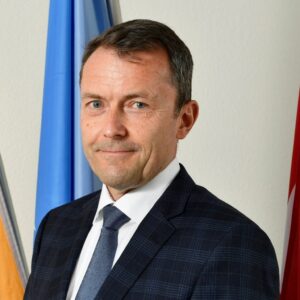
H.E. Amb. Jürg LAUBER
Permanent Representative of Switzerland to the UN Office and other international organizations in Geneva

Marie-Laure SALLES
Director, Geneva Graduate Institute

Felix KIRCHMEIER
Executive Director, Geneva Human Rights Platform
9:30 – 10:00 CET | Keynote

Philip ALSTON
John Norton Pomeroy Professor of Law, NYU Law
10:00 – 11:00 CET | Academic Plenary Panel | The Deadlock of Multilateralism: How can human rights advance different policy fields?

Janet ANDERSON
Founder and Co-host of Asymmetrical Haircuts | Moderator
Felix KIRCHMEIER
Executive Director, Geneva Human Rights Platform | Moderator
Philip ALSTON
John Norton Pomeroy Professor of Law, NYU Law
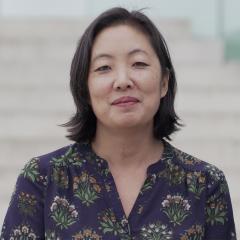
Suerie MOON
Professor of Practice, Interdisciplinary Programmes and International Relations/Political Science, Geneva Graduate Institute | Co-Director, Global Health Centre
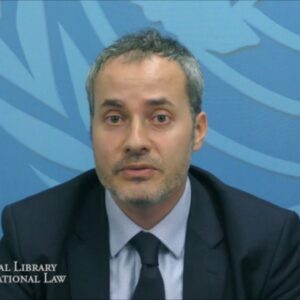
Jorge E. VIÑUALES
Harold Samuel Chair of Law and Environmental Policy, University of Cambridge | Founding Director, Cambridge Centre for Environment, Energy and Natural Resource Governance
11:00 – 12:30 CET | Workshops co-organized with other ‘Geneva Platforms’
- Human Rights in the Age of Digital Innovation: Regulating AI and technology in Smart Cities
- Human Rights in Global Health policies
- Human Rights in Preventing Environmental Triggers to Conflict
- Human Rights and Sustainable Development: Advancing Monitoring and Collaboration Through Digital Tools
13:30 – 15:00 CET | High-level Inter-agency Panel on Human Rights
In this panel discussion, which closes the 2024 Annual Conference of the Geneva Human Rights Platform, high-level representatives of various UN agencies are invited to reflect upon where human rights are present in their mandates, policies and programs, and what further input and guidance they would welcome from the human rights system.
Human Rights in Preventing Environmental Triggers to Conflict | Workshop

About the Workshop
The interconnection between human rights, environmental degradation, and violent conflict is becoming an increasingly pressing issue for global governance. When fundamental environmental-related human rights, such as food and water, are compromised, the consequences can lead to social tensions and even armed conflict. For instance, failure to uphold the right to food during droughts can exacerbate food insecurity in communities, intensify competition for limited resources, and potentially trigger violent conflicts. This pattern has been observed in regions of Africa and the Middle East, where resource scarcity has fueled tensions and clashes.
Key questions arise in this context: what does the community expect from human rights in preventing environmental triggers of conflicts? How could these expectations shape the design of conflict prevention strategies?
The 2022 White Paper on the Future of Environmental Peacebuilding, a collaborative initiative led by five organizations, including the Geneva Peacebuilding Platform, focuses on the model of environmental peacebuilding – a people-centered approach that integrates human rights, sustainable development, and peacebuilding efforts. It underlines that human rights violations are often closely linked to mismanagement of natural resources, including minerals, oil, and timber, as well as biological resources like land, forests, and fishing grounds. This mishandling also contributes to a heightened risk of conflicts.
However, the complex, non-linear, and unpredictable relationship between environmental human rights and conflicts makes it difficult to operationalize early warning systems. A research brief from the Geneva Academy of International Humanitarian Law and Human Rights underscores this point, noting that the Human Rights Council’s current data collection efforts often prioritize thematic reports and country-specific investigations. However, such a mechanism is not designed for providing the granular data necessary for accurate conflict prediction. The fragmentation of the current human rights framework highlights the necessity to systematically track and analyze various environmental human rights violations. By doing so, it would be possible to assess their potential conflict risks and provide relevant information to key stakeholders, such as peacebuilding agencies.
The former UN High Commissioner for Human Rights, Michelle Bachelet, has identified climate change as a “non-traditional threat” to peace and security, highlighting how environmental degradation can fuel conflicts over resources like land and water. In this regard, the recognition of the right to a clean, healthy, and sustainable environment by the UN Human Rights Council in resolution 48/13 on 8 October 2021, followed by its acknowledgment by the UN General Assembly, marks a significant advancement. This right, arguably a promising tool for conflict prevention, underscores the importance of safeguarding environmental human rights as a strategy for reducing tensions before they escalate into violence. It follows that, by focusing on the protection and promotion of environmental rights, relevant stakeholders can contribute to mitigating conflict risks.

This workshop, co-organized by the Geneva Human Rights Platform, the Geneva Environment Network, the Geneva Peacebuilding Platform, Earthjustice, explored pressing questions about community’s expectations on the role of human rights in preventing environmental triggers from escalating into conflict. By examining the lessons learned from Geneva’s role in peacebuilding, where the Second International Conference on Environmental Peacebuilding took place in 2022, and considering the potential of human rights, especially those related to the environment, as a tool for conflict prevention, this workshop aimed to foster an in-depth discussion on how human rights can contribute to a more peaceful future.
Speakers

Jörg BALSIGER
Associate Professor, Department of Geography and Environment (Geneva School of Social Sciences) and the Institute for Environmental Sciences

Romina Edith PEZZOT
PhD Researcher and Candidate in International Law, Geneva Graduate Institute

Diana RIZZOLIO
Coordinator, Geneva Environment Network

Annyssa BELLAL
Executive Director, Geneva Peacebuilding Platform
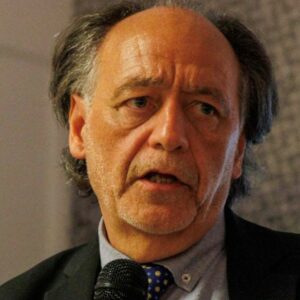
Yves LADOR
Representative of Earthjustice to UN Geneva | Moderator
High-level Inter-agency Panel on Human Rights
About this Panel
This panel discussion, co-organized with the Geneva Graduate Institute, closes the 2024 Annual Conference of the Geneva Human Rights Platform. High-level representatives of various UN agencies are invited to reflect upon where human rights are present in their mandates, policies and programs, and what further input and guidance they would welcome from the human rights system.
The human rights system is currently facing unprecedented pressure. The deteriorating global situation is creating or intensifying human rights crises, while political support for human rights continues to wane, leading to a growing perception that the UN Human Rights System is failing to deliver on its promises in specific country contexts.
Despite the challenges, human rights remain the guiding principles that unite humanity and offer a path through the current crises, as recently emphasized by the UN High Commissioner for Human Rights. In these turbulent times, the interconnections between human rights and various policy areas are becoming increasingly evident, including global health, internet governance and new technologies, environmental issues, and climate change.
In the Pact for the Future, heads of states and governments “recognize that the multilateral system and its institutions, with the United Nations and its Charter at the centre, must be strengthened to keep pace with a changing world. They must be fit for the present and the future – effective and capable, prepared for the future, just, democratic, equitable and representative of today’s world, inclusive, interconnected and financially stable.” (A/79/L.2, para 6).
They further reaffirm the importance of the UDHR and state: ‘The implementation of the Pact will enhance the full enjoyment of human rights and dignity for all, which is a key goal. We will respect, protect, promote and fulfil all human rights, recognizing their universality, indivisibility, interdependence and interrelatedness,…’ (A/79/L.2, para 13).
Interconnectedness is present throughout the document, when referring to the human rights in the chapters on development, security/conflict, terrorism or technology, social inclusion and climate change. As human rights intersect with a wide range of policy domains, the 2024 Annual Conference of the Geneva Human Rights Platform delved into these connections.
The conference explored how the strength and potential of human rights can be harnessed to benefit the work of other actors, even those who may not traditionally view human rights protection as their primary mission.

Nada AL-NASHIF
Deputy High Commissioner, Office of the High Commissioner for Human Rights
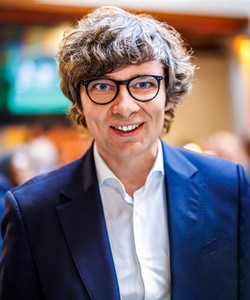
Tomas LAMANAUSKAS
Deputy Secretary-General, ITU

Catharina BOEHME
Assistant Director-General, WHO
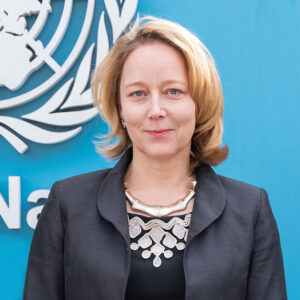
Agi VERES
Director, UNDP Office in Geneva

Arnold KREILHUBER
Regional Director, Europe Office, UNEP

Paola GAETA
Professor of International Law at the Geneva Graduate Institute and Director of the Geneva Academy | Moderator
Felix KIRCHMEIER
Executive Director, Geneva Human Rights Platform | Moderator
Highlights
Links
- 2022 White Paper on the Future of Environmental Peacebuilding
- 2nd International Conference on Environmental Peacebuilding
- Environmental Human Rights as a Tool in Early Warning and Conflict Prevention | Geneva Academy of International Humanitarian Law and Human Rights | January 2024
- Protecting the Environment in Armed Conflict | GEN
- Human Rights and the Environment | GEN