Event Conference
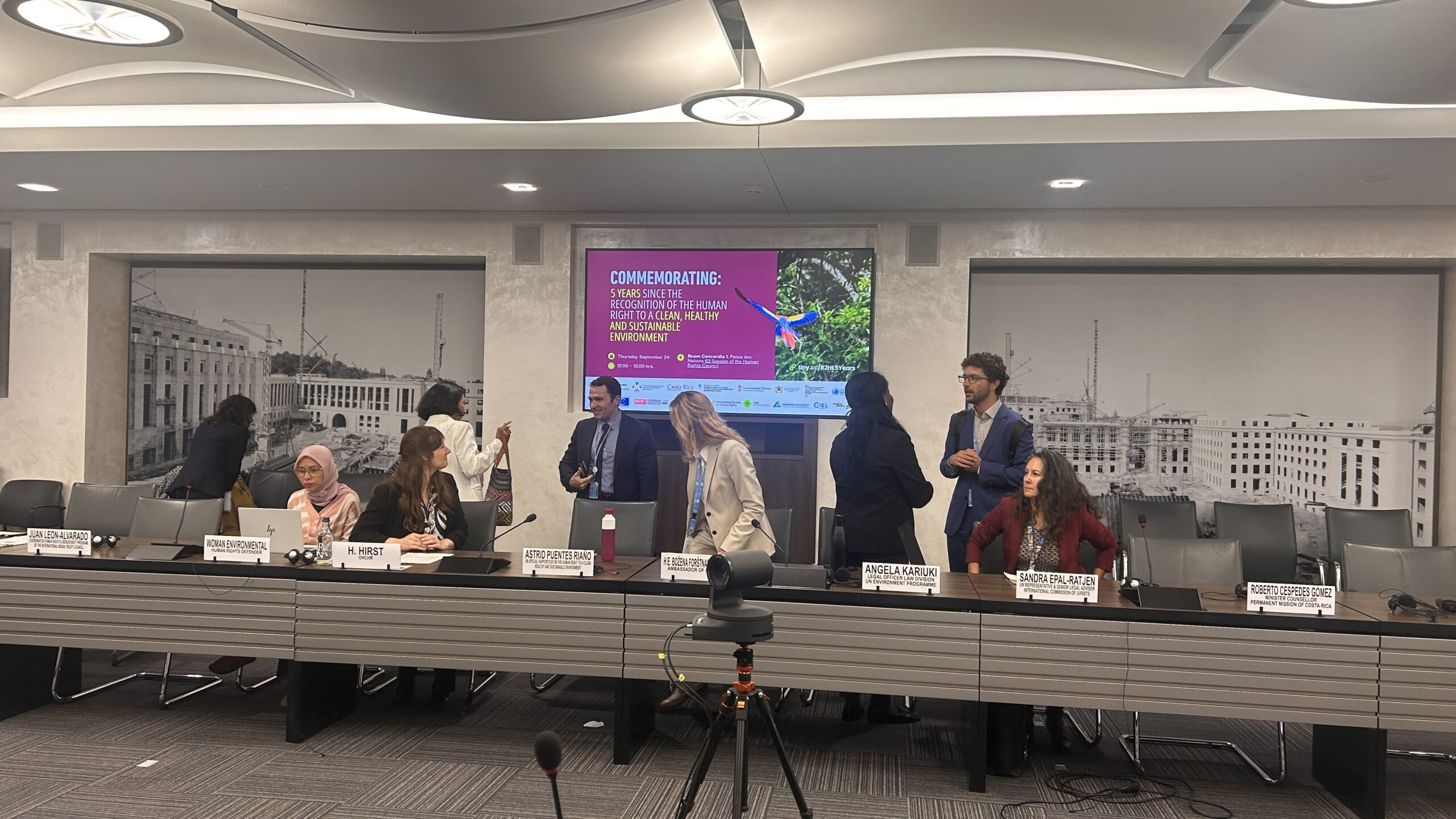
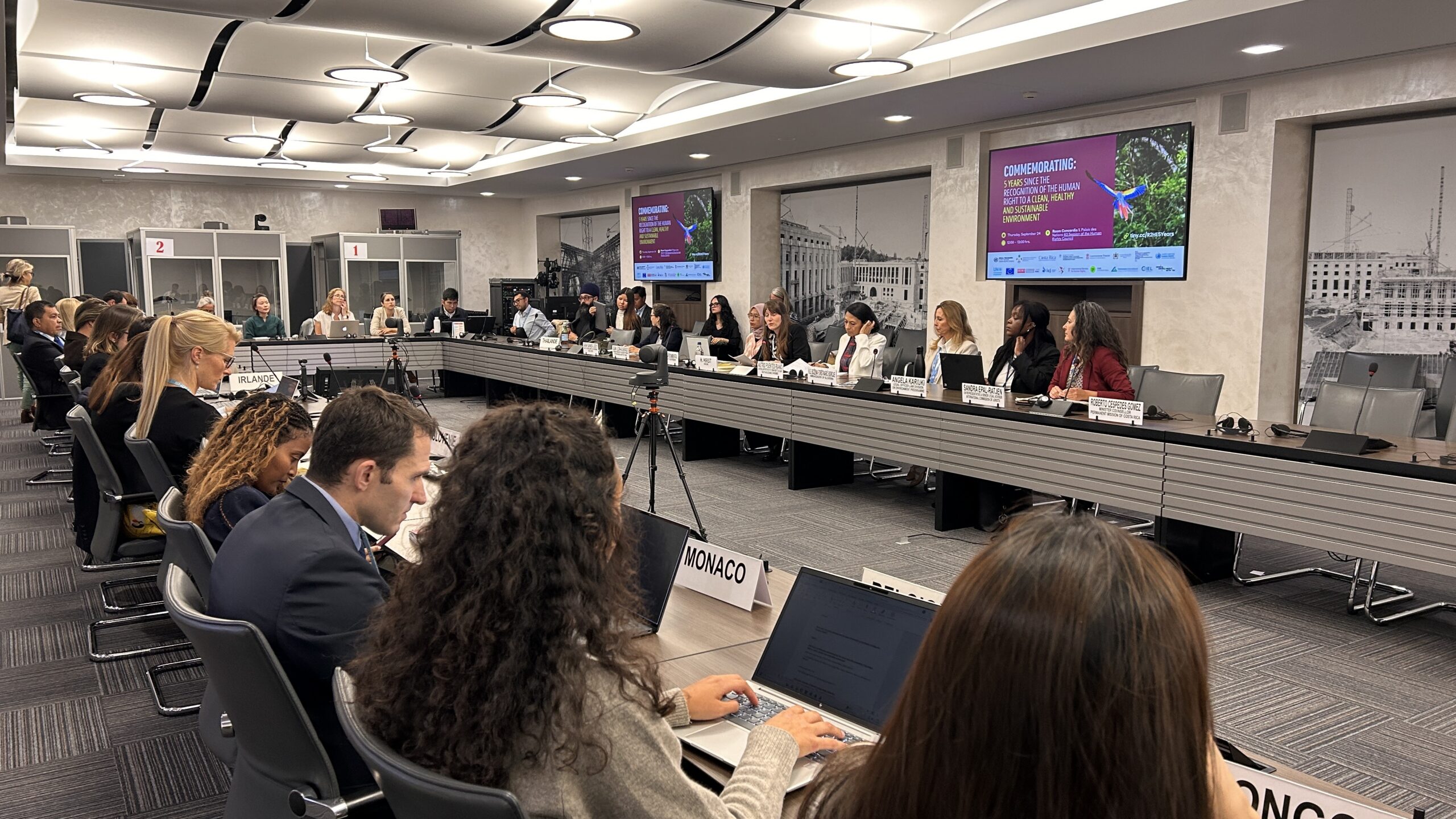
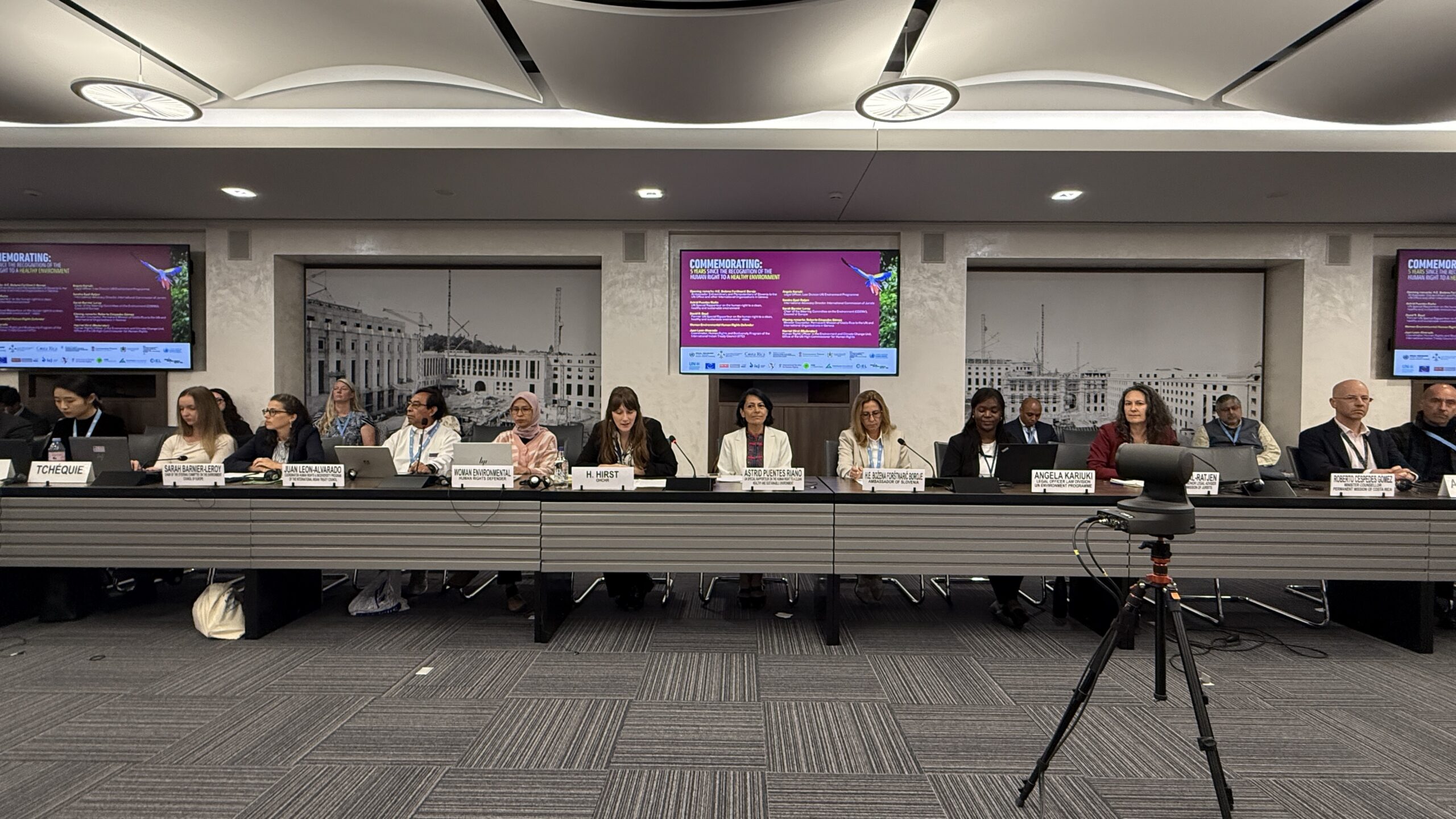
A Celebration and Stocktaking: Five years since the recognition of the human right to a clean, healthy and sustainable environment | HRC63 Side Event
24 Sep 2026
12:00 – 13:00
Venue: Palais des Nations | Concordia 1
Organization: Special Procedures of the UN Human Rights Council, Costa Rica, Maldives, Morocco, Slovenia, Monaco, France, Office of the High Commissioner for Human Rights, United Nations Environment Programme, Council of Europe, Environmental and Climate Justice Laboratory at IBERO, International Commission of Jurists, International Indian Treaty Council, International Service for Human Rights, FIAN International, Franciscans International, Center for International Environmental Law, Geneva Environment Network
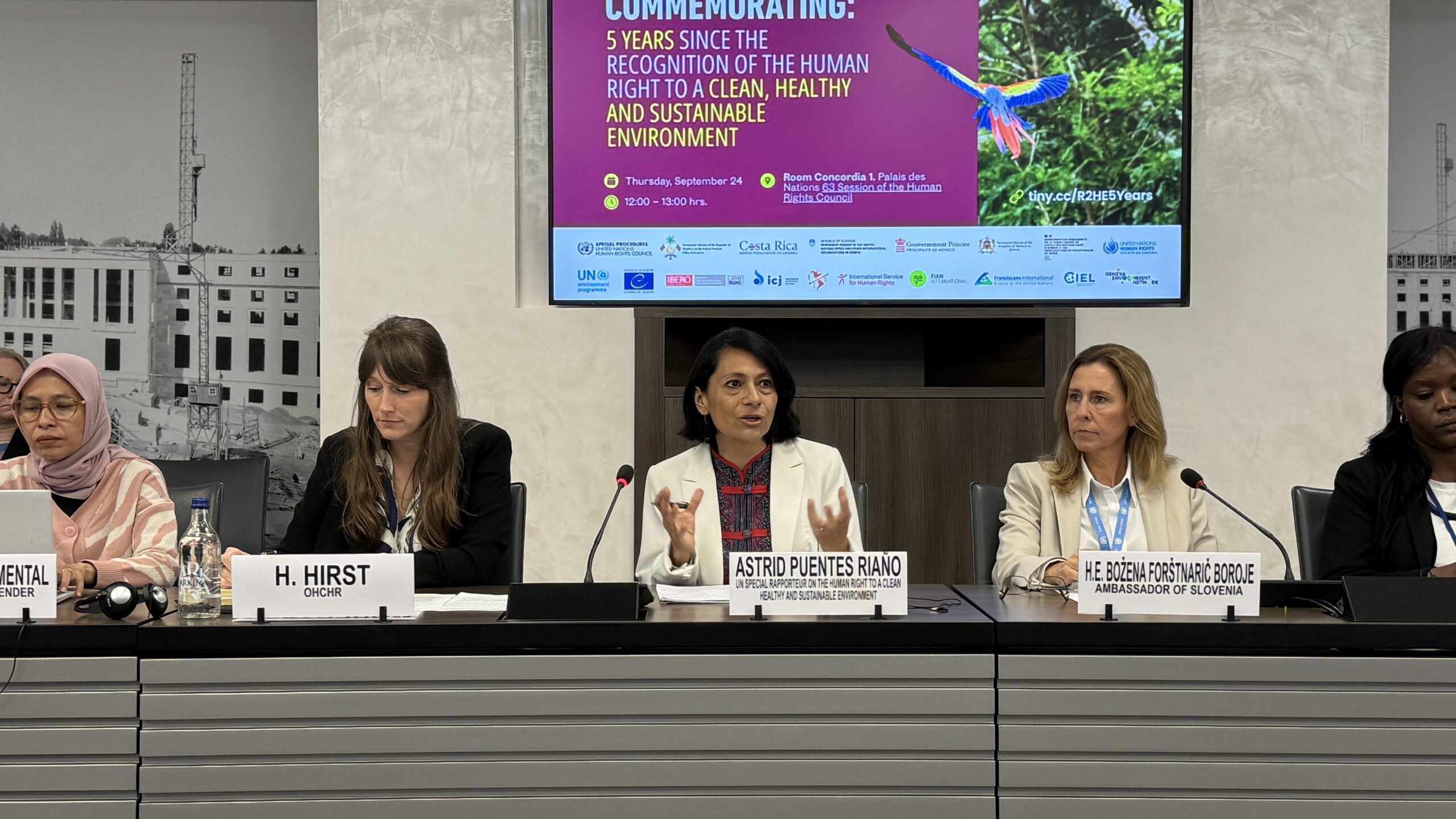
Ahead of the five-year anniversary of the recognition by the Human Rights Council of the human right to live in a clean, healthy and sustainable environment, this side event to the 63rd session session of the Human Rights Council will provide an opportunity to celebrate advances and to assess the evolution of the right. The 5th anniversary of the milestone will serve both as commemoration and a moment for renewed commitment to the implementation of the right to a healthy environment.

About this Event
The recognition
8 October 2026 marks the five-year anniversary from the day when the United Nations recognized for the first time that everyone, everywhere, has the human right to live in a clean, healthy and sustainable environment. The recognition took place at the Human Rights Council as it adopted resolution 48/13 – a resolution that added the right to a clean, healthy and sustainable environment to the library of internationally recognized rights. The recognition by the United Nations (Human Rights Council resolution 48/13 in 2021 and General Assembly resolution 76/300 in 2022) is the most important recent advancement for the effective protection of the environment and human rights.
Achieved with historic support from States, and after five decades of efforts from United Nations entities, Special Procedure mandate holders, civil society, Indigenous Peoples, and social movements, it highlights what coordinated collaboration can achieve. Since its recognition at the UN, a growing range of actors have also contributed to translating the right into practice, developing practical tools, guidance, knowledge resources and other initiatives to strengthen awareness and understanding of the right.
As humanity grapples with the unprecedented triple planetary crises of climate change, biodiversity loss and toxic pollution, the human right to a clean, healthy and sustainable environment needs to serve as catalyst for systemic and transformative changes to achieve a just and sustainable future in harmony with nature and centred on people.
The human right to a clean, healthy, and sustainable environment has many interconnected elements; therefore, the implementation of programmes, policies and projects must be done with a holistic approach. As recently affirmed by the International Court of Justice’s advisory opinion on the legal obligations of States with respect to climate change, the right to a healthy environment is a precondition and essential to the effective enjoyment of all human rights – as they are interdependent, inalienable, and indivisible.
Advances since the recognition
Since the UN expressed the recognition, the human right to a healthy environment has continued to gain widespread public and legal attention across the world. Currently, the right is legally recognized in 85 per cent of United Nations Member States (166 out of 193 States) through constitutions, legislation, and regional treaties. The most recent recognitions include Canada, Federal States of Micronesia, Oman, Antigua and Barbuda, Belize, Dominica, Grenada, Saint Lucia and Trinidad and Tobago.
In July 2025 the historic Advisory Opinion on the Obligations of States in respect of Climate Change from the International Court of Justice unequivocally and unanimously concluded that international human rights law is part of the stringent obligations of States to protect the climate system and the environment. As mentioned above, its paragraph 393 clarified that the human right to a healthy environment is a precondition and essential for the enjoyment of all human rights, and therefore fundamental for States to fulfill their obligation to guarantee the enjoyment of all human rights, while leaving open whether this right qualifies as an independent norm of customary international law.
Regionally the recognition of the right to a healthy environment has advanced, including the ASEAN Declaration on the right to a safe, clean, healthy and sustainable environment adopted in October 2025, that was welcomed by a group of UN Special Procedures mandate holders Special Rapporteurs who also committed to support its implementation. At the same time, there is a process underway within the Council of Europe to also expressly recognize this right regionally,
The universal recognition of the right to a clean, healthy and sustainable environment has already influenced global environmental governance, as seen in frameworks such as the Sharm el-Sheikh Implementation Plan and the Kunming-Montreal Global Biodiversity Framework.
Despite this progress, the full realization of the right to a clean, healthy, and sustainable environment remains a challenge. The strengthening of multilateral environmental agreements and enhancing the protection of environmental human rights defenders and for more States to recognize the right at the national level is key.
The Human Rights Council and the broader UN system must maintain their leadership role to ensure continued progress, reinforcing their commitment to implementation of this right.
A moment to commemorate, reflect and learn to improve
The five-year milestone provides an opportunity to celebrate advances and to assess the evolution of the right to a clean, healthy, and sustainable environment. The 5th anniversary is both a commemoration and a moment for renewed commitment to the implementation of the right to a healthy environment. It is also a great opportunity to reflect, identify lessons learned, and implement key improvement actions.
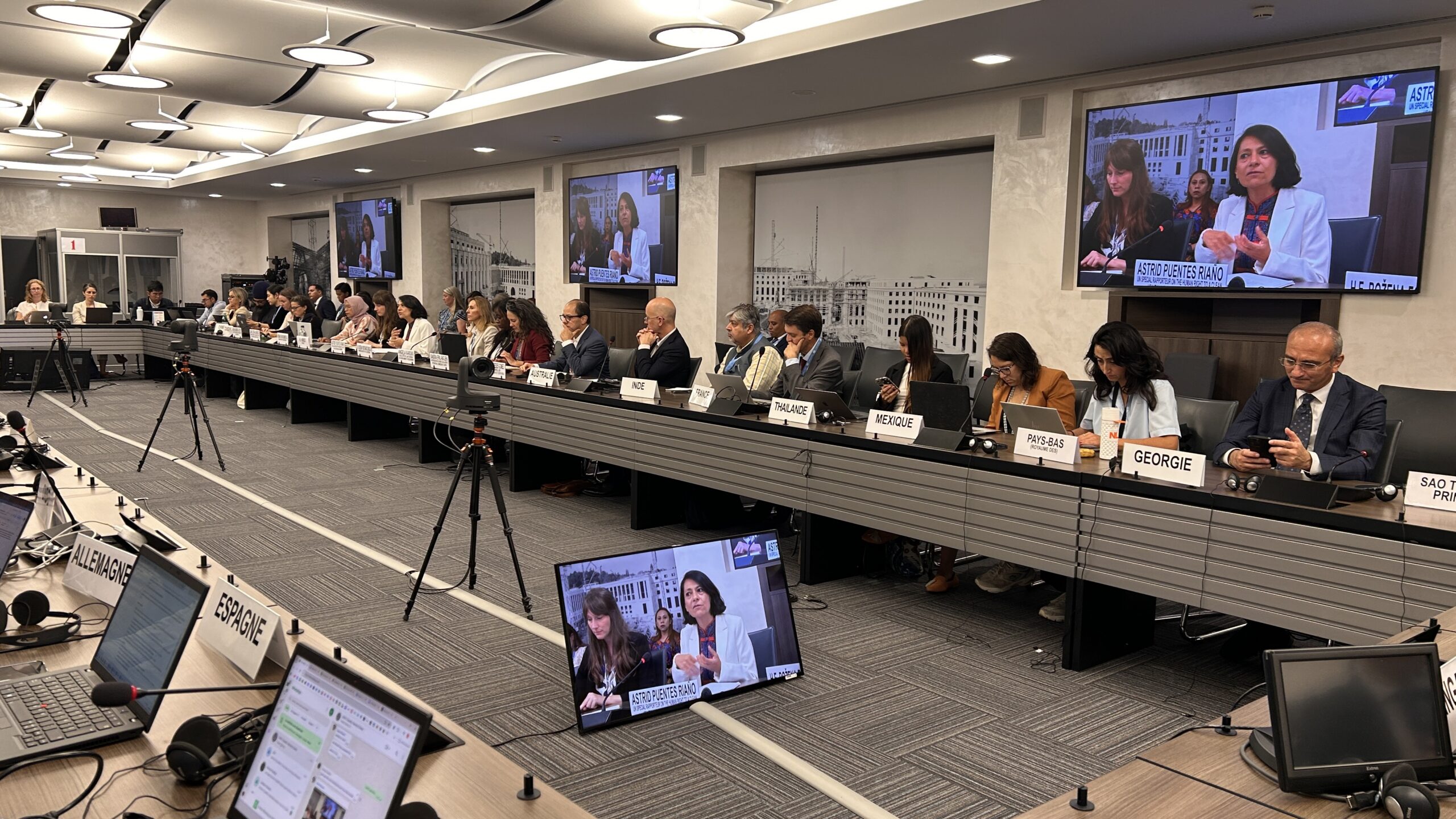
This side event to the 63rd session session of the Human Rights Council aims to identify key achievements, lessons learned and good practices to replicate and explore ways for the Human Rights Council and the broader UN human rights system to further promote progress. It will focus on the global perspective to highlight advances achieved thanks to the recognition of the human right to a clean, healthy and sustainable environment. This will include reflecting on the recognition of this right by the International Court of Justice and how this right is essential for the enjoyment of all other human rights. It also aims to assess and identify opportunities for future action needed in the next five years to further implement the right to a clean, healthy, and sustainable environment.
This event is organized by the UN Special Rapporteur on the right to a clean, healthy and sustainable environment, and co-sponsored by Costa Rica, Maldives, Morocco, Slovenia, Monaco, the Office of the High Commissioner for Human Rights, the UN Environment Programme, the Council of Europe, the Environmental and Climate Justice Laboratory at IBERO, the International Commission of Jurists, the International Service for Human Rights, FIAN International, Franciscans International, the Center for International Environmental Law and the Geneva Environment Network.
A reception in celebration of the fifth anniversary of the recognition is taking place at Palais des Nations on 24 September 2026 from 17:30 to 19:00 CEST.
Environment @ HRC63
The 63rd regular session of the UN Human Rights Council (HRC63) will take place in Geneva from 7 September to 7 October 2026. Consult this regularly-updated page that highlighted the environmental-related activities of this session.

Speakers

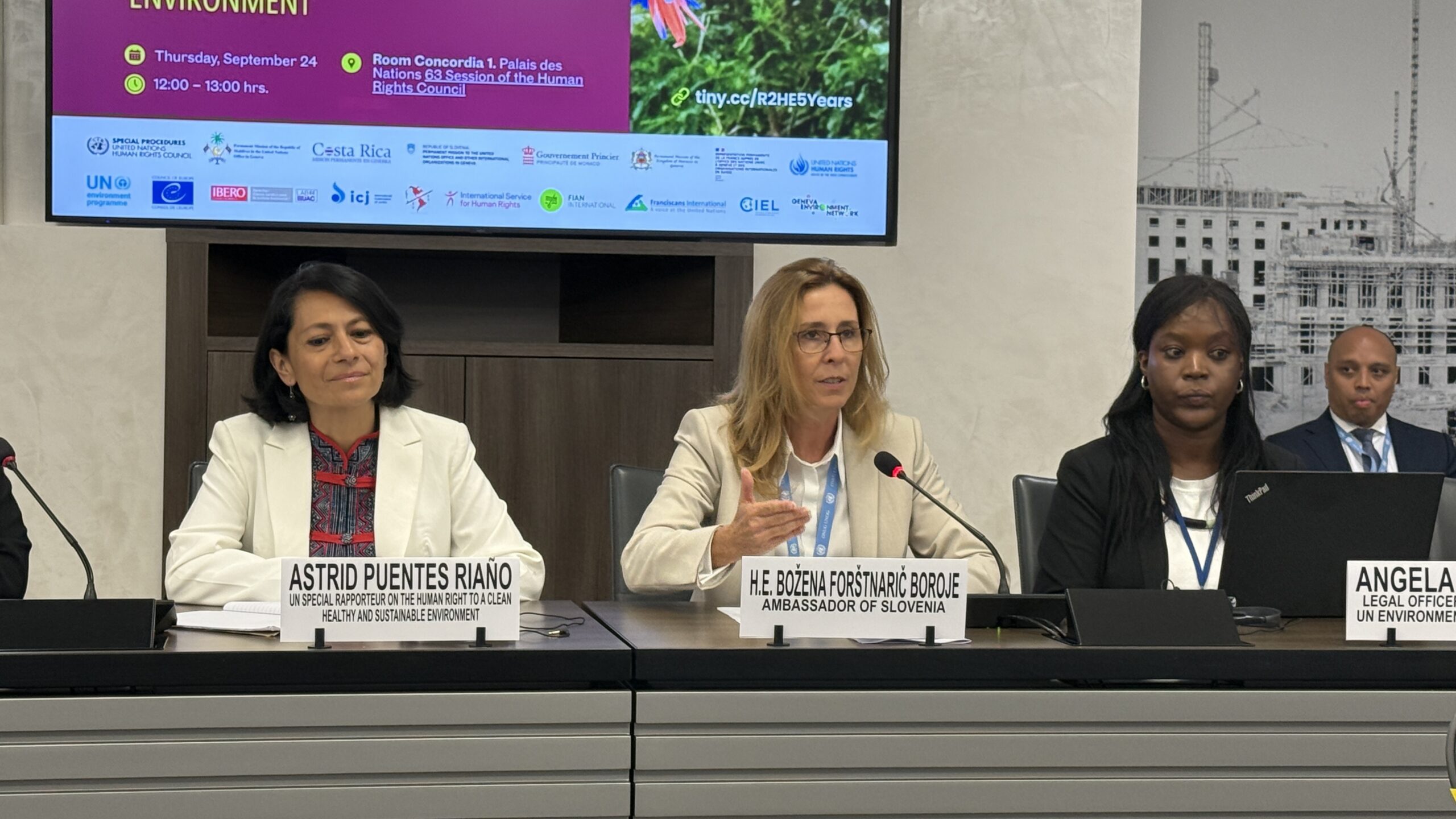
H.E. Amb. Božena FORŠTNARIČ BOROJE
Permanent Representative of Slovenia to the United Nations Office and other international organizations in Geneva

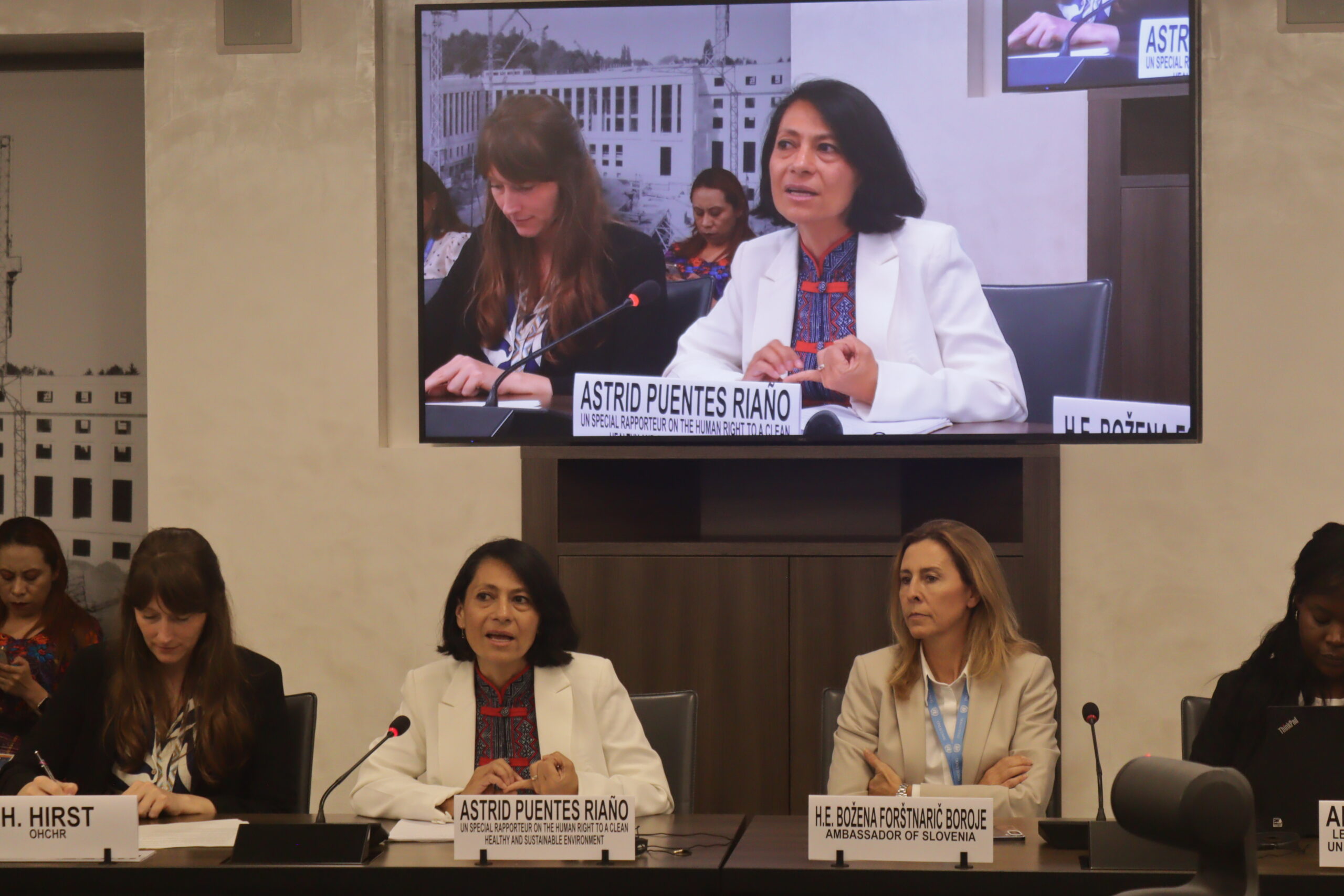
Astrid PUENTES RIAÑO
UN Special Rapporteur on the right to a healthy environment
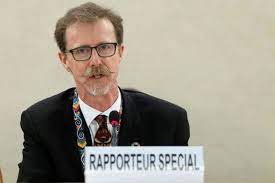
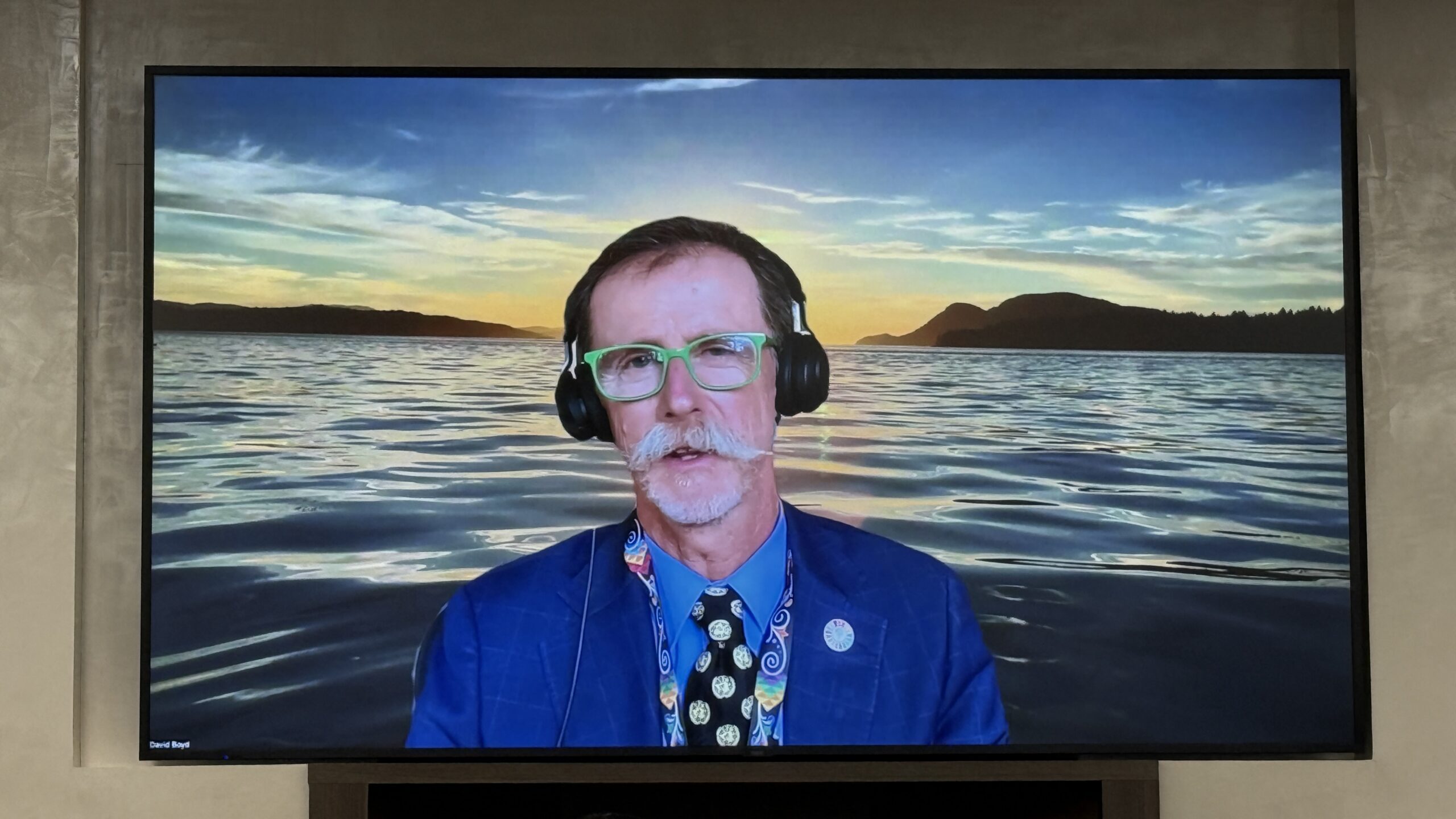
David R. BOYD
Former UN Special Rapporteur on the right to a healthy environment (video message)
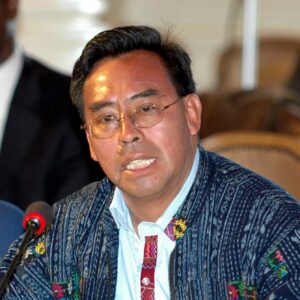
Juan León ALVARADO
Coordinator, Human Rights and Biodiversity Program, International Indian Treaty Council

Angela KARIUKI
Legal Officer, Law Division, UN Environment Programme
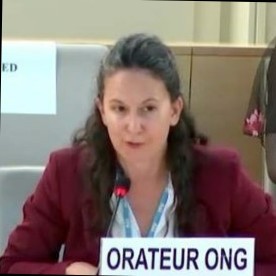
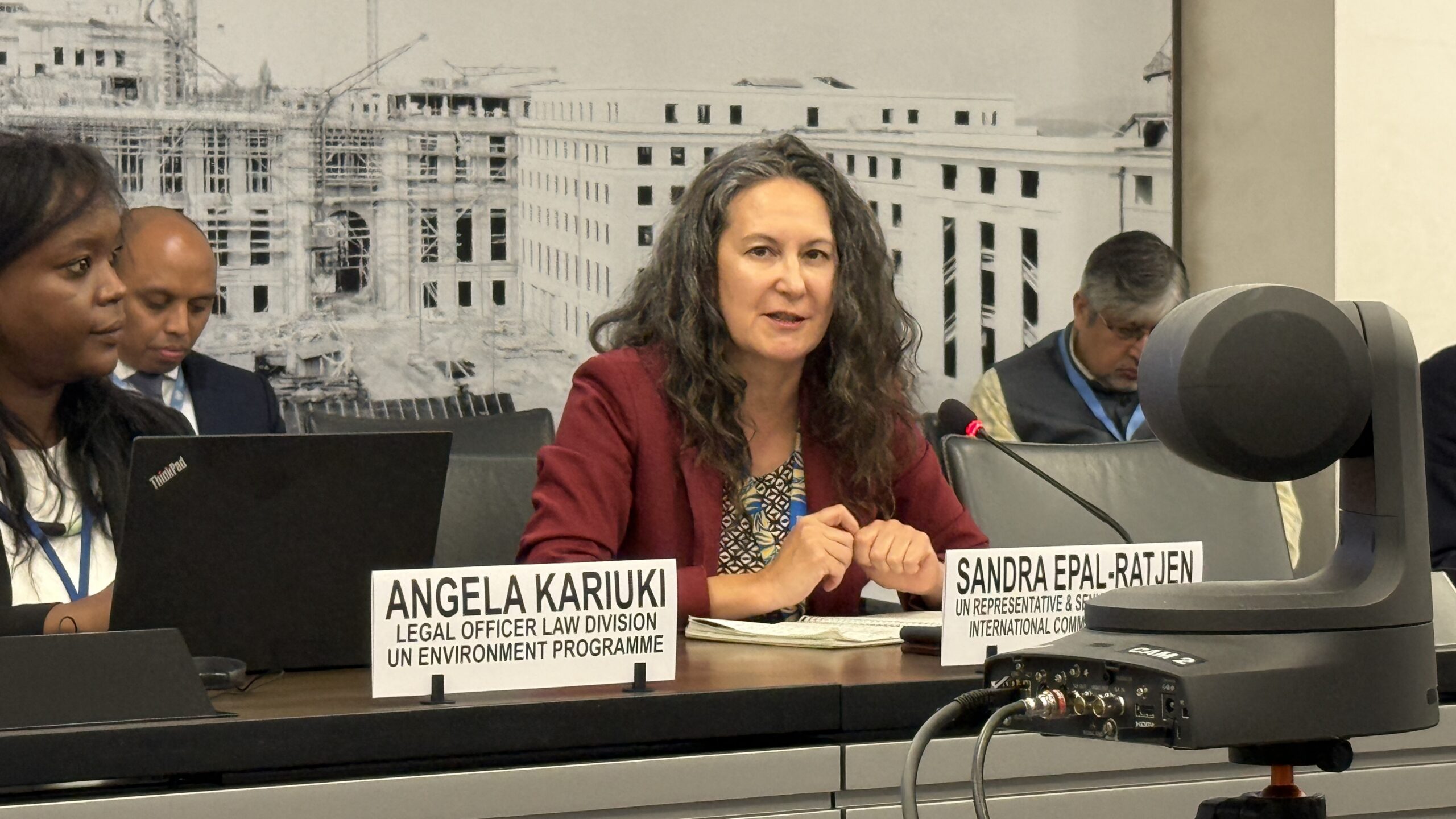
Sandra EPAL RATJEN
UN Representative and Senior Legal Adviser, International Commission of Jurists

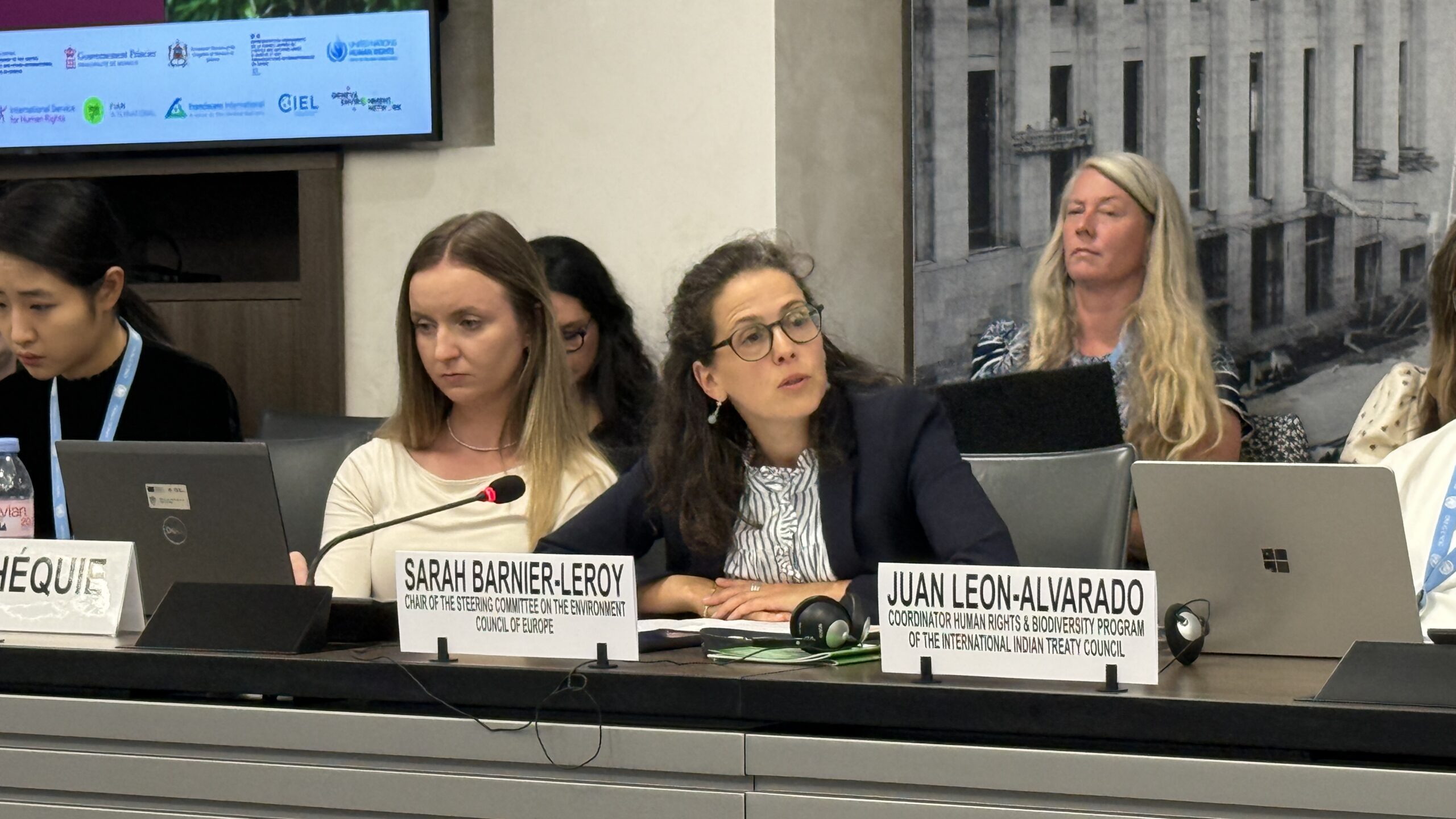
Sarah BARNIER-LEROY
Chair, Steering Committee on the Environment (CDENV), Council of Europe

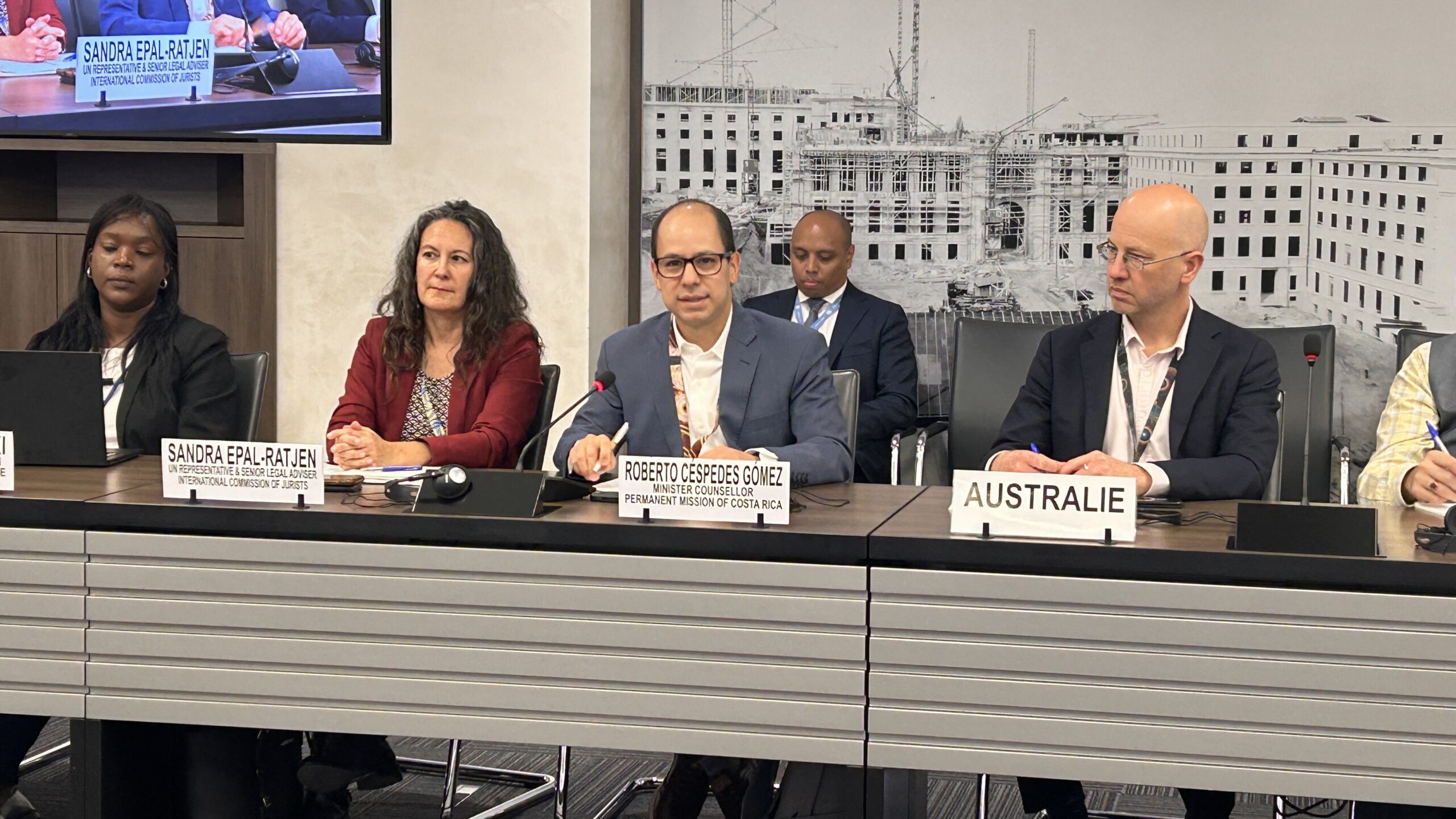
Roberto CESPEDES GOMEZ
Minister Counsellor, Permanent Mission of Costa Rica to the United Nations and international organizations in Geneva
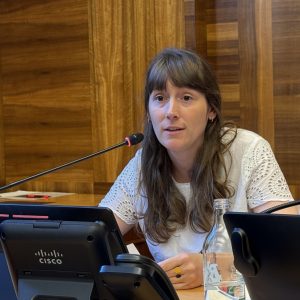
Harriet HIRST
Human Rights Officer, Environment and Climate Change Unit, UN Office of the High Commissioner for Human Rights | Moderator
Highlights
Video
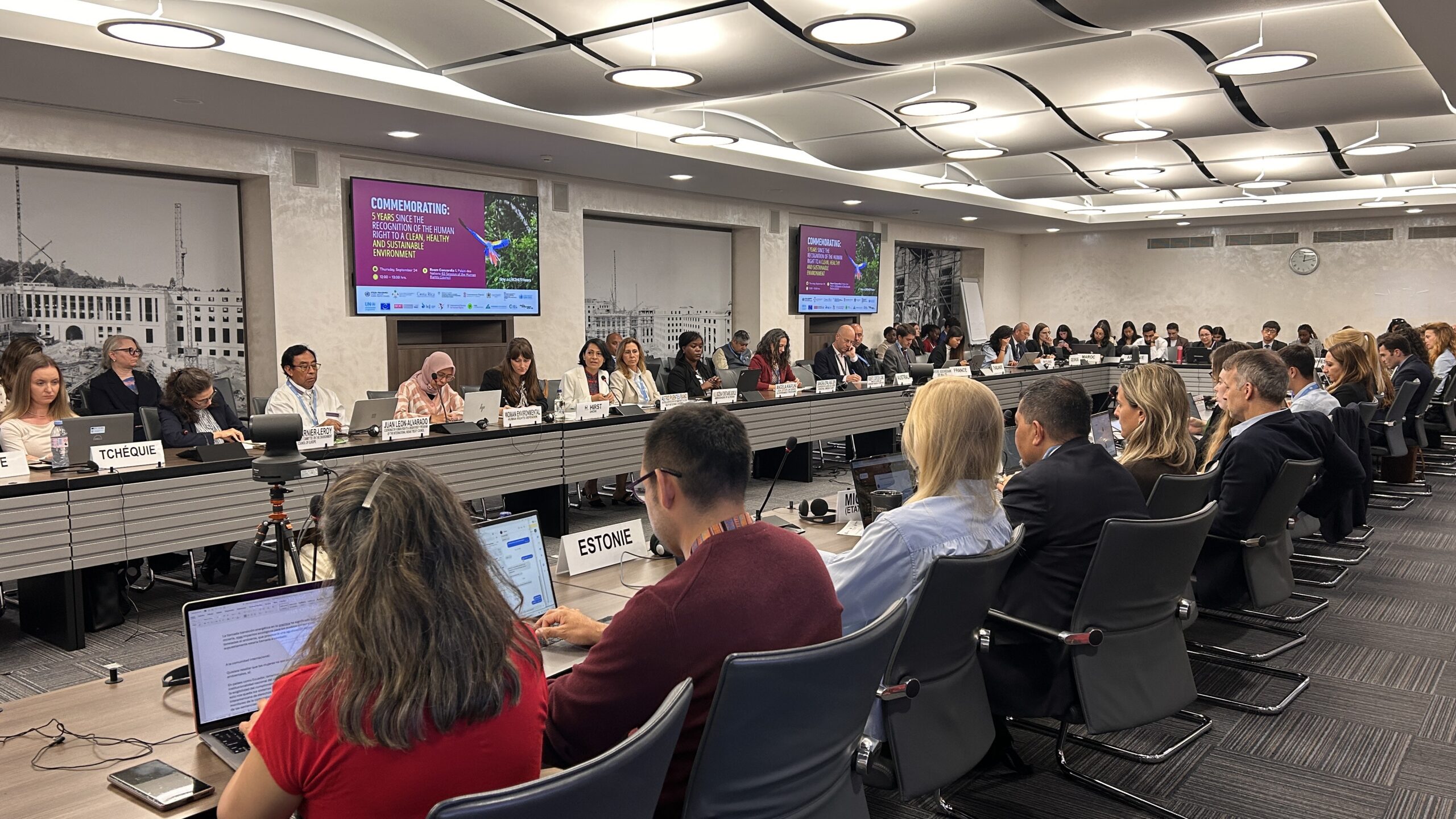
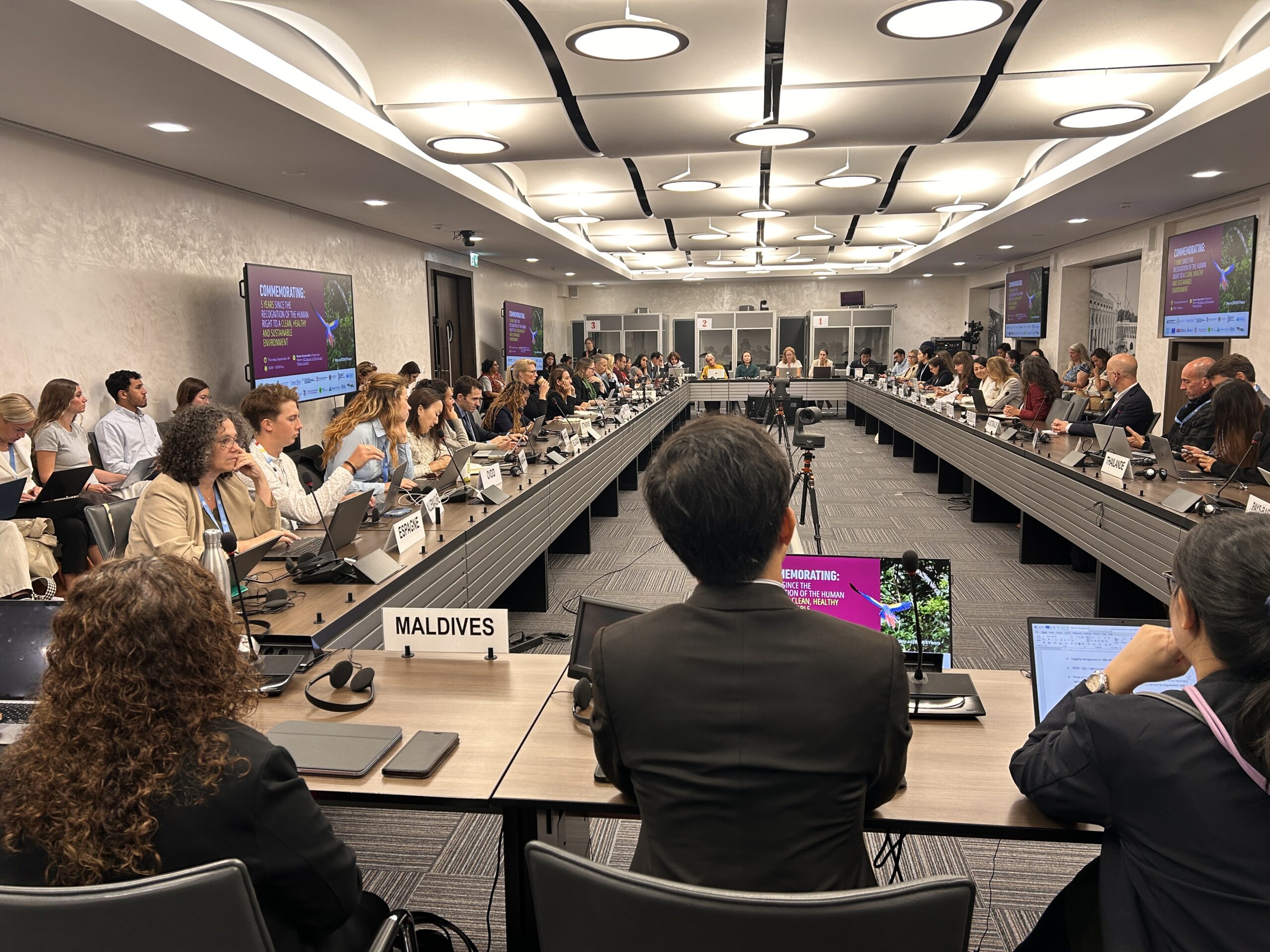
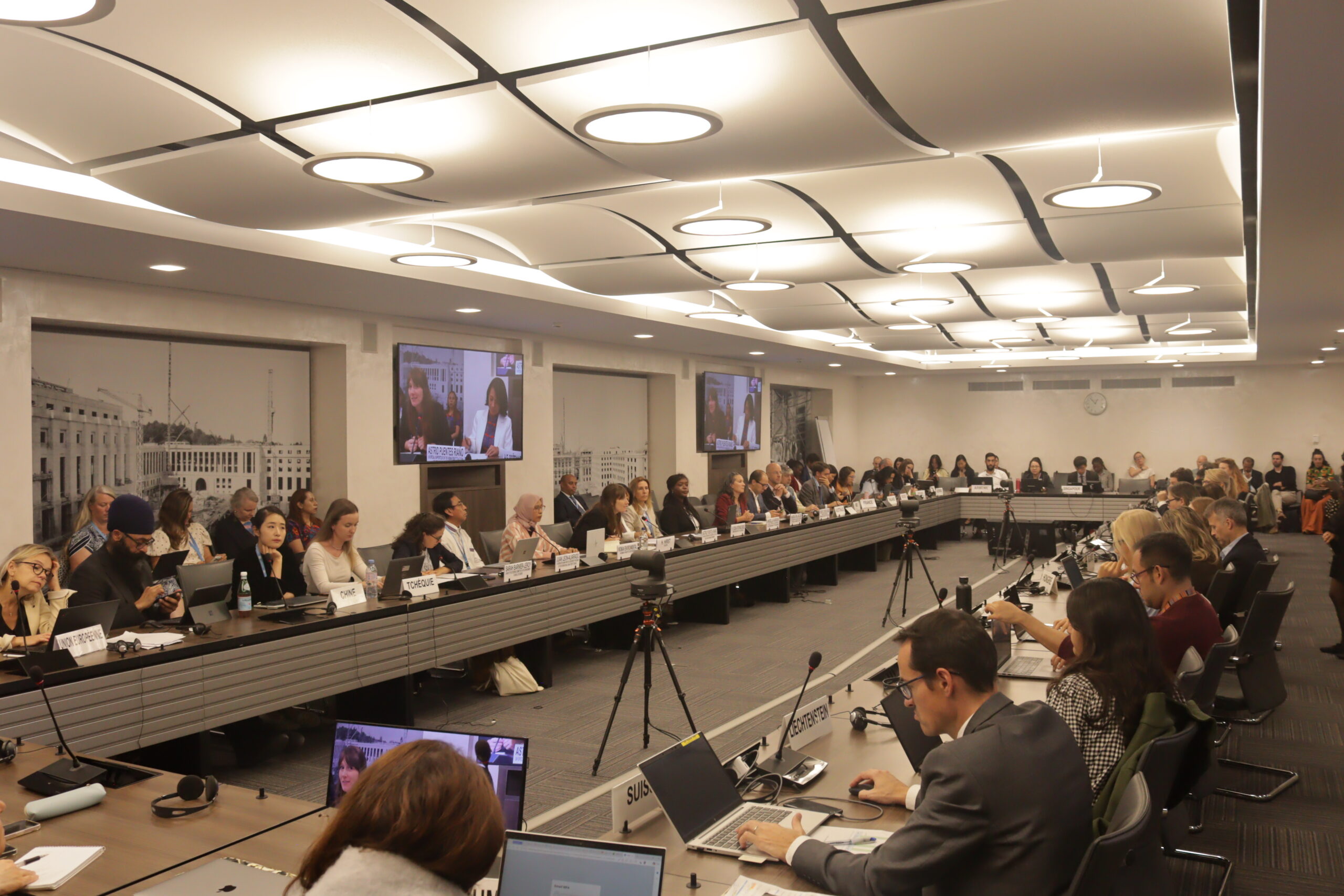
Live from Palais des Nations
Summary
Harriet HIRST | Human Rights Officer, Environment and Climate Change Unit, UN Office of the High Commissioner for Human Rights | Moderator
- Five years ago, the international community took a historic step when the Human Rights Council recognized the right to a clean, healthy, and sustainable environment, affirming what communities, Indigenous peoples, environmental human rights defenders, and many others had long been advocating: that a healthy environment is fundamental to the enjoyment of human rights.
- Today’s event provides an opportunity not only to celebrate that achievement, but also to reflect on how far we have come, the challenges that remain, and the priorities that should guide us over the next five years.
- As environmental crises continue to affect people and ecosystems worldwide, the question before us is how to ensure this recognition translates into meaningful implementation and tangible improvements in people’s lives.
Opening Remarks
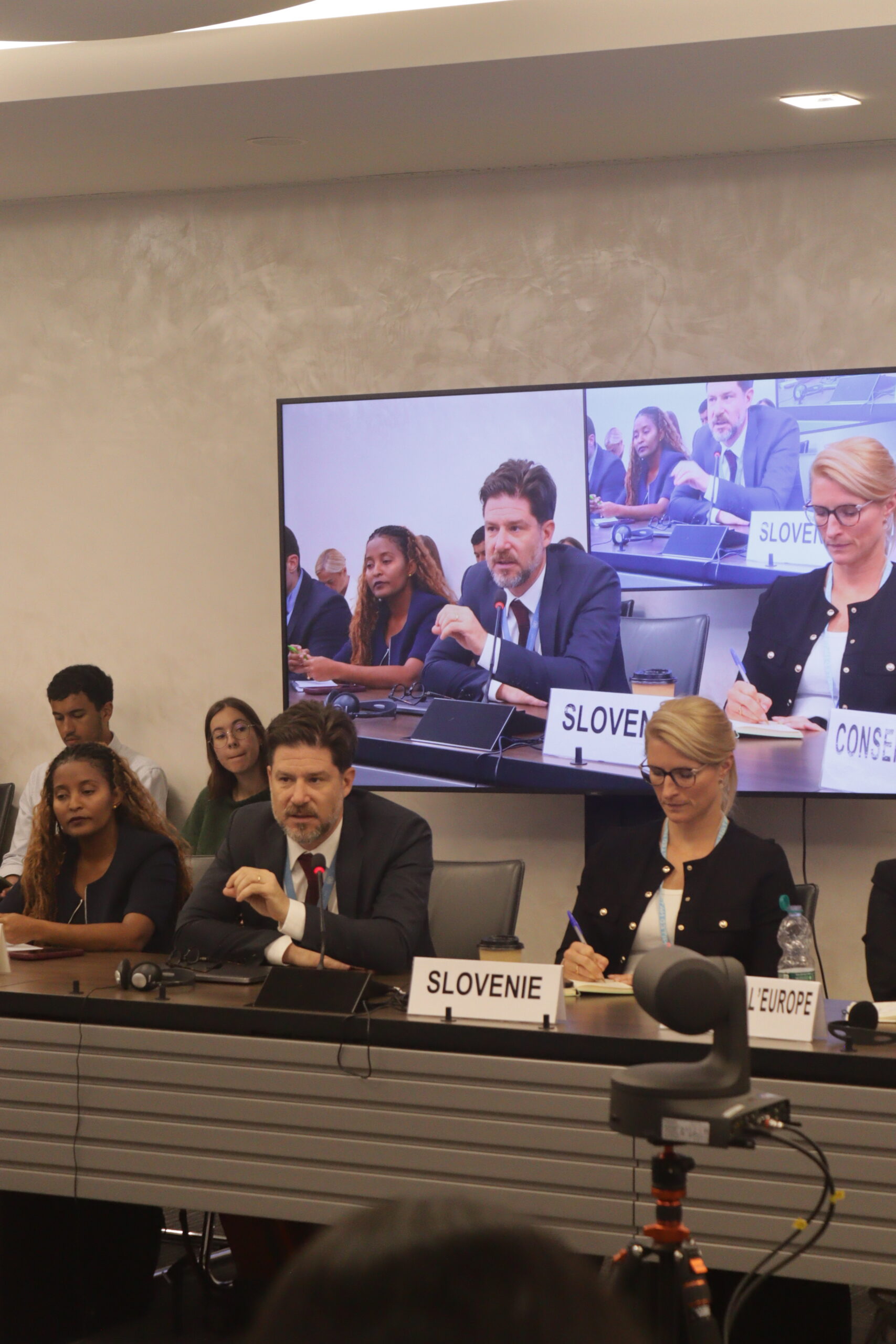
H.E. Amb. Božena FORŠTNARIČ BOROJE | Permanent Representative of Slovenia to the United Nations Office and other international organizations in Geneva
- Five years ago, through resolution 48/13, the Human Rights Council took an important step. It recognized that everyone, everywhere, has the right to live in a clean, healthy, and sustainable environment. A year later, the General Assembly reaffirmed this recognition.
- These decisions were the result of decades of engagement by states, civil society, Indigenous peoples, environmental human rights defenders, United Nations experts, and many others, probably many others who are actually sitting today in this room and have had a part to play in this whole process.
- Today is therefore a moment to celebrate. But not just that. It is also the time to take stock and to look forward, as was already mentioned.
- The right is now legally recognized in 166 United Nations Member States through constitutions, legislation, and regional instruments in various ways. Importantly, also last year, the International Court of Justice affirmed that the right to a healthy environment is a precondition and essential for the enjoyment of all human rights.
- These are very significant achievements. But let us remind ourselves that the recognition of the right itself was never meant to be just the end of the journey. It was actually more like the beginning of it.
- For Slovenia, the next chapter should be about implementation, as probably for all laws. At a time when climate change, biodiversity loss, and pollution increasingly affect the enjoyment of human rights, the right to a clean, healthy, and sustainable environment provides us with a common framework for action.
- It reminds us that environmental protection and human dignity cannot be separated. That is why Slovenia remains firmly committed to this right and to our work within its working group.
- We will continue to support stronger implementation at national, regional, and international levels, meaningful participation of civil society and rights holders, and protection of environmental human rights defenders. We believe that, in all of this, the Human Rights Council must continue to provide leadership.
- The challenge before us is now to translate international recognition into tangible improvements in people’s lives: cleaner air, safe water, healthy ecosystems, meaningful participation in environmental decisions, and effective protection when these rights are threatened.
This anniversary therefore carries a simple message. We have made important progress, but our responsibility now is to turn this recognition into a reality. The coming five years should be years of implementation, cooperation, and concrete results.
- Everyone knows how difficult that is when you are actually trying to move forward and implement something like that.
Panel Discussion
Astrid PUENTES RIAÑO | UN Special Rapporteur on the right to a healthy environment
- One of the key aspects that made this recognition happen was the coordination of civil society organizations, Indigenous peoples, African descendants, the movements from the ground, with this famous now, of course, petition signed by over 1,400 organizations from all over the world, in many languages, requesting states to recognize this right. The Human Rights Council heard that and the General Assembly also heard that, and then we had this recognition.
- So that is the first thing that I want to highlight. Also, in what we have seen in these five years, definitely the recognition and the universality and the clarity today that we have that the right to a healthy environment is a human right. There is no question about that.
- We have the advisory opinion from the International Court of Justice concluding that the right to a healthy environment is a precondition and is essential for the enjoyment of all other human rights, and that they cannot think about how states will recognize and guarantee all other human rights without the right to a healthy environment. So that is a very clear conclusion and mandate from the ICJ advisory opinion to link that.
- The other element that I want to highlight is how the right to a healthy environment has helped in these five years and the decades before to move from and reduce the silos and fragmentation that we have. In a lot of ways, the right to a healthy environment has helped to bring different planets together: the planet of human rights, the planet of the environment, the planet of climate change, but also health.
- As we know, and from the mandate we have developed, when we talk about the right to the environment, we talk about clean air, safe climate, healthy ecosystems and biodiversity, non-toxic environments, healthy and sustainably produced food, and clean water, of course. We also talk about access to justice, public participation, and access to information.
- So the right to a healthy environment has helped to bring these planets together, of course incorporating, for example, as they mentioned in the Kunming-Montreal Biodiversity Framework, in the Biodiversity COPs, and now, of course, the implementation of the Paris Agreement, among others.
- It also highlights, and this is my third point, the importance of collaboration and mainstreaming the human right to the environment for present and future generations.
- What remains to be done? Well, we only have to see the reality, the science, and for those who live in Europe, living through the heat waves in Europe, living through the really worse and sad situations from Nepal recently also, for a few weeks, that scientists are saying that there is no way that the floods that you saw would happen without climate change and the anthropogenic actions there.
- So we need effective implementation. We need to address the drivers of the triple planetary crisis: both climate change, biodiversity loss, and toxic pollution.
- And we also need to do it in a way that is combining and integrating this. As you know, the next report that I will be presenting here, in the session in March, is about environmental human rights defenders. It is very important that while implementing the right to a healthy environment, we also ensure the people that are protecting the environment are safe. And this is unfortunately something that is not happening.
- To advance peace, implementing the right to a healthy environment means that we also need to advance peace. Conflict, war, the occupation, the genocide, that is directly impacting the right to a healthy environment, both in the areas that are suffering conflicts but also worldwide.
- We are losing worldwide all the efforts to mitigate emissions, protect biodiversity, and reduce toxic contamination in every single increase of war and conflict. And that is something that we are going to be, and I will be, working on.
- So I want to close by highlighting the importance of continuing to mainstream and strengthening the mainstreaming of the right to a healthy environment.
- I have seen also one of the challenges is that while, right after the recognition, the right to a healthy environment was included in the Kunming-Montreal Biodiversity Framework, at the biodiversity COPs, etc., now it is more difficult to get states to include, to talk about this in climate negotiations, biodiversity negotiations, plastic negotiations.
So let us lose that fear and use the tools that we have. Let us advance the science. Let us advance the situations and use the knowledge that we have, not only science from the Western perspective, but Indigenous peoples, children, youth participation, the knowledge of women, the very diverse knowledge that we have.
As we achieve the recognition of the right to a healthy environment, let us implement it in a collective and collaborative way.
- I will close with this: a lot of the logos and the collaboration for making this side event happen and the reception is reflecting how much the work that we have to do together.
David R. BOYD | Former UN Special Rapporteur on the right to a healthy environment (video message)
Since the successful adoption of resolution 48/13 in 2021, I have been both surprised and delighted by the way it has been a catalyst for action around the world in at least seven different ways.
- It stimulated powerful new general comments from United Nations treaty bodies, including the Committee on the Rights of the Child and the Committee on Economic, Social and Cultural Rights.
- It has contributed to putting human rights at the heart of the new Kunming-Montreal Global Biodiversity Framework.
- It has sparked constitutional reforms in Micronesia, Pakistan, the State of New York, and hopefully soon Bangladesh.
- It has led to positive changes in both human rights legislation and environmental legislation in countries from Australia to Canada.
- It has been used by civil society, Indigenous peoples, and local communities to hold governments accountable through the courts in Costa Rica, South Korea, Panama, North Macedonia, India, South Africa, Mexico, Pakistan, Peru, and other nations.
- It played a key role in the advisory opinions on climate change from the Inter-American Court of Human Rights and the International Court of Justice. And perhaps most surprisingly, governments have used the right to a healthy environment as a shield against industry lawsuits trying to overturn new and improved environmental regulations, such as bans on certain types of plastics and taxes on certain types of pollution.
I would like to share with you a personal story. My career as an environmental lawyer shifted towards human rights in 2007 after I visited a terribly polluted Indigenous community here in Canada.
- I could not believe what I saw, smelled, and heard. Dozens of oil refineries, plastic manufacturers, and chemical factories surrounded this small community. People were suffering from high rates of cancer and other illnesses.
- But in 2023, because of the United Nations resolution, Canada amended its main pollution law to recognize the right to a clean, healthy, and sustainable environment.
- A year later, in 2024, Canada created a new regulation, forcing dramatic reductions in benzene emissions from these industrial facilities. Our Environment Minister said, in announcing the new regulation, that everyone has the right to live in a healthy environment.
- Since then, benzene emissions have fallen dramatically. People are healthier and happier. And this, to me, is such a powerful and inspiring example of how the right to a healthy environment could make a meaningful difference in people’s lives.
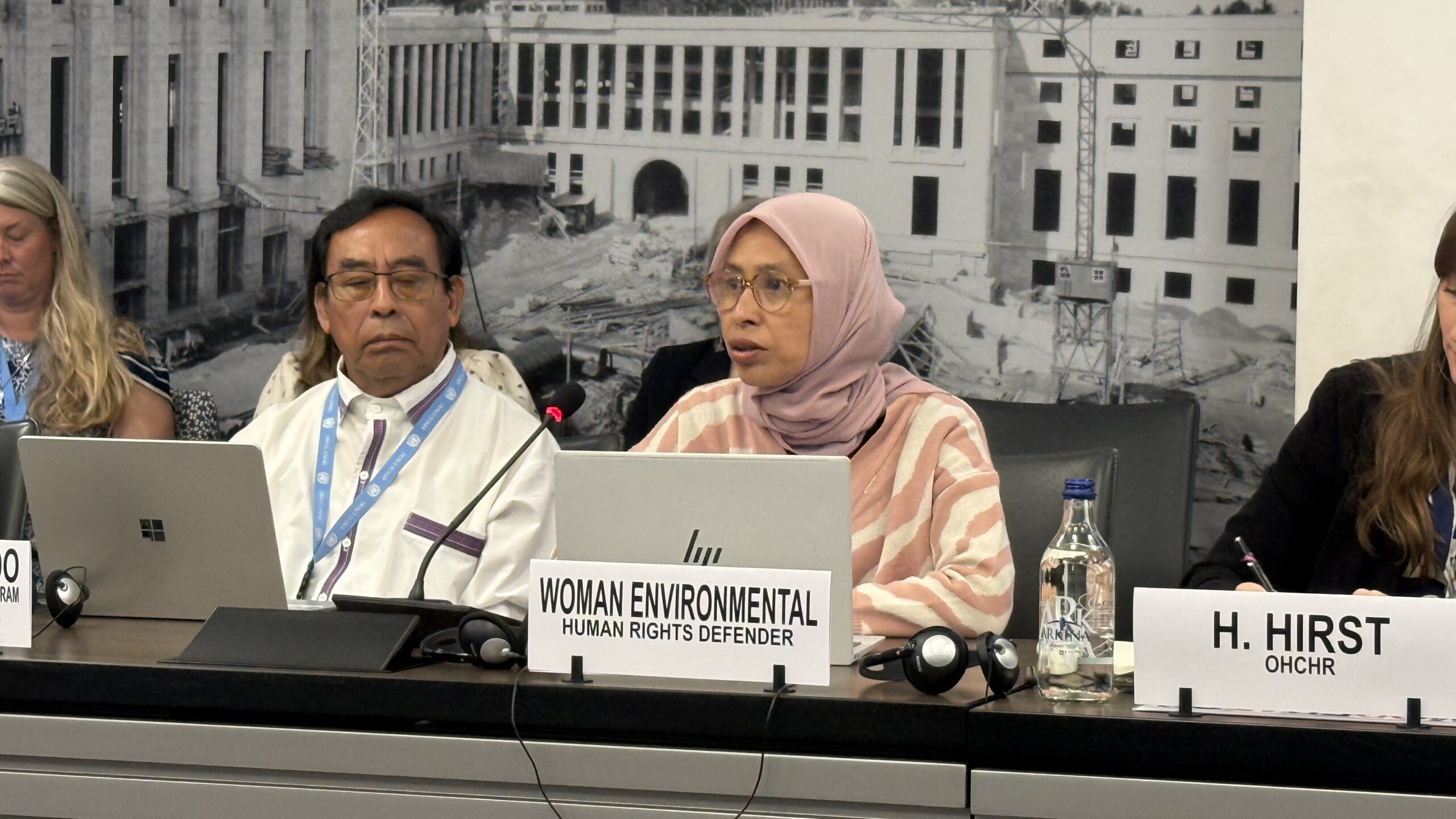
Andriyeni | Solidaritas Perempuan (Women’s Solidarity for Human Rights), Indonesia
- Today, we gather to commemorate the 5th anniversary of the recognition of the human right to a clean, healthy, and sustainable environment. While this is a global milestone to celebrate, I stand before you with a bitter reality. For grassroots women in Indonesia—Indigenous women, farmers, and fisherwomen—this right remains merely a promise on paper. Today, land grabbing and ecological violence continue on a massive scale under the guise of National Strategic Projects and the so-called “clean energy transition.”
- The ecological destruction and land loss structurally impoverish women. For example, in Poco Leok, East Nusa Tenggara, a geothermal project claimed to be a climate solution instead threatens almost two thousand Indigenous women with the loss of their customary lands, water sources, and cultural identity. On the coast of Makassar, the Makassar New Port reclamation has destroyed traditional fishing grounds, displacing 150 people, 131 of whom are fisherwomen who have now lost their source of food and livelihood.
- Women human rights defenders are systematically excluded and when we defend our lands through the “Keep the Village” action (Aksi Jaga Kampung), we are met with military repression. Throughout 2025, we recorded 135 women who became victims of violence and criminalization in agrarian conflicts: 114 were physically assaulted, 19 criminalized, and 2 women were shot.
- Distinguished delegates, We refuse to submit to this impoverishment. However, we need concrete action from the international community:
- First, we need your intervention to halt the ongoing criminalization and physical violence experienced by Indigenous women and environmental activists defending their living spaces.
- Second, we urge the States to provide adequate resources to UN experts country visits and for the States to accept the visits. Experts should meet us at the grassroots level. Witness firsthand the destruction caused by extractive projects in Indonesia. By doing so, you can provide human rights policy recommendations that are directly addressed to our government.International public scrutiny is a powerful tool to hold the government and corporations accountable.
- We ask you to incorporate gender-based data and analysis into the work of the Human Rights Council and the General Assembly, so the world can clearly see that climate solutions must not become patriarchal solutions that destroy women’s lives.
- Third, we request the international community to speak up highlighting the severe ecological violence and systemic criminalization faced by Women Human Rights Defenders in Indonesia.
- Effectively protecting the right to a healthy environment through an Indigenous and Gender perspective means recognizing us as legitimate rights holders and political subjects, not merely objects of development. Ecological justice will never be achieved without gender justice.
Juan León ALVARADO | Coordinator, Human Rights and Biodiversity Program, International Indian Treaty Council
- For the IITC, it is important to remember the contribution and the leadership of Indigenous peoples in this process and also the responsibility that we have to continue advancing the implementation of these rights.
- Indigenous peoples have protected our lands, territories, water, biodiversity, and natural resources for generations. Our relationship with the environment is also linked to our culture, spirituality, tradition, knowledge, food systems, and all rights to self-determination.
- For this reason, the implementation of the right to a clean, healthy, and sustainable environment must be consistent with the United Nations Declaration on the Rights of Indigenous Peoples.
- We consider several elements fundamental for the next five years.
- First, states must recognize and respect the individual and collective rights of Indigenous peoples in all environmental policies, programs, and decisions.
- This includes the rights to land, territories, and resources; the right to participate in decision-making; the right to maintain and protect Indigenous knowledge; and the right to free, prior, and informed consent.
- Second, the participation of Indigenous peoples must continue to be strengthened. Indigenous peoples should participate from the beginning in decisions that affect our rights, lands, territories, resources, and way of life.
- Participation should not take place only after projects or policies have already been decided. It is also important that Indigenous peoples participate through our own representative institutions, in accordance with our own procedures.
- Third, Indigenous knowledge must be respected and protected. Today, there is increasing recognition of the contribution of Indigenous knowledge to biodiversity conservation, climate action, food systems, and the protection of the environment.
- However, this knowledge cannot be separated from the peoples who hold it. Its use must respect the rights of Indigenous peoples, including our right to free, prior, and informed consent and our rights over our knowledge and resources.
- It is also important that states assume their responsibilities. Recognition of these human rights was an important achievement. Now it is necessary to strengthen the implementation in national legislation, public policies, and international processes related to climate change, biodiversity, chemicals and waste, oceans, and other environmental issues.
- Finally, we hope that during the next five years, the international community will continue advancing from recognition to effective implementation.
The protection of the environment and the protection of the rights of Indigenous Peoples must advance together. Respecting the rights of Indigenous Peoples, strengthening our participation, and protecting our lands, territories, resources, and knowledge will also contribute to achieving a clean, healthy, and sustainable environment for all.
Angela KARIUKI | Legal Officer, Law Division, UN Environment Programme
- A few years ago, before this Council, or even the General Assembly later, had recognized the right, I remember sitting on one of the panels here at the Palais, and I said that the only way that we would get there was if the environmental and human rights communities were rowing fiercely in the same direction. That is also how I saw the work of UNEP, the special procedures, and our collaboration, institutions with different tools rowing together.
- So, it feels almost unreal to be here marking five years. A great deal has happened, and there is still a lot more ahead.
- Harriet, you asked where the greatest opportunities are for our two agendas to work more closely together. For me, wherever environmental decisions that shape people’s lives are already being made, and where human rights expertise can help to shape them early rather than respond to the harm afterwards. That is one area, and this is also where the energy is moving on this right.
- Five years ago, it was concentrated on recognition here and then later in New York. Today, it is showing up in places that do not always talk about the right to a healthy environment: regional ministerial meetings, the implementation of environmental treaties, and the decisions that are also being made behind the energy transition.
- We have all been speaking about this over the last several months. Multilateral cooperation is under strain at the moment. Resources are tight, but that is also where our shared effort goes the furthest.
- So, on to the three opportunities.
- The first is regional. Last year, African environmental ministers meeting at the African Ministerial Conference on the Environment asked UNEP and the AU, and partners including OHCHR, to support the advancement of human rights related to this right.
- We are now working on what that could mean for access to information, for participation, but also for justice across the continent. To me, it matters that this request came from environment ministers.
- David also mentioned the development of general comments, and many of you will also know that the African Commission is working on its own general comment on the environment. That is a positive opportunity.
- The second is next month, and Ashford, you mentioned this. The parties to the CBD will be meeting for the first global review of the Kunming-Montreal Framework. The framework already acknowledges the right. David put it quite well when he said it is at the center of it.
- That review can also look at how people were involved, not only at what was protected. Human rights mechanisms can draw on what states have reported when they review those same countries.
- Neither of those would require new negotiations, and there is also a side event on this topic here next week. I am looking forward to that as well.
- Then the third opportunity is the energy transition, and a few colleagues have already alluded to this.
- I had the privilege of supporting the UN Secretary-General’s panel on critical energy transition minerals, which made human rights the first of its guiding principles. It was not easy to get there, and that was only a start.
- The work that we are doing now, the question that we are addressing now, is how those principles actually travel into mining laws, into licenses, and also the agreements that governments are signing with investors, but also governments signing with other governments.
- Those agreements often run for decades. So, what we put into them now is what people will live with in 2050 and beyond.
- We have heard the reality also from Andreani and from Juan. This is also where the environmental and human rights lawyers can do some of their most useful work together and where UNEP is supporting governments that are asking for it.
- So, whether the issue is nature, climate, or pollution, the opportunity looks the same. It is bringing rights in at the point where environmental decisions are being made, and not only afterwards when we are addressing the harm.
Five years ago we were rowing toward recognition. Now we are rowing through implementation, which is slower, with a few rocks here and there. It is maybe also a bit less visible sometimes, and it needs more hands.
But when environment ministers, treaty negotiators, and governments are all starting to pick up the paddles or the oars themselves, I take that really as a sign that we are going in the right direction.
Sandra EPAL RATJEN | UN Representative and Senior Legal Adviser, International Commission of Jurists
- The actual question that you asked me to talk about is: the legal and institutional developments that are still needed.
- The first point is very key for us to remember that when the resolution was adopted, the right to a clean, healthy, and sustainable environment, in different ways and forms, was already enshrined in a really large number of domestic laws and jurisdictions.
- Obviously, I will focus on this national level, but there are still also some things to happen internationally. At the national level, it is really important for me to continue pushing for the constitutional protection and recognition of the right to a clean, healthy, and sustainable environment.
- We heard from David that it was already the case in several countries, but still, we can do better. It would be like many other rights that are enshrined in constitutions.
- For me, the point with this constitutional recognition is really to ensure that the protection will survive electoral agendas and changes, but also to protect the right against setbacks in public policies more efficiently, and also to be as efficient as possible in access to justice or providing remedies in cases of violations and abuses of the rights.
- It also provides legality and predictability, and this recognition five years ago provides a more unified and certain ground for these processes.
- Then, of course, it is also important to have very strong public policies. We are all talking about implementation and concrete changes on the ground, and on the basis of the resolution and legal developments.
- For me, it is important to insist that it should not only be in the environmental sphere. We need strong environmental policies, but as we heard also from Andreani and others, it is important that with this right, we also touch upon areas that may not be explicitly about the environment but have a massive impact on the right to a clean, healthy, and sustainable environment.
- I am thinking of the development of artificial intelligence. I am thinking of health policies. I am thinking of mining, but many, many others.
- In addition to constitutional recognition, we could perfectly think, as for other rights, of sometimes the added value of having framework laws at the national level.
- Which leads me to the last part of the points I wanted to make, which is the institutional developments that are needed.
- Obviously, with what I just said, it is important to make sure that all ministries at the national level are engaged and involved accordingly in the protection and promotion of the right to a clean, healthy, and sustainable environment.
- We also discussed many times what is really an important point for me: the role of national human rights institutions.
- Now that we have this recognition of the right to a clean, healthy, and sustainable environment as a human right, we have an even stronger legitimacy and role for national human rights institutions to protect the right and those who defend it.
- Last but not least, and maybe this is the point that concerns my organization more specifically, is the role of judges, lawyers, and overall the justice system in all of that.
- With partners, the ICJ has analyzed a number of jurisdictions to draw some lessons on how to ensure that judiciaries are fit for purpose in protecting the right to a healthy environment and to defend it.
- This includes, I will not go into details, the training of judges and the building of expertise, including to deal with complaints about environmental impact assessments, to name something concrete, but also the existence of specialized courts or chambers and how this plays in favor of better enforcement and protection of the right to a healthy environment.
- But also the ability of procedural laws to ensure effective access to justice, including on issues of locus standi, or the possibility of associations, for instance, also to bring complaints and claims.
- The last point I wanted to make is also very important for the protection of environmental human rights defenders and other actors against SLAPPs.
- We know that in different judiciaries across the world, we have judicial memos and other measures that help judges to ensure that they can act in the interest of justice and against the abuse of law in cases involving the right to, or to defend the right to, a clean, healthy, and sustainable environment, where the people who try to defend them are themselves under attack.
- So again, there is really a lot of margin for improvement in that sense, and I am happy also to provide more technical details outside of the room.
Sarah BARNIER-LEROY | Chair, Steering Committee on the Environment (CDENV), Council of Europe
- The triple planetary crisis poses an existential threat and requires immediate and decisive action. It endangers not only our natural environment but also the foundations of democracy, human rights, and the rule of law.
- At the Reykjavik Summit in May 2023, heads of state and government of all Council of Europe member states committed to strengthening the organization’s work on the human rights dimension of the environment and to addressing the urgency of the triple planetary crisis.
- The Council of Europe Strategy on the Environment, adopted in May 2025 by the 46 member states, builds on this commitment by addressing the accelerating environmental crisis through the lens of human rights, democratic governance, and the rule of law.
- Furthermore, the Steering Committee on the Environment, the CDENV, established this year and which I chair, plays a pivotal role in ensuring that these strategic objectives are met.
- The first strategic objective, integrating human rights considerations in environment-related strategies, instruments, legislation, policies, and actions, and vice versa, is grounded on the principle that a clean, healthy, and sustainable environment is integral to the full enjoyment of human rights by present and future generations.
- This interconnection between human rights and the environment is increasingly reflected in the evolving case law of the European Court of Human Rights and in the decisions and conclusions of the European Committee of Social Rights.
- Around 300 environment-related decisions of the European Court of Human Rights show this connection, and one of the most significant is Verein KlimaSeniorinnen Schweiz and Others v. Switzerland.
- Article 8 of the Convention, which protects the right to private and family life, encompasses a right of individuals to effective protection by state authorities from serious adverse effects of climate change on their life, health, well-being, and quality of life.
- Yet Europe remains the only region where the regional human rights system does not explicitly enshrine the right to a clean, healthy, and sustainable environment, even if several Council of Europe member states do recognize, either explicitly or implicitly, some formulation of this right within their domestic legal systems.
- The Council of Europe has already undertaken substantial work on the feasibility of possible legal instruments on human rights and the environment. However, no consensus emerged around a legally binding instrument.
- In line with the 2023 Reykjavik Declaration and the decision adopted at the 2025 ministerial session of the Committee of Ministers, discussions are ongoing regarding the development of a Council of Europe instrument on environmental and human rights based on the right to a clean, healthy, and sustainable environment.
- In the meantime, drawing on similar forums that have been established in other regions, the Council of Europe co-organized, together with the Office of the United Nations High Commissioner for Human Rights, the European Union Agency for Fundamental Rights, and the Special Rapporteur on Environmental Defenders under the Aarhus Convention, the first European Forum on Environmental Human Rights Defenders in June in Strasbourg at the Council of Europe headquarters.
- The event brought together around 400 participants, including environmental human rights defenders, representatives of civil society organizations and grassroots movements, Indigenous peoples, government officials, and representatives from national, regional, and international institutions and mechanisms.
- The discussions addressed a number of issues that are central to the effective enjoyment of the right to a clean, healthy, and sustainable environment, including meaningful participation in environmental decision-making, access to information, the protection of environmental human rights defenders, and the possible development of a binding legal framework recognizing the right to a healthy environment.
- The forum also provided a space for different actors and institutions to exchange experiences, identify common challenges, and explore practical ways of strengthening the protection of human rights in the context of environmental action.
- Looking beyond Europe, other regions have also developed important approaches to recognizing and implementing the right to a clean, healthy, and sustainable environment. Their experiences can offer valuable lessons for the European region, not only on legal recognition, but also on implementation, access to justice, public participation, and the protection of those who defend the environment.
- The Council of Europe is, of course, in favor of further regional cooperation, both to learn from the experiences and practices of the regions and to raise the profile of the work of the CDENV on the implementation of the Council of Europe Strategy on the Environment.
Open Discussion
Q: How can you give us examples to make our governments, civil society, and local communities find the solutions and put them on the ground?
Astrid PUENTES RIAÑO
- Something that I want to highlight, is mainstreaming the human right to a healthy environment.
- What I mean by that is to make sure that policies and laws actually refer to the right to a healthy environment, and there are many ways to put it. I am trying to do it through the report.
- For example, clean air and air pollution, as we know, is unfortunately one of the huge threats worldwide. Considering the WHO, it says that nine out of ten people worldwide are breathing air that is polluted.
- So, linking air pollution measures and policies with the right to a healthy environment is one of the key things.
- The other thing is implementing, and Sandra mentioned that, environmental impact assessments and also planning tools. That is the report that I will be presenting to the General Assembly. Make sure that the planning and investment and infrastructure, and there are ways, and we are seeing this, how economies can thrive without destroying the environment. That is one of the key things: making sure that prior assessment is adequately done.
- The other thing is that in every action, I mean, there are many things, of course, we can continue, but also making sure that every action, both for conserving biodiversity and for climate action, includes the right to a healthy environment.
- We are seeing, unfortunately, that many protections for conservation areas, natural protected areas, and even carbon markets are violating human rights or are even increasing degradation and deforestation. This is one of the things that we have to avoid.
- So, making sure that the right to a healthy environment, and protecting clean air, safe climate, healthy ecosystems, and biodiversity, is included in all actions. We know that it is possible that while advancing development and investment, it is also protecting the environment and not continuing to sacrifice it, and, of course, environmental human rights defenders.
Q: I remember the days when the first resolution itself was being negotiated. There was a tally and sort of a scoping mechanism on the legal instruments nationally that included, in one way or another, these mechanisms in terms of a clean and healthy environment.
I am wondering whether it would not be useful to have continued monitoring of this, in a sense of seeing the progress or how many others are starting to include it. You are alluding to it, but I am just wondering whether there is data that could sort of be reflective of that progress over time.
Astrid PUENTES RIAÑO
- One of the challenges is to specifically monitor the right to a healthy environment in each of the elements, but one of the key aspects I also highlighted is that, in the Council, for example, the UPR is a good and very good tool to make sure that we are not only monitoring how many jurisdictions are recognizing the right, but also in terms of implementation.
- That is something that we have been working on with the Office and Unit. I also want to highlight the importance, as mentioned, to make sure that all jurisdictions, and regionally, the right to a healthy environment is expressly recognized, because that also helps in the implementation.
- So, the Council of Europe definitely should also be recognizing it, and in the Pacific as well.
- Then, in the monitoring of this, both the UPR but also at multilateral environmental agreements, negotiations and implementation. So, in the MEAs, in the COPs, making sure that the right to a healthy environment is included, and in the following up of the implementation of the Kunming-Montreal Framework and others, it is included.
- Hopefully, building on synergies so that it is not one different, separated [element], but it is together in different aspects, like mitigation will also be linked with conservation and key ecosystems.
Closing Remarks
Roberto CESPEDES GOMEZ | Minister Counsellor, Permanent Mission of Costa Rica to the United Nations and international organizations in Geneva
- As you know, Costa Rica, Morocco, Maldives, Switzerland, and Slovenia still champion the resolution on the right to a clean, healthy, and sustainable environment, and this is something that, as long as we can, we will continue to do so.
- Five years after the recognition of the right, the question is no longer if the right exists, but how it is applied. It is now legally recognized in around 166 countries, if I am not mistaken, at different levels: at the constitutional, legal, or regional treaty levels.
- I am sure it has been mentioned, but the advisory opinion of the International Court of Justice really gave an important push for the right, its validity, and its recognition. Now we move again, as we have been doing, into the practical implementation of the right.
- This is where I wanted to end with a concrete, very recent example from my own country that also highlights the work that we do here in Geneva.
- In June 2026, in judgment number 2247, the Constitutional Chamber of the Supreme Court of Costa Rica found that the authorities had violated Article 50 of the Constitution, which guarantees a healthy and ecologically balanced environment, which is what we call a right in the Constitution.
- We had failed to include climate risks and impacts in the environmental impact assessment framework. The Court ordered the Ministry of Environment and Energy and the National Environmental Technical Secretariat to correct this within 18 months.
- The important part of this ruling is that the Court built its reasoning on international sources, including the reports of the Special Rapporteur on the right to a clean, healthy, and sustainable environment, the report of the Special Rapporteur on human rights and climate change, as well as the advisory opinion of the International Court of Justice and the Inter-American Court of Human Rights.
- It also admitted the Special Rapporteur’s own submission in the case. The need for technical inputs or for prior territorial planning could not justify the omission to address this.
- This really shows that what we all build here in Geneva has an impact. I look around and there are many friends and colleagues who I would like to mention: all human rights defenders, environmental human rights defenders, colleagues from the missions, people at the Office, the academic sector, non-governmental organizations. All that we build together here in Geneva has an impact. It does not matter if it takes a little bit of time or a lot of time, but what we do matters.
- This should really encourage us to keep moving forward on implementing the right, but also on exploring what else, where else, the right can work for the human rights of people on the ground.
- There are still challenges that remain, and we will, of course, keep moving in other fora towards strengthening the right. I wanted to end with this example in the event to just encourage you to keep pushing forward.
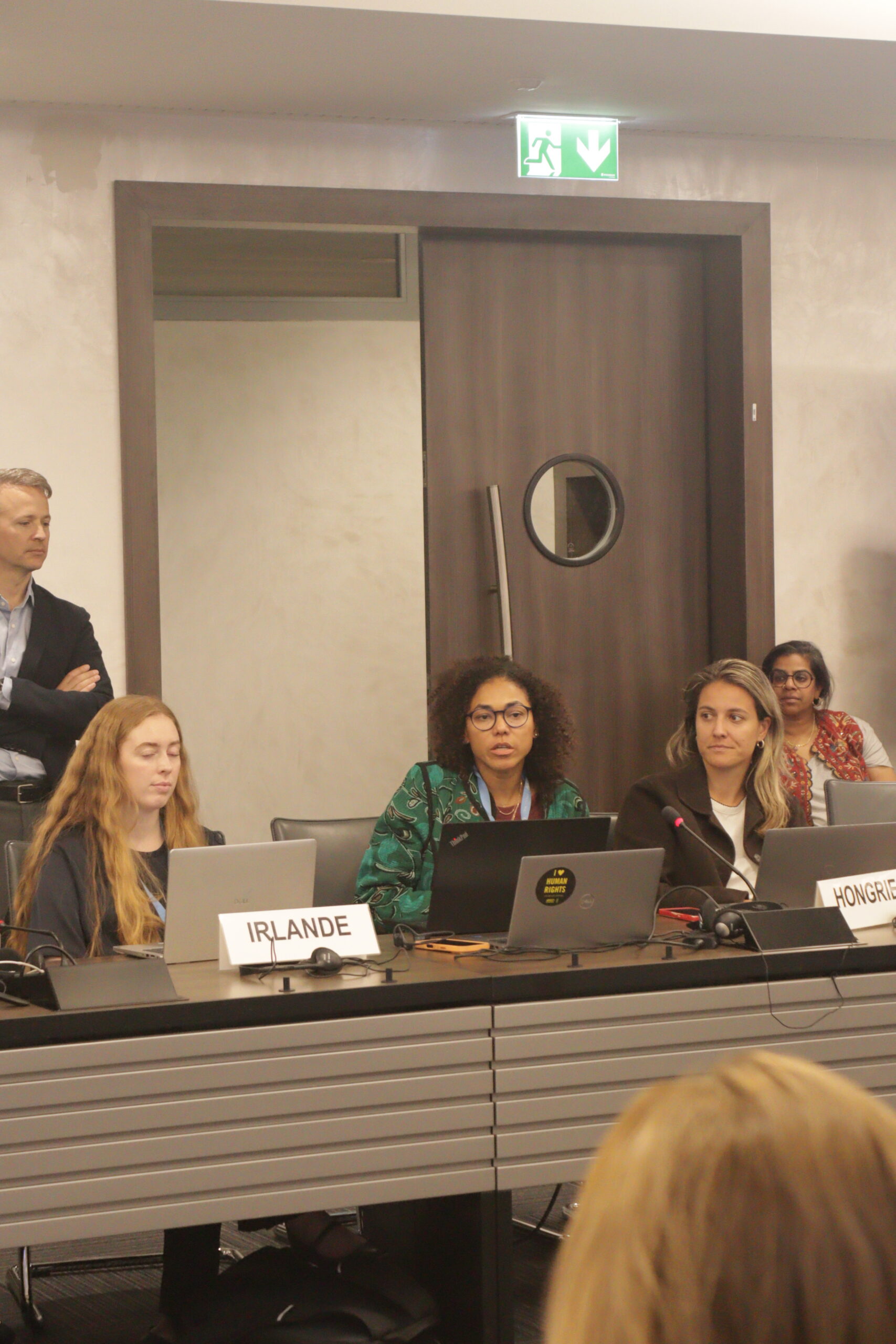
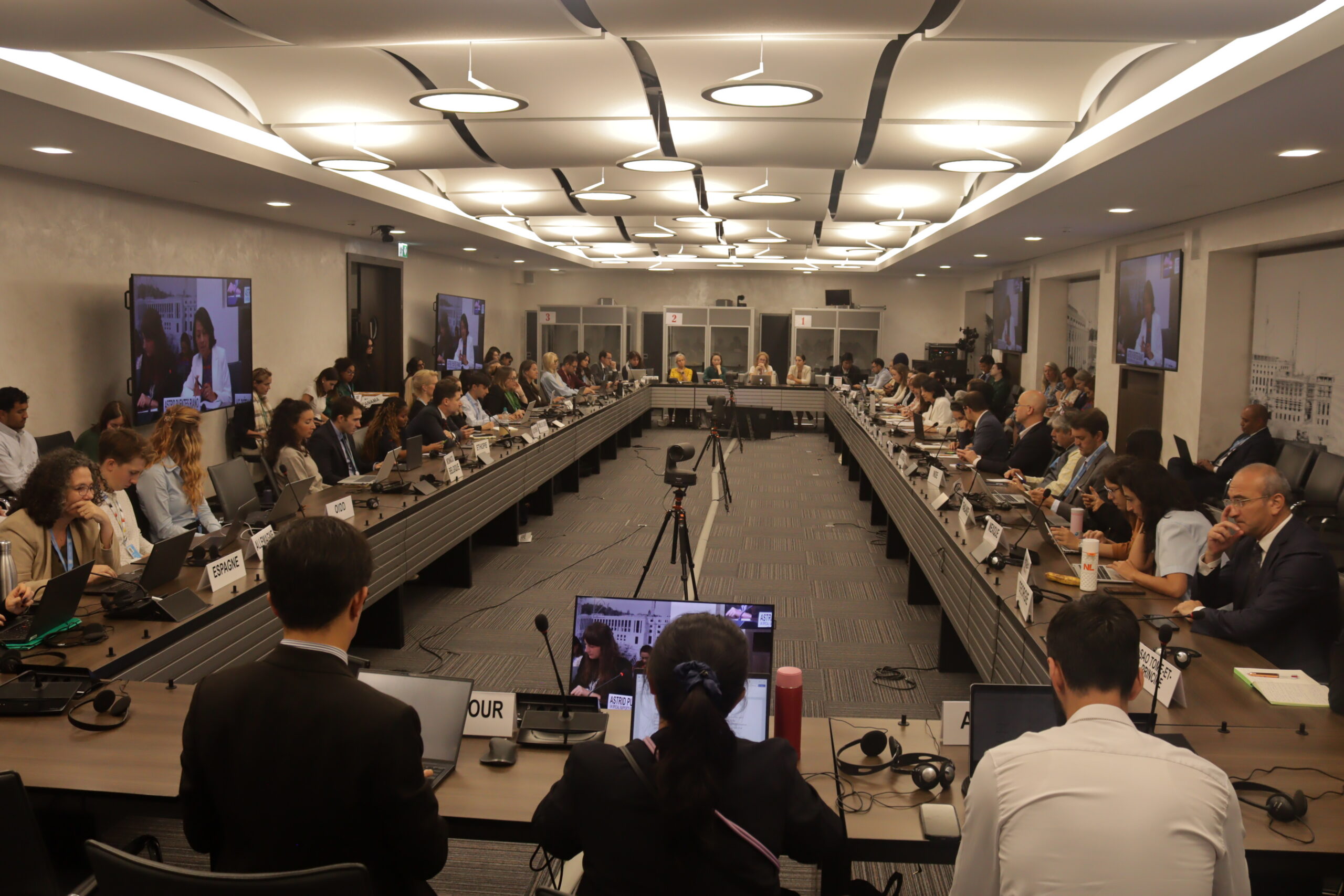
Photo Gallery
Photo Credits © UNEP Geneva Environment Network & Martha Djan, UNEP Disaster Risk Reduction at the Disasters and Conflicts Branch.