Event Conference
Briefing on the 2027 Meetings of the conferences of the Parties to the Basel, Rotterdam and Stockholm Conventions
05 Oct 2026
10:00 – 11:30
Venue: International Environment House I | Room 3 & Online | Webex
Organization: Basel, Rotterdam and Stockholm Conventions, Geneva Environment Network
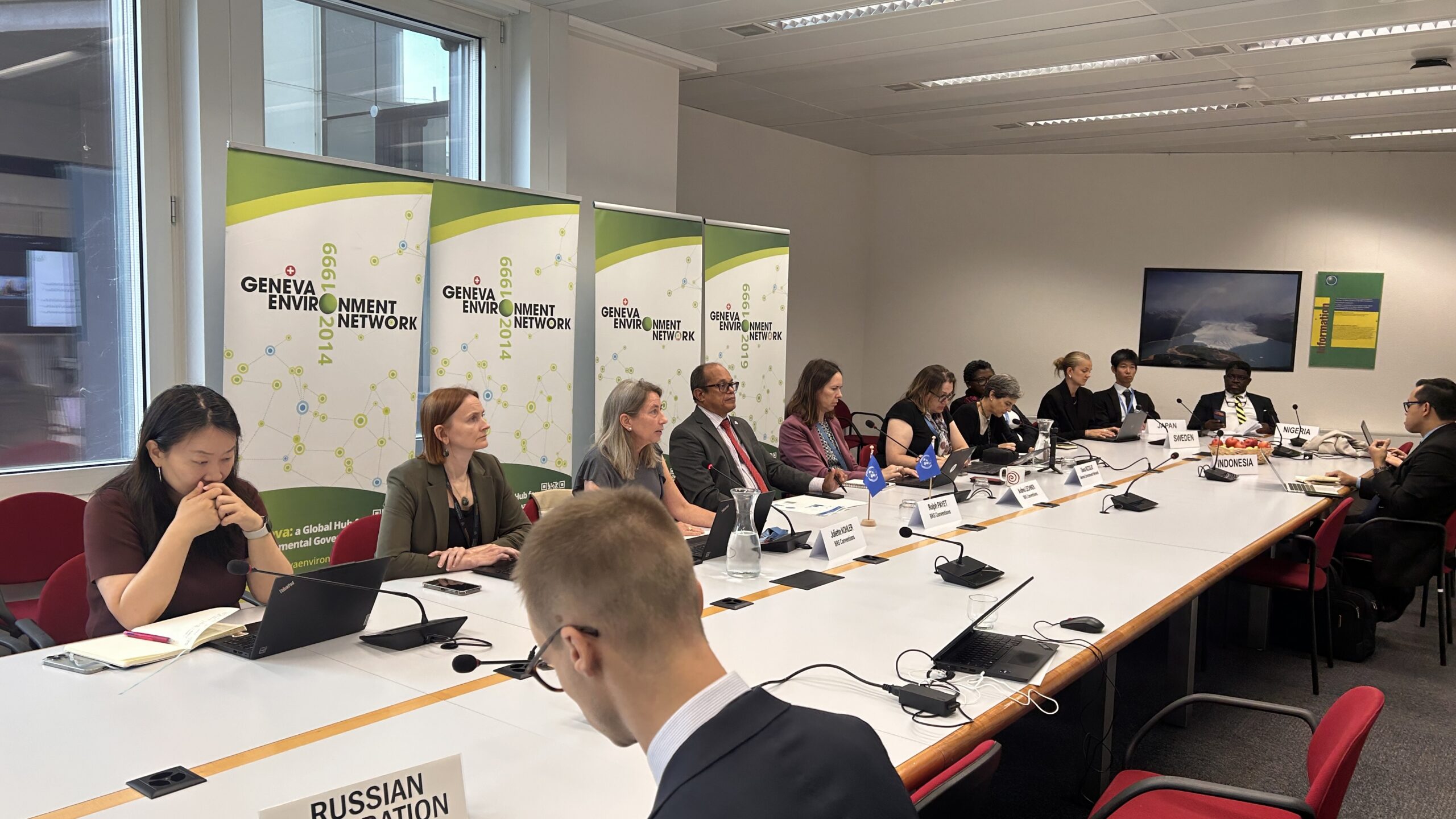
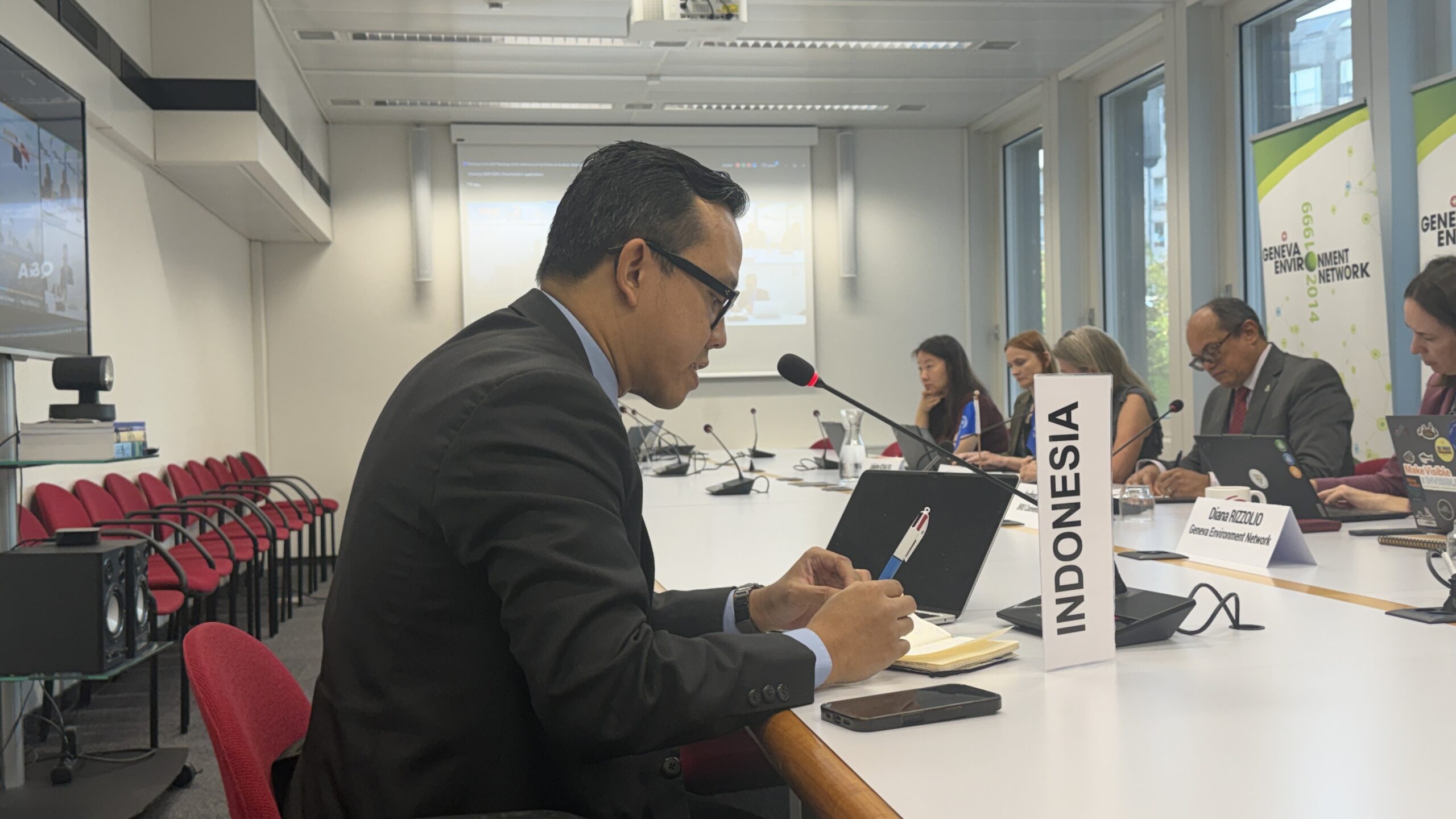
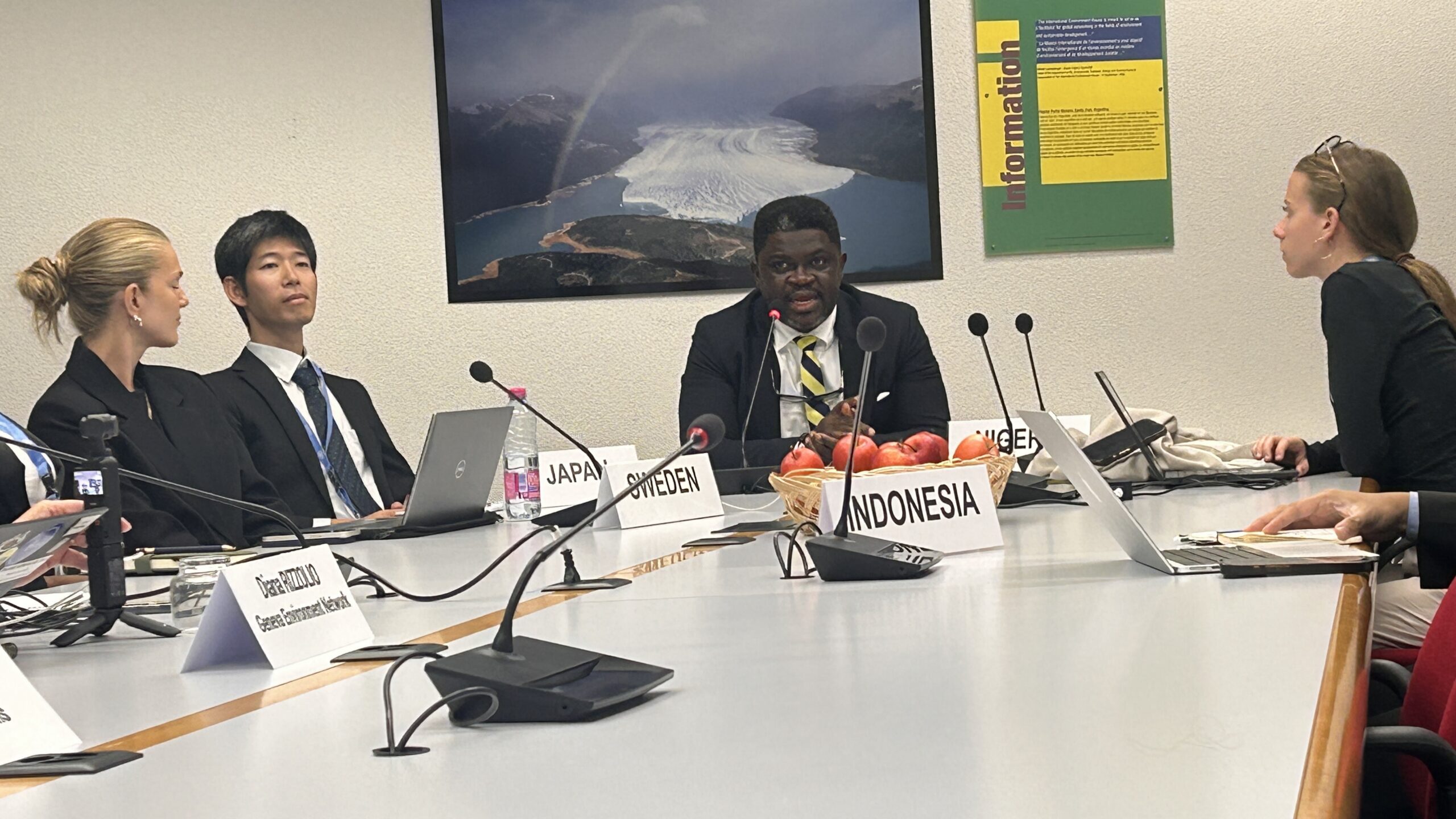
This briefing, organized within the framework of the Geneva Environment Network, launched a series of events organized in the run-up to the upcoming 2027 Meetings of the Conferences of the Parties to the Basel, Rotterdam and Stockholm Conventions (2027 BRS COPs) to be held in Panama, from 19 to 30 April 2027.

About this Event
The Parties to the Basel, Rotterdam and Stockholm Conventions meet every two years to advance multilateral action to protect human health and the environment from hazardous chemicals and wastes.
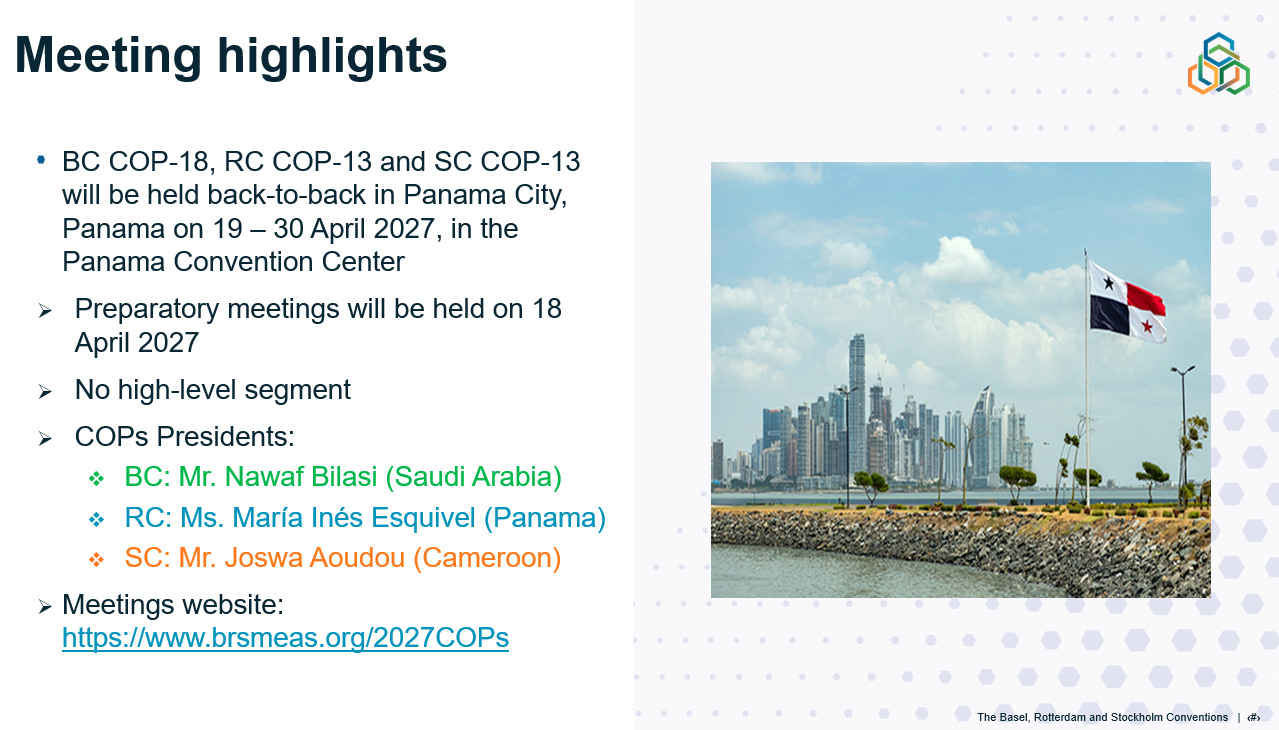
The eighteenth meeting of the Conference of the Parties to the Basel Convention (BC COP-18), the thirteenth meeting of the Conference of the Parties to the Rotterdam Convention (RC COP-13) and the thirteenth meeting of the Conference of the Parties to the Stockholm Convention (SC COP-13) will be held back-to-back at the Panama Convention Centre in Panama City from 19 to 30 April 2027. The meetings will not include a high-level segment. Preparatory meetings will be held on 18 April 2027.
This briefing, organized by the BRS Conventions Secretariat and the Geneva Environment Network, provided the latest information on the preparations for the 2027 BRS COPs.
Speakers
By order of intervention
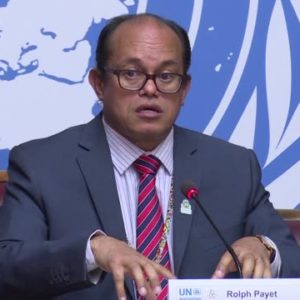
Rolph PAYET
Executive Secretary, Basel, Rotterdam and Stockholm Conventions

Andrea LECHNER
Head, Conference Services Unit, Governance Branch, Basel, Rotterdam and Stockholm Conventions

Juliette KOHLER
Chief, Governance Branch, Basel, Rotterdam and Stockholm Conventions
Highlights
Video
Summary
Opening Remarks
Rolph PAYET | Executive Secretary, Basel, Rotterdam and Stockholm Conventions
- Allow me at the outset to express my appreciation for your continued support for the work of the Basel, Rotterdam and Stockholm Conventions at a time when the international community is confronted with multiple and interconnected challenges, which include pollution, biodiversity loss, climate change, economic pressures and geopolitical uncertainty. The role of the multilateral environmental agreements has never been more important and relevant.
- The Basel, Rotterdam and Stockholm Conventions provide an essential framework for addressing hazardous chemicals and waste throughout their entire life cycle, protecting human health and the environment and also supporting sustainable development. Moreover, they constitute unique, global, legally binding platforms for international cooperation on pollution prevention and control.
- The last meetings of the Conferences of the Parties, in 2025, brought together more than 2,000 participants, including from parties, observers, international organizations, civil society and the private sector. As we move forward in the organization of the 2027 meetings, we see an even stronger commitment among parties in advancing the objectives of the three conventions and addressing emerging challenges related to chemicals and waste management, which, as you know, covers health, the environment, industry, agriculture, water and so on.
- Significant intersessional work has also been undertaken and is still underway across all three conventions.
- The Chemical Review Committee and the Persistent Organic Pollutants Review Committee concluded their meetings just last week, while the Open-ended Working Group and the Rotterdam Convention Compliance Committee completed their work in June.
- The Basel Convention Implementation and Compliance Committee and the Stockholm Convention Compliance Committee, both of which also had their respective meetings in June, will resume their work in October, including the final touches to their recommendations.
- Several expert and small intersessional working groups are also advancing technical, legal and policy discussions that will culminate in draft decisions for consideration by the Conferences of the Parties.
- From the secretariat side, preparations for the 2027 COPs are progressing very well. We have been working very closely with the host government on key organizational and logistical arrangements. These discussions have confirmed the strong commitment of the Government of Panama and the institutions there to deliver inclusive, efficient and successful meetings. Invitation letters were sent out last week and registration for the meetings is now open.
- Your support as representatives of permanent missions will be critical in helping ensure timely communication with the capitals, early nomination of delegates and effective participation in the meetings. Strong engagement from parties throughout the preparatory process will also contribute significantly to the success of the Conferences of the Parties to the Basel, Rotterdam and Stockholm Conventions.
- The 2027 COPs will also provide an important opportunity for parties to take stock of progress made under the conventions, address emerging policy, legal and technical issues, and focus on strengthening implementation and reinforcing international cooperation in tackling this important planetary crisis of pollution.
Outcomes of recent meetings relevant to the preparations of the 2027 COPs | Twenty-second meeting of the Chemical Review Committee (CRC-22)
Andrea LECHNER | Head, Conference Services Unit, Governance Branch, Basel, Rotterdam and Stockholm Conventions
- The Chemical Review Committee is the subsidiary body under the Rotterdam Convention that is tasked with recommending chemicals for inclusion in Annex III of the Convention, and there are actually two tracks on how chemicals come forward.
- The first is that whenever a party to the Rotterdam Convention takes a regulatory action to severely restrict or prohibit a chemical, it has to inform the Rotterdam Convention Secretariat of such action.
- The second is particularly for developing countries and countries with economies in transition are able to propose the inclusion of severely hazardous pesticide formulations under the Convention.
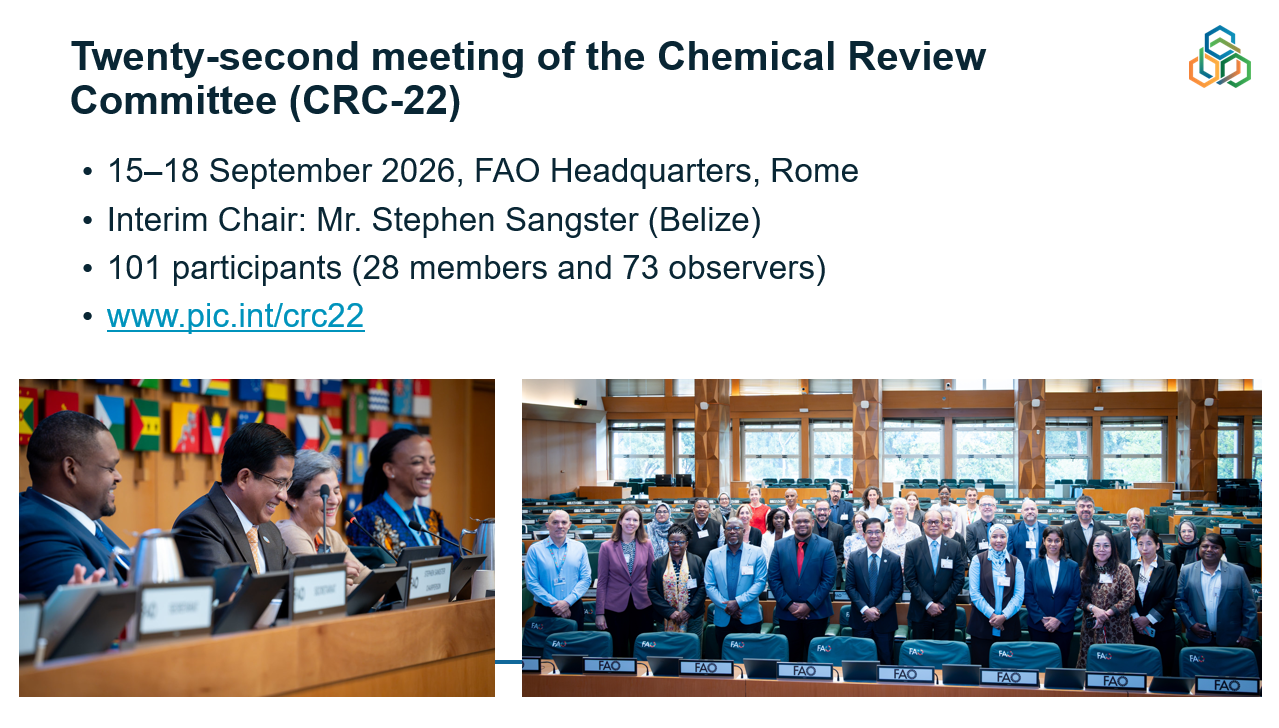
- The 22nd meeting took place from 15 to 18 September at the FAO headquarters in Rome, back-to-back with the POPs Review Committee meeting.
- The main outcome of the meeting is the finalization of the work on the review of methyl parathion. The review by the Chemical Review Committee takes place in two steps, and this chemical has now passed the second step, which is the development of a draft decision guidance document. Now the complete package, together with the recommendation for listing the chemical, can be forwarded to the COP. This chemical will be on the agenda of the upcoming COP 13. This chemical is already included in Annex III of the Rotterdam Convention as a severely hazardous pesticide formulation with a narrower scope, and now it has gone through the notification track. It is being recommended for listing as a pesticide with a broader scope, and the recommendation is that this listing would then replace the current SHPF listing.
- For lead chromates, the Chemical Review Committee went through the first step of the review process, so this one is not yet ready for consideration by the upcoming COP. The Committee reviewed notifications of final regulatory action, found that they meet the criteria of the Convention, and proceeded to recommend the inclusion of the chemical in Annex III to the Convention as an industrial chemical. But the draft decision guidance document has yet to be developed. So, at the earliest, this chemical would come for consideration at COP 14 in 2029.
- The CRC had quite a full agenda, reviewing a total of 28 notifications of final regulatory action. It was a bit of a clean-up meeting, in the sense that there were quite a number of notifications to review that the Bureau, in its preliminary review, had considered probably did not meet the criteria.
- Some of them had been postponed for a couple of years until now, and this time there was sufficient time to take them all up.
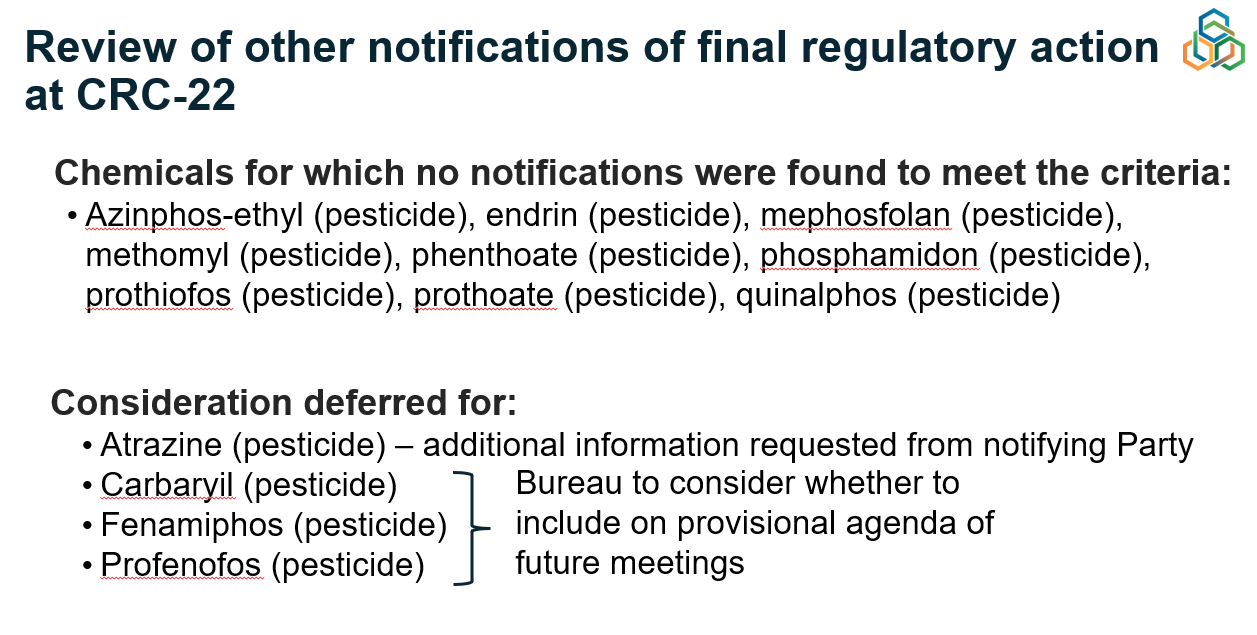
- There were also notifications for four other pesticides for which consideration was deferred, which means that the Committee could not reach agreement on whether they met the criteria or not.
- For atrazine, a notification from Uruguay, the Committee decided to ask the notifying party for additional information.
- For the other three, carbaryl, phenamiphos and profenofos, which have already been considered for a couple of years by the Committee, the Committee still could not reach agreement and decided to defer those considerations as well. However, the Bureau will consider whether to include them on the provisional agenda of future meetings, so that they do not necessarily come back for rediscussion at every meeting.
- The Committee also revised the human health and environmental incident report forms. Those are the forms used by countries to make proposals for listing severely hazardous pesticide formulations (SHPF). The Committee revised them because it had found, in the past, quite some difficulties in reviewing those proposals against the criteria of the Convention. The forms have now been revised to make the information the Committee needs for its evaluation available to it.
- The CRC also updated some sections of the Handbook of Working Procedures and Policy Guidance. This handbook gives guidance to the CRC on how to conduct its work. It also compiles past experience and practice to help the CRC ensure consistency in its work. Two sections were updated: the one on the collection of examples of how severely hazardous pesticide formulations were reviewed, and the one on guidance to intersessional task groups on reviewing notifications of final regulatory action. This is the guidance on how the intersessional work prior to a CRC meeting is undertaken.
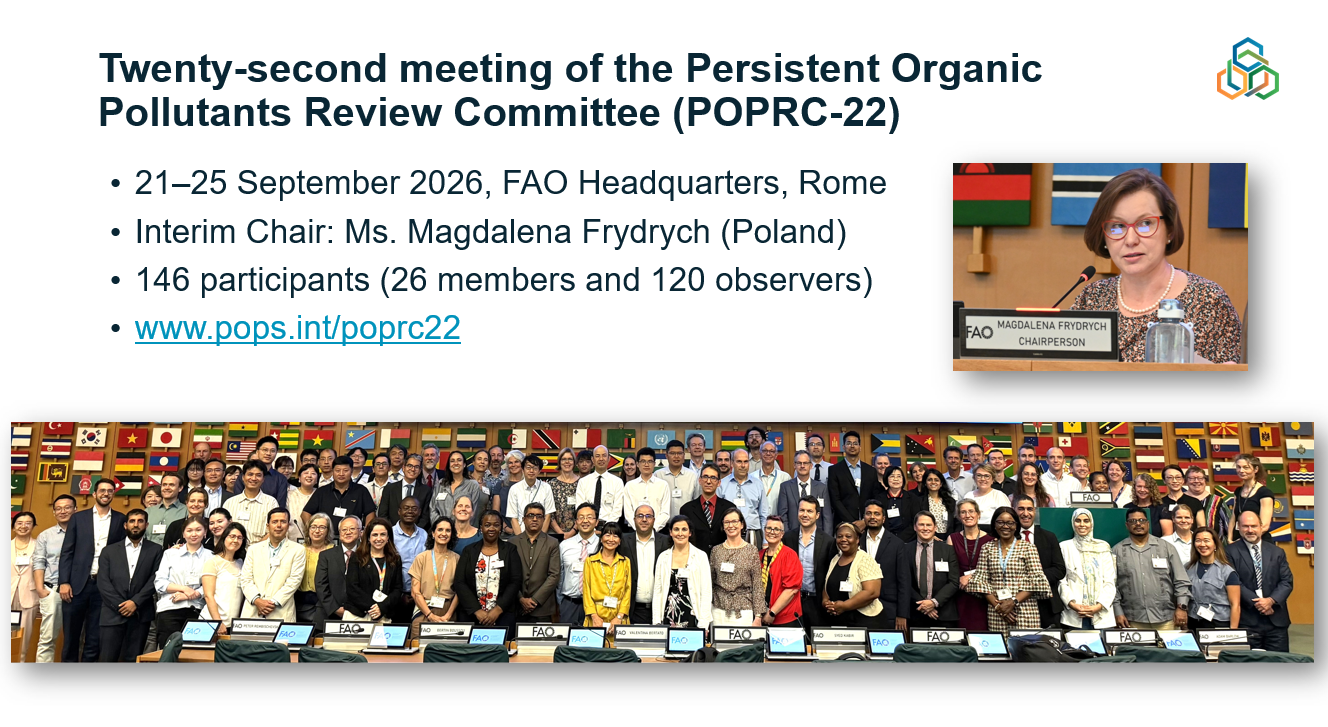
Outcomes of recent meetings relevant to the preparations of the 2027 COPs | Twenty-second meeting of the Persistent Organic Pollutants Review Committee (POPRC.22)
Juliette KOHLER | Chief, Governance Branch, Basel, Rotterdam and Stockholm Conventions
Main outcomes include:
- First, with regard to polybrominated dibenzo-p-dioxins and dibenzofurans (PBDD/Fs) and mixed polybrominated/chlorinated dibenzo-p-dioxins and dibenzofurans (PBCDD/Fs), the Committee decided that tetra- to octabrominated dibenzo-p-dioxins and dibenzofurans are likely, as a result of their long-range environmental transport, to lead to significant adverse human health and environmental effects, such that global action is warranted.
- The POPs Review Committee (POPRC) adopted the risk profile and invited parties and observers to submit, by 4 December 2026:
- Information on the socioeconomic aspects specified in Annex F, to support the preparation of the risk management evaluation, which is the next stage of the work under the POPRC.
- Further information relevant to mixed polybrominated/chlorinated dibenzo-p-dioxins and dibenzofurans, in view of the need for further study and the possible preparation of an addendum to the risk profile.
- Second, POPRC-22 evaluated two new proposals put forward by parties for listing in Annexes A, B and/or C to the Convention against the Annex D screening criteria. This is the first stage of the review.
- The first was a proposal by Norway concerning Decabromodiphenylethane (DBDPE) and its related substance, 1,1′-ethane-1,2-diylbisbenzene, brominated.
- The second was a proposal by the European Union concerning bis(2-ethylhexyl) tetrabromophthalate (TBPH), covering any of its individual isomers and/or combinations thereof.
- In relation to both, the POPRC was satisfied that the screening criteria had been fulfilled, for DBDPB and for TBPH. It invited parties and observers to submit, by 4 December, the information specified in Annex E, to support the preparation of the risk profile.
- The evaluation of the continued need for perfluorooctane sulfonic acid (PFOS), its salts and perfluorooctane sulfonyl fluoride (PFOSF) for the various acceptable purposes and specific exemptions.
- In general, the POPRC encouraged further phase-out and transition to safer, feasible alternatives.
- With regard to insect baits with sulfluramid as an active ingredient for the control of leaf-cutting ants, the POPRC concluded that there is a continued need, and there is a proposal to clarify the Annex entry and to consider further review at COP in 2029.
- With regard to hard metal plating, the POPRC recommends that the specific exemption no longer be available. With regard to firefighting foam for Class B fires, the POPRC recommends ending the specific exemption upon expiry of the existing registrations.
- For this reason, there will be a recommendation for amendments to Annex B to the Convention, to be considered by COP-13 under the agenda item on PFOS, its salts and PFOSF.
- Both the CRC and the POPRC, at their latest meetings, concluded with recommendations to amend the Rotterdam Convention and the Stockholm Convention, respectively.
Preparations for the 2027 Meetings of the Conferences of the Parties to the Basel, Rotterdam and Stockholm Conventions
Registration and credentials
- Invitations have been sent out on 30 September 2026.
- Parties have until Friday, 20 November 2026 to register for the meeting. The deadline for observers is Friday, 11 December 2026. Registration has to take place through the online registration system. It is the same system as in the past, but we have fine-tuned it to take into account that the meetings are taking place in Panama, and there is a new section with information on the visa process.
- At the time of registration, parties’ delegates will have to upload an official nomination letter. It has to be submitted by the Ministry of Foreign Affairs, or by an equally valid note verbale from the permanent mission, and uploaded at the time of registration. We mentioned in the invitation letter, in line with past practice, that parties are invited to consider nominating bureau members to their delegations, ensuring gender balance as well as continuity between their representatives who participate in the regional preparatory meetings and the COPs.
- Credentials, as per the rules of procedure, should be submitted to the Secretariat, if possible, no later than 24 hours after the opening of the meeting, which would be by 10:00 a.m. on Tuesday, 20 April 2027. We strongly encourage the submission of advance electronic copies to the Secretariat via email (slotte@un.org) by 1 April 2026.
- Parties are encouraged to bring the originals with them to the meeting venue in Panama. We want to minimize any issues of communication. If you bring them to Panama, we can receive them at the meeting venue, but if we receive them in advance, we can already start processing them and identify any need for correction.
- The format of the credentials, the Bureaus, at their individual meetings held earlier this year, agreed to follow past practice. Namely, they will accept originals in good order as well as copies in good order, with the understanding that the original will be submitted as soon as possible. You can access templates of credentials here.
Financial support
- Subject to the availability of funding, financial support will be provided for one representative per State per Convention to which the state is a party, up to a maximum of three representatives per state.
- This will be for the full two-week duration of the meetings, since all three meetings open on the first day and close on the last day.
- The BRS Conventions are still facing a gap in financial support, and we are working on closing it. We encourage donors to contribute; every contribution would help. At this time I want to thank, on behalf of the Secretariat, the Government of Switzerland and the Kingdom of the Netherlands for the contributions already received.
- The request for financial assistance must be confirmed in the official nomination letter or note verbale from the permanent mission, which has to be uploaded in the online registration system. This letter should indicate the order of priority, as funds may be limited. The deadline for requests from parties is Friday, 20 November 2026, the same as the deadline to register on the platform.
- There is a new UN debit card. We will provide you with a user guide, which we invite parties to review carefully so that they come ready to the meeting. This is a new system, which was already tested in 2026, but not with all representatives of parties.
- We will have extended hours for DSA distribution starting on Sunday 18 April 2026. This is a change in the organization of the meeting: already on Sunday, when delegates come to attend either the Bureau meetings or the regional preparatory meetings, which are customarily held the day before the meeting, we will be available to start DSA distribution.
Visas
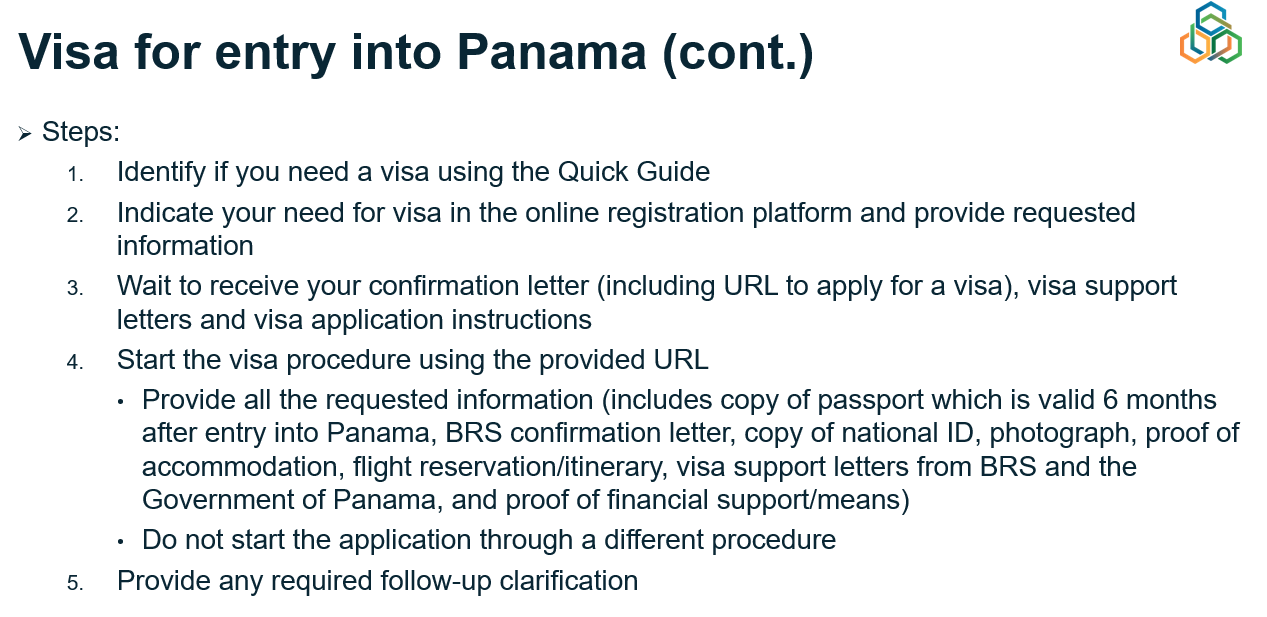
- Another new feature, as I mentioned, is the requirement for entry with a visa into Panama.
- We have attached to the invitation letter a quick guide for participants who may require a visa to enter the Republic of Panama, which was developed by the Government of Panama. It provides detailed information on who needs to apply for a visa and on the overall process.
- When representatives register in the online registration platform, they have to indicate their expected need for a visa and provide the preliminary information needed at that stage. Because of this new process, we strongly encourage early registration by parties, so that the process may be as smooth as possible on all sides.
- The visa process will be entirely electronic and free. The processing time itself is approximately 30 days, but of course it all depends on all the required information having been provided to the Government of Panama.
- There will be no possibility of a visa upon arrival. Please review this information carefully and take into account that you will need time to go through this new system, to make sure that you can meet all the requirements and that a visa is issued to all representatives wishing to attend the meeting.
Logistics and documents
- We will provide, as needed, some information on accommodation and transportation based on the information provided by the Government of Panama.
- We have also taken steps to green the COPs, and the meetings will be paperless.
- Meeting documents so far include the provisional agenda, which was attached to the invitation letter. The tentative schedule of the meetings is not yet finalized. First drafts were considered by the Bureaus at their first meetings, between May and July, and the Bureaus will meet jointly on 23 and 24 November in Geneva to finalize the tentative schedule, which will then be made available on the website.
- The budget documents will be the first ones posted, by 19 January 2027, 90 days before the COPs. For the other working documents, the deadline is 6 to 8 weeks before the COPs, so they will be posted by 19 February 2027. Here is the URL where you will find the meeting documents.
Elections
- There will, of course, be elections at the forthcoming meetings.
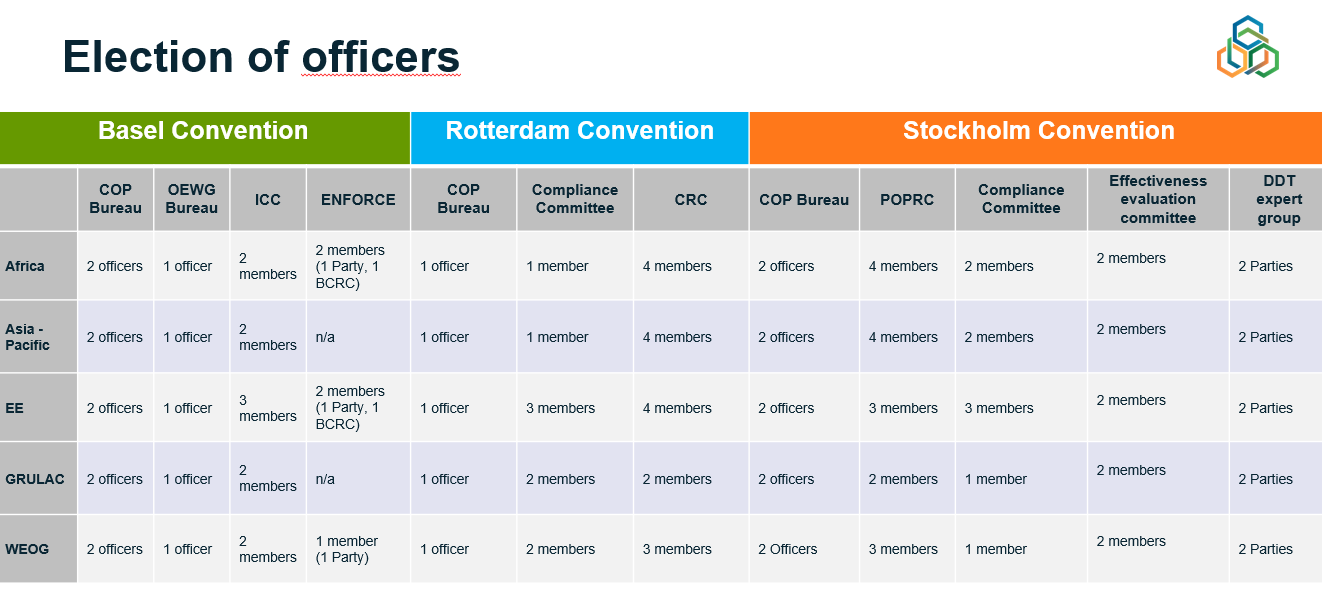
- We have already sent some information to the parties in a letter of 10 August 2026, inviting nominations by 1 December, along with the supporting documents: the conflict-of-interest forms for the CRC and the POPRC, CVs, etc.
- The selection of candidates will be facilitated, as in the past, through the regional election focal points appointed by each region.
- The names of the focal points were shared in the Executive Secretary’s letter of 10 August. With regard to the Eastern European region, since there is no representative in the Bureaus, the Bureaus agreed to entrust the Secretariat with facilitating the process of nominating candidates from that region for election.
- According to the financial rules, no representative of any party whose contributions are in arrears for two or more years shall be eligible to become a member of the Basel Convention Bureau or its subsidiary bodies, or a member of the Rotterdam or Stockholm Convention Bureau or its subsidiary bodies. Bear in mind that this does not apply to LDCs, SIDS and parties that are respecting a schedule of payment in relation to their arrears.
Theme, fair and side events
- The theme of the meetings is “Make visible the invisible”.
- There will also be a fair organized during the meetings, under the theme “From regional action to global impact”. It will raise awareness of the work of the three Conventions and their contributions towards addressing the crises of pollution, biodiversity loss and climate change, showing how evidence leads to action. The fair will take place from 21 to 23 April.
- Expressions of interest to book an exhibition booth should be sent no later than 8 January 2027. A dedicated online request form, as well as detailed information on the fair and exhibition booths, will be made available on the fair web page in late November 2026.
- We will provide an opportunity for parties, observers and other stakeholders to organize and participate in side events to exchange information, share experiences and discuss issues related to the implementation of the Conventions. In terms of milestones: in late November 2026, we will publish organizer guidance on our website and open the online application process.
- The deadline for submission of side-event requests will be 8 January 2027, and on 19 February you will be notified of the allocated slots.
- The current planning is that side events will be held during lunch breaks and in the evening time slots, with up to two side events in parallel at lunchtime and in the evening. The draft schedule will be published prior to the meetings.
Regional preparatory meetings
Overview of agenda items | Basel Convention COP-18 Main Issues:
Strategic issues
- Improving the PIC procedure
Scientific and technical matters
- Technical guidelines:
- POPs wastes, waste lead-acid batteries, other batteries, waste pneumatic tyres and e-wastes
- E-notifications
- Further consideration of plastic waste, incl. proposal to amend Annex IX entry B3011
- National reporting
- Used textiles and textile waste
Legal, governance and enforcement matters
- Further legal clarity:
- Recommendations on Annexes I and III
- Proposal by the Russian Federation to amend paragraph 2 of Article 6 of the Convention
- Implementation and Compliance Committee (specific submissions; general review; programme of work)
Basel Convention Partnership Programme
- Plastic Waste Partnership
- Partnership for Action on Challenges relating to E-waste
- ENFORCE
- Household waste partnership
Overview of agenda items | Rotterdam Convention COP-13 main issues
Listing of chemicals in Annex III to the Convention
- 1 new chemical: methyl-parathion as a pesticide (already listed as SHPF)
- 8 returning chemicals: acetochlor, chlorpyrifos, chrysotile asbestos, iprodione, mercury, methyl bromide, paraquat and paraquat formulations
Compliance
- Compliance Committee (specific submissions; general review; programme of work)
Enhancing the effectiveness of the Rotterdam Convention
- Follow-up to decision RC-12/5 on enhancing the effectiveness of the Rotterdam Convention
- Proposal by African countries to amend Article 16 of the Rotterdam Convention
Overview of agenda items | Stockholm Convention COP-13 main issues
Reduce or eliminate release from intentional production and use (implementation of Article 3)
- Exemptions
- DDT
- Polychlorinated biphenyls
- PFOS, its salts and PFOSF
Implementation plans
Financial mechanism
- Changes to the TOR of the 7th review
Reporting
- Further updates to electronic reporting system
Effectiveness evaluation
Compliance (questions of compliance; systemic issues; programme of work)
Regional centers
- Nomination of a new host institution for SCRC Mexico
- Nomination of a host institution for SCRC Kazakhstan
Joint issues
- Recurring joint issues include technical assistance and the regional centres.
- A draft resource mobilization strategy from non-state actors for the African and Latin American and Caribbean regions, which is a new topic.
- There are also the programme of work and budgets for the next biennium, and returning items on international cooperation and coordination, again regarding enhanced cooperation and coordination among the BRS Conventions.
- These are the usual topics: synergies; preventing and combating illegal traffic and trade; the clearing-house mechanism; from science to action; and mainstreaming gender.
- Additional briefings will be organized in February and March 2027 on the organization of work, on the substantive issues on the agenda, and on logistics.
Q&A
Representative from Nigeria
- I wanted to get clarity on the issue of registration and visas.
- We also want to know whether the Mission of Panama here could issue visas for people travelling from the missions here.
- We also want to understand the part where it was mentioned that some documentation will need to be uploaded on the website, in the case of people in capital.
BRS Secretariat
- The first thing we provided you with is the visa guide, where you will first see whether your representatives will need a visa, and follow-up information will come on what is required.
- There is only one way to register, and that is through the online visa application link, which will be provided to those who receive a BRS confirmation letter. So there is only one track.
- The Permanent Mission here in Geneva is not responsible for this, and it applies only to meeting participants whose participation has been confirmed.
- The first step is to get your nomination letter identifying who will represent Nigeria.
- This then comes to us through the online registration system, where you will have identified whether you need a visa.
- The third step is when you receive the BRS confirmation letter, which contains the link to register and apply for a visa.
- It is a linear process, which we hope is clear. If you have questions in the process, of course you can come to the Secretariat and we will assist as we can.
- We will be organizing a webinar shortly with all the delegations.
- As you know, many countries don’t have an in-country mission, so they sometimes have to post their passport or take a plane.
- This online visa application process is meant to simplify the application. That said, if your ambassador, for example, wishes to visit Panama, he can still use the normal visa application process.
- But to attend this meeting, it is better to use the portal that has been set up, because it helps to speed up and facilitate the issuance of visas for countries that require visas to go to Panama.
- It is also important that countries do this early, because transit visas may be required.
- Getting to Panama, participants will probably need to transit via Europe, the US or other countries, so they need to keep in mind that they may have to apply for transit visas or airport transit visas. That is why we are encouraging participants to register and start the process very early, and why we have started this process from our side very early.
Representative from the Russian Federation
- Approximately when are you planning to publish all the main documents, the annotated agendas, and will they be in all the languages?
Secretariat
- For the provisional agenda, the skeleton is already published and was sent with the invitation letters.
- The working documents will be published by 19 February.
- The only documents that will come before that are the budget documents, that is, the programme of work and budget, which will be published by 19 January, since they have to be out 90 days before the COPs.
- The other thing that can come earlier is, of course, the tentative schedule, because it will be finalized at the joint Bureau meetings, before the end of the year. We will bring this to the attention of the parties, because we know it also helps with planning attendance at the meetings.
Representative from Indonesia
- Is there any cap on the total number of delegates attending the COPs?
- Can the Secretariat explain more about the format of the preparatory meeting and what is going to be discussed in it?
Secretariat
- On financial support, our goal is that up to three representatives would be funded for parties to the three conventions. So it is not nine; it is up to three, one per convention. That is our goal, in line with past practice.
- As for a cap, there is none as such. We have the chance of having a very comfortable convention center, and we are of course planning along the lines of past participation in our COPs, a maximum of around 2,000 participants.
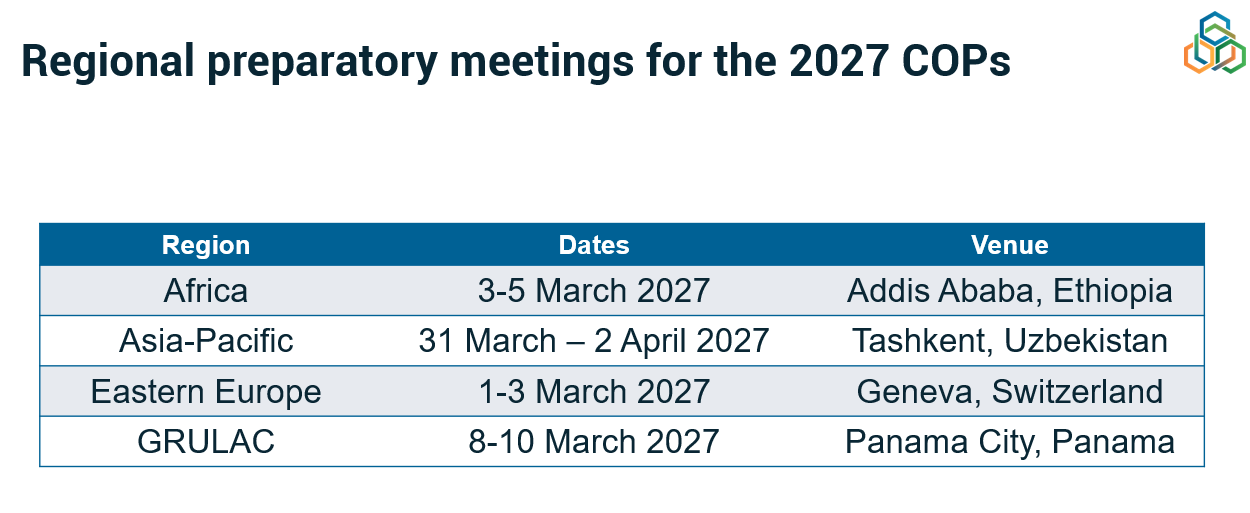
- For the RPMs, they will take place face-to-face, as is the practice. The agenda for each RPM is prepared in consultation with the members of the Bureau from the region. The goal is to prepare the delegations and to give them an opportunity to exchange their positions with each other. It usually covers the whole of the provisional agendas for the three meetings. Another important space usually carved out during the RPM is for the region to discuss candidates for election. It is a good opportunity for the region to discuss this. We know it can be time-consuming, and when delegations arrive at the meeting itself, it can be a distraction from their work. So we hope all parties will take advantage of the RPMs not only to look at the substance of the matters but also to try to identify their candidates for election. It fully covers the breadth of the COPs.
- Just to add on the financial support: as you know, the Secretariat does its best to raise the resources to ensure that countries are represented at our COPs, and that is why we say “up to three.” If we do get the financing, we will finance all three, one from each convention. If we don’t, we will have to go to two, and if we still don’t, we will have to go to one. It is important to keep that in mind.
- At the regional preparatory meetings, the Secretariat is there to present and go into detail on some of the documents, but at the end of the day it is the regions themselves who decide. Some have closed sessions, some have open sessions, and some come up with a regional position on different items. It is really a working time for delegations to prepare for the COPs, so that when it comes to the COPs, we have much more effective negotiations on the different important areas that need to be negotiated.
Representative from Colombia
Is Norway’s proposal a new proposal, or is it related to what we discussed during the Basel Convention OEWG-15 in June 2026?
Secretariat
Indeed, it is related to what was put forward as an application at the time at OEWG-15. Now it is a formal proposal to amend the Convention and the entry on plastic waste in Annex IX.
Question
- For side events, what could be the mechanism to send requests to participate, or can we make proposals?
- Will the regional preparatory meetings be hybrid or in person?
Secretariat
- For the side events, an email address will be provided in due course where requests should be submitted.
- For the RPMs, the format at this time is face-to-face.
- As you know, with side events, if we get too many, we may come back to organizers to ask them to organize them jointly, or to join a group of others with similar topics and coordinate the side events together, noting that we have limited space and time in the calendar for side events.
Question:
Are organizations listed as observers eligible for funding or sponsorship?
Secretariat
Observers are not eligible for sponsorship.
Question
Could you please clarify to which email address letters regarding financial support for participation should be addressed?
Secretariat
The nomination letters have to be uploaded in the online registration system, so there is no email address per se. It has to be done through the online registration system.
Rolph Payet (Executive Secretary)
We have a website, and there is a link there where you can upload your registration. That link is in the letter that has been sent out.
Question
Have all the invitations already been sent to the missions in Geneva?
Secretariat
Yes, on 30 September. If you have not received it, just call us or send us an email and we will find out where it went.
Photo Gallery