
Event Conference
Briefing on the Preparations for the First Plenary Session of the Intergovernmental Science-Policy Panel on Chemicals, Waste and Pollution | Road to ISP-CWP P1
14 Jan 2026
14:00 – 15:30
Venue: International Environment House I & Online | Webex
Organization: Intergovernmental Science-Policy Panel on Chemicals, Waste and Pollution, Geneva Environment Network
This event is part of the series of events organized in preparation of the first session of the Plenary of the Intergovernmental Science-Policy Panel on Chemicals, Waste and Pollution, to take place in Geneva in February 2026.

About this Event
The Intergovernmental Science-Policy Panel on Chemicals, Waste and Pollution (ISP-CWP) is a new independent, intergovernmental body that was established in Punta del Este, Uruguay, on 20 June 2025, to strengthen the science-policy interface to contribute to the sound management of chemicals and waste and pollution prevention. As global challenges related to chemicals, waste, and pollution grow more urgent, the need for effective, evidence-based policymaking has never been greater. The ISP-CWP aims to bridge science and policy by assessing and sharing scientific knowledge and information, identifying evidence-based actionable policy options, and catalysing solutions through a strengthened science-policy interface.
This pre-session briefing provided information to help participants prepare for the first session of the Plenary of the Intergovernmental Science-Policy Panel on Chemicals, Waste and Pollution (ISP-CWP P1), taking place in Geneva from 2 to 6 February 2026.
In addition to outlining the session’s structure, schedule, and participation modalities, the event introduced the documents prepared for the session, including a scenario note. The event also featured stakeholder perspectives on the Panel’s establishment as participants prepare to gather in Geneva for the inaugural session of the Panel’s governing and decision-making body.
Road to the First ISP-CWP Plenary Session
To support Members, governments and other stakeholders in their preparations for the first session of the Plenary of the Intergovernmental Science-Policy Panel on Chemicals, Waste and Pollution (ISP-CWP P1), the ISP-CWP Secretariat, in collaboration with the Geneva Environment Network, organized the “Road to the First ISP-CWP Plenary Session” series of events. The series was designed to provide essential information about the first Plenary session, address key questions, and foster dialogue to ensure inclusive and informed participation.
Speakers
By order of intervention.
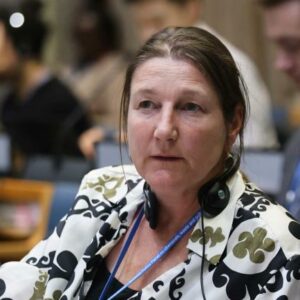
Tessa GOVERSE
Head, Interim ISP-CWP Secretariat, UNEP | Co-Moderator

Nalini SHARMA
Interim ISP-CWP Secretariat, UNEP
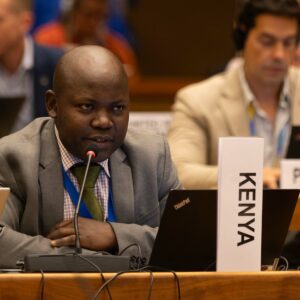
Tobias OTIENO OGWENO
Deputy Director/Head Environment and Climate Change Division, Ministry of Foreign and Diaspora Affairs, Kenya

Michel TSCHIRREN
Head, Global Affairs Section, Federal Office for the Environment, Switzerland

Richard MIESEN
Interim ISP-CWP Secretariat, UNEP

Kaai Tung CHAN
Interim ISP-CWP Secretariat, UNEP
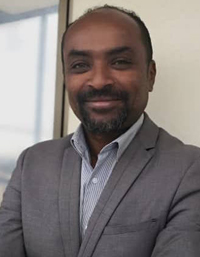
Wondwossen SINTAYEHU
Technical Coordinator, SouthSouthNorth
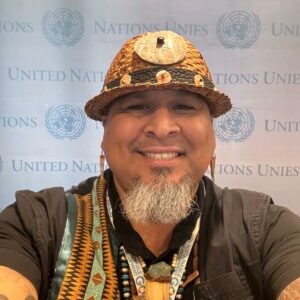
Frankie ORONA
Executive Director, Society of Native Nations

Sherika WHITELOCKE-BALLINGSINGH
Poison Information Coordinator, Caribbean Poison Information Network (CARPIN), University of Technology, Jamaica
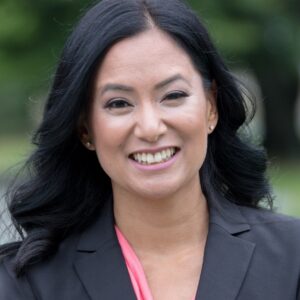
Virunya BHAT
Technical Officer, Chemicals, Radiation and Health Unit, Department of Environment, Climate Change, One Health and Migration, WHO

Gudi ALKEMADE
Former Chair, Bureau of the Ad Hoc Open-Ended Working Group on a Science-Policy Panel to Contribute Further to the Sound Management of Chemicals and Waste and to Prevent Pollution
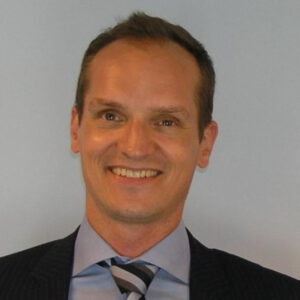
Jonas PASQUIER
Minister, Global Affairs, Permanent Mission of Switzerland to the UN Office and other international organizations in Geneva
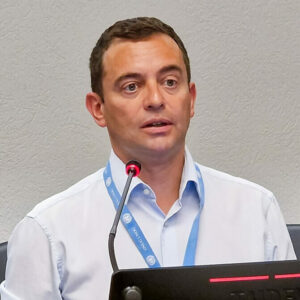
Ludovic BERNAUDAT
OiC, Chemicals and Health Branch, UNEP | Co-Moderator
Highlights
Summary
Opening Remarks
Tessa GOVERSE | Head, Interim ISP-CWP Secretariat, UNEP
- The first plenary of the ISP-CWP will take place in Geneva from 2 to 6 February and constitutes a milestone moment, as it is the first time the governing and decision-making body of the panel will come together since the panel’s establishment in Punta del Este, Uruguay, on 20 June 2025.
- At that meeting, governments adopted the foundational document and established the panel with the objective of strengthening the science-policy interface in order to contribute to the sound management of chemicals and waste and the prevention of pollution.
- The panel’s core functions include conducting assessments, alongside horizon scanning, information provision and sharing, and the integration of capacity building into all functions and work of the panel.
- The panel is an independent intergovernmental body, with scientific independence, credibility, legitimacy, transparency and inclusivity embedded in the principles and approaches guiding its work.
- Membership of the panel currently stands at 122 countries and is still growing.
- The agenda for the first plenary is substantial, making focus and prioritization essential. The key task ahead is to operationalize the ISP-CWP so that it can start its important work, and in that sense the first plenary can be considered as an “enabling plenary”. The foundational document that was agreed and adopted in June provides an essential underpinning an guidance for doing so.
- A main priority for the upcoming plenary session is the finalize the rules of procedure. These are essential for the panel’s operations.
- Today’s webinar has two main parts:
- In the first part, colleagues from the interim secretariat will provide an update on the preparations for the ISP-CWP first plenary, followed by a question-and-answer session.
- The second part will turn to the panel of stakeholders who will provide brief reflections on the panel’s establishment.
Updates on Preparations for the First Plenary Session of the ISP-CWP
Nalini SHARMA | Interim ISP-CWP Secretariat, UNEP
The first session of the plenary will be held fully in person at the International Conference Centre in Geneva from Monday 2 February to Friday 6 February 2026 and will be hosted by the Government of Switzerland. → Access all pre-session documents.


1. Opening of the Session
- The session will open at 10:00 a.m. on Monday 2 February 2026.
- Opening statements by representatives of members of the panel and observers are expected under this agenda item. To facilitate efficient conduct of the session, statements may be delivered on behalf of regional and political groups and groups of observers.
- Individual members and observers are invited to submit general statements in writing to the interim secretariat, which will be made available as in-session documents on the session website.
2. Organizational Matters
- The provisional agenda for the first session of the plenary is contained in document 1, with an annotated provisional agenda provided in document 1/AD1.
- Pending the formal consideration and adoption of the panel’s own rules of procedure, the rules of procedure of the United Nations Environment Assembly will apply mutatis mutandis to the work of the first session of the plenary.
- Following adoption of the agenda, members may want to consider the scenario note prepared by the secretariat for the first session, contained in document 1, to agree on the organization of work.
- The scenario note was prepared in response to requests made during consultations with member states held on 28 October 2025 and sets out proposed modalities, organization of work, and general expectations for possible outcomes.
- Under this agenda item, the secretariat will report on the status of membership of the panel, with updated information available on the panel’s website.
- The plenary is expected to elect the officers of the bureau of the panel.
- In accordance with the foundational document, the bureau will be comprised of two members from each of the five United Nations regional groups, including one chair and nine vice-chairs, one of whom will act as rapporteur.
- Members of the bureau are selected on the basis of expertise relevant to the functions of the bureau. Document M/2 summarizes nominations of candidates for the bureau received by the deadline of 28 November 2025.
3. Modalities
- Contact groups and informal groups may be established as necessary, with clear and concise mandates.
- It is expected that two contact groups will be established for the first session of the plenary, unless otherwise decided by the chair or contact group co-facilitators.
- Contact groups will be open to participation by all members and observers under agenda items on the report on activities of the interim secretariat, operational arrangements for the panel, and financial and budgetary arrangements.
- The panel may wish to hold discussions following brief presentations of relevant meeting documents by the interim secretariat, after which members, followed by observers, will be invited to provide their views.
- Simultaneous interpretation into the six UN languages will be provided for plenary meetings and contact groups, while informal groups will be held in English only.
- Annex 2 of the scenario note includes a tentative schedule and organization of work for the first session of the plenary, which is indicative and subject to adjustment based on progress and guidance from the bureau in consultation with co-facilitators.
- On Monday 2 February, the plenary will convene from 10:00 a.m. to 1:00 p.m. and from 3:00 p.m. to 6:00 p.m.
- Most agenda items are expected to be opened on the first day, and mandates for contact groups are expected to be agreed so they can begin work on Monday evening.
- A stock-taking plenary is foreseen for Wednesday afternoon from 3:00 p.m. to 6:00 p.m.
- Outcomes from contact groups will be submitted as conference room papers for consideration by the plenary, allowing for translation into all six UN languages and adoption by Friday 6 February.
- Conference room papers will need to be submitted to the secretariat by 6:00 p.m. on Wednesday 4 February.
- On Friday, the plenary will convene from 10:00 a.m. to 1:00 p.m. and from 3:00 p.m. to 6:00 p.m. to conclude outstanding agenda items, including adoption of decisions, agreement on the date and venue of the next session of the plenary, and adoption of the draft report of the session.
4. Credentials of Representatives
- Under agenda item three, the plenary will consider and approve the report of the bureau on credentials of representatives in attendance.
- Original hard copies of credentials and related communications should be delivered to the interim secretariat at the registration desk at the venue if not already submitted to UNEP’s Law Division in Nairobi.
- On Monday, the interim secretariat will present its report on activities undertaken between the intergovernmental meeting and the first session of the plenary, contained in document 2.
- At the intergovernmental meeting held on 20 June 2025 in Punta del Este, decision IM/2 was adopted transmitting draft rules of procedure and policies to the first session of the plenary for consideration.
- Under sub-agenda item 5B, the plenary is expected to prioritize the finalization and adoption of the rules of procedure for the plenary.
- The plenary will also consider other draft procedures and policies transmitted by the intergovernmental meeting.
- If insufficient time is available to conclude work on all draft procedures and policies, members may explore options for intersessional consideration with a view to finalization and possible adoption at the second session of the plenary.
- Under the foundational document, the plenary at its first session will secure secretariat services provided by UNEP, with the secretariat to be hosted in a single location selected on the basis of proposals submitted by members.
- Offers received by the deadline are compiled in document IMP/3.
Presentation of Offer to Provide the Physical Location of the Secretariat of the Panel
Tobias OTIENO OGWENO | Head, Environment and Climate Change, State Department for Foreign Affairs, Kenya
- Kenya submitted a bid to host the physical secretariat of the ISP-CWP, to be based at the headquarters of the United Nations Environment Programme (UNEP) in Nairobi.
- As communicated in the letter of intent, the bid enjoys unanimous endorsement and support from the African Ministerial Conference on the Environment.
- The bid aims to streamline the current global environmental governance landscape, which is highly fragmented, resulting in duplication, policy incoherence, and high costs of doing business, especially at a time when the United Nations is facing budgetary constraints.
- The bid also aligns with UNEP’s role and mandate as the leading global environmental authority, including setting the global environmental agenda and promoting a strong science-policy interface for evidence-based decision-making.
- Paragraph 88 of the Pact for the Future outcome document lends further support for this bid, which calls on Member States to progressively consolidate UNEP headquarters functions in Nairobi and to promote a strong science-policy interface. UNEP currently serves as the secretariat of the United Nations Environment Assembly (UNEA), the highest decision-making platform on environmental matters, as well as of 15 multilateral environmental agreements.
- During the last intergovernmental meeting in Punta del Este, member states also entrusted UNEP to be the interim secretariat of the science-policy panel, reinforcing the rationale for locating the permanent secretariat there.
- UNEP has the legitimate convening power over all relevant actors on chemicals and waste within the United Nations system, which will enhance synergies and holistic approaches to the science-policy interface.
- UNEP’s role as chair of the Environmental Management Group positions it to bring together actors across social and economic sectors. Its well-established infrastructure, scientific expertise dating back to 1972, and strong network of divisions, regional offices, and external UN partners whose contributions will enrich the complex work of this panel.
- Kenya has unique strategic advantages. Kenya has a stable economy and a vibrant democracy. The city of Nairobi is very competitive in terms of its favorable all year round climate and comparatively high standards of living at a fairly affordable cost.
- Nairobi is a hub already with 102 foreign diplomatic missions, 35 consulates, 70 UN agencies, funds and programmes, and 110 other international organizations, creating a vibrant ecosystem for research, collaboration, synergies, and cross-pollination of ideas.
- Kenya also has a robust digital and technical ecosystem and being a leading developing country in green growth and development.
- Kenya has not committed financial contributions in support of the bid, due to legitimate concerns surrounding such approaches for international organizations domiciled within the UN system. There are concerns regarding fiscal responsibility, fairness, and the potential damage to the UN’s perceived neutrality. For example, bids influenced by financial endorsements could undermine the UN’s image of partiality.
- Decisions on the location should be made purely on operational needs, efficiency, or merit rather than being transaction.
- Financial inducement may also disadvantage countries that do not have the same financial wherewithal which therefore creates an uneven playing field and potentially leading to a concentration of the UN presence in richer countries.
- Kenya is also concerned about establishing dangerous precedents that could encourage other international organizations to demand similar approaches in creating or locating organizations.
Michel TSCHIRREN | Head, Global Affairs Section, Federal Office for the Environment, Switzerland
- From Switzerland’s point of view, to fulfil its mandate, the new panel requires a well-connected and well-funded secretariat embedded in key global governance clusters.
- The funding for the secretariat is particularly important because the funding for the new panel is purely voluntary funding.
- Geneva offers these conditions, providing access to expertise, institutions, and networks across environment, and especially in the fields of chemicals, waste, and pollution, as well as health and trade.
- The city’s established ecosystem enables scientific collaboration, communication and outreach in a well-established multilateral setting.
- Geneva is the heart of the global governance cluster on chemicals and waste. The Basel, Rotterdam and Stockholm Conventions Secretariat is located in Geneva, as well as the Minamata Convention Secretariat, the Secretariat of the Global Framework on Chemicals, as well as UNEP’s Chemicals and Health Branch, WHO, ILO and WTO.
- 40 other international organizations and 400 NGOs are based in Geneva, and this geographic concentration fosters close collaboration between international instruments and agencies, and this ensures efficiency, coherence, synergies, and cost effectiveness.
- Many of these actors are co-located in the International Environment House, which combined different kinds of expertise – technical, scientific, political, logistical, communication and is therefore a ready-made support system for the ISP-CWP Secretariat in Geneva.
- There are also other well-established, important actors when it comes to science-policy interfaces such as the IPCC. Therefore, this environment provides a very strong enabling home for the success of the new panel.
- Two elements are very important for the new panel:
- 1) Ensuring that expertise contributing to the panel’s work comes from all regions of the world.
- 2) Integrating capacity building as a core component across all functions and activities of the panel.
- By locating the secretariat of the panel in Geneva, Switzerland is very committed to ensuring to achieve these two aspects and ensure inclusiveness in the panel’s work.
- Geneva hosts permanent representations from 185 UN Member States, enabling regular contact with the secretariat and direct participation in meetings. Geneva is also home to hundreds of NGOs that would be involved and connected to member states.
- Switzerland commits to providing financial support for capacity building and other initial activities of the panel, and it has already begun this engagement by funding a UNITAR-implemented project to support ISP national focal points in establishing national science networks.
- Switzerland with its offer stands ready to assist the establishment of the secretariat in Geneva financially, administratively, and logistically.
- The offer comprises of the following important elements:
- An annual contribution of 500,000 Swiss francs to the ISP secretariat
- An initial contribution of 1 million Swiss francs towards initial activities such as capacity building
- The provision of adequate office space within the International Environment House with an annual contribution of 50,000 Swiss francs
- An initial contribution of 10,000 Swiss francs per staff member to furnish and equip the secretariat,
- Free rental of the Geneva International Conference Centre premises for panel meetings.
Continuation of Updates
Nalini SHARMA | Interim ISP-CWP Secretariat, UNEP
Operational arrangements for the panel
5(a) Consideration of the physical location of the Panel secretariat
- The offers to host the secretariat are compiled in document IM/3 and delegates are invited to review them carefully
5(b) Rules, procedures and policies transmitted by the intergovernmental meeting
- Finalization and adoption of the draft rules of procedure is expected to be one of the key priority outcomes of the first session of the plenary. At the intergovernmental meeting, the plenary was recommended to consider and possibly adopt the draft rules of procedure set out in annex I to decision IM/2. These draft rules have been reproduced in document 3 for the first session of the plenary.
- In preparation for the plenary’s consideration, the secretariat made limited editorial adjustments to the draft rules to reflect the name of the panel and to refer consistently to the governing body as the plenary.
- The draft rules of procedure reflect negotiations undertaken alongside the negotiations on the foundational document. Rules 35, 36 and 49 were agreed and are therefore not bracketed, while the remaining rules still require finalization. Some provisions in the draft rules no longer fully align with the agreed foundational document, and the plenary may therefore wish to consider the draft rules with a view to aligning them with the foundational document, finalizing them and adopting them.
- Finalizing and adopting the draft rules of procedure is presented as an essential step in advancing the operationalization of the panel.
- During the first webinar of this series, the secretariat provided a detailed presentation on opportunities for aligning the draft rules of procedure with the foundational document.
- As a follow-up, and to aid in preparations for the first plenary session, the interim secretariat has posted a non-paper outlining opportunities for aligning the draft rules of procedure with the foundational document. This document is available on the event website alongside the other pre-session documents.
- The non-paper compiles the tables presented during the webinar held on 19 November. Each table contains, on the left, relevant extracts from the agreed foundational document, and on the right, related provisions from the draft rules of procedure, with opportunities for alignment highlighted in bold.
- While the draft rules are structured to support a functioning plenary, they also include procedural elements that are not contained in the foundational document but are standard in intergovernmental processes.
Richard MIESEN | Interim ISP-CWP Secretariat, UNEP
5(b) Rules, procedures and policies transmitted by the intergovernmental meeting
- In addition to the draft rules of procedure, the first session of the plenary has before it three further documents transmitted by the intergovernmental meeting for consideration. These include the draft conflict of interest policy, the draft process for determining the work program, and the draft procedures for the preparation and clearance of panel deliverables.
- The annex to working document 4 contains the draft conflict of interest policy as transmitted by the intergovernmental meeting, while the annex to document 5 contains the draft process for determining the work program.
- For both documents, limited editorial adjustments were made to reflect the name of the panel and to refer consistently to the governing body as the plenary.
- The plenary may wish to further consider the draft conflict of interest policy with a view to finalizing it. If there is not sufficient time during the first session to conclude work on this policy, members may wish to explore options for pursuing its consideration intersessionally, with a view to facilitating finalization and possible adoption at the second session of the plenary.
- The plenary may also wish to further consider the draft process for determining the work program with a view to finalizing it. Similarly, should there not be sufficient time to conclude this work at the first session, members may wish to explore intersessional consideration to facilitate its finalization and possible adoption at the second session of the plenary.
- The annex to document 6 contains the draft procedures for the preparation and clearance of panel deliverables as transmitted by the intergovernmental meeting with limited editorial adjustments. The plenary may wish to consider these draft procedures and defer their further consideration to the second session of the plenary, including exploring options for intersessional work to facilitate finalization and possible adoption at a future session.
5(c) Consideration of intersessional work
- In addition to intersessional work on the items discussed under agenda item 5B, paragraph 26 of the foundational document specifies that at its first session the plenary will request the secretariat to develop a proposal on establishing different types of partnerships for consideration by the panel.
- The plenary may therefore wish to request the secretariat to develop such a proposal intersessionally, for consideration at the second session of the plenary.
- Finalizing and adopting the draft rules of procedure is expected to be an essential outcome of the first plenary session. In line with the scenario note, the plenary may decide to establish two contact groups:
- one to consider the draft rules of procedure
- a second to consider the other draft processes and policies for the panel, including any intersessional work to be undertaken in preparation for the second session of the plenary.
6. Financial and budgetary arrangements for the Panel
- Under agenda item six, members will consider financial and budgetary arrangements for the panel.
- The plenary is expected to request the establishment of a trust fund.
- During the session, the interim secretariat will provide an update on the status of contributions and expenditures since the intergovernmental meeting that established the panel.
- Paragraph 25 of the foundational document specifies that at its first session the plenary will decide on the financial procedures for the panel, including details related to the earmarking of contributions.
- Draft financial procedures aligned with the foundational document are set out in working document 7, and the plenary may wish to consider these with a view to finalizing them.
- As set out in the scenario note, informal consultations on the panel’s initial budget may be convened during the week.
Other agenda items
- Under agenda item seven, the plenary may wish to consider the provisional agenda, dates and venue of its next session.
- Under agenda item eight, the plenary will be invited to consider and adopt decisions proposed during its first session, as well as a draft report reflecting the proceedings of the session.
- Under agenda item nine, the plenary may consider any other matters raised during the adoption of the agenda.
- The session of the plenary is expected to close by 6 p.m. on Friday, 6 February 2026.
Possible outcomes of ISP-CWP P1
- The scenario note outlines possible outcomes of the first session of the plenary.
- By the close of the session, the plenary is expected to have elected the chair and first bureau of the panel, adopted the rules of procedure, designated the physical location of the panel secretariat, requested the establishment of a trust fund, agreed on intersessional work and preparations for the second session, decided on the provisional agenda, dates and venue of the next session, and adopted the draft report of the first session.
Kaai Tung CHAN | Interim ISP-CWP Secretariat, UNEP
Logistics and Practical Information
- This presentation will provide practical information and logistics arrangement for the session.
- The first session of the plenary of the ISP-CWP will be held at the Geneva International Conference Center (CICG) from Monday 2nd of February to Friday 6th of February.
- An information note for participants providing logistical information for the session is available on the website.
- The registration desk will open for early batch pickup on Saturday 21st of January from 3:30-5:30pm as well as on Sunday 1st of February from 9:00 am to 5:00 pm.
- The registration desk will open daily from 8:00 am to 5:00 pm during the session.
- On Sunday 1st of February, facilities will be made available for regional and stakeholder groups to hold informal consultations and preparation meetings from 10:00 a.m. to 5:00 p.m.
- A briefing will be provided by the secretariat from 5 to 7:00 p.m.
- Regarding the stakeholder meetings, the secretariat will circulate an email to observers about the arrangement for self-organizing their meetings on Sunday
Key contacts and reminders
- Members of the panel who have not yet done so are encouraged to nominate a national focal point who will serve as the principal contact for all communications and to disseminate information related to the panels work at the national level.
- Nominations may be submitted through a Note Verbale addressed to the interim secretariat by the email: isp-cwp@un.org, with a copy to unep-sgb@un.org
- For information on the availability of meeting rooms at the venue, delegations can reach out to the secretariat through the following emails, Mr Abiodun Djidioni dijdjioni@un.org , copy to isp-cwp@un.org
Q&A
Q: Miriam G. MEDEL GARCIA, Head, Environment Team, Permanent Mission of Mexico to the UN office and other international organizations in Geneva
- I have one concern which has been raised before to the interim secretariat on the issue of the contact groups and trying to manage the time both in terms of a very heavy agenda for only five days and considering that many delegations very limited. I would like to appeal to the secretariat to consider that many of us will have very small delegation.
- I also have a question regarding the credential – what is meant by a “competent authority”, does it mean a Ministry of Foreign of Affairs or will a Note Verbale suffice?
A: Nalini SHARMA | Interim ISP-CWP Secretariat, UNEP
- We have taken well note of your concern regarding small delegations and have put some elements in place to try to optimize and avoid any conflicts.
- With regard to contact groups, reference was made to the tentative schedule contained in annex 2 of the scenario note, which proposes that no more than two contact groups run in parallel. This arrangement remains subject to adjustment in consultation with the bureau and the co-facilitators, and efforts will be made to manage time as effectively as possible.
- Regarding credentials, members of the panel were requested, in the invitation letter, to submit an advance scanned copy of credentials signed by an appropriate government authority.
- In addition, other formal communications containing the names of representatives to the plenary were requested, such as letters or notes from permanent missions or formal communications from government ministries.
- For the purposes of participation and accreditation, a note verbale from a permanent mission is sufficient.
Q: Permanent Mission of Indonesia to UN offices and other international organizations in Geneva
- The first question is regarding focal points. Our government has not been able to decide which ministry will be the focal point and we are not sure we will come up with a decision even during the meeting, therefore is it possible to submit the confirmation of national focal points after the meeting of the first plenary?
- The second question is regarding the registration, we still have some people that need to be registered, is this still possible as I know the date on the website was the 5th of January?
A: Kaai Tung CHAN | Interim ISP-CWP Secretariat, UNEP
- Regarding late registration, you can send a request to the secretariat by email and we will facilitate late registration of the delegates.
Q: Permanent Mission of Panama to UN offices and other international organizations in Geneva
Follow up question regarding how many focal points can the country have and when was the deadline for focal point nomination?
Q online: What will come first, the adoption of the agenda or the election of the bureau?
A: Nalini SHARMA | Interim ISP-CWP Secretariat, UNEP
- Given that the Executive Director will be convening the meeting in accordance with decision IM/3 on interim arrangements, the intention is to hand over responsibility to the members of the panel as soon as possible.
- The plan is therefore to proceed first with the election of officers, including the election of the Chair. Once that election has taken place, the conduct of the meeting will be undertaken under the leadership of the elected Chair.
Q online regarding observers & focal points
A: Nalini SHARMA | Interim ISP-CWP Secretariat, UNEP
- Regarding interventions by observers during the plenary, as outlined in the scenario note under the organization of work, following presentations by the secretariat on the substantive agenda items and the associated working and information documents, the order of speaking will be to give the floor first to members of the panel, followed by observers.
Q online regarding focal points
A: Nalini SHARMA | Interim ISP-CWP Secretariat, UNEP
- The focal point system is intended to help facilitate communication between the secretariat and different organizations, members, and stakeholders.
- For larger networks in particular, it is considered useful to appoint a focal point.
- A notification was sent requesting focal points also from observers, and a number have already been received.
- The secretariat welcomes official communications appointing focal points from stakeholder and observer organizations.
Q online: is it appropriate to start adopting the recommended rules of procedures provisionally form the intergovernmental meeting instead of applying the UNEA rules of procedure?
A: Nalini SHARMA | Interim ISP-CWP Secretariat, UNEP
- There was a technical briefing on the rules of procedure will take place on Sunday evening. Our view is that as the discussions on the rules of procedure have not been finalized or adopted, the secretariat’s preference is to apply the rules of procedure of UNEA so that the meeting can conduct its work.
- This is on the premise that as soon the rules of procedure of the panel’s plenary are concluded and finalized, they can be adopted.
Perspectives on the Panel’s Establishment
Frankie ORONA | Executive Director, Society of Native Nations
- The ISP-CWP was created to establish the science-policy interface on chemicals, waste, and pollution.
- For Indigenous peoples, the mandate of the ISP-CWP is not abstract. Pollution is experienced as contaminated water, unsafe food, degraded lands, increased disease, and the erosion of cultural and spiritual relationships with lands and territories.
- For this reason, the panel’s foundational principles matter as much as its scientific outputs.
- The five principles that should underpin the panel’s work are:
- First principle for indigenous peoples – prevention is not optional, it is essential.
- Science is too often mobilized after harm has already occurred, and the panel’s emphasis on horizon scanning and early identification of risks must be operationalized to prevent exposure before impacts become irreversible, including early warnings related to cumulative pollution burdens where communities are already overexposed due to historical and structural inequities.
- Second, pollution does not arrive one chemical at a time but accumulates across decades and generations.
- Assessments therefore need to move beyond narrow technical thresholds and explicitly address cumulative, long-term, and intergenerational impacts, as failure to do so leads to underestimation of harm and normalization of injustice.
- Third, inclusion of knowledge is inseparable from recognition of rights, as affirmed in the United Nations Declaration on the Rights of Indigenous Peoples.
- Indigenous knowledge systems are collective, rights-bearing systems developed through generations of stewardship.
- Respecting them requires institutional safeguards, including the right of Indigenous peoples to determine whether, how, when, and for what purpose their knowledge is shared, consistent with free, prior, and informed consent, and protection against extraction, misrepresentation, and misuse.
- This is why establishing an Indigenous people’s advisory committee within the panel is critical.
- Fourth, for those most affected by pollution, science that cannot be accessed or understood is science that cannot protect.
- The panel’s knowledge synthesis and communication must ensure findings are usable not only for ministries and experts but also for communities, Indigenous institutions, and local decision-makers.
- Capacity building should support meaningful participation in decision-making, not just information transfer.
- Fifth, science–policy interfaces shape real-world outcomes, influencing regulations, permits, investments, and enforcement.
- This responsibility requires transparency around uncertainty, assumptions, and limitations, freedom from conflicts of interest, and avoidance of analytical framing that validates harmful activities or excludes critical impacts.
- For frontline communities, credibility is measured not by citations alone but by whether science helps prevent harm rather than explain it after the fact.
- First principle for indigenous peoples – prevention is not optional, it is essential.
- In closing, the ISP-CWP’s foundational document provides a starting point, but its real impact will depend on whether prevention, inclusiveness, transparency, accountability, and rights-based approaches are implemented in ways that place those most exposed and least protected at the center, enabling the panel to help shape decisions that protect life, lands, waters, and future generations.
Wondwossen SINTAYEHU | Co-Founder, Eco-Justice Ethiopia
- This moment represents a milestone for the chemicals and waste cluster. With the establishment of the ISP-CWP alongside the IPCC and IPBES, the trio of science-policy bodies is now complete, filling the missing pillar of the triple planetary crisis.
- The foundational document is not only a procedural or methodological text. It provides a solid bedrock, with concrete governance structures, principles, and design elements that can be translated directly into the work programme as the panel moves into its first plenary.
- The aspiration for the panel to be policy relevant but not policy prescriptive is a distinctive mandate conferred by UNEA and embedded in the foundational document. This balance is essential for building trust over time.
- The panel must inform government action without being perceived as dictating or instructing sovereign states. This framing establishes autonomy of knowledge within the chemicals and pollution cluster and positions the panel as a distinct science–policy body, an epistemic community in academic terms.
- At the same time, the panel must reflect the hybrid nature of knowledge production.
- Policy relevance depends on participatory knowledge co-evolution, involving not only experts but also decision-makers engaged early in the process rather than at the end.
- Relevance also depends on timeliness, accessibility of outputs, and effective communication, not only at high political levels but also at the grassroots. Scientific rigor remains essential, but long assessment cycles risk irrelevance in a rapidly changing context.
- Inclusivity and diversity of knowledge systems are central to the credibility of the panel over the long term.
- Regional balance and inclusivity are not optional values but guiding principles embedded throughout the document. This includes bringing in underserved communities, addressing uneven data-generation capacities, and integrating diverse forms of knowledge, including Indigenous knowledge. This signals a departure from narrow expert-based models seen elsewhere and sets an important precedent for implementation as the work programme unfolds.
- A further substantive strength of the panel is the decision to address chemicals, waste, and pollution together rather than in silos. This reflects an intent to tackle problems systemically rather than through fragmented approaches that have characterized past efforts. This systemic framing will need to be sustained throughout the work programme.
- For developing countries, the commitment to capacity building, identified as one of the core functions of the panel, is especially important. This includes not only technical support but also increased and sustained financial commitment to ensure meaningful participation and impact.
- The panel has now been established – the “baby” is born. The task ahead is to nurture it, support its growth, and ensure that its principles are translated into practice.
Sherika WHITELOCKE-BALLINGSINGH | Poison Information Coordinator, Caribbean Poison Information Network (CARPIN), University of Technology, Jamaica
- The ISP-CWP was established to strengthen the link between science and policy and to support the sound management of chemicals, waste and pollution by successfully bridging the gap between scientific knowledge and actionable global solutions.
- The ISP-CWP recognizes that inclusivity is recognized as crucial. This means ensuring that everyone feels valued and respected, as equal opportunities foster stronger communities and contribute to better problem solving.
- One key element necessary for inclusivity is regional and geographical balance. Engaging diverse perspectives promotes inclusive growth, reduces sociopolitical tensions, optimizes resource use, decreases inequality, and helps build resilient nations that are better able to manage crises.
- Gender balance is another essential element. This approach goes beyond addressing the needs of women and girls and also tackles disadvantages affecting all genders.
- Achieving gender balance can lead to economic benefits through improved leadership and enhanced positive impacts on education and health sectors.
- It also ensures fair representation in political and developmental gains, which is essential for fostering peaceful, prosperous, and sustainable societies.
- Integrating capacity building is vital. Strengthening individuals, organizations, and communities through skills development, system improvement, and resource enhancement supports greater effectiveness, sustainability, innovation, and self-reliance.
- The objective is to address complex challenges and pursue long-term goals without ongoing dependence on external support.
- Capacity building produces several important outcomes.
- It supports empowerment and ownership, where individuals gain control over their own development.
- It enhances effectiveness, program quality, innovation, and performance by strengthening internal structures, processes, and skills.
- It contributes to sustainability and resilience, enabling organizations to achieve financial stability and adapt to changing conditions while ensuring long-term mission attainment.
- It allows for deeper impact by enabling organizations to address complex societal issues more effectively and to create lasting change beyond short-term initiatives.
- It also strengthens accountability and transparency, fostering trust with funders and communities by shifting the focus from quick solutions to building robust, self-sustaining foundations.
- Capacity building is essential for achieving meaningful levels of participation and impact, and it is hoped that these considerations will guide collective efforts moving forward.
Virunya ORONA | Technical Officer, Chemical Safety and Health Unit, WHO
- The burden of disease due to environmental factors is significant.
- The World Health Organization estimates that one quarter of global deaths are due to modifiable environmental risk factors, including air pollution, harmful chemicals, unsafe water and sanitation, increasing heat waves, and severe weather events.
- These are preventable deaths, and addressing these risks requires that health be placed at the center of the panel’s work.
- The establishment of the ISPCWP meets an urgent need and can drive science-based, evidence-informed policies to protect people and the planet.
- The panel should align with the wider United Nations system, particularly with UN specialized agencies such as WHO and others whose constitutional mandates are to provide authoritative scientific guidance.
- The panel should also address and manage conflicts of interest. Such alignment will ensure that the panel’s work is grounded in authoritative science, avoids duplication, and amplifies global impact through coherent and mutually reinforcing action across sectors.
- This approach strengthens complementarity with existing international frameworks and processes and facilitates effective and impactful contributions to global chemicals, waste, and pollution governance.
- Inclusive capacity building and sustainable development are also essential.
- The panel’s outputs should be pragmatic, interdisciplinary, and responsive to the needs of all members, especially developing countries.
- Capacity building and knowledge transfer should be embedded throughout the panel’s work.
- Through collaboration and the prioritization of evidence-based solutions, the panel can fulfill its mandate across the environmental, social, economic, and health dimensions of sustainable development.
Gudi ALKEMADE | Former Chair, Bureau of the Ad Hoc Open-Ended Working Group on a Science-Policy Panel to Contribute Further to the Sound Management of Chemicals and Waste and to Prevent Pollution
- The reflections shared by previous speakers highlighted several features and issues that were central to the discussions on the panel’s establishment.
- From a personal perspective, these reflections confirm both the relevance of the panel’s work and the importance of the responsibility to get it right as the foundations of the panel are operationalized.
- As chair of the open-ended working group, firsthand experience included witnessing the many hours of discussion, collective efforts, and compromises required to shape the foundational document. The process was not easy, but it is due to the efforts of all participants that the milestone of establishing the panel was reached.
- Agreement was reached on foundations for the panel to operate in a scientifically independent and credible, transparent, and inclusive manner, respectful of different forms of knowledge, and committed to working by consensus to strengthen the science–policy interface in order to contribute to the sound management of chemicals and waste and to pollution prevention.
- Clarity was also reached that the panel must be policy relevant without being policy prescriptive, coordinated with existing processes and building upon them, responsive to the needs of all members, particularly developing countries, and that capacity building be integrated across all functions of the panel.
- As preparations move toward the first plenary session, there is a strong hope that the work will continue in a spirit of collaboration necessary for the panel to succeed.
- The agreements that made up the foundational document serve not only as guidance on paper, but as a shared compass for how work is carried out together, how trust is maintained, and how the panel’s future is shaped from the very beginning.
Jonas PASQUIER | Minister, Global Affairs, Permanent Mission of Switzerland to the UN Office and other international organizations in Geneva
- This briefing was a valuable step on the road to the first plenary session of the Intergovernmental Science-Policy Panel on Chemicals, Waste and Pollution.
- In June 2025 in Punta del Este, Uruguay, the international community made history by formally establishing this new panel. This represents a major step forward for global environmental governance.
- What already existed for climate change and biodiversity has now come into being for chemicals, waste and pollution, supporting decision makers by providing access to robust scientific information and reliable data to inform policy decisions.
- This must be a game-changer for better protection of human health and the environment at all levels, from local to global.
- Switzerland’s had a key role in the establishment of the panel. It was one of the proponents of the main resolution and has supported the negotiation process both logistically and financially.
- Switzerland is keen to continue this support by offering to host the secretariat.
- Looking ahead, Switzerland is honored to continue this commitment by hosting the first plenary session of the panel in Geneva from 2 to 6 February.
- As mentioned, this first session was highlighted as an opportunity to take a number of important decisions that will allow the panel to begin its work as swiftly and effectively as possible.
- Geneva offers an ideal setting for this work, given its role as a global governance cluster on chemicals and waste and is home to many multilateral environmental agreements, and has a longstanding tradition in science-policy dialogue and multilateral cooperation, combined with strong know-how in organizing events of all formats and of all volumes.
- In closing, let us draw inspiration from the progress already achieved and from the important tasks that still lie ahead.
- Protecting human health and the environment from the harmful effects of chemicals, waste and pollution is a journey that demands vision, cooperation and sustained commitment from all stakeholders.
Video
Live from International Environment House
Photos


Documents
Links
- ISP-CWP Plenary
- From Punta del Este to Geneva | First Session of the Plenary of the Intergovernmental Science-Policy Panel on Chemicals, Waste and Pollution (ISP-CWP P1)
- Scenario note for the first session of the Plenary of the Intergovernmental Science-Policy Panel on Chemicals, Waste and Pollution (UNEP/ISP-CWP.1/INF/1)