
Event Conference
COP30 and Human Rights: Call from Global South Catholic | Geneva Rights and Climate Talks
18 Sep 2025
11:00 – 12:00
Venue: Palais des Nations | Room H.307.1 & Online | Webex
Organization: Congregation of Our Lady of Good Shepherd, Franciscans International, Dominicans for Justice and Peace, VIVAT International, Swiss Catholic Lenten Campaign, Edmund Rice International, Geneva Environment Network
This event was organized in the margins of the 60th session of the Human Rights Council, in the framework of the Geneva Rights and Climate Talks.

About this Event
Climate change poses a profound threat to human rights, disproportionately affects vulnerable populations—threatening their access to clean water, food, health, and shelter, and event their right to life and culture identity. Recognizing this, the UN Human Rights Council continues to address the adverse impacts of climate change for the enjoyment of human rights. At the current 60th session of the UN HRC, the UN Secretary General presents his synthesis report on “Just Transition and human rights” aimed to identify the opportunities, best practices, actionable solutions, challenges and barriers relevant to a just transition and the full realization of human rights for all people.
This report arrives at a pivotal moment, as the international community prepares for the 30th Conference of the Parties (COP30) to the UN Framework Convention on Climate Change (UNFCCC), set to take place in Belém, Brazil. Just transition is expected to be a central theme of the negotiations, reflecting growing global consensus on the need for climate action that is both ambitious and socially equitable.
A just transition seeks to ensure that the shift to a low-carbon economy protects workers, communities, and marginalized groups from economic and social displacement, while promoting sustainable livelihoods. COP30 offers a critical platform to elevate these interconnected concerns, especially as the Amazon region embodies both ecological fragility and socio-political complexity. By integrating human rights frameworks into climate negotiations and prioritizing just transition strategies, COP30 can catalyze global commitments that not only curb emissions but also uphold dignity, equity, and resilience for all.
In anticipation for COP30, Catholic Bishops from the Global South, representing SECAM (Africa), FABC (Asia), and CELAM (Latin America and the Caribbean), are calling for climate justice and ecological conversion ahead of COP30. They are urging for bold action, including phasing out fossil fuels, fulfilling the Paris Agreement, and addressing the “ecological debt” owed by wealthy nations. Their message, titled “A Call for Climate Justice and the Common Home,” emphasizes the need for a radical transformation of the global economic system to prioritize people and the planet.
Environment @ HRC60
The 60th Regular Session of the Human Rights Council (HRC60) is taking place in Geneva from 8 September to 8 October 2025. Consult this regularly-updated page that highlighted the environmental-related activities of this session.

Geneva Rights and Climate Talks
In the face of the three interrelated environmental crises — climate change, loss of biodiversity, and pollution — the intensification of climate change-related extreme and slow-onset events constitutes one of the greatest threats to human rights, placing it at the forefront of the human rights agenda.
As climate change and human rights continue to be high on the agenda of the 60th session of the Human Rights Council (HRC60), such as the UN Secretary-General’s report on just transition, this series of the Geneva Rights and Climate Talks, will continue to reflect on the challenges posed by the impacts of climate change and the intertwined human rights implications. The talks are also an opportunity to discuss how Geneva contributes to bringing together the actors working towards placing human rights at the heart of climate action.

Speakers
By order of intervention.
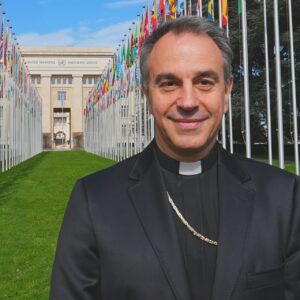
H.E. Archbishop Ettore BALESTRERO
Apostolic Nuncio, Permanent Observer of the Holy See to the UN Office and other international organizations in Geneva
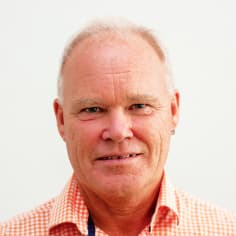
Blair MATHESON
Executive Director, Franciscans International
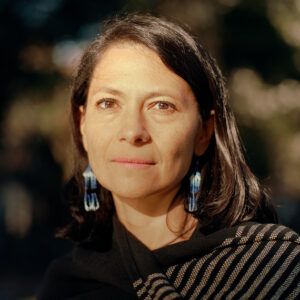
Astrid PUENTES RIAÑO
UN Special Rapporteur on the right to a clean, healthy, and sustainable environment
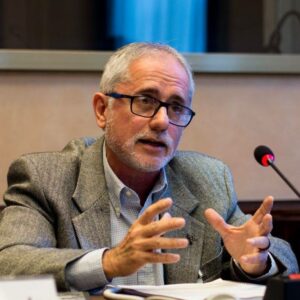
Br. Rodrigo PERET OFM
Franciscans Friar, Pastoral Land Commission of Uberlândia | Franciscans International

Elena CEDILLO
Program Executive, Climate Justice, The Lutheran World Federation
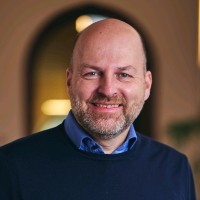
Bernd NILLES
President, CIDSE | Director, Swiss Catholic Lenten Fund | Moderator
Highlights
Video
Live from Palais des Nations
Summary
The event held on 18 September 2024, focused on the intersection of climate change, human rights, and the just transition, with a strong emphasis on amplifying the voices of the Global South. Speakers highlighted how climate change threatens fundamental rights such as access to food, health, housing, and cultural identity, while disproportionately affecting vulnerable communities. With COP30 approaching in Belém, Brazil, the discussion stressed the urgency of ensuring that climate negotiations lead to ambitious, equitable, and people-centered outcomes.
Archbishop Ettore Balestrero underlined that climate change is not merely an environmental concern but also a profound question of justice, as those who contribute least to the crisis bear its heaviest burdens. He called for recognition of ecological debt, differentiated responsibilities, and a just transition that upholds human dignity and human rights beyond technical fixes. Elena Cedillo of the Lutheran World Federation echoed these points, stressing that life is a gift and protecting it is a duty. She insisted that climate policy must safeguard ecosystems, social and economic rights, and future generations, while fostering moral and spiritual transformation.
Rodrigo Peret of the Franciscans drew attention to the extractivist model where “life is exchanged for profit,” warning of a “new green colonialism” masked under sustainability. He emphasized the need for ecological conversion, recognition of traditional lands, and reimagined urban spaces that reflect diverse experiences and local realities. Other speakers, including civil society representatives, also pointed to the rise of climate litigation, the risks of false narratives around just transition, and the need for bottom-up multilateralism. Collectively, the panel called for COP30 to be more than another conference and to deliver transformative commitments rooted in justice, equity, and the voices of the Global South.
Links
- Environment @ 60th Session of the UN Human Rights Council | GEN
- Geneva Rights and Climate Talks
- Human Rights, Climate Change, and the Role of Geneva
Photo Credits
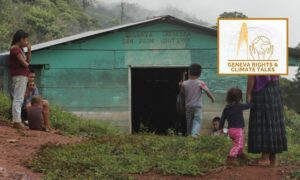
Guatemala. Franciscans International.