
Event Conference
Human Rights Obligations Beyond Direct Emissions, Including Exports of Fossil Fuel – The implications of two recent groundbreaking legal cases | HRC62 Side Event
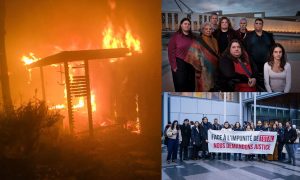
This side event to the 62nd session of the Human Rights Council will present two legal cases — a human rights complaint with the UN Human Rights Committee against the Australian government for fossil fuel exports, and a ground breaking decision in the case brought by a coalition of associations and the City of Paris against the French company TotalEnergies — with the lawyers involved and discuss the importance of holding States accountable for their exports of fossil fuels.

About this Event
The science is irrefutable: global warming is caused by human activities that emit carbon dioxide (CO2) and other greenhouse gases such as methane into the atmosphere of the planet which trap the sun’s radiation around the Earth, leading to a “greenhouse warming effect.” There is now more CO2 in the atmosphere than at any time in the past 800,000 years.
This leads the planetary system to now nearly cross the threshold of average 1.5°C increase above the industrial era and this anthropogenic climate change to already drive catastrophic irreversible human rights impacts. The scientific consensus is that meeting the 1.5°C target requires a rapid and substantial decline in fossil fuel production and use, beginning immediately. At the current annual rate of global greenhouse gas emissions the risks of climate harms escalate with every additional fraction of global warming.
When accounting for their greenhouse gas emissions, States generally do not account for the fossil fuels they export, because it is burned outside their borders. These emissions are also known as “scope 3 emissions”, including all indirect greenhouse gases generated across a company’s or a State’s upstream and downstream value chain. In reality, States do exercise regulatory control over fossil fuel production, including those for export, and the release of emissions from the combustion of fossil fuels—whether within or outside their territory—are an inevitable consequence of that production.
Therefore, States are responsible for breaching their human rights obligations to prevent climate harm through emissions resulting from fossil fuel exports.
On 20 June 2026, ten Australians filed a human rights complaint with the United Nations Human Rights Committee against the Australian government, arguing that by continuing to produce and export large quantities of fossil fuels, Australia has violated their right to life, to family and home life and their right to culture.
They demonstrate that despite knowing about the deadly and foreseeable consequences of climate change for decades, Australia has failed to take the necessary action to prevent climate harms and has materially contributed to climate change as one of the world’s leading historical and current producers and exporters of fossil fuels and that it has no deliberate policy to make the significant export reductions required to prevent dangerous climate harms.
On 25 June 2026, in a ground breaking decision in the case brought by a coalition of associations (Notre Affaire à Tous, Sherpa, ZEA and France Nature Environment) and the City of Paris against the French company TotalEnergies, the Paris Judicial Court ruled that GHG emissions resulting from TotalEnergies’ activities are part of the climate risks included in the scope of the duty of vigilance (Art. L. 225-102-1 of the French Commercial Code) and that scope 3 emissions of parent companies are part of the risks arising from their activities within the meaning of the Due Diligence Act.
Therefore, the court ordered TotalEnergies to integrate scope 3 emissions into its risk mapping and the prevention and mitigation actions of its vigilance plan within six months.
In this event, we will present these two very recent and notable cases with the lawyers involved and discuss the importance of holding States accountable for their exports of fossil fuels.
Environment @ HRC62
The 62nd regular session of the Human Rights Council (HRC62) will take place in Geneva from 15 June to 7 July 2026. Consult this regularly-updated page that highlighted the environmental-related activities of this session.
Speakers

Astrid PUENTES
UN Special Rapporteur on the Right to a Healthy Environment

Yves LADOR
Representative to the United Nations in Geneva, Earthjustice

Ramin PEJAN
Deputy Managing Attorney of the International Program, Earthjustice

Paul MOUGEOLLE
Strategic Advisor, Notre Affaire à Tous

Sébastien DUYCK
Senior Attorney, Center for International Environmental Law

Camilla POLLERA
Campaigner, Center for International Environmental Law | Moderator
Highlights
Videos

UN Special Rapporteur Opening Remarks
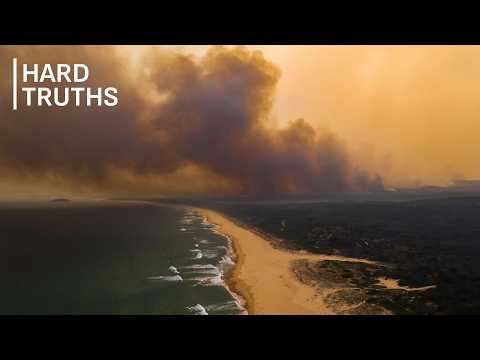
Australian Hard Truths Case

Paul Mougeoelle | Notre Affaire à Tous
Summary
Opening
Astrid Puentes Riaño| UN Special Reporter on the Right to a Healthy Environment
- This discussion focuses on the accountability gap related to scope 3 emissions, specifically through the analysis of two cases.
- Following a litigation brought a coalition of civil society organizations and the City of Paris, the Paris Judicial Court concluded that the French company, Total Energies, has an obligation to consider scope 3 emissions,
- Scope 3 emissions are the ones related to upstream and downstream emissions. Such emissions can take place either domestically, where the products or fossil fuels are produced, or abroad, constituting exported emissions. This is because scope 3 emissions are directly connected to the project and because there is currently an existing gap in their accounting and accountability.
- As Europe experiences increasingly severe heatwaves and the human rights impacts of climate change become an increasing threat to the enjoyment of human rights, including the right to a healthy environment, all emissions must be adequately assessed and considered. This obligation has also been reaffirmed by the International Court of Justice in its advisory opinion.
- The Inter-American Court of Human Rights has emphasized that States must ensure that scope 1,2, 3 emissions in projects are adequately examined and integrated when evaluating fossil fuel projects, particularly in climate risk assessments.
- If scope 3 emissions are not included, the climate risk is not adequately addressed and accounted for.
- In my report presented at the UNGA in 2025 (A/80/187), I proposed a framework for environmental, social, and human rights impact assessments that calls upon States to ensure that they are considering scope 1,2,3 and requesting companies to do so.
- The recent decisions taken by the French court align with similar litigations presented in South Africa, the Netherlands, Norway, and the United Kingdom, where courts are systematically stressing the obligation to consider Scope 3 emissions.
Yves LADOR | Representative to the United Nations in Geneva, Earthjustice
- The current heatwave in Europe has been marked by some of the highest temperature records across various countries and an increasing number of heat-related deaths.
- Climate change is not something that might happen in the future, it’s a present issue, which means we are also talking about victims who exist today.
- The World Meteorological Organization’s State of the Climate report 2025 stressed that Earth’s climate IS swinging increasingly out of balance, which is what we are currently living. It reveals how global greenhouse gas emissions continue to increase in 2025 and this is why we have to push for stronger resolutions on human rights and climate change discussions.
- In the Human Rights Council, we can count on the Special Rapporteur on human rights and climate change’s report on the need to defossilize our economies (A/HRC/59/42), which highlights the importance of human rights-based approaches to have a coherent approach to go beyond simple decarbonization.
-
- As the Special Rapporteur Elisa Morgera explains in the report, we must move beyond what she calls “carbon tunnel vision”. Decarbonization alone is not enough. We need to address the full life cycle of fossil fuels and their broader human rights and climate impacts. Annex II of the report sets out these impacts and the relevant human rights standards. It shows why a full life-cycle approach is both necessary and currently urgent.
- Additional relevant documents stemming from the Human Rights Council on the need for a lifecycle approach in climate action is the 2023 report of the Special Rapporteur on toxics, “The toxic impacts of some proposed climate change solutions” (A/HRC/54/25), underlining the need to avoid shifting the burden through toxification.
- We are observing a trend towards the intensification of mining activities and a shift in practices, especially the use of plastic, which will inevitably end up having an impact on the climate. We still have a huge progress to do on just transition and the judiciary to help to use the law more coherently and shape relevant and efficient climate action.
Camilla Pollera| Center for International Environmental Law (CIEL)
- We are meeting in the midst of another intense heatwave, one of the many that have affected Europe and other parts of the world in recent years. The starting point for today’s discussion is that climate change is already causing widespread and increasingly severe harm to people and ecosystems across the world. States have clear obligations to take measures to limit greenhouse gas emissions in order to keep global average temperature increase below 1.5° C, which is the temperature goal for limiting the global average temperature increase under the Paris agreement.
- As the Intergovernmental Panel on Climate Change (IPCC) concluded, climate change risks, projected adverse impacts, and the associated loss and damage are expected to escalate with every additional degree of global warming. They will be higher for global warming of 1.5 degrees than at present and even higher at 2 degrees. This is aligned with the obligation under the Paris agreement and the UNFCCC, human rights law, customary law and international environmental law principles. States must implement emission reduction measures that collectively can achieve the goal of holding the increase in the global average temperature to below 1.5 degree.
- In the context of climate change, the ICJ clarified that States have a stringent due diligence obligation to pursue domestic mitigation measures grounded in the best available science, which shows that every increment of global warming increases projected risks and harms.
- This interpretation is supported by a growing body of international jurisprudence. The International Tribunal for the Law of the Sea (ITLOS), the Inter-American Court of Human Rights, and, most recently, the European Court of Human Rights in KlimaSeniorinnen have all affirmed that climate change calls for an enhanced standard of due diligence, requiring States to establish effective regulatory frameworks to mitigate climate risks.
- For several years, organizations and communities have been extremely worried about the effects of global warming, using climate litigation as a tool to demand accountability.
- A human rights case against the Australian government before the United Nations human rights committee was lodged on 20 June 2026, asking the committee to declare it is unlawful for the Australia government to continue approving coal and gas exports without a plan to prevent dangerous climate harm and keep people safe.
- A revolutionary decision was issued by the Paris judicial court concerning Total Energies on 25 June 2026. The Paris judicial court has confirmed that companies can be held illegally responsible for climate pollution resulting from their fossil fuel production and sales, including through subsidiaries.
Ramin Pejan| Deputy Managing Attorney of the International Program, Earthjustice
- The testimony of our 10 authors, who, with Earthjustice, Human Rights Law Center and Environmental Justice Australia, are trying to hold Australia accountable for the exports of its gas and coal that it exports abroad, is crucial.
- Why do exports matter in Australia? In 2024, Australia was the second largest exporter of coal in the world and the third largest exporter of liquified natural gas, and around 80% of its total carbon dioxide footprint comes from what is burned outside of Australia, its exports, contributing to about 3.5% of annual global fossil fuel carbon dioxide emissions.
- Australia doesn’t account for these exports and the emissions that come from them overseas in its Nationally Determined Contributions (NDCs) and its domestic targets. This constitutes a loophole.
- This is because many states argue that under the Paris Agreement, they don’t need to account for emissions that are not within their territory and what is happening outside their territory is not their responsibility.
- Australia’s main policy with respect to its exports has nothing to do with climate change or preventing climate harm. It’s basically a market-based export system. So it has stated that it will continue to export as long as there’s market demand. It has approved some of the largest coal and gas projects in recent years, with more than 40 or 50 projects in the pipeline. If these are developed, these projects would lock in fossil fuel carbon emissions well into the 2070s. So it really matters that the 10 authors brought this case.
- The case the communication argues is that Australia must comply with its international climate obligations, which are necessary to respect and ensure the rights recognized under the International Covenant on Civil and Political Rights (ICCPR). It alleges violations of the right to life, the right to culture, and the right to private life.
- The obligation states that Australia has to act with stringent due diligence to use all means at its disposal to prevent significant damage to the climate system. The case argues that Australia is failing to do everything it possibly could to reduce its emissions, essentially in large part because of the exports.
- Australia exercises regulatory control over the fossil fuel production, notably through numerous subsidies, licensing these projects, while fully aware that these projects will ultimately generate combustion carbon emissions.
- An inevitable and foreseeable consequence of approving and producing these fossil fuels would kickstart a chain of events that will result in harm to the climate system.
- Moreover, the ICJ and other courts have made it really clear that there is a joint and shared responsibility for emissions and just because these are not accounted for under Paris, it doesn’t mean that states are exempt from the human rights responsibility for the harm that their actions are contributing to.
- The comment declared that the export policies are not aligned with 1.5 degrees. We have even showed that they’re not aligned with 2 degrees.
- The goal is that the committee recommends that Australia be processed for assessing the climate harm and the alignment of its exports with 1.5 and 2 degrees as per the ICJ’s statements and to fend off on approving projects until they have a process in place for making that assessment.
Paul Mougeolle| Notre Affaire à Tous
- We won our case against TotalEnergies, one of the largest oil and gas companies in the world.
- This case has been brought by various French NGOs and municipalities. We asked the oil and gas company TotalEnergies to make the best efforts to mitigate global warming as much as possible and to do so relied on the French duty of vigilance law, which translates the UN Guiding Principles on Business and Human Rights – the corporate due diligence framework, which is relevant to human rights and the environment in general – into domestic law.
- The Court found that:
- The notion of human rights is linked to global warming because global warming is endangering human rights.
- The corporate actor has a legal duty to identify global warming as a serious risk to human rights, including the environment, and to set out preventive measures.
- Thus, the court relies on other cases worldwide, especially the European Court of Human Rights ruling case against Switzerland.
- Global warming is a universal issue; since human rights are also recognized and protected internationally, there are two notions that are relevant to any jurisdiction. Moreover, courts acknowledge that human rights are indeed threatened by global warming and that their interdependence reinforces them; this realization also reassures them that they are not alone in this situation. This dimension of cross-fertilization of these cases is crucial.
- Requirements within French law are harmonized both via a European directive and the United Nations treaty on business and human rights, currently under discussion in Geneva, which aims to require states to regulate companies and impose general due diligence obligations on them in order to prevent risks related to human rights and environmental damage.
- Often, it is not explicitly set out that climate must indeed be part of it, and that was heavily debated in our case. There is some questioning of climate action; furthermore, both the company involved and the State’s lawyers urged the court not to rule in our favor on this matter, yet the court’s final decision upheld our position.
- This means that the company will have to make every effort to reduce not only its direct emissions but also its indirect emissions associated with the oil and gas products it markets.
- The next appointment will take place in January to determine if the company indeed responded to the injunction.
Sébastien Duyck| Senior Attorney from CIEL
- We are witnessing a process whereby international judicial institutions and national ones are recognizing some of those key fundamental legal principles that come from different legal norms, human rights law, corporate accountability, and civil responsibility, all converging in the same direction.
- There is no sound legal basis for major contributors to climate change—through the production, export, and sale of fossil fuels—to escape accountability for the climate-related harms resulting from those activities.
- In the context of fossil fuels, the emissions that are generated through the use of fossil fuels are the emissions that result from the predictable use of fossil fuels. So if you export or produce or fossil fuel, whether it’s coal, oil, or gas, it is going to impact the climate. This is something that the Paris court has been very clear about, building on judicial decisions that have been delivered by other courts.
- The French decision delivered on 25 June 2026 was specifically based on this French duty of vigilance law, very specific to the French context, yet it was able to cite many decisions from other courts, highlighting this cross-fertilization among judicial bodies. That’s the reason why we can expect that this decision will be cited in future judicial cases at international courts or international bodies like the human rights committee and at the national level.
- One particular aspect was this question of scope 3 emissions. In the case of TotalEnergies, more than 90% of its greenhouse gas emissions are Scope 3 emissions, generated by the end use of the fossil fuels it produces and sells. Accordingly, the company’s contribution to climate change arises not only from emissions associated with its own operations and those of its subsidiaries, but primarily from the downstream emissions resulting from the consumption of the products it places on the market.
- Some states and private companies have been trying to use as an argument: they should only be responsible for the emissions that they themselves contribute to.
- The court in Paris was very clear in relation to this, that excluding scope free emissions from corporate accountability or states will exclude the principal source of climate damage attributed to the fossil fuel model.
- The court stressed that TotalEnergies acknowledged its ability to influence its Scope 3 emissions through its investment decisions and energy portfolio. It held that accounting for Scope 3 emissions enables companies to assess the full climate impacts of their activities, identify climate-related risks, and set appropriate sustainability targets, even if those emissions are also counted as Scope 1 emissions by other actors.
- The decision thus confirms that responsibility for emissions can be shared across the fossil fuel value chain, reflecting an approach increasingly adopted in recent case law. The advisory opinion of the International Court of Justice places States’ regulation of fossil fuel activities at the centre of climate accountability. It declares that a State’s failure to take appropriate measures to address greenhouse gas emissions, including those arising from fossil fuel production, consumption, licensing, and subsidies, may constitute an internationally wrongful act attributable to the State.
- However, the Paris Judicial Court also relied on recent case law, including the European Court of Human Rights’ 2025 judgment in Greenpeace Nordic and others, like Norway.
- The Court held that States must consider the climate impacts of fossil fuel extraction and require environmental impact assessments to quantify greenhouse gas emissions, including downstream combustion emissions, both domestically and abroad. It thus confirmed that States may be held accountable for failing to regulate private fossil fuel activities, including the climate harms resulting from exported fossil fuel products.
- Existing legal frameworks already enable us to regulate adequately and to hold those actors involved in the fossil fuel supply chain accountable. There is no reason to continue to live in this age of impunity, where industries accountable for its massive human rights harms is the fossil fuel companies and their governmental backers.
- In an extraordinary step, the French public prosecutor sided with Total just weeks before the hearings in February, asking the Paris Judicial Court to rule that, actually, climate change was not to be considered as an environmental threat under the French duty of vigilance law and that this was something that was of a different nature. In fact, the French government tried to protect one of its major industrial companies to argue that when the French duty of vigilance law was adopted in 2017, the environment meant everything except the climate. Nevertheless, the judges ruled against this, but it illustrates the desperate attempts some governments make to shield certain companies from climate accountability; it also demonstrates the crucial role of the courts, which see beyond appearances and continue to apply existing law, even in the face of the existential crisis posed by climate change
Closing
Yves Lador| Earth Justice
- The purpose of making these movements is to make things move forward. But we see how it is urgent to have another type of action. We emphasized that recent judicial decisions, particularly the International Court of Justice’s advisory opinion, reaffirm the existing legal framework on climate change and clarify its application.
- They also highlighted the essential role of human rights bodies in strengthening climate accountability, alongside international frameworks such as the UNFCCC, and called for a more ambitious level of climate action.
Ramin Pejan| Earth Justice
- The authors of the Australian case have lost homes, their cultures threatened through flooding and heat.
- The work of leading IPCC scientists and their models shows that, at current emission rates, we have less than two years left before exceeding the atmosphere’s capacity to absorb emissions while remaining below the 1.5-degree threshold.
- One might think that, given statistics and observed damages, governments and companies would do everything they can to reduce their emissions and make a change. In reality, we are seeing some of the most ambitious drilling plans, some of the most ambitious plans to go ahead with fossil fuel projects despite the reality. This raises an inevitable question, especially regarding the French government’s attempt to deny the application of climate change legislation.
- Who do they represent? Obviously, not the people who are being harmed and we can hope that these kinds of cases and these kinds of discussions move things forward.
Sébastien Duyck| Senior Attorney from CIEL
- This question is not only who do they represent, but are they really using French taxpayer money on legal teams that are arguing in favor of TotalEnergies to suggest that, because we didn’t mention environment in this 2017 law, climate change should some climate change should somehow be outside of its scope?
- This is an incredible lack of accountability towards their own constituency.
- As these courts have demonstrated—including the International Court of Justice just a year ago—we do indeed possess the necessary legal arsenal. We already have legal frameworks in place, and we also have a growing body of scientific evidence that helps us understand the responsibility attributable to specific actors. Yet, we have collectively failed to hold these companies and their government backers accountable for the irreversible damage we are witnessing on the ground.
- We have to be very aware that future generations will judge us very harshly when they know that we were standing in these halls at this point and yet we failed to be creative and bold enough to hold uh duty bearers accountable.
Photo Gallery


