Event Conference
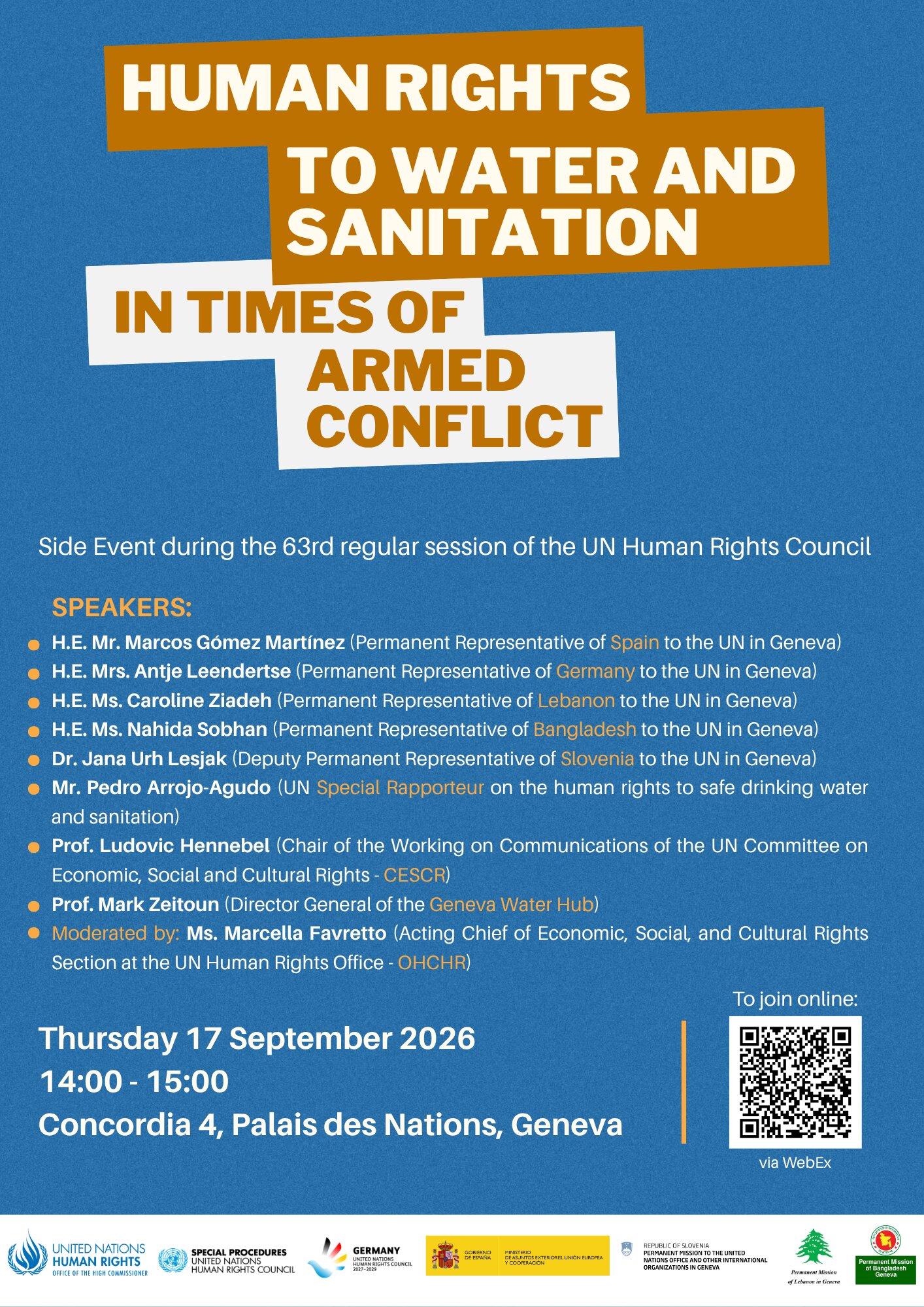
Human Rights to Water and Sanitation in Times of Armed Conflict | HRC63 Side Event
17 Sep 2026
14:00 – 15:00
Venue: Palais des Nations | Concordia 4 & Online
Organization: Office of the High Commissioner for Human Rights, Germany, Spain, Lebanon, Slovenia, Bangladesh, Special Procedures of the UN Human Rights Council
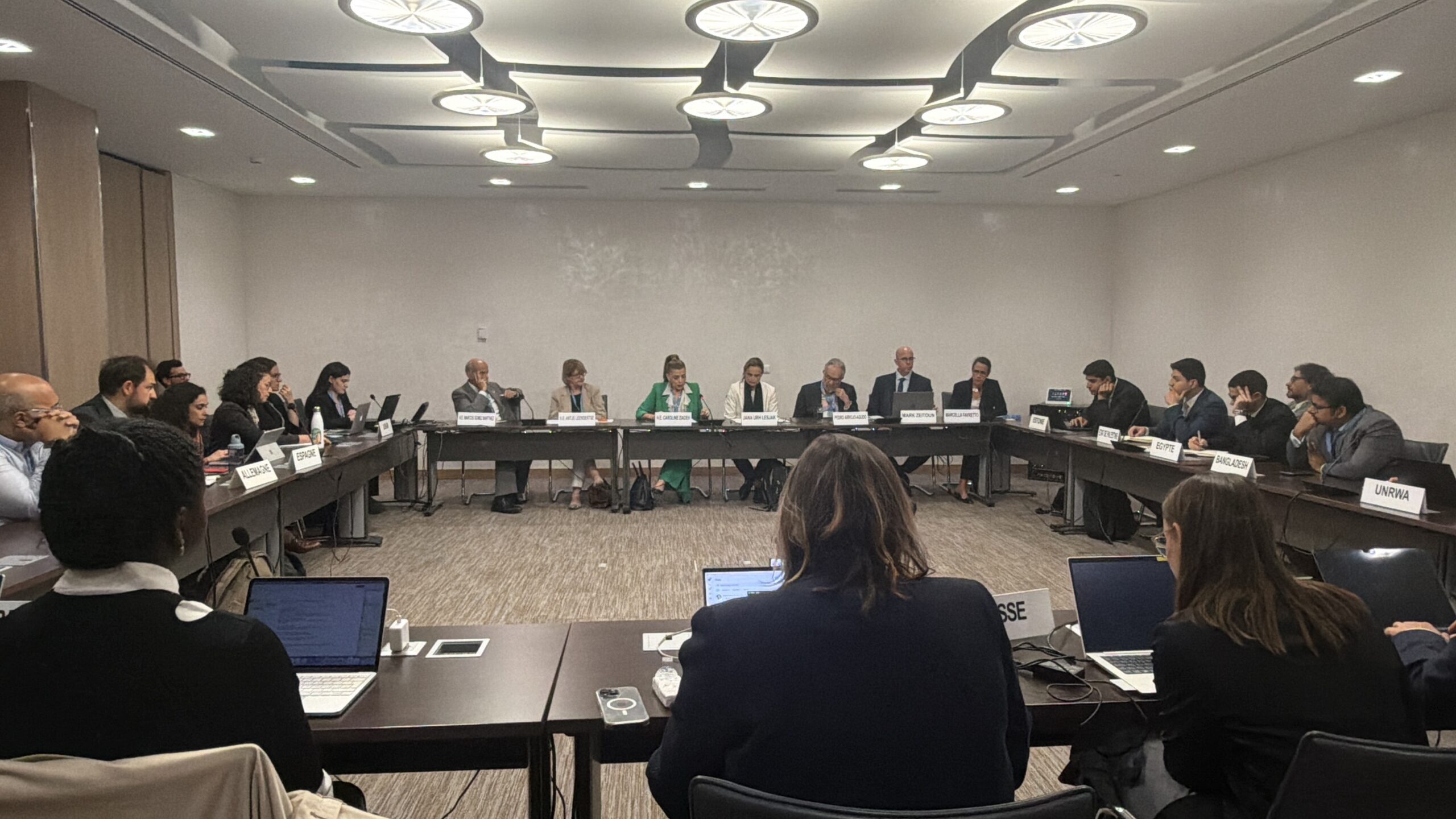
This side event to the 63rd session of the Human Rights Council examined the interplay between these legal frameworks, highlight specific challenges and documented cases, and identify concrete recommendations for the protection and restoration of water and sanitation services during and after armed conflict. This event was organized by the Office of the UN High Commissioner for Human Rights, alongside the Permanent Missions of Germany, Spain, Lebanon, Slovenia, and Bangladesh in Geneva, and the UN Special Rapporteur on the human rights to safe drinking water and sanitation.

About this Event
Access to safe drinking water and sanitation are basic human rights and indispensable to life, health and people’s dignity and to the realization of other human rights. Water has increasingly been weaponized in modern conflicts, transforming from a life-sustaining resource into a tool of war and oppression. This weaponization includes the deliberate destruction of infrastructure and the diversion or contamination of water sources, to exert control, inflict suffering and displace populations.
While International Humanitarian Law and International Human Rights Law provide clear obligations to respect and protect the rights to safe drinking water and sanitation and to guarantee access to these rights, enforcement remains a critical gap.
This side event examined the interplay between these legal frameworks, highlight specific challenges and documented cases, and identify concrete recommendations for the protection and restoration of water and sanitation services during and after armed conflict.
Environment @ HRC63
The 63rd regular session of the UN Human Rights Council (HRC63) will take place in Geneva from 7 September to 7 October 2026. Consult this regularly-updated page that highlighted the environmental-related activities of this session.

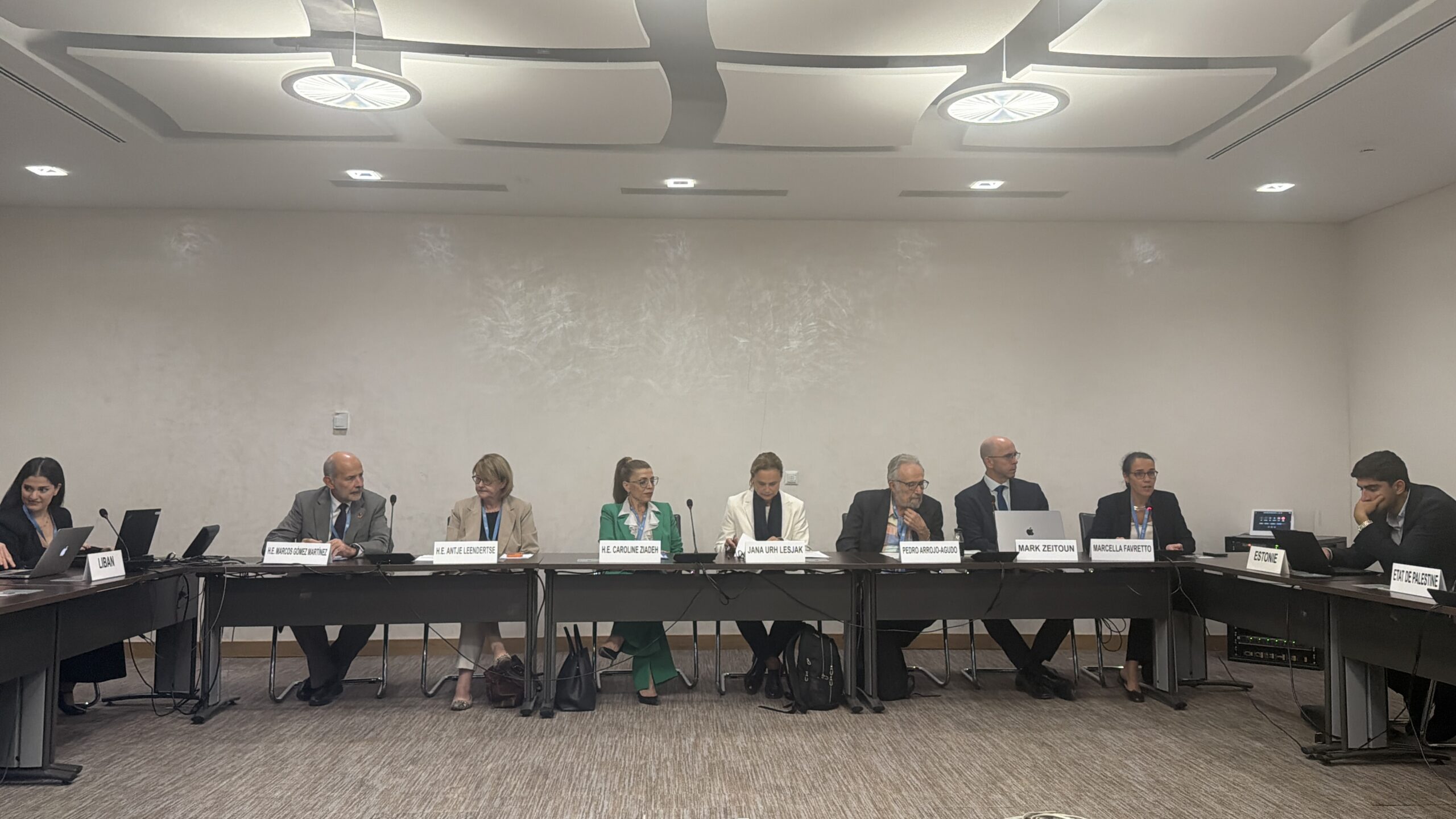
Speakers
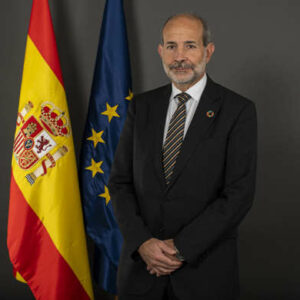
H.E. Amb. Marcos GÓMEZ MARTÍNEZ
Permanent Representative of Spain to the UN and other international organizations in Geneva
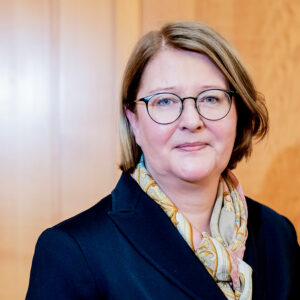
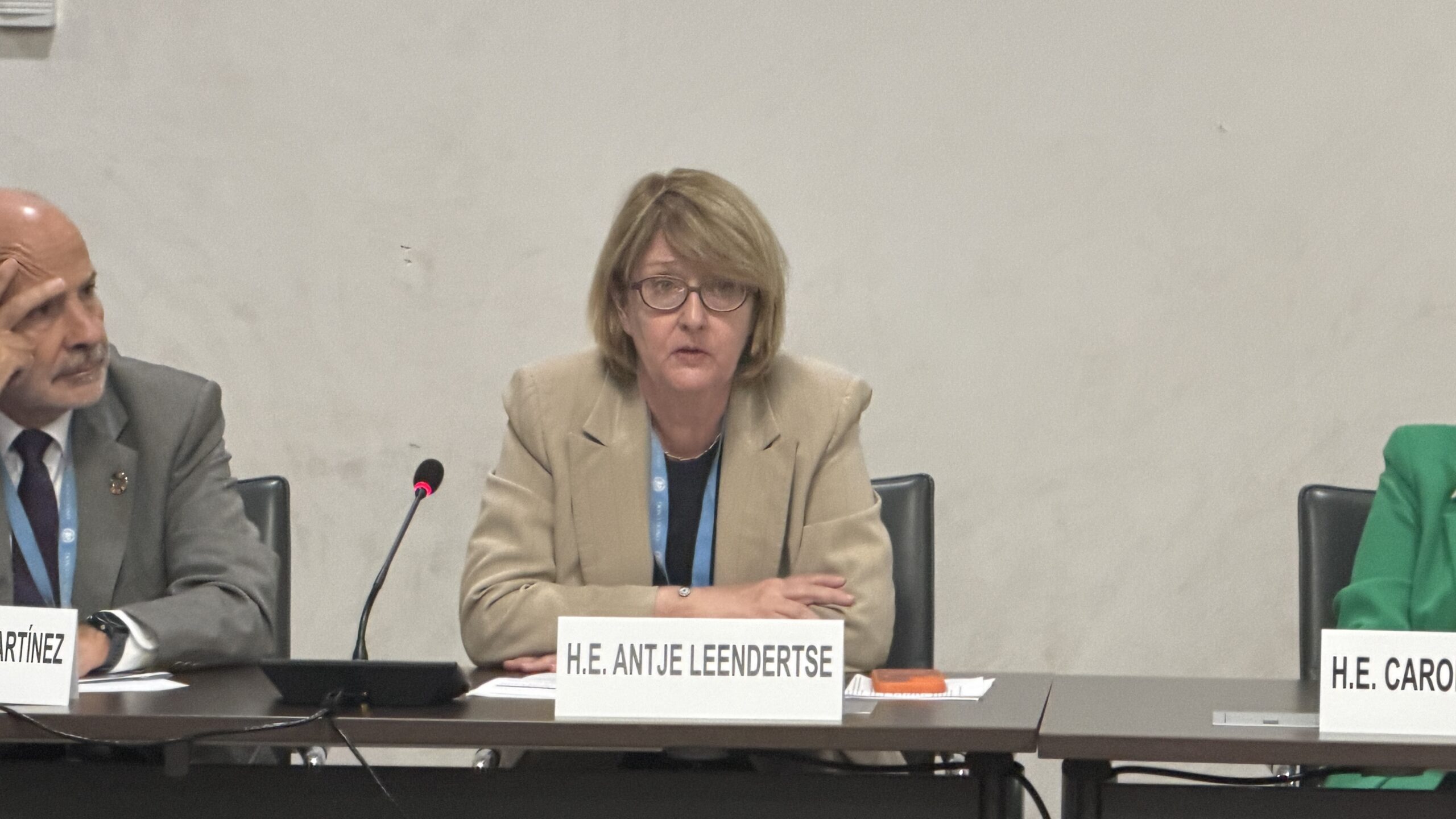
H.E. Amb. Antje LEENDERTS
Permanent Representative of Germany to the UN and other international organizations in Geneva
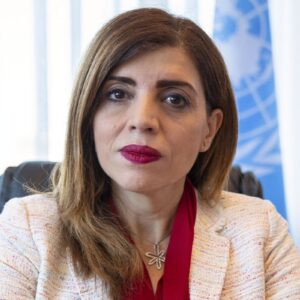
H.E. Amb. Caroline ZIADEH
Permanent Representative of Lebanon to the UN and other international organizations in Geneva
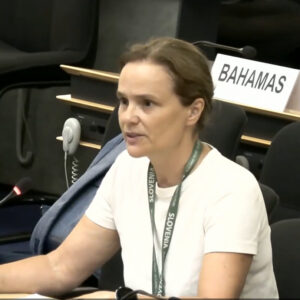
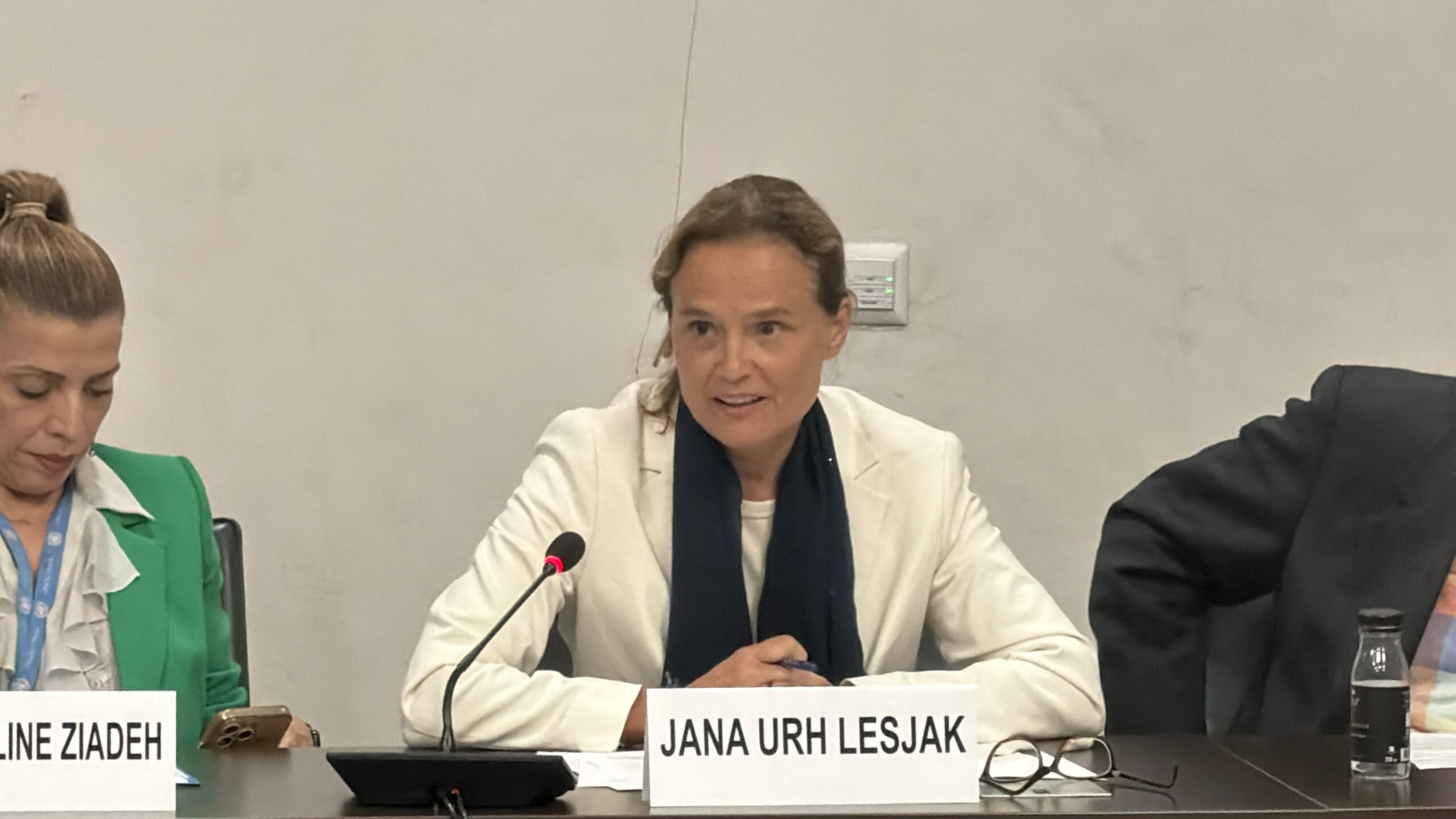
Jana Urh LESJAK
Deputy Permanent Representative of Slovenia to the UN and other international organizations in Geneva

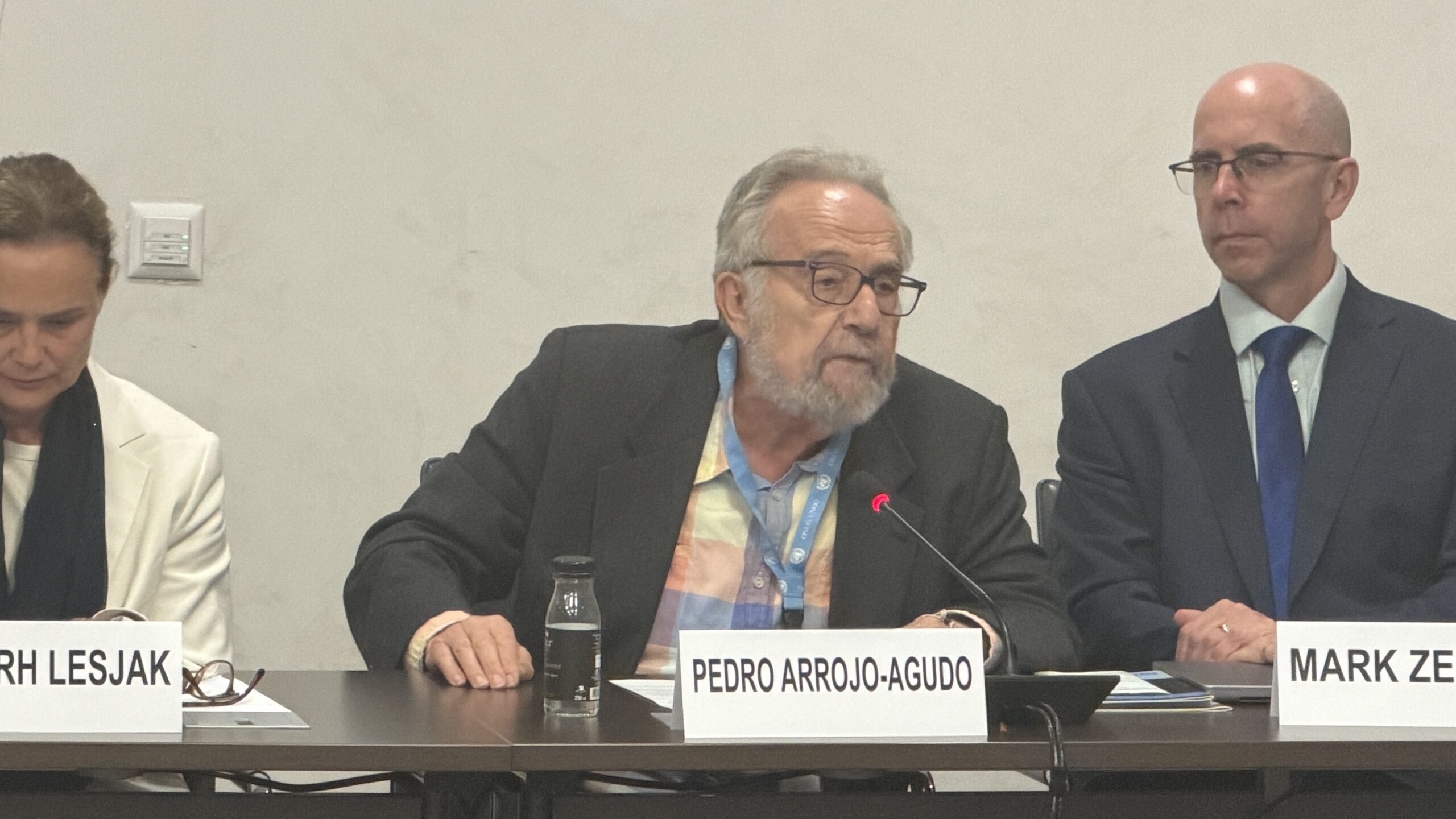
Pedro ARROJO-AGUDO
UN Special Rapporteur on the human rights to safe drinking water and sanitation
Ludovic HENNEBEL
Chair of the Working on Communications of the UN Committee on Economic, Social and Cultural Rights - CESCR

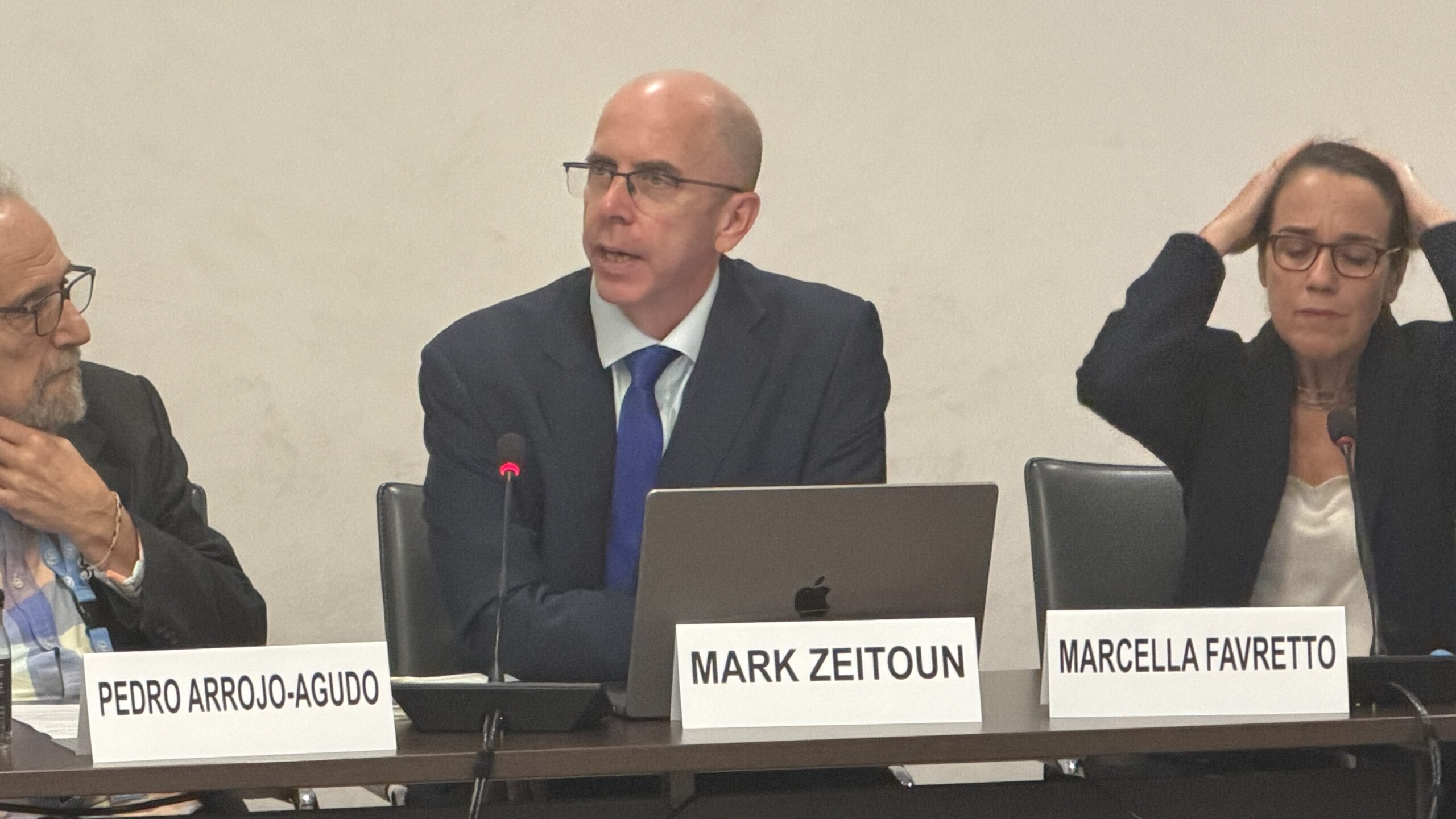
Mark ZEITOUN
Director General, Geneva Water Hub
Marcella FAVRETTO
Acting Chief of Economic, Social, and Cultural Rights Section, UN Human Rights
Highlights
Video
A live stream of the event is available on the Geneva Environment Network YouTube channel.
Summary
Marcella FAVRETTO | Acting Chief of Economic, Social, and Cultural Rights Section, UN Human Rights
- This is certainly a very topical, timely, urgent conversation. Access to safe drinking water and sanitation is key to the right to life. It is key to the right to health overall. It is key to a life in dignity, but the gap is staggering. 2.1 billion people lack adequate access to safely managed drinking water. 3.4 billion lack access to adequate sanitation, and this disproportionately impacts specific disadvantaged groups in our societies. When we think of homeless people, people living in informal settlements, refugees, migrants, and women and girls among them.
- Armed conflict compounds these inequalities. Water has been increasingly weaponized, infrastructure destroyed, sources diverted, and contaminated, with devastating consequences. Again, these consequences have a disproportionate impact on sections of society that are already vulnerable and very often subject to intersecting forms of discrimination.
H.E. Amb. Marcos GÓMEZ MARTÍNEZ | Permanent Representative of Spain to the UN and other international organizations in Geneva
- We are living in a world of conflict. In the context of conflict, we know that access to the rights to water and sanitation becomes a matter of life, dignity, and survival.
- We are very concerned by the trend we are seeing of targeting and destroying civilian infrastructure in many conflicts. We are seeing this happening in different scenarios. We try to do what we can, but it is all only after the destruction takes place.
- So we have been working recently both in Gaza and in Ukraine on these specific scenarios through our International Agency for Development Cooperation. We have been restoring water supplies in Khan Younis and in Rafah in Gaza, and also in Ukraine after the destruction of the Kakhovka dam.
- So this is happening these days, with a disproportionate effect on vulnerable parts of society, particularly women and girls.
- We have also developed a manual on water and sanitation in humanitarian contexts, which is in line with the Sphere standards and recommendations from the World Health Organization to guide our action in this specific field.
- The protection of water and sanitation is also linked to the protection of healthcare services. Because we try to work more or less in a cohesive manner, we have been co-chairing Workstream Number Five of the Global Initiative to Galvanize International Humanitarian Law, launched by several states and the ICRC.
- So, protecting the medical mission, we hope that the conference later this year will indeed send a strong signal on the need to reinforce international humanitarian law.
- There is another specific area in our humanitarian work in which water and sanitation are particularly relevant, which is education. We are one of the promoters and supporters of the Safe Schools Declaration, and we think this is a component of this education framework.
- Water and sanitation are, of course, essential, and we have the UN Water Conference later this year. It does give an opportunity to underline that protecting human rights to water and sanitation requires strengthened respect for international humanitarian law, unhindered humanitarian access, protection of critical civilian infrastructure, and also accountability for violations.
- We will continue in this line of work. We count on your partnership. We count on keeping this issue at the top of the agenda.
Marcella FAVRETTO | Acting Chief of Economic, Social, and Cultural Rights Section, UN Human Rights
- The UN Water Conference provides an important opportunity to ground some of the critical content and recommendations in this specific area of discussion into commitments that will emerge from that process.
H.E. Amb. Caroline ZIADEH | Permanent Representative of Lebanon to the UN and other international organizations in Geneva
- We are observing how quickly war can disrupt access to water and sanitation and how the consequences can persist and continue to last for months and years, impacting the livelihood of generations.
- This is particularly grave because water is indispensable to life, as the moderator mentioned, to health, and to human dignity.
- Based on the Lebanon Rapid Damage and Needs Assessment conducted by the World Bank at the request of the Lebanese government to assess the impact of the first round of hostilities in 2023–2024, the study showcased that the wastewater and irrigation sector alone sustained 356 million US dollars in direct damage, 171 million in economic losses, and 58 million US dollars needed for recovery and reconstruction.
- 64% of community water supply distributions, reservoirs, and 46% of water reservoirs and 58% of pumping stations had been damaged or destroyed.
- Three wastewater treatment plants and three wastewater pumping stations were also destroyed. This figure did not include damage to water supply and sewage networks where on-site verification was not possible.
- Here comes the responsibility of the government. While we were in the midst of rehabilitating and fixing the impact of these losses, on the 2nd of March 2026, Lebanon was dragged into a war that it did not ask for, and the damage continued.
- Based on an Oxfam report issued on the assessment of the impact of the war in March 2026, at least seven critical water sources, including reservoirs, pipe networks, and pumping stations, were damaged within four days, only four days, and weeks of renewed escalations, affecting almost 7,000 people in the Beqaa and in the south.
- Oxfam reported that 19 important water facilities serving up to 60,000 people were undergoing rehabilitation, while six had already been damaged during the previous escalation.
- These figures showcase how the war can exacerbate an already vulnerable cycle. Infrastructure is damaged. Communities lose access to safe water. Repairs require time and, most importantly, resources. And before rehabilitation is complete, renewed hostilities cause further destruction.
- Functioning water networks are also essential for the safe and dignified return of displaced communities. The ICRC reports that as of 26th of August, more than 334,000 people remained displaced. At the peak and the height of the conflict, we had 1.2 million people displaced, with damage and limited access to essential services among the factors preventing many people and families from returning.
- The ICRC has continued rehabilitation efforts, particularly in the south of Lebanon, to help maintain the continuity of water services.
- So, what are we witnessing? What are the lessons from Lebanon?
- The Lebanon lesson is of great concern. The weaponization of water, water and sanitation infrastructure serving civilians is civilian infrastructure, and like any civilian infrastructure, is protected by international humanitarian law and by international law.
- Parties to armed conflict must therefore respect their obligations to protect such objects and to ensure that civilian populations are not deprived of what is essential for their survival.
- Against this backdrop, Lebanon would highlight four priorities. These are our lessons learned.
- Protection. Water and sanitation infrastructure serving civilian populations must be effectively protected from attack and destruction. The upcoming meeting in Jordan should represent an opportunity to reaffirm our commitment to international humanitarian law.
- Continuity of essential services. Sustainability of livelihood is key. Water and sanitation systems must be maintained and repaired, and humanitarian actors must be able to assess damages, to access and to assess damaged infrastructure safely and without obstruction. Free access.
- Recovery and resilience. Recovery cannot simply mean replacing what has been destroyed. This is not the objective. It must restore people’s effective access to water and sanitation and strengthen the resilience of these systems against future shocks, in a conducive environment and ecosystem. This is key.
- Accountability, to break this cycle of vulnerability. Accountability remains key. Documenting and leading a path toward holding perpetrators accountable remains key for us in Lebanon.
- The message is clear. Water must never be used as a weapon against civilians. We must ensure that people can access safe water and sanitation during conflict, immediately after the conflict, and throughout recovery.
Jana Urh LESJAK | Deputy Permanent Representative of Slovenia to the UN and other international organizations in Geneva
- For Slovenia, water is part of who we are. We are fortunate to live in a country with abundant and clear water resources, and we are proud that the right to drinking water is enshrined in our Constitution.
- But for millions of people around the world, this reality is still a distant dream.
- Climate phenomena are making the challenge even more acute, bringing prolonged droughts, erratic rainfall, and mounting pressure on already scarce water resources.
- We are stating that access to safe water and sanitation is about health. It is about dignity. It is about human rights. And increasingly, as we have heard and stated many times before, it is about survival.
- The connection between water and security is becoming more and more evident.
- 420 water-related conflict events were recorded in 2024 alone, nearly 20% more than in 2023 and 78% more than in 2022.
- Water can be a trigger of conflict when scarcity or unequal access deepens tensions. Water can be a casualty of conflict when water systems are damaged or destroyed, and of course water can be used as a weapon when access to water is deliberately manipulated to cause harm.
- But behind all these categories, there are always people. When water and sanitation systems fail, the consequences go far beyond thirst. Hospitals struggle to function, disease risks rise, livelihoods are lost, people are displaced, and human dignity is undermined.
- So from a human rights perspective, the impact is profoundly unequal. Conflicts compound existing inequalities. Women and girls, children, persons with disabilities, older persons, refugees, and internally displaced persons are often among those who suffer first and most when access to water and sanitation collapses.
- So this is why we need to see water, sanitation, human rights, peace, and security as one interconnected agenda.
- Let me state another data point. The 2026 Global Water Bankruptcy Report argues that we have entered the era of water bankruptcy. It tells us to do three things: recognize the new reality first and foremost, prevent further irreversible loss, and put water at the center of global cooperation.
- This matters especially because most of the world’s fresh water is shared across borders.
- Shared waters can become, as we know, a source of tension, but they can also become a powerful instrument of cooperation. That is why frameworks such as the Water Convention, which Slovenia is presiding over at the moment, are so important. They help countries move from ad hoc coordination to structured, predictable, and rules-based cooperation.
- For Slovenia, the water and peace nexus has long been our priority. During our UN Security Council membership, we called for water-related risks to be considered more systematically in conflict prevention, conflict resolution, and peacebuilding.
- In Geneva, Slovenia chairs the Group of Friends on Water and Peace, established to advance the understanding of how water cooperation can contribute to peace and security.
- Together with the Geneva Water Hub and partners, we launched the Global Alliance to Spare Water from Armed Conflicts. The purpose of the Alliance is very simple but very urgent: to strengthen the protection of water resources and water infrastructure through advocacy, knowledge, partnerships, and good practices. Because the legal and human rights framework is very clear.
- International humanitarian law protects civilian objects and gives special protection to objects indispensable to the survival of the civilian population, including drinking water installations.
- At the same time, international human rights law continues to apply in situations of armed conflict. Human rights do not disappear when conflicts begin.
- States remain bound by their human rights obligations alongside the applicable rules of international humanitarian law.
- Protecting water is therefore not only about protecting infrastructure. It is about protecting people and their rights.
- Water and sanitation must never become instruments of warfare, and access to them must never be deliberately denied as a means of exerting pressure on civilian populations.
- But protection during conflicts is only part of the answer. If you want water to contribute to peace, we must invest in cooperation before tensions escalate.
- That means stronger institutions, fairer access, resilient infrastructure, effective transboundary cooperation, and a human rights approach.
- So as we move toward the much-expected contribution of the 2026 Water Conference, we have an important opportunity. We stress that the conference outcomes must deliver very clear human rights-based commitments, with measurable targets and transparent monitoring mechanisms aligned with international human rights standards, reflected also in the very valuable work of the Special Rapporteur on water and sanitation.
- Last but not least, the human rights to safe drinking water and sanitation are linked to the right to a clean, healthy, and sustainable environment. As you know, Slovenia has worked very hard to put this on the agenda of the Human Rights Council and in other fora.
- Armed conflict can simultaneously contaminate water resources, destroy sanitation infrastructure, and degrade ecosystems essential to human health and dignity.
- Protecting water means protecting human rights, and protecting human rights to water and sanitation can in turn contribute to peace.
Pedro ARROJO-AGUDO | UN Special Rapporteur on the human rights to safe drinking water and sanitation
- Some years ago, I presented a report on water as a tool for peace and cooperation. On 16 October 2026, I will present my latest work, a policy brief on this topic, with these ideas developed further.
- Access to clean and safe drinking water, as well as basic sanitation, are international human rights that apply both in times of peace and in times of war. This is evident.
- Furthermore, attacks on water sources, water and sanitation infrastructure, as well as their destruction or seizure in armed conflicts, constitute war crimes and are prohibited under international humanitarian law.
- Where this is carried out on a widespread or systematic level, it may also be a crime against humanity, specifically depriving the population of food.
- Water is, par excellence, the essential daily nutrient we need. This is classified under the Rome Statute as the crime of extermination.
- This is something I have insisted upon in several of my reports, quoting verbatim Article 7 of the Rome Statute.
- Finally, genocide is the deliberate and systematic destruction of a national, ethnical, racial, or religious group, whether in whole or in part, because of its nationality, ethnicity, race, or religion.
- There are three main ways to use water as a weapon.
- Withholding water, whether by retaining water, destroying storage and distribution infrastructure, or blocking sources in various ways, such as restricting water supplies provided by humanitarian actors, blocking the delivery of essential components for water systems, hindering the repair of damaged infrastructure, diverting rivers or canals, or simply cutting off the energy or power supply on which water and sanitation systems depend. Water can be withheld even through administrative regulations and bureaucratic mechanisms in times of war.
- Turning water into an instrument of aggression through flooding or contamination. These impacts can combine, as has happened with the destruction of the Kakhovka dam in Ukraine, which, in addition to flooding thousands of homes and affecting around 16,000 people, released 83,000 tons of heavy metal from the sediment stored in the reservoir, in what is considered a catastrophe comparable to the Chornobyl nuclear accident.
- Making access to water dangerous. A strategy for which the Gaza Humanitarian Foundation provided a harrowing example, illustrating the killing of starving and thirsty civilians as they sought food and water for their families.
- Often the most effective way to block access to water is to cut off the electricity supply needed to pump, distribute, and even produce it. In particular when the supply relies on desalination plants that require energy to operate. We perhaps do not talk about water; we do not talk about energy, and no one realizes that you are cutting off water for people.
- Water contamination can be caused not only by poisoning a well with toxic substances, but also, in many cases by cutting off the electricity supply once again and disrupting sanitation systems, leading to the direct discharge of untreated waste that seeps into the aquifer and contaminates available drinking water with fecal matter.
- The blockade of Gaza, in place for over 15 years before the massacre committed by Hamas, and Israel’s genocidal response de facto imposed a process of progressive aquifer salinization due to over-extraction and seawater intrusion.
- This over-extraction was driven by the need to supply 2.2 million inhabitants crammed into the Strip, of whom at the time 1.4 million were refugees forcibly displaced from their land by Israel. They do not want to be there because they like Gaza.
- The policy brief, which I will publish and present around mid-October, precisely identifies actions and strategies of all these types, providing concrete examples from around the world, not just on Gaza and Palestine but around the world.
- All these strategies are often combined, as is particularly the case in Gaza, where they are all employed systematically as a key tool of a strategy that, let us recall, was characterized by the Independent International Commission of Inquiry as genocidal.
- It is an official commission of the United Nations, citing the fulfillment of four of the five criteria established by the Convention on the Prevention and Punishment of the Crime of Genocide, adopted by the United Nations in 1948.
- In most of these wars around the world, as the brief will also show, both sides have used water as a weapon. With the exception of Palestine, where such use has been and remains one-sided.
Mark ZEITOUN | Director General, Geneva Water Hub
- You have heard the law, the rights, the evidence. Let me leave you with just two propositions that come from the engineering, policy, and legal experience of the Geneva Water Hub.
- The first proposition is, much like Ambassador Lesjak said, protecting water is protecting civilians.
- The second proposition is that the more we know about what happens to water systems in war, the less we can claim that the civilian consequences of attacking them are unforeseeable. Human rights law and IHL have very specific roles to play in both propositions, and both point towards concrete action through the 2026 Water Conference and through the Global Alliance to Spare Water from Armed Conflict.
- So, elaborating on the first proposition, you do not have to attack civilians directly to cause enormous civilian harm. Hit a pumping station, cut its electricity, damage a treatment plant, prevent the chemicals or engineers from reaching it. The tap may still run for a while, but then the hospitals struggle to sterilize equipment. Sanitation deteriorates, diseases spread. People who survive the attack itself may die weeks or months later.
- We increasingly understand how war affects water systems. Water services depend not only on pipes and pumps, the infrastructure, but on electricity, consumables, information, and above all, people. The effects of an attack can therefore spread and accumulate, and if the shrapnel does not kill you right away, polluted water may kill you days later, or water-related diseases like cholera or dysentery weeks later, AMR-related disease and infected wounds months later.
- These are the reverberating effects. Civilian harm is felt far beyond the blast zone and long after the dust has settled.
- So the first proposition is quite literal. Protecting the water systems means protecting the civilians who depend on them.
- The second proposition explains why technical knowledge matters to international lawyers and defenders of human rights, because knowledge changes foreseeability.
- The more we understand how these systems fail, the harder it becomes to say the consequences of attacking them were not predictable. Under the IHL rules of proportionality and precautions in attack, parties must take account of the reasonably foreseeable civilian harm. At least, that is the ICRC lawyers’ interpretation of the Geneva Conventions.
- And this is all very neatly captured in the Geneva Principles on the Protection of Infrastructure by the Geneva Water Hub, as well as taken further.
- Furthermore, speaking of knowledge, as the conflict continues, damaged systems become more fragile and the belligerent knowledge about them accumulates. The consequences of another attack can therefore become more, not less, foreseeable. We reach a point where we cannot say we did not know.
- So what do these two propositions require us to do?
- If we ignore the foreseeable consequences for civilians in one conflict, then we risk normalizing them for the next. We have seen this in Ukraine and Gaza and Lebanon. There was very little international outcry and no accountability. And then, right on cue, we saw water and desalination infrastructure become part of the wider regional conflict after the United States and Israel attacked Iran and vice versa.
- Not only were these attacks foreseeable and predictable, they were also foreseen and predicted. We knew that water desalination plants were going to get hit.
- Principle therefore has to become practice, and there are two opportunities to do that.
- The first is the Global Alliance to Spare Water from Armed Conflict, co-chaired by Slovenia and Switzerland, with the Geneva Water Hub as a secretariat. Its purpose is to keep water out of harm’s way and keep it off the battlefield. It works to understand the harm, strengthen the legal framework, and influence practice, including military doctrine, training, and direct engagement with combatants.
- The second opportunity is the UN 2026 Water Conference in Abu Dhabi in December. Interactive Dialogue One, chaired by Ghana and Switzerland, has already opened the door to discussing why the human right to water must also apply to those who are caught up in war. But the water community should go further.
- We, as a water community, cannot treat armed conflict as someone else’s or another sector’s problem. Protecting water systems, defending the right to water, and using water as an entry point for cooperation all belong within the global water agenda.
- Water for peace cuts across the 2026 Conference. → Flowing Towards Peace – Recommendations ahead of the 2026 UN Water Conference
- Put a different way, a pumping station is not just a pumping station. It is drinking water. It is a functioning hospital. It is safe sanitation. It is prevented diseases.
- Ultimately, it is civilian life. Protecting water is protecting civilians.
- The more we know, the less room there is to say the consequences were unforeseeable. For lawyers, humanitarians, diplomats, and human rights defenders, that brings responsibility. And for those conducting hostilities, it carries a more direct message: protect the water, protect the civilians, and act on what we know now.
Ludovic HENNEBEL | Chair of the Working on Communications of the UN Committee on Economic, Social and Cultural Rights – CESCR
- Water is an absolute condition of life, but also a condition for the enjoyment of all human rights. Our Committee understood that quite early, and in 2002, General Comment No. 15 affirmed the right to water, later joined by sanitation.
- Water is also a question of geopolitics. Tomorrow, more than today, water will be at the center of conflicts. The era of blue wars has begun, and that is why, in armed conflict situations, the regime of these rights, especially economic, social, and cultural rights, remains to be consolidated and constructed.
- The right to water is not conceived the same way in peace and in war. International law still struggles to protect it in exceptional circumstances.
- A little girl thirsty in a war zone is not, of course, in the same situation as a little girl living in abundance and peace. Both have exactly the same right to water, but not the same needs, nor the same conditions of enjoyment of their rights. The law should answer to both, not only to the second. That is why we are preparing this new General Comment within the Committee.
- In the more than 100 submissions that we have received after the call for input, it is clear that the central role of water is absolutely everywhere and clear to everyone.
- But think again of that first little girl in the war zone. She is thirsty. She turns on the tap, nothing comes out.
- We will have, of course, to try to answer her. This is probably the most difficult challenge before us for that goal.
- A right stated on paper does not by itself fill an empty cup. But the law can at least say who must act. The law can say what must be protected, and the law also may say who must answer when protection fails.
- To construct this answer, four points at minimum must be addressed, because of course there are many more.
- Point one would be absolute clarity: clarify the regimes, the obligations, and the responsibilities.
- The Covenant applies fully during armed conflict. There is no derogation clause. There is no derogation for the right to water.
- Humanitarian law applies. The Covenant applies. Humanitarian law asks: was the attack lawful? The Covenant asks: did the water still reach the people?
- Both questions must be asked. Both questions must be answered. That is the first challenge.
- The second challenge: assess globally the right to water in armed conflict situations, technically, legally, politically. Protect the service, not only the structure.
- A pumping station may be intact but completely useless. No power, no chlorine, no spare parts, no engineer. That means no water.
- The right to water is not abstract. It is a situated right, and its enjoyment would depend on the context. We should take that into account. So global assessment is absolutely necessary.
- The third challenge, the third point, would be the fight against the instrumentalization of water in situations of armed conflict.
- Taking the right to water hostage is absolutely not admissible. One interruption is an incident. Repeated interruptions or restrictions with discrimination are absolutely not admissible. It is a pattern, and accountability must follow the decisions, not only photograph the damage. We need to take that into account as well.
- Now, point number four: think also beyond the war, the post-conflict situation, the reparation, the violation of the right to water.
- Water is at the origin of the conflict; it is also a weapon of war, but it is also there to prevent potentially peace itself.
- Protection must outlast the fighting. If water returns to the city center but not to the settlement where that girl now lives, the right is still denied.
- We have four points and probably a lot more to address. That is why we are working on the General Comment.
- Four points, four challenges, four questions, but one purpose: to be sure that, at some point, we can offer, at least legally, the full protection of the right to water, including in situations of armed conflict.
- Because the ultimate test will not be the elegance of all legal reasoning. It will be whether or not the right recognized by the Committee can travel from Palais Wilson to the empty cup of that child.
Open Discussion
Interventions from the floor
- There was today the presentation of the World Meteorological Organization’s Global State of Water Resources 2025, and the picture outside of the conflict context is worsening. The more it worsens, it will actually drive to more conflict situations because of water, or water will be easier to weaponize. That is one of the conclusions that came from it.
- We have heard about issues and problems today, and there are, of course, a sea of problems that we can sense.
- Maybe I would ask about positive examples where water has helped resolve conflict.
- Just to give a more positive example of how water can help resolve or overcome conflict.
Interventions from the floor
- Water can be a way to facilitate dialogue and can be used as a weapon of war. From our experience in Palestine, and I think the Water Hub knows a lot about this from the Palestinian experience too.
- One key word was accountability.
- After what we saw, and after what you documented, and what we have seen in your report, whether in Lebanon and Palestine, the perpetrator is one. What can states do? What are the obligations of states, especially when it comes to water and facilitation in relation to early recovery?
Mark ZEITOUN | Director General, Geneva Water Hub
- One minute for optimism within the UN.
- There is water as a great tool for peace, and this is what the Geneva Water Hub promotes constantly. A really good example of that is how water can be used for mediation.
- We have also developed the thinking on this, but basically it involves the fact that water systems cross contact lines. Think of Syria, for example. Often, depending on what the belligerents want, they do not necessarily, or not always, want to cut off the water supply to the people that they are besieging, who might be their cousins or who might be the people that they occupy. Winning the hearts and minds, there are all sorts of military reasons for not cutting off the water.
- But even if it is cut off, when water is restored, because inevitably the sides have to end the fighting, or before then, the technicians have to work across the contact lines. Those technical talks are legitimate political vehicles that should be politicized. Politicized in the good sense. I mean not instrumentalized, but used. Do not leave it to the engineers. Bring the diplomats in on the back of those talks.
- That has happened in Syria. It has happened a bit in Yemen, not everywhere.
Pedro ARROJO-AGUDO | UN Special Rapporteur on the human rights to safe drinking water and sanitation
- We need to improve our legal framework at the international level. But for me, at present, the most important thing is to implement the legal framework we have in force and to reinforce our courts.
- It is not possible that the courts are under the threat of big powers in the world and no one says anything, because if we allow this, we have no possibility for the future.
- We need to improve the laws of chaos. But with the laws we have, with the framework we have, it is important to implement the laws. It is evident in our countries, right? Why it is not evident at the international level is the big issue for the UN.
Closing Remarks
H.E. Amb. Antje LEENDERTS | Permanent Representative of Germany to the UN and other international organizations in Geneva
- Water must never be used as a weapon against civilians. This is something we all have to agree on, without waiting for the discussion in the UN.
- As we have heard during today’s discussion, the human rights to water and sanitation remain fully applicable during armed conflict. This means that water supply and sanitation infrastructure are indispensable to the survival of the civilian population and must not be targeted or damaged by conflicting parties.
- Even in armed conflict, the deliberate deprivation of water as a method of warfare must be prevented. At least, not only must it be prevented, but there also has to be accountability for that, and restrictions on water access must comply with international humanitarian law and human rights law.
- The human rights to water and sanitation remain an important priority for our work here in general in the Human Rights Council, but also in New York.
- Spain and Germany are again presenting a draft resolution at this Council session. The rights to water and sanitation may have many dimensions, and they are always fundamental to the enjoyment of human dignity and other human rights.
- This year, we want to keep these rights not only on the Council agenda, but we also want a strong human rights perspective at the upcoming UN Water Conference in December this year in Abu Dhabi, and of course the next one in 2028.
Photo Gallery