
Event Virtual
Road to OEWG 3.2 Series | Relevant Examples from Other Panels for the Establishment of a Science-Policy Panel to Contribute Further to the Sound Management of Chemicals and Waste and to Prevent Pollution
23 Jan 2025
14:00 – 15:30
Venue: Online | Webex
Organization: Ad hoc open-ended working group on a science-policy panel on chemicals, waste and pollution prevention, Geneva Environment Network
This online event is part of the "Road to OEWG 3.2 Series", co-organized by the Secretariat of the ad hoc open-ended working group (OEWG) on a Science-Policy Panel to Contribute Further to the Sound Management of Chemicals and Waste and to Prevent Pollution and the Geneva Environment Network.

About this Event
This session will provide an opportunity for governments and other stakeholders to gain insights from the Intergovernmental Panel on Climate Change (IPCC) and the Intergovernmental Science-Policy Platform on Biodiversity and Ecosystem Services (IPBES) that might be relevant for the establishment of a science-policy panel on chemicals, waste and pollution prevention. Speakers will discuss how governments and stakeholders can engage in their processes; key roles and responsibilities as well as financial considerations for the successful functioning of a panel; and how governments and observers can participate in the work of science-policy panels.
Speakers
By order of intervention.

Gudi ALKEMADE
Chair, Bureau of the ad hoc open-ended working group on a science-policy panel to contribute further to the sound management of chemicals and waste and to prevent pollution
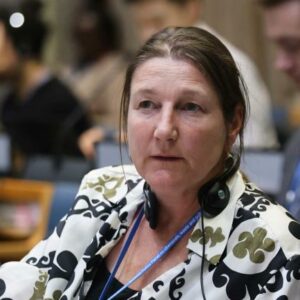
Tessa GOVERSE
Principal Coordinator, Secretariat of the ad hoc open-ended working group on a science-policy panel to contribute further to the sound management of chemicals and waste and to prevent pollution
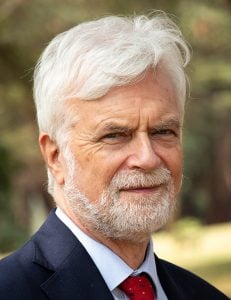
Jim SKEA
Chair, Intergovernmental Panel on Climate Change

Ermira FIDA
Deputy Executive Secretary, Intergovernmental Panel on Climate Change

David OBURA
Chair, Intergovernmental Science-Policy Platform on Biodiversity and Ecosystem Services

Anne LARIGAUDERIE
Executive Secretary, Intergovernmental Science-Policy Platform on Biodiversity and Ecosystem Services Secretariat

Nalini SHARMA
Secretariat of the ad hoc open-ended working group on a science-policy panel to contribute further to the sound management of chemicals and waste and to prevent pollution | Moderator
Road to OEWG 3.2 Series
In the lead-up to the establishment of a science-policy panel (SPP) to contribute further to the sound management of chemicals and waste and to prevent pollution, a series of webinars and events are being organized by the OEWG Secretariat and Geneva Environment Network to build bridges and promote collaboration and knowledge sharing between and among stakeholders, and to raise public awareness about the ad hoc open-ended working group (OEWG) preparing proposals for the scope, shape and functions of the panel.
Highlights
Video
Live on Webex.
Summary
Opening Remarks
Gudi ALKEMADE | Chair, Bureau of the ad hoc open-ended working group on a science-policy panel to contribute further to the sound management of chemicals and waste and to prevent pollution
- The resumed third session of the open-ended working group (OEWG 3.2) will take place in Punta del Este, Uruguay, from 14 to 20 June 2025, including the intergovernmental meeting.
- Chemicals, waste and pollution are among the most pressing global environmental challenges of our time. Pollution and its impact on human health, the environment, and social and economic societies is identified as one of the top 10 risks that need to be addressed.
- A dedicated science-policy interface will enable policymakers to make informed decisions that can drive tangible, coordinated actions to prevent further harm and promote a transition to a more sustainable future.
- Experiences and insights from the Intergovernmental Panel on Climate Change (IPCC) and Intergovernmental Science-Policy Platform on Biodiversity and Ecosystem Services (IPBES) will help guide the discussion and deepen our understanding of how to establish a robust and effective science-policy panel (SPP) that supports the transition to a sustainable, pollution-free pathway.
- The third resumed session will focus on finalizing the foundational document, rules of procedure, as well as agreements and recommendations to present for consideration at the intergovernmental meeting.
- It is imperative to remain efficient and come with solutions, building up on what has already been agreed. The complexity and the scope of discussions require institutional memory and ongoing engagement.
- Preparation and collective contributions are key in addressing the root causes of pollution and promoting sustainable pathways to protect human health and the environment.
- In addition to providing scientific evidence for policymakers, the SPP will also support global efforts to tackle the interconnected challenge of the triple planetary crisis, enabling governments and stakeholders to take coordinated and decisive action for the people and the planet.
Setting the Stage for Discussion
Tessa GOVERSE | Principal Coordinator, Secretariat of the ad hoc open-ended working group on a science-policy panel to contribute further to the sound management of chemicals and waste and to prevent pollution
- Given the urgency to tackle chemicals, waste and pollution-related issues, the establishment of the SPP is timely and necessary. The Panel will inform policymakers with scientifically robust knowledge and enhance the global ability to prevent pollution and improve the sound management of chemicals and waste.
- The structure, experience and best practices of IPCC and IPBES provide examples to build upon. We must consider the key takeaways from these bodies while building on the agreements in the UNEA Resolution that requested the establishment of the SPP, as well as progress achieved in previous sessions.
- The OEWG was established through UNEA Resolution 5/8, adopted in March 2022, to create a science-policy panel for the sound management of chemicals, waste, and pollution prevention. The resolution emphasizes that the panel should be an independent, intergovernmental body providing policy-relevant scientific evidence without being policy-prescriptive.
- The OEWG was unable to finalize its work by the end of 2024. The resumed third session will take place in June 2025 in Punta del Este with the goal of finalizing the foundational document and the draft rules of procedure. Resolution 5/8 also emphasizes the importance of ensuring coordination with other science-policy bodies, such as the IPCC and IPBES.
- Examining examples from IPCC and IPBES on its successes, stakeholders involved, and their interactions with Multilateral Environmental Agreements (MEAs) and other institutions, will enable us to understand what is needed for the establishment of the SPP that can deliver on the urgent need to manage chemicals, waste and pollution to protect human health and the environment.
Round of Introductions and Big Picture Insights
Jim SKEA | Chair, Intergovernmental Panel on Climate Change
- I have been the Chair of the IPCC since 18 months ago at the start of the seventh assessment cycle.
- Since 2008 I have been in the IPCC Bureau, I served as a vice-chair of Working Group 3 on mitigation during the fifth cycle and co-chair in the sixth cycle. I have seen developments including reviews of IPCC procedures and response to InterAcademy Council recommendations. The review of procedures will be a key focus in the upcoming cycle.
Ermira FIDA | Deputy Executive Secretary, Intergovernmental Panel on Climate Change
- I have been the Deputy Executive Secretary of the IPCC since 2020, with prior experience working on climate policy and programming for the UN and governments.
- Alongside the Secretary, I lead a small Secretariat team to support the IPCC’s mission, developing comprehensive assessments of climate science.
- As a deputy, I oversee meeting documentation, implement gender and communication strategies, support legal work, and engage with the UNEP, UNFCCC, and other MEAs.
- IPCC’s 36 years of experience and IPBES’s expertise offer valuable knowledge and lessons that can help establish a new panel on chemicals, a missing puzzle in the response backed by science to the triple planetary crisis.
David OBURA | Chair, Intergovernmental Science-Policy Platform on Biodiversity and Ecosystem Services
- I have served as the Chair of IPBES since 2023. As a coral reef scientist with expertise in climate impacts, ecosystem services and sustainability, I have taken part in the Global Assessment, joint workshop with the IPCC, and the Nexus Assessment.
- The establishment of the new panel on chemicals, waste and pollution is crucial in addressing the interconnected challenges and synthesizing science for policymakers.
- IPBES has established a rolling work program for the preparation of assessments, which involves a continuous interaction between science, policy, countries, and members in preparing science outputs. This process is crucial for ensuring the relevance and strength of our work for governments and the global community.
Anne LARIGAUDERIE | Executive Secretary, Intergovernmental Science-Policy Platform on Biodiversity and Ecosystem Services Secretariat
- I am the Executive Secretary of IPBES, serving since its establishment in 2014.
- One early achievement of the IPBES in its first decade is global awareness raising on biodiversity. Its assessments have well-informed policies at national and international levels, while bringing new communities, such as the business sector, around the topic of biodiversity. This progress highlights the importance of science-policy interfaces like the panel that is being developed today.
Keys to IPCC and IPBES success
Jim SKEA
- Consensus is not a requirement in IPCC but it is consistently achieved through our best endeavours, which strengthens IPCC’s impact. Scientific findings serve as a foundation for political discussions at the UNFCCC, with governments frequently referencing IPCC findings in the sessions. When struggling to reach a consensus, we use shorter huddles to deal with smaller issues, and full contact groups for more complex issues.
- One example of successful resolution is the debate over “nature-based solutions” versus “ecosystem-based adaptation,” where delicate wordsmithing in a huddle addressed concerns about whether the word “solution” could draw attention away from other critical actions such as transitioning from fossil fuels.
- A major challenge in Working Group 3 was achieving agreement on long-term emission and mitigation pathways, which required continuous negotiations in a contact group to frame “global modeled pathways” as constructions produced by scientists, rather than physical reality.
- When consensus is not reached, the IPCC follows WMO regulations, and differing scientific views should be noted in scientific documents, often in footnotes. However, in recent years, countries have preferred recording differing views in the meeting reports.
- The special report on global warming of 1.5°C posed challenges in reaching consensus, with one country objecting to references of nationally determined contributions before their formal submission. Another country issued a strong statement clarifying that approval of the summary for policymakers does not imply endorsement of findings in the report. So far, the IPCC has been successful in reaching consensus, although some scientific discussions have started to take on a negotiating character.
David OBURA
- A key success of IPBES has been its strong engagement with stakeholders, especially from outside the science community, incorporating indigenous and local knowledge into assessment reports.
- People, nature and culture cannot be separated, and we must be fully inclusive in the engagement processes, including free, prior, and informed consent and clear agreements on the use of knowledge.
- Task forces play a key role in maintaining consistency across assessments and facilitating partnership with other stakeholders. IPBES assessments are increasingly incorporating knowledge from different communities, although greater inclusivity in each process sometimes poses challenges.
Ermira FIDA
- The IPCC has progressively developed and formalized its principles and procedures since its establishment in 1988, including its role, processes and budget management. The principles, first adopted in 1991, have evolved into a set of 19 clauses and three appendices covering report preparation, financial provisions, and election processes. Although the principles provide for a review every 5 years, the IPCC has reviewed its principles whenever it was needed.
- In 2010, an independent review of the IPCC was conducted by the Interagency Council following criticism of errors in the Fourth Assessment Report. Its recommendations led to amendments in the governance mechanism and functioning system, such as establishment of the executive committee, implementation of an error protocol, development of uncertainty guidance and conflict of interest policy, and revision of communication strategy to improve public and stakeholder engagement.
- IPCC procedures often reflect the necessary compromises to balance political contexts with the scientific robustness of its reports.
- In addition, there is often a need for interpretation and clarification, sometimes requiring advice and intervention from lawyers of IPCC and parent organizations.
Anne LARIGAUDERIE
- The key to success in producing quality assessment and scientific excellence is a strong nomination process to attract the best scientists from all regions. It is crucial to include nominations in a transparent manner from scientific institutions, universities, and practitioners to increase policy relevance. The multidisciplinary expert panel of IPBES conducts the selection and oversees the implementation of scientific matters.
- The involvement of users, including governments and other stakeholders, should be ensured from the beginning. IPBES receives requests from governments, COPs, MEAs, and non-governmental stakeholders, who can also provide views that inform decisions by the multidisciplinary expert panel and plenary.
- Having strong operating principles is crucial as they define the identity and values of the new panel. For example, IPBES emphasizes the inclusivity of different knowledge, respect for indigenous people and local community, and interdisciplinarity, that guide the rest of the procedures.
- IPBES operates a trust fund managed by UNEP and relies almost entirely on voluntary contributions. We also allow for exceptional earmarked contributions; amounts below $300,000 can be approved by the bureau, and larger contributions would require plenary approval.
Who is involved?
David OBURA
- The involvement of experts in broad fields enables us to understand multiple knowledge systems. IPBES brings in independent science and different experiences from experts from the government, academia, and NGOs, along with strong focus on early career scientists and practitioners.
- We also invest in outreach and communication by engaging communication experts to translate information that is often complex for communities.
- Partnership is crucial in distributing information to networks of different communities, aligning with cultural contexts and relevant languages.
Jim SKEA
- Authors of IPCC reports work on a voluntary basis. An author team usually consists of 12 to 20 people, including two or three coordinating lead authors who oversee the chapter and lead authors who write the main text. A report is reviewed twice by experts and governments, and review editors check if comments and feedback are appropriately taken into account. Contributing authors may also provide texts or tables.
- Authors are nominated by governments, official observer organizations of IPCC, and Bureau members. The number of nominations has increased from five to ten times the available spots, making the selection process challenging.
- The selection process takes into account gender balance, representation of developed and developing countries, regional diversity, and prior experience in IPCC to ensure fresh perspectives in the reports.
- The process varies across working groups, often involving voting by Bureau members, but achieving balance in the various features remains a challenge.
- Although IPCC has relied more on traditional scientists, we are aiming to include more practitioners and holders of indigenous and local knowledge.
Anne LARIGAUDERIE
- IPBES has a collaborative partnership agreement with four United Nations organizations: UNEP, FAO, UNESCO and UNDP.
- We also have a memorandum of cooperation with MEAs including the Convention on International Trade in Endangered Species of Wild Fauna and Flora (CITES), Ramsar Convention on Wetlands, United Nations Convention to Combat Desertification (UNCCD) and Convention on the Conservation of Migratory Species of Wild Animals (CMS). They make requests to IPBES through their COP decisions and consider the findings and implications of the report for the work of their conventions and parties.
- There is close collaboration between IPBES and IPCC, with the IPCC Chair serving as an observer to the IPBES scientific body and the two organizations participating in each other’s plenaries and joint workshops. We hold many events and discussions, especially regarding approaches related to indigenous peoples and local communities.
- IPBES also engages with many other stakeholders, incorporating their input and energy through online dialogues and stakeholder days organized at each plenary. Each stakeholder contributes to IPBES in their respective ways.
Ermira FIDA
- Governments play a critical role in the functioning and governance system of the IPCC, in the decision-making process, report preparation, and through financial contributions. Their involvement ensures that IPCC’s work is both scientifically rigorous and policy relevant, setting “intergovernmental” panels like IPCC and IPBES apart from other “international” organizations.
- Governments play a key role in decision-making by approving reports, electing Bureau members, and deciding on work plans, budgets, and scopes and timelines of the reports. The decisions are made through consensus, which can be challenging.
- They also support report preparation by nominating experts and authors to review IPCC reports or providing data and feedback in the review process.
- Governments contribute to the IPCC Trust Fund to support its core activities, and there is growing interest in supporting the scholarship program, which has traditionally been funded by non-government sources. Apart from traditional donors, all member governments, including those from small island developing states and developing countries, now contribute to the Trust Fund.
Working together
David OBURA
- The global assessment influenced the development of the Global Biodiversity Framework (GBF) for the Convention on Biological Diversity (CBD). The findings contributed to the transition from the previous biodiversity strategy and structuring the GBF to address complex relationships between biodiversity, ecosystem services, and human dependence on nature.
- IPBES assessments have successfully targeted to meet the needs of various MEAs. Unlike the consistent cycles of IPCC reports, IPBES adopts a rolling work program to identify key issues that need to be addressed, enabling us to address the complex interactions between humans and nature.
Anne LARIGAUDERIE
- The close collaboration between IPBES and the CBD has been powerful and influential. CBD COP decisions often request new work from IPBES, and almost all IPBES reports, including the first Global Assessment, have been requested by CBD decisions.
- COPs also look at the findings of the assessment and decide on the implementation of the convention through its parties. For example, at CBD COP 16, recommendations were adopted to control the spread of invasive alien species and raise awareness on their harmful impacts on biodiversity.
- A notable example of the use of IPBES assessment by the CBD is the first Global Assessment. The Assessment serves as the scientific basis for the Kunming-Montreal Global Biodiversity Framework (KMGBF), influencing its structure and targets.
Jim SKEA
- The main connection with the IPCC Secretariat is through the Subsidiary Body for Scientific and Technological Advice (SBSTA), through information sharing at IPCC – SBSTA joint working group meetings. Efforts are being made to strengthen intersessional relationships with UNFCCC standing bodies, such as the finance and adaptation committees.
- It is important to ensure that UNFCCC decisions accurately reflect IPCC findings.
- We try to engage major groups by establishing focal points within the IPCC for better collaboration with various stakeholder groups, including Business and Industry NGOs, environmental NGOs, and indigenous communities.
Ermira FIDA
- Both IPCC Principles and the Convention text mention UNFCCC, such as the COP early decisions that require IPCC findings to inform the UNFCCC negotiating process.
- The special report on 1.5°C was the first precedent where the UNFCCC invited the IPCC to produce such a report, and communication specialists contributed to simplifying the key messages to be more accessible to the public. The report’s impact on public awareness, COP deliberations and climate action highlights the value of the partnership between IPCC and UNFCCC.
Links
- Ad hoc open-ended working group on a science-policy panel on chemicals, waste and pollution prevention
- Resumed third session of the ad hoc open-ended working group to prepare proposals for a science-policy panel to contribute further to the sound management of chemicals and waste and to prevent pollution (OEWG 3.2)
- Report of the first part of the third session of the ad hoc open-ended working group on a science-policy panel to further contribute to the sound management of chemicals and waste and to prevent pollution (UNEP/SPP-CWP/OEWG.3/5)