
Event Virtual
The Economics of Addressing Pharmaceuticals in the Environment | Addressing Pharmaceuticals in the Environment Series
01 Oct 2026
14:00 – 15:30
Venue: Online | Webex
Organization: UNEP Chemicals and Health Branch, Geneva Environment Network
This online event is part of the “Addressing Pharmaceuticals in the Environment through a Lifecycle Approach” Event Series, co-organized by the United Nations Environment Programme (UNEP) in cooperation with the World Health Organization (WHO) and the Geneva Environment Network (GEN).
About this Event
Pharmaceuticals play a key role in our daily life. They help safeguard human, animal and plant health, enhance food production, and contribute to economic prosperity. However, expanded access to medicines, population growth and ageing, the increasing prevalence of chronic diseases, the intensification of animal-based food production, and climate-related disease pressures are all contributing to a rapid increase in pharmaceutical consumption worldwide.
This growing production and use of pharmaceuticals, combined with the lack of sound management across their life cycle, has resulted to the widespread presence of pharmaceutical residues in the environment, raising concerns about their potential impacts on biodiversity, ecosystems and human health.
Different approaches to address this issue are being implemented at key stages of the life cycle of pharmaceuticals. These include upstream preventive measures, such as awareness-raising, innovation in manufacturing, responsible prescription and use, as well as downstream interventions, including the safe disposal of waste and improved wastewater treatment.
In this context, this webinar explored the costs of inaction, business models and innovations, and opportunities to mobilize economic and financial incentives through practical examples. It is part of the series of events “Addressing Pharmaceuticals in the Environment through a Lifecycle Approach” – organized by the United Nations Environment Programme (UNEP) in cooperation with the Geneva Environment Network (GEN) and the World Health Organization (WHO).

Addressing Pharmaceuticals in the Environment through a Lifecycle Approach Event Series
The United Nations Environment Programme, in cooperation with the World Health Organization, the Geneva Environment Network, and other key partners, is organizing a series of events to raise awareness and share best practices, challenges and opportunities to address this pressing issue. The virtual events bring together experts, decision makers and other relevant stakeholders from around the world to discuss innovative practices throughout pharmaceutical lifecycle and across key sectors such as pharmaceutical manufacturing, healthcare facilities, agriculture, food production, and municipalities/households, shedding light on the benefits of action as well as existing tools.
Speakers
Ludovic BERNAUDAT
Head, GEF Chemicals and Green Chemistry Unit, UN Environment Programme

Erta KALANXHI
Director Partnerships, One Health Trust

Andreia SANTOS
Associate Professor, St Mary's University, London, United Kingdom

Peggy LEFORT
Pollution & Circular Economy Lead, UN Environment Programme Finance Initiative (UNEP FI)

Ann-Lise MIKOLAJCZAK
Associate Director, Innovation and Sustainability Policy, IFPMA

Antoine ICHAS
Chemicals and Environment Manager, EFPIA

Jorge Enrique TRUJILLO SÁNCHEZ
Executive Director, Punto Azul Colombia

Elvana RAMAJ
Director of Circular Economy Directorate, Albania

Stéphanie LARUELLE
Programme Management Officer, Chemicals and Health Branch, UN Environment Programme | Co-Moderator

Gastón ITURBURU
Pharmaceutical Lifecycle Expert, UN Environment Programme | Co-Moderator
Highlights
Summary
Opening Remarks
Ludovic BERNAUDAT | Head, GEF Chemicals and Green Chemistry Unit, UN Environment Programme
- Pharmaceuticals play a critical role in safeguarding human and animal health, with positive impacts on food production and economic welfare. However, what makes pharmaceutical residues an environmental concern is closely related to what makes pharmaceuticals effective as medicines. They are designed to be biologically active at low concentrations, interacting with specific biological mechanisms.
- Increasing evidence shows their release into the environment throughout the life cycle, from manufacturing to use and disposal, with waste and wastewater as major sources and sectors such as healthcare, agriculture, and aquaculture.
- Today, pharmaceuticals have been detected in over 100 countries and in all UN regions. Some of these sites where they were monitored show concentrations with expected ecological effects. Others contain antimicrobials at levels of potential concern for resistance selection, which is another issue in which UNEP is active.
- Environmentally persistent pharmaceutical pollutants were recognized as an emerging policy issue under SAICM, a strategic approach to international chemicals management, and became an issue of concern with the adoption of the GFC and further discussion in the international conference in one month.
- In this context, health and environmental considerations are necessary to inform decision-makers on this issue. But considering the costs and benefits of addressing it or not will also help shape the decision. That is why we are convening this webinar today.
- We will explore the figures on pharmaceuticals in the environment, including the cost of inaction and the benefit of action, possible economic and financial incentives and business models, and investment cases.
Cost of inaction / Benefits of action – The economic cost of Inaction on AMR
Erta KALANXHI | Director Partnerships, One Health Trust
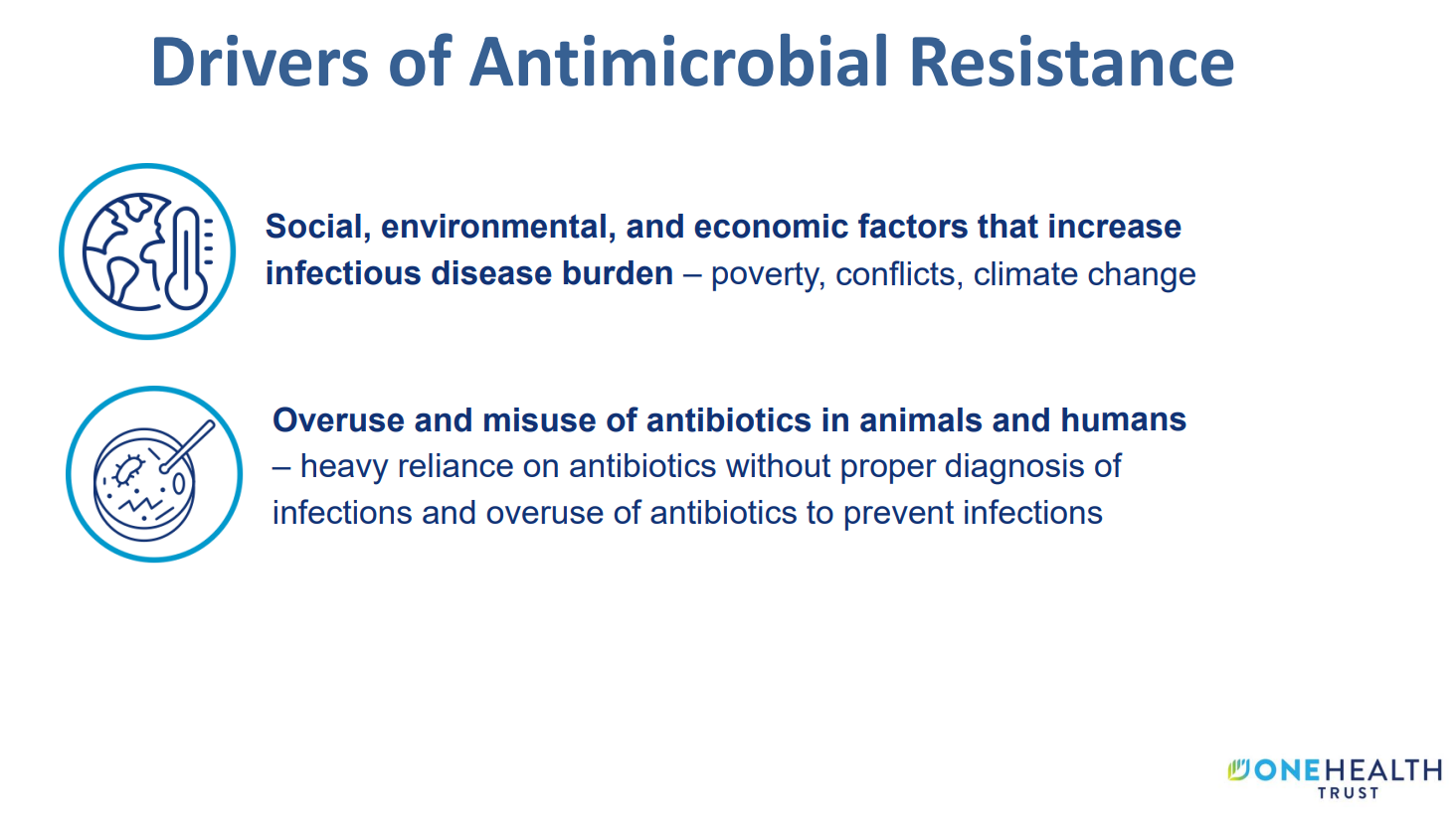
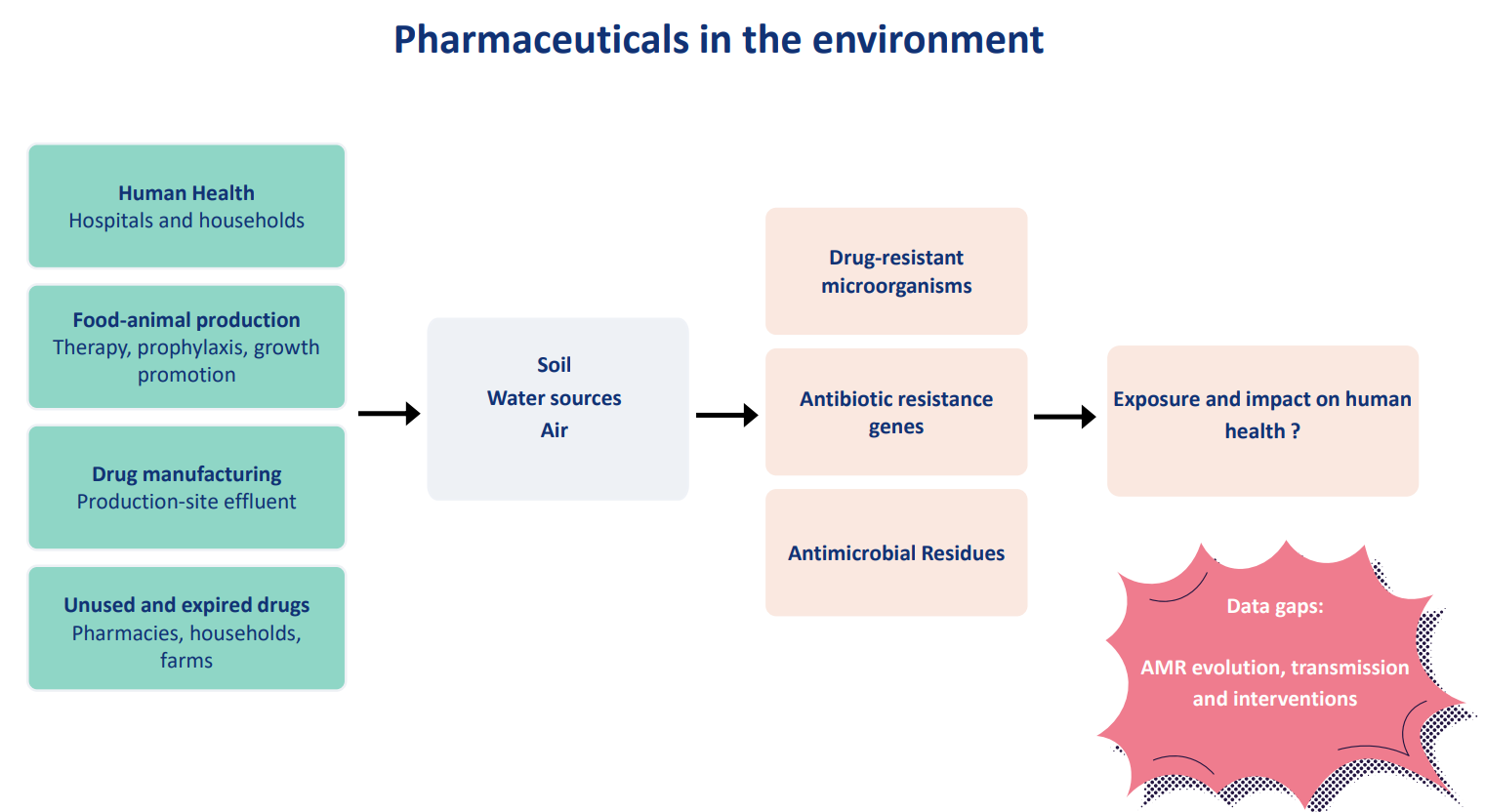
- To talk about the connection between pharmaceutical pollution and how it relates to health impacts, in this case through antimicrobial resistance, it is important to understand some of the factors that drive AMR. That way, we are able to position the environment exactly in the pathways that are enabling this interaction.
- Antimicrobial resistance causes substantial mortality and morbidity across the world, even though mortality values are the ones often used to bring forth the burden of AMR. There are a lot of additional costs to health, like productivity losses, as well as economic ones, that are very important.
- Of the 7.7 million annual deaths due to bacterial infections, almost two-thirds are associated with AMR, and 1.27 million are actually attributed to AMR. We are all vulnerable, but there are certain groups in the population, as well as people living in low-resource settings, that are mostly affected.
- AMR must be placed in the context of real-life examples, because it is often talked about as a phenomenon where bacteria or other microbes resist treatment. But there is so much more to AMR. The pathways are very complex.
- The main and core driver is antimicrobial use, including both overuse and inappropriate use. Upstream from that is infectious disease, which is often shaped by many different factors in a particular society.
Pharmaceuticals in the Environment
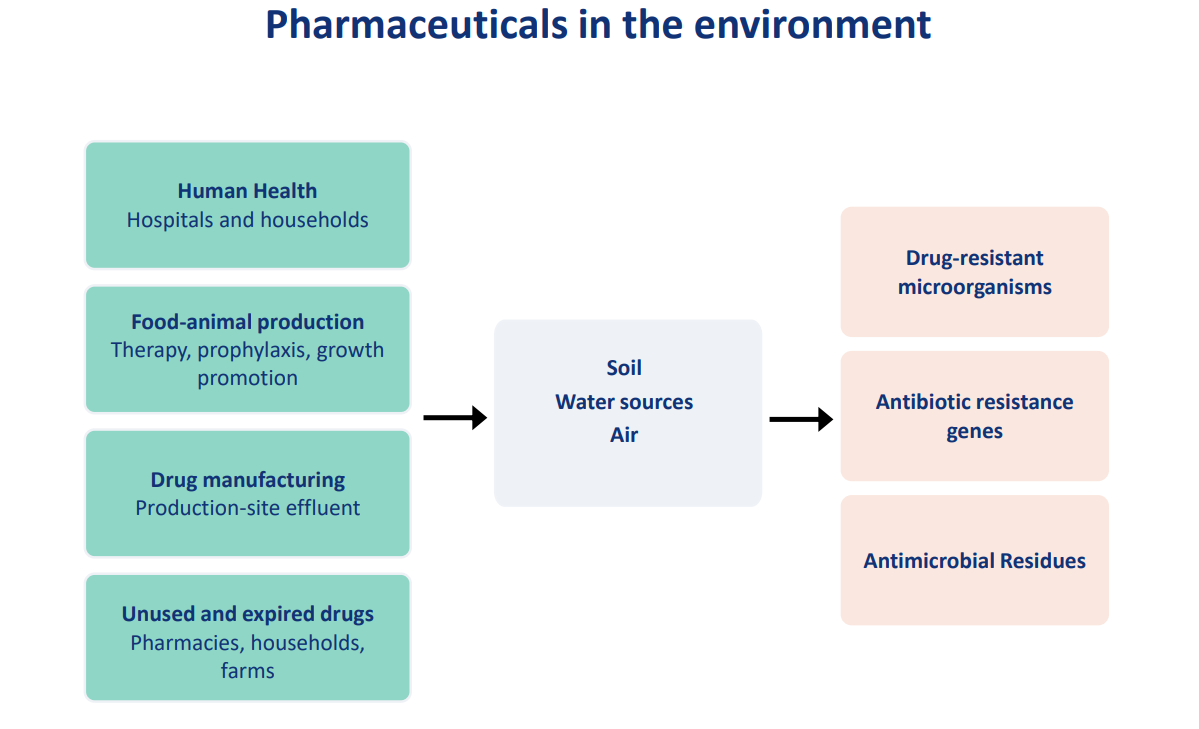
- The presence of these AMR-related drivers in the environment can lead to the selection of drug-resistant microorganisms, antimicrobial resistance genes, as well as residues that have not been metabolized, which can then exert and change or shape the microbial communities in the environment.
- If we are thinking about antimicrobial use in human health as a strong factor in the degree of environmental pollution, then we truly have to understand the importance of reducing antimicrobial use, because projections show that it is supposed to increase by 50% between 2023 and 2030, with the greatest increase being attributed to low- and middle-income countries, where there is also a much higher level of informal antibiotic use and inappropriate use.
- It is also worth looking at the trajectory for antimicrobial use in livestock, as the demand for animal protein is increasing. There is a significant increase projected between 2013, so over a decade ago, and 2030.
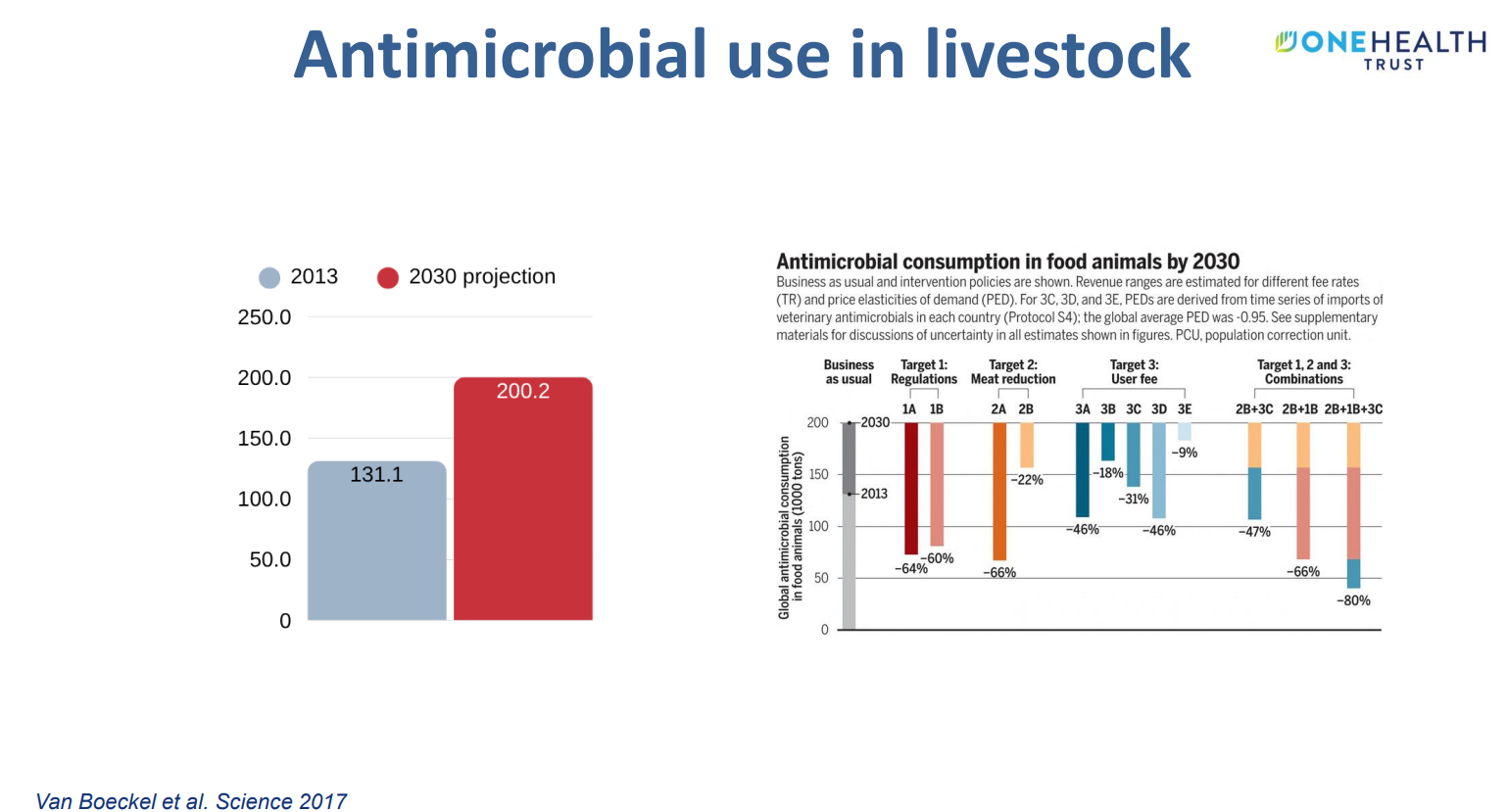
- Pharmaceutical pollution is in water bodies and the soil in concentrations which are way above those required to select for resistance in a clinical setting or in vivo.
- There are several studies that have shown this. This one in particular is looking at river samples across 104 countries and showed high levels of commonly used antibiotics. So the evidence is there.
- However, there is an issue with regard to having to actually connect this finding with the implication that it has for human health, both from a mechanistic perspective and, as a result, the cost.
- The cost of AMR and consider pollution from pharmaceuticals as a specific contributor to this problem, then you really understand that we are facing incredible losses in both health and economic terms going forward.
- Estimates from one of the recent reports from the Global Leaders Group on AMR project that by 2035 there would be a decline of almost 1.8 years in life expectancy, and over $400 billion in losses in healthcare spending and productivity losses.
- The good news is that when investing in interventions that are meant to reduce infectious disease, improve health systems, and create more sustainable agricultural practices, they would have a significantly high return on investment. For $1 invested, this could be 10 times the return by 2035 and almost 14 times more by 2050.
- Understanding the mechanistic pathways, the contribution that the environment has on antimicrobial resistance, and more closely on human health has not been prioritized. But it is really time to do that through the generation of data that shows how resistance evolves, pathways of transmission, as well as the impact that certain interventions could have in reducing this pollution.
Gastón ITURBURU | Pharmaceutical Lifecycle Expert, UN Environment Programme
- Cases of the potential effects of pharmaceuticals on the environment and evidence of impacts on ecosystem services.
- Pharmaceuticals are vital to human, animal and plant health as well, and contribute to food security and economic well-being. As production and consumption of pharmaceuticals are rising globally, pharmaceutical residues reach the environment, including water, soil, sediments, ecosystems, plants and animal tissues. We already know that these residues are there, and the releases are coming from different sectors throughout the life cycle, from production to use to final disposal, including waste and wastewater.
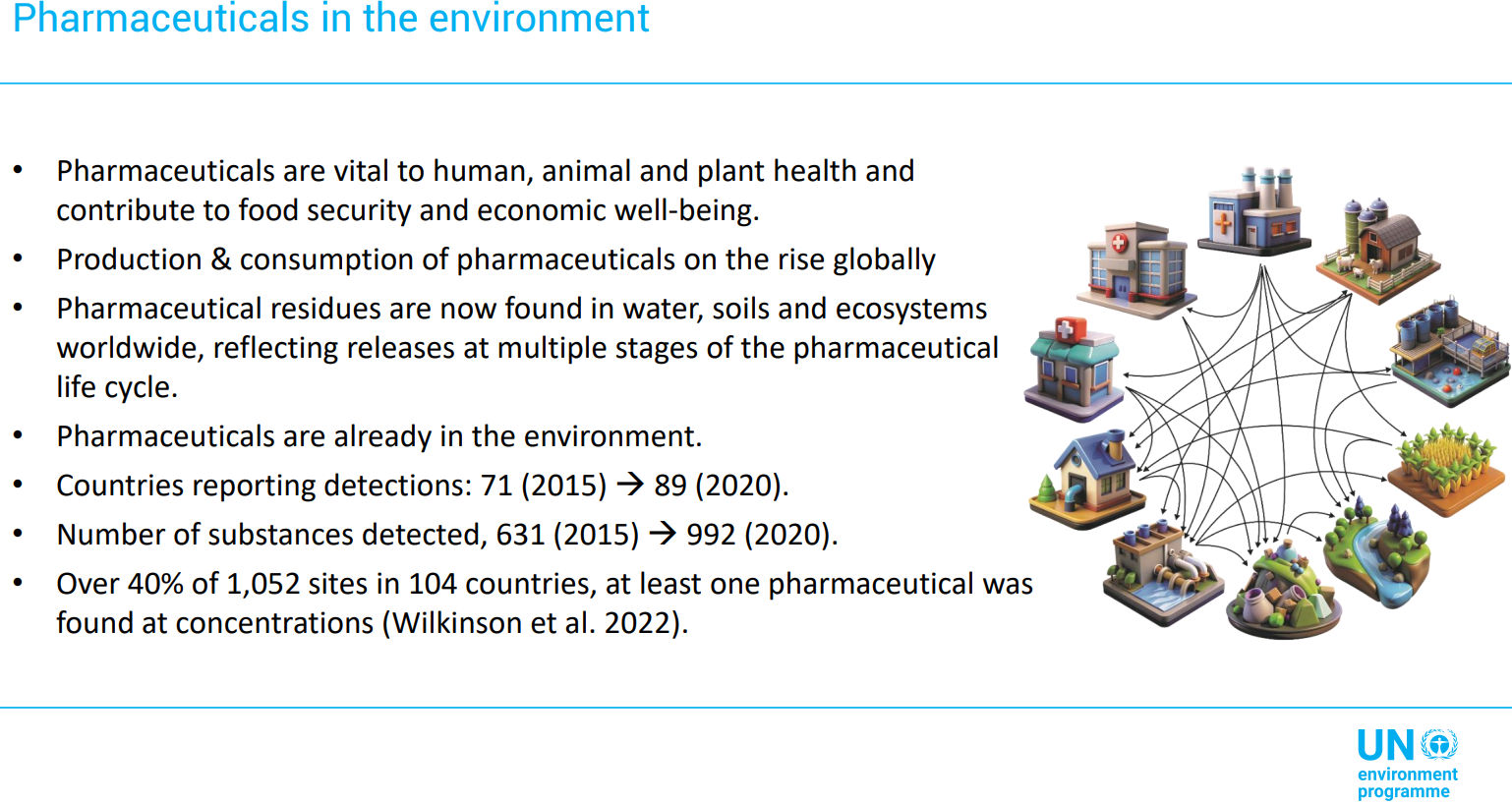
- It is not only about the presence; it is also about the risk of these compounds being there in the environment. A global river monitoring study showed that over 40% of the 10,000 sites monitored around the world had at least one compound that represented a risk for the environment.
- Environmental monitoring remains limited, particularly in low- and middle-income countries, and also many pharmaceuticals currently were authorized before environmental risk assessment requirements existed. There are these legacy compounds that need to undergo environmental risk assessment
- There are some pharmaceutical groups that are of environmental concern globally. For example, environmentally persistent pharmaceutical pollutants. As already mentioned, they are now an issue of concern in the context of the Global Framework on Chemicals, and the future of this issue of concern will be discussed in November at the first international conference. There are also pharmaceuticals that could elicit endocrine disruptor effects, as well as antimicrobials leading to antimicrobial resistance, and, among other effects, anti-cancer active pharmaceutical ingredients.
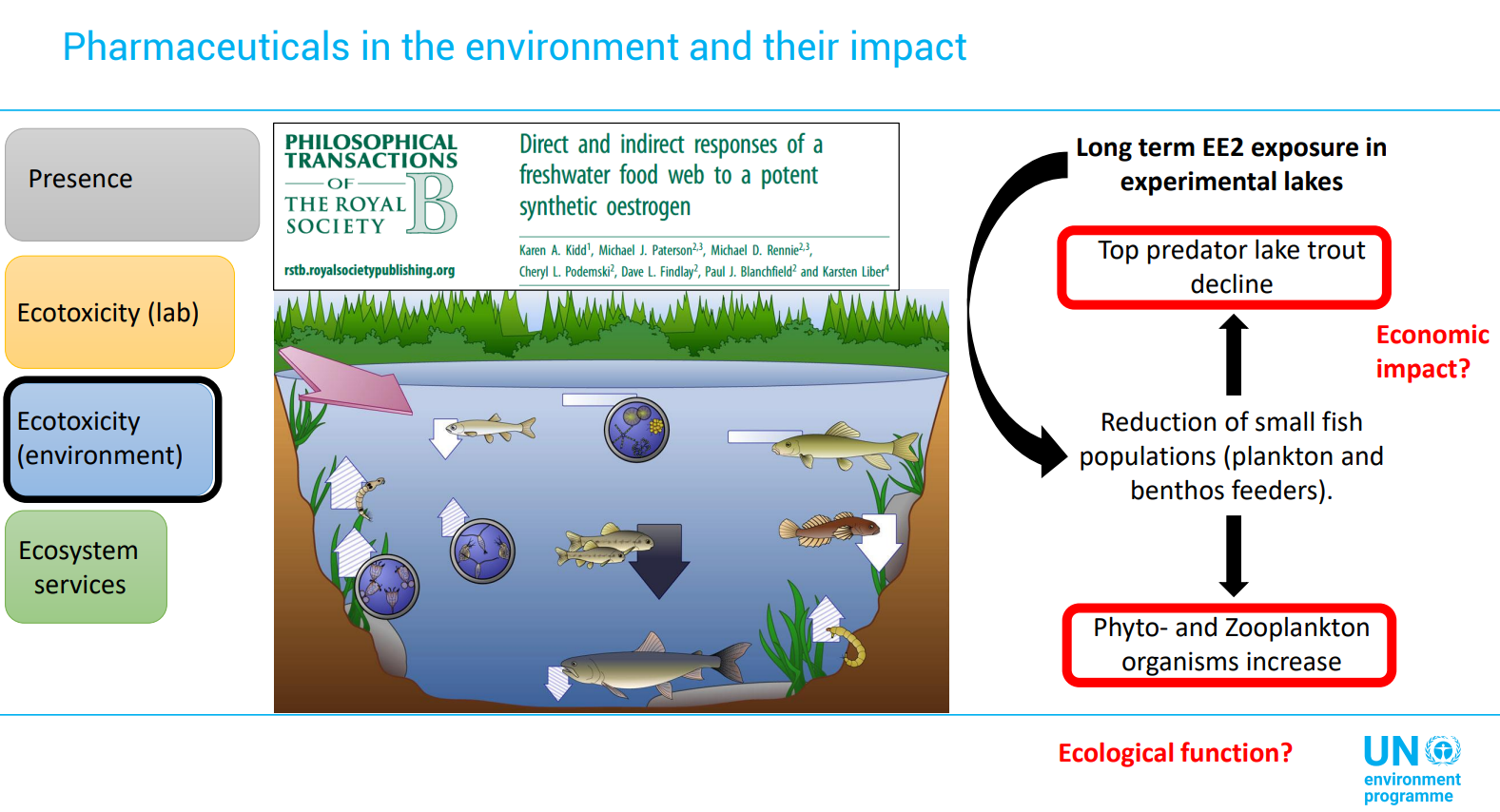
- There are many other groups here. I wanted to highlight something about this scheme and the evidence, because we have different levels and amounts of evidence, but the weight of evidence is different. We can move from presence in the environment to ecotoxicity assessment, at laboratory scale and at the environmental scale, and also to ecosystem services impact.
- If we move from presence to ecosystem services, the weight of evidence increases because we are looking for the ecosystem services and the impact on humans, but also on some ecological functions. However, the amount of evidence is greater for presence in the environment and not for these types of effects or impacts.
Cases about some assessment of ecotoxicity:
- This is a classical case in the Experimental Lakes Area in Canada, where researchers exposed complete experimental lakes to ethinylestradiol, a synthetic hormone. They saw that after three years of exposing these lakes to environmentally relevant concentrations of estradiol, it had a direct effect on the reduction of small fish populations and an indirect effect on plankton organisms increasing because these small fish feed on plankton and benthos. They also had an effect on top predators, lake trout, and their population declined.
- It leads us to think that maybe we do not care about small fish and people should maybe not care about small fish, but sometimes it could lead to an economic impact as well because of fisheries, for example, or recreational fishing of trout in the lake. Maybe we are disturbing some ecological functions.
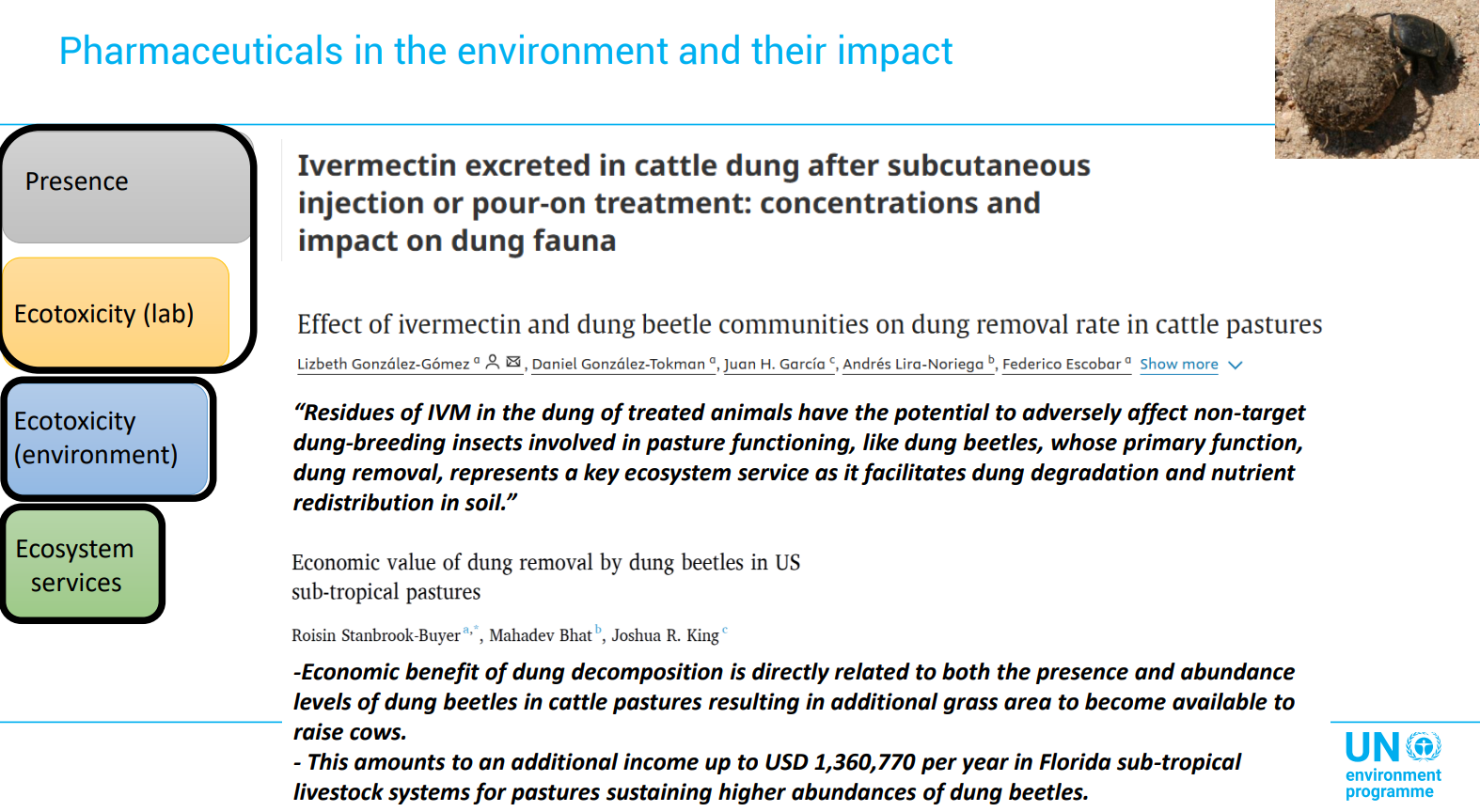
- Another typical effect is how we increased our knowledge about dung beetles. Since 1992, we have known how the antiparasitic is applied to cattle, and it remains in detectable concentrations in the dung of the cattle. It could affect the fauna removing this dung from the grasslands.
- Here we move from knowing about the presence to ecotoxicity assessment, to detecting that this could affect the degradation of dung and nutrient redistribution in soil. In the last years, there were some estimates about the amount of additional income that we could have, for example, in the case of Florida State in the United States. Having dung removal by this fauna would lead to economic benefits without disturbing them.
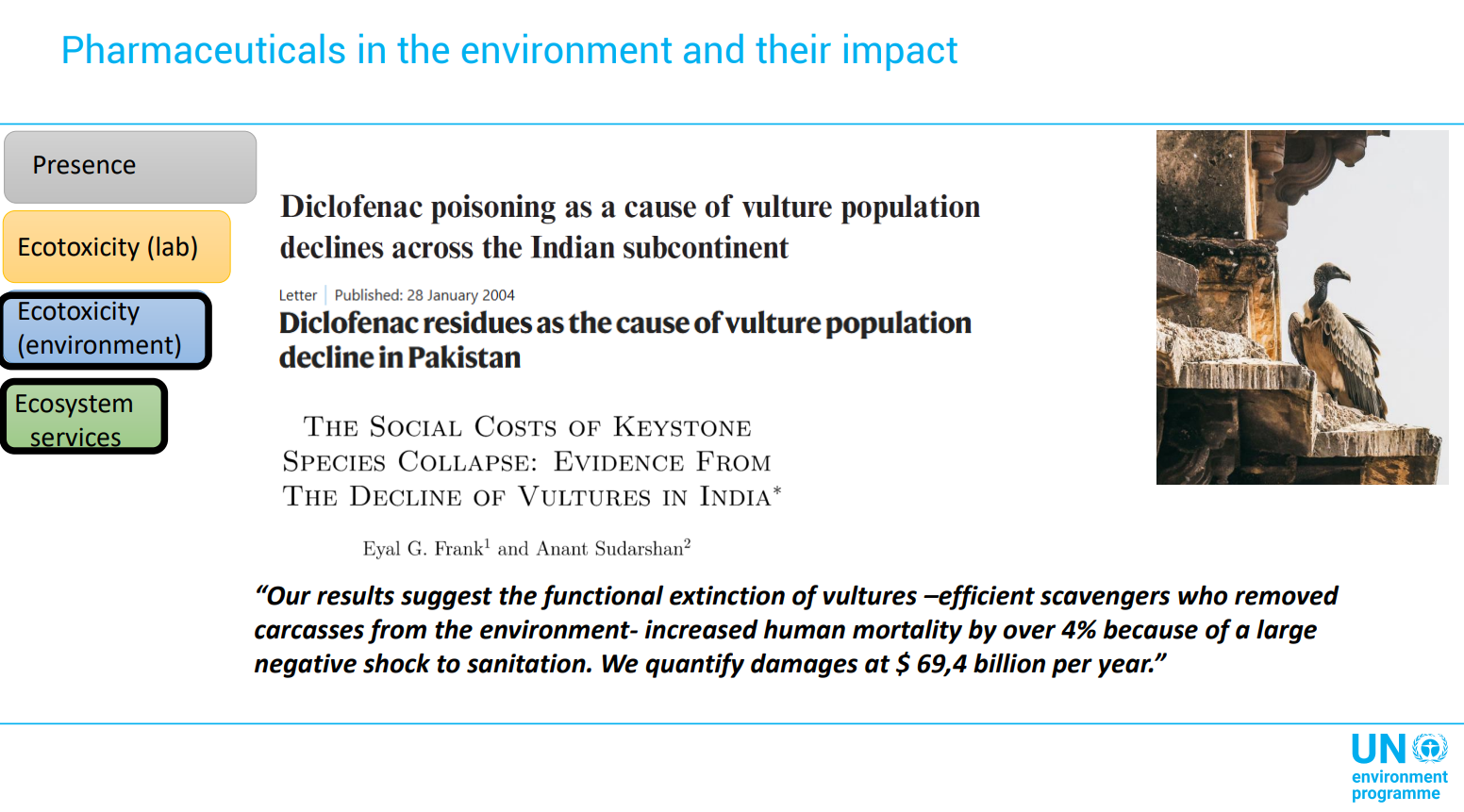
- Another typical case here is the case of vultures in the Indian subcontinent that was reported from the early 2000s. In 2004, it was reported that there was a major episode of vulture poisoning with diclofenac, which was in the carcasses of dead animals in the environment. These animals feed off these carcasses. So there was something like a functional extinction of some of these species there.
- Some researchers in 2024 made an estimation of the economic impact of this decline in population because these vultures are efficient scavengers at removing carcasses from the environment. Without this ecosystem service, they calculated that human mortality increased by over 4% in these regions because of the large negative shock to sanitation, and they quantified a damage of $69 billion per year because of this effect.
- There is growing evidence of the presence and impact of pharmaceuticals in the environment. Data gaps remain in some groups of pharmaceuticals and impacts at population, community and ecosystem levels.
- There is uncertainty about the full scale of the problem, but it should not be confused with the absence of demonstrated harm. The objective, of course, is not to constrain access to safe and effective medicines, but to ensure that their health benefits are delivered while minimizing avoidable environmental harm. Global cooperation can reinforce this.
Andreia SANTOS | Associate Professor, St Mary’s University, London, United Kingdom
- My focus will be on the planning of a study led by UNEP on the benefits of action on sustainable chemicals.
- The study is broader and more ambitious, and it covers not only pharmaceuticals but many chemicals related to four sectors linked to the Global Framework on Chemicals. At this stage, we have a strong study design to look at the health burdens of the management of chemicals, the benefits of sustainable chemicals. But we are also planning to look at the environmental metrics as well, although this level of data is still a bit of a challenge for us.
- Our focus is mainly on health, but we are also looking at the environmental impact as well. When I say health burdens, I am talking about not only mortality but also morbidity. Morbidity here is measured in terms of the number of new disease cases that could be prevented if you have sustainable management of chemicals, but also productivity levels of people who get sick and are unable to work.
- In terms of economic valuation, we are looking at cost savings to the health sector and also productivity levels. Depending on the level of data that we can gather, including the quality of the data, we are also planning to do some environmental gains assessment.
- Once we have this impact, this benefit of action, we are looking at what pathways lead to these benefits of action. So we are not only interested in the mitigation strategies, but we are also interested in what makes these mitigation strategies effective and enables them to have an impact on the sustainable management of chemicals. We are really trying to have this full cycle of assessment for the benefits of action on the sustainable management of chemicals.
- We are moving away from an approach where we look at the entire cycle of the chemicals. Instead of just looking at chemical by chemical, we look at the entire cycle of chemicals.
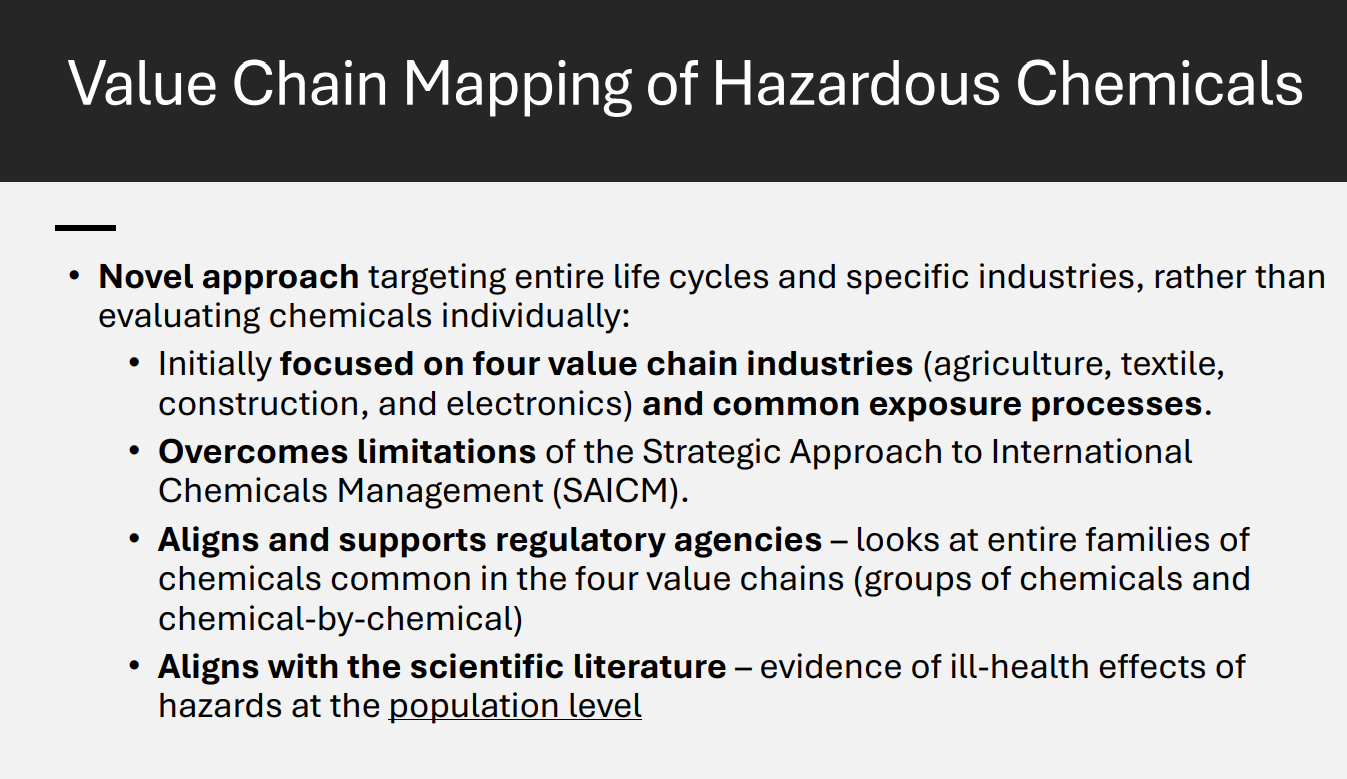
- It also aligns with the scientific literature because we are looking at the evidence that exists. From the past 10 to 15 years, the number of studies relating hazardous chemicals to human effects has really grown exponentially. So we are in a very good position to look at this literature and the quality of this literature and establish this link between hazardous chemicals and human effects.
- Here is just an example of how we took advantage of looking at these value chains for the different sectors. Then we could identify what are the chemicals being emitted. What are these chemicals? First, list these chemicals, which chemicals are being emitted, and also who is being exposed, not only in terms of occupational exposure but population exposure as well.
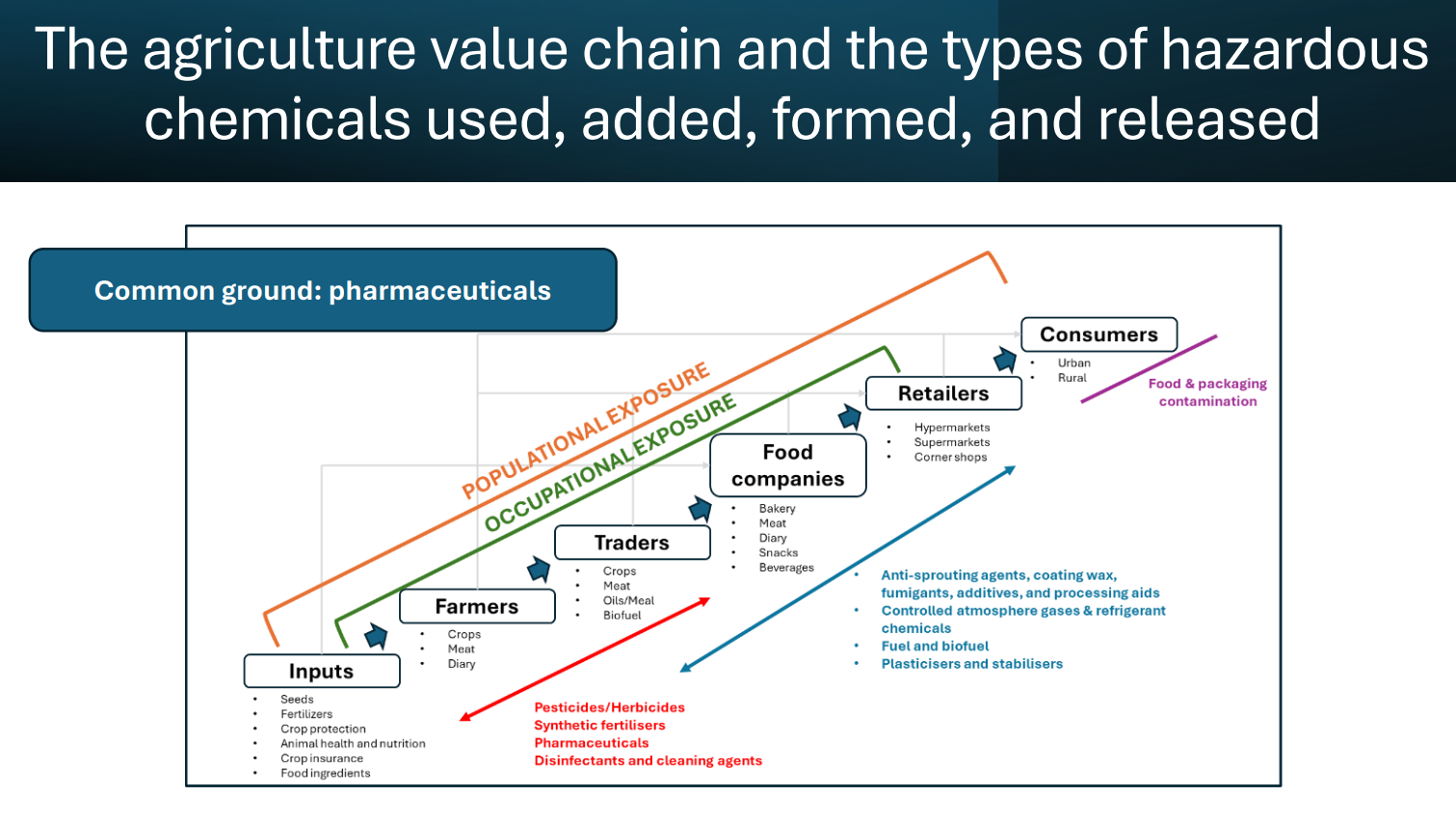
- For example, people who live near the farmers or people working directly with the products. As you can see here, we have the different aspects of the production, from inputs, so the products that the farmers and everyone working throughout the value chain, like farmers, traders, food companies, laboratories, et cetera, use the inputs until reaching the consumers.
- What are the different activities? What are the chemicals being added for and released and used in these different activities? Then we were able to identify these chemicals and also the population who are exposed to these different levels of exposure to hazardous chemicals being used.
- If we look at how pharmaceuticals enter this chain, you can see here that pharmaceuticals go not only in terms of antimicrobial exposure but also in terms of the discharge of the chemicals.
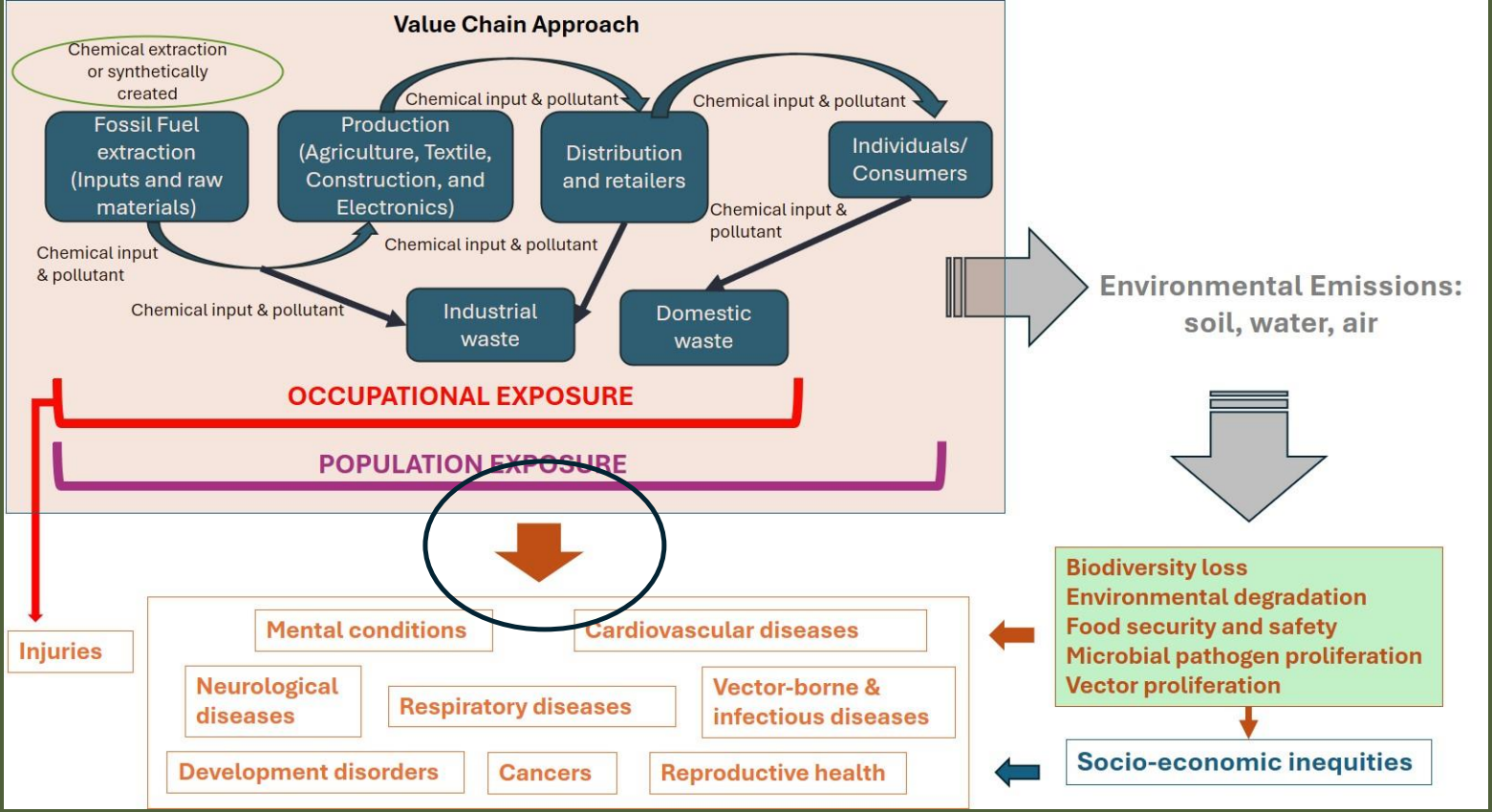
- Here, the focus will be really on these four value chains and the effect on the different diseases. Of course, the environment is there behind, but we are still trying to get an understanding of the data that is available.
- In terms of economic evaluation, in terms of the cost of illness, that is a tangible cost, so the number of hospitalizations, people being diagnosed and treated because of diseases. That is the cost that we can avoid, but also what we call disutility. That is intangible cost in terms of suffering and mental health diseases as well. So dementia, depression, anxiety, all these causes will also be taken into account.
Economic and Financial incentives
Peggy LEFORT |Pollution & Circular Economy Lead, UN Programme Finance Initiative (UNEP FI)
Perspectives on the risks and opportunities that pharmaceutical pollution presents for financial institutions and also the role that they can play to tackle this issue.
- Why should financial institutions care? What are the risks and opportunities for them? What can they practically do?
- Financial institutions have an important role to play because they are connected to this issue through the companies and activities that they finance. Pharmaceutical manufacturers, healthcare, agriculture and livestock, water and wastewater, and waste management all provide opportunities for technologies and solutions.
- What is key is really to look beyond pharmaceutical manufacturing and consider the whole value chain and life cycle, and how financial institutions can support the transition of companies across the value chain to reduce the impact of pharmaceutical pollution on the environment, on people and on society.
- Financial institutions should also care because the impacts of pharmaceutical pollution can then generate financial risks through various risk transmission channels. We have analyzed these risk transmission channels in a publication called Navigating Pollution: A Blueprint for the Banking Sector, which made this analysis for a few high-impact sectors and value chains, including pharmaceuticals.
- What is important is really to take a double materiality lens, to look at the impact of what is financed on the environment, health and society, but also what the potential risks generated by these environmental and social impacts are.
- The potential risks for financial institutions include:
- Regulatory and legal risk, because we see requirements on pollution, on water quality, on pharmaceutical residues and antimicrobial resistance which are developing.
- Credit and investments risks For instance, if companies, clients of financial institutions, or investors face additional capital expenditure, compliance or remediation costs linked to pharmaceutical pollution.
- Reputational risk, particularly where pollution affects drinking water, ecosystems or human health.
- Transition risk, as better monitoring technologies make it increasingly possible to detect pollutants at very low concentrations and identify pollution sources. An important forward-looking question for financial institutions is whether what may not appear financially material today could become material for their clients tomorrow.
- We should not see it only as a risk issue, but also as an opportunity. Addressing pharmaceutical pollution also creates opportunities to finance solutions through the support that they can provide to their clients across the entire value chain, for instance, green chemistry and medicines with lower environmental impacts, more targeted drug delivery technologies, medicine take-back and reverse logistics systems, advanced wastewater treatment technologies.
- We have mentioned the kind of return on investment which can be expected on the antimicrobial resistance side, for instance. So those represent real opportunities for the financial sector as well.
- What can financial institutions practically do?
- They can first understand better their portfolio exposure. So identify the potentially relevant sectors and activities in their financial portfolios, including pharmaceuticals, healthcare, livestock, water and waste, and integrate pharmaceutical pollution into their credit risk assessment and financial decision processes. Rather than developing a separate framework, really embed this issue in their internal policies and processes.
- Second, they can also engage with their clients and with companies. For pharmaceutical companies, financial institutions can ask: How are environmental considerations integrated into product development? How are manufacturing influences and active pharmaceutical ingredients managed? How are supply chain impacts addressed? What happens to unused medicines and pharmaceutical waste? What investment is planned for cleaner production and wastewater treatment?
- This engagement with clients can help financial institutions to better identify not only the risk, but also what are the clients’ transition plans and financing needs.
- Provide financing solutions can include financing for cleaner production, green chemistry and innovation, advanced wastewater treatment, water efficiency, pollution control technologies, circular supply chains, and medicine collection and take-back systems.
- You can find some examples of solutions, for instance, on the wastewater side in a recent publication, Circular Solutions to Achieve Nature Targets, which we published in September, and which looks at how banks can finance circular solutions that address impacts on freshwater and other ecosystems. It includes some case studies, including on wastewater treatment.
- To close, what more is needed to accelerate and scale up action? Although attention is increasing, chemicals pollution and pharmaceutical pollution still tend to rank relatively low among financial institutions’ sustainability priorities, compared with climate, for instance.
- Moving from individual examples to action at scale will require addressing several barriers. Some of what is needed is greater awareness and capacity within financial institutions because it is such a complex topic. There is such a rapid pace of pharmaceutical and technological development. Greater awareness and capacity building is important.
- But it is also about the enabling environment. So, creating clearer and more consistent policy signals, because regulation remains fragmented. Greater regulatory consistency could help financial institutions to assess companies, understand transition risk, identify credible solutions and provide legal predictability for financial institutions.
- One key barrier that is really coming up periodically in all our engagement with our members is data and tools. There are still important gaps in the availability and comparability of data on releases, on impacts, on company performance.
- There are already standards and tools. The EU Taxonomy provides a common classification framework with technical screening criteria specifically for the sector. The TNFD, the Taskforce on Nature-related Financial Disclosures, also published sector guidance for biotechnology and pharmaceuticals.
- We have here a representative from EFPIA. The Eco-Pharmacos Stewardship Initiative, the EPS Initiative, is a useful framework to identify and address emerging and ongoing environmental concerns.
- It is important to understand the current landscape of disclosure and reporting standards and tools, and where the data gaps are and what the opportunities are to improve harmonization and interoperability between standards.
- In this perspective, the Global Framework on Chemicals and the first international conference taking place in November represent an important opportunity to help create this stronger enabling environment for finance.
- Financial institutions can play a key role, and to move to scale, we need better data, practical tools, clearer policy signals and stronger cooperation between governments, industry and finance.
Economic & Financial Incentives
Ann-Lise MIKOLAJCZAK | Associate Director, Innovation and Sustainability Policy, IFPMA
- When we talk about financial and economic levers, it is a shared responsibility. No single actor can really solve pharmaceuticals in the environment alone, and the economic incentives that we will propose should engage a full continuum of stakeholders, from manufacturers, suppliers, healthcare systems, patients, wastewater operators and governments, basically the entire life cycle.
- This life cycle framing is really important when we talk about that topic, and it has been highlighted by some previous panelists. It should encompass really everything: manufacturing, use, disposal and wastewater treatment.
Manifacturing
- Our companies are already complying with a large set of regulations, be it at the national, regional or global level, to ensure that emissions of chemicals in the environment are limited.
- We can just provide a few examples. For instance, in Europe we have the Industrial Emissions Directive and Classification and the Labelling and Packaging Regulation (CLP). The Industrial Emissions Directive and the Classification, Labelling and Packaging Regulation, the CLP, are two examples that are key in Europe. In the US, we have, for instance, the Clean Water Act for manufacturing discharge and resource conservation.
- While those texts are important, another point that we wanted to stress is that we need to involve the suppliers because, of course, pharmaceutical companies are manufacturing some products, but you have an entire system, an ecosystem of suppliers that are involved, who supply chemicals used to develop the final product. Having this engagement throughout the value chain is absolutely key if we want to make progress and move the needle on pharmaceutical pollution.
- Another example is the antibiotic manufacturing standard. This antibiotic manufacturing standard has been proactively developed by the pharmaceutical industry to really have a globally recognized, independently certifiable framework for controlling antibiotic manufacturing emissions to reduce the environmental AMR risk.
- We know that compliance with that standard is a bit uneven across the globe. In particular, the lower-income countries who have plants for generic or biosimilar medicines, for instance, and our industry is also opening the door to sharing best practices and knowledge on that standard.
- Another point that I wanted to make is around regulatory fragmentation. This is a complexity that is sometimes overlooked, including on the cost side, and really, if you integrate additional environmental control in one country, it can lead to global fragmentation, increase compliance costs, reduce efficiencies and create unnecessary supply chain risks that are not necessarily delivering better environmental outcomes.
- The focus should always be on ensuring two aspects: the timely and safe access to quality medicines and, at the same time, making sure that we all work together to lessen the environmental impact. So, we have a dual role here as health organizations.
- Nevertheless, we can also think about more forward-looking measures, such as at the product development side. Incentives for more sustainable product innovation, that means really sustainable design and development of new health products is an area where we are open to collaborating.
- Of course, the focus should always be to find new drugs, new medicines and vaccines for improving health outcomes for our population, but we are open to discuss some new pathways for that, and we can give the example of the Safe and Sustainable by Design principles and the recommendation of the European Commission to embed them in the development and manufacturing of products across the EU.
- So, this is an example of a practical way to really try to push companies to achieve those goals.
- Then I will mention two last points in that spirit of working throughout the entire value chain.
- We have upstream preventative measures that are really interesting to look at, and economic and financial incentives, or making the case for that, are really important. Of course, prevention and take-back programs are often lower-cost opportunities to reduce the emissions before they reach the water, the soil, the environment in general.
- Having safe disposal pathways for medicines, as well as prevention through awareness-raising among healthcare professionals and the general public, is really important. An example of that in Europe, is the Meds Disposal campaign in Europe, which is explaining and raising awareness of the proper disposal of medicines, which is absolutely important.
- Last point, and I stop here. I know that we are running with the clock. The downstream measures.
- Wastewater treatment is a very efficient tool to remove pollution from pharmaceuticals. But not only that, it also has co-benefits. It can really help to decrease the concentration of other chemicals in the environment, but also pathogens, agricultural contaminants, and those measures are really generating wider public health and environmental returns.
- One intervention can have broader benefits. So, the economic value and the case is made. Having a government working with the appropriate stakeholders for wastewater treatment plants is really important and should be improved in the countries where there is nothing in place.
Open Discussion
- Are there other costs associated with the presence of pharmaceuticals in the environment, or other benefits of taking action that we are not overlooking?
Andreia SANTOS | Associate Professor, St Mary’s University, London, United Kingdom
- One of the big issues is the high emissions of pollutants. For example, I was just looking at the statistics, and apparently it surpassed the automobile sector. When I say emissions, it is not only carbon emissions but all types of air pollution, so that is something that we could also look at.
- When you look at pharmaceutical production, the heavy release of pollutants is putting a lot of pressure on petrochemicals and the production of petrochemicals is another issue, especially when you are talking about fossil fuels.
- One of the big areas here in the UK, for example, that is being given a lot of attention is the disposal of pharmaceuticals, not only in terms of water contamination but soil contamination as well. This is really linked with the overuse or over-prescription of pharmaceuticals, so that is another area that could be something that we could look at in more detail, trying to understand what the main drivers are and also how it could be tackled in the future, and also the costs related to that.
- When you talk very briefly about antimicrobial resistance, one thing that we need to look at, maybe through modeling, is the issue of outbreaks. In the UK, for example, DRA has some studies looking at the impact of outbreaks. It is not a pandemic, but it has a really high cost for the producers and cattle growers.
- That is the broader aspect of pharmaceuticals. It would be really useful if we could look at it in the same way that we are looking at chemicals, as a value chain and the different contributions from the inputs to consumers. It could be helpful to identify what costs are missing.
Antoine ICHAS | Chemicals and Environment Manager, EFPIA
- For the disposal of pharmaceuticals, improper disposal is a global issue. When we have discussions with policymakers and when we work on external communication for pharmaceuticals, we do a lot of campaigns around the proper disposal of pharmaceuticals.
- For example, the Meds Disposal campaign is a website where everyone can look and see where they can bring pharmaceuticals near their home.
- What we see lacking here is support from public authorities, because the industry can co-finance these campaigns. We can develop these campaigns, but ultimately we really need the support of healthcare practitioners, hospitals and public authorities to support us.
- We have great results in the northern European countries and less, I would say, more bad results in other countries. This is something that we have to be very cautious about, and we work towards improving the results there. Proper disposal of medicines is something that we will always work towards, and we are ready to pursue the campaign and collaborate further on this.
- But that is a European perspective. We also need to turn our gaze toward the rest of the globe, where this awareness may not exist, or may not exist to the same extent. Maybe it is one of the areas where we can work with the GFC to ensure that we have internationally agreed guidelines for raising awareness in countries where we may see it lacking. We are definitely ready to work together on this.
- Regarding pollutants, we have more and more legislation to ensure that emissions of pollutants are reduced in Europe. We have now a PFAS discussion to reduce the emission of APIs in the environment. So, we are going to get there to a point where hopefully, at some point, there will be zero emissions in the environment from the manufacturing part, at least, thanks to wastewater treatment, proper disposal of hazardous chemicals and proper disposal of waste.
- Again, we have some frontrunner countries, this is quite unequal across the globe. We know especially that in lower- and middle-income countries, because they have facilities developing generics and biosimilars, the standards may not be the same.
- We have to work with public authorities and international organizations to see how we can improve the situation. As innovative companies, we are currently complying with all the legislation in place with all the legislation in place, but it is mostly in Western countries. So, we have to see what more we can do, but also how we can share good practices and share our input with other countries and other companies.
- The Eco-Pharmaco Stewardship it can be explored and built upon, GFC is a great opportunity for that.
Question
- What financial or economic levers will allow governments or the industry to address the issue of pharmaceuticals in the environment?
- It is about what governments can do, but what financial or economic levers will allow governments or industry to address the issue of pharmaceuticals in the environment? What are the levers?
Erta KALANXHI | Director Partnerships, One Health Trust
- We look at antimicrobial resistance as the end result of a lot of systemic issues. We are very much focused on how to reduce antimicrobial use. To be able to do that, a lot of the measures that the government can take are through either regulations or incentives.
- With regards to use in animals in an agricultural setting, putting a cap on the amount of antimicrobials that can be used per, let us say, 10,000 inhabitants, regulating the amount of use in agriculture could, for example, force or make room for other measures to be able to achieve that.
- Another option is adding a tax. This was something that was proposed by some of the researchers in our organization, looking at some of the ways that the government could impose a tax for, let us say, antibiotic use over a certain limit.
- But, the regulations are far from implementation and regular enforcement.
Peggy LEFORT | Pollution & Circular Economy Lead, UN Programme Finance Initiative (UNEP FI)
- Many of these solutions on cleaner production, on pollution prevention technologies, on more advanced wastewater treatment, require significant upfront investment, and some of the benefits will not necessarily generate a direct financial return, or the return may appear a bit later on.
- So, this is where blended finance can play a catalytic role, by combining public and concessional finance with solutions like first-loss mechanisms, guarantees, and risk-reducing solutions. It can improve the risk-return profile of investments which otherwise would struggle to attract commercial finance.
- The public component of financing and public capital can then really act as a catalyst to attract private finance, because at the end of the day, it is private finance which really needs to be mobilized at scale.
- There are very good examples of successful blended finance systems put in place to address other issues, which could be replicated in the pharmaceutical sector. What is important is also to think about how these kinds of solutions can create system change, rather than really financing individual transactions, but rather financing transactions that have the potential, given the policy environment and technological potential, to change the system itself.
- That requires collaboration between different types of actors. Therefore, blended finance is very important.
Business models and Investment Cases | EPR: An Investment Rather than a Cost for the Pharmaceutical Industry
Jorge Enrique TRUJILLO SÁNCHEZ | Executive Director, Punto Azul Colombia
- Punto Azul is a nonprofit organization that represents 97% of the pharmaceutical industry in Colombia regarding extended producer responsibility for pharmaceuticals.
- Based on these 17 years of experience in post-consumer management of pharmaceutical products in Colombia, I would like to begin by sharing some conclusions that we have reached after a longer period of experience in the region than most countries.
- Extended producer responsibility is not about making profit. It is about mitigating environmental impacts while ensuring financial sustainability.
- This conclusion stems from the needs and expectations of a whole industry and from the experience accumulated in the waste management of hazardous products.
- With this in mind, the model that enabled to meet the regulatory targets 17 years ago here in Colombia, arising from extended producer responsibility, was built around many questions. Most of those questions have been addressed over the years, and some of them are still on the table.
- With this in mind, the model that has enabled us to meet the regulatory targets is based on three key success factors:
- Collaboration with the industry trade associations of a specific country;
- Pharmaceutical industry representation by a nonprofit organization;
- Representativeness.
- During the initial development of this project, when engaging with stakeholders to build methodology through producers, in this case the pharmaceutical industry, extended producer responsibility is essential to develop and generate trust.
- This is the main frame of this purpose. When you engage with pharmaceutical companies, it is a new entity and a new topic, and when you enter to talk about new things, there is a lot of resistance in the pharmaceutical industry and among companies.
- When this happens, we knew that we had to build trust. In order to do that, we needed to leverage entities that had already gained this trust.
- This is why collaboration within the framework of Sustainable Development Goal 17 alliances came into place at the time. We worked with Afidro and the Ainfire, which are pharmaceutical trade associations. They were highly trusted and are still highly trusted over time by pharmaceutical companies, and we leveraged them to build that trust.
- In order to give a main message, it was very important to regain funds and build funds to make possible the mitigation of environmental impacts in hazardous products.
- The invitation was: this should be seen as an investment rather than a cost.
- It was very difficult at the beginning. There were not many companies that, in the early stages, in the first years, believed in investing in these products, regardless of the fact that there was a legal obligation. They just saw it as a cost.
- But over time, this principle that we built, this is a main investment rather than a cost, took place, and the companies, now 17 years later, most of them are in this belief and in this frame.
- The second key success factor is the nonprofit organization model.
- This is highlighted by the corporate and financial structure, which is sustainable over time. Here, it is essential to have an organizational model based on a nonprofit organization where the owners are the same clients.
- When we built this model, the pharmaceutical companies were the ones financing the entire process for hazardous products.
- We built a scheme, a corporate scheme, where the assembly and the board of directors are the same pharmaceutical companies. They are the decision-makers over Punto Azul, and they are at the same time the clients.
- It is a very interesting model where they trust their own entity, where they make some decisions, and where financially they feel comfortable with it.
- This only happens if it is a nonprofit organization because all the profits that are made are reinvested in the main environmental objective.
- The other surpluses as well have shown us over time that this was definitely a good decision.
- Framed in the network that we built with Spain, Portugal, Mexico, and Colombia, we have a network formally built 11 years ago where we shared all the experiences of the Ibero-American region, but mainly these four countries.
- We just came to the same conclusion. This key factor is not only a key factor that I present from Colombia, but from the Ibero-American region.
- This makes it possible to make these historical environmental impacts.
- In 2010, we had installed 155 Punto Azul containers. Now we have 2,314.
- We went from five tons collected of hazardous medicines in 2010, and now in 2025 we have 2,310.
- The companies have passed from 119 in 2010 to 276, representing 97% of the pharmaceutical industry.
- These are some numbers regarding the effectiveness and the results of what we have been working on here in Colombia.
- The third key success factor is representativeness.
- Industry representation by a nonprofit organization is a main driver. If pharmaceutical industry extended producer responsibility representation is not concentrated in a single nonprofit organization, economies of scale will not be achieved, resulting in a lower positive environmental impact.
- On the other hand, the best way to generate positive environmental impacts is through economic efficiencies achieved by consolidating the representation of the pharmaceutical industry under a single nonprofit organization.
- These are some examples where all the pharmaceutical industries are concentrated in different countries in just one entity.
- In Spain, we have Sigre, 25 years working in this matter. We have Valormed in Portugal, 27 years; in France, 33 years; SINGREM in Mexico, 19 years; and Punto Azul in Colombia, 17 years.
- All of them are framed in the same principle of unity in one entity.
- Extended producer responsibility is not about making profit. It is about mitigating environmental impacts while ensuring financial sustainability.
Business models and Investment Cases | Sound Chemicals Project- Experience in Albania
Elvana RAMAJ | Director of Circular Economy Directorate, Albania
- It has been a successful project, and the support that was provided by UNEP was very useful for the country.
- Extended producer responsibility (EPR) in Albania is just being introduced. So, we have to get the best out of the experience of countries that are more advanced than Albania in some aspects.
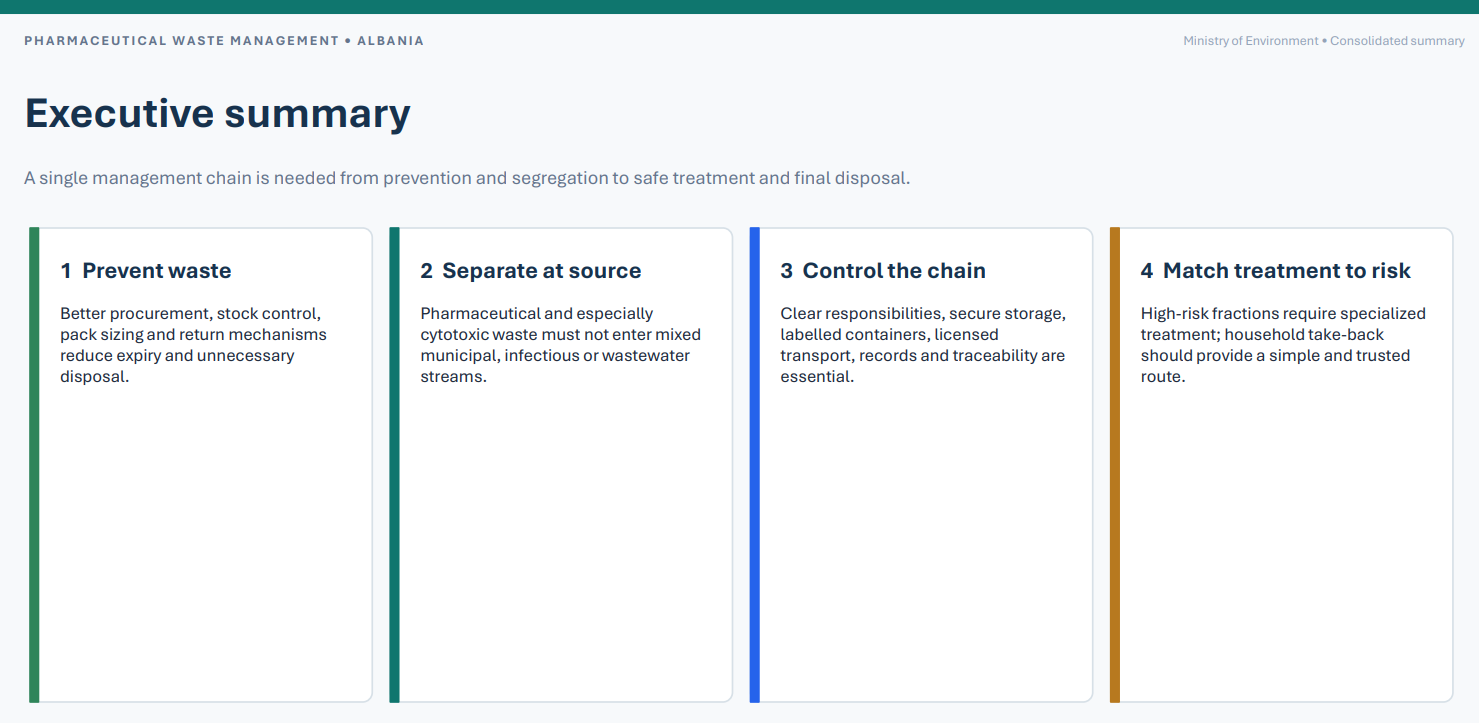
- The first pillar of waste components is prevention. We are working a lot on this aspect generally for all the waste streams, but pharmaceutical waste, of course, is an important component as well.
- As the country is advancing with the process of negotiations with the European Union, with Chapter 27, Environment and Climate Change, which we opened a year ago we aim to close it within a year. It is a huge task, and for this, we are also working with the support of all the international partners and projects and several donors, apart from our national experts and inter-institutional cooperation.
- Regarding waste prevention, the main issues we are focusing on are better procurement, stock control, pack sizing and return mechanisms, reducing expiry and unnecessary disposal of pharmaceutical waste.
- The second step after prevention is separation at source.
- The country is introducing separation at source right now, and part of it will also be pharmaceutical waste. Not all categories, but especially the ones that are related to household pharmaceutical waste and the ones that we can collect separately and through which we can establish a consolidated network of pharmacies in the country.
- The objective is that pharmaceutical waste, and especially cytotoxic waste, does not enter mixed municipal, infectious or wastewater streams.
- The third pillar is the control of the chain. We have worked a lot on the topic of having clear responsibilities, secure storage, labeling of the containers, licensed transport, records and the traceability of all the operations, which are the most essential parts.
- The fourth one is related to matching treatment to the risk. We have to ensure that we are operational in fact and ensure that high-risk fractions receive specialized treatment.
- We also need to introduce household take-back, which should provide a simple but trusted system.
- This is a simple one. I am going to go quickly on that. For sure, the sources of pharmaceutical waste where we mostly have an impact, I think this is well known.
- Why it matters: improper disposal creates linked environmental, health, safety and governance risks.
- The first one, of course, is water and soil contamination. The second one is public and occupational health. The third one is antimicrobial resistance. The fourth one is the impact on the ecosystem. And the last one is misuse and diversion.
- What we did during the years, with the help of the project experts during the project implementation, we consolidated the classification of the waste to the management route in order to establish a practical system that must distinguish ordinary pharmaceutical waste from hazardous and cytotoxic fractions.
- In this respect, the pharmaceutical waste that will be collected in this fraction is unused medicines due to expiry, open packages, recalls or other reasons.
- The other one is cytotoxic and cytostatic waste, which is the most dangerous in terms of the impact on the environment but also on health. The objective is to ensure the integrated management of this type of waste from preparation, administration or manufacture of antineoplastic medicines.
- In this regard, risks identified included mutagenic, carcinogenic and teratogenic properties.
- According to the Albanian Waste Catalogue, which is fully in line with the European Waste Catalogue, the hazardous codes highlighted are the ones related to human healthcare, 18 01 08, veterinary healthcare, 18 01 07, and cytostatic and cytotoxic medicines.
- Briefly, a quick overview of our legal and policy framework, which ensures the provisions and the policy for the intersection of waste, healthcare, pharmaceutical and environmental frameworks.
- We currently have a new legal framework in place regarding integrated waste management, put in line with the Waste Framework Directive of the European Union, 2008/98.
- The new law is Law No. 57/2025, which overrides the waste management frameworks and the European Union employment context.
- We have the existing pharmaceutical law on drugs and pharmaceutical services, which also provides provisions for labeling, disposal instructions and disposal of unusable or confiscated medicine.
- The Waste Catalogue on waste classification includes healthcare waste.
- We have a DCM on roles for hospital waste management, including segregation, packaging, storage, treatment and records on this matter.
- The United Nations international regulations that our legal framework transposes, related to the Waste Framework Directive, the European Union guidance on hazardous waste, the Basel Convention technical guidelines and the World Health Organization pharmaceutical waste best practice, have also been consulted and made part of our system of regulations and national rules.
- Regarding the institutional responsibilities, pharmaceutical waste management in Albania aims to have effective control, which depends on clear handles between health, environment, generators and licensed operators.
- Regarding the authorities, we have the Ministry of Environment in charge of waste policy and legal framework, environmental governance, coordination, hazardous waste management and European Union alignment.
- The health authorities, starting from the Ministry of Health, the regional directorates have in their national network the Institute of Public Health and other institutions that deal with the pharmaceutical and healthcare sector regulation, technical requirements, supervision of healthcare practices and medicine controls.
- We have the National Environment Agency, which covers issues with permitting, reporting, data function and compliance of our sites with the environmental framework, environmental permits and according to applicable competencies.
- Regarding the inspection functions, there was a change last month. We now have a dedicated central inspectorate that will house and include all the respective single inspectorates that were functioning until now.
- Then we have generators and operators: hospitals, pharmacies, laboratories and other generators, which segregate and store pharmaceutical waste correctly.
- The licensed operators are responsible for the collection, transport and treatment, with documentation and in line with all national pharmaceutical regulations.
- After the experience and the work that was carried out in the course of the project, we also prepared the preferred management hierarchy for the country, coming from where we are now and where we want to go and what we want to achieve.
- We managed, through the working groups and all the exchanges we had with all the national institutions taking part in this process, to identify the fact that the strongest system is the one that prevents waste first, then uses controlled return and treatment routes that match the hazard of this category of waste.
- So, we have prevention first, then return and recovery when supplier take-back through reverse logistics where feasible where feasible. Segregation and secure storage are the next step, treatment the next one, and final disposal the last one, only after appropriate treatment and in authorized facilities.
- We are running very late, so I will go quickly regarding segregation, packaging and storage.
- We have identified as the most important components and steps to be taken the separation of streams to keep pharmaceutical waste separate from infectious, radioactive and general waste; the use of fit-for-purpose containers; the clear labeling of each of them; and the secure storage of pharmaceutical waste in restricted-access control conditions, with clear signage and protection from leakage, misuse and so on.
- We have identified also as a challenge at the moment for Albania that cytotoxic waste requires a stricter control chain in our country, so that high-risk pharmaceutical fractions require dedicated handling from preparation through the final treatment.
- We have identified as the major steps to be controlled the generation, followed by the containment, storage and final treatment.
- For each treatment option, we have managed to introduce and ask all the doctors to implement the specific treatment according to the waste type and the risk they are posing. The following ones are given in the table.
- Regarding household pharmaceutical waste, there are still some efforts to be made in the country in order to be in line with all the regulations for proper integrated treatment of this fraction of waste, but also to be in line with the European Union standards.
- We are about to introduce separate collection according to the access, according to municipalities and the infrastructure of each municipality. Besides that, we need great communication and downstream control to design the system as a whole.
- We have identified collection channels that are listed on the slide. We have identified the factors that will help us to achieve success and so on.
- Regarding European practice, we have identified the French take-back model as a very good and advanced one from which Albania can learn, for sure, step by step. This is what we got as a very good example.
- We have identified the key implementation gaps that are being addressed even now as we speak to address the challenges with pharmaceutical waste management, such as the fragmented responsibilities, household collection gap, proper and full traceability of the data, treatment capacities, awareness raising and training, and inspection and enforcement.
- We have also compiled an implementation roadmap for the country, which ensures a phased approach that will allow Albania to build a safe system while generating evidence for scale-up, with the following phases that you see on the slide: baseline and roles, design and piloting, training and communication, scaling and enforcement, and optimization.
- We have also identified the minimum performance dashboard for all the steps and all the stakeholders in order to be able to have something that is doable and implementable for the actors involved.
- The next one, which is the last one, is what we want to achieve: to move from a fragmented disposal to a controlled national system.
- The priority is a simple, enforceable chain: prevent, separate, secure, trace, treat and measure.
- Our immediate focus is clarity on the operating model, piloting of the household take-back, strengthening cytotoxic controls and building stability.
Stéphanie LARUELLE | Programme Management Officer, Chemicals and Health Branch, UN Environment Programme | Co-Moderator
- We discussed the cost of inaction. We also heard about the benefits of action on pharmaceuticals in the environment and existing levers and enablers. We heard about solutions across the pharmaceutical life cycle and heard practical experiences in countries, as well as in industry and different sectors. We also heard about the role of the finance sector.
- A recurring theme was also the need for collaboration and cooperation across sectors and stakeholder groups.