Event Virtual
The Impacts of Mercury Exposure on the Rights of Indigenous Peoples and Ways to Address Them | Minamata COP-6 Online Event
16 Oct 2025
13:00 – 14:00
Venue: Online | Webex
Organization: Special Procedures of the UN Human Rights Council, Office of the High Commissioner for Human Rights, Geneva Environment Network
This online event to the 6th meeting of the Conference of the Parties to the Minamata Convention on Mercury is jointly organized by the UN Special Rapporteur on toxics and human rights, the Office of the High Commissioner for Human Rights, and the Geneva Environment Network. The event will explore how mercury exposure, particularly from artisanal and small-scale gold mining (ASGM), threatens the health, rights, and cultures of Indigenous Peoples, including those in voluntary isolation. Building on voices of the UN Special Rapporteur on toxics and human rights, Indigenous Peoples, and other experts, the discussion will highlight human rights impacts and pathways to strengthen Indigenous Peoples’ participation at the COP and in implementing the Minamata Convention.

About this Event
Mercury is hazardous to human health and the environment. Indigenous Peoples are particularly vulnerable to mercury exposure and are among the first to face the serious health and environmental effects resulting from mercury pollution owing to their close relationship with the environment and its resources. The effects of mercury contamination are widespread and intergenerational. The situation is also critical concerning the rights of Indigenous Peoples in voluntary isolation and initial contact.
For instance, permafrost melting is releasing high levels of mercury that could threaten Indigenous Peoples in the Arctic. Elevated concentrations of mercury are commonly found in the traditional foods, which Indigenous Peoples rely on.
The biggest driver and source of mercury emissions is artisanal and small-scale gold mining (ASGM) operations. ASGM is often carried out without the free, prior and informed consent of Indigenous Peoples, and threatens the rights, health, and a healthy environment of Indigenous Peoples, as it spreads mercury in water systems and contaminate fish stocks of Indigenous Peoples.
Even in small amounts, mercury may cause serious health problems and are a threat to reproductive health and the development of infants. In the long term, the presence of mercury on or near Indigenous land has caused intellectual and other disabilities that may undermine the ability of Indigenous Peoples to pass along culture and traditions.
At its fifth meeting, the Conference of the Parties to the Minamata Convention adopted a decision, encouraging Parties to engage and work together with Indigenous Peoples, as well as local communities, in decision-making processes and with regard to their needs and priorities in relation to the use of mercury in ASGM.
Drawing upon the voices of the UN Special Rapporteur on toxics and human rights, Indigenous Peoples, and other experts, the panel was be invited to share how mercury exposure, including from ASGM, impacts the human rights of Indigenous Peoples, and identify ways to strengthen human rights and the participation of Indigenous Peoples in the implementation of the Minamata Convention and at the sessions of the Conference of the Parties.
DISCLAIMER: The views expressed by speakers, moderators, and participants during this pre-COP-6 online event are those of the individuals concerned and do not necessarily reflect the views or policies of the Secretariat of the Minamata Convention on Mercury.
About Minamata COP-6 Online Events
Minamata COP-6 online events provide an informal platform for Parties and observers to share information and highlight advances in technology, research and policy for the attention of Parties and the global community that the Convention serves.
Speakers
By order of intervention.
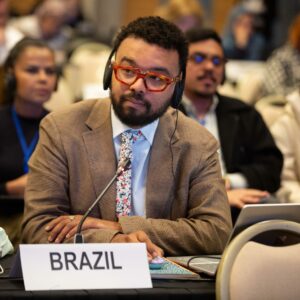
João Paulo De SOUSA VIEIRA
Deputy Head of Environmental Policy Division, Ministry of Foreign Affairs, Brazil

Marcos ORELLANA
UN Special Rapporteur on toxics and human rights

Taily TERENA
Indigenous climate and land activist, Terena Nation, Brazil
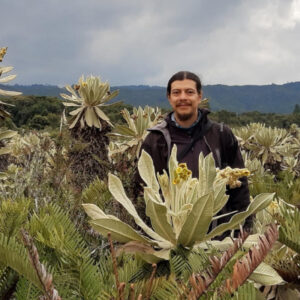
Daniel ARISTIZABAL
Amazon Conservation Team & GTI PIACI
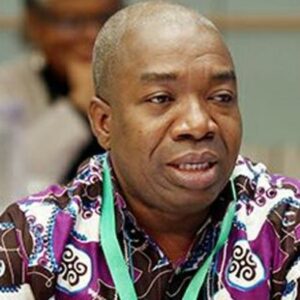
Legborsi Saro PYAGBARA
President, Movement for the Survival of the Ogoni

Sara OLSVIG
International Chair, Inuit Circumpolar Council

Yuyun ISMAWATI
Senior Advisor and Co-Founder, Nexus for Health, Environment and Development Foundation (Nexus3) | Co-Chair, IPEN

Richard GUTIERREZ
Programme Management Officer, Minamata Convention on Mercury

Ana Paula SOUZA
Human Rights Officer, Office of the United Nations High Commissioner for Human Rights (OHCHR) | Moderator
Highlights
Video
Summary
Opening Remarks
João Paulo De SOUSA VIEIRA | Deputy Head of Environmental Policy Division, Ministry of Foreign Affairs, Brazil
- This is an important discussion ahead of COP-6, as the issue lies at the intersection of human rights, environmental protection, and public health, and must be understood as a matter of justice and dignity. Indigenous Peoples are among the first to experience the consequences of mercury pollution. Their traditional food systems, which are vital sources of sustenance and cultural identity, are disproportionately vulnerable, with mercury posing a daily threat to their health and way of life.
- At COP-5, Decision 5/1 recognized this reality and called upon governments to help implement the objectives of the Convention. At COP-6, Brazil will be tabling a proposal to strengthen financial support through the Global Environment Facility (GEF) under Article 19 of the Convention on monitoring. In doing so, agencies implementing these projects should ensure the rights of Indigenous Peoples are respected, including in project design, data collection, and implementation.
- Participation is not only a matter of inclusion but is also essential for the effectiveness of the Convention. Community-based monitoring offers unique insights and provides a concrete way to implement a human-rights-based approach to environmental governance.
- In June 2025, Brazil took an important step forward. The Ministry of Health, in cooperation with Indigenous Peoples and through the Secretariat of Indigenous Health, released a manual on the care of Indigenous Peoples exposed to mercury. The manual, the result of two years of collaborative work, provides practical clinical and operational guidance for health professionals. It is particularly innovative for its intercultural approach and adaptation into many local languages, serving as a tangible expression of Decision 5/1.
- Brazil will also be organizing a side event at COP-6 to share experiences on creating this manual and to highlight how community-based governance can contribute to the effective realization of human rights. Protecting Indigenous Peoples from mercury exposure is essential to protecting sustainable development. Brazil remains committed to safeguarding those who have long cared for the Earth.
Panel Discussion
Ana Paula SOUZA | Human Rights Officer, Office of the United Nations High Commissioner for Human Rights (OHCHR) | Moderator
- This conversation takes place at a critical moment. The biggest driver and source of mercury emissions is artisanal and small-scale gold mining operations. However, nearly a decade after the Minamata Convention entered into force, mercury pollution continues to inflict devastating harm on people and ecosystems worldwide.
- But as we know, the impacts are not evenly shared. Indigenous Peoples, whose lives, cultures, and food systems are deeply intertwined with their lands and waters, bear a disproportionate burden, with widespread and intergenerational consequences, undermining their ability to pass along culture and traditions.
- The situation is also critical concerning the rights of Indigenous Peoples in voluntary isolation and initial contact.
- Let’s have no doubt: mercury contamination is a human rights issue. Looking ahead to COP-6, Parties have a renewed opportunity to integrate human rights considerations across the Convention, ensuring that the knowledge, priorities, and particularly of Indigenous Peoples inform decisions and implementation processes. We will spend the next hour discussing how this can be achieved.
- Today’s discussion brings together a range of speakers who will reflect on these challenges. We will hear about the human rights gaps that persist within the Convention; the lived experiences of Indigenous Peoples confronting mercury exposure in the Amazon, Africa and the Arctic; and lessons from other environmental struggles.
- Together, panelists insights will help us reflect on how the Convention can better serve its ultimate purpose: protecting human health and the environment from the harmful impacts of mercury and ensuring that those most affected by it can live in non-toxic environments where their rights and voices are fully respected.
Marcos ORELLANA | UN Special Rapporteur on toxics and human rights
Question: Dr. Orellana, you have noted critical shortcomings in the Minamata Convention that have disproportionate impact on Indigenous Peoples’ rights, particularly the absence of a phase-out timeline for mercury use in ASGM. What concrete steps would you recommend Parties consider at COP-6 to begin addressing these gaps?
- Artisanal and small-scale gold mining is aggravating the triple planetary crisis and contributing to the toxification of our planet. Mercury, used in ASGM, is highly persistent—it cannot simply be wished away. It is hazardous to both human and environmental health and contributes significantly to biodiversity loss.
- ASGM has severe adverse effects on human rights, particularly for Indigenous Peoples who rely on rivers for food, hygiene, and cultural practices. When these rivers are contaminated with mercury, the consequences are devastating, leading to disabilities and even death. Mercury can also cross the placenta, having serious impacts on women and children.
- The harms of ASGM go beyond exposure. They include the invasion of Indigenous Peoples’ territories, as well as violence and forced displacement—violations that directly contravene the United Nations Declaration on the Rights of Indigenous Peoples (UNDRIP), which was established to address the historical marginalization of Indigenous Peoples.
- Specific standards in UNDRIP are violated by ASGM, including: The right to self-determination; The right to economic, social, and cultural development; The right not to be dispossessed of lands, territories, and resources; and The right that no storage or disposal of hazardous materials shall take place on their lands without their free, prior, and informed consent (FPIC).
- The preamble of the Minamata Convention expresses concern for Indigenous Peoples in relation to the impacts of mercury, and any human rights treaty, including UNDRIP, continues to apply to the Minamata Convention. With this backdrop, one would expect the Convention to be aligned with UNDRIP. Yet, is this the case?
- Does it ban ASGM that releases mercury in Indigenous Peoples’ territories? No.
- Does it subject ASGM activities releasing mercury in Indigenous territories to the FPIC of Indigenous Peoples? No.
- Does the Convention articulate obligations for gold-importing States to exercise due diligence regarding harms to Indigenous Peoples? No.
- Article 2(a) of the Convention allows the use of mercury in ASGM, leaving it to territorial States—many of which lack the capacity to regulate such activities and face economic incentives to continue mining due to high gold prices. In effect, this provision enables the ongoing harms to Indigenous Peoples resulting from ASGM.
- This conclusion highlights the urgent need to amend the Convention to ensure protection for Indigenous Peoples. Other gaps have been examined in thematic report A/HRC/51/35. The existing shortcomings of the Convention are leading to widespread human rights violations, and COP-6 represents a critical opportunity to address these gaps.
Taily TERENA | Indigenous climate and land activist, Terena Nation, Brazil
Question: Looking ahead to COP-6, how can the voices and human rights concerns of Indigenous Peoples be more systematically integrated into the implementation and decision-making processes of the Minamata Convention?
- The impact of ASGM is not small in our territories. It has far-reaching consequences for our lands, waters, and communities. We must consider how our views and demands can be more effectively integrated into the Minamata Convention process, beginning with the recognition of Resolution MC-5/1.
- However, it is also important for us to have our own space within the Minamata Convention. While there is an Indigenous Caucus, it is equally vital to recognize our inherent and collective rights as Indigenous Peoples. There is often confusion when we are grouped together with other actors, such as local communities, which are not internationally defined.
- Another challenge is that the Minamata Convention is available only in English, which creates barriers to participation. There is a need for language justice, as many Indigenous Peoples affected by mining cannot fully understand the negotiations due to technical language and a lack of translation. This severely limits dialogue and meaningful participation.
- Many Indigenous youths are attending the Minamata Convention this year, and it is crucial that their perspectives be integrated into the discussions. Mercury contamination is not only occurring through ASGM but also through other sources, such as dental amalgam. Many of our relatives are unaware of these risks and are being exposed without knowing it.
- It is also important to ensure that Indigenous Peoples’ voices are reflected in national action plans, which should be translated and made accessible to affected communities. Lastly, it is essential to recognize Indigenous science. Indigenous Peoples are not only those affected by mercury contamination—they also have deep knowledge and valuable contributions to make toward solutions.
Daniel ARISTIZABAL | Coordinator, Amazon Conservation Team & International Working Group on Indigenous Peoples in Isolation and Initial Contact
Question: Your work in Colombia and as a member of the International Working Group on Indigenous Peoples in Isolation and Initial Contact has focused on strengthening protection of these Peoples. What particular risks does mercury contamination pose to them, and how should States adapt their national action plans to safeguard their rights and territories?
- There are up to 188 Indigenous Peoples groups living in isolation in the Amazon. It is often said that their numbers are smaller, and they remain legally under-recognized. Between 34 and 60 million hectares of land still need to be formally entitled to these Peoples.
- With regard to mining in these territories, 77 Indigenous Peoples in isolation live in areas that overlap with both legal and illegal mining zones. Thirty-two of these groups are affected by legal gold mining projects, while forty overlap with illegal mining operations. The actual number of affected groups is likely much higher, as mercury flows freely across borders and ecosystems.
- For Indigenous Peoples in isolation, this represents a major threat. They are unaware of mercury contamination and its sources. Although they can observe its effects, mercury acts as a silent killer. During the fire season, gaseous mercury is released into the air, further endangering their health and survival.
- The rights and territories of these peoples must be established and protected, with clear demarcation of their territorial boundaries. Traceability of mercury and gold should be a priority for Member States, and mercury inputs for ASGM must be subject to stronger control measures.
- It is also essential to focus on demand—not only for mercury but also for gold—and to recognize the ethical consequences of current production practices. Stronger global ethical procedures and standards for gold production are urgently needed.
Legborsi Saro PYAGBARA | President, Movement for the Survival of the Ogoni
Question: The Ogoni people’s struggle has long highlighted the devastating health and environmental impacts of extractive industries on Indigenous territories. From your perspective, what lessons from the Niger Delta experience are most relevant for addressing mercury pollution from ASGM, and how can Indigenous Peoples be better protected from the combined harms of pollution?
- The Ogoni people have long been engaged in a struggle against extractive industries. Our experiences with gold and oil mining sectors reveal similar patterns of harm—whether through mercury releases or oil spills, the impacts on our lands, waters, and communities are comparable.
- From the Ogoni perspective, one key lesson is the power of collective resistance. We launched a strong campaign against the activities of the oil industry, making use of multiple avenues within national, regional, and international systems to demand accountability and justice.
- It is important to call for technology transfer to support alternative methods that do not rely on mercury. Many miners depend on ASGM for their livelihoods, and they need viable, sustainable alternatives. Alongside this, the provision of alternative means of livelihood is essential.
- In this era of climate change, the campaign against mercury use in ASGM is part of the broader movement for environmental and social justice. We must also reflect on and adjust our consumption patterns so that we can live in true harmony with nature.
Sara OLSVIG | International Chair, Inuit Circumpolar Council
Question: As Chair of the Inuit Circumpolar Council and a former member of the UN Panel on Critical Energy Transition Minerals, you’ve worked extensively at the intersection of Indigenous Peoples’ rights and global environmental governance. What lessons can be drawn from other international processes to ensure the knowledge of Indigenous Peoples, rights and priorities shape solutions to mercury pollution?
- It is important for the Inuit Circumpolar Council (ICC) to continue advocating strongly on the issue of mercury contamination, which is directly affecting our livelihoods. Our homelands make up more than one-third of the combined Arctic areas, and the majority of Inuit people are marine-dependent. We rely on a healthy marine environment for our food security, culture, and way of life.
- Combatting mercury contamination remains a high priority for us. The Arctic functions as a sink for many global contaminants. However, the Minamata Convention lacks explicit recognition of Indigenous Peoples as distinct rights holders, contains no reference to the United Nations Declaration on the Rights of Indigenous Peoples (UNDRIP), and fails to acknowledge the right to a clean, healthy, and sustainable environment as a human right. In this regard, the Rio Declaration provides stronger precedents and better practices.
- A knowledge lab on this topic will be organized at the upcoming COP. ASGM continues to cause mercury deposits in the Arctic, contaminating traditional foods and endangering our health. Addressing this requires coordinated global action through multilateral processes.
- It is also important to recognize that the Minamata Convention has weak provisions regarding the elimination of mercury use in ASGM and lacks any concrete phase-out dates. In closing these gaps, it is essential to listen to the inputs of Indigenous Peoples. No multilateral environmental agreement currently addresses the needs and rights of Indigenous Peoples sufficiently; we must therefore set a higher standard to fulfill the rights affirmed in UNDRIP.
- The Convention does include some inclusive processes, such as the Open-Ended Scientific Group and the Effectiveness Evaluation. These mechanisms should be further strengthened and used to ensure Indigenous participation and leadership. Finally, it is crucial to undertake human rights assessments of mercury contamination affecting Indigenous Peoples, carried out in accordance with the principle of free, prior, and informed consent.
Yuyun ISMAWATI | Senior Advisor and Co-Founder, Nexus for Health, Environment and Development Foundation (Nexus3) | Co-Chair, IPEN
Question: You have worked extensively on the health impacts of mercury in artisanal and small-scale gold mining. From your perspective, what are the most urgent matters to be addressed at Minamata COP-6, to take to protect Indigenous Peoples, as well as local communities, from mercury exposure?
- A study examining population groups with relatively high exposure to mercury and its compounds found that Indigenous Peoples are among the most highly exposed populations. This is unacceptable and must be urgently reduced.
- When it comes to mercury, there is no safe level of exposure. Studies mapping ecosystem sensitivities have found that seven countries with active ASGM activities also possess biodiversity levels far above the global average.
- We have also conducted studies measuring mercury concentrations in hair samples from Indigenous communities. These studies revealed that Indigenous Peoples in Bolivia exhibited the highest concentrations of mercury. Mercury pollution is not confined to its point of origin—it can travel as far as 2,000 kilometers from the source, contaminating the global environment and food chains.
- Genomic investigations into genes related to mercury metabolism in Amazonian Indigenous populations have further shown that certain communities possess a high-impact genomic variant that increases susceptibility to mercury exposure, making it more difficult for their bodies to eliminate mercury.
- Recommendations for COP-6 include: Ban mercury in ASGM; Mandatory NAP and implementation; Strengthen regulations and enforce compliance; Capacity building for health sector to identify, screen early detection of Hg poisoning and treatment; Comprehensive monitoring programs to assess chemical levels in water soil and biota
Richard GUTIERREZ | Programme Management Officer, Minamata Convention on Mercury
Question: The Secretariat will soon release guidance on Indigenous Peoples’ engagement in ASGM National Action Plans. Could you share the main objectives of this guidance, and how it is expected to support Parties in ensuring meaningful participation and protection of Indigenous Peoples’ rights?
- The Minamata Convention is the youngest convention in the chemicals and waste family, now entering its eighth year. While the Convention is functioning and making progress, there remain important gaps that need to be addressed.
- When negotiators designed the Minamata Convention, they built upon lessons learned from previous conventions, adopting a comprehensive approach that covers the full life cycle of mercury—from production to consumption. However, ASGM continues to pose a major challenge. One of the biggest drivers of this issue is the price of gold, which has reached a historic high and is significantly higher now than when the Convention was first adopted.
- In addressing this challenge, it is essential to look beyond Article 7, which specifically concerns ASGM, and to consider the other interlinked articles that also shape implementation and enforcement. A critical focus must be placed on national action plans (NAPs) under Article 7, taking into account that each country operates within its own unique context.
- One key element that has not yet occurred is a comprehensive review of the implementation of Article 7. Such a review should include an assessment of how effectively Indigenous Peoples have been engaged, in line with the provisional guidance on their meaningful participation.
- With the support of the Government of Finland, efforts are also being made to facilitate the participation of Indigenous Peoples at COP-6.