Event Conference
The Plastic Amendments: Are we fulfilling the Promise? | Basel OEWG-14 Side Event
25 Jun 2024
18:15 – 19:45
Venue: CICG | Room 4 & Online | Webex
Organization: Basel Action Network, Break Free From Plastic, International Pollutants Elimination Network, Geneva Environment Network
This side event to the fourteenth meeting of the Open-ended Working Group of the Basel Convention on the Control of Transboundary Movements of Hazardous Wastes and their Disposal (OEWG-14) was organized by the Basel Action Network with the support of the Geneva Environment Network.

About this Event
More than three years have passed since the Plastic Waste Amendments to the Basel Convention entered into force on 1 January 2021. After China banned the import of several types of wastes in 2018, developing countries became overwhelmed with plastic wastes from high-income countries, diverted from their usual route to China. Much of the wastes were illegally dumped and burned, causing widespread pollution and health problems.
Originally, these Amendments were envisioned to cover all plastic waste, aiming to control and eliminate the dirty trade via bans and the Prior Informed Consent (PIC) procedure under the Basel Convention. However, the latest trade data and on-the-ground evidence show that the trade of plastic waste remains largely out of control.
High volumes of plastic waste are still being exported, plastics have been found hidden in other waste streams, and mixed plastics that are often dirty and hazardous have escaped the PIC procedure. In addition, the Amendments do not apply to all plastic waste, and plastics with hazardous additives continue to be traded without controls. Meanwhile, upon closer scrutiny, the actual recycling of plastics can hardly be considered environmentally sound management.
This panel discussion by Basel Action Network and Break Free From Plastic presented a snapshot of where the world is at, in both exporting and importing countries, and examines the challenges in combating illegal waste trafficking and the enforcement of international law. The panellists delved into the loopholes in the Amendments, and presented recommendations to uphold the original promise of the Basel Convention Plastic Waste Amendments – to protect human health and the environment from the adverse effects of hazardous plastic waste.
Basel Convention OEWG-14
The fourteenth meeting of the Open-ended Working Group will take place from Tuesday, 25 June to Friday, 28 June 2024, with pre-meetings, including Bureau and regional meetings, to be held on Monday, 24 June. The Working Group is expected to progress items in its work programme, with topics to include:
- A draft renewed strategic framework
- Work to improve the functioning of the prior informed consent procedure
- Technical guidelines on Persistent Organic Pollutants, e-waste, waste lead-acid batteries and used and waste pneumatic tyres
- Practical guidance on the development of inventories of waste for certain waste streams
- Plastic waste
- Providing further legal clarity
- Work of the Implementation and Compliance Committee
- Basel Convention Partnership Programme
Speakers
By order of intervention.

Jim PUCKETT
Executive Director, Basel Action Network

Pui Yi WONG
Researcher, Basel Action Network

Sedat GÜNDOĞDU
Professor, Çukurova University, Adana, Türkiye
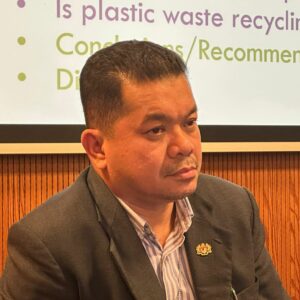
Norhisham Bin Abdul HAMID
Principal Assistant Director, Hazardous Substance Division, Department of Environment, Malaysia

Lee BELL
Mercury and POPs Policy Advisor, International Pollutant Elimination Network

Coleen SALAMAT
Waste Trade Project Coordinator, Break Free From Plastic Asia-Pacific | Moderator
Highlights
Summary
Event Summary
This panel discussion explored the promise that the plastic waste amendments in 2019 held and where the world is at in meeting this promise. The panel began by examining how global trade data revealed a slight decrease in plastic waste exports when the new rules took effect in 2021, but appears to be on the rise currently.
- They further highlighted the situation of Malaysia and Turkey – two key destinations of the global plastic waste exports. They also discussed the implementation and efforts of Parties at the national level on transposing the plastic waste amendments. While exporting countries bear much of the responsibility, importing countries appear to be failing to equip their agencies to effectively implement the new amendments, to inspect shipments, and to prosecute illegal activities. The Department of Environment of Malaysia shared that much effort goes into combating illegal waste shipments and outlined ways forward in strengthening law enforcement and coordination.
- Meanwhile, the Basel Convention’s new plastic waste listings which were supposed to cover all plastic waste have left out other types of plastic waste such as synthetic textiles, rubber waste, plastic-waste-fuel pellets, and plastics mixed into waste paper. These represent almost half of the global plastic waste generated, but they are not covered by the Convention despite causing significant environmental harm around the world.
- The panel recommended for Parties to the Basel Convention to strengthen enforcement and implementation efforts, particularly in ensuring the Prior Informed Consent (PIC) procedure is properly implemented for plastic waste exports and that plastic recycling facilities operate under environmentally sound management (ESM); to amend the annexes to close the loopholes on the forgotten plastic wastes and to consider plastics exhibiting hazardous characteristics as hazardous waste; and for the Secretariat to consider preparing model legislation and guidance on the implementation of the plastic waste amendments.
Speaker Points Summary
Jim PUCKETT recalled the promise of the Basel Convention’s Plastic Waste Amendments. He also presented the data and trends of global north plastic waste export to global south that partially decreased since the Amendments entered into force in 2021 but is starting to increase again. In particular, Japan’s exports to Asia and the UK’s exports to Turkey in March 2024 have reached similar volumes as 2020’s monthly average, while the US’s exports to Mexico since 2021 have far exceeded volumes in previous years. Jim also argued that because plastic recycling is partial at best, generating a significant amount of residual waste as well as microplastic pollution, plastic recycling is likely not environmentally sound. Under Article 9(1)(e), exports that “results in deliberate disposal (e.g. dumping) of hazardous wastes or other wastes in contravention of this Convention” shall be considered illegal traffic.
Pui Yi WONG highlighted the problems of plastic waste imports despite several rounds of enforcement actions taken by the authorities. At the ports, waste continues to be trafficked; at plastic recycling facilities (both with and without import permits), certain operators consistently fail to recycle plastic waste in an environmentally sound manner; in terms of waste disposal, illegal dumping and burning of waste, including electronic waste, remain rampant. She also highlighted other implications of plastic waste exports to Malaysia in terms of governance, social relations, labor welfare, food security, and waste management.
Sedat GÜNDOĞDU presented how Turkey is becoming the dumping ground for plastic waste, illegal dumping and microplastic issues, effects of plastic waste imports and alarming cases of fires in plastic recycling facilities. He highlighted that the surge in plastic waste imports has led to a critical level of microplastic pollution in agricultural regions where importing companies are based, and in aquatic ecosystems where they discharge their wastewater. He also emphasized that while Turkey constantly continues to import plastic waste, it struggles to recycle its domestic waste.
Coleen SALAMAT briefly detailed an analysis of laws and policies of Southeast Asian countries focusing on Malaysia, Thailand, Philippines and Indonesia, on their import regulations and how some of them have departed from Basel obligations. It has been observed that all countries still follow HS codes for the categorization of plastic waste and not Basel listings, most countries’ focal points are not competent authorities, and PIC procedures remain unclear.
Norhisham Bin ABDUL HAMID shared Malaysia’s ways forward to address illegal trafficking of hazardous and plastic waste. He highlighted emerging policies, modus operandi, and enforcement of illegal waste shipments in the country. The government of Malaysia plans to enhance the capacity of enforcement officers and competent authorities, strengthen links, networks and communications among concerned authorities, and implement efficient information exchange among importing and exporting countries.
Lee BELL emphasized that certain plastic wastes are not clarified in the Plastic Waste Amendments like synthetic textiles, plastic-based rubber products, plastic mixed in bales of recovered paper, and the plastic component of refuse-derived fuels (RDF). These are hidden or forgotten plastics which are often composed of hazardous and unregulated chemicals. He also explained that although all plastic wastes are meant to be categorized by B3011 non-hazardous plastic waste, A3210 hazardous plastic waste, or Y48 halogenated, mixed, incinerated, or contaminated plastics waste, these forgotten plastic wastes also have the same properties as Y48 or A3210. Thus, this needs to be addressed and clarified through the amendment of the Annexes of the Convention.
Video
Photo Gallery


