
Event Conference
The Silent Threat: Exploring pollution’s impact on health | GHF2024
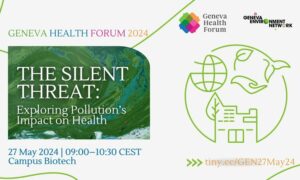
27 May 2024
09:00 – 10:30
Venue: Campus Biotech | Chem. des Mines 9, 1202 Genève
Organization: Geneva Health Forum
This session of the Geneva Health Forum was organized with the support of the Geneva Environment Network.

Geneva Health Forum
The Geneva Health Forum (GHF) is the forum that brings together key stakeholders to help find solutions to global health challenges. Created in 2006, the forum is organized every two years by the Geneva University Hospitals (HUG) and the University of Geneva in partnership with 30 global multisectoral organizations, with the overall goal to contribute to improving health and care access in the world.
The Geneva Health Forum gathers from 27 to 29 May 2024 to tackle crucial issues linked to health such as pollution, climate change, how to operationalize concepts such as “One Health” or “Planetary Health”, environmental drivers for pandemics, antibiotic resistance, and many more.
About this Session
Speakers

H.E. Amb. Fernando ESPINOSA OLIVERA
Deputy Permanent Representative of Mexico to the United Nations Office and other international organizations in Geneva

Richard BROWN
Technical Officer, Chemical Safety and Health Unit, World Health Organization

David AZOULAY
Director of the Geneva Office and of the Environmental Health Program, Center for International Environmental Law
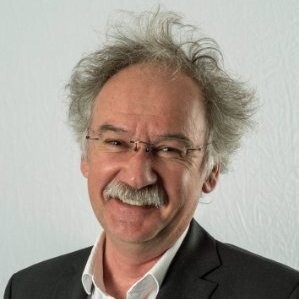
Nino KUENZLI
Director Emeritus, Swiss Tropical and Public Health Institute

John JI
Tsinghua University Vanke School of Public Health

Diana RIZZOLIO
Coordinator, Geneva Environment Network | Moderator
Highlights
Summary
Diana RIZZOLIO | Coordinator, Geneva Environment Network
- Leaders often refer to the triple planetary crises of climate change, biodiversity loss, and pollution and have adopted global deals that bring agreed goals and targets for each of these crises.
- Today, we are discussing the pollution crisis. This is an important topic for International Geneva, which is a hub for global governance to produce and enforce solutions to this crisis, with the presence here of key institutions such as the chemicals and waste conventions that are administrated by the United Nations Environment Programme.
- Through the food we eat, the air we breathe, and the water we drink, we are intimately connected to nature and exposed to a cocktail of pollutants that have a range of effects on our health, as we will hear from our speakers this morning.
- Two years ago, an international team of researchers concluded that humanity has exceeded planetary boundaries related to environmental pollutants, including plastics. According to the scientists who contributed to the findings, the rate at which pollutants are appearing in the environment far exceeds the capacity of governments to assess global and regional risks, let alone control any potential problems.
- Multilateral solutions are being developed by member states and stakeholders at the World Health Assembly that kicked off this morning, at the World Environment Assembly, and in other international negotiations.
H.E. Amb Fernando ESPINOSA OLIVERA | Deputy Permanent Representative of Mexico to the United Nations Office and other international organizations in Geneva
- Mexico tabled last year at the World Health Assembly a resolution on the impact of chemicals, waste, and pollution on human health together with other member states including Peru and Switzerland. Mexico is also very active in numerous environmental negotiations aiming at tackling various crises, including pollution.
- Pollution’s impact on human health and the environment is one of the world’s most urgent problems. We should not stay silent in front of this silent threat.
- This issue must be addressed from a scientific perspective and to act to defend he results of science.
- Many people around the world die every year because they live in unhealthy environments. Unfortunately, people with lower incomes are more likely to live in polluted areas and have, for instance, unsafe water.
- Opening the 2024 Edition of the Geneva Health Forum with the topic of pollution is a powerful message because health institutions do not only play a critical role in protecting health and well-being from the harmful impacts of pollution but also because this is an important topic for international Geneva.
- The international urgency of taking action on pollution, including chemicals and waste for the protection of human health and the environment, has recently been reflected in the adoption of several significant resolutions:
- The resolution “The impact of chemicals, waste, and pollution on human health” (A76/A/CONF./2) adopted by the 76th World Health Assembly;
- The United Nations Environment Assembly (UNEA) resolution 5/14 to end plastic pollution towards an international legally binding instrument;
- UNEA resolution 5/8 to establish a science policy panel to contribute further to the sound management of chemicals and waste and prevent pollution.
- The recently adopted Global Framework on Chemicals.
- Pollutants, especially persistent ones, have been detected globally in our food, in high mountain lakes, and in offshore waters.
- It is essential to deepen the understanding of the interactions between health and environment, address one health challenge.
- WHO plays a key role in protecting us from the impacts of pollution on health and well-being, addressing different challenges, to encouraging science-based review, research, regulation, and contributions that will lead us to positive impacts and to the achievement of many obstacles and targets of the 2030 agenda.
Richard BROWN | Technical Officer, Chemical Safety and Health Unit, World Health Organization
- Pollution may not be completely silent, but quieter than people think because many, particularly in the health sector, tend to underestimate the impact that the environment can have on health.
- WHO estimates that deaths related to environmental risk factors account for 23% of the global burden of disease and 24% of preventable deaths, which could be prevented. These are deaths and ill health that do not need to happen if we do something about those modifiable environmental threats.
- Polluted water and radiation greatly contribute to the health impact we must deal with. To deal with the size of the problem of this increasing crisis, the focus must be on prevention.
- This has been the direction in recent times and other international negotiations, in terms of establishing potentially a treaty on plastic, a science-policy panel, the Global Framework on Chemicals, and the World Health Assembly itself giving more and more attention to this issue.
- Chemicals and climate change are on the 77th World Health Assembly agenda, and there will be a further item on the Health Assembly agenda in 2025. That’s three years in a row, which is almost unprecedented in the area of environment and chemicals, showing the increasing importance of this issue.
- Another aspect WHA will address this week is the next Global Program of Work, the strategic plan the World Health Organization has for our work in the next few years. Its 14th Global Program of Work proposes six strategic objectives two of which are on this very topic: one of them specifically on responding to the threat of climate change, and another objective on addressing the root causes of ill health, including environmental, social, and economic factors.
- The numbers of mortality and morbidity associated with pollution are around 7 million. That is a much bigger number than people tend to assume. In exposure to hazardous chemicals we estimate 2 million deaths a year. That is much bigger than most people ever think, and that number is both substantial, it is an underestimate, and it is rising.
- It is an underestimate because we only have good data to make estimates for certain chemicals. But there are many chemicals where we do not have good data to make estimates, even mercury, which is a well-known pollutant. Hence, 2 million sounds big but is, in fact, an underestimate, and we know it is an underestimate, and it is growing because the use of chemicals is growing, urbanization of societies is increasing, and the consumerization of societies means more people are exposed to hazardous chemicals. The number of chemicals being manufactured and used is estimated to double in the next few years, and that burden will only ever increase unless we take significant action to address those.
- The numbers themselves are alarming, and they are only likely to grow. One key improvement from the scientific side would be more research to give us a better understanding of those estimates of the burden of disease so that we can really get this message over that these modifiable environmental factors and pollution are having a big impact on people’s health.
David Azoulay is the director of the Geneva office and of the Environmental Health Program of the Center for International Environmental Law, and this group is very active in numerous environmental negotiations ongoing in Geneva, particularly, for example, the one on plastics.
- David wanted to bring that topic here and bring an example of plastic pollution for which the international community is developing an international legally binding instrument. A few points that he had put here are the importance of the recognition issues are closely interlinked is obviously not new but is getting some broader recognition in global policy spaces, and we have seen that in some of these environmental negotiations.
- This is really something that we have had to push. As environmental degradation grows due to the triple planetary crisis of climate change, biodiversity collapse, and pollution, health impacts will also grow, and this is something we have also heard.
- According to him, there is still a huge gap between our advanced understanding of existing health impacts due to pollution and environmental degradation and the severely limited and insufficient global policy decisions to address the environmental crisis.
- Adopting a human health lens and perspective on these challenges is key to advancing adequate policies to address both the three environmental crises and the growing human health degradation.
- When we were preparing this session, David mentioned to me that he had recently done some blood tests to test for phthalates and bisphenols in his blood, and he really found the numbers surprising; they were so high. That is the example he would have brought here, and he would have insisted on the lack of transparency and the need for strong global policies. That is what we are doing here in multilateral Geneva: trying to adopt strong policies to get through that.
Nino KUENZLI | Former Deputy Director of the Swiss Tropical and Public Health Institute and the Former Dean of the Swiss School of Public Health
- I have invested 30-plus years into air pollution and health, which of course is not the only type of pollution, but a very nice example to show how things work as well.
- Air pollution governance is an example of how it is possible to succeed in the domain of environment and health, which can be applied to more recent, less-known challenges.
- Science. We must know the effects of complex environmental challenges. We cannot call for action and policy without that knowledge, and it is fascinating to see how science to understand the health effects of ambient air pollution has evolved over the last decades. The progress is enormous, and the collaboration with scientists and technologists has improved so much that today there is always a get-together of basic science, bio micro science, together with very large epidemiological studies to understand what it means to live in air pollution.
- Methodology of Assessing the Burden of Air Pollution. It is how to ensure pollution gets included in the global burden of disease studies.
- Defining what a healthy environment means given the science. Many countries have in their constitution or regulations laws that make this case that we have the right to a healthy environment. The main aim of air quality guidelines is to protect people’s health.
- Developing a Policy framework to ensure that clean air is guaranteed to people. Air quality has improved in almost all Western countries, the next biggest challenge is addressing the inequity of exposure. We need science to apply solutions on a global scale. There are many dimensions where the causes of problems and part of the responsibility falls on governments who do not act, and who do not impose the right standards and the right requirements.
- We have this global community of industries that play this game. If a country has no regulation on a specific chemical, refineries that produce byproducts would not care to do it in a clean way. As long as it is allowed, the production will happen in the dirtiest allowed way as the global system is still favoring very dirty technologies in places where regulations are not in place and that is a very costly avenue.
- There is this misunderstanding that clean air has a price that we cannot afford. Poor countries cannot afford air pollution hence they should keep it clean as urgently as possible because of the health effects and other effects of noise can you hear it that is also why we are we are developing multilateral solutions to try to avoid these inequalities.
John JI | Tsinghua University Vanke School of Public Health
- Lead exposure is particularly interesting because it is often referred to as a “silent threat.” Without biomarker advancements, we could not accurately measure the health impacts of lead exposure. Technological advancements, such as ICP-MS, now allow us to measure lead levels in biological samples like hair, toenails, blood, and urine. These methods help quantify the body’s lead burden and understand its health impacts.
- Studies using biomarkers like blood lead levels and bone lead concentration (measured via x-rays) have shown associations with lower IQ in children. Lead exposure historically came from sources like gasoline and lead paint in old houses, where it tastes sweet and is inadvertently ingested by children.
- Epidemiological studies using big data have revealed nonlinear relationships between lead exposure levels and health outcomes. Even at low exposure levels, the impact on health can be significant, which underscores the toxicity of lead.
- Despite this scientific understanding, challenges remain in convincing policymakers to act due to concerns about confounding factors like socioeconomic status. Advances in biology, particularly neuroscience, have also enhanced our understanding of how lead affects cognitive functions through interactions with calcium channels in the brain.
- In terms of local contexts, industrialized and developing countries alike face challenges with lead pollution, often from electronic waste recycling. Regulations are critical, but emerging chemicals without robust epidemiological and biological data pose new challenges.
- Biomonitoring programs, such as China’s CDC program for heavy metals, provide critical data on exposure levels. These programs highlight uneven distributions of heavy metals across different socioeconomic areas, emphasizing the role of occupation and consumer products in exposure risks. I think a lot of it must come from occupation or consumer products that are not enforced more. We always talk about socioeconomic status as a determinant of health, but as a mediator in that pathway, you have pollution, and some of these are irreversible neurological damages.
- On an individual level, maybe you are lowering the IQ of populations by one or two, which, you know, to an individual, may or may not be a lot, but as a population, that is a lot. Hence some of the potential of humans may be reduced of heavy metals are not being erased.
Q: How is the World Health Organization bringing its voice in environmental negotiations aiming at tackling pollution?
Richard BROWN
- Many international negotiations are ongoing and some of the UN resolutions specify a role for WHO in these environmental negotiations.
- They are saying what role health should have in instruments or treaties coming out of the environmental sector. I think it is an attempt to recognize that there needs to be a role for health.
- Some existing treaties, for example, the Minamata Convention, spell out a specific role for health, for which we consulting internally and externally within WHO.
- We have many different departments interested in the topics covered by environmental negotiations. For example, within the area of plastics, we have the chemicals, their relevance to medical waste, it is relevance to the use of plastics in medical devices.
- There are a lot of different internal stakeholders that we have to consult with, and then external stakeholders in what we think of as the health sector, and our health partners, to ensure that they engage with the negotiations for the treaties and also that they talk to their governments and their member state representatives who will be attending those talks. Even within a government, you want to encourage the health sector parts of government to talk to perhaps the environmental sector parts of government who will be attending the negotiations and who can help to make those important connections. Likewise, we ask our member states for guidance on this and the resolution, sorry, the paper that is going to the World Health Assembly this week asks the member states for guidance on the positions that the organization should be taking within the discussions on the science-policy panel and the potential plastics treaty.
- Hence, trying to bring together those parties and ensure that health has a place at the table and is part of the discussions, both internally and externally, is one of the key roles that we think we need to play. In the end, the outcome will be negotiated by member states, and then we will ultimately be guided by them.
Q: What lessons could be implemented from what you have observed in the air pollution regulation world on the realms of water, noise, tobacco, and other types of pollution? What are the lessons learned? How could we apply them?
Nino KUENZLI: Science itself is not enough. We need the next step, and of course, that is the 100-million-dollar question. This could be a global convention or a treaty. We need to reach the point where science is getting globalized in regulations, in rules. I do not know how to get there without the help of UNEP. An PCC is a good example of saying that a lot can be done to move inertia in many countries, but it must become very concrete. And if we do not get to that point, I am not optimistic that this global divide will ever change.
Q: Living environments and health expectancies have been part of the studies you have been recently doing. Any findings in your research of good policies that could be shared?
John JI: There is a strong correlation between urbanization and rising life expectancies globally, but to tease out what is in there that is driving the causal relationship between urban environments, higher air pollution, higher pollution in general, transportation, the chance at income, the healthcare determinant of health is multifaceted. We have learned a lot from urban development in the past century, but is that the right type of path that all the developing world should follow? Is the industrial revolution the only path forward? And if so, knowing what we know today about pollution, how do we design future cities and places to live?
Q&A
Q: I believe that civil society has a strong role to play against inertia. How can we address communication to the general public to try to balance between rising awareness and this overwhelming and paralyzing feeling that we live in a very dangerous world for which there is very little to do, especially at the individual level?
Q: I have a long history of tobacco control. But in recent years, I have been working on indoor air quality. Given that so many populations around the world spend up to 90% of their time indoors, what are your views on how the world can collectively move forward on indoor air quality so that we can all be safe from all the pathogens in the air, but also as our panelists have pointed out, all of the pollutants that are in indoor air. Many different countries have acted on this sort of independence in recent years. Many European countries are now getting indoor air quality standards developed. There is a whole range of US states that have done so. It seems to be sort of isolated, and I am just wondering if the panel has views on how we can better collaborate globally to move forward to make sure that the air we breathe is safe everywhere.
Nino Kuenzli: Civil society is extremely important. All historical improvements come from extensive debate and sometimes struggles. Of course, it is also important to have the backing of the parliament. Air pollution cannot be tackled at the individual level. Air pollution is a problem we must resolve as a society.
In terms of indoor pollution, the problem is a regulatory one. At least in Switzerland, indoor regulation is seen as a private issue. Of course, there are few regulations on how the material must be created that you put in an indoor environment, but in general, we are lagging behind.
John JI: China’s experience on household air pollution – which is academically different from indoor air pollution – is seeing efforts to change from biomass to gas, to gas-fired heating, and gas-fired cooking. And the newer epidemiology studies are coming out that gas is still a source of air pollution. So now the issue is, should we go from gas to electricity? The question is, should there be a leapfrog, just go from biomass to electric and just skip the gas? Some of these discussions are happening in China.
H.E. Amb. Fernando ESPINOSA OLIVERA: Civil Society is essential because it is one of the stakeholders active across all the work areas of International Geneva. Civil Society needs to organize, raise their voices, and follow up on the negotiations, being on panels, and events like this, going to your civil servants, and raising awareness. Without such work, the Tobacco Convention would have been impossible.
Richard BROWN: In the moving to cleaner sources of energy and benefits towards climate change it would be best to show people the benefits rather than pointing out the negativities about an issue. It is not an inconvenience; it is also contributing to moves towards climate change. Hence the message does not have to all be negative. In terms of what do we say to the public where everything seems terrible, actually, some of the things that are being proposed to reduce pollution, you know, they have that co-benefit where, if the message is properly given, people can see this is why they want to do this thing instead of it being something which is imposed on them as a negative.
Professor JI: Communication of risk from civil society tends to often focus on relative risks, comparing two probabilities, and that creates a lot of fear.
Richard Brown: It is a challenge. But the public need messages that they can easily understand.
Q: One of the speakers mentioned that the science generated should be relevant. When it comes to chemicals, for instance, we know that the pace of development of new chemicals can prevent effective research on the effects of many of them, which may be used widely by many people in the world. Hence given the existing resource constraints, which is a reality, which recommendation could you have on this issue? I am thinking about, for instance, endocrine disruptors where we have discussions in Europe about understanding very precisely the routes of exposure and the causal effects before acting.
Richard Brown: There are already 40,000 chemicals in use, with a thousand or more chemicals brought into use every year. And the volume of chemicals being developed and used increases all the time as well, so it is a challenge. It is not really a recommendation, but you cannot wait until you have 100% evidence or proof before you take any regulatory action. Otherwise, it is far too late, and you will have an extensive burden of disease behind that. You need to be willing to take measures that will intervene before that point. Recent studies show that you have 16,000 chemicals only for the plastic sector.”
John JI: When lead was first introduced, lead gasoline, people knew factory workers had neurological issues. Now there is new chemicals, and new heavy metals, and when the research community finds health harms and then they become regulated, why should the burden of proof be borne by the general public? Why should it not be the other way around? Before introducing a new chemical in a product, there should be a level of toxicology safety and technology safety that is a part of society that is beyond my scope and that I do not fully understand.
Closing remarks
John JI : Planetary health is a new topic that we ought to pay more attention to because we are needing a multidisciplinary work between chemists, between engineers, doctors, epidemiologists, and everybody need to work together on future pollution and planetary health issues.
Nino Kuenzli: Stay tuned, be ready to defend science, to do science, and to apply science to policymaking and solutions because there are solutions. And do not give up this optimism if you feel sometimes pessimistic.
Richard Brown: Take advantage of the direction of travel that we currently have with the global framework work on chemicals, the upcoming plastics treaty, chemicals and pollution issues, climate change issues being on the agenda of the health assembly this year, next year, and in the new global program of work. This is like a good direction of travel to get these issues an important place on the policy table, making sure that the health aspect is well addressed within that.
H.E. Amb. Fernando ESPINOSA OLIVERA: Let us be optimistic. Let us trust science, and let us work together, civil society, public servants, diplomats, and scientists.
Video
Photo Gallery


Links
- Geneva Health Forum 2024
- One Health | GEN (updated regularly)
- Health and Environment | GEN