Event Conference
Toxic Substances and Wastes and Human Rights: Challenges, Responsibilities and Ways of Achieving Solutions | HRC63 Side Event
16 Sep 2026
13:00 – 14:00
Venue: Palais des Nations | Concordia 1
Organization: Côte d'Ivoire, Democratic Republic of the Congo, Rencontre Africaine pour la Défense des Droits de l'Homme, Earthjustice
This side event to the 63rd session session of the Human Rights Council (HRC63) is organized by Côte d'Ivoire, Democratic Republic of the Congo, Rencontre Africaine pour la Défense des Droits de l'Homme (RADDHO) and Earthjustice, with the support of the Geneva Environment Network. It will reflect on how stronger action on toxic substances and waste can contribute to the protection of human rights.

About this Event
The management of toxic substances and hazardous waste is not only an environmental challenge but also a critical human rights issue. Around the world, improper handling, disposal, and transboundary movement of hazardous waste continue to disproportionately affect vulnerable communities, undermining the rights to health, life, clean water, food, and a healthy environment.
This side event, co-organized by the Permanent Missions of Côte d’Ivoire and the Democratic Republic of the Congo to the United Nations Office at Geneva, in collaboration with the African Meeting for the Defense of Human Rights (RADDHO) and Earthjustice, will explore the links between toxic substances, environmental justice, and human rights. Drawing on lessons from past and ongoing cases, particularly in Africa, the discussion will highlight the human impacts of toxic pollution, the unequal distribution of environmental risks, and the need for stronger governance at national, regional, and global levels.
The event will provide a platform for governments, civil society organizations, legal experts, and other stakeholders to exchange experiences, identify persistent challenges, and showcase good practices and cooperative approaches. It will also underscore the importance of preventing environmental harm, ensuring accountability, and advancing the universal right to a clean, healthy, and sustainable environment.
Through an inclusive dialogue, participants will be invited to reflect on how stronger action on toxic substances and waste can contribute to the protection of human rights and to sustainable development for present and future generations.
Environment @ HRC63
The 63rd regular session of the UN Human Rights Council (HRC63) will take place in Geneva from 7 September to 7 October 2026. Consult this regularly-updated page that highlighted the environmental-related activities of this session.

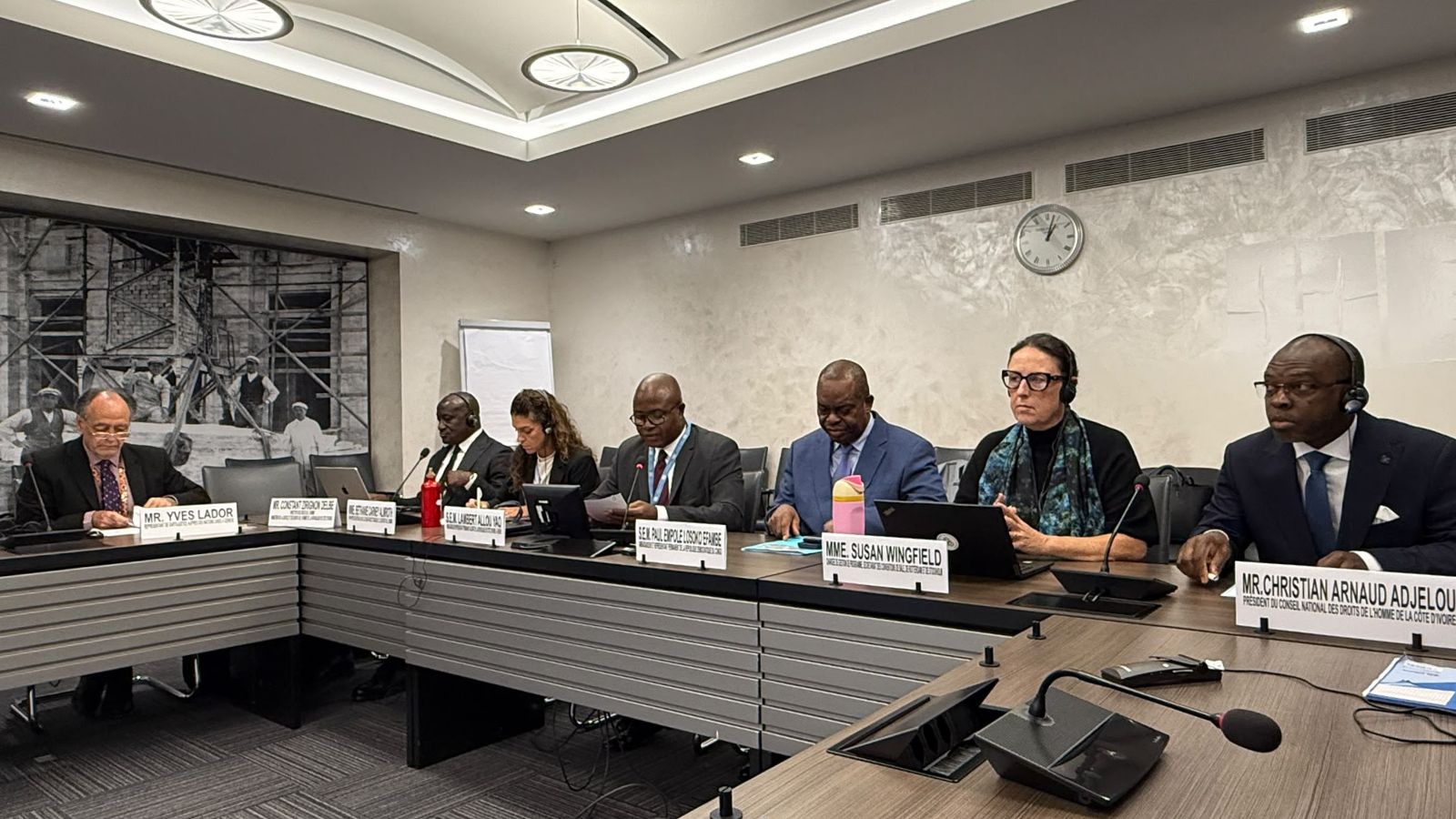
Speakers

Deputy Permanent Representative of the Republic of Côte d'Ivoire to the United Nations Office and other international organizations in Geneva
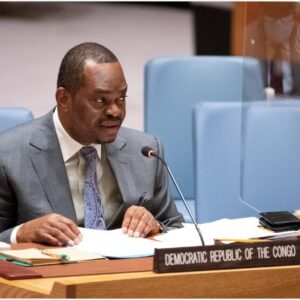
H.E. Amb. Paul EMPOLE LOSOKO EFAMBE
Permanent Representative of the Democratic Republic of the Congo to the UN Office and other international organizations in Geneva

Christian Arnaud ADJELOU
President, National Council for Human Rights of Côte d'Ivoire

Constant Zirignon DELBE
Director, Ministry of Justice and Human Rights of Côte d'Ivoire

Bethanie CARNEY ALMROTH
UN Special Rapporteur on toxics and human rights

Yves LADOR
Representative of Earthjustice to UN Geneva

Susan WINGFIELD
Programme Manager, Basel, Rotterdam and Stockholm Conventions Secretariat
Highlights
Video
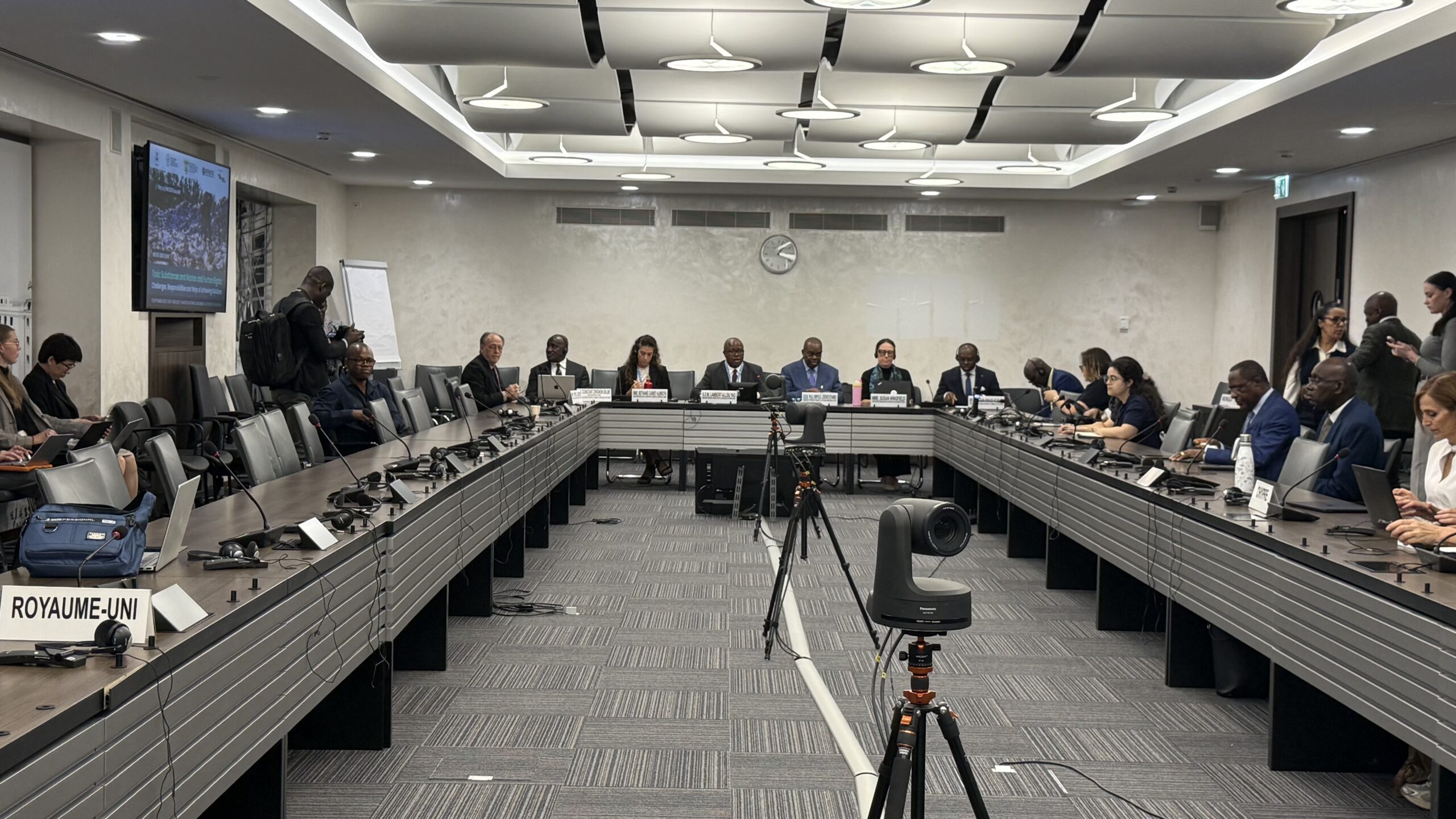
Live from Palais des Nations
Summary
H.E. Amb. Lambert ALLOU YAO | Deputy Permanent Representative of the Republic of Côte d’Ivoire to the United Nations Office and other international organizations in Geneva
- Your presence here reflects the importance you attach to this panel discussion on the theme “Toxic Substances and Waste and Human Rights: Challenges, Responsibilities, and Pathways to Solutions.”
- For years, the management of chemicals and waste has been approached from a purely technical, industrial, and environmental perspective.
- Yet the reality that brings us together today is quite different. This is a crisis on a human scale that affects fundamental rights.
- Every year, exposure to chemicals deprives millions of people of their most basic rights: the right to life, the right to health, the right to safe food, clean drinking water, and a clean, healthy, and sustainable environment.
- Victims are almost always the most vulnerable: children, the working poor, Indigenous communities, and people in developing countries, which are often turned into dumping grounds for the world’s waste. Our goal is to analyze this issue from three perspectives.
- First, the challenge: how can we map the extent of this invisible pollution and address the emergence of new pollutants such as PFAS and microplastics that are saturating our ecosystems and our bodies?
- Second, responsibilities: What are states’ duties in protecting their citizens? How can we compel corporate and industrial actors to respect human rights throughout their value chains, in accordance with the “polluter pays” principle?
- Third, potential solutions: what legal, political, and technological strategies can we implement to move from crisis management to true environmental justice and a transition toward a world free of toxic substances?
Original version in French:
- Votre présence est l’expression de l’importance que vous accordez à ce panel ayant pour thème « Substances et déchets toxiques et droits de l’homme : défis, responsabilités et voies de solutions ».
- La gestion des produits chimiques et des déchets a été durant des années abordée sous un angle purement technique, industriel et environnemental. Pourtant, la réalité qui nous rassemble aujourd’hui est tout autre. Il s’agit d’une crise d’envergure humaine qui touche aux droits fondamentaux.
- Chaque année, l’exposition aux substances chimiques prive des millions de personnes de leurs droits les plus élémentaires : le droit à la vie, le droit à la santé, le droit à une alimentation saine, à l’eau potable et à un environnement propre, sain et durable.
- Les premières victimes sont presque toujours les plus vulnérables : les enfants, les travailleurs pauvres, les communautés autochtones, les populations des pays en développement, souvent transformés en réceptacles des déchets du monde.
- Notre objectif est d’analyser cette problématique sous trois angles.
- Premièrement, le défi : comment cartographier l’ampleur de cette pollution invisible et faire face à l’émergence de nouveaux polluants comme les PFAS ou les microplastiques qui saturent nos écosystèmes et nos corps ?
- Deuxièmement, les responsabilités : quels sont les devoirs des États dans la protection de leurs citoyens ? Comment contraindre les acteurs corporatifs et industriels à respecter les droits humains tout au long de leurs chaînes de valeur, selon le principe du pollueur-payeur ?
- Troisièmement, les voies de solution : quelles stratégies juridiques, politiques et technologiques pouvons-nous déployer pour passer de la gestion de crise à une véritable justice environnementale et à une transition vers un monde sans substances toxiques ?
H.E. Amb. Paul EMPOLE LOSOKO EFAMBE | Permanent Representative of the Democratic Republic of the Congo to the UN Office and other international organizations in Geneva
- I was asked to examine the impact of toxic waste on human rights and on its management.
- Addressing toxic waste from a human rights perspective first requires us to move beyond the notion that toxic waste is primarily a problem of pollution or environmental management, as it is also a matter of human dignity, equality, public health, and responsibility.
- Indeed, waste becomes a particular cause for concern when, due to its composition, persistence, or the conditions under which it is produced, transported, stored, recycled, or disposed of, it exposes people and ecosystems to hazardous substances.
- This exposure can occur in industrial and mining activities, in agriculture, in the management of electronic or chemical waste, but also through cross-border movements.
- The waste that is most difficult or costly to treat is frequently shipped from wealthy countries to developing countries. Plastics, electronic waste, and end-of-life vehicles are often recycled under hazardous conditions or dumped in open landfills, with direct consequences for public health.
- Low-income countries, which often lack adequate infrastructure, oversight, and advanced remediation capabilities, thus become vulnerable links in a global chain.
- Informal workers who recover metals or electronic components are particularly exposed to toxic substances. Weak oversight exacerbates the situation.
- Globally, only 2% of shipping containers are physically inspected, and only a fraction of those involve waste.
- In fact, the more costly and heavily regulated waste management becomes, the greater the temptation to dispose of waste illegally. The global waste economy, estimated at approximately $1.2 trillion in 2024, provides fertile ground for these abuses.
- Profits from illegal activities remain difficult to quantify, but some estimates suggest billions of dollars annually in the e-waste sector.
- The supply chains are complex, fragmented among producers, collectors, transporters, recyclers, and brokers. This fragmentation facilitates fraud.
- Common methods include false declarations, forged documents, mixing hazardous waste with legal waste streams, and the use of shell companies.
- However, the consequences go beyond the contamination of air, soil, or water. They directly affect the exercise of fundamental rights.
- The right to life and the right to health are at stake when populations are chronically exposed to substances that can cause serious illnesses, disabilities, developmental impairments, or even premature death.
- But other fundamental rights are equally at stake: the rights to safe drinking water, food, adequate housing, and safe working conditions, as well as the right to a clean, healthy, and sustainable environment.
- Above all, there is one aspect we must not lose sight of: the risks are not distributed equitably.
- The most vulnerable populations are often the poorest, as you mentioned, who lack the means to avoid such exposure or to seek redress.
- Informal workers, communities living near industrial, mining, or trade sites, children, women, and certain economically marginalized communities may bear a disproportionate share of the health and environmental costs of our modes of production and consumption.
- The issue of toxic waste thus becomes a matter of environmental justice.
- This aspect is particularly important when we examine the transboundary movement of hazardous waste. And it is precisely at this intersection that international human rights law and international instruments on chemicals and waste must work together.
- The Basel, Rotterdam, and Stockholm Conventions are essential instruments of international cooperation in this regard, and the presence of their secretariats in this discussion is warmly welcomed. Undoubtedly, it helps strengthen cooperation in the search for a solution.
- Standards are not enough if they are not accompanied by effective national capacities for prevention, control, and enforcement.
- A human rights-based approach to toxic waste management requires a strict hierarchy, from prevention to safe disposal.
- It begins with prevention. States and economic actors must act before the damage becomes irreparable.
- We must therefore reduce the hazardousness and quantity of manufactured products by adopting green chemistry.
- Sorting must take place at the source, rigorously separating hazardous waste and avoiding the mixing of incompatible substances: household waste, industrial waste, electronic waste, etc.
- Safe storage and transportation are also required, which means keeping waste in sealed, appropriate containers and then using authorized waste collectors.
- Finally, appropriate treatment is necessary. This involves using methods such as physicochemical neutralization, bioremediation, or thermal treatment through controlled incineration.
- A human rights-based approach to toxic waste management also requires information and transparency.
- A person cannot protect their health or defend their rights if they are unaware of the substances to which they are exposed, the risks those substances pose, and the decisions that lead to that exposure.
- It also involves the participation of affected communities in environmental decisions that impact their living conditions.
- Finally, it requires accountability and access to effective remedies.
- When harm occurs, victims must be able to identify those responsible, access justice, and obtain appropriate compensation.
- I would like to conclude with a call to Member States, international organizations, the private sector, and civil society to improve efforts to combat the trafficking of toxic substances and waste.
- A call for the harmonization of legislation and greater international cooperation, for the provision of adequate resources and improved traceability of waste, for stronger penalties, and for increased corporate accountability.
Original version in French:
- Il m’a été demandé de me pencher sur l’impact des déchets toxiques sur les droits de l’homme et sur leur gestion.
- Parler des déchets toxiques sous l’angle des droits humains nous invite d’abord à dépasser l’idée selon laquelle les déchets toxiques seraient essentiellement un problème de pollution ou de gestion environnementale, car ils constituent également une question de dignité humaine, d’égalité, de santé publique et de responsabilité.
- En effet, un déchet devient particulièrement préoccupant lorsque, en raison de sa composition, de sa persistance ou des conditions dans lesquelles il est produit, transporté, stocké, recyclé ou éliminé, il expose des personnes et les écosystèmes à des substances dangereuses.
- Cette exposition peut intervenir dans les activités industrielles et minières, dans l’agriculture, dans la gestion des déchets électroniques ou chimiques, mais également à travers les mouvements transfrontaliers.
- Les déchets les plus difficiles ou coûteux à traiter circulent fréquemment des pays riches vers les pays en développement. Plastiques, déchets électroniques ou véhicules hors d’usage sont souvent recyclés dans des conditions dangereuses ou abandonnés à ciel ouvert, avec des conséquences directes sur la santé des populations.
- Les pays à faible revenu, souvent dépourvus d’infrastructures adaptées, de surveillance et de capacités de dépollution avancées, deviennent ainsi des maillons fragiles d’une chaîne globale.
- Les travailleurs informels qui récupèrent les métaux ou composants électroniques sont particulièrement exposés aux substances toxiques. La faiblesse des contrôles aggrave la situation.
- À l’échelle mondiale, seuls 2 % des conteneurs maritimes sont inspectés physiquement et une fraction seulement concerne les déchets.
- En effet, plus la gestion des déchets devient coûteuse et réglementée, plus la tentation de s’en débarrasser illégalement grandit. L’économie mondiale des déchets, évaluée à environ 1 200 milliards de dollars en 2024, offre un terrain fertile à ces dérives.
- Les profits issus des activités illégales restent difficiles à quantifier, mais certaines estimations évoquent des milliards de dollars par an dans le secteur des déchets électroniques.
- Les filières sont complexes, éclatées entre producteurs, collecteurs, transporteurs, recycleurs et négociateurs. Cette fragmentation favorise la fraude.
- Au nombre des méthodes courantes figurent les fausses déclarations, les documents falsifiés, le mélange des déchets dangereux avec les flux légaux ou l’utilisation des sociétés-écrans.
- Cependant, les conséquences ne s’arrêtent pas à la contamination de l’air, des sols ou de l’eau. Elles touchent directement à l’exercice de droits fondamentaux.
- Le droit à la vie et le droit à la santé sont concernés lorsque les populations sont durablement exposées à des substances susceptibles de provoquer des maladies graves, des handicaps, des atteintes au développement, voire d’occasionner des décès prématurés.
- Mais d’autres droits fondamentaux le sont tout autant : les droits à l’eau potable, les droits à l’alimentation, à un logement adéquat, à des conditions de travail sûres, ainsi que le droit à un environnement propre, sain et durable.
- Il existe surtout une dimension que nous ne devons pas perdre de vue : les risques ne sont pas répartis de manière équitable.
- Les populations les plus vulnérables sont souvent celles les plus démunies, comme vous l’avez dit, qui ne disposent pas de moyens pour éviter cette exposition ou pour en obtenir réparation.
- Les travailleurs informels, les communautés vivant à proximité des sites industriels, miniers ou d’échanges, les enfants, les femmes et certaines communautés économiquement marginalisées peuvent supporter une part disproportionnée du coût sanitaire et environnemental de nos modes de production et de consommation.
- La problématique des déchets toxiques devient alors une question de justice environnementale.
- Cette dimension est particulièrement importante lorsque nous examinons les mouvements transfrontaliers des déchets dangereux. Et c’est précisément à cette intersection que le droit international des droits humains et les instruments internationaux relatifs aux produits chimiques et aux déchets doivent s’articuler.
- Les conventions de Bâle, de Rotterdam et de Stockholm constituent à cet égard des instruments essentiels de coopération internationale, et la présence de leurs secrétariats à cette discussion est vivement saluée. Certainement, elle contribue à renforcer la coopération dans la recherche d’une solution.
- Les normes ne suffisent pas si elles ne sont pas accompagnées des capacités nationales effectives de prévention, de contrôle et de mise en œuvre.
- Une approche fondée sur les droits humains et la gestion des déchets toxiques exige une hiérarchie stricte, de la prévention à l’élimination sécurisée.
- Elle suppose d’abord la prévention. Les États et les acteurs économiques doivent agir avant que les dommages ne deviennent irréparables.
- Il faut donc réduire la dangerosité et la quantité de produits fabriqués en adoptant la chimie verte.
- Il faut que le tri se fasse à la source, en séparant rigoureusement les déchets dangereux et en évitant de mélanger les substances incompatibles : déchets ménagers, déchets industriels ou déchets électroniques, etc.
- Il faut aussi le stockage et le transport sécurisés, c’est-à-dire conserver les déchets dans des conteneurs étanches et adaptés, puis faire appel à des collecteurs autorisés.
- Il faut enfin un traitement adapté. Il faut utiliser des méthodes de neutralisation physico-chimique, de biorestauration ou un traitement thermique par incinération surveillée.
- L’approche fondée sur les droits humains et la gestion des déchets toxiques exigent ensuite l’information et la transparence.
- Une personne ne peut protéger sa santé ou défendre ses droits si elle ignore les substances auxquelles elle est exposée, leurs risques et les décisions qui conduisent à cette exposition.
- Elle implique également la participation des communautés concernées aux décisions environnementales qui affectent leurs conditions de vie.
- Enfin, elle suppose la responsabilité et l’accès à un recours effectif.
- Lorsqu’un dommage survient, les victimes doivent pouvoir identifier les responsables, accéder à la justice et obtenir une réparation appropriée.
- J’aimerais terminer par un appel aux États membres, aux organisations internationales, au secteur privé et à la société civile pour améliorer la lutte contre les trafics de substances et de déchets toxiques.
- Un appel à une harmonisation des législations et à plus de coopération internationale, à une disponibilisation des moyens adéquats et à une amélioration de la traçabilité des déchets, à un renforcement des sanctions et à un accroissement de la responsabilité des entreprises.
Constant Zirignon DELBE | Director, Ministry of Justice and Human Rights of Côte d’Ivoire
- On August 19 and 20, 2006, nearly 528 m³ of toxic waste transported by the ship Probo Koala was dumped without any safety precautions at about 15 sites—most of which were inhabited—scattered throughout the city of Abidjan.
- More than 100,000 people were poisoned, including more than 20 who died, and thousands of patients were hospitalized, some in critical condition.
- Various human rights were violated on that occasion, and these serious human rights abuses led to legal proceedings, which should be reviewed before providing an overview of the measures taken to strengthen the protection of people against the impact of toxic waste and substances.
- As for the judicial response to the Probo Koala case, the criminal investigation launched in connection with this case led to the indictment of 11 individuals; ultimately, nine of them were brought to trial before the Assize Court of Côte d’Ivoire in Abidjan.
- Two individuals were convicted, and the others were acquitted.
- With regard to the victims, it is important to note that, under an agreement reached with Trafigura, the government secured a payment of 100 billion CFA francs—approximately 150 million euros—which made it possible to quickly compensate a large number of victims and fund the cleanup of contaminated sites.
- Turning now to measures aimed at strengthening the regulatory framework, I would like to point out that the Constitution of November 8, 2016, affirms the commitment of the people of Côte d’Ivoire to help preserve a healthy environment for future generations, in particular by establishing as a duty for the community and for every natural or legal person the protection of the environment and the promotion of quality of life.
- As part of the legislative measures that Côte d’Ivoire has adopted to address new challenges in the area of environmental crime, the Environmental Code of November 23, 2023 criminalizes various acts, including the irreversible degradation of soil or subsoil quality, the use and handling of mercury—particularly in artisanal mines—water pollution, the importation of hazardous waste into the national territory, and the transfer of hazardous waste for storage, treatment, or incineration.
- Legal entities may also be held criminally liable. The Water Code also provides for criminal offenses along the same lines.
- Following a national workshop on consultation and harmonization of mechanisms to combat illegal looting in Côte d’Ivoire, held on September 4 and 5, a more deterrent legal framework is expected to be implemented shortly, in a more practical manner, to combat water pollution.
- Twenty-one river security units will be deployed to ensure constant monitoring of the country’s four major rivers and their tributaries within two months following this workshop, to enable a deterrent, coordinated, and continuous response to illegal looting, the environmental consequences of which are a major concern for the government.
- Côte d’Ivoire has also undertaken to develop a national Business and Human Rights plan that will improve the protection of human rights in the context of economic activities.
Original version in French:
- Les 19 et 20 août 2006, près de 528 m³ de déchets toxiques acheminés par le navire Probo Koala avaient été déversés sans aucune précaution dans une quinzaine de sites habités pour la plupart et disséminés dans la ville d’Abidjan.
- Plus de 100 000 personnes avaient été intoxiquées, dont plus de 20 morts, et des milliers de malades hospitalisés dans un état critique pour certains.
- Divers droits de l’homme avaient été violés à cette occasion et ces graves atteintes aux droits de l’homme avaient donné lieu à des poursuites judiciaires, dont il conviendra de faire un rappel avant de donner un aperçu des mesures prises afin de renforcer la protection des personnes contre l’impact des déchets et substances toxiques.
- Quant à la réponse judiciaire à l’affaire du Probo Koala, l’enquête judiciaire engagée dans le cadre de cette affaire a abouti à l’inculpation de 11 personnes et, finalement, neuf de ces personnes ont été mises en accusation devant la cour d’assises de Côte d’Ivoire, à Abidjan.
- Deux personnes ont été condamnées et les autres acquittées.
- Concernant les victimes, il est important de rappeler qu’à la faveur d’un accord qui avait été conclu avec la société Trafigura, l’État avait obtenu le versement de la somme de 100 milliards de francs CFA, environ 150 millions d’euros, ce qui avait permis d’indemniser rapidement un grand nombre de victimes et de financer la dépollution des sites contaminés.
- Concernant à présent les mesures relatives au renforcement du cadre normatif, je rappelle que la Constitution du 8 novembre 2016 affirme l’engagement du peuple de Côte d’Ivoire à contribuer à la préservation d’un environnement sain pour les générations futures, notamment en érigeant en devoir pour la communauté et pour chaque personne physique ou morale la protection de l’environnement et la promotion de la qualité de la vie.
- Au titre des mesures législatives dont la Côte d’Ivoire s’est dotée en vue de faire face aux nouveaux défis en matière de criminalité environnementale, le Code de l’environnement du 23 novembre 2023 incrimine divers comportements, dont l’altération irréversible de la qualité du sol ou du sous-sol, l’utilisation et la manipulation du mercure, notamment dans les mines artisanales, la pollution des eaux, l’importation des déchets dangereux sur le territoire national, la remise des déchets dangereux en vue de leur stockage, traitement ou incinération.
- La responsabilité pénale des personnes morales peut de même être engagée. Le Code de l’eau prévoit également des incriminations dans le même sens.
- A l’issue d’un atelier national de concertation et d’harmonisation des mécanismes de lutte contre le pillage illégal en Côte d’Ivoire, qui s’est tenu les 4 et 5 septembre dernier, un dispositif légal plus dissuasif devrait être initié incessamment, de façon plus pratique, pour lutter contre la pollution des eaux.
- 21 pelotons de sécurité fluviale seront déployés afin d’assurer une surveillance permanente des quatre grands fleuves du pays et leurs affluents dans les deux mois qui suivent donc cet atelier, pour permettre une réponse dissuasive, coordonnée et continue face au pillage illégal, dont les conséquences environnementales constituent une préoccupation majeure pour le gouvernement.
- La Côte d’Ivoire a également entrepris de se doter d’un plan national Entreprises et Droits de l’homme qui permettra d’améliorer la protection des droits de l’homme dans le cadre des activités économiques.
Christian Arnaud ADJELOU | President, National Council for Human Rights of Côte d’Ivoire
- The National Human Rights Council of Côte d’Ivoire (CNDH) emphasizes that the management of toxic waste goes beyond industrial, economic, or public health issues.
- For a national human rights institution with A status, the storage, dumping, and proliferation of these products constitute a direct violation of human dignity.
- The Ivorian experience demonstrates that an environmental disaster has consequences for human rights that persist well beyond the initial crisis.
- The Probo Koala disaster: a wound in the national conscience. The dumping of toxic waste from the Probo Koala in August 2006 in Abidjan and its surroundings illustrated the brutality of the global waste trade.
- Twenty years later, the toll remains heavy: tens of thousands of cases of poisoning, long-term pollution of groundwater, soil, and the food chain, and massive violations of the rights to life, health, and an adequate standard of living.
- This tragedy exposed the vulnerability of countries in the Global South to environmental dumping and the mismanagement of cross-border transfers.
- The lingering aftermath. Twenty years later, the CNDH continues to receive complaints related to the Probo Koala. Five major complaints have been filed, concerning governance conflicts within victims’ associations, the management of compensation, restrictions on freedom of expression, assembly, and demonstration, difficulties in enforcing court decisions, and barriers to accessing specialized health care.
- This demonstrates that the response to disasters must be a long-term effort.
- The current impacts of toxic substances in Côte d’Ivoire. The country faces other direct environmental threats.
- Illegal gold mining. Despite Côte d’Ivoire’s accession to the Minamata Convention on Mercury, the unregulated use of mercury and cyanide is polluting waterways and groundwater, threatening the right to health and to safe drinking water.
- Electronic waste: The accumulation of used electrical and electronic equipment and the informal burning of cables release dioxins and heavy metals, exposing women and children in particular to harm.
- Obsolete pesticides: As an agricultural powerhouse, the use and storage of poor-quality or expired pesticides degrade the soil and harm workers’ health.
- Strengthening the mandate of the United Nations Special Rapporteur. The CNDH commends the work carried out under this mandate and welcomes its renewal by Resolution A/HRC/RES/54/10 of 2023.
- As the review of this mandate approaches, the CNDH advocates for its continuation and strengthening in order to ensure sustained monitoring, early warning, and international cooperation.
- Institutional Framework and Actions of the CNDH. In accordance with Resolutions 48/13 and 76/300, which enshrine the right to a healthy environment, the CNDH has implemented several measures: the creation of a department responsible for the environment and climate change; the coordination of a victims’ mechanism; a framework for consultation with civil society and the private sector that meets at least twice a year; and the receipt and processing of complaints throughout the country through its 31 regional commissions
- Example of a recent intervention: the 2020 Kraffy case. Following a gas leak from a pipeline at the Petroy Holding Block C11 oil platform, which affected the health of local communities and local fisheries, a technical report submitted to the Office of the President led to the repair of the infrastructure and the provision of assistance to the affected communities.
- The Zimrida Case (2025). The organization intervened with the authorities when a ship carrying 20,000 metric tons of ammonium sulfate docked at the port of Abidjan to assess the risks to the population.
- Seizure of counterfeit medicines: monitoring safety, health, and environmental issues related to the storage and destruction of substandard health products.
- Areas of Focus and Call to Action. The CNDH is implementing its strategy across five key areas: regular advocacy with authorities; corporate accountability; the duty of care in accordance with the United Nations Guiding Principles; protection of environmental defenders; access to legal remedies and full reparations for victims; and continuous improvement of the institutional and regulatory framework.
- CNDH recommendations to the international community: rigorously enforce international instruments—the Basel, Rotterdam, and Bamako Conventions—to ban illicit waste transfers to developing countries.
- To States and partners: fund the transition to a safe circular economy and create sustainable mechanisms to support victims.
- To economic actors: integrate human rights and the duty of care throughout the chemical and industrial value chain.
- In conclusion, long-term environmental degradation directly undermines fundamental rights.
- The CNDH reaffirms its determination to defend the people and reiterates that, even as the Special Rapporteur’s mandate comes to an end, the demand for justice, accountability, and international protection must continue.
Original version in French:
- Le Conseil national des droits de l’homme de Côte d’Ivoire, CNDH, rappelle que la gestion des déchets toxiques dépasse les questions industrielles, économiques ou sanitaires.
- Pour une institution nationale des droits de l’homme de statut A, le stockage, le déversement et la prolifération de ces produits constituent une atteinte directe à la dignité humaine.
- L’expérience ivoirienne démontre qu’un drame environnemental génère des conséquences sur les droits humains qui perdurent bien au-delà de la crise initiale.
- Le drame du Probo Koala, une lésion dans la conscience nationale. Le déversement des déchets toxiques du navire Probo Koala en août 2006 à Abidjan et ses environs a illustré la brutalité du commerce mondial des déchets.
- Vingt ans après, le bilan reste lourd : des dizaines de milliers d’intoxications, pollution durable des nappes phréatiques, des sols et de la chaîne alimentaire, atteinte massive aux droits à la vie, à la santé et à un niveau de vie suffisant.
- Ce drame a révélé la vulnérabilité des pays du Sud face au dumping environnemental et à la mauvaise gestion des transferts transfrontaliers.
- La persistance des séquelles. Vingt ans après, le CNDH continue de recevoir des requêtes liées au Probo Koala. Cinq requêtes majeures ont été enregistrées, portant sur des conflits de gouvernance au sein des associations de victimes, sur la gestion des indemnisations, sur des entraves aux libertés d’expression, de réunion et de manifestation, sur des difficultés d’exécution des décisions de justice, sur des obstacles à l’accès à des soins de santé spécialisés.
- Cela démontre que la réponse aux catastrophes doit s’inscrire dans le long terme.
- Les impacts actuels des substances toxiques en Côte d’Ivoire. Le pays fait face à d’autres menaces environnementales directes.
- L’orpaillage clandestin. Malgré l’adhésion de la Côte d’Ivoire à la Convention de Minamata sur le mercure, l’usage non contrôlé du mercure et du cyanure pollue les cours d’eau et les nappes phréatiques, menaçant le droit à la santé et à l’eau potable.
- Les déchets électroniques : l’accumulation d’équipements électriques et électroniques usagés et le brûlage artisanal des câbles libèrent des dioxines et des métaux lourds, exposant particulièrement les femmes et les enfants.
- Pesticides obsolètes : en tant que puissance agricole, l’utilisation et le stockage de produits phytosanitaires de mauvaise qualité ou périmés détériorent les sols et la santé des travailleurs.
- Le renforcement du mandat du Rapporteur spécial des Nations Unies. Le CNDH salue le travail accompli au titre du mandat et se félicite de son renouvellement par la résolution A/HRC/RES/54/10 de 2023.
- Alors que la révision de ce mandat approche, le CNDH plaide pour sa continuité et son renforcement afin de maintenir un suivi, une alerte et une coopération internationale durables.
- Dispositif institutionnel et action du CNDH. Conformément aux résolutions 48/13 et 76/300 consacrant le droit à un environnement sain, le CNDH a déployé plusieurs leviers : création d’un département en charge de l’environnement et du changement climatique, animation d’un mécanisme de victimes, un cadre de concertation avec la société civile et le secteur privé se réunissant au moins deux fois par an, réception et traitement des requêtes sur tout le territoire national grâce à ses 31 commissions régionales.
- Exemple d’intervention récente : affaire Kraffy 2020. À la suite d’une fuite de gaz sur un tuyau de la plateforme pétrolière du bloc C11 Petroy Holding, affectant la santé des populations locales et la pêche locale, une note technique transmise à la Présidence de la République a permis la réparation des infrastructures et une assistance aux populations.
- Affaire Zimrida 2025. Intervention auprès des autorités lors de l’accostage au port d’Abidjan d’un navire transportant 20 000 tonnes de sulfate d’ammonium afin d’évaluer les risques pour la population.
- Saisi de médicaments falsifiés : suivi des enjeux sécuritaires, sanitaires et environnementaux liés au stockage et à la destruction des produits de santé sous-standard.
- Axe d’engagement et appel à l’action. Le CNDH déploie sa stratégie autour de cinq axes : plaidoyer régulier auprès des autorités, redevabilité des entreprises, devoir de vigilance selon les Principes directeurs des Nations Unies, protection des défenseurs de l’environnement, accès au recours et à la réparation intégrale pour les victimes, amélioration continue du cadre institutionnel et réglementaire.
- Recommandations du CNDH à la communauté internationale : appliquer rigoureusement les instruments internationaux, les Conventions de Bâle, de Rotterdam et de Bamako, pour bannir les transferts illicites de déchets vers les pays en développement.
- Aux États et partenaires : financer la transition vers une économie circulaire sûre et créer des mécanismes pérennes d’accompagnement des victimes.
- Aux acteurs économiques : intégrer les droits humains et le devoir de diligence dans toute la chaîne de valeur chimique et industrielle.
- En conclusion, la dégradation durable de l’environnement fragilise directement les droits fondamentaux.
- Le CNDH réaffirme sa détermination à défendre les populations et rappelle que, si le mandat du Rapporteur spécial arrive à son terme, l’exigence de justice, de responsabilité et de protection internationale doit se poursuivre.
Bethanie CARNEY ALMROTH | UN Special Rapporteur on toxics and human rights
- For 30 years, this mandate on toxics and human rights has documented a fundamental reality. Toxic pollution is not simply an environmental problem but also a human rights problem. Hazardous substances move through our economies, across borders, through extraction and production, trade, use, recycling and waste, and they contaminate our air, water, soil, food and ultimately our bodies.
- The consequences affect many rights, as we have heard: the right to health, the right to food and water, the right to clean, safe working environments, the right to information, the right to participation, the right to access to justice, the right to a clean, healthy environment.
- These are harms that are not distributed equally. Women, children, workers, Indigenous peoples, people living in poverty, communities on the frontlines and fence-line communities are often affected first and worst.
- For 30 years, this mandate has shown us that these are not isolated incidents. They reveal systemic problems in how we produce, regulate, use and dispose of chemicals and waste.
- PFAS, so-called forever chemicals, provide a striking example. These are thousands of synthetic chemicals that are designed for properties such as resistance to heat, to water and to degradation. These useful properties also render them very persistent.
- Once PFAS are released, they can travel through air and water and accumulate in ecosystems. They have been found in drinking water. They have been found in food. They can cross placentas. They are found in breast milk. They are found in almost all of our bodies.
- Workers manufacturing or using PFAS face particularly high exposures. We know that PFAS cause toxic impacts in our bodies. They can affect our hormone systems. They impact the development of our children. They impact our immune systems. They impact our liver function. And there are currently no effective and scalable technologies capable of removing PFAS from our ecosystems.
- Some of the pollution that we create today may therefore remain for generations.
- PFAS illustrate three challenges that are very fundamental to this mandate.
- The first is prevention. We too often govern chemicals by allowing their production and use, identifying harm after the fact and then attempting to manage the pollution. But when pollution is persistent, widespread and irreversible, this approach fails.
- PFAS should be banned for all non-essential uses. We need to move upstream when we are managing toxic pollution. We cannot continue to manage it after harm has occurred.
- This means looking across the full life cycle of chemicals and materials. We need to ask not only how we clean up contamination, but why hazardous substances enter into products, our workplaces, our ecosystems and bodies in the first place.
- Why are we producing them? Which raw materials are we using to do this? Are these substances and products essential to society, to protecting human health, to protecting the functioning of our societies, to meeting our essential needs? Where is the pollution and exposure occurring?
- When harm occurs, rights holders must have access to information, to meaningful participation, to justice and to effective remedy.
- Identifying responsibilities is one part of the problem. Producers and polluters must be held accountable, and this will require evidence. This will require transparency and mechanisms. This will require monitoring of emissions and of impacts.
- Toxic pollution crosses scientific disciplines, economic sectors, political borders and human generations.
- No single discipline or institution or community holds all of the knowledge that we need to address these issues. So, going forward, it will be important under the work of this mandate to connect, to build bridges, to make connections between science and human rights, public health, policy and lived experiences.
- This will reflect my broader work going forward to build interdisciplinary approaches, translating evidence into policy and concrete interventions.
- Thirty years of the toxic mandate has given us an extraordinary body of knowledge about harm. There are many legacy toxics that we continue to suffer from. We heard about some of them already, like metals.
- We also know that there are coming threats on the horizon. The challenge for the coming years is to turn our knowledge into prevention.
- Bridging science and human rights therefore gives us a pathway forward. We can move upstream. We can protect the right to know. We can apply precaution. We can demand accountability. And we can design chemicals and production systems that are essential, safe and sustainable from the outset.
- Our ambition should not be simply to manage toxic pollution better. It should be to prevent toxic harm and ensure that everyone, including future generations, can work, study and play in a non-toxic environment.
Susan WINGFIELD | Programme Manager, Basel, Rotterdam and Stockholm Conventions Secretariat
- Toxic substances and waste are not only an environmental challenge. They affect human health, water, food, livelihoods, and working conditions. And those impacts are not distributed equally.
- The new Special Rapporteur has also emphasised the importance of moving upstream, preventing harm, looking across the full life cycle of chemicals and waste, and reducing hazardous exposure before contamination occurs. That resonates very strongly with the approach of the Basel, Rotterdam and Stockholm Conventions.
- The three conventions are environmental treaties, not human rights treaties per se, but their fundamental objective, which is to protect human health and the environment from hazardous chemicals and waste, has a very direct bearing on the enjoyment of human rights, including the rights to health and to a clean, healthy, and sustainable environment.
- They do this in different but complementary ways.
- Firstly, the Stockholm Convention requires action to eliminate or restrict persistent organic pollutants such as PFAS and reduce their releases.
- Next, the Rotterdam Convention promotes information exchange and informed decision-making on hazardous chemicals and pesticides in international trade.
- And last but not least, the Basel Convention seeks to minimise the generation of hazardous and other waste, ensure their environmentally sound management, and control their movement across borders.
- Together, they provide practical tools for prevention, minimisation, information exchange, environmentally sound management, and international cooperation. And together they address different stages of the life cycle, from hazardous chemicals in production and use through to international trade, and then lastly where the waste remains at the end.
- If I were to frame the challenge that we face, I would highlight three dimensions: the challenge itself, responsibility, and solutions.
- Firstly, the challenge. Toxic exposure is simultaneously an environmental, health, human rights, and development issue. Chemicals, products, and waste cross borders while their impacts may persist for generations. Exposure is unequal. Workers, children, women, Indigenous peoples, people living in poverty, and informal waste workers and communities may face disproportionate risks.
- Secondly, responsibility. States have obligations under the conventions, but adopting international rules is only the beginning. Those commitments have to be translated into national legislation, functioning institutions, monitoring, and enforcement.
- Responsibility also means ensuring access to information and opportunities for affected people to participate in decisions that concern them. And there is an important international dimension to responsibility.
- Products may be manufactured or consumed in one part of the world, while hazardous constituents or waste create risk for workers and communities somewhere else. Countries should not be left to manage those risks without the capacity, technology, and resources to do so safely.
- This brings us to solutions.
- Firstly, prevention and stronger national implementation. We need effective laws, institutions, monitoring, laboratories, customs, and enforcement capacity, and appropriate infrastructure.
- The objective should not simply be to manage harm after it has occurred, but to prevent hazardous exposure in the first place.
- Second, international cooperation and implementation support. Finance, technology transfer, technical assistance, and capacity building are fundamental if international commitments are to work in practice.
- Under the BRS Conventions, our regional centres, of which we have 23, technical assistance programmes, partnerships, and cooperation among Parties are important parts of the implementation architecture.
- Third, information and meaningful participation.
- Workers and affected communities often understand exposure pathways that national statistics do not capture. Giving people access to understandable information and a meaningful voice in decisions is not simply an additional human rights consideration. It can lead to better chemicals and waste management as well.
- The human rights framework and the BRS Conventions are highly complementary. Human rights help us ask who is exposed, who benefits, who bears the costs, and who has a voice in the decisions being made.
- The conventions provide practical tools for prevention, information, control, environmentally sound management, and international cooperation.
- Our shared challenge is to connect these approaches more systematically, ensure that we make international commitments translate into work, communities, and healthier lives.
Yves LADOR | Representative of Earthjustice to UN Geneva
- The one of the Special Rapporteur on toxics is the oldest environmental mandate of the Council. It actually started at the time of the Commission and was created in 1995, precisely after terrible waste dumps in Africa. The African Group’s work has been pushing and has been the force behind this acknowledgement of the importance of the human rights aspects of waste.
- It started with waste but then continued with the more general view of toxics in general. There has been a co-evolution between international human rights law and international environmental law.
- The Basel Convention was adopted in 1989, which means before the creation of the mandate.
- 1998 was a very important year for the adoption of the Rotterdam Convention, but also of the Bamako Convention in Africa. We definitely need today to devote also more attention to these regional instruments, which is the Bamako Convention.
- This was completed with the Stockholm Convention in 2001 and the Minamata Convention in 2013.
- Regardless of these very good examples of progress and better protection, we still face a huge number of challenges. To those that have already been mentioned, we could just add the huge textile waste, which is unfortunately now flooding, and it is not an exaggeration, flooding some of the African countries to the point that their own beaches cannot be used anymore.
- It is a whole evolution of an industry where nobody really looked at what the consequences are, and this is where we are today. And it includes a number of toxics in these textiles.
- Another element which is also very worrying is how artificial intelligence can bring us to the creation of new products, new manipulation of molecules, without any correct consideration of what the consequences would be.
- So when we have already heard all these elements of contamination, and what we prevent on these issues, we definitely need to go beyond what is still today a situation of little, if not non-existent, protection.
- Now, is this hopeless? Well, what we have at stake now is that the way states have developed international environmental law, and that has been very clearly said, is a logic that goes from one problem to another, from one substance to another. And today we have to be very clear: this just fails. We cannot produce and see later what the impact will be.
- There has also been some progress. For example, having an approach that looks at classes of substances rather than just going from one substance to the other.
- For example, what has been developed in the EU and also in the United States, but unfortunately in the United States it has been deconstructed. For example, in the EU, the REACH mechanism. But here again, we are always trying just to catch up with the existing production. We are not going beyond the curve.
- So we definitely need to have a much better approach.
- Do we have an industrial sector that has another approach? Well, yes, there is one that could be a source of inspiration. That is in the field of pharmaceuticals.
- The principle is that you must test before using a different product. We still have a lot of issues around pharmaceuticals, but the principle is such that you have to test it before. That is prevention. And actually, it is even part of the industrial sector as such. It is a business. This prevention, this testing, is part of the industry.
- So we need to move away from the way the industry is saying. So how can the mandate play a role, and the work in this Council can play a role, in this change of paradigm inside the industry, where states must push the industry to change its practice?
- Well, on the 24th of October 2019, in front of the United Nations General Assembly, one of the previous mandate holders, Mr. Baskut Tuncak, the Special Rapporteur on toxics, produced and presented his report on the duty to prevent exposure, and also the responsibilities of companies to prevent exposure as a central element.
- Of course, it is based on human rights elements: the right to life, the right to health… Of course, the right to a healthy and sustainable environment, but also a very important element in human rights, which is a basis for such an approach, is the protection against cruel, inhuman and degrading treatment.
- It is an absolute obligation that no one should be tortured under human rights law. There is no argument to defend that, which means that there is bodily integrity protection. As a principle, this has not been developed in the industry as a fundamental aspect in order to develop these types of activities.
- As we are right now exposed to a multitude of hazardous substances, we are still facing lack of information, as has been said, lack of prevention. And this absence of protection is also, on the long run, hitting the legitimacy of the action of states.
- We heard a number of testimonies earlier during this week, and we see how, when you do not have remedies, when you do not have information, when actually what you are suffering from is not even considered as a human rights violation, you see how people get desperation and then do not believe in the existing institutions.
- So it is a wider threat that lies behind the threats that we are seeing with toxics.
- By working together, international environmental law and international human rights law, and with a contribution that is possible thanks to this incredible mechanism of Special Rapporteurs, there is a possibility to enlarge the discussion and to start to change paradigms.
- We need the renewal of the mandate, a very strong resolution for the renewal of the mandate. And we can also look forward later this year for the international conference of the Global Framework on Chemicals, which will happen here in Geneva in November, a moment where we can try to start the change of the paradigm in this industry.
Interventions from the Floor
- My name is Abdelhab Hani, from the NGO Ismoun, and I was also a member of the United Nations Committee Against Torture.
- Yves Lador just mentioned the absolute prohibition of torture and cruel, inhuman, or degrading treatment. I just wanted to clarify one point: the State is liable both by action—if an act of torture is committed by a public official—and by inaction—if the State fails to take the necessary preventive measures to avoid cruel, inhuman, or degrading treatment.
- To explain this further, Article 3, common to all four 1949 Geneva Conventions—which constitute international humanitarian law—is very specific on this point. Torture and cruel treatment violate a person’s physical integrity. Inhuman or degrading treatment violates human dignity.
- Thus, we have both a violation of personal integrity through torture and cruel treatment, and a violation of the dignity of every human being, of every human person, through inhuman or degrading treatment.
Thus, in both cases, there is an absolute prohibition at all times—in times of peace, war, threats of war, occupation, conflict, etc. - We have two branches of law—human rights and environmental law—and two types of conventions. What do you think might be the possible bridges to ensure that, on the ground, we apply both branches of law—all branches of law—and don’t stop there?
- Today it’s human rights, and tomorrow it’s the environment. How can the Human Rights Council foster dialogue and ensure that protections complement one another rather than exclude one another?
Original version in French:
- Je suis Abdelhab Hani, de l’ONG Ismoun, et j’étais aussi membre du Comité des Nations Unies contre la torture.
- Yves Lador vient de mentionner à l’instant l’interdiction absolue de la torture et des traitements cruels, inhumains ou dégradants. Je voulais juste apporter une petite précision là-dessus : l’État est responsable par action, s’il y a une action de torture commise par un agent public, ou par inaction, si l’État ne prend pas les mesures préventives nécessaires pour éviter les traitements cruels, inhumains ou dégradants.
- Pour mieux expliquer cela, l’article 3 commun des quatre Conventions de Genève de 1949, qui représentent le droit international humanitaire, est très précis là-dessus. La torture et les traitements cruels touchent à l’intégrité de la personne. Les traitements inhumains ou dégradants touchent à la dignité de la personne humaine.
- Donc, à la fois, on a une atteinte à l’intégrité personnelle par la torture et les traitements cruels, et une atteinte à la dignité de tout être humain, de toute personne humaine, par les traitements inhumains ou dégradants.
- Donc, des deux côtés, c’est une interdiction absolue en toutes saisons, en temps de paix, de guerre, de menaces de guerre, d’extraction, de conflits, etc.
- On a deux familles de droit, donc à la fois les droits de l’homme, mais aussi le droit à l’environnement, deux types de conventions. Et quelles seraient peut-être, pour vous, les passerelles possibles pour faire en sorte que, sur le terrain, on applique les deux familles de droit, toutes les familles du droit, et on ne s’arrête pas ?
- Aujourd’hui, ce sont les droits de l’homme et, le lendemain, c’est l’environnement. Comment le Conseil des droits de l’homme peut-il faire dialoguer et faire en sorte qu’il y ait une complémentarité de protection et pas une exclusion de protection ?
Christian Arnaud ADJELOU | President, National Council for Human Rights of Côte d’Ivoire
- We advocate for cooperation. We believe that, whether we’re working on human rights or environmental law in the field, it is through close collaboration that we can prevent all these issues of human rights violations.
- At the National Human Rights Council, we have made it our top priority to work on human rights and the environment. That is our top priority. And what we are doing first is meeting with all the relevant organizations in our country to establish a plan for collaboration, so that together we can examine the various existing legal texts and create this synergy of action.
- Without this synergy of action, we will never be able to contain the various threats.
Original version in French:
- Nous préconisons la coopération. Nous estimons que, qu’on fasse des droits de l’homme ou qu’on fasse du droit de l’environnement sur le terrain, c’est l’étroite collaboration qui doit nous permettre de prévenir toutes ces questions de violation des droits de l’homme.
- Et nous, au niveau du Conseil national des droits de l’homme, nous avons pris comme premier engagement de travailler sur les droits de l’homme et l’environnement. Ça, c’est notre première priorité. Et ce que nous faisons, c’est d’abord de rencontrer toutes les structures dans notre pays pour mettre en place un plan de collaboration, pour qu’ensemble nous puissions étudier les différents textes juridiques qui existent, pour que nous puissions créer cette synergie d’action-là.
- Sans synergie d’action, nous n’arriverons jamais à contenir les différentes menaces.
Interventions from the Floor
- For covering these challenges, the best way is to close the gap and address the origins of the production of waste, toxic waste. Unfortunately, one of the main origins of this waste is man-made crises and conflicts.
- Unfortunately, some states or parties to the conflicts, without taking care of international law, international humanitarian law and human rights law, just attack infrastructure and industries. Because of these attacks, many toxic wastes are released, and the lives of thousands or millions of people will be in danger.
- During the war with Iran in 2025 and 2026, millions of tons of pollutants have been released from missiles and bombs, and many plants have been destroyed in the cities. Also, because of the bombing of chemical installations, a large amount of toxic waste was released in the main cities.
- What kind of program, what is your suggestion, to oblige states to observe their obligations under humanitarian law and international law during the conflict, and [to prevent them from] attacking industries, not attacking installations inside the cities?
- For example, in my country, three big oil storage facilities inside the metropolitan area have been targeted, and dark clouds covered the whole city.
- What is the program for just stopping and obliging states to observe the international regulations?
- And maybe one solution is shedding light on the adverse consequences of what happened after the war. I bring the example of Iran because now the conflict is around the world in Africa, Asia, and everywhere, and we have the waste and pollution produced from conflicts.
Interventions from the Floor
- Regarding the issue of international humanitarian law, I would like to point out that, in the context of conflicts, there are fundamental principles that are binding on States.
- The first is the principle of distinction, from which other principles derive, namely those of precaution and proportionality.
- These principles are not only enshrined in the treaties to which most belligerent states are parties, but they are also established by customary international humanitarian law; thus, even if states were not bound by international conventions, they would still be bound by this international custom.
- Emphasis should be placed on scrupulous respect for these principles, because the law—at least in its current state—provides mechanisms to prevent attacks on sites containing material that is potentially dangerous to the survival of populations.
Original version in French:
- Concernant la question du droit international humanitaire, je souhaiterais rappeler qu’il y a, en matière de conflits, des principes fondamentaux qui lient les États.
- Le premier est le principe de distinction, dont il découle d’autres principes, qui sont ceux de la précaution et de la proportionnalité.
- Ces principes-là sont prévus non seulement par les traités auxquels la plupart des États belligérants sont parties, mais ils sont consacrés également par le droit international humanitaire coutumier, de sorte que même si les États n’étaient pas liés par les conventions internationales, ils le seraient par cette coutume internationale.
- L’accent soit mis sur le respect scrupuleux de ces principes-là, parce que le droit, en tout cas dans son état actuel, prévoit des mécanismes pour prévenir les attaques des sites qui contiennent du matériel potentiellement dangereux pour la survie des populations.
Interventions from the Floor
- Speaking of humanity, on prevention, in terms of the damage to nature as well as leading to human rights, would ecocide law be of benefit to states to prevent this kind of damage we are talking about today?
Bethanie CARNEY ALMROTH | UN Special Rapporteur on toxics and human rights
- This also brings us to the interconnections between human rights, the right to a clean, healthy environment, and a One Health perspective, where our societies, our people, our populations, our generations are intimately dependent on a healthy environment.
- So strengthening law that protects our planetary health, our planetary systems and our environment can also help protect human rights.
Yves LADOR | Representative of Earthjustice to UN Geneva
- There are several parliaments working on proposing at the International Criminal Court that this would be recognized as an international crime, just like we are doing for genocide and these others.
Lambert ALLOU YAO | Ambassadeur, représentant permanent adjoint de la République de Côte d’Ivoire
- The goal is to protect people. The goal is the human being. The goal is to ensure that human beings can live a good life under all circumstances and in every respect.
L’objectif, c’est la protection de l’homme. L’objectif, c’est l’être humain. L’objectif, c’est de donner une bonne vie à l’être humain dans toutes les conditions et dans son intégralité.
Photo Gallery