
Événement Conférence
Climate Justice Hearings at the International Court of Justice: Unpacking Key Arguments and Drawing Lessons from a Human Rights Perspective
12 Déc 2024
18:30 – 20:30
Lieu: Villa Moynier & Online | Zoom
Organisation: World's Youth for Climate Justice, Earthjustice, Geneva Environment Network, Geneva Human Rights Platform, Center for International Environmental Law
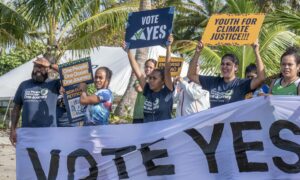
The World Youth for Climate Justice, Earthjustice, the Geneva Environment Network, the Geneva Human Rights Platform, and the Center for International Environmental Law organized a special event to unpack key arguments and draw lesson from the hearings of the International Court of Justice (ICJ) to issue an Advisory Opinion on States’ obligations in respect of climate change.

About this Session
The World Youth for Climate Justice, Earthjustice, the Geneva Environment Network, the Geneva Human Rights Platform, and the Center for International Environmental Law organized a special event to unpack key arguments and draw lesson from the hearings of the International Court of Justice (ICJ) to issue an Advisory Opinion on States’ obligations in respect of climate change.
Unpacking key arguments and drawing lessons from a human rights perspective, this event:
- increased public awareness of the Advisory Opinion (AO) process and its relevance from a human rights perspective;
- centered the understanding of the Advisory Opinion on human rights and States’ obligations beyond those contained in the Paris Agreement by offering the most immediate debriefing of the hearings with a focus on human rights;
- planted seeds for future follow-up: prepare the ground for an uptake of the Advisory Opinion among human rights institution.
A panel setting the stage with introductory remarks was followed by a discussion among key experts with a focus on human rights dimensions of the hearings. The guided questions focused on the relevance of human rights (focusing on specific dimensions) to addressing the two questions that the Court is set to address, and to the relevance of the upcoming Advisory Opinion for the work of human rights mechanisms and processes.
Revisit the opening remarks from experts and State representatives in the Geneva Screening of Day 1 of the ICJ Oral Hearings on Climate Justice.
Speakers
By order of intervention.

Felix KIRCHMEIER
Executive Director, Geneva Human Rights Platform

Joie CHOWDHURY
Senior Attorney, Center for International Environmental Law
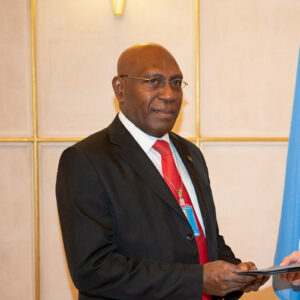
H.E. Amb. Sumbue ANTAS
Permanent Representative of the Republic of Vanuatu to the UN Office and other international organizations in Geneva

Luc DOCKENDORF
Deputy Permanent Representative of Luxembourg to the UN Office and other international organizations in Geneva

Elisa MORGERA
UN Special Rapporteur on climate change and human rights (remote)
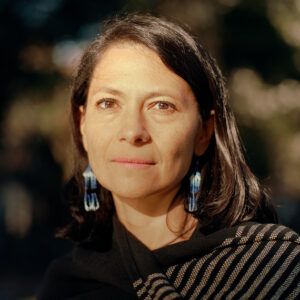
Astrid PUENTES
UN Special Rapporteur on the right to a clean, healthy and sustainable environment

Marcelo KOHEN
Professor, Geneva Graduate Institute of International and Development Studies

Vishal PRASAD
Pacific Islands Students Fighting Climate Change (remote)

Olivier DE SCHUTTER
UN Special Rapporteur on extreme poverty and human rights

Surya DEVA
UN Special Rapporteur on the right to development

Ana Maria SUAREZ FRANCO
Accountability and Monitoring, FIAN International

Evelyne SCHMID
Professor, University of Lausanne

Ginevra LE MOLI
Professor, European University Institute, Florence School of Regulation

Nicole Ann PONCE
Steering Committee, World Youth for Climate Justice (remote)
Highlights
Short Videos
Watch short extracts with main messages.
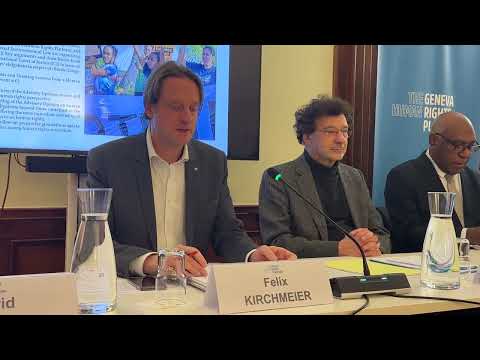
Welcome by Felix Kirchmeier
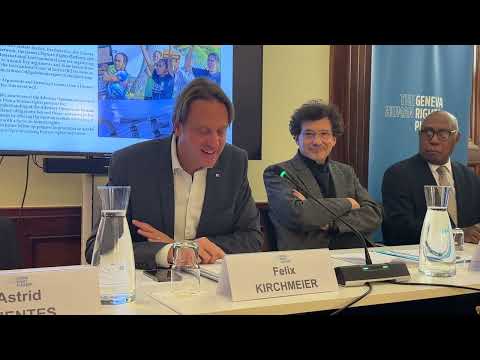
Welcome by Felix Kirchmeier
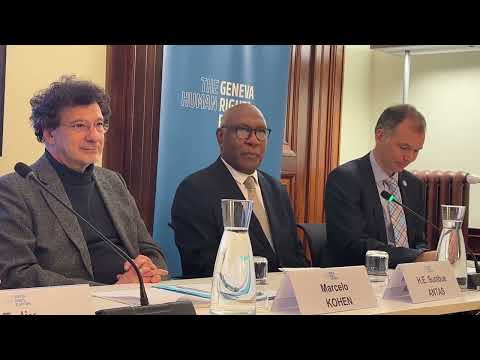
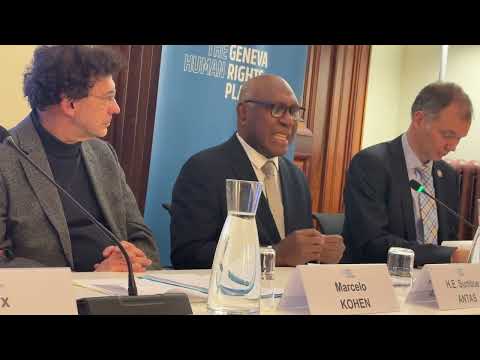
Opening by H.E. Amb. Sumbue Antas
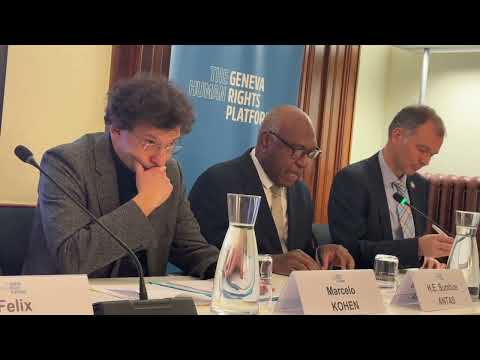
Opening by H.E. Amb. Sumbue Antas
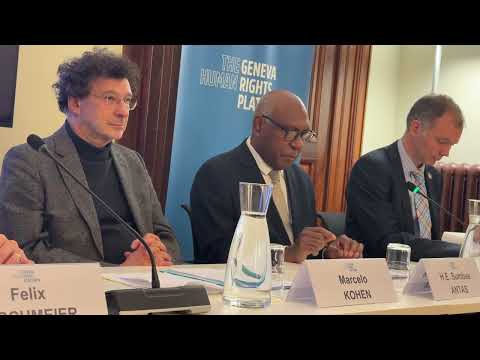
Opening by H.E. Amb. Sumbue Antas
Opening by H.E. Amb. Sumbue Antas

Opening by UN Special Rapporteur on climate change, Elisa Morgera
Opening by UN Special Rapporteur on Right to a healthy environment, Astrid Puentes
Opening by UN Special Rapporteur on Right to a healthy environment, Astrid Puentes
Opening by Prof. Marcelo Kohen
Opening by Prof. Marcelo Kohen
Opening by Prof. Marcelo Kohen
Opening by Prof. Marcelo Kohen
Opening by Prof. Marcelo Kohen
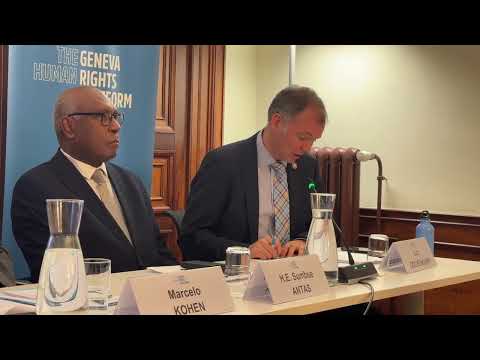
Opening by Luc Dockendorf
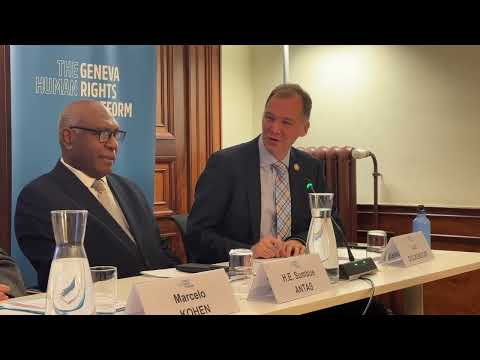
Opening by Luc Dockendorf
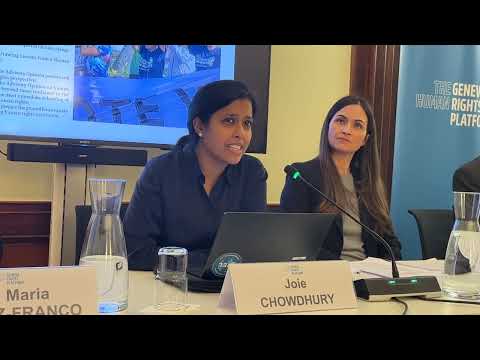
Discussion with Joie Chowdhury
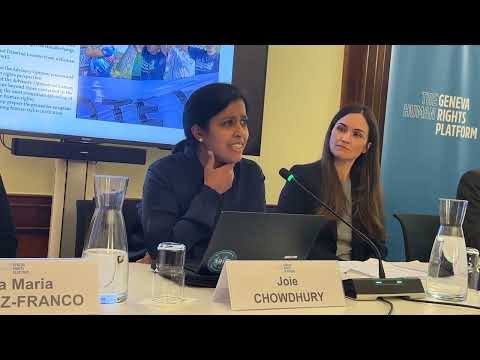
Discussion with Joie Chowdhury
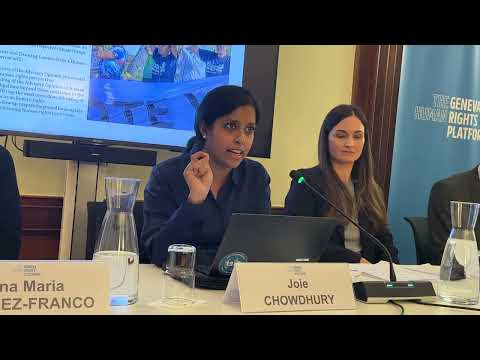
Discussion with Joie Chowdhury
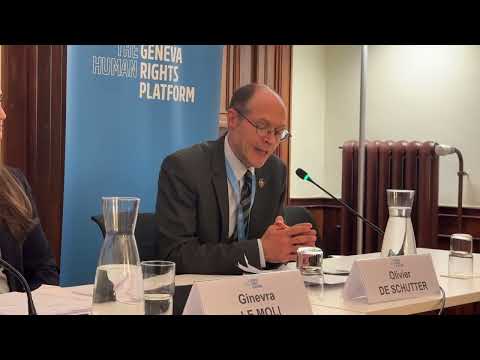
Discussion with UN Special Rapporteur on extreme poverty and human rights, Oliver De Schutter
Extreme poverty
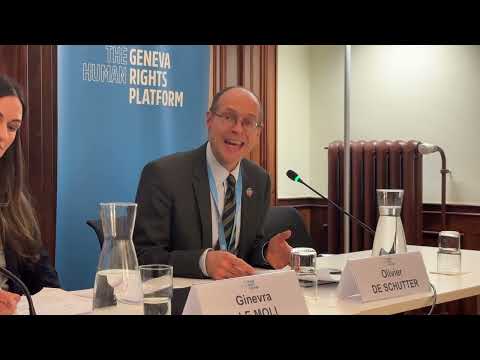
Discussion with UN Special Rapporteur on extreme poverty and human rights, Oliver De Schutter
Extreme poverty
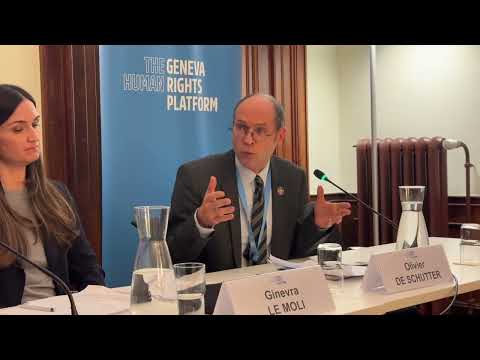
Discussion with UN Special Rapporteur on extreme poverty and human rights, Oliver De Schutter
Extreme poverty
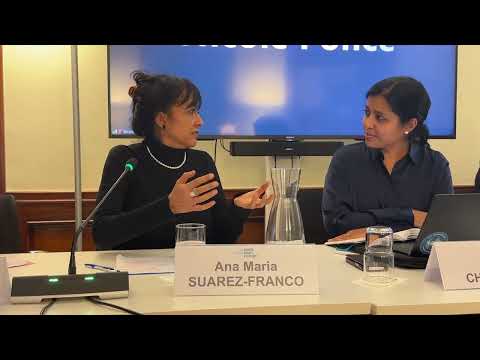
Discussion with Ana Maria Suarez
Human rights of future generations
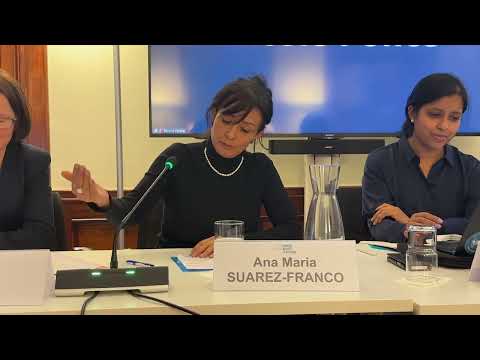
Discussion with Ana Maria Suarez
Human rights of future generations
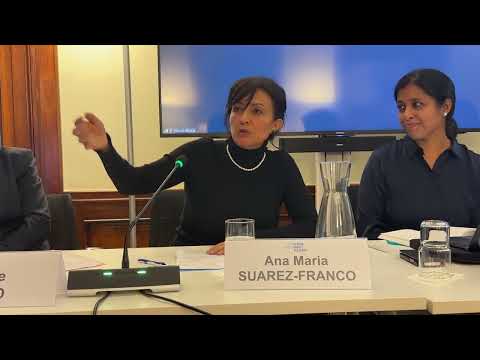
Discussion with Ana Maria Suarez
Human rights of future generations
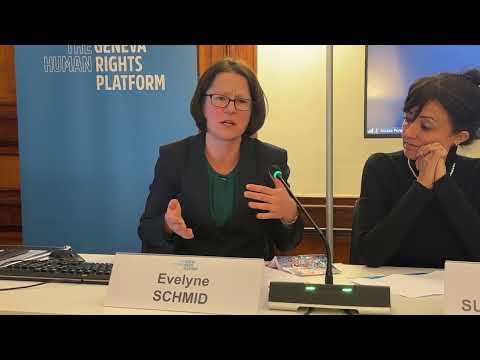
Discussion with Prof. Evelyne Schmid
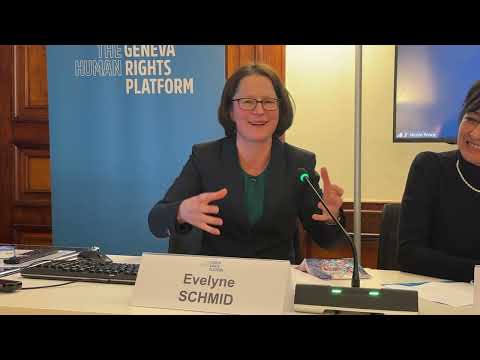
Discussion with Prof. Evelyne Schmid
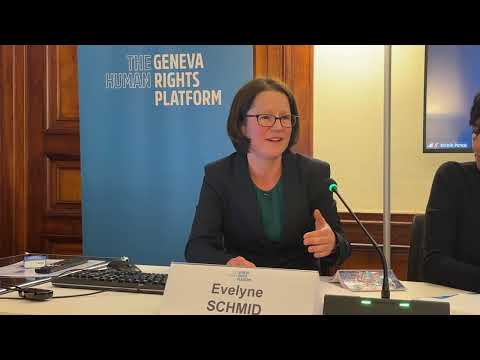
Discussion with Prof. Evelyne Schmid
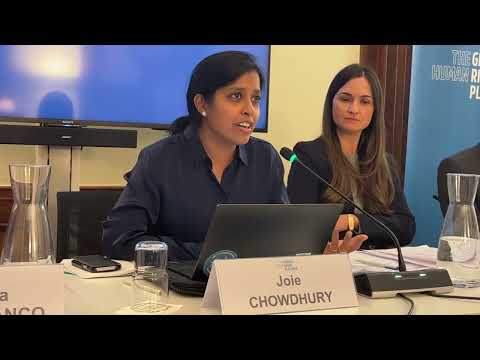
Discussion with Joie Chowdhury
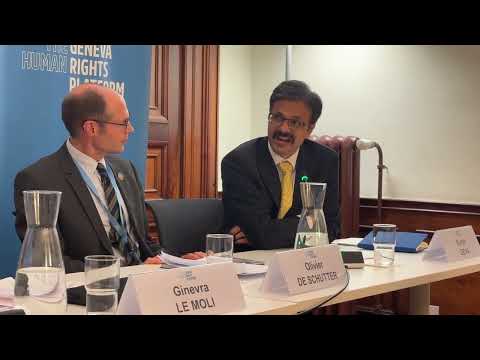
Discussion with the UN Special Rapporteur on the right to development, Surya Deva
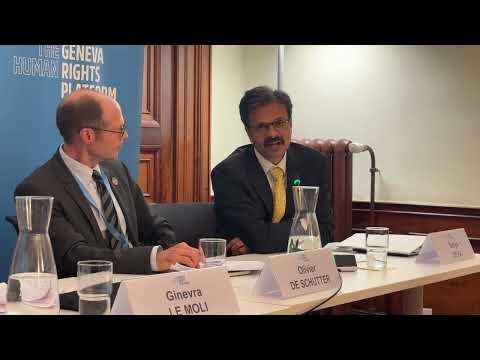
Discussion with the UN Special Rapporteur on the right to development, Surya Deva
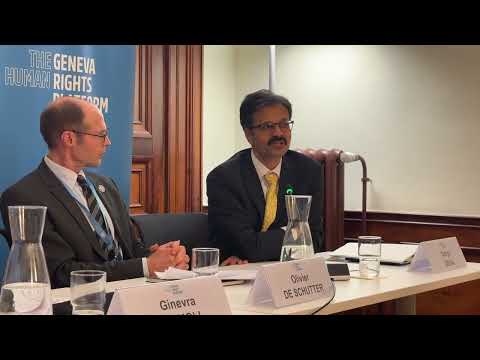
Discussion with the UN Special Rapporteur on the right to development, Surya Deva
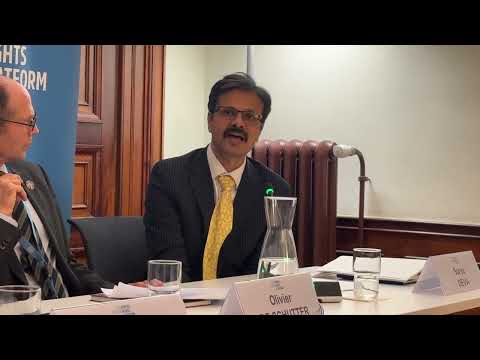
Discussion with the UN Special Rapporteur on the right to development, Surya Deva
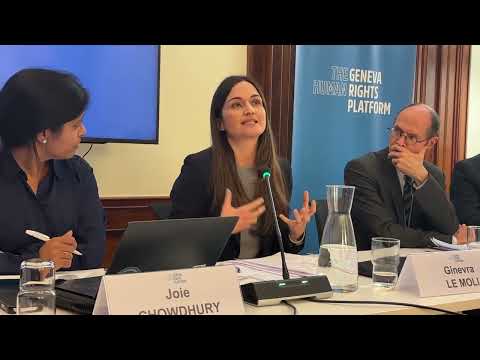
Discussion with Prof. Ginevra Le Moli
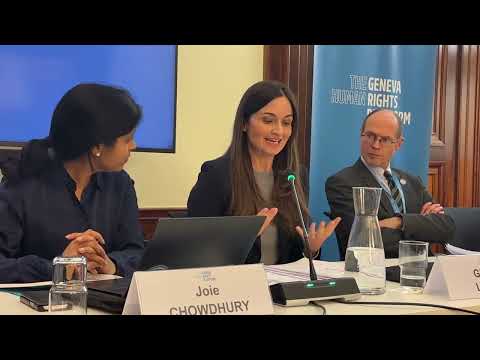
Discussion with Prof. Ginevra Le Moli
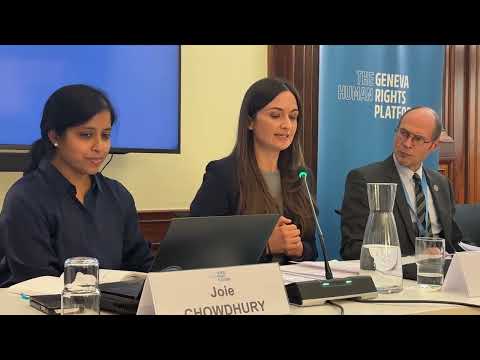
Discussion with Prof. Ginevra Le Moli
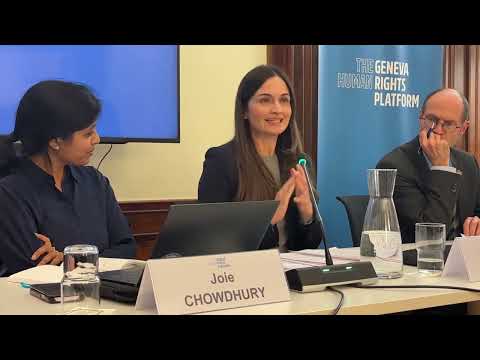
Discussion with Prof. Ginevra Le Moli

Discussion with World Youth for Climate Justice
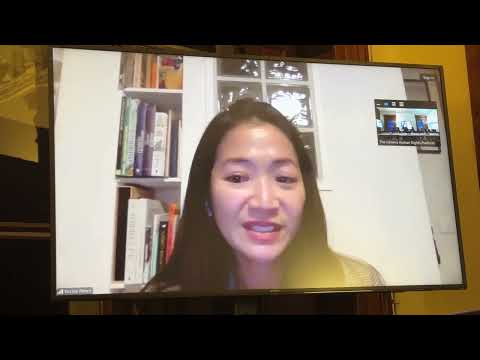
Discussion with World Youth for Climate Justice

Discussion with Joie Chowdhury
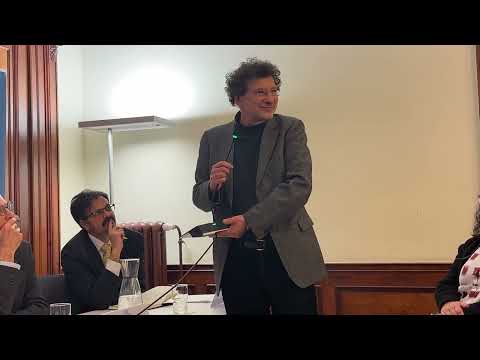
Opening by Prof. Marcelo Kohen
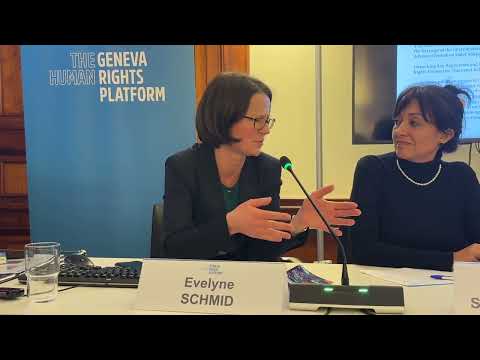
Discussion with Prof. Evelyne Schmid
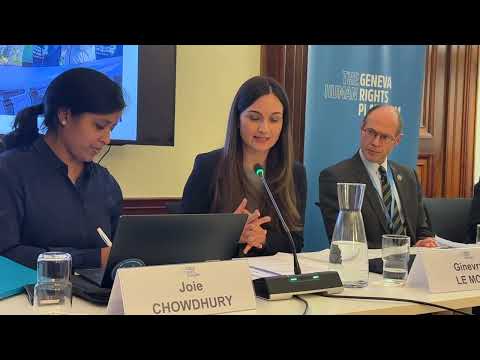
Discussion with Prof. Ginevra Le Moli
Video
From Villa Moynier.
Summary
Opening
H.E. Sumbue Antas, Permanent Representative of the Republic of Vanuatu
- This exercise started with young people. We are very thankful for their activism. Young people from the Pacific, with support from the youth worldwide and CSOs and NGOs, have driven this movement. Emphasizes that the most affected are the next generation.
- This week, we’ve seen history being made at The Hague.
- Nearly 100 states and organizations highlighted the scale and devastating impacts of the climate crisis.
- The hearing came in the wake of COP29 where, once again, climate justice wasn’t delivered.
- Multilateralism will always be a cornerstone of our international relations but it’s beyond time that climate policy is rooted also in existing legal obligations.
- The aim for the AO is to establish a stronger framework for accountability and to carify States’ obligations in regard to climate change
- Over the last two weeks, we heard historical polluters and high emitters defend the sole application of climate-specialized treaties. However, Vanuatu and the majority of other States recognize climate obligations in many other human rights instruments.
- Many States from across the Global South call for a better legal framework for climate justice.
- We must act with solidarity to meet our legal obligations. There is a need for accountability.
- Looking forward to a strong opinion from the highest court, encompassing a broad scope of HR.
Elisa Morgera, UN Special Rapporteur on Climate Change and Human Rights (video message)
- Application of the human rights legal regime: Lack of credibility in the argument advocating for the sole application of climate-specialized legal frameworks: climate actions do not exempt States from complying with other international obligations. Treaties, even if they don’t explicitly mention climate change, should still be effective in addressing it. Even if measures seem compliant with the Paris Agreement, it could not exempt States from their HR obligations under international law.
- States in breach of these obligations should provide financial compensation to affected parties.
- Youth: It’s really important to see how children and youth have been heard during these oral submissions. But it’s surprising that not so many States build their argument on the Convention on the Rights of the Child.
- The argument of the Vanuatu’s team was really clear.
- Responsibility: It’s important for the Court to address key issues such as remedies, liability, and guarantees of non-repetition. Highlights the importance of the guarantee of non-repetition as it prioritizes States’ obligations in relation to a just transition, etc. Stress the importance of clear modalities for how these remedies will be identified, implemented, and enforced.
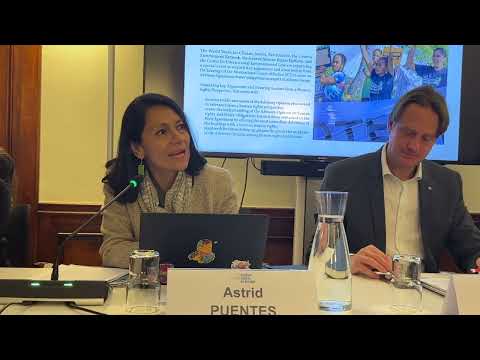
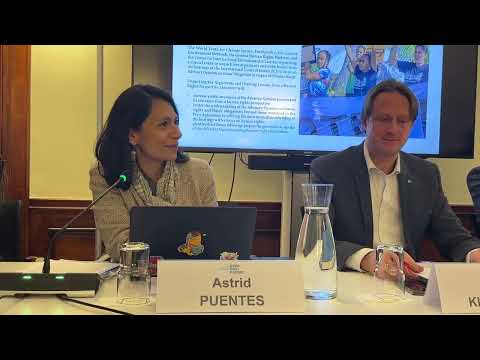
Astrid Puentes, UN Special Rapporteur on the Right to a Clean, Healthy and Sustainable Environment
- The RHE during the ICJ’s oral submissions: The majority of the States have mentioned the RHE even if sometimes it was in a negative way, because it means it’s acknowledged. The vast majority of the states highlighted the RHE as a recognized international law. A lot of mentions to the UN Resolutions which were adopted with consensus and no votes against.
- The worldwide recognition of the RHE: That gives us a clear perspective that the great majority of states recognized that right → more precisely, 80% of States have recognized it for decades, since the 70s, also supported by treaty bodies and rulings from institutions, such as the European Court of Justice.
- Legal status of the RHE: We should not talk about formalities if RHE is legally binding or not. We need actions, and the RHE is a crucial tool we need to strengthen climate actions.
- We really hope that the ICJ takes into account all developments on the RHE.
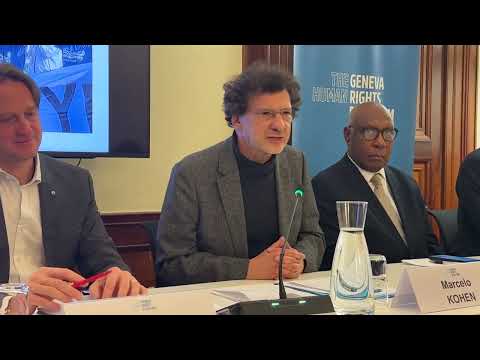
Marcelo Kohen, Emeritus Professor, Geneva Graduate Institute
- Continues the analysis on the RHE: this is one of the most crucial contributions that the Court could adopt. It is regrettable to see some States challenging the existence of this right. Costa Rica is one of the leading countries supporting this right.
- Legal status of the RHE: The argument that this is a political recognition is really strange → this is a “right”, it can’t be political. This right is a premisse for all the other rights (food, water, etc), much like other foundational laws have been throughout history (e.g. the 1966 ICCPR)
- Extraterritorial application: another strange argument was that there is no extraterritorial application of this HR. It is even conceivable that States would be allowed to commit human rights violations outside their territory?
- On the question of due diligence: many states insisted on lex specialis, but then they try to narrow this scope. Many States were confused and put to much focus on DD.
- State responsibility:The main element here will be the application of the law related to State responsibility for wrongful acts. This will be one of the major points. I try to keep hope. There are moments when the interventions on the direct applicability of the law of state responsibility were really convincing.
- I do believe that the court won’t accept the lex specialis argument and accept the application of state responsibility.
Luc Dockendorf, Deputy Permanent Representative of Luxembourg
- « I was a student myself at The Hague for COP6.” Nothing has changed since then. The youth of today is still sending the message of how to protect us and the future.
- An important principle is there is a fundamental difference between the rule of law (originally intended to protect the weak from the strong) and the essence of justice (international law justice, intergenerational justice, and historical justice from colonialism, extractivism, etc.)
- It is important to tackle remedies and guarantees of non-repetition, as well as international cooperation. Also, it is important for the HR council to recognize these obligations.
- It’s important to switch to the positive side of the obligations: the doing rather than not doing.
- There are sometimes rather difficult debates, even within countries, among ministers, etc.
- Principles are often waived in favor of short-term interests.
- States need to recognize that rights are not only for their citizens but for populations worldwide.
Discussants
Joie Chowdhury, Senior Attorney (Climate Litigation and Accountability) at CIEL
- Tuvalu’s action: Despite emitting less than 1% of greenhouse gases, Tuvalu is predicted to be the first nation to vanish due to sea level rise. The injustice is tackling. Now they are thinking of digitalizing their territory and cultures to not safeguard them in a way or another.
- This is a watershed for climate, HR defenders to shed accountability.
- Many States, endangered by climate disasters, called for justice and accountability
- Other States try to dilute their unlawful conduct by denying the applicability of HR law in this context.
- In the Hague, calls for remedy and reparation went beyond monetary compensation, for material and non-material including structural measures such as equitable fossil fuel phase-out, non-reliance on measures which may exacerbate harm colloquially known as false solutions such as geoengineering, eco-restoration, tributes to victims and debt cancellation.
- As was mentioned by Mr. Dockendorf, there are structural issues at play here- how climate impacts are experienced as human rights harm is also rooted in intersecting systems of oppression such as, for example, unjust global financial infrastructure, entrenched inequalities, and the perpetuation of exacerbated by colonial legacies. These are not abstract issues; they are lived realities for millions. The structural links between climate harm and systemic injustice have been made unequivocally clear in the oral proceedings, reminding us that the fight for climate justice is also a fight for equity and dignity.
Extreme poverty: Olivier De Schutter, UN Special Rapporteur on extreme poverty and human rights
- Poverty eradication as a pretext for climate inaction: A number of States (Kuwait, China, India, Emirate) refer to poverty by saying that climate mitigation will slow poverty eradication, which should be the priority. This position is to say that there is an opposition between poverty eradication and climate mitigation and that they need to build their economic development in order to eradicate poverty.
- Poverty fueled by climate change: Then there are many countries that mention poverty but in a very different way (Cote d’Ivoire, Sri Lanka,…). Many of them, that are low-income, are saying that climate change is exacerbating poverty. We should first prevent these persons from landslides, drowning, etc. Poverty is made worse by climate change. By 2050, millions of people will be forced to migrate because of climate change, crop failures,… Those who will be most affected by climate change are those in poverty.
- The interconnectedness between climate mitigation and poverty eradication: In fact, we can adopt measure that can eradicate poverty while mitigating climate change. See his report “The « just transition » in the economic recovery: Eradicating poverty within planetary boundaries”, where he highlights, for example, creating employment in the just transition sector, reducing wasteful consumption, etc. In his other report “Eradicating poverty beyond growth”, he tried to show that increasing GDP to eradicate poverty is a mistake. It can even be counterproductive, as it can create inequalities and social exclusion that we are trying to avoid in the first place.
Human rights of future generations: Ana Maria Suarez-Franco, Accountability Coordinator, FIAN International
- RHE during the ICJ proceedings: 82 States are in favor of the RHE, while 5 are against, including 4 from the Global North and that are very powerful countries.
- This impact of climate change continue to worsen. Now we are thinking about the digitalization of nature, which is proposing false solutions (like others: carbon market,…).
- The Maastricht principles are a very interesting exercise of looking in the sources of law, which include the constitutions, jurisprudence, etc. These principles are also used by courts nowadays.
- The discussion does not only involve opinio juris but also state practice in shaping international law.
- In some countries, the impact assessment also looks into the long term. Opinio juris is growing.
- Rights of future generations: Germany claims that the rights of future generations are very abstract. I hope that the judges will consider the very concrete impacts of climate change and the very concrete existence of the people after us. An important thing that can be brought by HR of future generation is accountability.
Right to development: Surya Deva, UN Special Rapporteur on the right to development
- Two contrasting mentions on the right to development: The right to development is coming in these proceedings in a very negative way, to justify economic development. At the same time, the right to development also provide a concrete base for HR protections.
- 5 elements to articulate the obligations of states:
-
- Intergenerational equity: the Rio Declaration makes an explicit link between the right to development and intergenerational equity. India made a reference to this but uses it in a different way, negatively.
- Climate change does not impact everyone in the same way. Certain people are impacted differently: people in developing countries and developed countries. Social discrimination.
- International cooperation: derived from the UN Charter and other instruments
- CBDRs: often the discussion is we should cut our coal, but how about people who need coal? If we are talking about fossil fuel phaseout, countries still need to meet the demand; so someone else should provide it, and it often comes from developing countries.
- Participation: people should be able to participate in a free, informed, and meaningful way.
- On the second question of the court about the legal consequences: it’s important to address questions of remediation, loss and damage, effective remedies, and ensuring full reparation.
- My personal view on the right to development is that it can be a tool for climate justice, but sometimes it’s not used as such.
Upraisal and the path forward: Evelyne Schmid, Professor of Public International Law, University of Lausanne
- Story about court alignments: the ECHR case of Klimaseniorinnen is the first decision where a court found a country in breach of its climate obligations.
- There is an important omission: Klimmaseniorinnen was not mentioned by the very country that was condemned. Duarte Augustinho was cited but not Klimaseniorinnen. It was cited on the subject of extraterritorial obligation but no obligation towards its own citizens. Many countries mentioned Klimmaseniorinnen but not Switzerland.
- Much could be said about the contested, debated effect of that judgment.
- Proxy debate. Important to look at the cases together
- But it’s really hard to make sure that the message of these proceedings is shared, which is that climate change is really happening and that we need concrete actions.
Upraisal and the path forward: Ginevra Le Moli, Professor, European University Institute
- The key outcome of the AO is the clarification of international legal obligations.
- Tools available to the Court: 70 written statements argue that the whole international obligation regimes apply. Only a minority of 20 written statements argues that only the climate regime apply. The Klimmaseniorinnen case, the GC 26 of the CRC, etc. are also tools available to the Court.
- The Court must also address the inconsistencies and breaches of climate obligations (fossil fuel subsidies, regulatory gaps,…)
- The causal link was also considered by others not an element that should be addressed by the court as it’s a composite element.
- Address comprehensive remedies: reparation, restitution, debt relief, debt cancellation, and satisfaction
- Overview of arguments: From the perspective of climate justice, there are both negative and positive arguments.
- Positive arguments: the key roles of human rights, intergenerational equity, and principles like the CBDR and the right to development.
- The negative and weak arguments: the Paris Agreement has become a sort of a cage, to excuse ‘euphemism for inaction’, the portraying of future generations as an abstract risk, abstract persons, and the argument that climate implementations are limited to the country
- The narrative used by numerous delegations has been remarkable: emphasis on the role of the youth,…
Upraisal and the path forward: Nicole Ann Ponce, Front convener for Asia & Steering Committee, World Youth for Climate Justice
- Interdependence between HR and climate justice: The AO can put an end to systemic oppression through the recognition of this interconnectedness.
- The AO potentiality in Asia: We have a unique opportunity to leverage this AO to strengthen climate policies in Asian regions. The declaration can help incorporate new principles in regional legal frameworks.
- The AO is not a silver bullet but can help strengthen the ties between climate justice and HR. It can help HR institutions to address climate challenges more effectively and expand their scope of action
Joie Chowdhury
- The forthcoming advisory opinion, an authoritative interpretation of binding international law, could deliver the legal blueprint to hold major polluters accountable and affirm the right to remedy and reparations.
- For those who work very hard on interconnectedness between climate justice and HR, you work is seen.
- The questions posed to the Court are not theoretical ones- they address legal violations deeply affecting Peoples and nations across regions and are fundamental as a foundation for ambitious and just climate action. Whatever the outcome, climate-justice aligned responses to these questions will need to be continually deepened, built on, upheld.
Open discussion
- In this particular case, the questions were particularly well drafted, and it will be difficult for the Court to escape from them.
- Among the consequences of the AO there is not only clarification of international responsibility but also domestic and regional courts will read the law in light of the ICJ AO, and this will have a major impact on the formation of international law
- The GA added in the preamble a list of instruments that support the Court in understanding the corpus of international law, especially in addressing Q1.
Links
- Human Rights, Climate Change, and the Role of Geneva
- Mobilizing Climate Actors in International Geneva
- ICJAO Oral Hearings: Daily Debriefs | World’s Youth for Climate Justice (WY4CJ), CIEL & AO Alliance | 13 December 2024
- Historic Hearings at the World’s Highest Court Could be a Gamechanger for Climate Justice | CIEL | 24 November 2024